Short answer: this Honda CBR500R review finds the most sensible faired sport bike in Honda’s American lineup — a full-fairing 471cc parallel twin that looks like a supersport, rides like a friendly all-rounder, and for 2026 costs $6,399 plus a $600 destination charge after a $1,000 price cut. Nothing mechanical changed for 2026; Honda simply made the same bike cheaper, and that single change transforms the value argument this Honda CBR500R review has to make. This Honda CBR500R review covers the verified specifications, the 2013-to-2026 history, the honest limits of a 421-pound twin, and who should buy the faired R instead of the Kawasaki Ninja 500.
That price cut is the story of this Honda CBR500R review. At $6,399 it undercuts the best-equipped Ninja 500 by $100, and the conversation this Honda CBR500R review opens with is no longer “why pay more” but “what else gives you this much motorcycle for this little money.”
Honda CBR500R Overview and Model-Year Updates
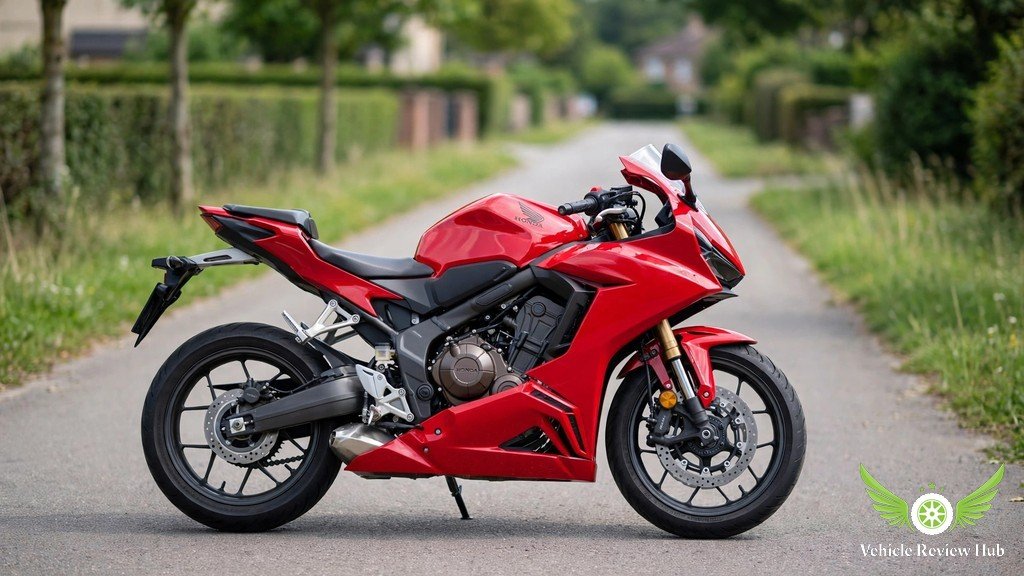
The CBR500R is Honda’s faired middleweight sport bike: the sportiest of the three 471cc twins, sharing its engine and chassis fundamentals with the naked CB500F and the adventure-styled NX500, but wearing full Fireblade-inspired bodywork and a sportier riding position. It is its own motorcycle, built in Thailand for riders who want supersport looks without supersport punishment.
What Is the Honda CBR500R and Who Is It Designed For?
The Honda CBR500R is a faired sport motorcycle designed for newer riders stepping up from a first bike, returning riders who want manageable performance, and commuters who want a motorcycle that looks fast standing still and behaves politely in traffic. Its natural buyer loves the supersport shape but not the supersport riding position, insurance bill, or repair costs. In this Honda CBR500R review, the R’s appeal is its honesty: it never pretends to be a track weapon, and it never needs to apologize for being a supremely capable everyday motorcycle. The clip-on handlebars sit above the triple clamp, the footpegs are low, and the 31.1-inch seat welcomes a wide range of riders.
US History 2013 to 2026: Fork and Brakes in 2022, TFT in 2024
Honda launched the CBR500R for 2013 alongside its naked and adventure siblings, a 471cc twin sized to slip under Europe’s 47-horsepower A2 licence cap. The first generation ran conventional forks and a single 320mm front disc. The 2019 restyle sharpened the Fireblade look, added winglets, a slipper clutch, and a mid-range power bump. The big chassis change came for 2022: a 41mm inverted Showa SFF-BP fork and dual 296mm front discs with radial-mount Nissin calipers replaced the old single-disc setup, with lighter wheels and swingarm keeping weight in check. For 2024 the R gained a 5-inch TFT display and Honda Selectable Torque Control. For 2026, as RevZilla’s 2026 review puts it, the only thing that really matters is the price: the same bike as 2025, $1,000 cheaper. This Honda CBR500R review treats that as a genuine model-year event, not a footnote.
Honda CBR500R Engine and Specifications
The engine is the heart of this Honda CBR500R review: a 471cc liquid-cooled DOHC parallel twin that trades peak horsepower for a flat, friendly torque curve and remarkable fuel economy.
471cc DOHC Parallel-Twin Engine, 6-Speed Gearbox and Slipper Clutch
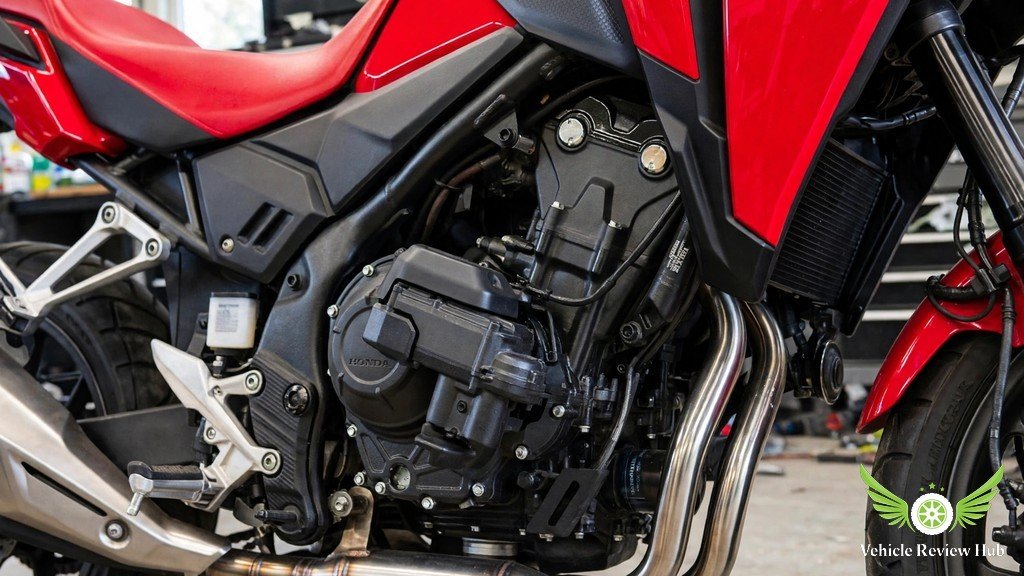
At the center of this Honda CBR500R review is a 471cc liquid-cooled, four-stroke, DOHC parallel twin with four valves per cylinder, a 67.0mm bore and 66.8mm stroke, a 10.7:1 compression ratio, and programmed fuel injection through a 34mm throttle body. The crankpins are phased at 180 degrees, and the engine drives the rear wheel through a six-speed gearbox, a slipper clutch, and an O-ring chain on 15-tooth front and 41-tooth rear sprockets. Honda publishes no horsepower figure for the American bike, and this Honda CBR500R review invents none — the measured evidence belongs to the dyno paragraph below, and the 47-horsepower figure quoted in European coverage is an A2 licence cap, not an American restriction or a measured American output. Testers consistently describe strong low-end torque, a linear pull to a rev limiter around 9,000 rpm, and an engine that never feels stressed in normal riding. The measured figures come from Cycle World’s dyno test of the 2022 bike: 43.20 horsepower at 8,280 rpm and 29.77 pound-feet of torque at 6,450 rpm at the rear wheel — the honest American numbers for this Honda CBR500R review.
Weight 421 lb Claimed, Seat Height 31.1 Inches and Tested Weights
Weight is the one honest criticism in this Honda CBR500R review, and the numbers deserve quoting by source rather than blended into one figure. Honda claims a 421-pound curb weight for the 2026 bike, fluids and a full 4.5-gallon tank included. Independent scales tell a slightly heavier story: Cycle World’s scales put the faired CBR 8 pounds heavier than the 417-pound naked CB500F, RevZilla’s read 422 pounds for 2023, and Ultimate Motorcycling recorded 423 pounds ready to ride for 2022. The spread is small and the conclusion is consistent: a substantial motorcycle for its class, roughly 50 pounds heavier than the old Ninja 400, and that weight is the main reason the CBR never feels as urgent as its lighter rivals. What the weight buys is stability and a planted highway feel. Seat height is 31.1 inches, the wheelbase is 55.5 inches, and the fuel tank holds 4.5 gallons — figures that shape the everyday usability this Honda CBR500R review keeps coming back to.
| Specification | Honda CBR500R (2026) | Notes |
|---|---|---|
| Engine | 471cc liquid-cooled DOHC parallel twin, 67.0 x 66.8mm, 10.7:1 | PGM-FI, 34mm throttle body |
| Gearbox / final drive | 6-speed, slipper clutch, O-ring chain 15T/41T | Cable throttle, no ride modes |
| Seat height / wheelbase | 31.1 in / 55.5 in | Low for a sport bike |
| Curb weight | 421 lb claimed (Honda) | 422–425 lb on independent scales |
| Fuel capacity | 4.5 gallons | 60–70 mpg tested by RevZilla |
| Front brakes | Dual 296mm discs, Nissin radial calipers, ABS | Single 320mm disc before 2022 |
| Suspension | 41mm Showa SFF-BP inverted fork / Pro-Link rear | SFF-BP and dual discs from 2022 |
| Summary | 2026: $6,399 + $600 destination | $1,000 less than 2025, same bike |
Honda CBR500R Price and Market Availability
Price in this Honda CBR500R review is now the bike’s strongest argument: one trim, two colours, and a 2026 sticker that finally matches the motorcycle’s modest ambitions.
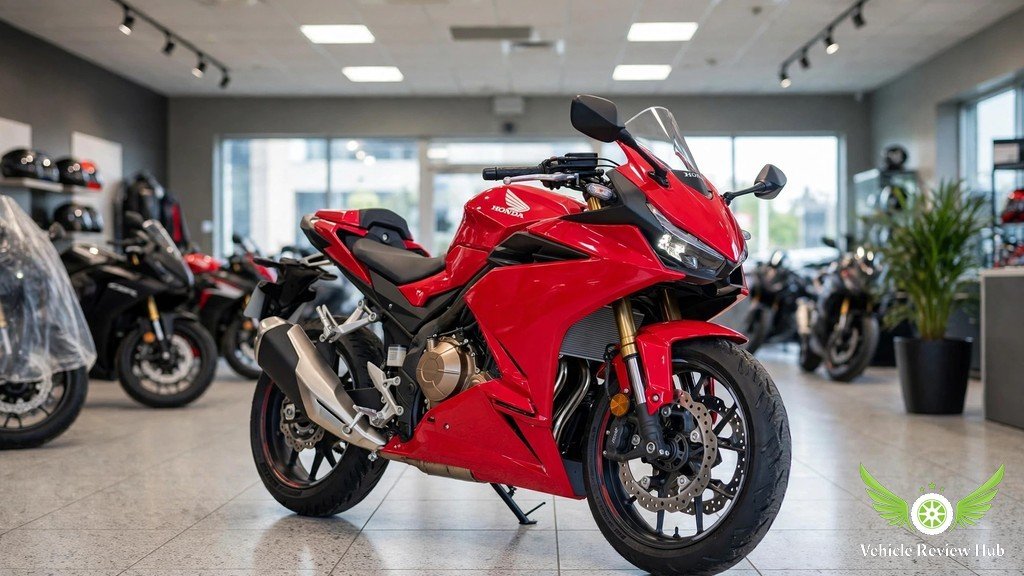
Honda CBR500R Price in the USA: $6,399 for 2026 Plus $600 Destination
The 2026 Honda CBR500R lists at $6,399 plus a $600 destination charge — $6,999 before tax and dealer fees — verified in current dealer listings and in RevZilla’s 2026 review. The price walk tells the model’s recent story: $7,199 for the 2022 bike, $7,299 for 2023, $7,399 for 2025, and then the $1,000 cut for 2026. Honda’s own dealer copy says it plainly — same bike, better value — and this Honda CBR500R review agrees: no corners were cut, because nothing was changed. Against the Kawasaki Ninja 500, the headline flips in Honda’s favour: the base trim lists at $5,399 and the ABS trim at $5,799, but the comparably equipped SE ABS lists at $6,499, $100 more than the Honda. The full trim-by-trim comparison belongs to our Honda CBR500R buying guide, where every figure carries its trim label.
Black and Grand Prix Red Colours and Official US Dealer Availability
Every 2026 CBR500R comes in Black or Grand Prix Red, with no other colour choices and no special editions, sold through Honda’s official US powersports dealer network. Dealer listings confirm 2026 Grand Prix Red stock with February 2026 availability, and Honda’s US dealer copy names both colours for 2026, so this Honda CBR500R review states both with confidence. The bike carries a 12-month Honda warranty in the USA. The Ninja 500 outsells it, but Honda’s dealer network is the deepest in the country, and parts for a platform shared across three models are easy to find.
Honda CBR500R Design, Features and Technology
The R’s technology story in this Honda CBR500R review is restrained by design: a modern TFT dash and traction control, but a cable throttle and no ride modes — Honda’s deliberate choice to keep the bike simple, light on electronics, and affordable.
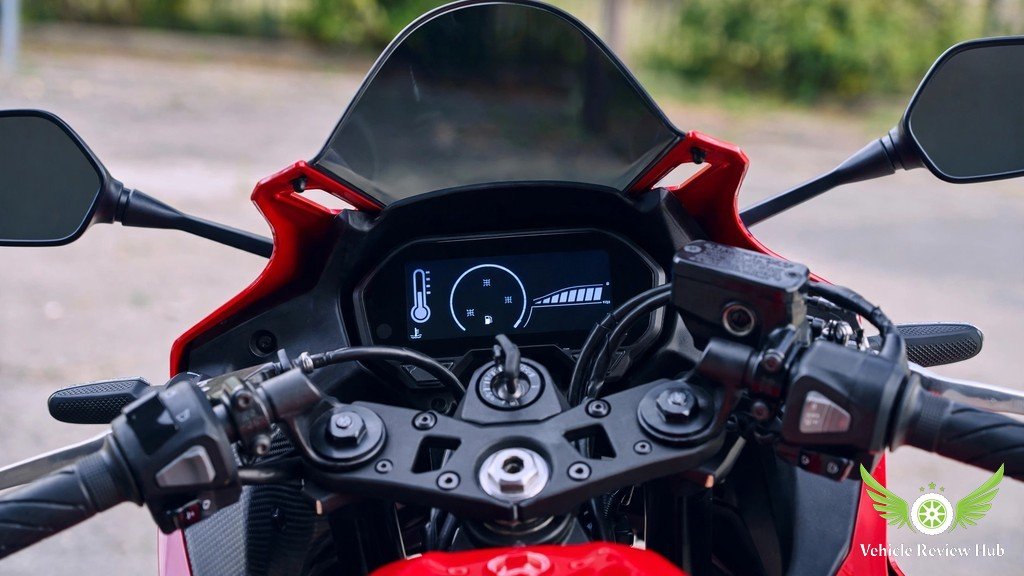
Fireblade Styling, 5-Inch TFT and HSTC From the 2024 Update
The 2024 update gave this Honda CBR500R review its most modern chapter: a 5-inch full-colour TFT display with Honda RoadSync connectivity potential, and Honda Selectable Torque Control, the traction-control system that trims power when the rear wheel starts to spin. The styling follows the Fireblade family: sharp full fairing, aggressive dual LED headlights, and the small winglets added in the 2019 restyle. The TFT is clean and logical, though testers note it can be hard to read in direct sunlight, and the joystick-style switchgear takes some learning. For the full equipment picture across model years, see our Honda CBR500R performance guide.
Cable Throttle, No E-Clutch in the USA and No Ride Modes
This section of the Honda CBR500R review states a fact that European coverage can blur: the American CBR500R uses a cable throttle, has no E-Clutch option in the USA, and offers no selectable ride modes. The 2026 American bike is the same machine as the 2025 bike, and no E-Clutch variant appears on Honda USA’s American page or in American dealer listings. European reports describing E-Clutch-equipped 500s, and the CBR650R’s E-Clutch, belong to other markets and other models, and this Honda CBR500R review never imports them onto the American R. Rival shoppers who want a clutchless-shifting aid must step up to the CBR650R E-Clutch, while R buyers get a conventional cable clutch and a slipper clutch for downshifts.
Honda CBR500R Riding Experience and Comfort
On the road, the R feels smooth, steady, polite, and far more comfortable than its supersport styling promises. Testers keep reaching for the same words — “lover, not a fighter” is RevZilla’s — and this Honda CBR500R review finds that verdict fair rather than damning.
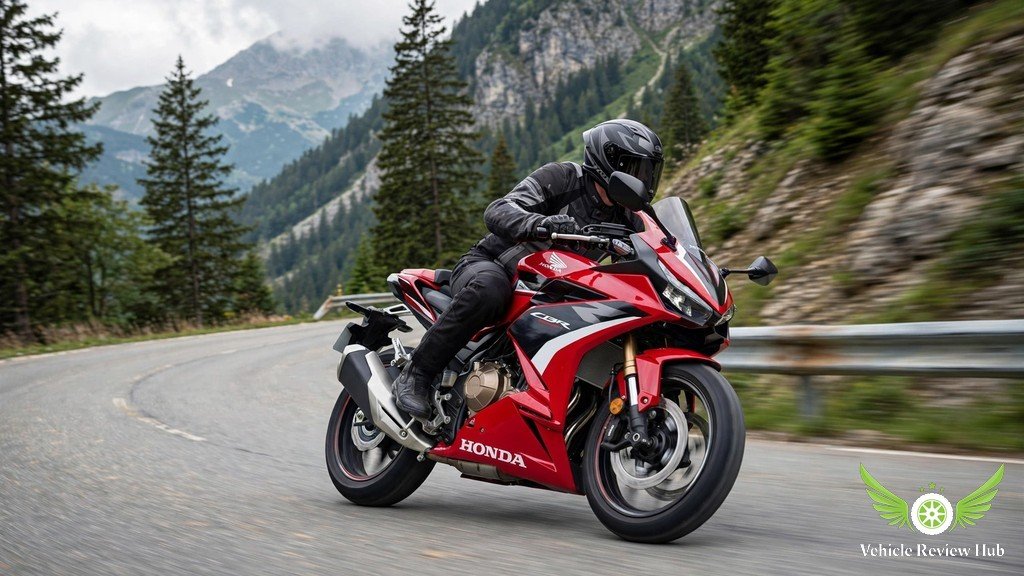
Riding Position, Handling and Low-Speed Maneuverability
The riding position in this Honda CBR500R review is the bike’s secret weapon: clip-ons above the triple clamp, low footpegs, and a 31.1-inch seat create a sporty-but-not-cramped posture that suits larger riders as well as smaller ones — RevZilla’s six-foot tester called it a surprisingly good fit, with no knee-crunching fold. At low speed the R inspires confidence: the slim shape, seated-in position, and flat torque curve make parking-lot maneuvers and city traffic easy, and the short first gear helps new riders avoid stalls. In corners the 2022 chassis changes transformed the bike, per Ultimate Motorcycling’s 2022 review: the Showa SFF-BP fork and dual discs made the front end far more sporting from the first ride, even if the bike still weighs more than its rivals. The video below is MCN’s review of the CBR500R and its naked CB500F sibling together — worth watching because it shows the faired R’s character against its own platform twin, not because it tests the R alone.
Two honest limits belong in this Honda CBR500R review alongside the praise. The tiny windscreen and narrow bodywork do little to divert windblast unless the rider is small or fully tucked, and the bike’s smoothness means very little vibration or noise feedback — testers say it can be hard to tell 2,000 rpm from 8,000 rpm by feel alone. Neither flaw dents the verdict for the intended buyer, but both belong in an honest Honda CBR500R review, because the buyer who discovers them after purchase bought the wrong idea of the bike.
Highway Comfort, Passenger Use and Everyday Practicality
On the highway the R is a genuinely capable commuter and weekend tourer, and this Honda CBR500R review rates its practicality above its sportiness. The engine cruises happily at highway speeds, the 4.5-gallon tank and 60-to-70-mpg economy stretch a tank toward 250 miles and beyond, and the suspension is soft without feeling mushy. Passenger use is the weak point: the pillion seat is small, the pegs are high, and RevZilla’s tester called it not ideal, though possible. Everyday practicality is otherwise strong: standard ABS, LED lighting, a fuel gauge and gear indicator, and running costs shaped by a shared platform. The ownership-cost detail lives in our Honda CBR500R reliability guide, but the headline here is simple — this is a motorcycle you can ride every day without thinking about it, which is rarer than it sounds.
Honda CBR500R Review: Pros, Cons and Verdict
The verdict in this Honda CBR500R review comes down to a simple trade: supersport looks and Honda refinement in exchange for weight and modest power — and for 2026, a price that finally makes the trade easy to accept.
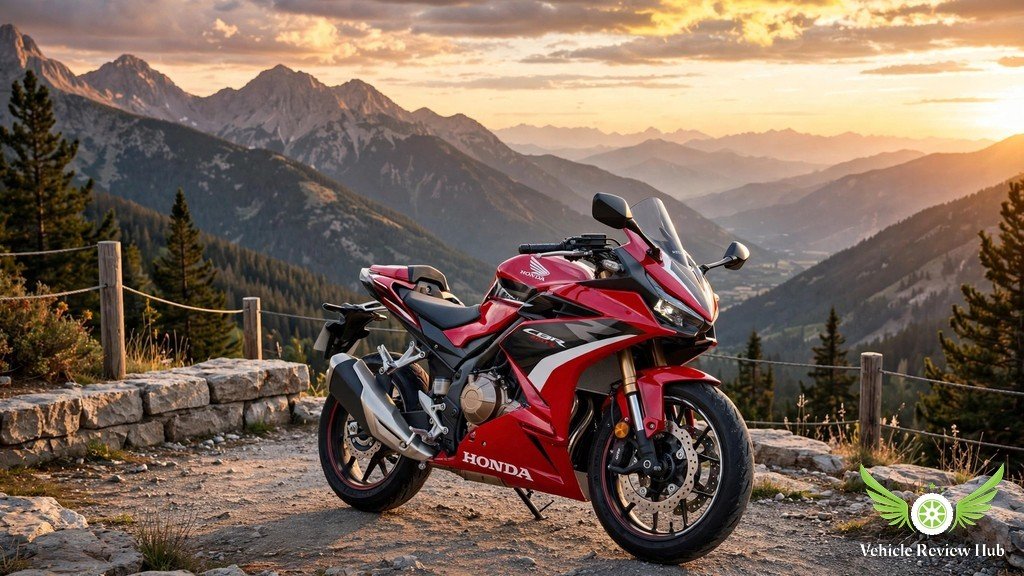
Main Advantages and Limitations of the Honda CBR500R
Advantages in this Honda CBR500R review: full-fairing Fireblade styling; a proven 471cc twin with a flat torque curve; the 2022 SFF-BP fork and dual-disc brakes; a 5-inch TFT and HSTC from 2024; a 31.1-inch seat and genuinely comfortable ergonomics; 60-plus-mpg real-world economy with a 4.5-gallon tank; standard ABS; and now a $6,399 price that undercuts the comparably equipped Ninja 500 SE ABS. The limitations are equally clear. At 421 pounds claimed it is heavy for its class, and the 43.2-horsepower dyno figure explains why lighter rivals creep away. There is no E-Clutch, no ride modes, and no ride-by-wire in the USA. The windscreen is small, the passenger seat is cramped, and the TFT can wash out in sunlight. Early bikes carried recalls — including a 2013–2015 fuel-sensor campaign covering 14,575 bikes, a 2019–2020 ABS modulator inspection, and a 2020–2021 rear-reflector campaign — all pre-2022 and checkable by VIN through Honda’s recall lookup, and no recall has named a 2022-or-newer bike.
Who Should Consider the CBR500R Over the Kawasaki Ninja 500?
Choose the CBR500R over the Ninja 500 if you value Honda refinement, a sharper-looking fairing, better stock suspension and brakes, and a dealer network that stretches across the country — and if the $100 sticker advantage over the SE ABS matters to you. Choose the Ninja 500 if you want the lighter, livelier motorcycle, a peppier feel on the road, and the best-selling bike in the class with the biggest aftermarket. For everyone else in this Honda CBR500R review — beginners who want a first faired bike, commuters who want economy with style, and returning riders who want a motorcycle that asks nothing of them — the R is one of the easiest recommendations in the class, provided the buyer accepts it for what it is: a superb everyday sport bike, not a race bike. At $6,399 plus $600 destination for 2026, this Honda CBR500R review calls it the best value the model has ever offered in America.
Honda CBR500R Review FAQs
Direct answers to the questions buyers ask most in this Honda CBR500R review.
What is the Honda CBR500R?
A faired middleweight sport motorcycle in this Honda CBR500R review: a 471cc parallel twin with full Fireblade-style bodywork, built for newer riders, commuters, and anyone who wants supersport looks without supersport punishment.
How much does the Honda CBR500R cost?
The 2026 Honda CBR500R costs $6,399 plus a $600 destination charge, in Black or Grand Prix Red, notes this Honda CBR500R review. The 2025 model was $7,399, so the 2026 bike is $1,000 cheaper with no mechanical changes.
How much horsepower does the Honda CBR500R make?
Honda publishes no figure for the American bike. Cycle World’s dyno recorded 43.20 horsepower at 8,280 rpm and 29.77 pound-feet of torque at 6,450 rpm at the rear wheel for the 2022 bike, reports this Honda CBR500R review. The 47-horsepower figure is a European A2 licence cap, not an American restriction.
What is the seat height of the Honda CBR500R?
31.1 inches, per this Honda CBR500R review — low for a sport bike, and one reason the R suits a wide range of riders.
How much does the Honda CBR500R weigh?
421 pounds claimed curb weight for 2026, with independent scales reading 422 to 425 pounds, says this Honda CBR500R review. It is heavy for its class, and that weight is its main performance handicap.
Does the Honda CBR500R have E-Clutch?
Not in the USA. The American CBR500R uses a cable throttle with no E-Clutch option and no ride modes, stresses this Honda CBR500R review. European E-Clutch coverage describes other markets, and the CBR650R E-Clutch is a different model.
What colours does the 2026 Honda CBR500R come in?
Black and Grand Prix Red, confirms this Honda CBR500R review, per Honda’s US dealer copy and current dealer listings.
Is the Honda CBR500R good for beginners?
Yes — with the usual caveat in this Honda CBR500R review that it is still a 421-pound motorcycle. The low seat, flat torque curve, short first gear, standard ABS, and forgiving chassis make it one of the friendliest faired bikes a newer rider can buy.
What fuel economy does the Honda CBR500R get?
RevZilla’s long-term test observed 60 to 70 mpg, and Ultimate Motorcycling recorded 65 mpg riding hard, notes this Honda CBR500R review. With a 4.5-gallon tank, real range runs toward 250 miles and beyond.
Does the Honda CBR500R have ABS?
Yes, standard on every current bike, says this Honda CBR500R review. The non-ABS variant was discontinued after 2021, and dual front discs arrived with the 2022 update.
Is the Honda CBR500R good for highway riding?
Yes. This Honda CBR500R review finds it a capable highway commuter: stable at speed, comfortable ergonomics, and a tank range that makes weekend trips easy. Passenger comfort is the weak point, not the bike’s highway ability.
Should I buy the CBR500R or the Ninja 500?
Buy the Honda for refinement, suspension, brakes, dealer support, and a $100 sticker edge over the Ninja 500 SE ABS; buy the Kawasaki for a lighter, livelier feel and the class’s biggest aftermarket, advises this Honda CBR500R review. Ride both before deciding.
When did the Honda CBR500R go on sale?
Launched for 2013, restyled for 2019, re-chassised for 2022, TFT-equipped for 2024, and price-cut for 2026 at $6,399, notes this Honda CBR500R review.