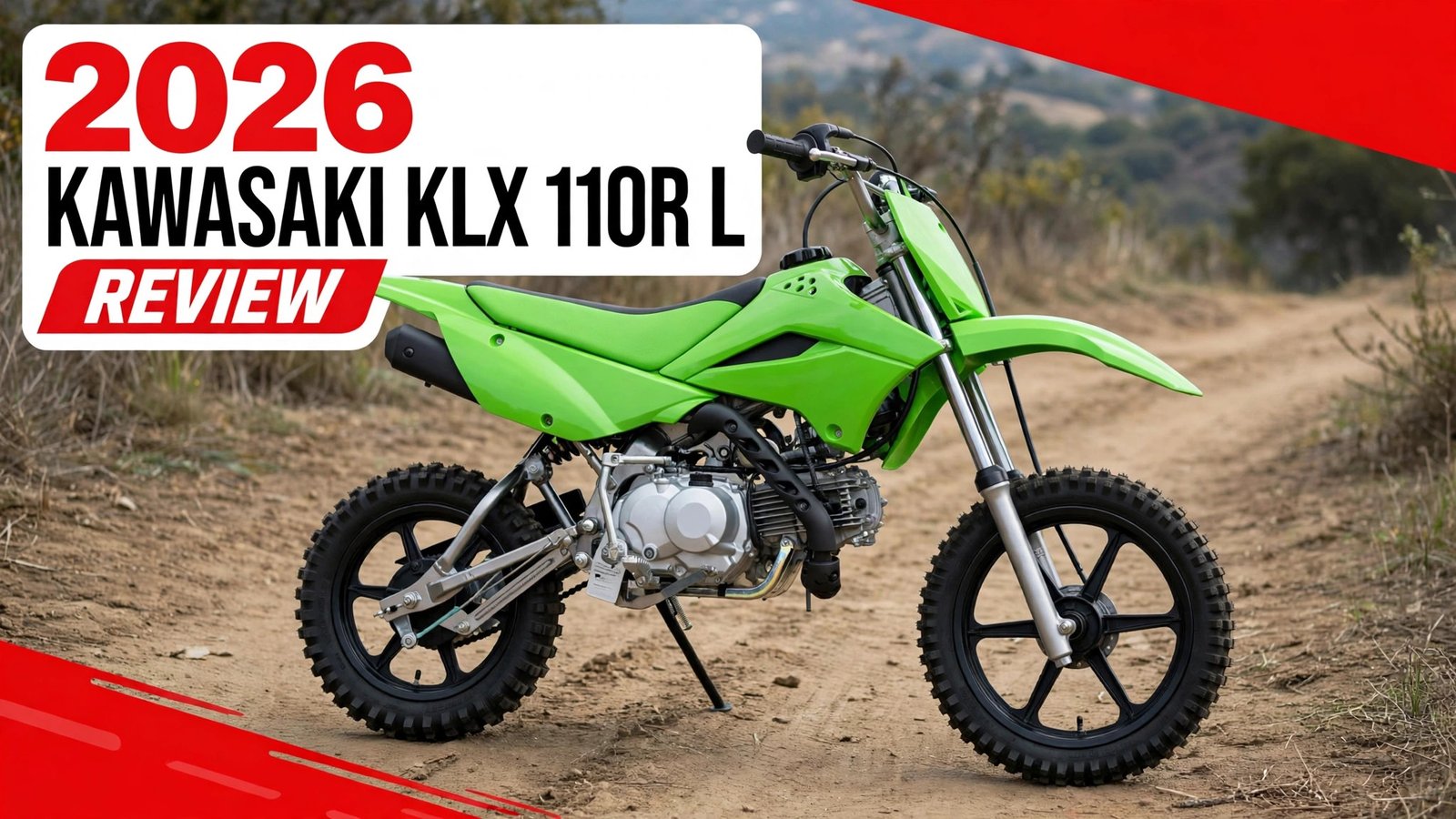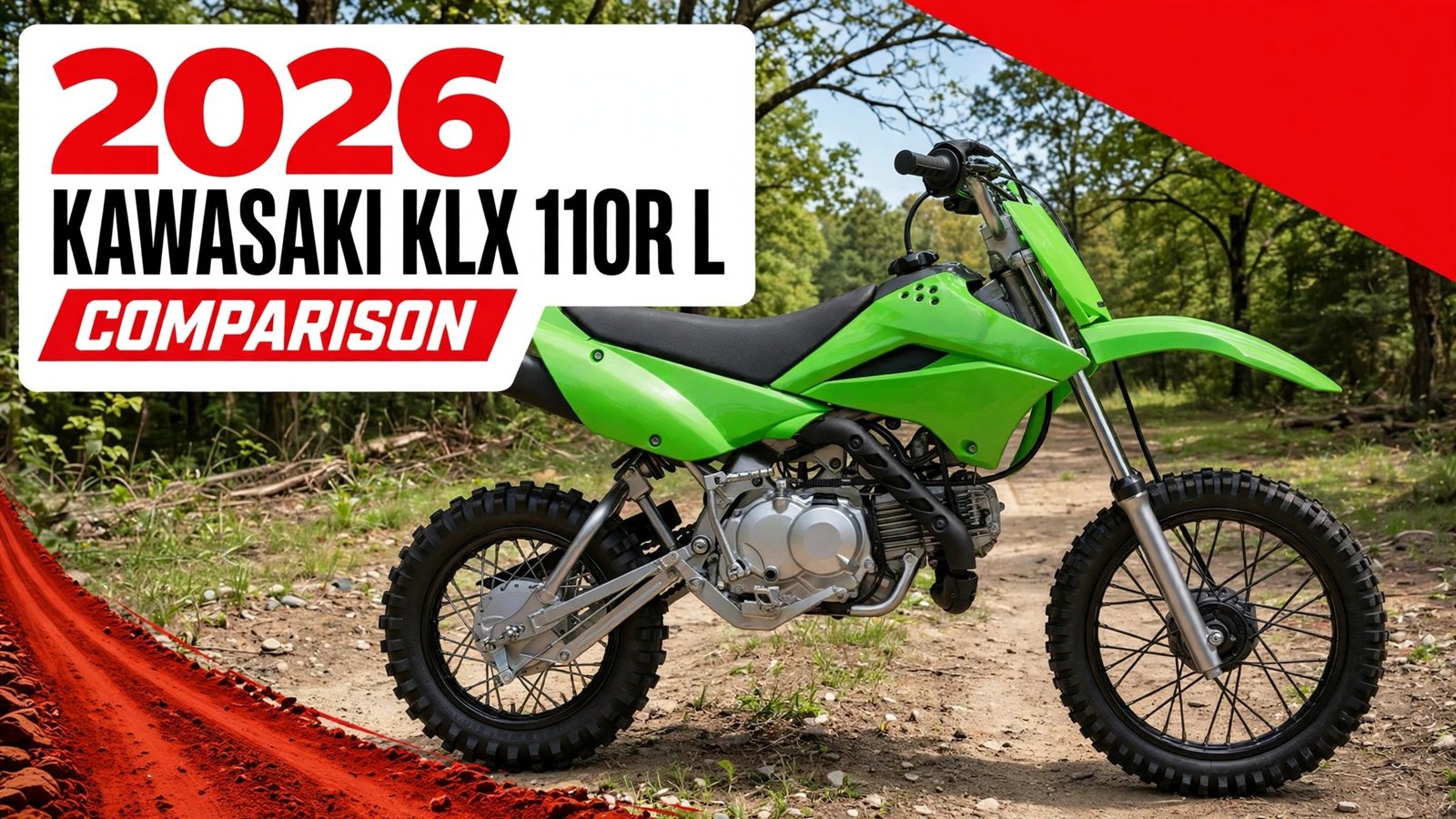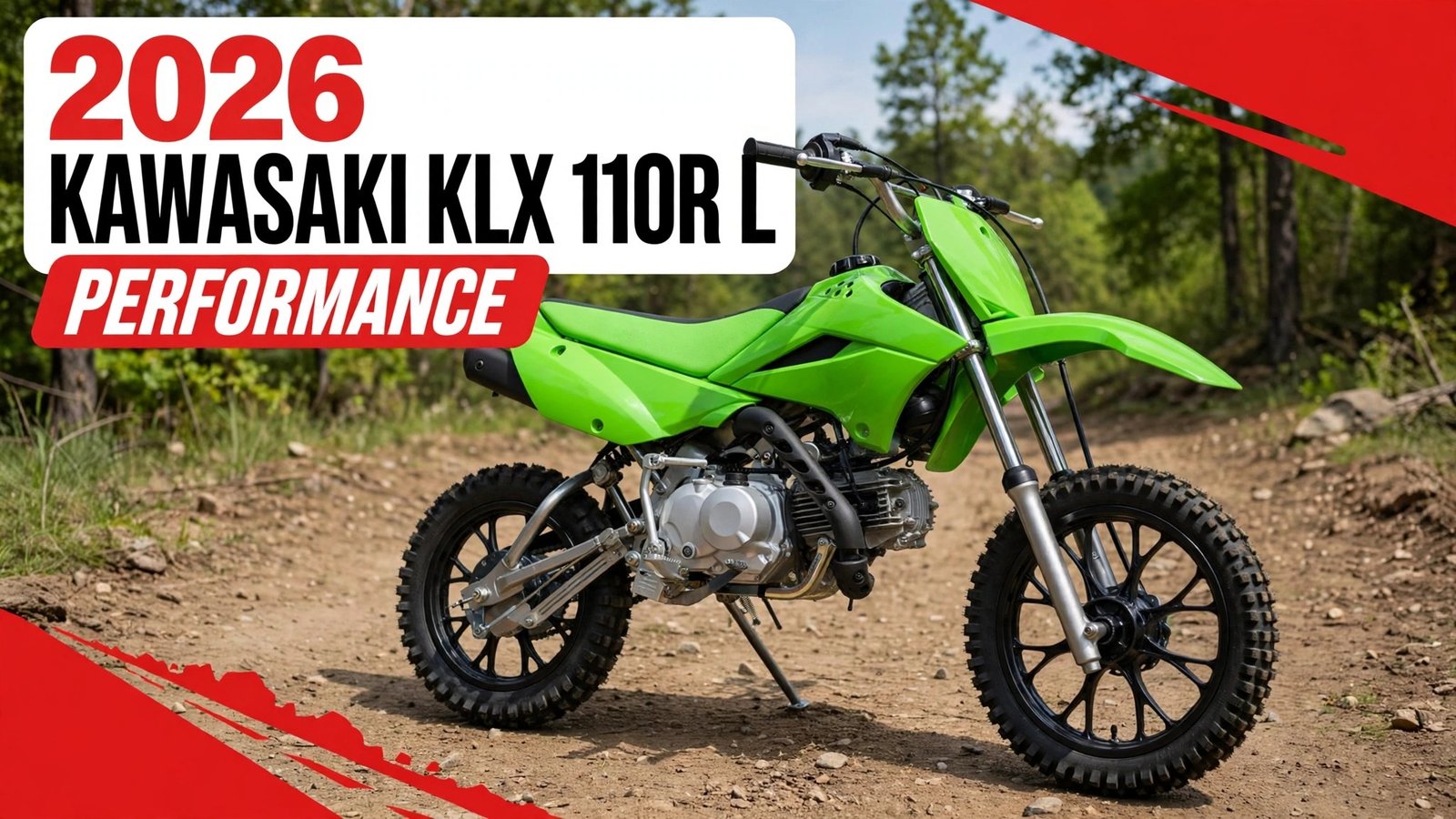
The 2026 Kawasaki KLX 110R L is a simple bike to keep, and this Kawasaki KLX 110R L reliability guide starts with the fact that makes everything else make sense: no odometer. The L is the same 112cc air-cooled single as the standard KLX110R, with the same Keihin PB18 carburettor, drum brakes and 1.0-gallon tank — plus a wet multi-disc manual clutch that the R does not have, and that clutch is the one thing in this Kawasaki KLX 110R L reliability guide that needs its own care. The 2026 L costs $3,199 plus a $315 destination charge — $3,514 delivered — with a 28.7-inch seat and the same 167.5 lb curb weight as the R.
Nothing here is a guess. Every interval below comes from Kawasaki’s own owner’s manual, every recall from the US Consumer Product Safety Commission, and wherever the sources disagree or stay silent, this Kawasaki KLX 110R L reliability guide says so plainly instead of picking a number.
Kawasaki KLX 110R L Reliability Overview
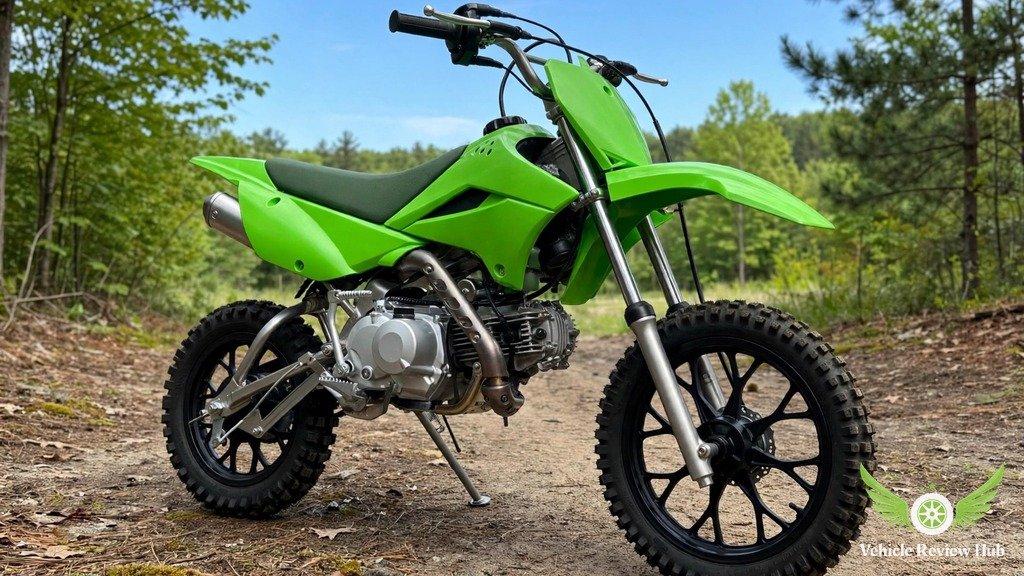
The L has been in production essentially unchanged since 2010, when Kawasaki added the taller L alongside the base KLX110, and this Kawasaki KLX 110R L reliability guide treats that long run as the first piece of evidence. The failures that do exist are the ones this guide covers: a clogged carburettor, a slipping clutch, three old recalls. Kawasaki’s own 2026 spec sheet for the L confirms the shared platform figures this Kawasaki KLX 110R L reliability guide quotes.
Servicing Counted in Hours
With no odometer and no instrument cluster, Kawasaki counts servicing in hours: the first service lands at 5 hours, or one month, and after that the chart runs on 50-hour and 100-hour marks. The engine oil is changed at the first service and then every 50 hours, the foam air filter is cleaned at every interval, and the oil filter at the first service and then every 100 hours — two marks on the chart against the oil’s three, says this Kawasaki KLX 110R L reliability guide.
Hours are self-reported, so condition matters more than the number.
How Mileage, Storage and Previous Care Affect Reliability
Storage is the L’s real reliability story: the Keihin PB18’s jets clog when fuel sits and evaporates, and a clogged pilot jet is the number one owner complaint — hard starting, a rough idle, a bike that only runs with the choke on. Drain the float bowl before storage; a bike that already sat needs a carburettor clean, not a new part.
Previous care shows up in the small things: a lever with no free play left, spokes that ring loose under a tap, a chain that is dry and tight — all visible in five minutes with no tools.
Kawasaki KLX 110R L Common Problems and Wear Items
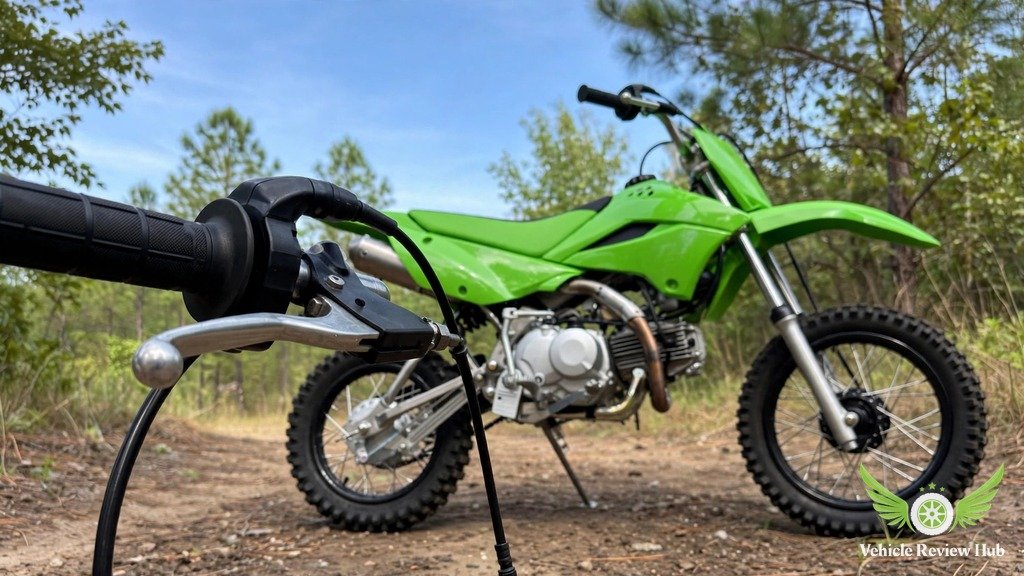
The L’s problems are wear items and owner habits, not design failures, and this Kawasaki KLX 110R L reliability guide lists them in the order a buyer is likely to meet them: the clutch first; the carburettor second; the recalls third, because they are old, free to fix, and easy to miss on a used bike.
Clutch Play Grows With Wear, Says Manual
The owner’s manual says it in its own words: lever free play increases with cable stretch and friction-plate wear, and it needs periodic adjustment. This Kawasaki KLX 110R L reliability guide repeats it because it is the wear pattern owners actually see. A new cable stretches in the first hours, the plates wear a little with every ride, and the free play grows until the clutch does not fully disengage and shifting gets stiff and clunky.
The other clutch habit is oil. The engine, gearbox and clutch share one oil supply, so the oil must be wet-clutch rated — JASO MA, MA1 or MA2. Automotive oils with friction modifiers can make a manual clutch slip, and a slipping clutch on a learner’s bike is the wear signal this Kawasaki KLX 110R L reliability guide tells owners to watch for: revs rise without speed, and the plates glaze a little more every ride.
Three Recalls Name the L Itself
The recall record is where the L’s history is written down officially, and this Kawasaki KLX 110R L reliability guide gives all three recalls that name the L, because a used-bike buyer should check each one by model year. All three are CPSC recalls — the Consumer Product Safety Commission, not NHTSA, because NHTSA does not regulate off-road bikes — and NHTSA’s own database returns zero for the 2026 L, which is weak evidence on its own.
| Recall | Models and years | Defect | Units |
|---|---|---|---|
| 10-750 (Aug 2010) | 2010 KLX110CAF / KLX110DAF | Faulty ignition-switch housing lets water in, starter can activate on its own | About 4,000 |
| 14-714 (Feb 2014) | 2010–2012 KLX110 / KLX110L | Fuel leak, fire hazard | About 10,000 |
| 14-731 (Apr 2014) | 2014 KLX110 / KLX110L | Camshaft sprocket bolts can loosen, engine can lock | About 611 |
Notes: the three recalls in this Kawasaki KLX 110R L reliability table are the CPSC recalls that name the L itself — 10-750 names the KLX110DAF (DAF is the L model code); 14-714 and 14-731 name the KLX110L directly. All three repairs were free. A fourth, 05-524, covers only the 2005 KLX110-A4 and does not touch the L.
The 10-750 defect is worth a sentence: a faulty ignition-switch housing could let water in and fire the electric starter by itself, fixed free by replacing the left switch housing. The 14-714 fuel leak is the biggest by units, and the 14-731 camshaft bolts are the most serious by consequence — a loose bolt can lock the engine while riding. A buyer of a 2010, 2011, 2012 or 2014 L should ask whether the free repair was done before money changes hands.
Kawasaki KLX 110R L Maintenance Schedule and Servicing
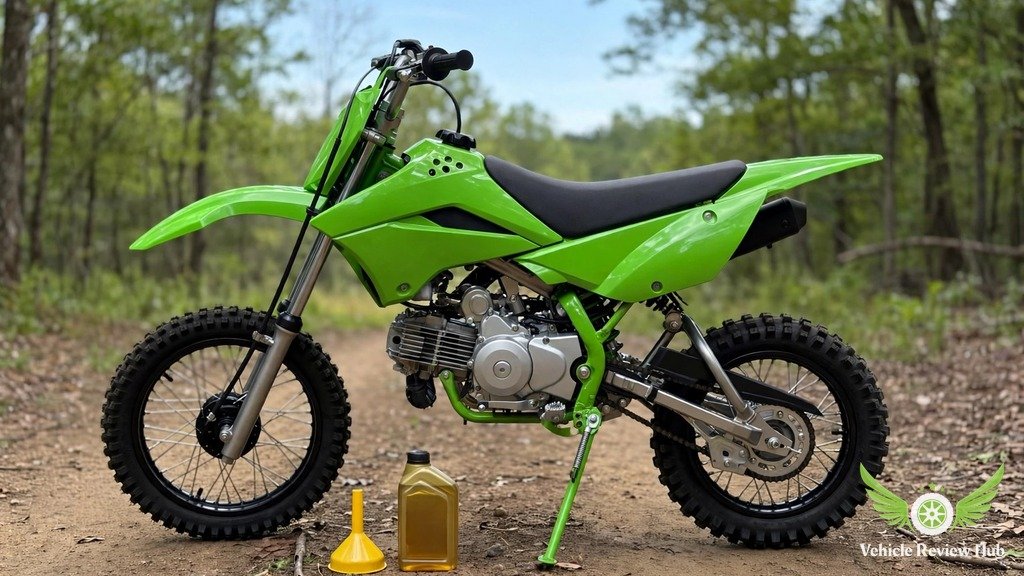
The schedule is short, and this Kawasaki KLX 110R L reliability guide prints it in full — three marks: the initial 5-hour service, then every 50 hours, then every 100 hours.
The video below shows the oil change on an older KLX110 — the same 112cc engine and the same procedure as the L. It is not an L video, and it does not show the clutch-lever check: the L adds a free-play check of 2 to 3 mm at the lever.
First Oil at 5 Hours, Then Every 50
The first oil change lands at 5 hours, or one month; after that, every 50 hours, or six months. That is the single most important line in this Kawasaki KLX 110R L reliability guide — the first change clears the break-in metal out of a new engine. The oil is SAE 10W-40, API SG, SH, SJ, SL or SM, rated JASO MA, MA1 or MA2 — the JASO rating is the wet-clutch part. Capacity is 0.9 litres without a filter change, 1.0 litres with one, and 1.1 litres dry.
The filter interval deserves a careful read, and this Kawasaki KLX 110R L reliability guide read the chart directly: the factory chart gives the oil filter two marks against the oil’s three: the filter is replaced at the initial 5-hour service and then every 100 hours, skipping the 50-hour mark. The 2017 L owner’s-manual summary agrees: initial plus every 100 hours.
| Item | Interval | Specification |
|---|---|---|
| Engine oil — change | First 5 hours, then every 50 hours | SAE 10W-40, API SG/SH/SJ/SL/SM, JASO MA/MA1/MA2; 0.9 L w/o filter, 1.0 L w/ filter, 1.1 L dry |
| Oil filter — replace | First service, then every 100 hours | Kawasaki oil filter element; skidplate off to reach it |
| Air cleaner (foam) — clean | Every interval | Wash in high flash-point solvent or hot soapy water, squeeze dry, do not twist |
| Spark plug — inspect / replace | Per chart | NGK CR6HSA, gap 0.6–0.7 mm |
| Valve clearance — inspect | Per chart — hour interval not pinned | 0.04–0.08 mm inlet and exhaust, screw-and-locknut, not shims |
| Idle speed — check | Every ride | 1,250–1,350 rpm |
| Fuel hose — replace | Every 5 years | Full hose replacement, not inspection only |
Notes: the intervals in this Kawasaki KLX 110R L reliability table come from the KLX110 owner’s-manual Periodic Maintenance Chart, shared by the R (KLX110C) and the L (KLX110D). The valve-clearance hour interval is deliberately left unpinned: the service-manual chart marks it once and the 2018 owner’s-manual chart twice, so this guide prints no interval rather than guessing one.
Lever Free Play: 2 to 3 Millimetres
The clutch lever needs 2 to 3 mm of free play — 0.08 to 0.12 inches — and the owner’s manual is the source. Free play is the small amount the lever moves before it starts to pull the cable. Measure it at the lever tip with a ruler, with the bars straight; if it is out of range, adjust at the lever first, and at the engine end only if the lever adjuster runs out.
Free play grows with wear, and this Kawasaki KLX 110R L reliability guide says to check it often on a learner’s bike. The manual’s warning is that play increases with cable stretch and friction-plate wear: no free play at all is a clutch already slipping, and a fistful of slack is one not fully disengaging.
Kawasaki KLX 110R L Tires, Brakes and Suspension Maintenance
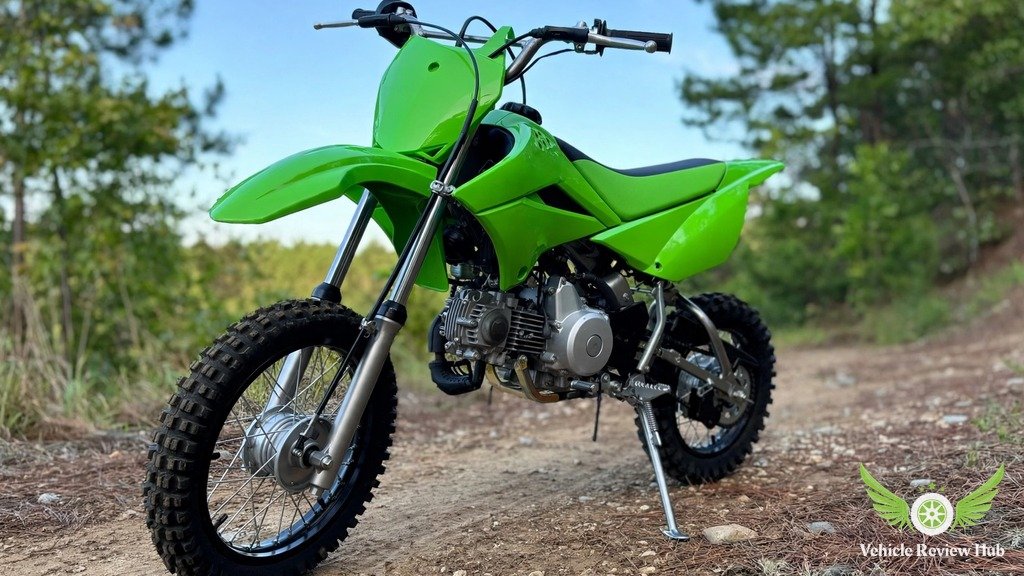
The running gear is where the L differs from the R in exactly one maintenance figure — the fork oil — and this Kawasaki KLX 110R L reliability guide puts that figure first.
Fork Oil Differs: 182 mL per Leg
The L’s fork takes 182 mL of Kawasaki Fork Oil SS8 per leg; the R takes 165 mL. That 17 mL difference is the one spec in the chart that actually differs between the two trims. The service manual’s dry-fill figure for the R fork is 163 mL — a different number from a different manual — so the two must not be mixed, says this Kawasaki KLX 110R L reliability guide.
| Item | KLX110R L (KLX110D) | KLX110R (KLX110C) |
|---|---|---|
| Front fork oil per leg | 182 mL, Kawasaki Fork Oil SS8 | 165 mL, Kawasaki Fork Oil SS8 |
| Front fork travel | 5.5 in, 30 mm fork | 4.3 in, 30 mm fork |
| Rear travel | 5.2 in | 4.3 in |
| Front tyre | 2.50 × 14 | 2.50 × 14 |
| Rear tyre | 3.00 × 12 | 3.00 × 12 |
| Front brake | 90 mm drum, cable | 90 mm drum, cable |
| Rear brake | 110 mm drum, rod | 110 mm drum, rod |
Notes: the fork-oil figures in this Kawasaki KLX 110R L reliability table are the owner’s-manual service fills — 2013 and 2015 KLX110L owner’s manuals both print KLX110C 165 mL and KLX110D 182 mL.
Tire, Brake and Suspension Checks That Matter
The every-ride list is short: check spoke tightness and rim runout before every ride — a loose spoke left alone takes the wheel out of true. Check the drive chain, adjust it and lubricate it; and on the chain, this Kawasaki KLX 110R L reliability guide prints no slack number — the service manual says 0 to 5 mm and the owner’s-manual FAQ says 20 to 30 mm.
The 90 mm front drum is weak by modern standards, and it is the first thing a race-mini build replaces — a KX65 fork swap brings a front disc. For trail riding, the drums are enough — Ultimate Motorcycling’s 2021 test of the R found they work as expected, even on steep downhills. The tyres are the first upgrade most owners make — the stock IRC GS-45s — though this Kawasaki KLX 110R L reliability guide prints no price for them.
Kawasaki KLX 110R L Maintenance and Ownership Costs
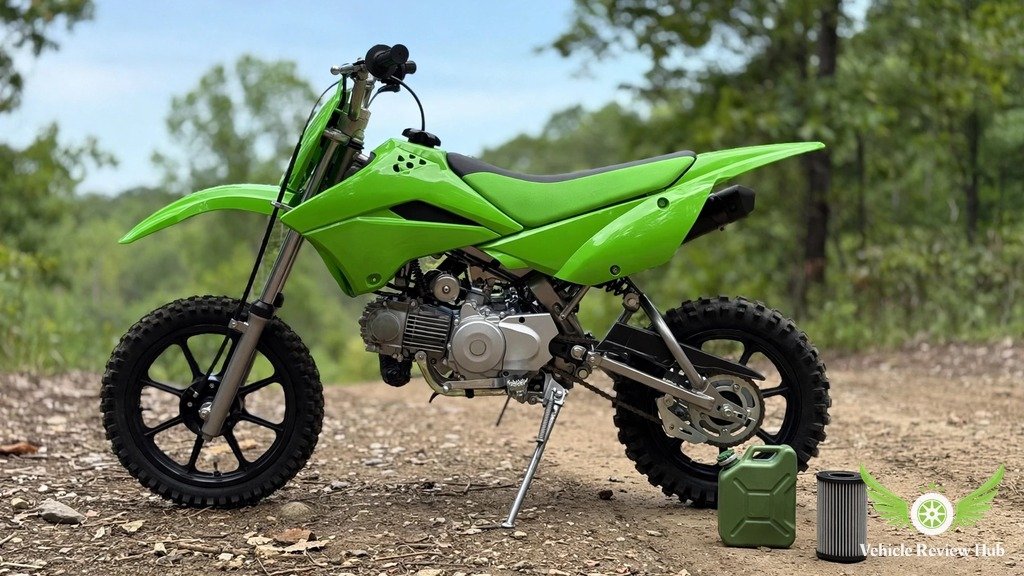
Running an L costs very little, and this Kawasaki KLX 110R L reliability guide is careful about why: no verified dollar figure exists for the L’s running costs, and no verified resale percentage exists either, so the table below prints intervals and part numbers only.
Fuel, Routine Servicing, Tires and Replacement Parts
The routine is one oil change every 50 hours, one filter every 100, a foam filter clean at every interval, and a plug when the chart says so. The fuel is regular pump petrol, the tank holds 1.0 gallon, and there is no MPG figure to budget against — the bike has no odometer. Fuel cost, says this Kawasaki KLX 110R L reliability guide, is whatever a gallon costs you per ride.
The parts that wear are the cheap ones: the spark plug is an NGK CR6HSA with a 0.6 to 0.7 mm gap, the tyres are the stock IRC GS-45s, and the brake linings are the drums’ only consumable. The oil strainer behind the clutch-side cover catches what the paper element misses.
| Routine item | Interval | Part / specification |
|---|---|---|
| Engine oil | First 5 hours, then every 50 hours | SAE 10W-40, JASO MA/MA1/MA2 |
| Oil filter element | First service, then every 100 hours | Kawasaki oil filter element + new O-ring |
| Air cleaner (foam) | Clean every interval | Foam element, high flash-point solvent or hot soapy water |
| Spark plug | Per chart | NGK CR6HSA, gap 0.6–0.7 mm |
| Front fork oil | First service, then every 100 hours | Kawasaki Fork Oil SS8, 182 mL per leg |
| Fuel hose | Every 5 years | Full hose replacement |
| Brake linings | On wear-indicator check | 90 mm front drum, 110 mm rear drum linings |
Notes: the intervals and part numbers in this Kawasaki KLX 110R L reliability table are from the owner’s-manual chart and the bike’s specification sheet. No dollar figures are printed here, because no verified running-cost figure exists for the L.
Fuel Hose Replaced Every 5 Years
The fuel hose is the one item on the chart with a calendar interval instead of an hours interval. Every five years the hose is replaced in full — not inspected, replaced — because rubber hardens and cracks with age. A five-year hose is cheap insurance — write the date on the hose with a marker when you fit it, says this Kawasaki KLX 110R L reliability guide.
How to Keep a Kawasaki KLX 110R L Reliable
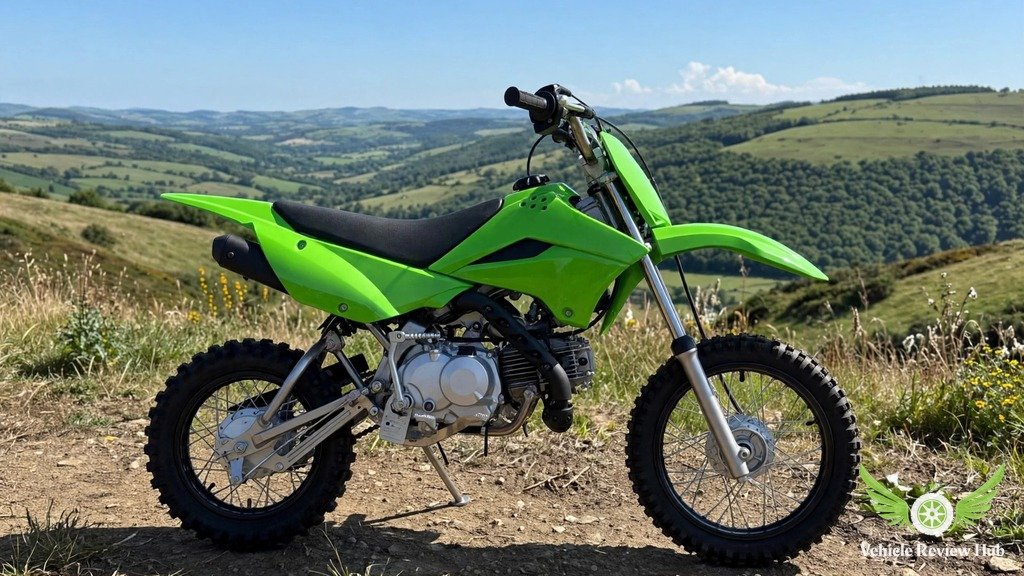
Keeping an L reliable is mostly a matter of doing the small things on time, and this Kawasaki KLX 110R L reliability guide closes with the routine that does it. For the bike itself, the L’s review covers price, specs and the verdict, and this Kawasaki KLX 110R L reliability guide covers keeping it.
Preventive Maintenance, Records and Regular Inspections
Write the hours down: with no odometer, a notebook is the only record of when the oil was last changed. Keep the receipts for the filter, the plug and the fork oil, and this Kawasaki KLX 110R L reliability guide says a buyer who can see the record trusts the bike.
The regular inspection is the every-ride list from the manual: brakes, chain, idle speed, spokes and rim runout. The R’s reliability guide covers the same hour-based servicing for the automatic twin.
| Used-bike check | What to do | Pass looks like |
|---|---|---|
| Stone-cold start | Start a cold engine, no warm-up from the seller | Starts on the button, no smoke, stable idle at 1,250–1,350 rpm |
| Recalls by model year | Check 10-750, 14-714 and 14-731 for the bike’s year | Free repair done, or year not covered |
| Clutch free play | Measure lever free play at the tip | 2–3 mm, smooth engagement, no slip under load |
| Carburettor and storage | Ask whether the float bowl was drained before storage | Clean idle, no choke needed once warm |
| Wheels and chain | Tap spokes, check rim runout, inspect chain | Spokes ring tight, wheel true, chain lubricated |
Notes: the checks in this Kawasaki KLX 110R L reliability table catch the L’s real problems — a clogged carburettor, a worn clutch, a missed recall — before money changes hands.
Check Clutch Slip on Learner Bikes
The last check is the L-specific one. On any used L that was a first bike, test for slip — a learner slips the clutch more than an experienced rider. Ride it, open the throttle in a high gear at low speed: if the revs rise without the speed following, the clutch is slipping. Check the free play first — a lever with no free play will slip even on good plates. Ultimate Motorcycling’s 2012 tester found the clutch engagement over a fairly narrow range and far out in the lever travel — an adjustment story, not a defect, says this Kawasaki KLX 110R L reliability guide.
The L is a simple bike with a short chart, three old recalls, one clutch and one carburettor — and this Kawasaki KLX 110R L reliability guide ends where it started: oil at 5 hours and then every 50, filter at the first service and then every 100, 2 to 3 mm in the lever.
Kawasaki KLX 110R L Reliability FAQ
The questions below answer what buyers ask most, and this Kawasaki KLX 110R L reliability guide keeps every answer to what the manual says, what the recalls say, and what is not tested at all.
How reliable is the Kawasaki KLX 110R L?
Very, for a bike this simple — and this Kawasaki KLX 110R L reliability guide says so on the evidence: a 112cc air-cooled single in production essentially unchanged since 2010, with no documented pattern of stock-engine failures.
How often should I change the oil on a KLX110R L?
At the first service at 5 hours, then every 50 hours, says this Kawasaki KLX 110R L reliability guide. Use SAE 10W-40, JASO MA, MA1 or MA2.
How often should I change the oil filter?
At the first service and then every 100 hours. The owner’s-manual chart gives the filter two marks against the oil’s three, and this Kawasaki KLX 110R L reliability guide confirmed that reading from the chart itself.
What is the valve clearance interval on the KLX110R L?
This Kawasaki KLX 110R L reliability guide prints no interval, because none can be pinned: the service-manual chart marks the valve check once and the 2018 owner’s-manual chart twice. Clearances are 0.04 to 0.08 mm, inlet and exhaust, screw and locknut, not shims.
How do I adjust the clutch on a KLX110R L?
Set 2 to 3 mm of free play at the lever, adjusting at the lever first and at the engine end only if the lever adjuster runs out. This Kawasaki KLX 110R L reliability guide repeats the manual’s warning: free play grows with cable stretch and friction-plate wear, so check it regularly.
Does the KLX110R L have any recalls?
Three CPSC recalls name the L itself: 10-750 (2010, ignition switch, about 4,000 units), 14-714 (2010–2012, fuel leak, about 10,000 units) and 14-731 (2014, camshaft sprocket bolts, about 611 units), and all three repairs were free. This Kawasaki KLX 110R L reliability guide notes NHTSA’s database returns zero for the 2026 L, but NHTSA does not regulate off-road bikes, so the CPSC record is the real one.
Why does my KLX110R L not start after sitting?
Almost always the carburettor: fuel left in the float bowl evaporates and clogs the pilot jet — the number one owner issue, says this Kawasaki KLX 110R L reliability guide. Drain the bowl before storage; a bike that already sat needs a carburettor clean.
What oil should I use in a KLX110R L?
SAE 10W-40, API SG, SH, SJ, SL or SM, rated JASO MA, MA1 or MA2. The JASO rating is the wet-clutch part — this Kawasaki KLX 110R L reliability guide warns against automotive oils with friction modifiers.
How much fork oil does the KLX110R L take?
182 mL per leg of Kawasaki Fork Oil SS8, from the owner’s manual. The standard R takes 165 mL; the service manual’s dry-fill figure is a different number — 163 mL — and this Kawasaki KLX 110R L reliability guide says the two must not be mixed.
How do I check for clutch slip on a used KLX110R L?
Open the throttle in a high gear at low speed and watch the revs: if they rise without the speed following, the clutch is slipping. Check the free play first, says this Kawasaki KLX 110R L reliability guide — a lever with no free play will slip even on good plates.
What should I check before buying a used KLX110R L?
A stone-cold start, the three recalls by model year, the clutch free play and slip, whether the float bowl was drained before storage, and the spokes and chain. The full check table is in the keeping-reliable section above, says this Kawasaki KLX 110R L reliability guide.
How long will a KLX110R L last?
There is no published lifespan figure, and this Kawasaki KLX 110R L reliability guide does not invent one. What the record shows is a 112cc single in production since 2010 with a short chart and no stock-engine failure pattern.