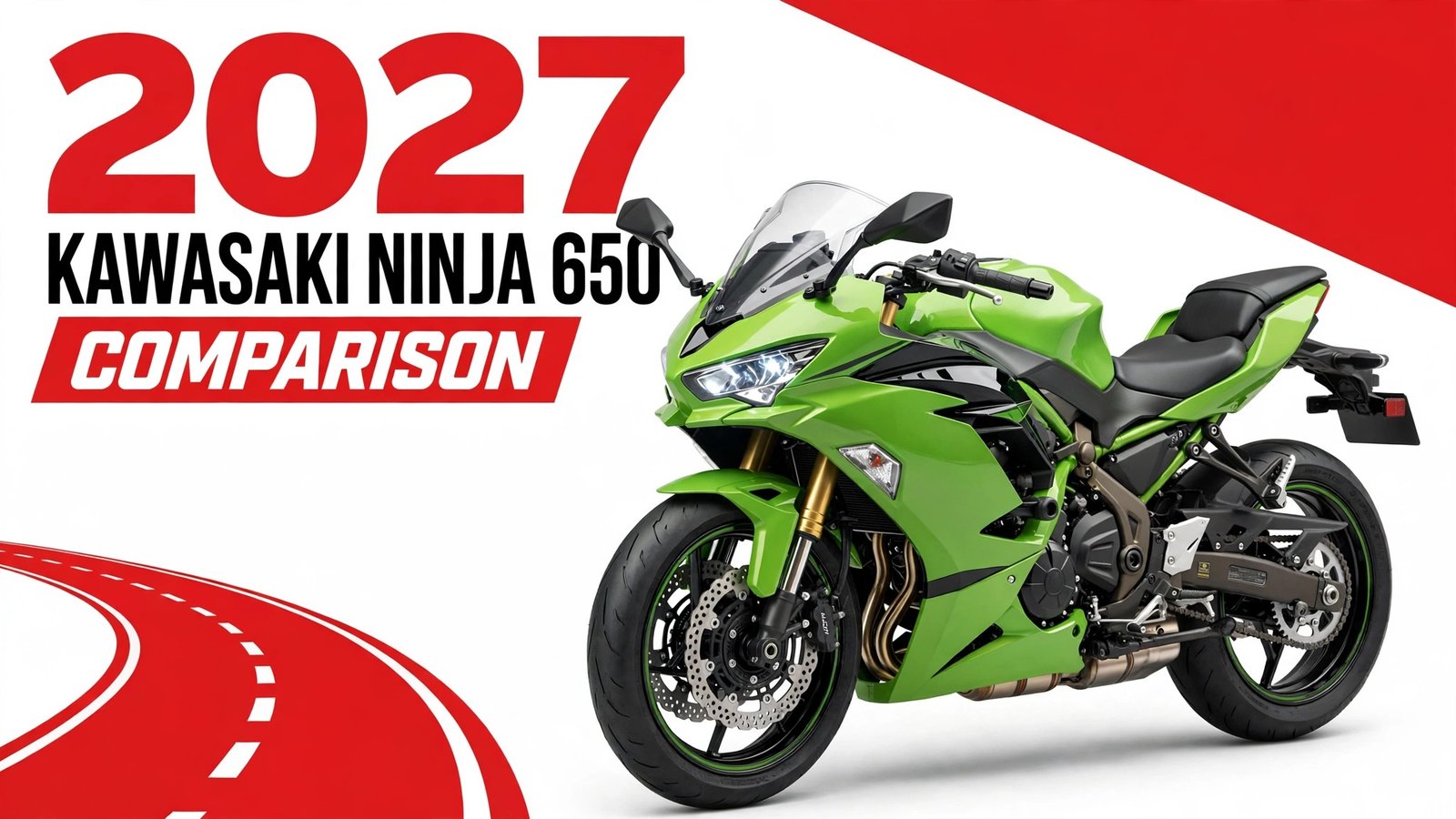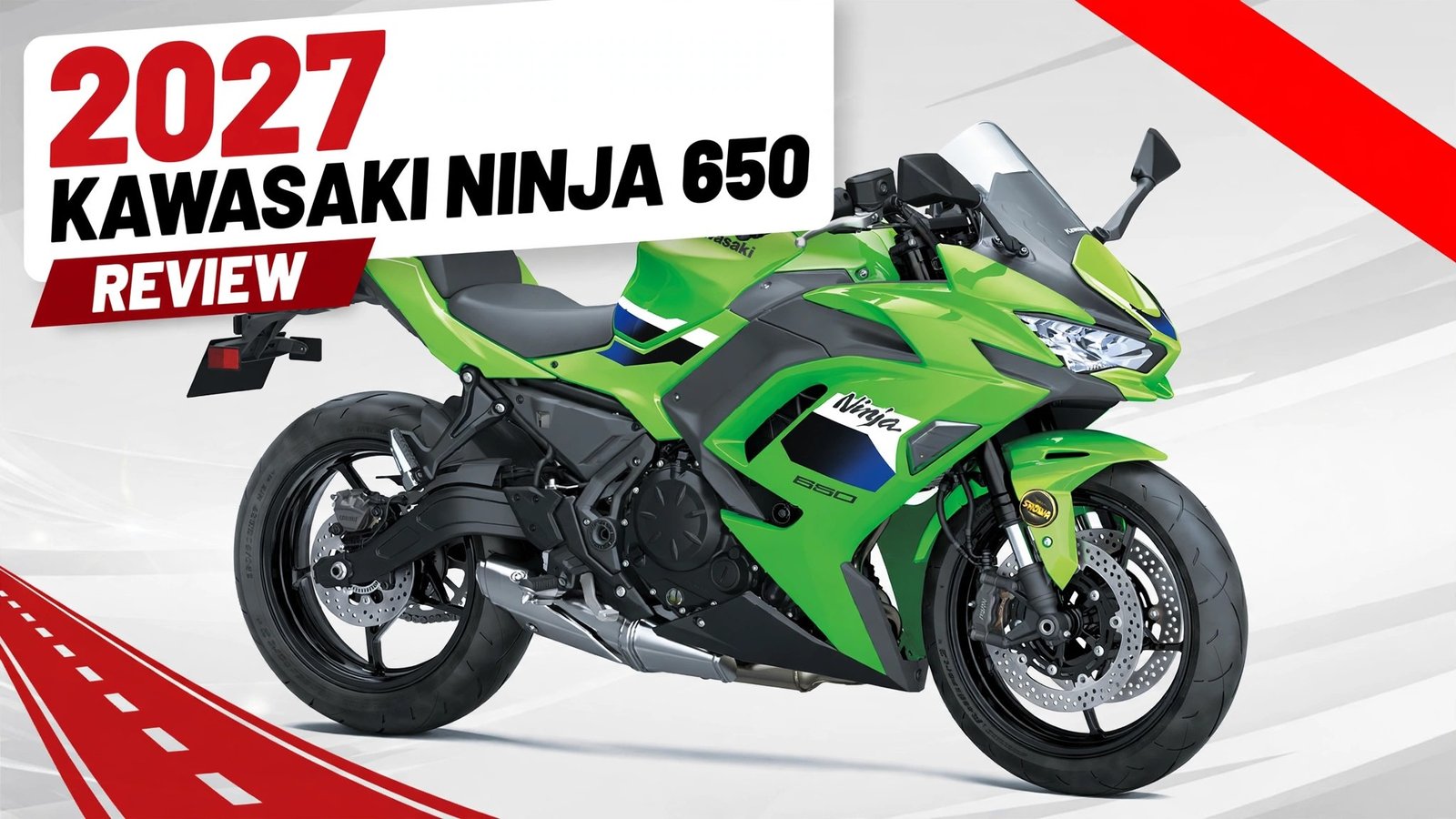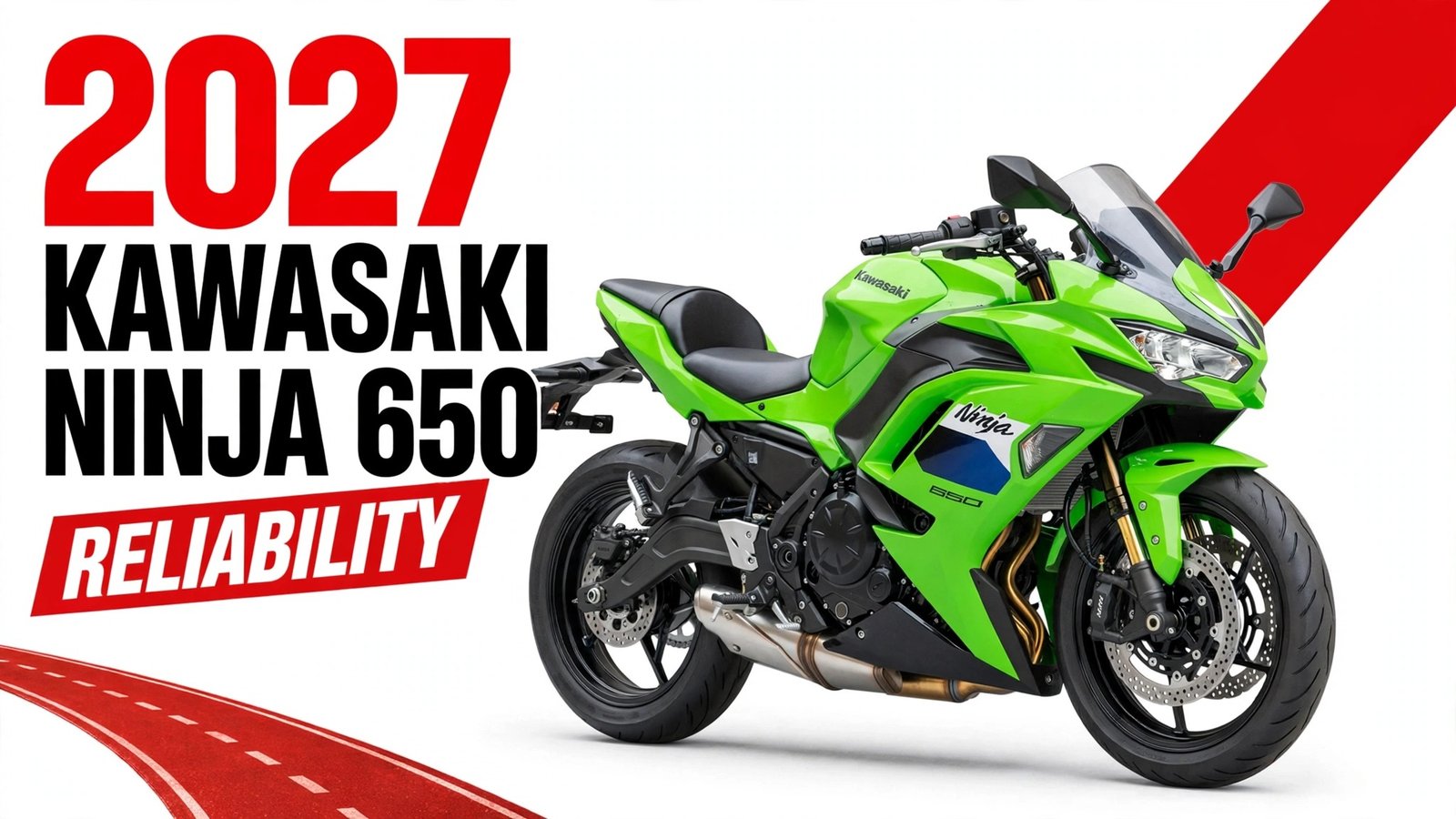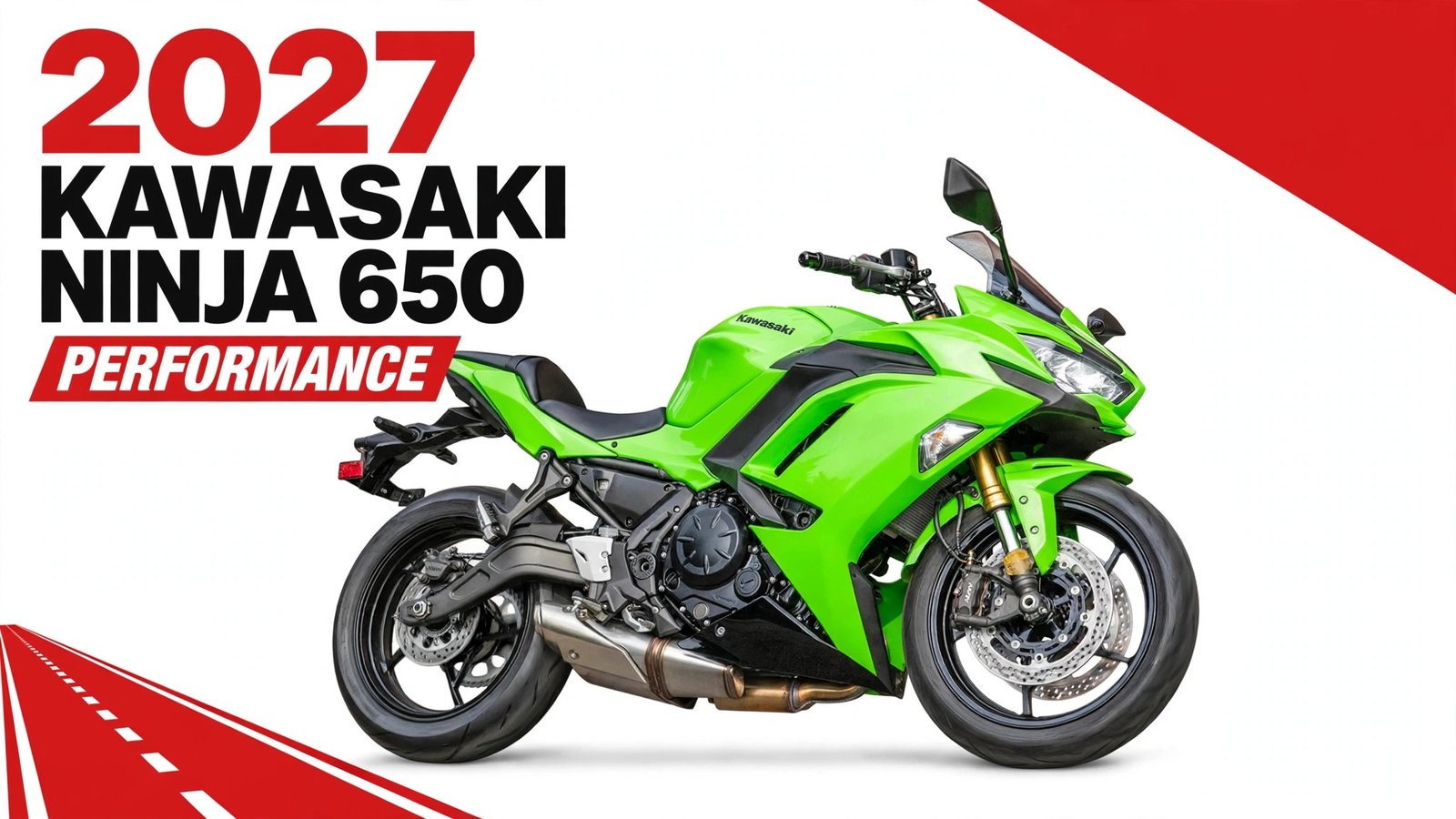
The Kawasaki Ninja 650 makes 67 hp on paper and about 60 hp at the rear wheel, it has no official top speed and no instrumented 0 to 60 time, and the only long-term fuel record comes from a British magazine that ran one for 9,500 miles — the starting point for this Kawasaki Ninja 650 performance guide. This Kawasaki Ninja 650 performance guide puts the honest numbers first: the claimed figures, the measured figures, and the viral figures that are not measurements at all. In short, the 650 is the least powerful bike in its four-bike set and the easiest to ride fast in the real world — and this Kawasaki Ninja 650 performance guide explains why those two facts are not a contradiction.
Kawasaki Ninja 650 Engine Performance and Power Delivery
The engine is the part of the 2027 Ninja 650 that did not change, and that is the starting point for any honest Kawasaki Ninja 650 performance discussion. Kawasaki kept the same 649cc parallel twin that has powered the bike since the 2017 retune — same claimed output, same fuel injection, same six-speed gearbox. The 2027 front end is new, but the power delivery is the same engine riders have known for nine years.
About 60 Rear-Wheel HP, Measured
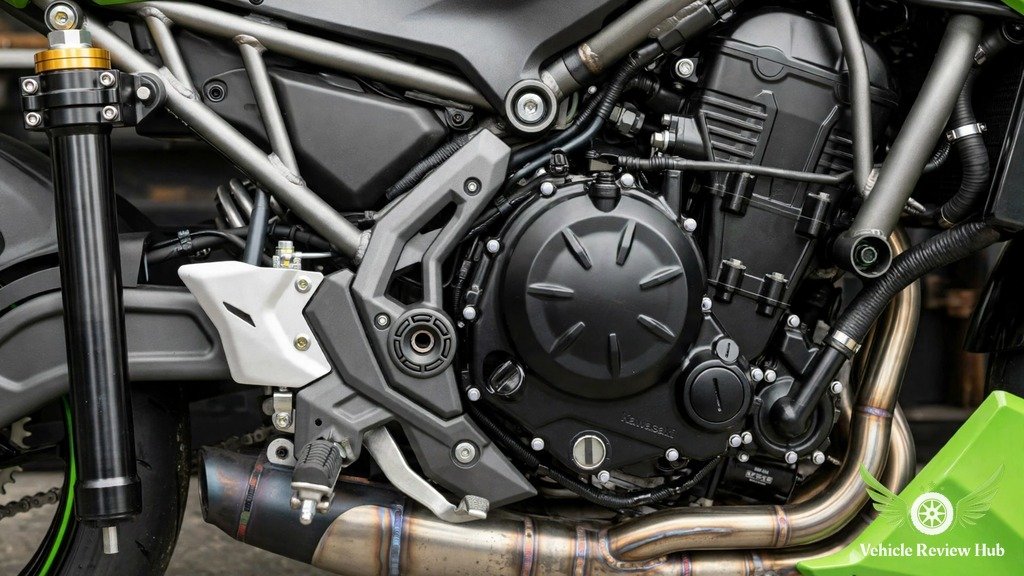
Kawasaki claims 67.0 hp at 8,000 rpm and 48.5 lb-ft at 6,700 rpm for the 649cc twin, measured to the ISO 4106 standard — identical on the 2027, 2026, 2025 and 2024 spec sheets. That 67 hp is a crank claim, not a rear-wheel figure, and the two should never be confused — a distinction this Kawasaki Ninja 650 performance guide keeps throughout. The measured rear-wheel figures, as this Kawasaki Ninja 650 performance guide records them, are about 60 to 61 hp: MCN’s long-term test put a stock 650 at 60.38 bhp, and Rider Magazine’s dyno of the same engine in the Z650 recorded 60.6 hp at 8,100 rpm with 43.9 lb-ft at 6,700 rpm. The two figures agree, and that agreement is the story — the 650 puts roughly 60 to 61 hp to the rear wheel, about 6 to 7 hp below the crank claim.
A higher number circulates online: an aggregator prints 62 hp at the wheels for the 650. That 62 hp figure is the aggregator’s number, not a measurement from a named test outlet, and it should never be printed as a measured figure. The measured record is MCN’s 60.38 bhp and Rider’s 60.6 hp, and this Kawasaki Ninja 650 performance guide uses those two. No US dyno of the current 2023-and-later bike exists — no Cycle World, Rider or RevZilla run of a 2023 to 2027 Ninja 650 was found — so the MCN and Rider figures are the best measured evidence this Kawasaki Ninja 650 performance guide could find.
The video below is a dyno run on a Ninja 650 after a Two Brothers exhaust install — a modified bike, not a stock-bike test. The dyno figure it shows is for that modified bike, and this Kawasaki Ninja 650 performance guide does not print it as the 650’s stock figure. The bike’s year and trim are not confirmed on screen, so treat the run as a look at the dyno process, not as a stock number.
Dyno Numbers Wander by Era
Dyno numbers wander by era, and the 650’s record shows why. MCN measured 60.38 bhp stock and 63.48 bhp with an Arrow exhaust on the same bike, a gain of about 3 bhp from the pipe alone, while Rider’s Z650 dyno read 60.6 hp on a different dyno in a different year. The pre-2017 bikes claimed about 71 hp, and the 2017 retune traded about five peak horsepower for stronger midrange torque, so a 2014 dyno figure and a 2020 dyno figure are not the same thing even when the bike wears the same name. Motorcycle.com’s 2027 ABS detail page lists the spec sheet figures, with the claimed 67.0 hp the same on every sheet from 2024 to 2027. The honest reading is about 60 to 61 hp to the wheel, the exhaust changing that by a few horsepower, and no single number capturing every bike on every dyno.
| Source | Rear-wheel power | Rear-wheel torque | What was tested |
|---|---|---|---|
| MCN long-term test | 60.38 bhp stock; 63.48 bhp with Arrow exhaust | Not published | 2017-on Ninja 650, stock then with an Arrow system |
| Rider Magazine (Z650, same engine) | 60.6 hp at 8,100 rpm | 43.9 lb-ft at 6,700 rpm | 2017 Z650 on Jett Tuning’s dyno — the same 649cc engine |
| Kawasaki claim (crank, ISO 4106) | 67.0 hp at 8,000 rpm | 48.5 lb-ft at 6,700 rpm | Claimed output, identical 2024 to 2027 — not a dyno figure |
Note: the measured figures in this Kawasaki Ninja 650 performance dyno table are the only named-outlet rear-wheel numbers found for this engine. The aggregator figure of 62 hp at the wheels is not in the table because it is not a measurement, and no US dyno of the current 2023-and-later bike exists.
Kawasaki Ninja 650 Top Speed and Acceleration
Top speed and acceleration are the two numbers every buyer asks for first, and for the Ninja 650 both answers are honest gaps, not headline figures. Kawasaki publishes no top speed, and no instrumented top-speed or 0 to 60 test of the current bike was found. What exists instead is a small set of named claims and rider reports, and this section of the Kawasaki Ninja 650 performance guide separates them so the reader can see which number comes from where.
About 125 MPH, Never Official
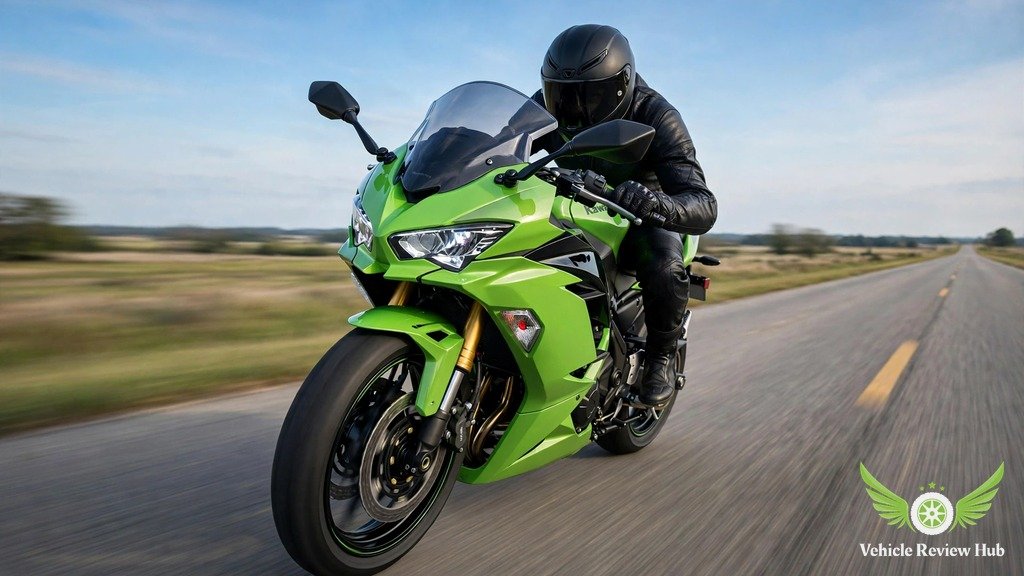
There is no official top speed for the Ninja 650, and no instrumented top-speed test of the bike was found. The honest number is the rider-reported one: just over 200 km/h, about 124 to 125 mph. TopSpeed prints 131 mph for the bike, unattributed to any test — and this Kawasaki Ninja 650 performance guide does not upgrade it into a measurement. Aggregators print 130 to 131 mph as a GPS figure, and that number circulates widely online, but it is an aggregator number, not a measured test, and this Kawasaki Ninja 650 performance guide does not print it as a measured top speed. The heading says “never official” because Kawasaki publishes no top-speed figure at all, and the body of this Kawasaki Ninja 650 performance guide says “about 125 mph” because that is what riders report.
0 to 60 in About Four Seconds
No instrumented 0 to 60 test of the current Ninja 650 was found. The only named-outlet acceleration claim is Cycle World’s 3.5 seconds to 60 mph — for the 2014 bike, not the current one. Real-world owners report around four seconds, and that is the figure this Kawasaki Ninja 650 performance guide prints as the honest expectation. A figure of 3.53 seconds circulates online, and it comes from the same aggregator behind the 62 hp number — it is not a tester’s measurement — no named outlet has published one. What it gives back is torque low down — 48.5 lb-ft at 6,700 rpm — which is why the bike feels fast in the real world even when the stopwatch says otherwise. SlashGear’s top-speed article carries the rider reports of about 124 to 125 mph and the owner reports of around four seconds.
| Claim | Figure | Status |
|---|---|---|
| Top speed, rider-reported | About 124 to 125 mph | Riders report just over 200 km/h (SlashGear) — the honest number |
| Top speed, TopSpeed | 131 mph | Printed without attribution to a test — not a measurement |
| Top speed, aggregators | 130 to 131 mph GPS | Aggregator number, not an instrumented test |
| 0 to 60, Cycle World | 3.5 seconds | Claim for the 2014 bike only, not the current bike |
| 0 to 60, owners | Around 4 seconds | Real-world owner reports — the honest expectation |
| 0 to 60, aggregators | 3.53 seconds | Aggregator number, not a tester’s measurement |
Note: every figure in this Kawasaki Ninja 650 performance speed table carries its source and its status, because the viral numbers and the measured numbers are not the same thing. No official top speed, no instrumented 0 to 60 test of the current bike, and no named-outlet quarter-mile test exists.
Kawasaki Ninja 650 Mileage and Fuel Economy
Fuel economy is the one area where the Ninja 650 has a genuinely measured record, and it comes from a single long-term test rather than a laboratory figure. Kawasaki publishes no MPG figure for the 650, and no WMTC or lab fuel figure for the bike was found. What exists is MCN’s 9,500-mile fuel diary.
MCN Measured 49.44 MPG Over 9,500 Miles
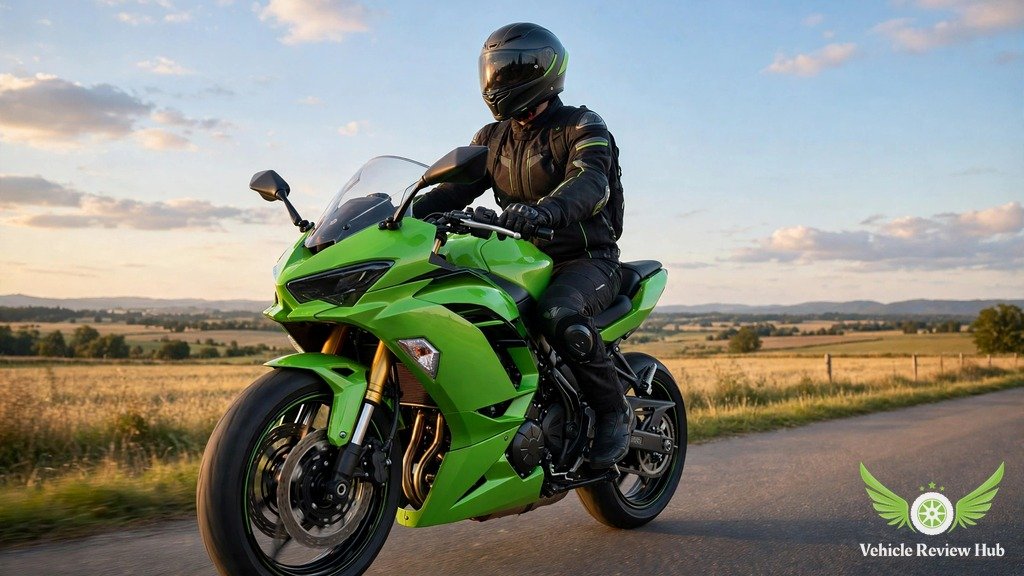
MCN ran a 2017-on Ninja 650 as a long-term test bike for 9,500 miles, keeping a meticulous fuel diary across commuting, three trackdays and motorway miles: 49.44 mpg on average. Gentle cruising returned 60 mpg or slightly more, the highest single figure was 69.54 mpg and the worst — a trackday — was 39.16 mpg. That spread is the honest picture in this Kawasaki Ninja 650 performance guide: about 70 mpg ridden gently, under 40 mpg ridden hard, and the 49.44 mpg average between the two. The 4.0-gallon tank gives a range of about 198 miles on the MCN average — a calculation, labelled as such, not a tested range. This Kawasaki Ninja 650 performance guide uses the MCN figures as the measured record because they are the only long-term fuel-consumption record found for the 650.
Class Norm Is 44 to 50 MPG
The class norm of 44 to 50 mpg is consistent with MCN’s 49.44 mpg average, and it is the range this Kawasaki Ninja 650 performance guide tells a buyer to plan around. A 61 mpg owner average is claimed online, but it could not be verified from a live source, so this Kawasaki Ninja 650 performance guide does not print 61 mpg as a fact. The Ninja 500 has a WMTC laboratory figure of 62.0 mpg, but that is the 500’s figure, not the 650’s, and it is not borrowed here. The honest statement in this Kawasaki Ninja 650 performance guide is that no lab figure exists for the 650 and the MCN figures are the measured record. Riders who want the full service picture behind those miles should read our Kawasaki Ninja 650 reliability guide, which carries the service intervals the bike needs to keep returning those figures.
| MCN long-term test figure | Miles per gallon | Conditions |
|---|---|---|
| Average over 9,500 miles | 49.44 mpg | Commuting, three trackdays and motorway miles, fuel diary kept throughout |
| Gentle cruising | 60 mpg or slightly more | Easy motorway and A-road cruising |
| Highest single figure | 69.54 mpg | Best single tank of the test |
| Worst single figure | 39.16 mpg | Trackday use |
| Range on the MCN average (calculated) | About 198 miles | 49.44 mpg × 4.0-gallon tank — a calculation, not a tested range |
Note: all figures in this Kawasaki Ninja 650 performance mileage table come from MCN’s long-term test, the only measured fuel record found for the 650. No Kawasaki MPG figure exists, no WMTC or lab figure exists for the 650, and the 61 mpg owner average claimed online is not printed here because it could not be verified.
Kawasaki Ninja 650 Real-World Riding Experience
The numbers above say the 650 is the least powerful bike in its set, and the real-world riding record says it is also the easiest of the four to ride fast on a real road — not a contradiction, but the whole point of this Kawasaki Ninja 650 performance guide. The twin makes its 48.5 lb-ft at 6,700 rpm, so the power is there at ordinary road speeds, and the upright bars and low 30.9-inch seat mean the rider arrives fresh.
SV650 Won the 2006 Shootout
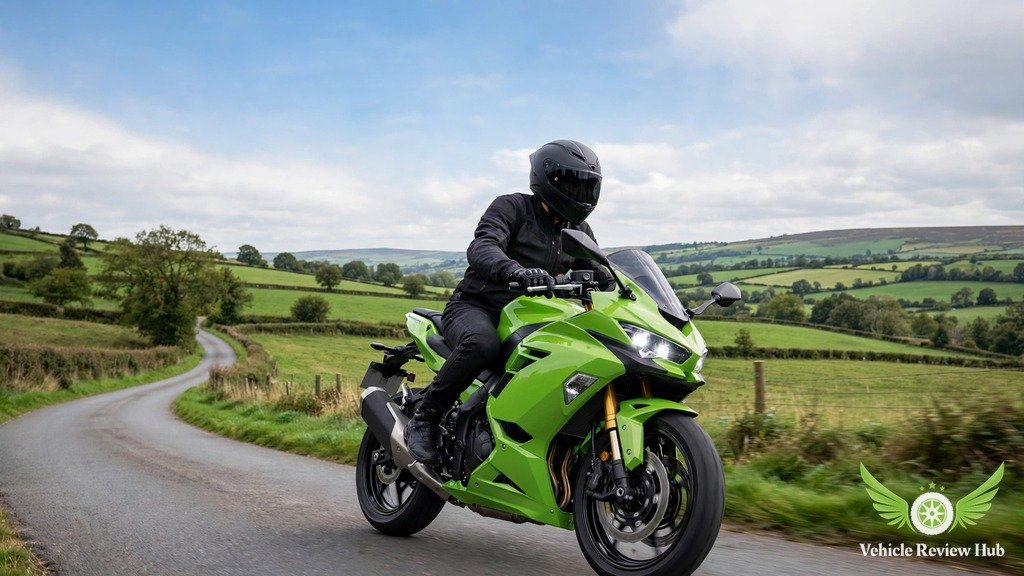
The SV650 won the 2006 shootout, and that result still explains the two bikes twenty years later. In January 2006, Motorcycle.com put the new Ninja 650R against the Suzuki SV650S and judged the SV650S the clear winner on handling, power, brakes and suspension. Cycle World’s March 2006 test found the same gap: the 650R made 8 fewer horsepower and 3 fewer lb-ft than their last SV-S, and it was 10 lb heavier — $6,449 for the SV650S against $6,299 for the Ninja 650R. But the shootout also gave the Ninja its verdict, and this Kawasaki Ninja 650 performance guide records it plainly: the 650R won the comfort argument as the easier, more upright bike, and the same split holds today. The SV650 is still the sportier twin — read our Suzuki SV650 performance guide for its numbers — and the Ninja 650 is still the more comfortable one.
No US Long-Term Test Exists
No US long-term test of the Ninja 650 exists, and that heading means exactly what it says. MCN’s UK long-term test does exist, and it is the backbone of this Kawasaki Ninja 650 performance guide: fifteen updates across 9,500-plus miles, a dyno run, a fuel diary, and three trackdays. The MCN test is where the 60.38 bhp dyno figure and the 49.44 mpg average both come from, and no American outlet has published an equivalent long-term record for the 650 — a gap this Kawasaki Ninja 650 performance guide states plainly. That gap matters because a long-term test is where the small things show up — mirrors, seat, fuel range, months of commuting — and for the 650 those findings live in the British test, not an American one. The body says so explicitly so the reader does not think no long-term test exists at all: one exists, it ran 9,500 miles, and it is British.
Kawasaki Ninja 650 Handling, Braking and Stability
Handling and braking are where the 2027 bike finally moves, and they are also where the honest record in this Kawasaki Ninja 650 performance guide is thinnest. The front end is genuinely new — a 37 mm inverted Showa SFF-BP fork and radial-mount four-piston calipers replacing the 41 mm telescopic fork and two-piston calipers — but no instrumented handling or braking figure exists for the 650. This section of the Kawasaki Ninja 650 performance guide describes the hardware and what testers said about it, and it invents none of the numbers that do not exist.
Handling, Braking and Stability on Real Roads
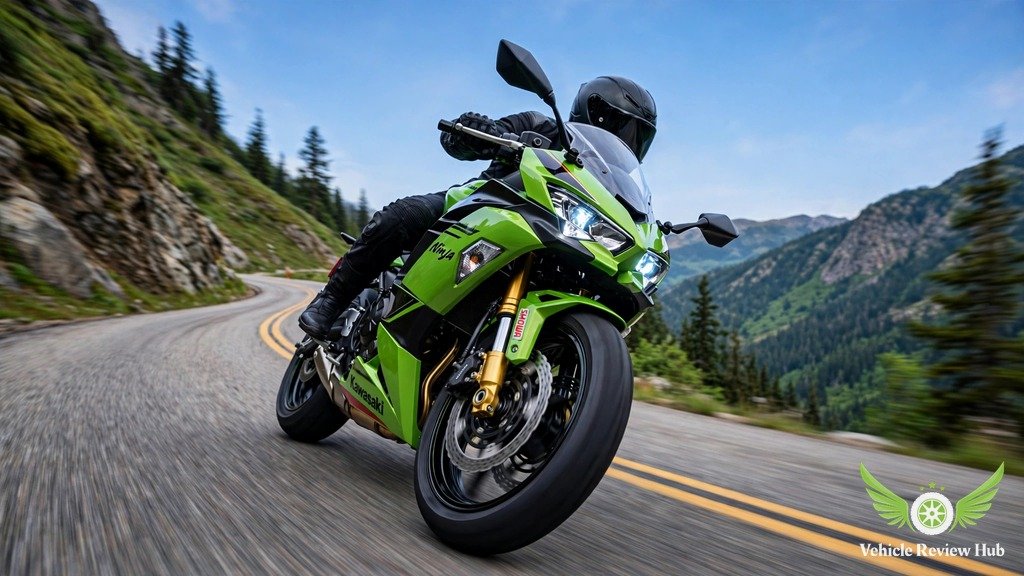
The 2027 front end is the single most important handling change this Kawasaki Ninja 650 performance guide covers: an inverted fork puts the larger-diameter outer tube at the top, clamped in the triple trees, and the slimmer inner tube at the bottom near the axle, a layout stiffer under braking than a conventional fork. The rest of the chassis carries over from the 2017 trellis bike, 42 lb lighter than the 2012 to 2016 bike, with a 24-degree rake, 3.9-inch trail and 54.9-inch wheelbase for 2027. RevZilla’s 2017 first ride praised the lighter trellis chassis and the assist and slipper clutch, and the 2027 hardware builds on it. The tyres are unchanged at 120/70-17 front and 160/60-17 rear, with no tyre brand verified for the 2027 bike because the spec sheet lists sizes only. Our Kawasaki Ninja 650 review covers the 2027 chassis changes in full, including the 0.2-inch seat drop and the 0.6-inch shorter wheelbase.
No Instrumented Braking Figure
No instrumented braking figure exists for the Ninja 650, and this Kawasaki Ninja 650 performance guide says so plainly rather than quoting a number from another bike. No US outlet has published a 60 to 0 mph distance for the 650, and Kawasaki publishes no stopping-distance figure. The GSX-8R does have a published figure — Cycle World’s 133.89 feet from 60 to 0 mph — but that is the 8R’s figure, not the 650’s, and it is not printed here as a 650 number. The hardware is now in line with the class: dual semi-floating 300 mm discs with radial four-piston calipers and ABS, where the 2026 bike had petal-type discs with two-piston calipers. The braking story of the 2027 bike is the hardware upgrade itself, and the stopping distance remains unmeasured until a tester publishes one — a gap this Kawasaki Ninja 650 performance guide leaves open rather than filling with another bike’s number.
Kawasaki Ninja 650 Performance Compared With Other Middleweights
The 650’s performance only makes sense against its rivals: on its own the numbers look modest, and in company they look like a choice. The four-bike set in this Kawasaki Ninja 650 performance guide is the Ninja 650, the Suzuki SV650, the Yamaha YZF-R7 and the Suzuki GSX-8R, with the 650 the least powerful of the four and the most comfortable. This section of the Kawasaki Ninja 650 performance guide puts the four side by side so the buyer can see what the 650 gives up and what it gives back.
Kawasaki Ninja 650 vs Suzuki SV650
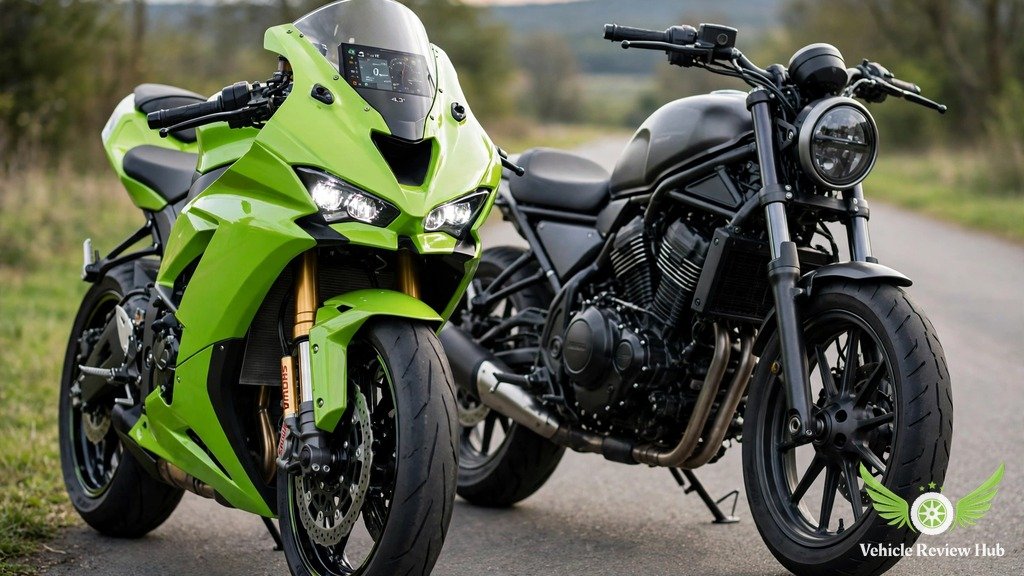
The SV650 is the 650’s oldest rival and its closest one on price, and it is the first comparison in this Kawasaki Ninja 650 performance guide’s four-bike set. The SV650’s 645cc 90-degree V-twin claims 75.1 hp at 8,500 rpm on its 2017 launch claim, with a post-2021 Euro 5 revision to 73 hp, and 47.2 lb-ft — 64 Nm — with no peak rpm stated, because the launch and post-2021 sources disagree on the rpm and Suzuki USA publishes no torque figure at all. The Ninja 650’s 649cc parallel twin claims 67.0 hp at 8,000 rpm and 48.5 lb-ft at 6,700 rpm, so the SV650 has the power advantage and the 650 has the torque advantage at a lower peak. The SV650 weighs 437 lb against the 650’s 427.8 lb, both sit at 30.9 inches, and the SV650’s dash is an LCD where the 650 has a 4.3-inch TFT with Rideology. The SV650 has no traction control, no quickshifter and no ride modes, while the 650 has two-mode KTRC and an accessory-only quickshifter. On price the SV650 is $8,149 plus $600 destination for $8,749 delivered, against the 650’s $8,099 plus $685 for $8,784 delivered — $50 cheaper on MSRP, $35 dearer delivered — and a $250 Suzuki freight surcharge exists in dealer pricing without being part of the $600 destination. The full price and equipment comparison is in our Kawasaki Ninja 650 comparison, and the 8R’s numbers are in our Suzuki GSX-8R performance guide. The R7, at 72.4 hp and 417 lb with its 2026 refresh of an IMU, ride-by-wire, quickshifter, cruise and a 5-inch TFT, is the supersport of the set — read the YZF-R7 review for its full figures — and it is $1,300 more than the 650 on MSRP.
| Bike | Claimed power | Measured rear-wheel power | Weight | Seat height |
|---|---|---|---|---|
| Kawasaki Ninja 650 (2027) | 67.0 hp at 8,000 rpm / 48.5 lb-ft at 6,700 rpm | 60.38 bhp (MCN) / 60.6 hp (Rider, Z650 same engine) | 427.8 lb curb (50-state) | 30.9 in |
| Suzuki SV650 (2026) | 75.1 hp at 8,500 rpm launch claim / 73 hp Euro 5; 47.2 lb-ft, no peak rpm | No named-outlet dyno found | 437 lb curb | 30.9 in |
| Yamaha YZF-R7 (2026) | 72.4 hp at 8,750 rpm / 50.2 lb-ft at 6,500 rpm | No named-outlet dyno found | 417 lb curb | 32.7 in |
| Suzuki GSX-8R (2027) | 81.8 hp at 8,500 rpm (83 PS) / 57.5 lb-ft at 6,800 rpm | 72.75 hp at 8,120 rpm / 51.73 lb-ft at 6,630 rpm (Cycle World) | 453 lb wet | 31.9 in |
Note: the claimed figures in this Kawasaki Ninja 650 performance comparison table are each bike’s manufacturer claim, labelled by model year, and the measured figures are named-outlet dyno runs only. The SV650 and R7 have no named-outlet dyno in the records checked, so their measured cells say so.
Is the Kawasaki Ninja 650 Suitable for Beginner Riders?
The honest answer in this Kawasaki Ninja 650 performance guide is no as a first-ever motorcycle and yes as a first big bike. A true beginner should not start on 67 hp, a 425.6 to 427.8 lb bike and a 30.9-inch seat with only two-mode traction control and no riding modes — the YZF-R3 review is the small-bike step to read first, and riders coming from a 125, a 300 or a 400 should read our Ninja 125 performance guide, Ninja 300 and Ninja 400 performance guides before deciding. But a rider stepping up from a 500 is ready for the 650, and this Kawasaki Ninja 650 performance guide says so plainly: the step from the Ninja 500’s 51 hp to the 650’s 67 hp is a real one, and our Ninja 500 and Ninja 500 SE KRT Edition performance guides show what that smaller twin gives and what the 650 adds. The 650’s case as a step-up bike is the same as its case everywhere else in this Kawasaki Ninja 650 performance guide: the least power in its set, the most usable torque low down, the most comfortable riding position, and a measured record. For the rider it suits, that is enough.
Kawasaki Ninja 650 Performance Frequently Asked Questions
These are the questions riders ask most about how the Ninja 650 actually performs, answered from the instrumented tests in this Kawasaki Ninja 650 performance guide. The short version is about 60 rear-wheel horsepower, no official top speed, and a fuel record from one 9,500-mile long-term test.
How much power does the Ninja 650 make at the rear wheel?
Kawasaki claims 67.0 hp at 8,000 rpm and 48.5 lb-ft at 6,700 rpm, measured to ISO 4106 — a crank claim, not a rear-wheel figure. The measured rear-wheel figures are about 60 to 61 hp: MCN’s long-term test put a stock 650 at 60.38 bhp, and 63.48 bhp with an Arrow exhaust, while Rider Magazine’s dyno of the same engine in the Z650 recorded 60.6 hp at 8,100 rpm with 43.9 lb-ft at 6,700 rpm. A 62 hp figure circulates online, but it comes from an aggregator, not from a named test outlet, and this Kawasaki Ninja 650 performance guide does not print it as a measured figure. No US dyno of the current 2023-and-later bike exists.
What is the top speed of the Ninja 650?
There is no official figure and no instrumented top speed test. Kawasaki publishes no top speed, and no major outlet has instrumented one. The honest number is the rider-reported one: just over 200 km/h, about 124 to 125 mph. TopSpeed prints 131 mph, unattributed to any test, and aggregators print 130 to 131 mph as a GPS figure, but neither is a measurement. This Kawasaki Ninja 650 performance guide prints the rider-reported figure and labels the 130 mph number as the one aggregators print, not a measured test.
How fast does the Ninja 650 accelerate to 60 mph?
No instrumented 0 to 60 test of the current bike was found. The only named-outlet acceleration claim is Cycle World’s 3.5 seconds to 60 mph, for the 2014 bike, not the current one. Real-world owners report around four seconds, and that is the figure this Kawasaki Ninja 650 performance guide prints as the honest expectation. A figure of 3.53 seconds circulates online, and it comes from the same aggregator behind the 62 hp number — it is not a tester’s measurement. There is also no named-outlet quarter-mile test of the 650.
What fuel economy does the Ninja 650 get, and how far does it go?
The only measured record is MCN’s long-term test, which ran a 2017-on bike for 9,500 miles and kept a fuel diary: 49.44 mpg on average, 60 mpg or slightly more cruising gently, a best of 69.54 mpg and a worst of 39.16 mpg on a trackday. The 4.0-gallon tank gives a range of about 198 miles on the MCN average, which is a calculation, not a tested range. Kawasaki publishes no MPG figure for the 650 and no WMTC or lab fuel figure was found. A 61 mpg owner average is claimed online but could not be verified from a live source, so this Kawasaki Ninja 650 performance guide does not print it as a fact.
How well does the Ninja 650 brake?
No instrumented braking figure exists for the 650 — no US outlet has published a 60 to 0 mph distance, and Kawasaki publishes no stopping-distance figure. The hardware is new for 2027: dual semi-floating 300 mm discs with radial four-piston calipers and ABS, replacing the 2026 bike’s petal-type discs with two-piston calipers. The GSX-8R does have a published figure, Cycle World’s 133.89 feet from 60 to 0 mph, but that is the 8R’s figure, not the 650’s, and this Kawasaki Ninja 650 performance guide does not print it as a 650 number.
Is the Ninja 650 suitable for beginner riders?
No as a first-ever motorcycle, and yes as a first big bike. A true beginner should not start on 67 hp, a 425.6 to 427.8 lb bike and a 30.9-inch seat with only two-mode traction control and no riding modes. But a rider stepping up from a 300, a 400 or a 500 is ready for the 650, and this Kawasaki Ninja 650 performance guide says so plainly: the step from the Ninja 500’s 51 hp to the 650’s 67 hp is a real one, and the 650’s low-down torque and upright riding position make it forgiving rather than intimidating.