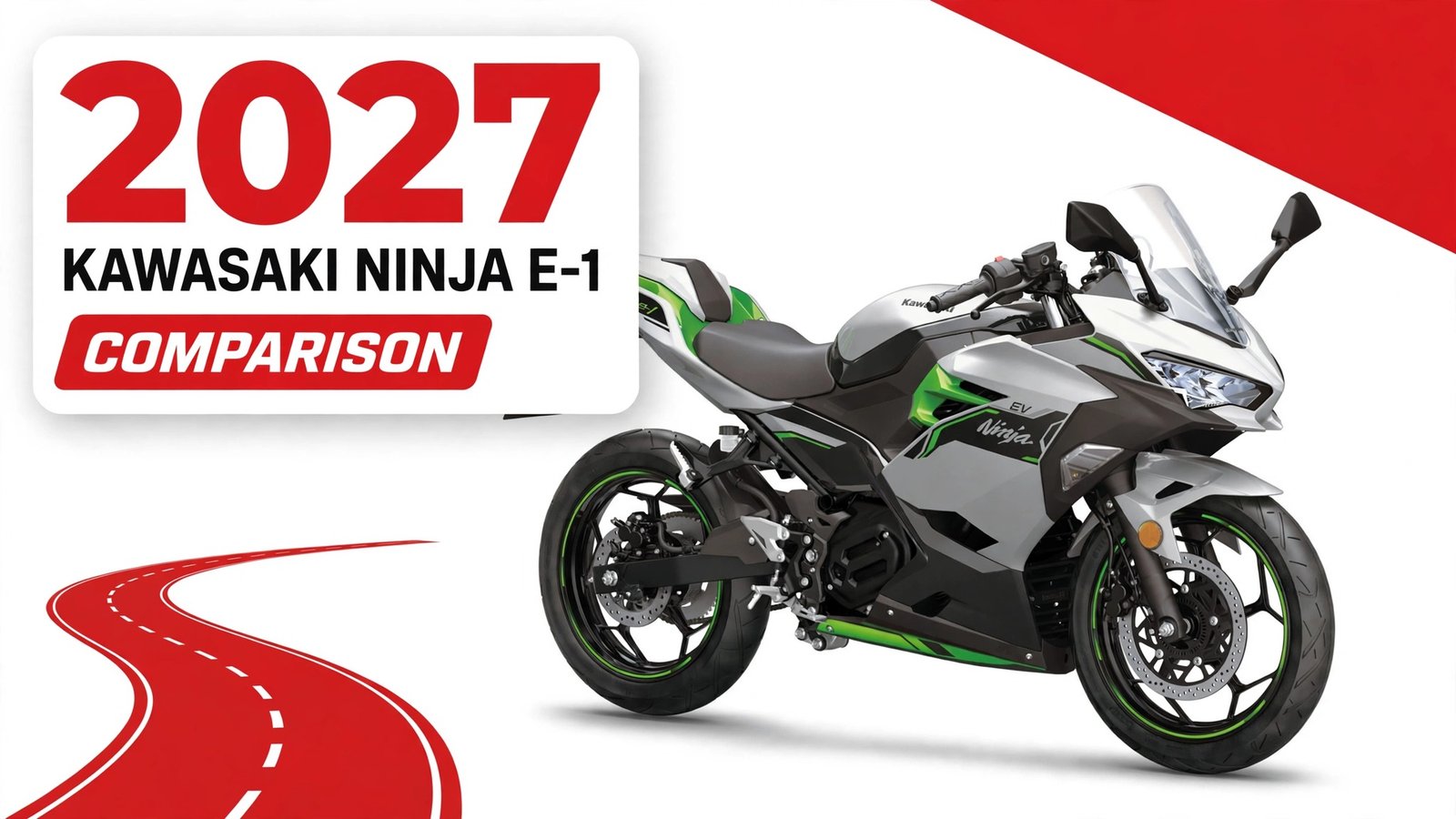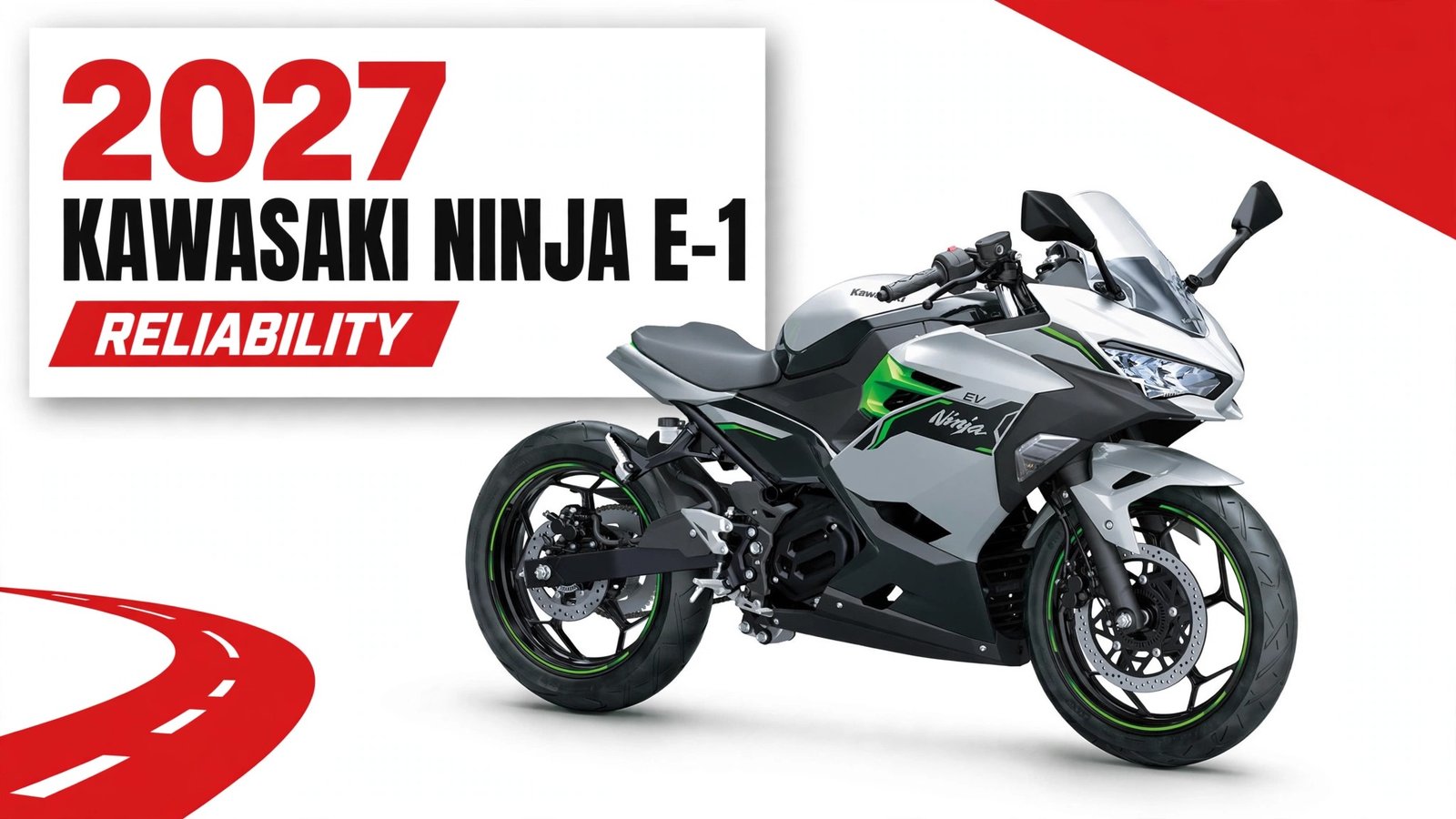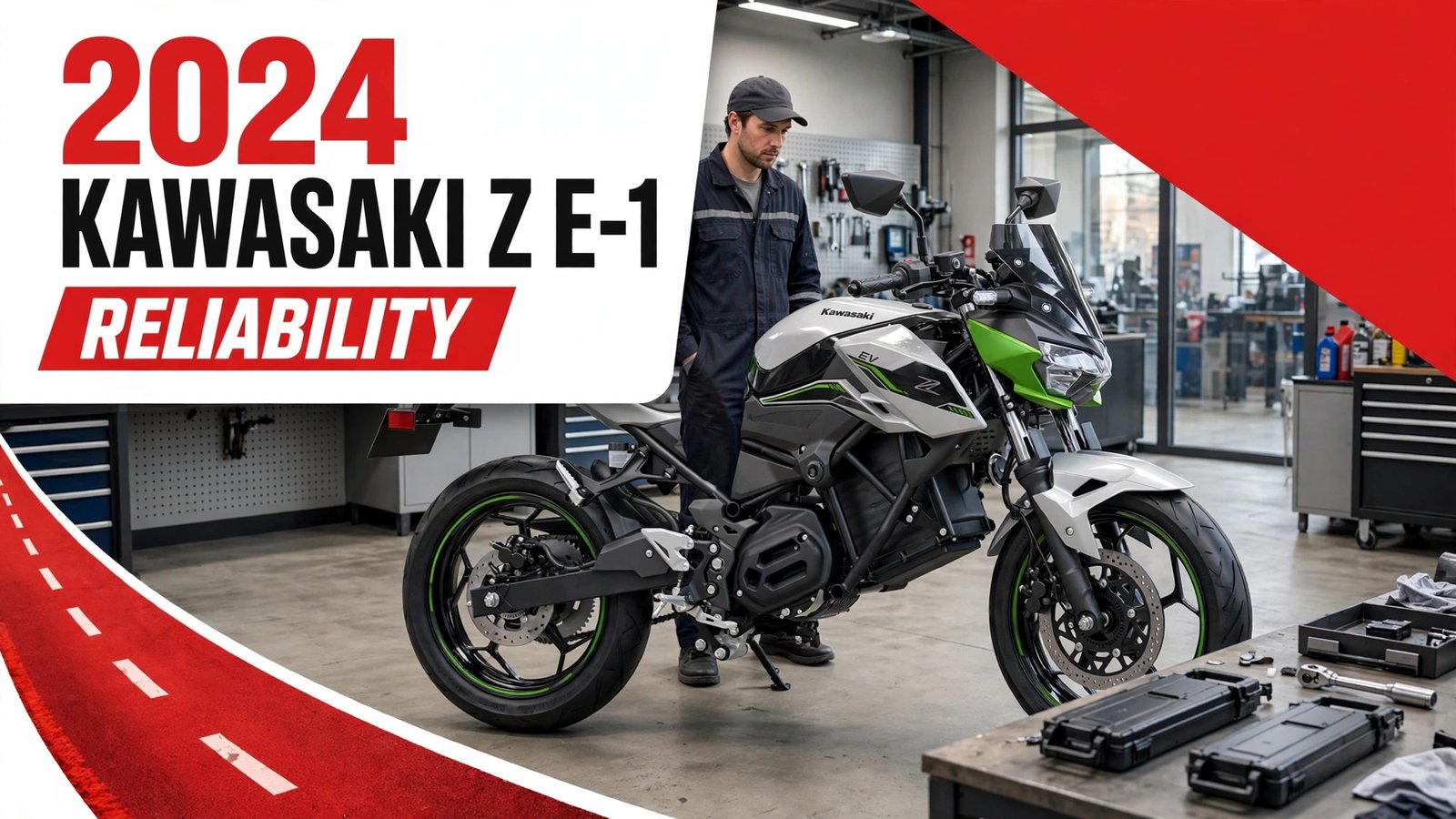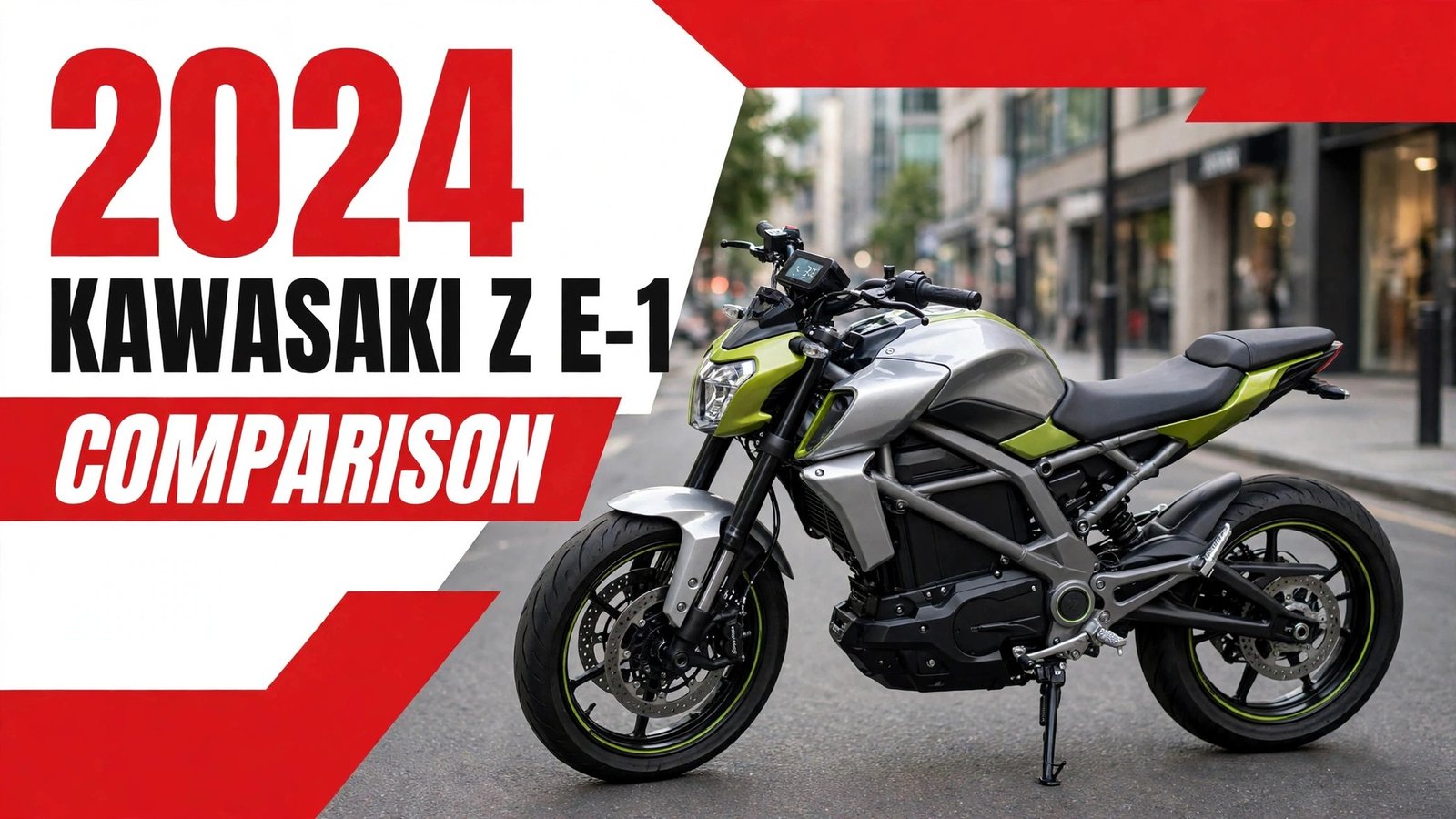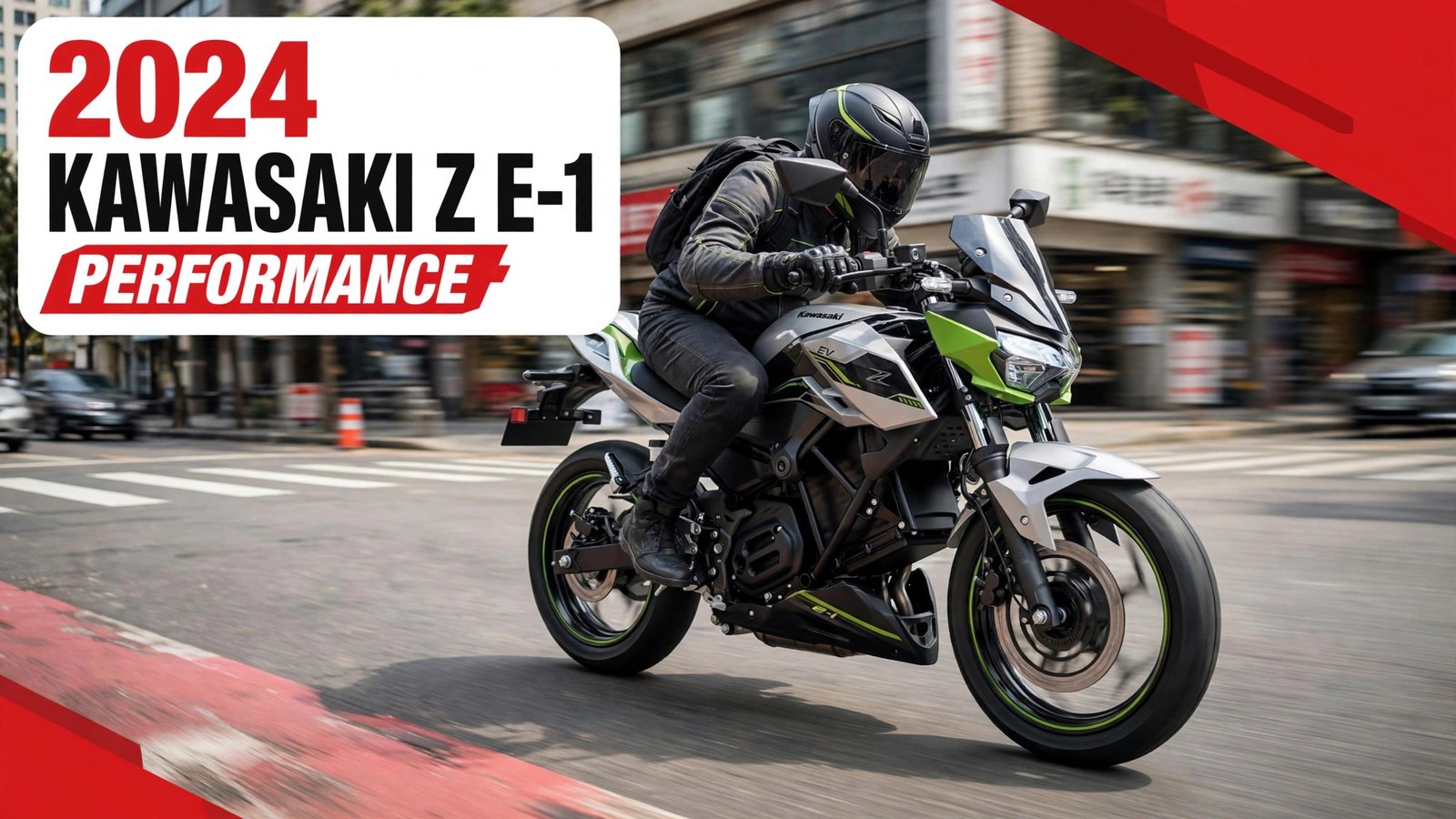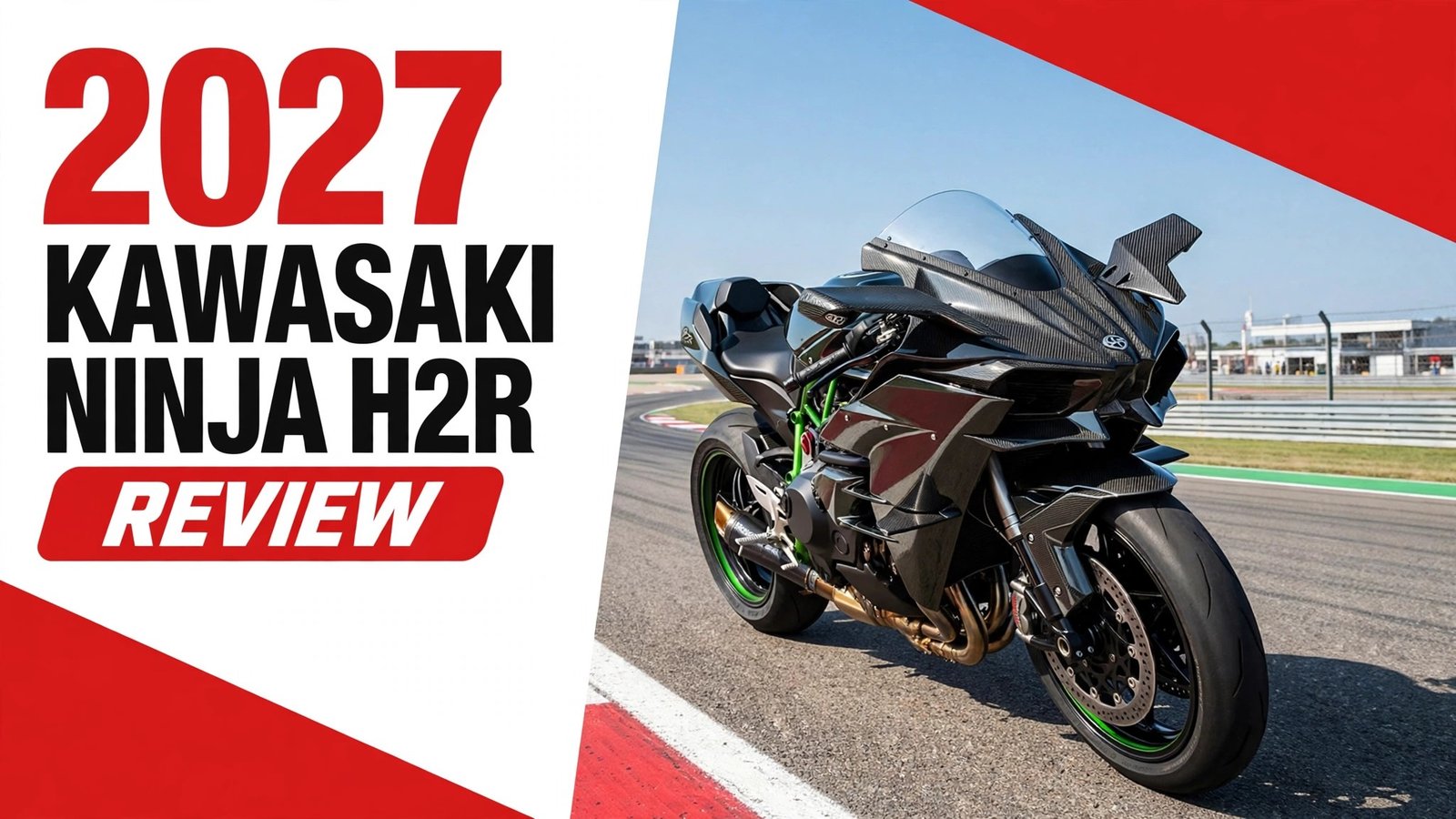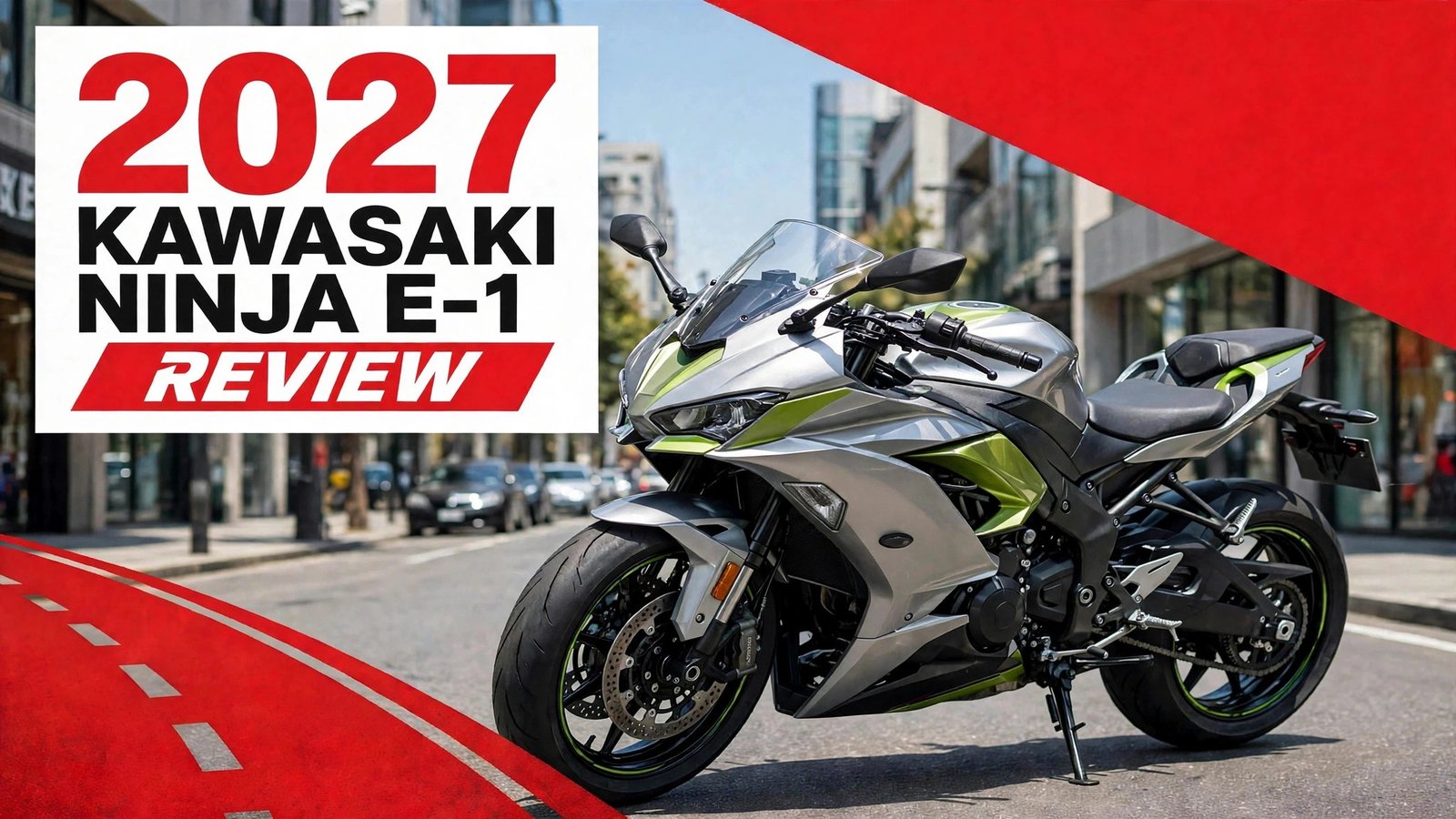
At $7,899 the Kawasaki Ninja e-1 is the only electric Ninja you can buy new in the United States — a faired, 125cc-class city commuter that skipped 2025 and 2026 and came back for 2027 completely unchanged. This Kawasaki Ninja e-1 review starts with the numbers: 55 mph continuous in Road mode, 65 mph with a 15-second e-boost, 41 miles of claimed range, and two removable battery packs that charge from a household outlet. It is the faired twin of the naked Z e-1, 11 lb heavier and $300 dearer, and the only e-1 with a future.
The rest of this Kawasaki Ninja e-1 review works through the spec sheet, the price, the fairing, the ride and the verdict — including the 112-bike recall every buyer needs to know about. Nothing here is padded: every figure comes from Kawasaki’s own spec sheets, the NHTSA recall file, or a named road test, and where a figure could not be verified this Kawasaki Ninja e-1 review says so instead of printing it.
Kawasaki Ninja e-1 Overview and Model-Year Updates
The story of this Kawasaki Ninja e-1 review starts with a gap. Kawasaki launched the e-1 twins in the United States in October 2023, sold the Ninja as a 2024 model, then stopped — no 2025 bike, no 2026 bike — and brought the same motorcycle back for 2027 at the same $7,899. Nothing on the spec sheet changed in the meantime, which makes this Kawasaki Ninja e-1 review unusually simple to verify: one spec sheet covers both model years.
Skipped 2025 and 2026
Kawasaki sold the Ninja e-1 in the US as a 2024 model only. The 2025 and 2026 product pages and spec-sheet URLs both return 404 — there was no Ninja e-1 on sale in those years in the US. In Europe the bike continued into 2025 in select markets, but that is a European fact, not the US story, and this Kawasaki Ninja e-1 review sticks to the US bike. The launch itself came on October 4, 2023, when Kawasaki opened orders for the e-1 twins until December 31, 2023, with first deliveries arriving late in 2023 and into the summer of 2024. The gap matters because a 2024 bike has been sitting — as a leftover, or as a used bike — while the 2027 bike is the one arriving at dealers now.
Returns Unchanged for 2027
Kawasaki announced the 2027 Ninja e-1 ABS on August 18, 2026, at the same $7,899, with reservations running through October 23, 2026. That window is now closed, so this Kawasaki Ninja e-1 review writes about reservations in the past tense — nobody can reserve one now. What happens next — general sale, allocation or sold out — was not confirmed by Kawasaki, but 2027 bikes are already listed at dealers, so the honest print is that the 2027 bike is reaching dealers. The return is literally unchanged: the 2027 spec sheet matches the 2024 sheet in every figure, from the 55 mph Road cap to the 308.7 lb curb weight. The model years are 2024 and 2027 — 2023 was only the launch year, not a model year.
Kawasaki Ninja e-1 Motor and Specifications
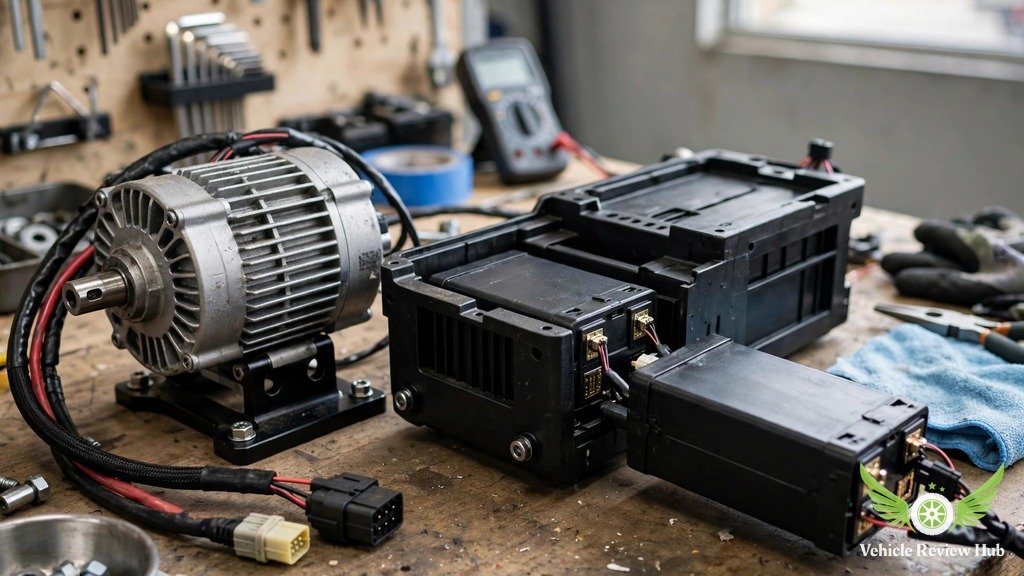
Under the fairing, this Kawasaki Ninja e-1 review finds the same motorcycle as the naked Z e-1. Same air-cooled motor, same two removable packs, same chain drive, same brakes — the fairing, the clip-on bars and 11 lb are the only differences. The table below is the full spec sheet, and it covers both the 2024 and the 2027 bike, because Kawasaki changed nothing between them — a fact this Kawasaki Ninja e-1 review verified against both sheets.
| Item | Specification (2024 and 2027) |
|---|---|
| Motor type | Air-cooled, interior permanent magnet synchronous motor |
| Power modes | 2 modes (ROAD/ECO) plus e-boost |
| Max speed by mode | ROAD 55 mph (65 mph with e-boost), ECO 40 mph (47 mph with e-boost) |
| Rated power | 5.0 kW @ 2,800 rpm (6.7 hp) |
| Maximum power | 9.0 kW @ 2,600–4,000 rpm (12.1 hp) |
| Maximum torque | 29.7 lb-ft @ 500 rpm (40.3 Nm) |
| Battery type | Lithium-ion battery pack (x2) |
| Battery voltage / capacity | 50.4 V, 30 Ah (x2) — 1.5 kWh each, ~3.0 kWh total |
| Battery range | 41 mi (approximate in ROAD Mode w/o e-boost) |
| Battery charge time | 3.7 hours (x2) — 3.7 hours per pack |
| Transmission type | Single reduction gear |
| Shifter mechanism | Push button (single-speed, twist-and-go) |
| Primary reduction ratio | 3.211 (61/19) |
| Final reduction ratio | 3.867 (58/15) |
| Final drive type | Chain |
| Frame type | Trellis, high-tensile steel |
| Front suspension / wheel travel | 41 mm telescopic fork / 4.7 in |
| Rear suspension / wheel travel | Bottom-Link Uni-Trak with single gas-charged shock, adjustable spring preload / 5.2 in |
| Front tyre | 100/80-17M/C 52S |
| Rear tyre | 130/70-17M/C 62S |
| Front brakes | Single 290 mm disc with dual-piston caliper |
| Rear brakes | Single 220 mm disc with dual-piston caliper |
| ABS | Yes |
| Rake / trail | 24.4° / 3.7 in |
| Overall length / width / height | 78.0 in / 27.0 in / 43.5 in |
| Ground clearance | 6.7 in |
| Seat height | 30.9 in |
| Wheelbase | 53.9 in |
| Curb weight | 308.7 lb |
| Colour | Metallic Bright Silver / Metallic Matte Lime Green / Ebony |
| Electronic rider aids | WALK Mode (with Reverse), ABS |
| Special features | ERGO-FIT, TFT instrumentation with smartphone connectivity via RIDEOLOGY THE APP, battery temperature–charge–remaining-range indicators |
| Model code | NX011ARFNN |
Note: Every figure in this table appears on both the 2024 and the 2027 Kawasaki spec sheets — the two sheets are identical. The Kawasaki Ninja e-1 review tables in this guide print only what those sheets verify, and the 47 mph Eco boost applies to both model years; only the Z e-1 prints 45 mph.
Only 11 lb Over the Z
The Ninja weighs 308.7 lb at the curb, against the Z e-1’s 297.7 lb — 11 lb for a full fairing and clip-on bars. That is still lighter than any petrol Ninja, and the extra weight sits in the bodywork, not in the motor or the battery. The 11 lb buys the look and the wind protection; it costs nothing in range, because both bikes claim the same 41 miles, and nothing in charging, because both bikes use the same two packs. For a buyer choosing between the twins, this Kawasaki Ninja e-1 review treats the 11 lb as a styling decision, not a performance one — and the fairing is the reason to pay the extra $300, not the weight.
Same 290mm Disc as the Z
The brakes are the Ninja’s least surprising parts: a single 290 mm front disc with a dual-piston caliper, a single 220 mm rear disc, and ABS — the same setup as the Z e-1, down to the disc sizes. The Ninja’s Nissin ABS unit comes standard, and the braking hardware is shared with the Z, so nothing in this Kawasaki Ninja e-1 review separates the two bikes on stopping. The shared brakes are one more reason this Kawasaki Ninja e-1 review treats the twins as one motorcycle in two outfits. The tyres are shared too — 100/80-17 front and 130/70-17 rear — and the verdict section below deals with what those narrow tyres mean on the road.
Kawasaki Ninja e-1 Price and Market Availability
Price is where this Kawasaki Ninja e-1 review gets complicated, because Kawasaki’s own numbers disagree with each other. The launch price, the spec-sheet price and the dealer listings tell three different stories, and the honest answer needs all three. The table below is the verified ladder — every figure with its source — and this Kawasaki Ninja e-1 review uses it as the reference for every price claim that follows.
| Figure | Value | Source |
|---|---|---|
| Launch MSRP, Ninja e-1 (Nov 2023 announcement) | $7,599 | RevZilla, Cycle News, Ultimate Motorcycling |
| Spec-sheet MSRP, Ninja e-1 (2024) | $7,899 | Kawasaki USA 2024 spec sheet |
| Spec-sheet MSRP, Ninja e-1 (2027 return) | $7,899 | Kawasaki USA 2027 spec sheet — unchanged |
| Destination charge, Ninja e-1 (2027) | Unverified | No Kawasaki source publishes it |
| Delivered price, Ninja e-1 (2027) | Do not compute | Would assume the 2024 destination charge — arithmetic, not a verified price |
| Leftover, new 2024 (Monroe, WA, Nov 2026) | $3,999 | Dealer listing, Nov 2026 |
| Leftover, new 2024 (Jacksonville, FL, Nov 2026) | $4,500 headline; $6,079 total excl. tax | Dealer brochure Nov 18, 2026 ($640 freight + $540 prep + $399 doc) |
| Used, 2024, 104 miles (Santa Maria, CA, Nov 2026) | $5,045 total | Dealer listing, Nov 2026 |
| Market average, 2024 Ninja e-1 (Nov 2026) | $4,540 | 1000PS market data |
Note: The $7,599 launch figure is the November 2023 announcement price — the bikes actually sold at $7,899. The Kawasaki Ninja e-1 review never prints a delivered price for the 2027 bike, because the destination charge is unverified.
Kawasaki Ninja e-1 Price in the USA: $7,899 (2027)
$7,899 is the price — for the 2024 bike and the 2027 bike alike. That is $300 more than the naked Z e-1’s $7,599, $1,450 more than a 2026 Ninja 500 ABS costs delivered, and $1,404 more than a Ryvid Anthem. At list price the Ninja is an expensive way into 41 miles of range, and this Kawasaki Ninja e-1 review says so plainly. At leftover prices near $4,000 — a new 2024 bike was listed at $3,999 in Monroe, Washington, in November 2026 — the same bike undercuts every petrol Kawasaki. The gap between the list price and the leftover price is the whole buying decision, and the verdict below is built on it.
Kawasaki’s Own Prices Conflict
Kawasaki’s own prices conflict, and the conflict has three parts. First, the $300 rise: the November 2023 announcement priced the Ninja at $7,599, but the spec sheet — the price the bikes actually sold at — says $7,899. Second, the database errors: Motorcycle.com’s compare table lists the right $7,899 MSRP but a $450 destination charge and a 12-month warranty, both database defaults and both wrong. Third, SlashGear’s figure, which appears in no Kawasaki document at all. The governing source for the price is the spec sheet; the governing source for the warranty is Kawasaki’s own dealer data, which says 24 months. This Kawasaki Ninja e-1 review prints $7,899 and explains the $7,599 launch figure in the same breath — never the other way round. The three conflicts are the reason this Kawasaki Ninja e-1 review keeps returning to the spec sheet as the governing source. The Jacksonville fee stack is part of the same honest story: a $4,500 headline becomes $6,079 before tax once $640 freight, $540 prep and a $399 doc fee are added — $1,579 of fees, or 35% on top of the headline — so a leftover buyer should ask for the out-the-door total, not the headline.
Kawasaki Ninja e-1 Design, Features and Technology
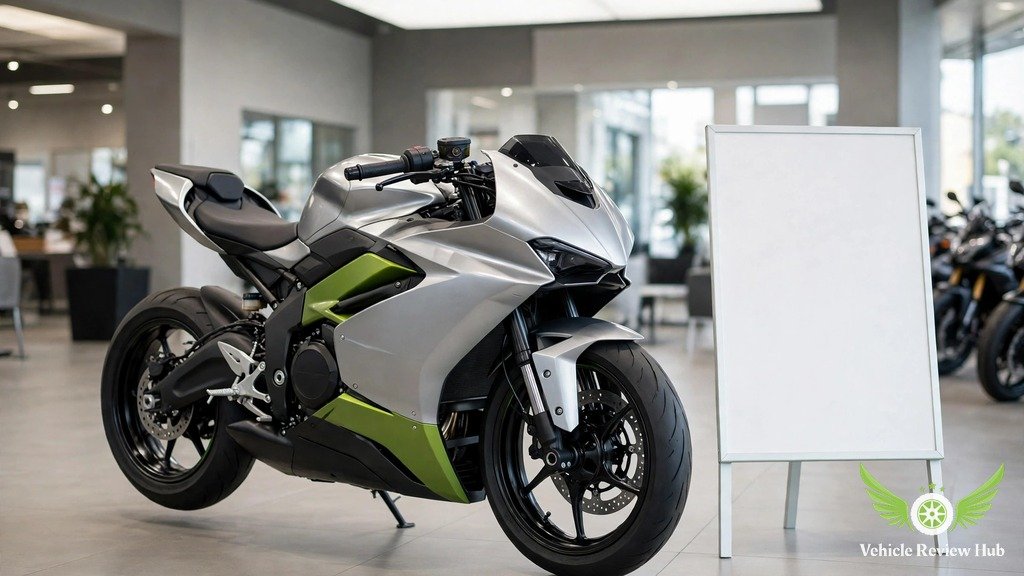
The fairing is the whole design story in this Kawasaki Ninja e-1 review. Kawasaki changed nothing mechanical between the twins — the design section is a fairing, a pair of clip-on bars and a TFT dash, and the riding position that follows from them.
Fairing and Clip-Ons Only
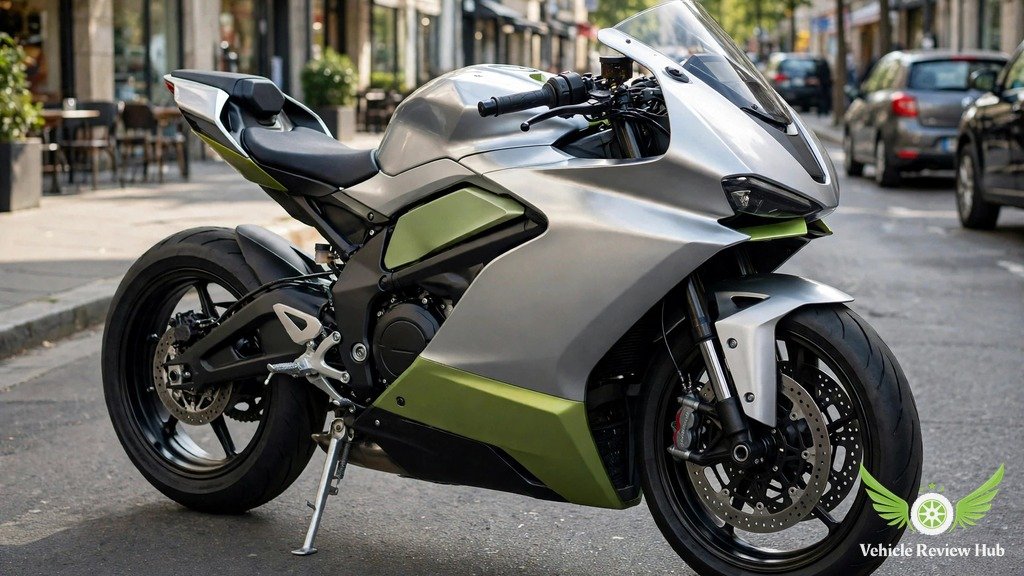
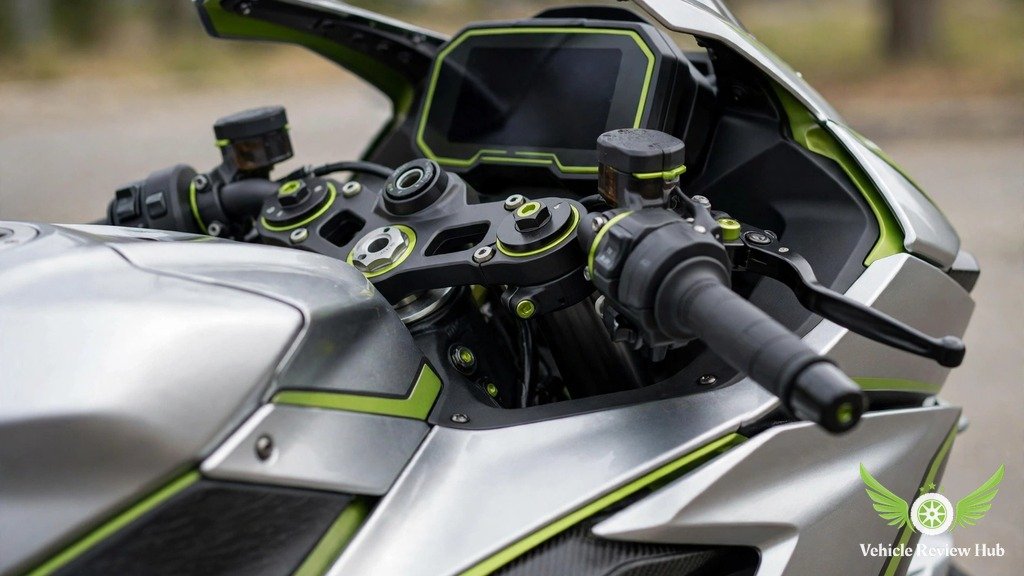
The Ninja wears the full-fairing look of Kawasaki’s bigger Ninja sport bikes — aggressive, angular cowling that looks every bit as racy as its bigger cousins. Under the fairing is the same trellis chassis the Z e-1 uses, a modified version of the Ninja and Z 400’s frame, with the same 41 mm fork, the same shock, the same wheels and the same brakes. The clip-on handlebars are the only other physical change, and they do not make the bike a race crouch: RevZilla’s first look notes the Ninja keeps an upright, neutral riding position suited to city traffic, not a crouch behind the bubble. The 4.3-inch TFT dash carries the speedometer, ride-mode indicator, e-boost gauge, battery charge and temperature gauges and a range indicator, with Bluetooth to the RIDEOLOGY app for a riding log — the app is for stationary use only. The storage box under the tank cover holds the charger cable; it is not useful luggage space. This Kawasaki Ninja e-1 review treats the fairing as the bike’s identity: without it, the motorcycle underneath is the Z e-1.
Reserve by October 23
Reservations for the 2027 bike ran through October 23, 2026, and the window is now closed. This Kawasaki Ninja e-1 review does not tell readers to reserve a bike — that is no longer possible. What the closed window means for buyers is simpler: the 2027 bike is a dealer bike now, listed at dealers such as Cycle City in Newnan, Georgia, and PCP Motorsports in Sacramento. A buyer shopping in 2027 should ask a dealer, not wait for a reservation page that has already closed.
Kawasaki Ninja e-1 Riding Experience and Comfort
On the road, this Kawasaki Ninja e-1 review finds a bike that surprises off the line and settles after that. The motor makes 125cc-class power with better pick-up than a 125, thanks to 29.7 lb-ft from a standstill, and with e-boost engaged it accelerates with the alacrity of a 400cc bike for about 15 seconds. Then the boost ends, and the bike is a 55 mph city commuter again — a fact this Kawasaki Ninja e-1 review keeps in view whenever the acceleration is discussed.
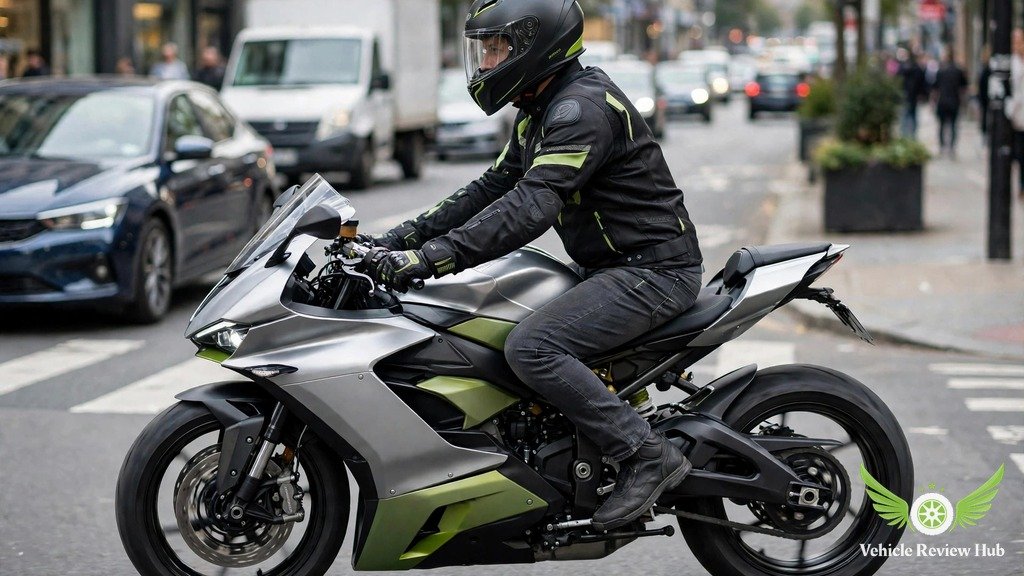
Sur Ronster’s first impression of the new Ninja e-1 — and the one big problem he found with it. The video below is a critical first look, not a glowing walkaround, and the problem he names is the one every buyer should hear before paying $7,899.
Testers’ Preferred Mount
No tester has said they prefer the Ninja e-1 over the Z e-1, and this Kawasaki Ninja e-1 review will not invent that claim. TopSpeed treats the two as styling-only different, and Cycle World reported both bikes comfortable to ride without picking a favourite. The honest choice is ergonomic: the Ninja for the faired sport look and the upright triangle behind clip-on bars; the Z for the naked position and wide bars. THE PACK’s Brussels test called the Ninja perfect for a beginner rider and praised the flawless finish and the quiet, smooth ride — but their 1.80 m tester felt pretty folded on it, a warning for tall riders that the fairing cannot fix. TopSpeed’s week-long test found the suspension forgiving but firm, and the ABS brakes competent.
24 Month Warranty, Both Years
The warranty is 24 months, limited, on both the 2024 and the 2027 bike — double Kawasaki’s standard 12-month petrol-bike warranty. That term is the same for both model years; what differs is the calendar. A 2027 bike’s warranty starts in 2027, while a leftover 2024 bike’s warranty starts at its sale date, so the leftover buyer gets the same 24 months but starting later. No separate battery warranty is published — the 24-month term covers the whole bike, which is a sharp contrast with the Zero FXE’s five-year battery warranty. Never print the 12-month figure from Motorcycle.com’s database, and never print the UK warranty — four years on parts, five on the battery — as the US warranty. This Kawasaki Ninja e-1 review prints the 24-month term because Kawasaki’s own dealer data confirms it for both years. For a leftover buyer, this Kawasaki Ninja e-1 review counts the warranty start date as part of the price.
Kawasaki Ninja e-1 Review: Pros, Cons and Verdict
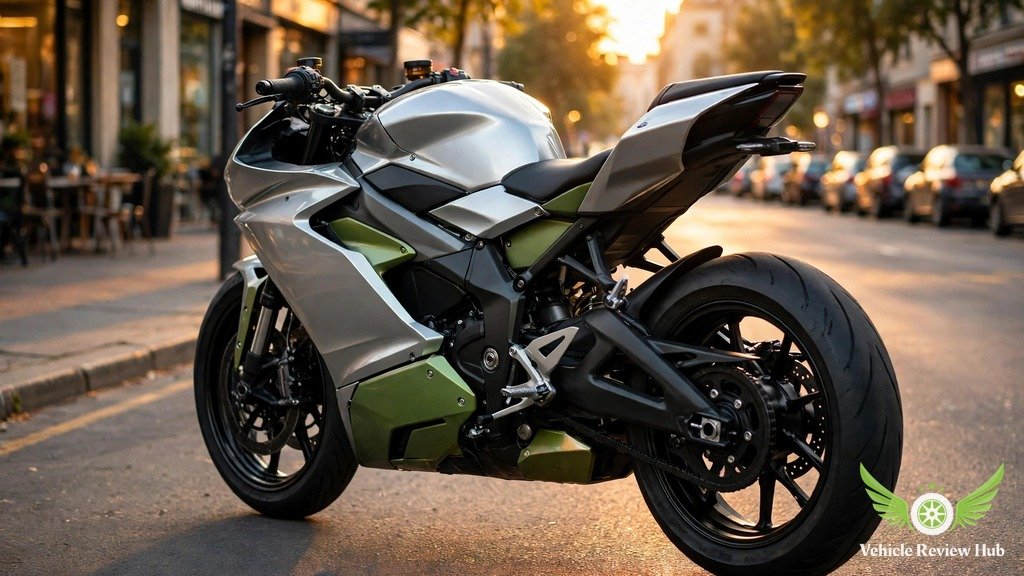
The verdict of this Kawasaki Ninja e-1 review is two verdicts, because the bike has two prices. At $7,899 it is the wrong buy for most riders; at about $4,000 as a leftover it is the cheapest way into a new Kawasaki with a warranty. The table below is the balance sheet. That split is the finding this Kawasaki Ninja e-1 review keeps coming back to.
| Area | What works | What does not |
|---|---|---|
| Price | Leftover 2024 bikes near $4,000 undercut every petrol Kawasaki | $7,899 list price buys less than the Anthem and the Ninja 500 |
| Speed | 65 mph with e-boost; 2 mph faster than the Z e-1 | 55 mph continuous; e-boost lasts 15 seconds only |
| Range | 41 miles claimed; enough for a city commute | No test cycle named; dash showed under 40 in testing |
| Charging | Packs lift out and charge from a household outlet | 3.7 hours per pack; 120 V only, no Level 2 charging |
| Warranty | 24-month limited warranty, both years | No separate battery warranty published |
| Recall | Fix is free and takes 10 minutes or less | Every 2024 bike was recalled (112 Ninja e-1s) |
| Riding position | Upright triangle behind clip-ons; low 30.9 in seat | Tall riders feel folded; narrow tyres inspire little confidence |
Note: The Kawasaki Ninja e-1 review verdict rests on the leftover price — at list price the Anthem and the petrol Ninja 500 both offer more for less.
Main Advantages and Limitations of the Kawasaki Ninja e-1
The advantages are real: a faired Ninja look on a 309 lb bike, twist-and-go simplicity, no oil, no coolant, no valves and no spark plugs, a 24-month warranty, a dealer network, and running costs close to zero. The limitations are just as real: 55 mph continuous, 41 miles of claimed range with no test cycle named, 3.7 hours per pack on a household outlet, no Level 2 charging, and a $7,899 list price that the market already rejected once — which is why the bike skipped two model years. The recall is the third item on the list: every 2024 bike was recalled over a missing battery terminal anchor, and the fix is free, but a buyer should ask for the remedy record by name — the Part 573 report for campaign 25V-118 is the source. This Kawasaki Ninja e-1 review puts the recall in the verdict because it is the one fact a leftover buyer cannot skip.
Same Tyres as the Z
The tyres are the same as the Z e-1’s — 100/80-17 front and 130/70-17 rear — and they are the bike’s weakest shared part. TopSpeed found they do not provide much confidence in handling, and the narrow sizes are a reminder that this is a 125cc-class chassis wearing 400-class dimensions. The tyres are cheap to replace and the sizes are common, so the limitation is a handling note, not a cost problem. A buyer who wants grip should budget for better rubber; a buyer who wants a city commuter will find the stock tyres adequate for the speeds this Kawasaki Ninja e-1 review has already set out. The verdict on the tyres in this Kawasaki Ninja e-1 review is simple: adequate for the city speeds the bike is built for.
Kawasaki Ninja e-1 Review: Frequently Asked Questions
Buyers shopping this Kawasaki Ninja e-1 review ask the same six questions, and the answers below give the verified figures — the price, the missing model years, the twin, the warranty and whether the bike is still sold new. This Kawasaki Ninja e-1 review stands behind each answer below.
What is the Kawasaki Ninja e-1?
The Ninja e-1 is Kawasaki’s first production electric motorcycle, a faired 125cc-class urban commuter with a removable-battery design. It has an air-cooled electric motor, two removable 1.5 kWh battery packs, a 41-mile claimed range and a 55 mph continuous top speed. It is the faired twin of the naked Z e-1, with the same motor, battery and chassis.
How much does the Kawasaki Ninja e-1 cost?
$7,899 for both the 2024 and the 2027 model years. The launch price in November 2023 was $7,599, but the bikes actually sold at $7,899. The destination charge for the 2027 bike has not been published by Kawasaki, so no delivered price can be given. Leftover 2024 bikes were listed near $4,000 in November 2026.
Why did the Ninja e-1 skip 2025 and 2026?
Kawasaki sold the Ninja e-1 in the US as a 2024 model only, then did not sell it in 2025 or 2026 — the product pages and spec sheets for those years return 404. It returned for 2027, announced August 18, 2026, unchanged in every figure on the spec sheet. No reason for the gap was published by Kawasaki.
How is the Ninja e-1 different from the Z e-1?
The Ninja is the faired twin: full fairing, clip-on handlebars, 11 lb heavier (308.7 lb vs 297.7 lb), $300 more ($7,899 vs $7,599), and 2 mph faster in Road mode (55 vs 53 mph) and with e-boost (65 vs 63 mph). Everything else — motor, battery, range, charge time, warranty, recall — is identical. The Ninja is also the only e-1 with a future: it returned for 2027, while the Z was a one-year-only bike.
Is the Ninja e-1 still sold new?
Yes, as a 2027 model. Reservations ran through October 23, 2026 and are now closed, but 2027 bikes are listed at dealers. The 2024 bike is leftover-only.
What warranty does the Ninja e-1 have?
A 24-month limited warranty, on both the 2024 and the 2027 bike — double Kawasaki’s standard 12-month petrol-bike warranty. No separate battery warranty is published.