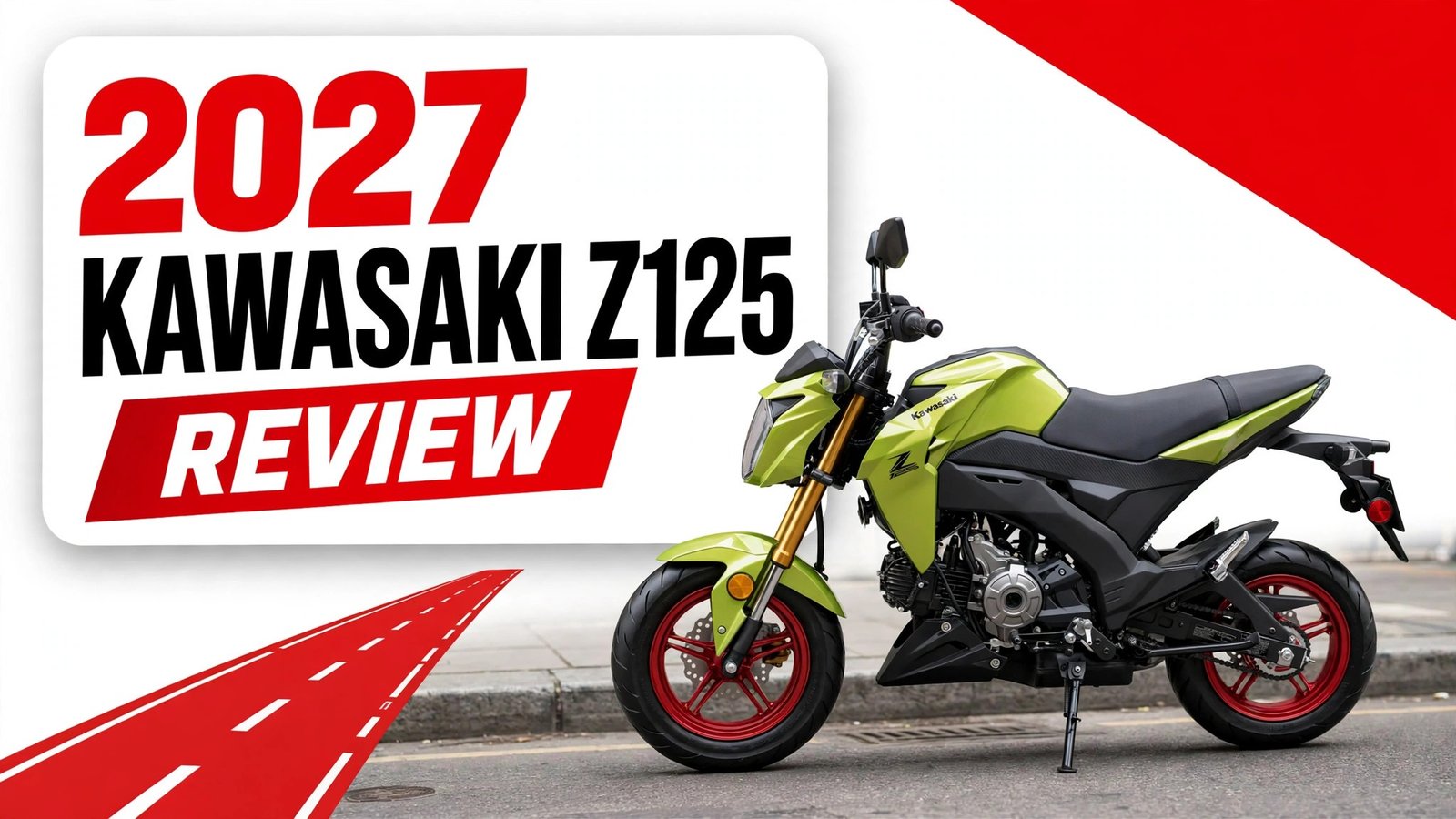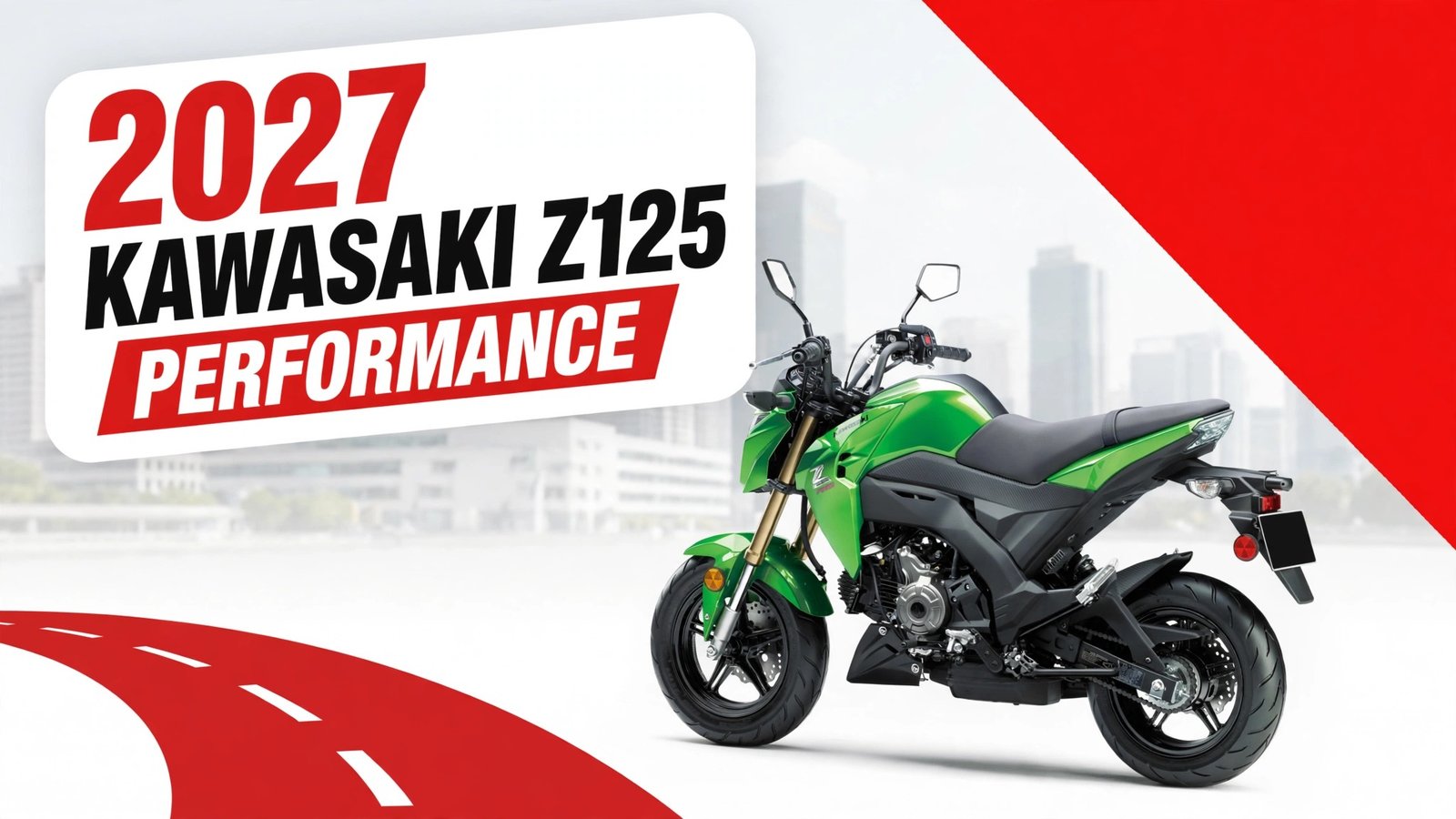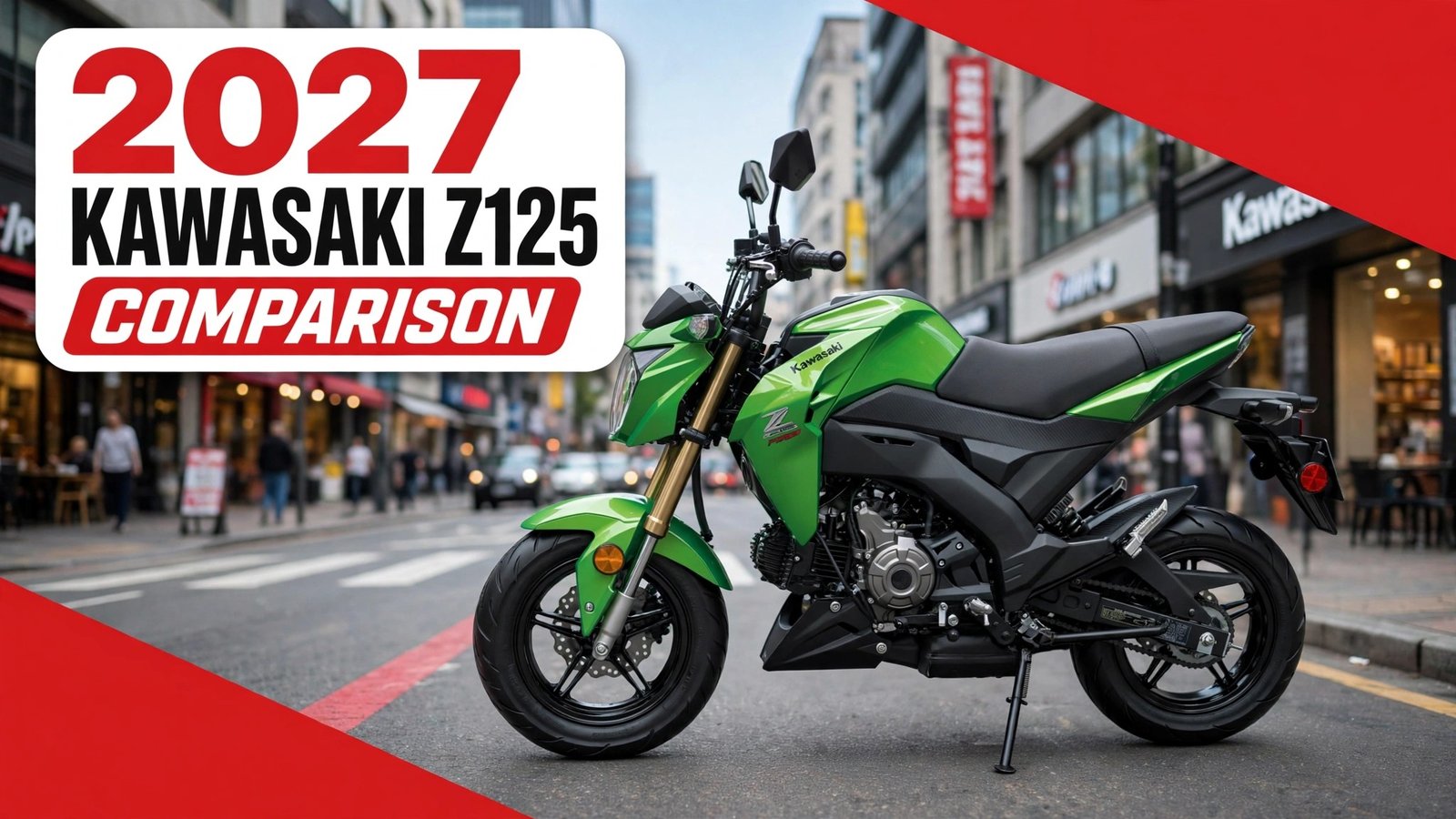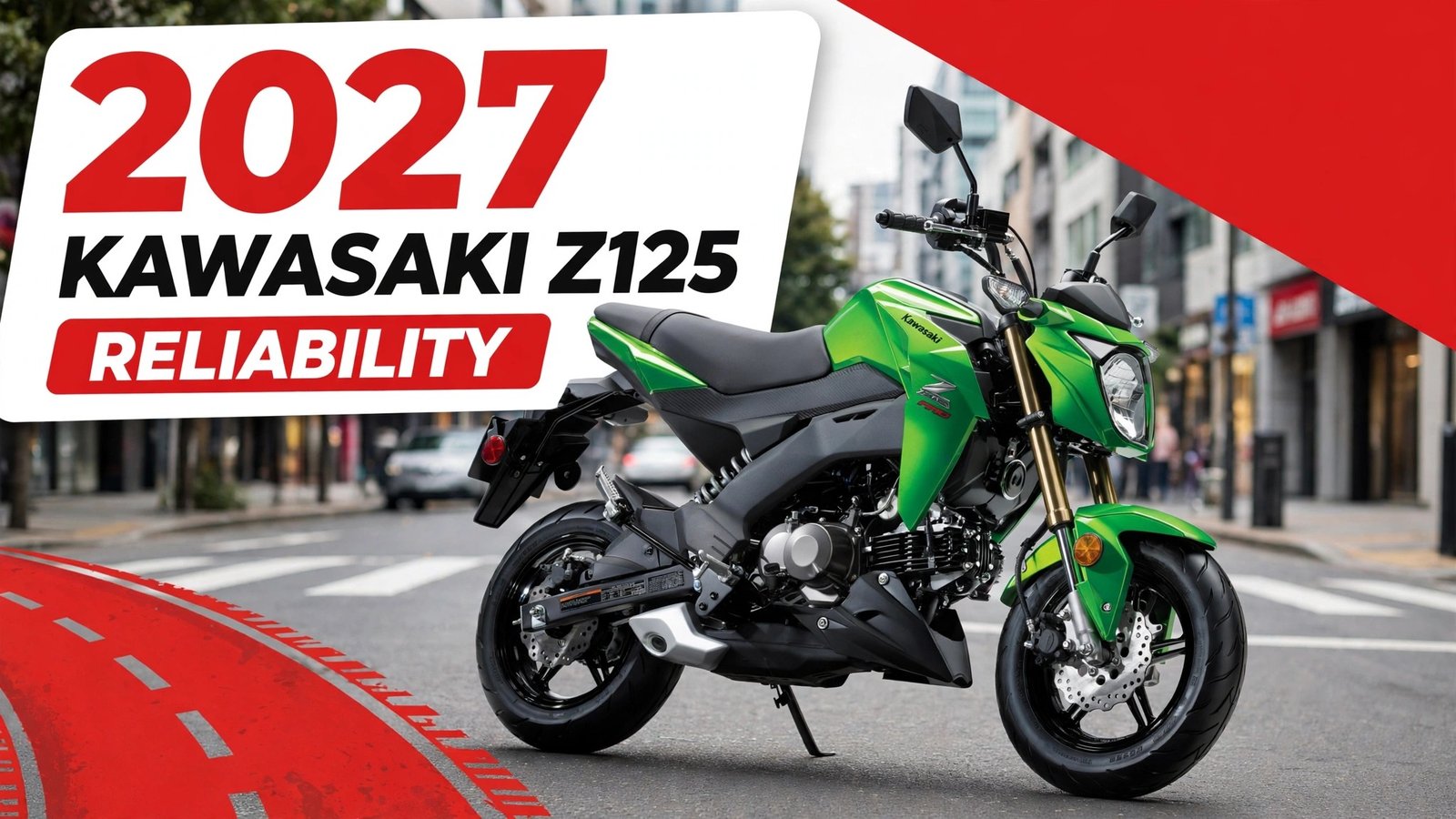
The Kawasaki Z125 PRO is a simple motorcycle, and simple motorcycles are usually reliable ones. An air-cooled 125cc single, a four-speed gearbox, a cable clutch and no electronics beyond fuel injection and a transistorised ignition leave very little to go wrong — and in nine model years on sale in the United States, very little has. This Kawasaki Z125 reliability guide covers the two recalls that do exist, both on early bikes, the 7,600-mile service rhythm that keeps the little single healthy, and the wear items an owner actually has to watch.
Kawasaki Z125 Reliability Overview
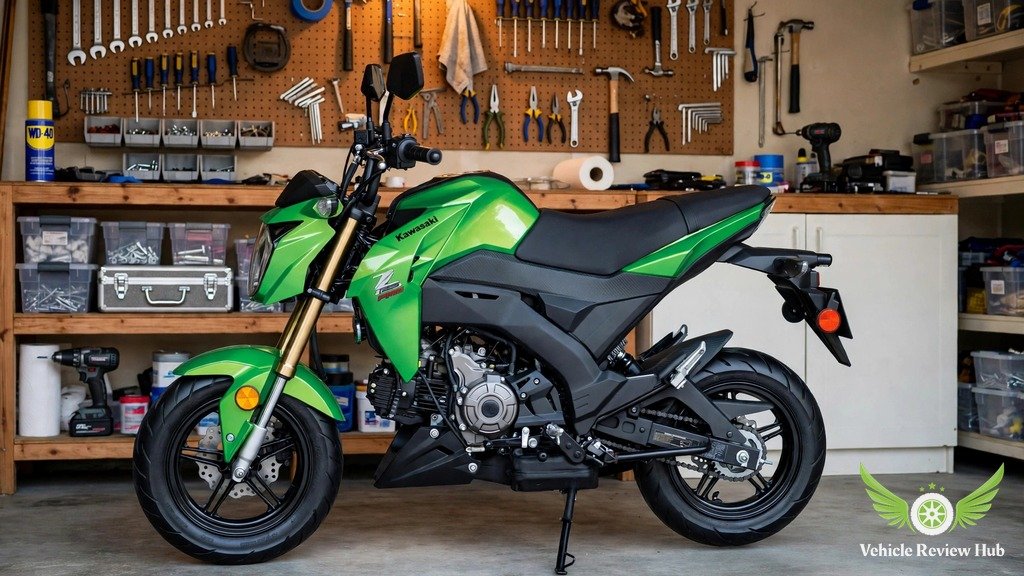
Kawasaki Z125 reliability starts with what the bike is not. It is not a stressed, high-output engine — the claimed 10.0 hp from 125cc is modest, and the measured 8.3 hp at the rear wheel is gentler still. It has no liquid cooling to leak, no ABS pump to fail and no ride-by-wire throttle to glitch. The things that can fail are mechanical and visible: a shock that leaks, a chain that stretches, a cable that slackens, oil that gets dirty in a sump holding less than a litre. That simplicity is the foundation of Kawasaki Z125 reliability.
Two Recalls, Both Early
There are exactly two recalls on the Kawasaki Z125 reliability record, and both touch early bikes only. The first is the ECU stall recall, NHTSA campaign 17V-774, covering 9,914 units of the 2017 and 2018 Z125 PRO and PRO KRT Edition. An improper fuel-injection setting in the ECU can stall the engine at low rpm when the throttle is opened slightly. Kawasaki’s remedy is a free ECU replacement under campaign MC 17-05. The second is the rear shock leak recall, NHTSA campaign 16V-535, covering 1,282 units of the 2017 model year built between February 4 and June 7, 2016. Improper grease can let the rear shock leak oil and lose function; the remedy is a free shock replacement under campaign MC16-04. No recall touches any 2019 or later bike. For Kawasaki Z125 reliability, both fixes are free and permanent.
| Campaign | Model years | Units | Defect | Remedy |
|---|---|---|---|---|
| 17V-774 | 2017–2018 | 9,914 | Improper ECU fuel-injection setting; engine may stall at low rpm | Free ECU replacement (Kawasaki campaign MC 17-05) |
| 16V-535 | 2017 | 1,282 | Rear shock absorber may leak oil and lose function | Free rear shock replacement (Kawasaki campaign MC16-04) |
Note: Both recalls in this Kawasaki Z125 reliability table are early-bike issues only. The 17V-774 unit count comes from the NHTSA Part 573 report; the 16V-535 count is the campaign figure from NHTSA, Motorcycle.com and Asphalt & Rubber. No recall touches any 2019 or later bike.
How Mileage, Storage and Previous Care Affect Reliability
Mileage matters less on a Z125 PRO than care does, and Kawasaki Z125 reliability follows the service book more than the odometer. The bike has no coolant system to corrode and no complex electronics to age, so the things that kill it are sitting unused and skipped oil changes. Fuel goes stale, batteries die, and chains rust — while the engine wears faster when its 0.95-litre sump holds old oil. A low-mileage bike that sat for two years needs more attention than a high-mileage bike that was ridden every week and serviced on schedule. Ask for the service records first and the mileage second.
Kawasaki Z125 Common Problems and Wear Items
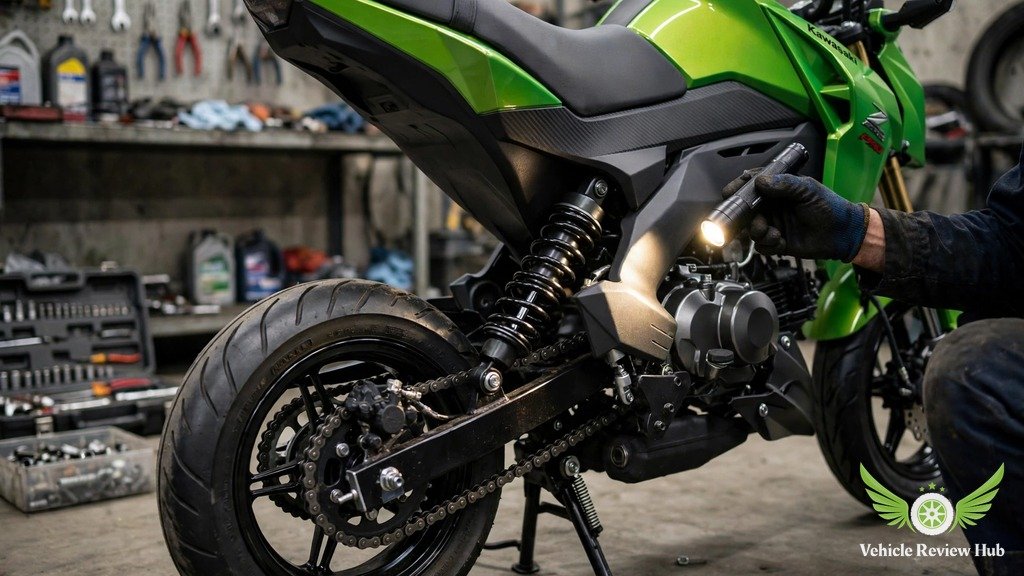
The common-problems list for the Z125 PRO is short, and that is itself a Kawasaki Z125 reliability finding. There is no pattern of engine failure, no electrical gremlin owners pass around on forums, and no chassis weakness that shows up with age. What exists is one genuine safety recall, one wear item that grows with use, one early-bike shock leak, and the ordinary consumables of any small motorcycle. Kawasaki Z125 reliability is helped by what the bike does not have: no liquid cooling, no ABS, no ride-by-wire.
17V-774: ECU Stall Fix
The ECU stall is the one Kawasaki Z125 reliability issue that matters as a safety matter, and it is also the one with the simplest fix. On affected 2017 and 2018 bikes, the engine can stall when the rider opens the throttle slightly at low rpm — pulling away from a traffic light, or slowing to a stop in traffic. The cause is an improper fuel-injection setting in the ECU, not a worn part, and the fix is a replacement ECU fitted free of charge by a Kawasaki dealer under campaign MC 17-05. By the third quarter of 2018, 5,669 of the 9,914 affected bikes had been remedied, so a used 2017 or 2018 bike can still be running its original ECU. The test is simple: ride the bike, open the throttle gently from a stop, and see whether it stalls. If it does, the ECU was never replaced — and the fix is a free dealer swap, not a tune-up. Kawasaki Z125 reliability guides treat the stall test as the first check on a 2017 or 2018 bike.
Clutch Freeplay Grows
The clutch on the Z125 PRO is cable-actuated, and cable stretch means the freeplay at the lever grows with use — which is why Kawasaki Z125 reliability guides list clutch adjustment as a routine owner job rather than a repair. As the cable stretches, the lever’s free travel increases, the bite point moves, and eventually the clutch stops disengaging cleanly, which shows up as clunky shifts. The fix is a cable adjustment, not a new clutch. For Kawasaki Z125 reliability, the clutch is a wear item to adjust, not a part to fear. No Kawasaki Z125 PRO-specific freeplay figure is published in the sources consulted for this guide, so this guide prints no number and defers to the owner’s manual.
Kawasaki Z125 Maintenance Schedule and Servicing
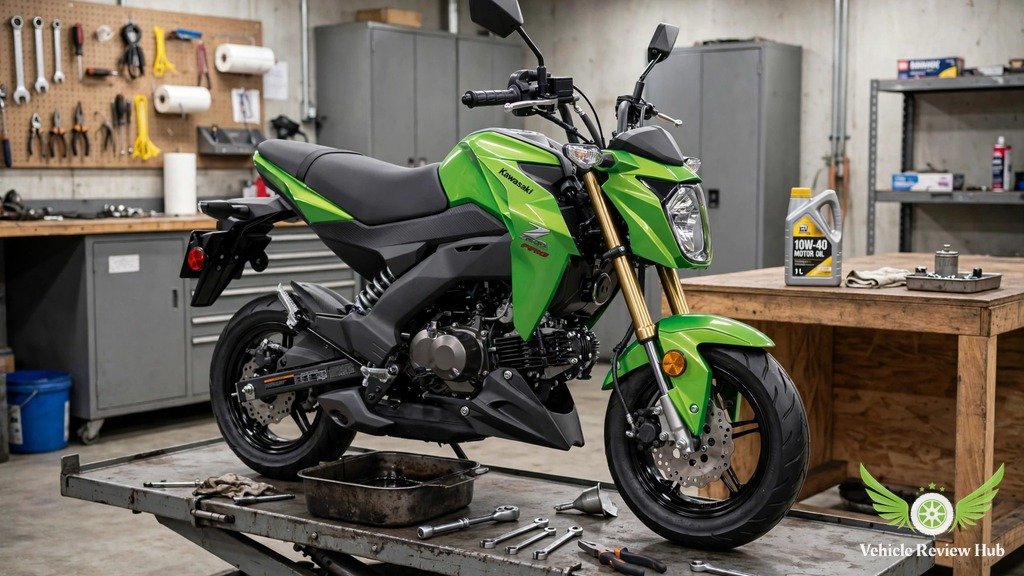
The maintenance schedule is the heart of Kawasaki Z125 reliability, because this is a bike whose whole service life is built around one repeating interval. The first service falls at 600 miles, and after that the bike comes back every 7,600 miles — 12,000 km in the manual’s metric figures. There is no separate minor and major service to memorise: the same three jobs — engine oil, oil filter and a valve-clearance check — are due at every service, including the first one. That valve check is the item owners most often skip, and the one that matters most at resale. Owners who keep the schedule keep the bike — that is Kawasaki Z125 reliability.
| Service (miles) | Engine oil | Oil filter | Valve-clearance check | Air filter / spark plug | Brake fluid |
|---|---|---|---|---|---|
| 600 (first) | Replace | Replace | Check | Inspect | Inspect |
| 7,600 | Replace | Replace | Check | Inspect | Inspect |
| 15,200 | Replace | Replace | Check | Replace | Inspect |
| 22,800 | Replace | Replace | Check | Inspect | Replace (every 2 years) |
| 30,400 | Replace | Replace | Check | Replace | Inspect |
Note: This Kawasaki Z125 reliability schedule follows the owner’s manual as transcribed by maintenanceschedule.com: first service at 600 miles, then every 7,600 miles. Oil, oil filter and a valve-clearance check are due at every service; the air filter and spark plug are due at 12,000 km intervals; DOT 4 brake fluid is replaced every two years.
Services at 7,600 Miles
What a 7,600-mile service actually involves is straightforward, and Kawasaki Z125 reliability depends on it being done rather than on it being complicated. The oil is drained and refilled with SAE 10W-40 meeting API SG, SH, SJ, SL or SM and JASO MA, MA1 or MA2 — 0.95 litres with a new filter, 0.85 litres for a drain-only change, with 0.9 litres the rounded figure some guides print. The filter is a real cartridge paper element, Kawasaki part 52010-1053, or the Hiflofiltro HF112 aftermarket equivalent, and it is changed at every service along with the oil. The valve clearances are checked at every service; the clearance values are unpublished in the sources consulted, so this guide prints no figure. The chain is lubricated every 400 miles and its slack checked every 600 miles, with wear inspected every 3,800 miles. Published guides disagree on the slack figure itself, so this guide prints no slack number and defers to the owner’s manual. Brake fluid is DOT 4, replaced every two years regardless of mileage. Kawasaki Z125 reliability rewards owners who treat the valve check as routine.
16V-535: 2017 Shock Leak
The second recall is a smaller story but the same lesson: check the shock on an early bike. Campaign 16V-535 covers 1,282 units of the 2017 model year, built between February 4 and June 7, 2016, where improper grease in the rear shock absorber can let oil leak out and the shock lose function. The symptom is visible — oil on the shock body, a rear end that feels soft or dead over bumps — and the remedy is a free shock replacement under Kawasaki campaign MC16-04, with the recall beginning on July 26, 2016. A buyer should check the shock body for oil and the VIN against the campaign. On a bike this light a dead shock is immediately obvious in the ride. For Kawasaki Z125 reliability, the shock leak tests the previous owner’s attention.
Kawasaki Z125 Tires, Brakes and Suspension Maintenance
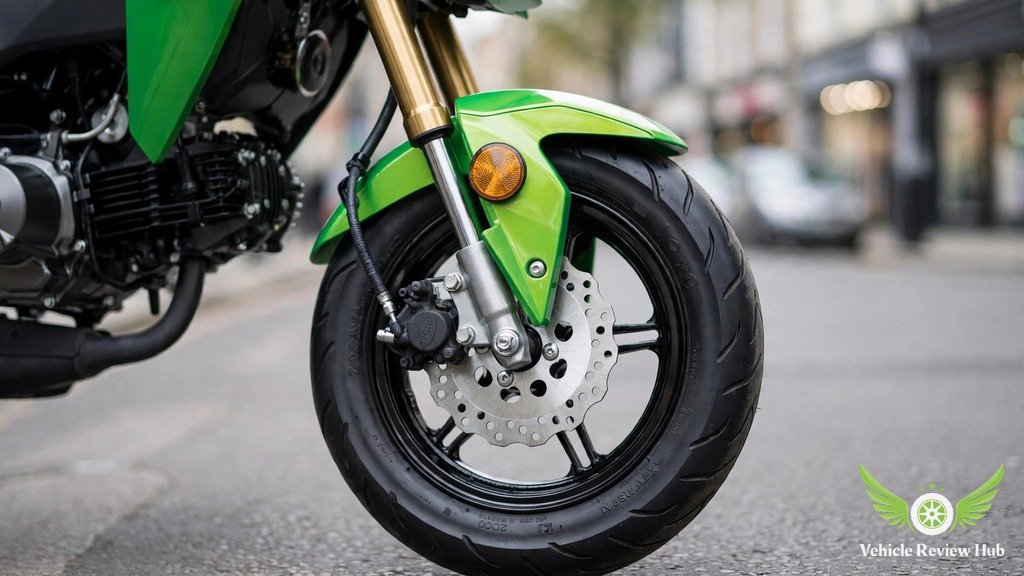
Tyres, brakes and suspension are where Kawasaki Z125 reliability is most visible to the rider, because all three are small, simple and cheap to keep right — and all three punish neglect quickly on a bike this light. The front tyre is a 100/90-12 and the rear a 120/70-12, both 12-inch sizes. The brakes are a single 200 mm petal disc up front and a single 184 mm petal disc at the rear, with no ABS anywhere in the system — no ABS pump to service, only pads, fluid and discs. The suspension is a 30 mm telescopic fork with 3.9 inches of travel and a single rear shock with 4.1 inches of travel and four-position preload adjustment. For Kawasaki Z125 reliability, the absence of ABS is a trade-off, not a flaw.
It Has an Oil Filter
The oil filter deserves its own heading because it settles a question that confuses mini-bike buyers. The Z125 PRO has a real, replaceable cartridge paper element — Kawasaki part 52010-1053, or Hiflofiltro HF112 — sitting on the right side of the engine case, and it is changed at every 7,600-mile service along with the oil. That matters because the early Honda Grom, the bike the Z125 PRO was built to answer, had no replaceable filter element at all. With only 0.95 litres of oil in the sump — the engine’s only coolant as well as its lubricant — a dirty filter wears the engine fast. An engine working that hard on less than a litre of oil needs its filter changed on schedule, every time — and the Motorcycle.com dyno test measured the Z125 PRO at 8.3 hp at the rear wheel. That fact is central to Kawasaki Z125 reliability.
| Item | Specification | Part / interval |
|---|---|---|
| Engine oil | SAE 10W-40, API SG/SH/SJ/SL/SM, JASO MA/MA1/MA2 | 0.95 L with filter / 0.85 L drain-only |
| Oil filter | Cartridge paper element | Kawasaki 52010-1053 / Hiflofiltro HF112, every service |
| Spark plug | NGK CR6HSA × 1, gap 0.6–0.7 mm, 13 Nm | Replace at 12,000 km intervals |
| Chain | 420 chain, 14T front / 30T rear | Lube every 400 mi; slack check every 600 mi |
| Tyre pressures | 22 psi front / 25 psi rear solo; 29 psi rear 2-up | Check cold; tyres 100/90-12 / 120/70-12 |
| Brake fluid | DOT 4 | Replace every 2 years |
| Brake pads | Front 43082-0134; rear 43082-0043 | EBC FA197HH fits both ends |
Note: Every figure in this Kawasaki Z125 reliability table comes from the owner’s manual as transcribed by maintenanceschedule.com and the service manual, with the oil capacity and plug gap cross-checked against a second source. The drain-bolt torque and the valve-clearance values are not printed here: the torque figures conflict between sources and the clearances are unpublished in the sources consulted.
Tire, Brake and Suspension Checks That Matter
The checks that matter are the ones an owner can do in a driveway before a ride. Tyre pressures are 22 psi front and 25 psi rear solo, 29 psi rear with a passenger — the 29 psi figure in some manual extracts is the loaded figure, not the solo one. Pressures are checked cold, because a 12-inch tyre warms fast and a hot reading lies. Brake pads are Kawasaki 43082-0134 at the front and 43082-0043 at the rear, with the EBC FA197HH fitting both ends, and the single 200 mm front disc is the strongest stop in the mini class, per Motorcycle.com’s Ankle Biters braking exercise. Set the rear shock’s four-position preload for the rider’s weight — RevZilla’s first ride used the second notch for a 205 lb rider on San Francisco’s streets. A buyer should bounce the rear end, look for oil on the shock body, and check the fork seals for weeping. These checks make Kawasaki Z125 reliability a driveway job, not a dealer job.
Kawasaki Z125 Maintenance and Ownership Costs
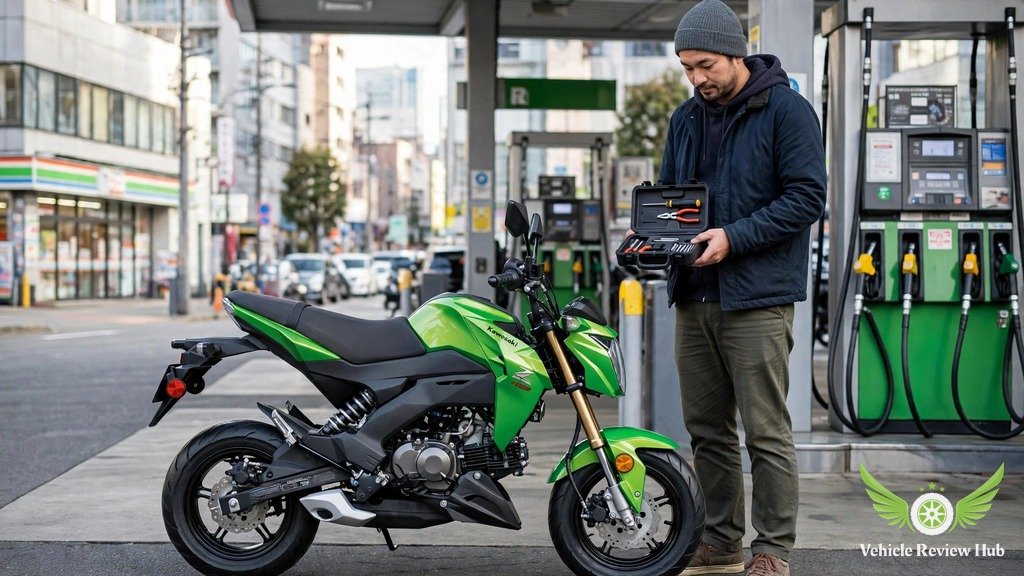
Ownership costs are where Kawasaki Z125 reliability turns into money, and the news is good in almost every line. A new 2027 Z125 PRO costs $3,799 before destination, $4,114 delivered, and the Cypher Camo Beige version costs $3,999 before destination, $4,314 delivered — but the running costs after that are the cheapest in the mini class. The 2.0-gallon tank, the 12-inch tyres, the 0.95-litre oil change and the absence of anything expensive to fail — no coolant, no ABS servicing, no shaft drive — mean the bike costs very little to keep. The one cost that surprises owners is the valve check, the only labour-heavy item in the schedule. Kawasaki Z125 reliability is cheap because there is almost nothing expensive to fail.
Fuel, Routine Servicing, Tires and Replacement Parts
Fuel is the cheapest running cost in the class. Kawasaki’s own launch figures conflict — MotorcycleDaily quotes a rating north of 100 mpg while Rider Magazine quotes a claimed 135 mpg, and neither is a measured figure — but even at the low end of the published range a fill-up costs a few dollars and a tank lasts a working week of commuting. Insurance is mini-bike cheap. The used market is the value play: in November 2026, used 2022–2024 Z125 PROs were listed at $2,684 to $2,799 on Cycle Trader, and new leftover 2025 bikes were discounted to $2,949–$2,999 — roughly $1,100 to $1,400 less than a new 2027 delivered. A buyer cross-shopping the mini class should also read the Ninja 125 reliability guide, the faired 125 single that shares the Z125’s simple maintenance rhythm, and the Ninja 500 reliability guide for what the next step up costs to keep. For Kawasaki Z125 reliability, the service book is worth more than the mileage reading.
| Part | Kawasaki part | Aftermarket |
|---|---|---|
| Oil filter | 52010-1053 | Hiflofiltro HF112 |
| Spark plug | NGK CR6HSA × 1 | — |
| Air filter | 11013-0756 | K&N KA-2414 |
| Front brake pads | 43082-0134 | EBC FA197HH |
| Rear brake pads | 43082-0043 | EBC FA197HH |
| Battery | YTZ4V | YTX4L-BS |
| Chain | 420, 14T front / 30T rear | — |
Note: Part numbers in this Kawasaki Z125 reliability table are verified from the maintenance schedule transcription and the service manual. The battery has two listed equivalents, YTZ4V and YTX4L-BS; the chain is a 420 with 14-tooth front and 30-tooth rear sprockets.
Big-Bore Kits Are Scene
The aftermarket for the Z125 PRO is real and well developed, and big-bore kits are the centre of it — which is why Kawasaki Z125 reliability has to cover them, because a big bore changes the bike’s reliability more than any other modification. The most popular kit is the TB Parts 143cc big-bore kit, a 60 mm bore drop-in; SP Takegawa’s Hyper S Stage kits go to 178cc. The rule with any of them is non-negotiable: a fuel controller — an aRacer or a Dynojet Power Commander — must go on with the kit, because the stock ECU runs lean and a lean big bore will overheat and can melt a piston. A big bore also voids the 12-month limited warranty, and it changes the bike’s reliability profile from a mild, understressed single to a tuned one that needs more frequent oil changes. A buyer should ask whether a used bike has a big-bore kit, and whether a fuel controller is fitted. The TB Parts big-bore range lists the 143cc kit and its stroker options, and the Ninja 650 reliability guide shows what a bigger Kawasaki twin costs to keep when the mini class starts to feel small. Kawasaki Z125 reliability after a big bore depends on the fuel controller and the oil-change rhythm.
How to Keep a Kawasaki Z125 Reliable
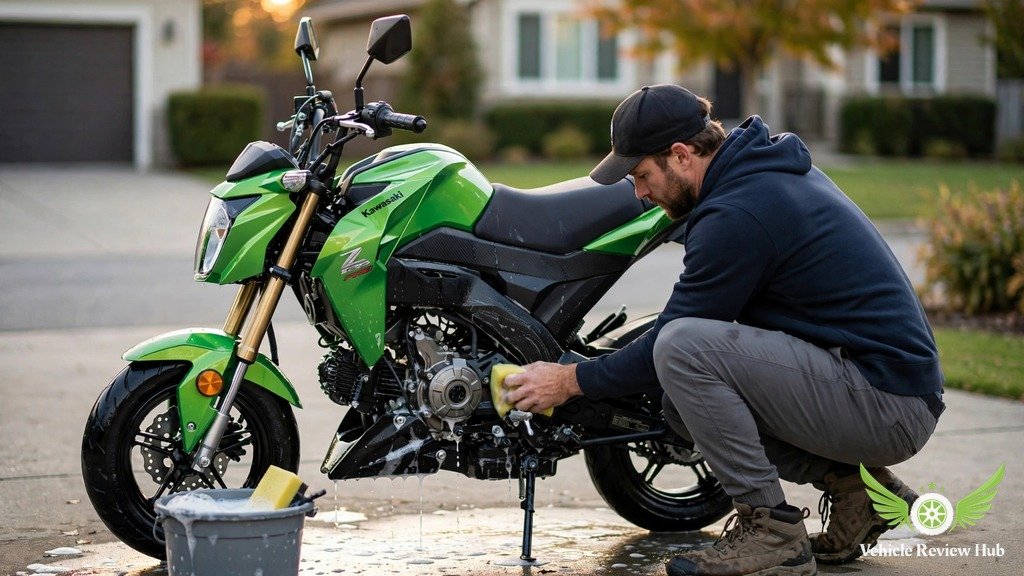
Keeping a Z125 PRO reliable is less a skill than a habit, and the habit is the 7,600-mile rhythm. The bike asks for very little — oil, a filter, a valve check, a chain lube, a pressure check — and it asks for it on a schedule a phone calendar can hold. The owners who get ten years out of a mini do the small jobs on time and keep the records. Kawasaki Z125 reliability, in the end, is a contract between a simple motorcycle and an owner willing to do simple maintenance.
Preventive Maintenance, Records and Regular Inspections
The preventive routine fits on an index card. Follow the 7,600-mile rhythm without exception. Check the oil level through the sight glass with the bike upright after a warm shutdown. Lubricate the chain every 400 miles and check its slack every 600 miles, adjusting per the owner’s manual. Check the tyre pressures cold — 22 psi front, 25 psi rear solo — before a ride, not after one. Keep the battery on a tender if the bike sits for weeks. Inspect the pads, fork seals and shock body at every oil change, and watch for the two early-bike tells: shock oil and a low-rpm stall. Keep the service records, because a stamped book is worth money at resale on a bike this cheap. The KLX230R reliability guide follows the same air-cooled-single logic on the off-road side of the Kawasaki range, and the Kawasaki Z125 review covers the prices and the model-year history behind any buying decision. Kawasaki Z125 reliability is built in the driveway, one small job at a time.
No Grom Stop-Sale Here
There is one more Kawasaki Z125 reliability advantage that has nothing to do with engineering and everything to do with timing. Honda issued a stop-sale notice on August 7, 2025, covering all 2020 and 2022–2026 Grom 125 models — an emissions recall, after a fuel permeation test failure found the fuel system was not within certification compliance. While the notice stood, dealers could not sell the Groms they had on the floor. The Z125 PRO has no stop-sale and no equivalent emissions recall. A buyer cross-shopping the two minis in late 2025 and into 2026 could buy a Z125 PRO off the floor while Groms were held — and the GoRollick first ride that called the Z125 a Grom killer back in 2018 reads differently now, when the Kawasaki is the one a buyer can actually ride home. That availability is part of Kawasaki Z125 reliability in the real world.
Kawasaki Z125 Reliability: Frequently Asked Questions
The answers below are short, direct, and based on the figures in this Kawasaki Z125 reliability guide.
Are there any recalls on the Kawasaki Z125?
Yes, two, both on early bikes: 17V-774 (9,914 units, 2017–2018, ECU stall — free ECU replacement) and 16V-535 (1,282 units, 2017, rear shock oil leak — free shock replacement). No recall touches any 2019 or later bike.
How often does a Kawasaki Z125 need servicing?
First service at 600 miles, then every 7,600 miles. Oil, oil filter and a valve-clearance check are due at every service.
Does the Kawasaki Z125 have an oil filter?
Yes. It uses a real cartridge filter — Kawasaki part 52010-1053, or Hiflofiltro HF112 — changed at every service along with the oil.
What is the oil capacity of a Kawasaki Z125?
0.95 litres with a new filter, 0.85 litres for a drain-only change, using SAE 10W-40. Some guides round the figure to 0.9 litres.
What tyre pressures does a Kawasaki Z125 use?
22 psi front and 25 psi rear solo; the rear goes to 29 psi with a passenger or a load.
Can you put a big-bore kit on a Kawasaki Z125?
Yes. The popular TB Parts 143cc kit is a drop-in, and Takegawa kits go to 178cc — but a fuel controller is non-negotiable, and a big bore voids the warranty and changes the bike’s reliability.