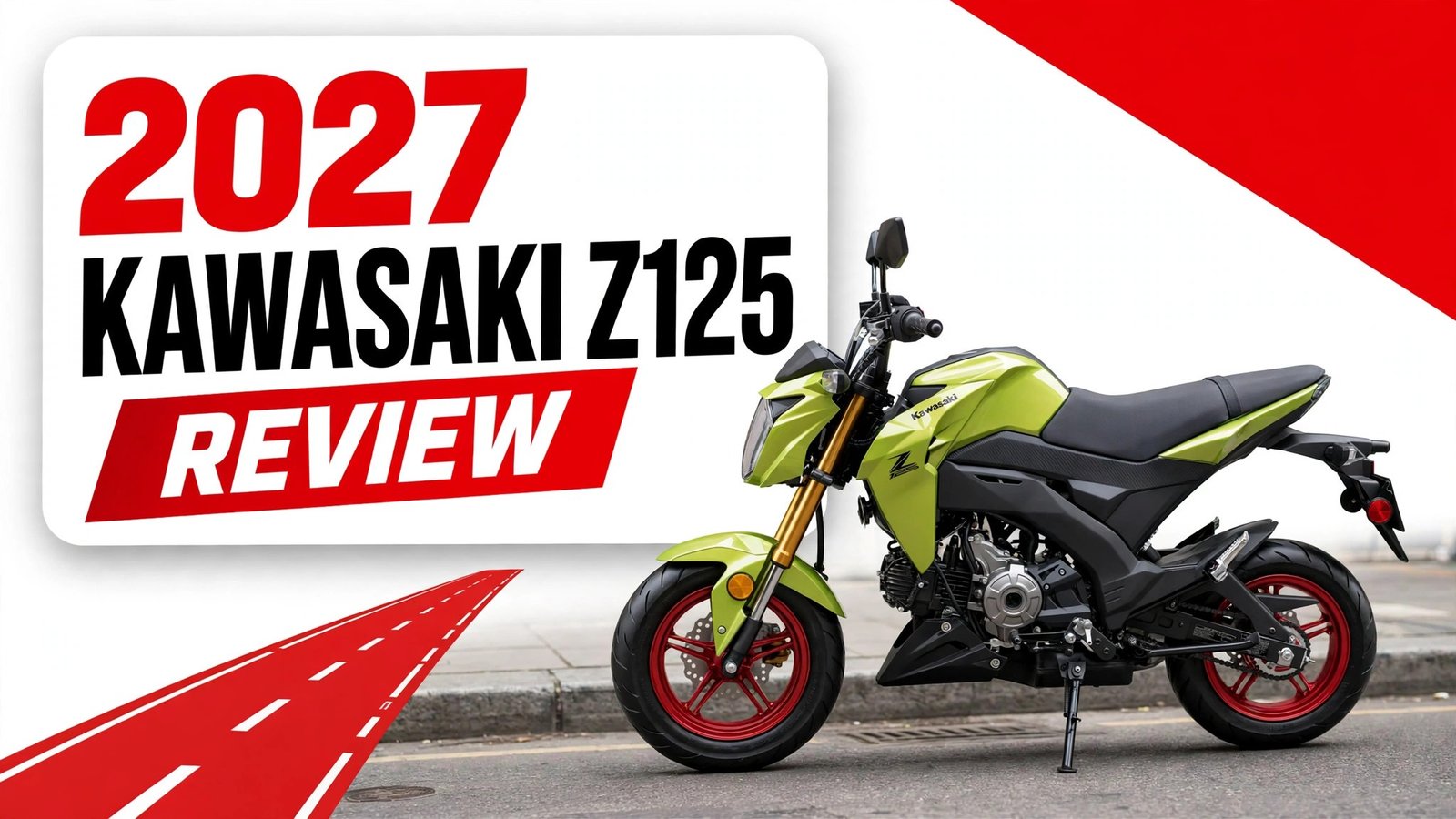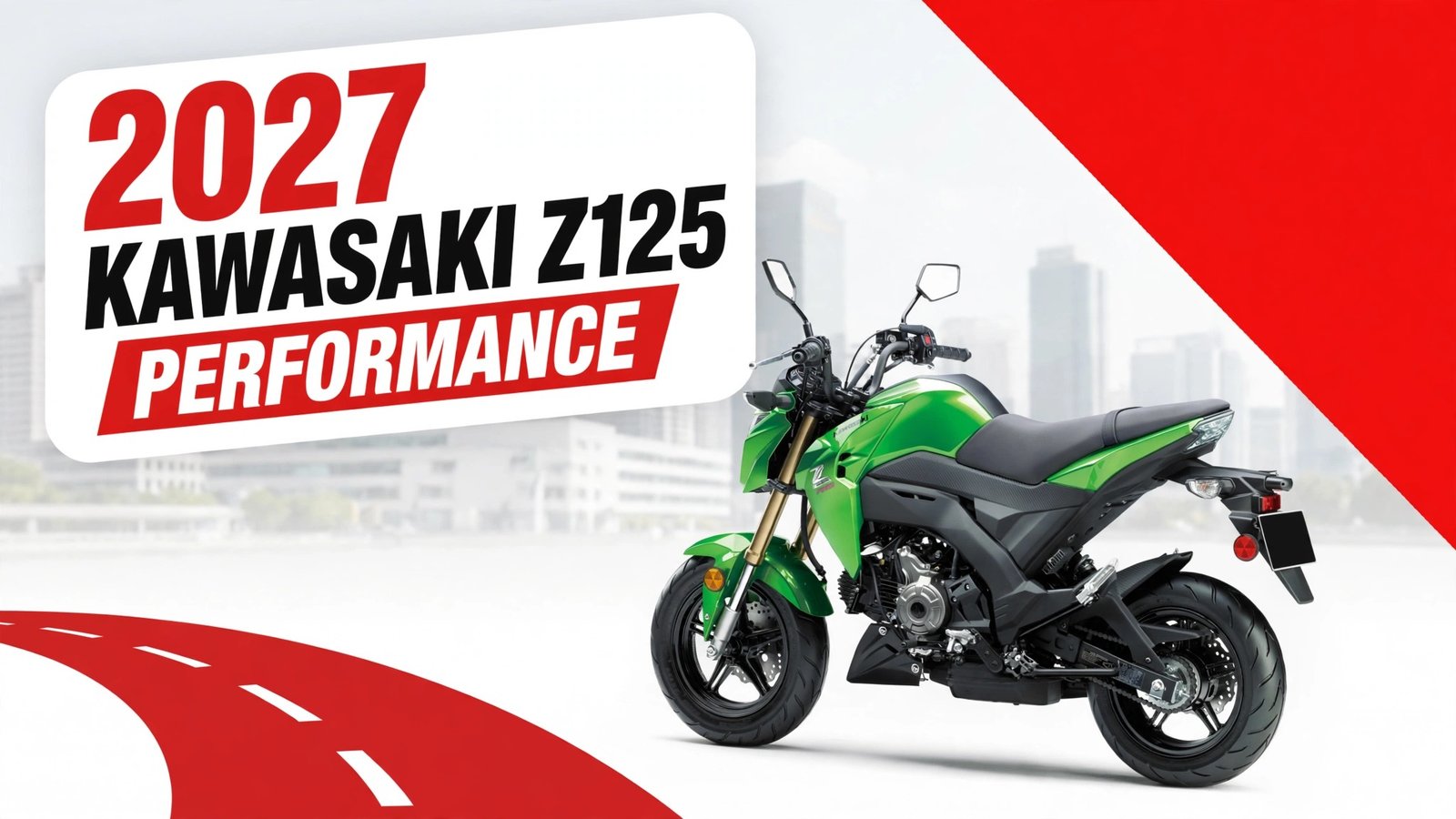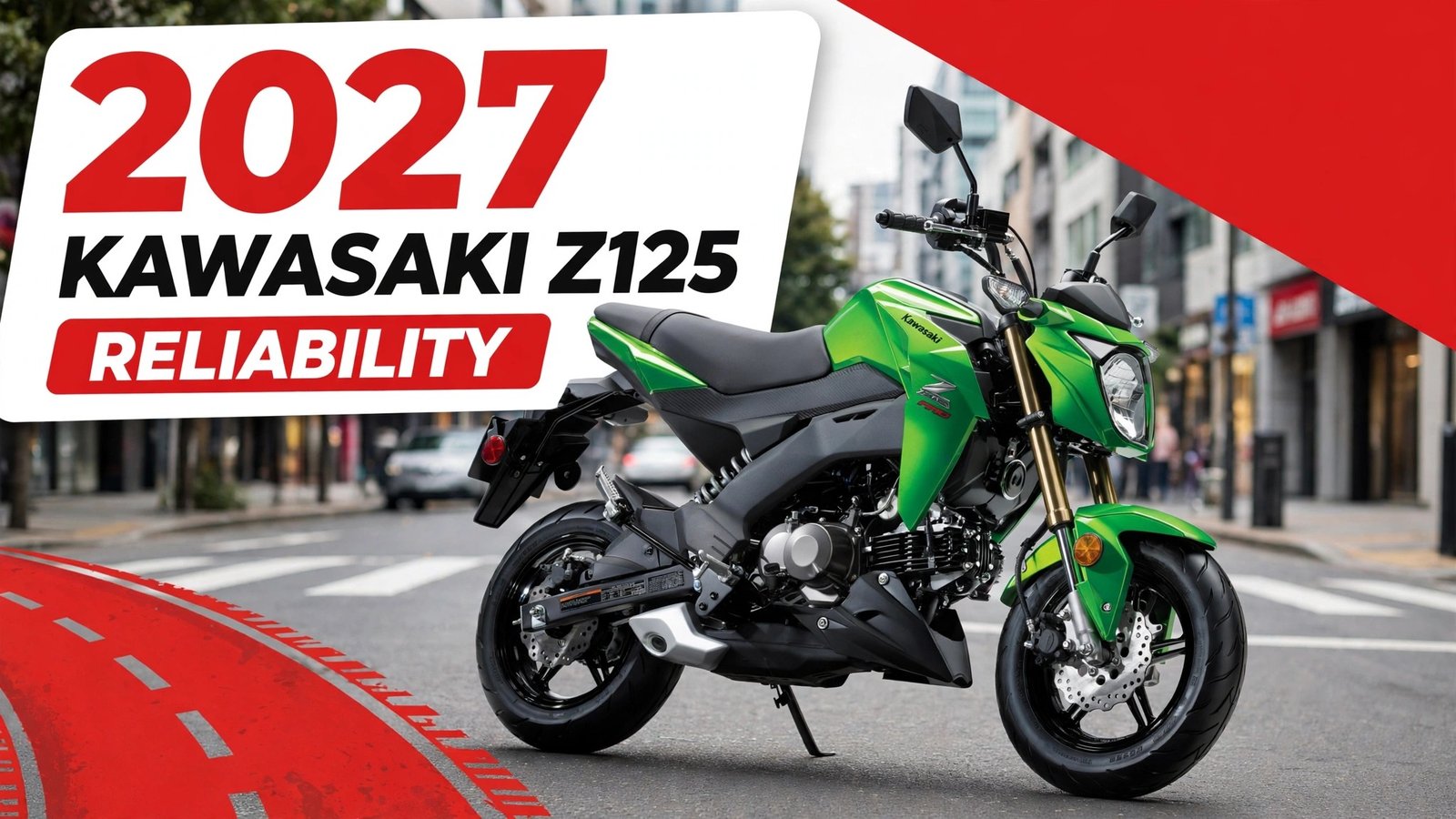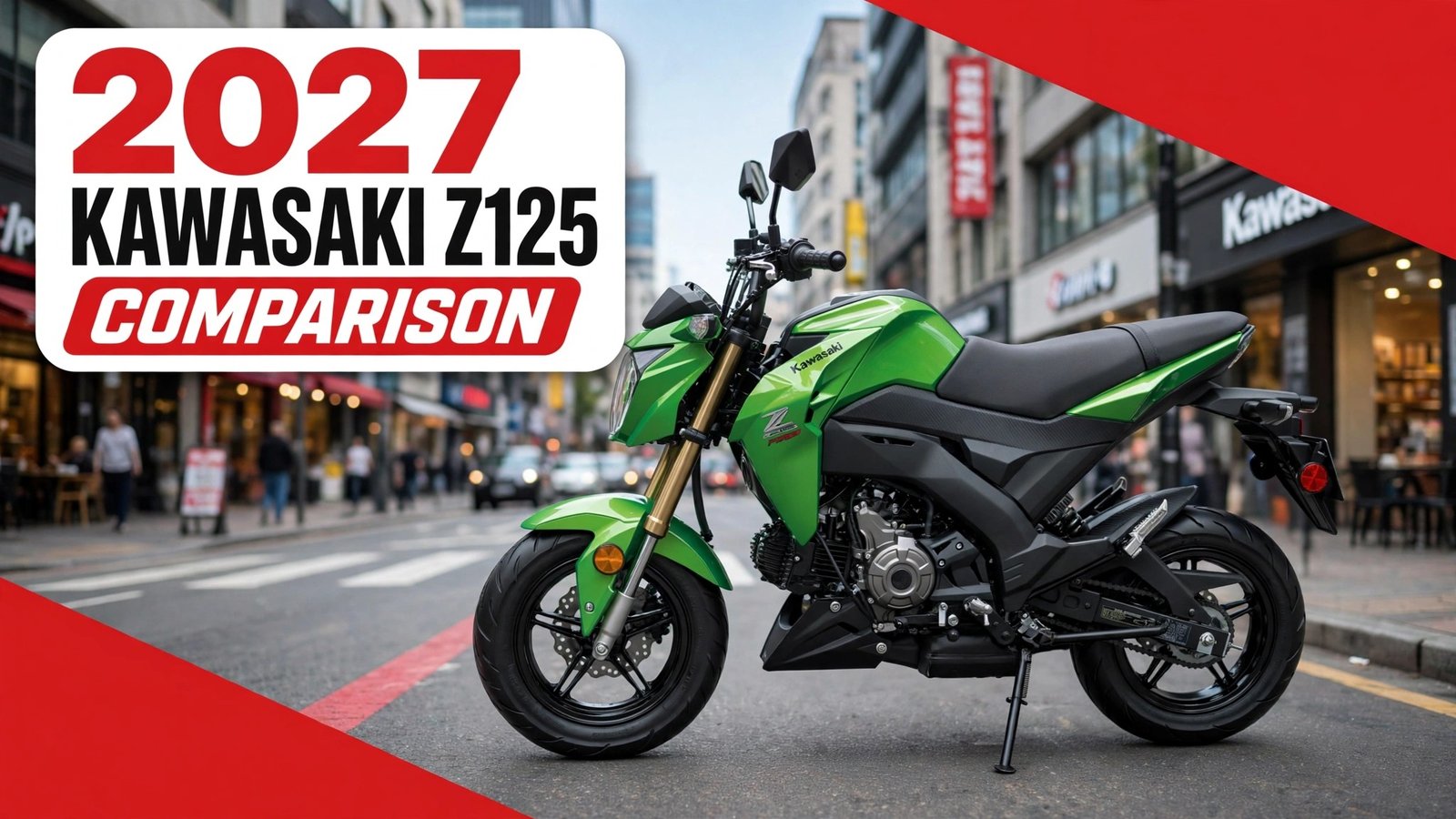
The Kawasaki Z125 PRO used to win its argument on price. In 2017 it undercut the Honda Grom by $200. That argument is dead in this Kawasaki Z125 comparison. In 2026–2027 the Z125 costs $4,114 delivered against the base Grom’s $3,899, so this Kawasaki Z125 comparison has to be fought on character — agility, brakes, tank range and riding position against the Grom’s power, fifth gear and ABS, the Monkey’s style and ABS, and the Papio’s price.
Kawasaki Z125 Overview and Its Closest Rivals
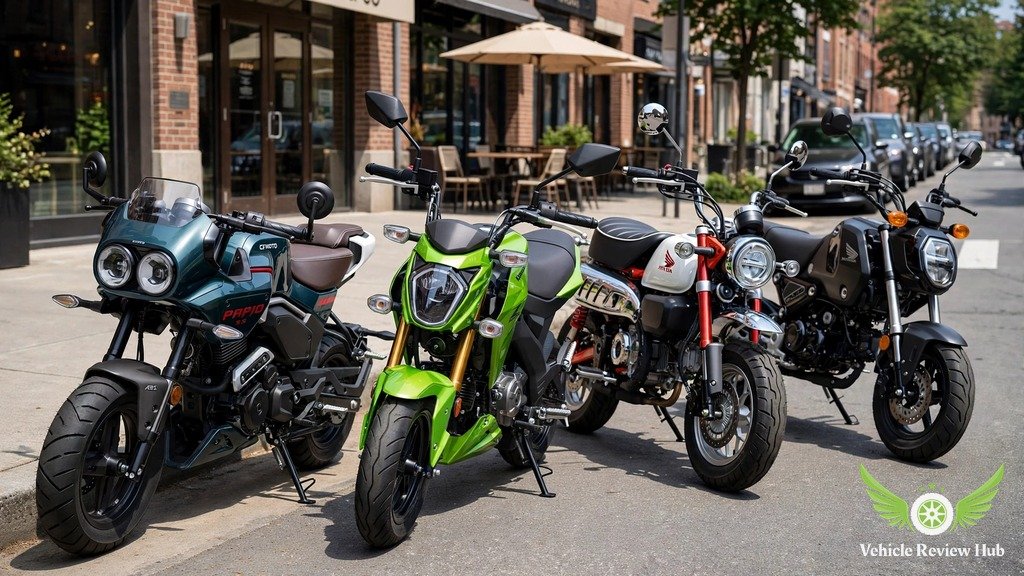
The mini class is small in every sense: four air-cooled singles, all under $5,000 delivered, all with 12-inch wheels and a manual clutch — except the automatic Navi, the price floor rather than a rival. The Kawasaki Z125 PRO is the 2027 survivor: Thai-built, 125cc, on US sale since 2017, 4-speed, no ABS, 31.7-inch seat. The Honda Grom is its oldest enemy and the class benchmark, the Monkey ABS is the same 124cc Honda single in retro chrome with standard ABS, and the Papio SS is the cheapest new mini. This Kawasaki Z125 comparison measures the Kawasaki against each in turn, then weighs price and value.
Undercut Case Is Dead
The maths is the story of this Kawasaki Z125 comparison. In 2017 the Z125 PRO launched at $2,999 against the Grom’s $3,199 — a $200 undercut. Ten model years later: the 2027 Z125 PRO costs $3,799 before destination, $4,114 delivered with the $315 charge, while the 2026 base Grom costs $3,599, $3,899 delivered with its $300 charge. The Z125 now costs $215 MORE than the base Grom, with no mechanical change to show for it. The undercut case is dead, and the Z125 has to win on character: the most agile bike and the best brakes in the shootout, the biggest tank, the tallest, roomiest riding position.
How the Four Bikes Differ at a Glance
The numbers below are the manufacturers’ figures for the current model years — 2027 Kawasaki, 2026 Hondas, 2025 CFMOTO — delivered prices computed from each bike’s own destination charge. The Papio has no delivered price in this Kawasaki Z125 comparison because CFMOTO’s destination charge is unpublished, so its $3,299 stands as MSRP only.
| Item | Kawasaki Z125 PRO (2027) | Honda Grom (2026) | Honda Monkey ABS (2026) | CFMOTO Papio SS (2025) |
|---|---|---|---|---|
| MSRP | $3,799 (+$200 camo) | $3,599 / $3,699 SP / $3,799 ABS | $4,399 | $3,299 |
| Destination | $315 | $300 | $300 | Unpublished |
| Delivered | $4,114 / $4,314 camo | $3,899 / $3,999 / $4,099 | $4,699 | $3,299 + ? |
| Engine | 125cc air-cooled single, SOHC 2-valve | 124cc air-cooled single, SOHC 2-valve | 124cc air-cooled single, SOHC 2-valve | 126cc air-cooled single, SOHC 2-valve |
| Claimed power | 10.0 hp @ 8,000 rpm | 9.7 hp @ 7,000 rpm | 9.3 hp @ 6,750 rpm | 9.4 hp @ 8,250 rpm |
| Torque | 7.1 lb-ft @ 6,000 rpm | 7.7 lb-ft @ 5,500 rpm | 8.1 lb-ft @ 5,500 rpm | 6.78 lb-ft @ 6,500 rpm |
| Gears | 4-speed, manual clutch | 5-speed, manual clutch | 5-speed, manual clutch | 6-speed, manual clutch |
| Seat height | 31.7 in | 30.0 in | 30.5 in | 29.9 in (SS) / 29.1 in (CL) |
| Curb weight | 224.8 lb | 224 lb (227 lb ABS) | 231 lb | 251 lb press / 257.9 lb manual |
| Fuel tank | 2.0 gal | 1.59 gal | 1.5 gal | 1.9 gal |
| Front brake | 200 mm petal disc, no ABS | 220 mm disc, ABS on ABS trim | 220 mm disc, front-wheel ABS std | Disc, ABS (SS) |
| Top speed | ~60 mph observed | ~60 mph observed | ~59 mph (estimated) | 56 mph (designed) |
| Warranty | 12 months | 12 months | 12 months | 12 months |
Note: Every figure in this Kawasaki Z125 comparison table is the manufacturer’s figure for the model year shown, re-verified against Honda’s and CFMOTO’s pages. The Monkey’s seat is 30.5 inches on Honda’s current page, and its power is 9.3 hp at 6,750 rpm — the 9.7 hp sometimes quoted for it is the Grom’s rating. The Papio’s curb weight is given both ways: 251 lb from the press, 257.9 lb from CFMOTO’s manual.
Kawasaki Z125 vs Honda Grom
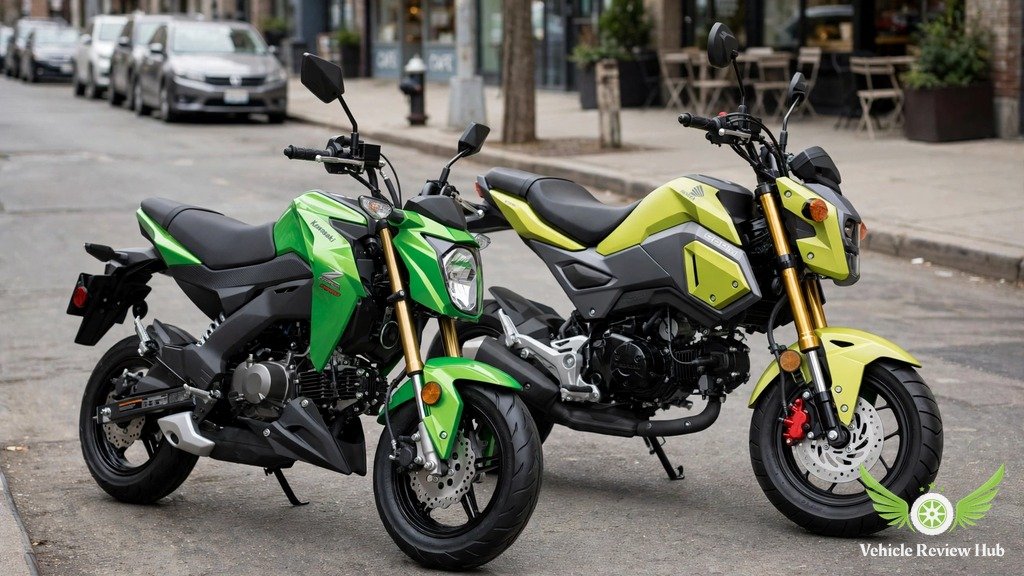
The Grom is the bike the Z125 PRO was built to answer, and nine years on it is still the benchmark of this Kawasaki Z125 comparison. The Grom is the more refined, better-rounded machine; the Z125 the sharper, more agile one. The shootout verdict has held since 2017: Grom best all-rounder, Z125 a close second.
Engine, Specs and Performance Side by Side
On paper the Grom has the better engine in this Kawasaki Z125 comparison. Its 124cc single is undersquare and makes 9.7 hp with 7.7 lb-ft, against the Z125’s oversquare single claiming 10.0 hp and 7.1 lb-ft. On Motorcycle.com’s dyno the Grom’s advantage is real: 8.7 hp and 7.8 lb-ft against the Z125’s 8.3 hp and 6.5 lb-ft. The Grom also has the fifth gear the Z125 lacks and a 220 mm front disc against the Z125’s 200 mm petal disc — though the Z125’s brakes won the braking exercise. Where the Z125 fights back is feel: shorter gearing, the most agile chassis, the bigger tank. Both top out at about 60 mph observed. The Motorcycle.com dyno test is the source for the rear-wheel figures; the Kawasaki Z125 performance guide covers the dyno and the fuel-economy conflict.
Motorcyclist Magazine’s MC Commute is a commuter test of the Z125 Pro itself — a morning ride through Southern California traffic, with its feathery cable clutch and slick-shifting four-speed — not a head-to-head against the Grom. It shows what the bike is like to live with at city speed, where this Kawasaki Z125 comparison is decided more than on any spec sheet.
| Item | Kawasaki Z125 PRO (2027) | Honda Grom (2026) |
|---|---|---|
| MSRP | $3,799 (+$200 camo) | $3,599 / $3,699 SP / $3,799 ABS |
| Delivered | $4,114 / $4,314 camo | $3,899 / $3,999 / $4,099 |
| Engine | 125cc air-cooled single, SOHC 2-valve | 124cc air-cooled single, SOHC 2-valve |
| Claimed power | 10.0 hp @ 8,000 rpm (ISO 4106) | 9.7 hp @ 7,000 rpm |
| Dyno power | 8.3 hp @ 7,800 rpm / 6.5 lb-ft | 8.7 hp @ 6,700 rpm / 7.8 lb-ft |
| Torque (claimed) | 7.1 lb-ft @ 6,000 rpm | 7.7 lb-ft @ 5,500 rpm |
| Gears | 4-speed, manual clutch | 5-speed, manual clutch |
| Seat height | 31.7 in | 30.0 in |
| Curb weight | 224.8 lb | 224 lb (227 lb ABS) |
| Fuel tank | 2.0 gal | 1.59 gal |
| Front brake | 200 mm petal disc, no ABS | 220 mm disc, ABS on ABS trim |
| Top speed | ~60 mph observed | ~60 mph observed |
Note: Dyno figures in this Kawasaki Z125 comparison come from Motorcycle.com’s MotoGP Werks dyno, both bikes tested the same day, same drum. The 10.0 hp and 9.7 hp figures are the manufacturers’ claimed crank figures, never dyno results.
Price, Equipment and Which Suits Which Rider
Price is where this Kawasaki Z125 comparison turns against the Kawasaki. The base Grom costs $3,899 delivered — $215 less than the Z125’s $4,114 — and the Grom buyer gets a fifth gear, ABS for $200 more, a bigger aftermarket and better resale. Even the Grom ABS at $4,099 delivered is $15 cheaper than the base Z125, with front-wheel ABS the Kawasaki has never offered. The Z125’s case in this Kawasaki Z125 comparison has to rest on the ride: the most agile bike, the best brakes, the bigger tank. Honda’s stop-sale notice of August 7, 2025 covered all 2020 and 2022–2026 Groms over an emissions recall, and while it stood dealers could not sell the Groms on their floors. The Z125 PRO has no stop-sale. Buy the Grom for value and resale; buy the Z125 for the sharpest handling and the best brakes, accepting the $215 premium for character, not value. The Ankle Biters shootout is the best single read on the two bikes, and the Ninja 125 comparison shows how the faired 125 single stacks up.
Kawasaki Z125 vs Honda Monkey ABS
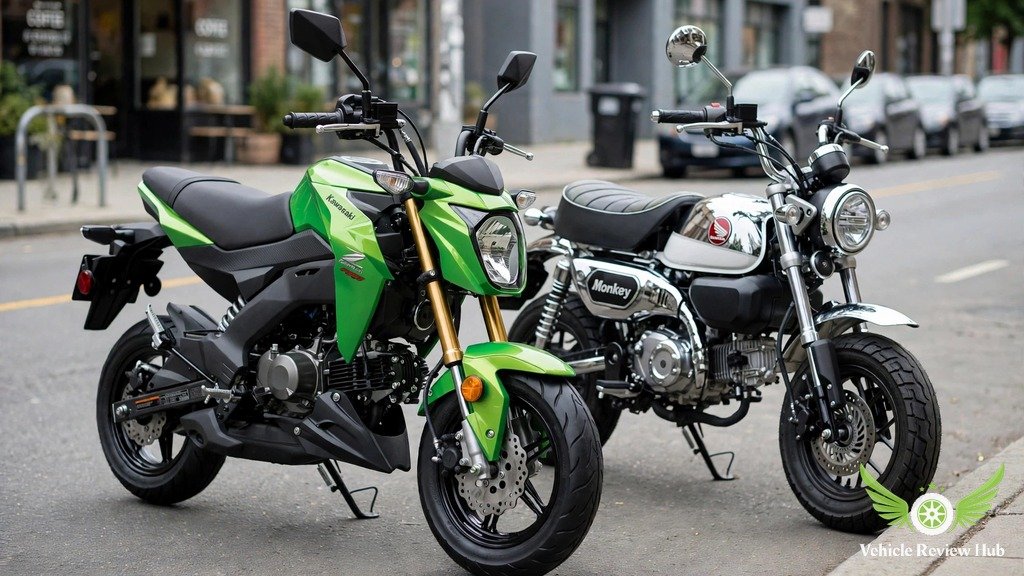
The Monkey is the Grom’s engine in a different costume — the same 124cc single and five-speed gearbox — wrapped in retro chrome, a round headlight and a tartan seat, with front-wheel ABS standard. For 2026 there is one US-market Monkey, in Matte Black Metallic, at $4,699 delivered. That makes this Kawasaki Z125 comparison a question of values: the Monkey sells style and safety, the Z125 sportiness and a lower price.
Engine, Specs and Performance Side by Side
The two bikes in this Kawasaki Z125 comparison share an engine family but not a rating. Honda rates the Monkey’s 124cc single at 9.3 hp with 8.1 lb-ft — less than the Grom’s 9.7 hp, more than the Z125’s 7.1 lb-ft. The Z125 claims 10.0 hp at 8,000 rpm, the highest claimed figure of the four bikes in this Kawasaki Z125 comparison, but the dyno tells the usual story: 8.3 hp at the rear wheel. The Monkey’s five-speed gives it the extra gear the Z125 lacks, and its inverted fork and twin rear shocks give it 4.3 inches of travel against the Z125’s 3.9. Where the Z125 wins is the chassis: the sharper handler, the bigger tank, the roomier seat. The Monkey’s decisive advantage is standard front-wheel ABS — IMU-based, on the 220 mm front disc — which the Z125 has never offered. The GoRollick first ride is the best account of the little Kawasaki at full tilt, and Honda’s own Monkey page confirms the standard ABS, the $4,399 MSRP and the 30.5-inch seat.
| Item | Kawasaki Z125 PRO (2027) | Honda Monkey ABS (2026) |
|---|---|---|
| MSRP | $3,799 (+$200 camo) | $4,399 |
| Delivered | $4,114 / $4,314 camo | $4,699 |
| Engine | 125cc air-cooled single, SOHC 2-valve | 124cc air-cooled single, SOHC 2-valve |
| Claimed power | 10.0 hp @ 8,000 rpm (ISO 4106) | 9.3 hp @ 6,750 rpm |
| Torque (claimed) | 7.1 lb-ft @ 6,000 rpm | 8.1 lb-ft @ 5,500 rpm |
| Gears | 4-speed, manual clutch | 5-speed, manual clutch |
| Seat height | 31.7 in | 30.5 in |
| Curb weight | 224.8 lb | 231 lb |
| Fuel tank | 2.0 gal | 1.5 gal |
| Front brake | 200 mm petal disc, no ABS | 220 mm disc, front-wheel ABS std |
| Top speed | ~60 mph observed | ~59 mph (estimated) |
Note: The Monkey’s figures in this Kawasaki Z125 comparison were re-verified against Honda’s pages: $4,399 MSRP plus $300 destination, a 30.5-inch seat, 231 lb curb and standard front-wheel ABS. The Monkey’s 9.3 hp is Honda’s figure for the Monkey — the 9.7 hp sometimes quoted is the Grom’s rating.
Price, Equipment and Which Suits Which Rider
The Monkey costs $4,699 delivered — $585 more than the Z125’s $4,114 — and the buyer gets retro style, chrome, a round headlight, standard front-wheel ABS and the Honda badge. The Z125 buyer gets the sportier bike, the bigger tank, the roomier seat and $585 left over. The Monkey’s ABS is the only safety equipment in this Kawasaki Z125 comparison that the Z125 cannot match at any price, and for a new rider that alone settles it. The Monkey holds value on style in this Kawasaki Z125 comparison; the Z125’s softer used prices make it the better second-hand buy. Buy the Monkey for ABS and the retro look; buy the Z125 for the sportiest mini for the least money — if you are comfortable without ABS. The Ninja 500 comparison shows the next step up in the Kawasaki range, and the Kawasaki Z125 reliability guide covers the two early recalls and the 7,600-mile service rhythm.
Kawasaki Z125 vs CFMOTO Papio
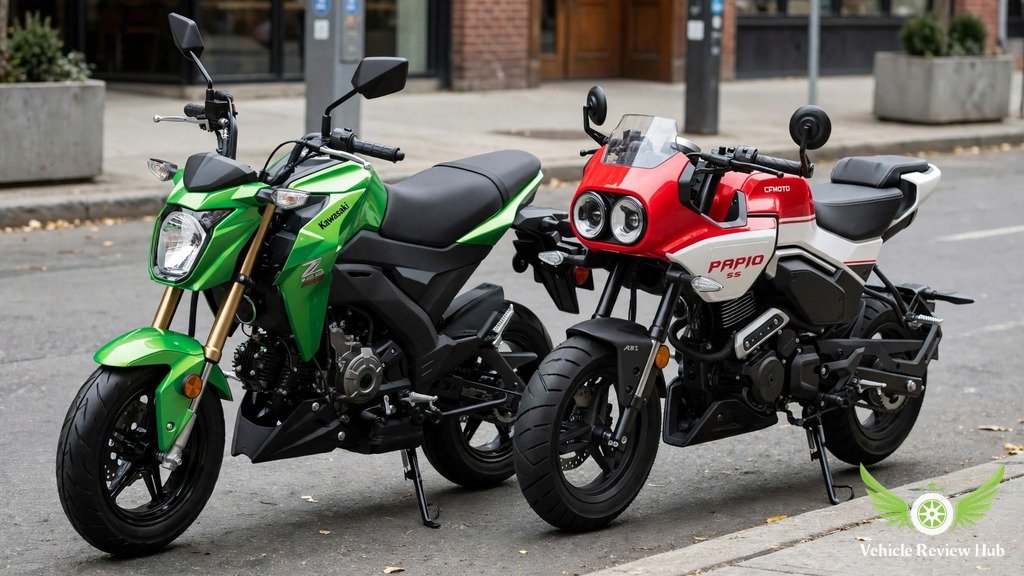
The Papio is the cheapest new mini bike on sale in the United States, and that single fact frames this whole Kawasaki Z125 comparison. At $3,299 for either the scrambler-styled CL or the sport-styled SS, it undercuts the Z125 by $815 before the Papio’s destination charge — a charge CFMOTO does not publish, so no delivered price is computed in this Kawasaki Z125 comparison. It is also the only bike here with a 6-speed gearbox and the lowest seat. What it does not have is the Kawasaki’s power, brakes, dealer network or resale.
Engine, Specs and Performance Side by Side
The Papio SS runs a 126cc air-cooled single — the largest of the four, on paper — but makes the least power: 9.4 hp and 6.78 lb-ft, against the Z125’s claimed 10.0 hp and 7.1 lb-ft. Its 6-speed is the most gears in the class and its 29.9-inch seat (29.1 on the CL) is the lowest. Its designed top speed is 56 mph — the lowest, and a design figure, not an observed one. The Z125 is quicker and sharper in this Kawasaki Z125 comparison: more power, the best brakes in the shootout, a bigger tank, a roomier seat. The Papio’s weight will not settle: Cycle World and Motorcycle.com list 251 lb wet, CFMOTO’s own manual lists 257.9 lb curb. This Kawasaki Z125 comparison prints both figures with attribution; its dealer network is thinner, its aftermarket smaller, its resale weaker. The Cycle World Papio buyer’s guide confirms the $3,299 price for both the CL and the SS, and CFMOTO’s Papio SS page covers the model.
| Item | Kawasaki Z125 PRO (2027) | CFMOTO Papio SS (2025) |
|---|---|---|
| MSRP | $3,799 (+$200 camo) | $3,299 (CL and SS) |
| Delivered | $4,114 / $4,314 camo | $3,299 + ? (destination unpublished) |
| Engine | 125cc air-cooled single, SOHC 2-valve | 126cc air-cooled single, SOHC 2-valve |
| Claimed power | 10.0 hp @ 8,000 rpm (ISO 4106) | 9.4 hp @ 8,250 rpm |
| Torque (claimed) | 7.1 lb-ft @ 6,000 rpm | 6.78 lb-ft @ 6,500 rpm |
| Gears | 4-speed, manual clutch | 6-speed, manual clutch |
| Seat height | 31.7 in | 29.9 in (SS) / 29.1 in (CL) |
| Curb weight | 224.8 lb | 251 lb press / 257.9 lb manual |
| Fuel tank | 2.0 gal | 1.9 gal |
| Front brake | 200 mm petal disc, no ABS | Disc, ABS (SS) |
| Top speed | ~60 mph observed | 56 mph (designed) |
Note: No Papio delivered price appears in this Kawasaki Z125 comparison because CFMOTO’s destination charge is unpublished — the $815 gap is the Z125’s $4,114 delivered against the Papio’s $3,299 MSRP, before the Papio’s own destination charge. The Papio’s curb weight is printed both ways: 251 lb from the press, 257.9 lb from CFMOTO’s manual.
Price, Equipment and Which Suits Which Rider
The Papio wins the price argument by $815 and loses almost everything else in this Kawasaki Z125 comparison. It suits the buyer who wants the cheapest new mini and the lowest seat, accepting the weakest power, the lowest top speed, the weakest resale. The Z125 suits the buyer who wants the proven Japanese bike, the better brakes, the sharper chassis — and will pay $815 more. The honest middle ground in this Kawasaki Z125 comparison is a used Z125 at $2,684 to $2,799 — less than a new Papio, and better. The Papio’s SS ABS and 6-speed are genuine advantages, but neither closes the gap in power, brakes or resale. Buy the Papio if the budget is the whole decision; buy the Z125 if the bike matters more than the price tag. The Ninja 650 comparison and the Kawasaki Z125 review show how the bigger Kawasaki twins compare and what the Z125’s prices and model years look like.
Kawasaki Z125 Price and Value Compared
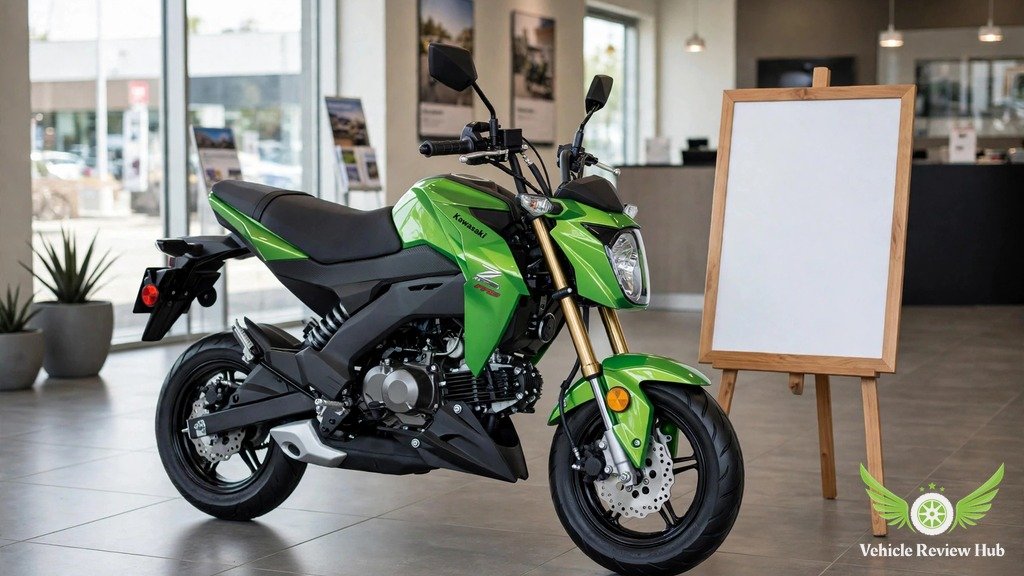
New prices tell only half the story of this Kawasaki Z125 comparison. The other half is what the bikes cost to run and what they are worth when sold — and there the Z125’s position is more interesting than its $4,114 suggests. It is the cheapest of the four to run and the weakest on resale, which makes the used market, not the showroom, where the Z125 makes its best case.
Leftovers Near $2,700
The used market is where this Kawasaki Z125 comparison turns back in the Kawasaki’s favour. In November 2026, used 2022–2024 Z125 PROs were listed at $2,684 to $2,799 on Cycle Trader, and leftover 2025 bikes were discounted to $2,949–$2,999. A used Z125 at roughly $2,700 costs about $1,100 to $1,400 less than a new 2027 delivered, and less than a new Papio at $3,299. A used 2018 can be found for $1,795. Used Groms hold their prices better in this Kawasaki Z125 comparison; the Z125’s softer used prices are the reverse. The best mini for the money is a used Z125 or a base Grom, and the used Z125 is cheaper. Two checks before buying used: the VIN against the 17V-774 and 16V-535 recalls on 2017–2018 bikes, and the service records — no records at 15,000 miles means the valves were likely never checked. The Kawasaki Z125 reliability guide explains both recalls and the 7,600-mile service rhythm.
Running Costs and Resale Value Compared
Running costs are the Z125’s quiet advantage in this Kawasaki Z125 comparison. Its 2.0-gallon tank is the biggest of the four, its 12-inch tyres are the cheapest to replace, and its 0.95-litre oil change is a twenty-to-forty-dollar DIY job. The Grom costs a little more to run but holds its value best, thanks to the biggest demand and aftermarket. The Monkey holds value on style and scarcity; the Papio’s $3,299 price is its resale ceiling too. Over five years the maths in this Kawasaki Z125 comparison favours the used Z125: roughly $2,700 to buy, minimal servicing, cheap insurance. The new Z125 at $4,114 is the hardest sell; the new Grom at $3,899 is the easiest. The TopSpeed Z125-versus-Grom case and the SlashGear Z125-versus-Grom comparison both reach the same conclusion: the Z125’s argument was never really about the spec sheet.
Kawasaki Z125 Comparison Verdict and US Alternatives
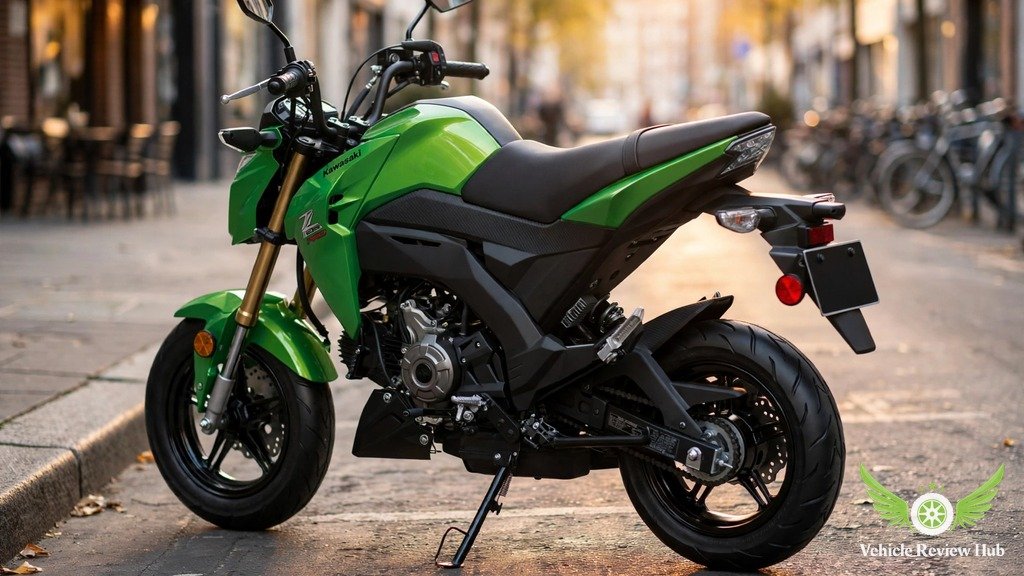
Four bikes, four answers, no single winner — the honest conclusion of this Kawasaki Z125 comparison. The Grom is the best all-rounder and the best value new; the Monkey is the style pick with the only standard ABS; the Papio is the cheapest way into a new mini; the Z125 is the most fun. The best mini for the money in this Kawasaki Z125 comparison is a used Z125 or a base Grom; the most fun is the Z125 PRO new, premium accepted. The alternatives below are for buyers whose budget or needs sit outside the four.
Verdict: Character, Not Value
The verdict of this Kawasaki Z125 comparison is the doc’s own heading, and it is right: character, not value. The Z125 PRO no longer wins on price — $215 more than the base Grom delivered, $585 less than the Monkey, $815 more than the Papio’s MSRP — so it has to win on the ride, and there it does win. It is the most agile bike in the shootout, with the best brakes, the biggest tank, the roomiest seat. The best mini for the money is a used Z125 around $2,700 or a base Grom at $3,899 delivered. The fun-seeker in this Kawasaki Z125 comparison buys the Z125 PRO new and accepts the premium. The Z125’s case was never about the spec sheet — it was about the ten minutes after the first ride, when the bike clicks. If the budget stretches, the electric Kawasaki Z e-1 review shows the other small naked at $7,599. If the mini class feels too small, the KLX230R review follows the same air-cooled-single logic off-road.
Navi Is the Floor
The Honda Navi is the price floor of the mini class, and it belongs in this Kawasaki Z125 comparison only to show where the floor sits. The 2026 Navi costs $2,199 before destination — $2,499 delivered with its $300 charge — $1,615 less than the Z125 delivered, but the Navi is an automatic scooter with a 109cc engine and a CVT, not a motorcycle. Cross-shopping the Z125 and the Navi is really deciding between a motorcycle and a scooter. The Navi’s price was $1,999 in the earlier guides; Honda’s page now lists $2,199 — the floor has risen, but it is still the cheapest way onto two wheels.
Kawasaki Z125 Comparison: Frequently Asked Questions
The answers below are short, direct, and based on the figures in this Kawasaki Z125 comparison.
Is the Kawasaki Z125 cheaper than the Honda Grom?
Not any more. In 2017 the Z125 undercut the Grom by $200; in 2026–2027 the Z125 costs $4,114 delivered against the base Grom’s $3,899 — $215 more.
Which is better, the Kawasaki Z125 or the Honda Grom?
The Grom is the better all-rounder — more power, a fifth gear, available ABS and a bigger aftermarket. The Z125 is the sharper handler with the better brakes, the bigger tank and the roomier riding position.
Is the Honda Monkey ABS worth the extra money over the Z125?
The Monkey costs $4,699 delivered, $585 more than the Z125, and buys retro style plus standard front-wheel ABS. If you want ABS and the look, it is; if you want the sportiest mini for the least money, the Z125 is.
What is the cheapest new mini bike?
The CFMOTO Papio at $3,299 for either the CL or the SS — $815 less than the Z125 before destination. It has a 6-speed gearbox and the lowest seat, but less power and a 56 mph designed top speed.
How much is a used Kawasaki Z125?
Used 2022–2024 bikes were listed at $2,684 to $2,799 in November 2026, and new leftover 2025 bikes were discounted to $2,949–$2,999.
What is the cheapest way onto two wheels?
The Honda Navi at $2,199 for 2026 — but it is an automatic scooter, not a motorcycle, so it is the price floor rather than a rival to the Z125.