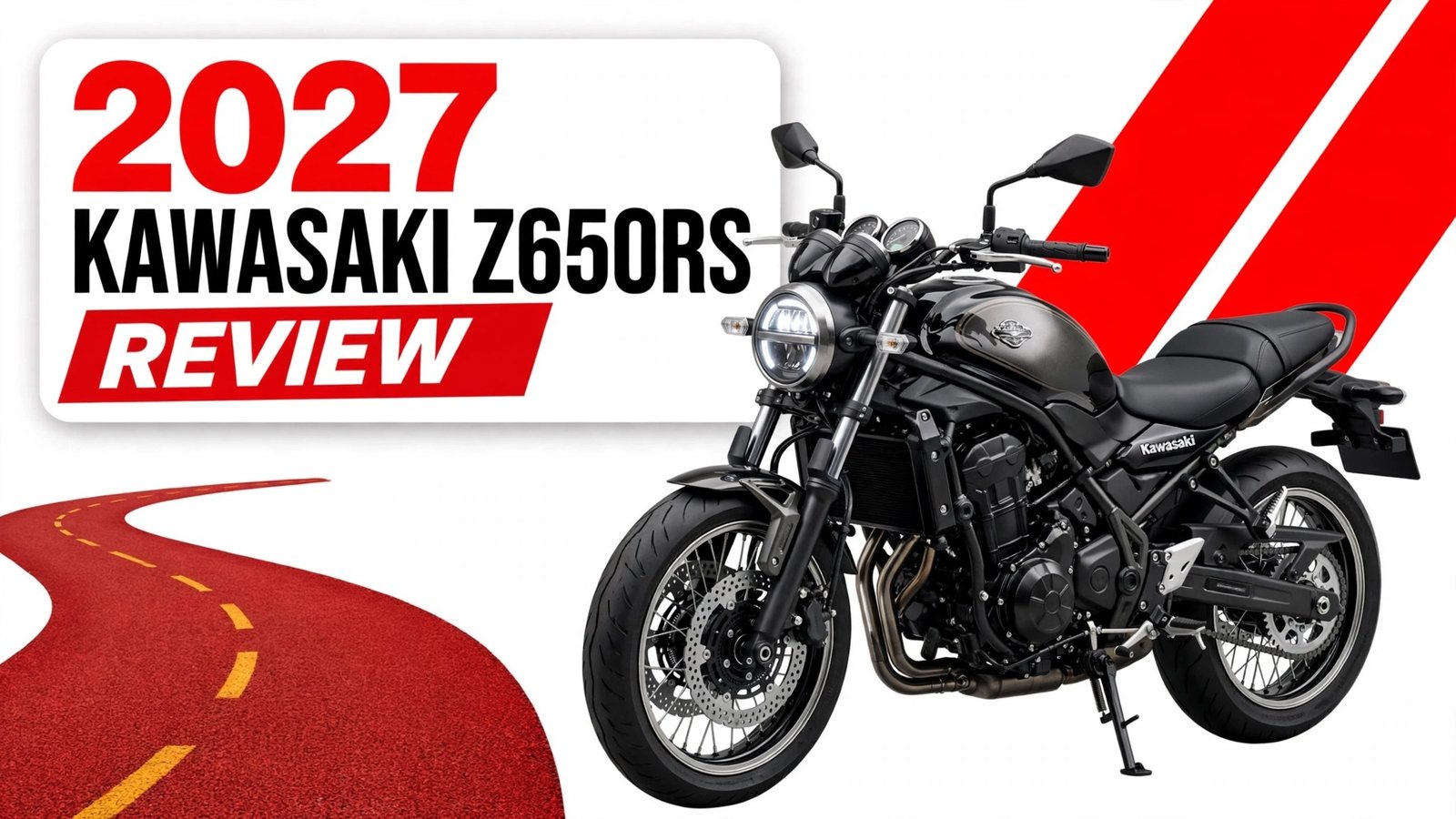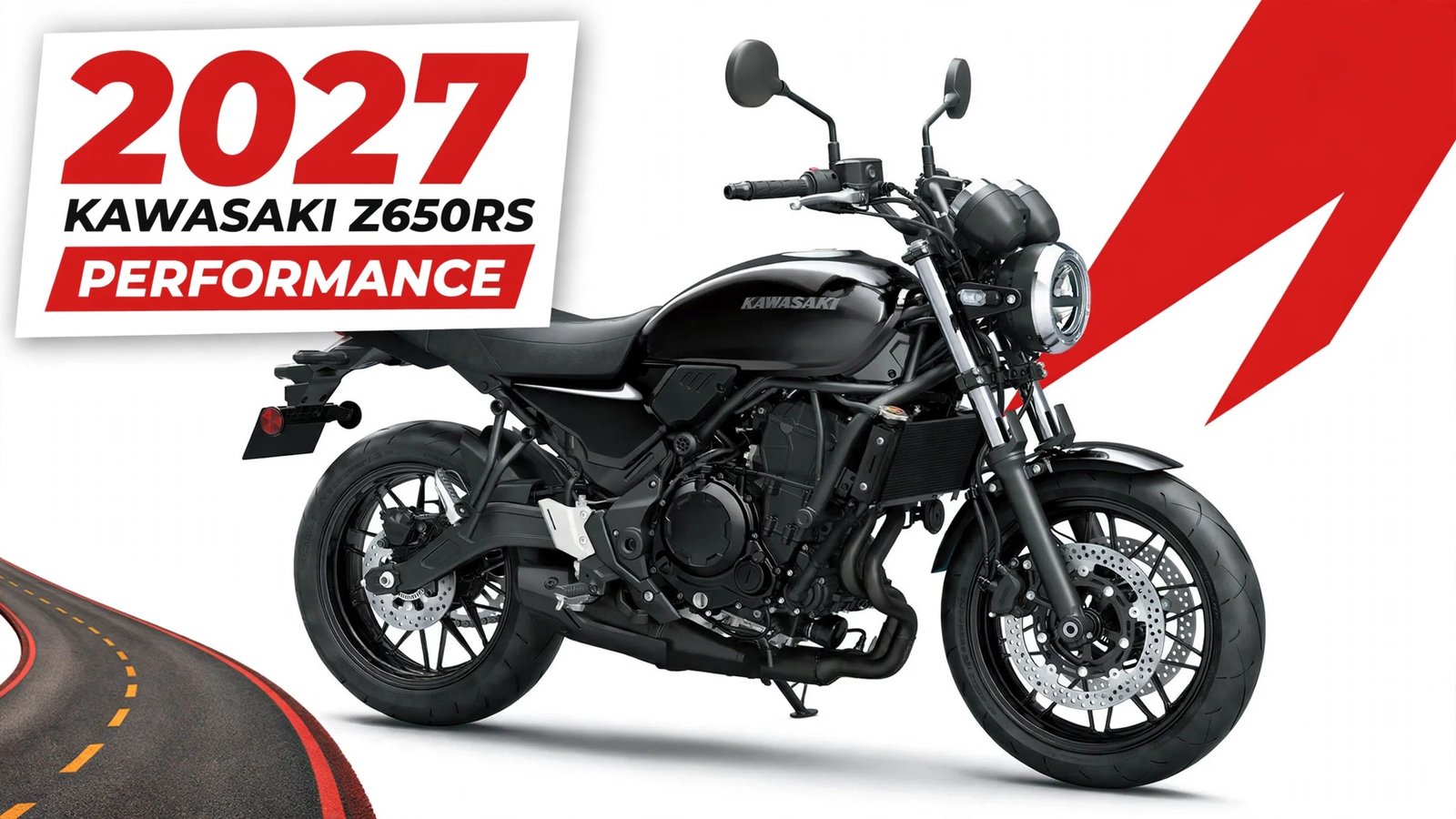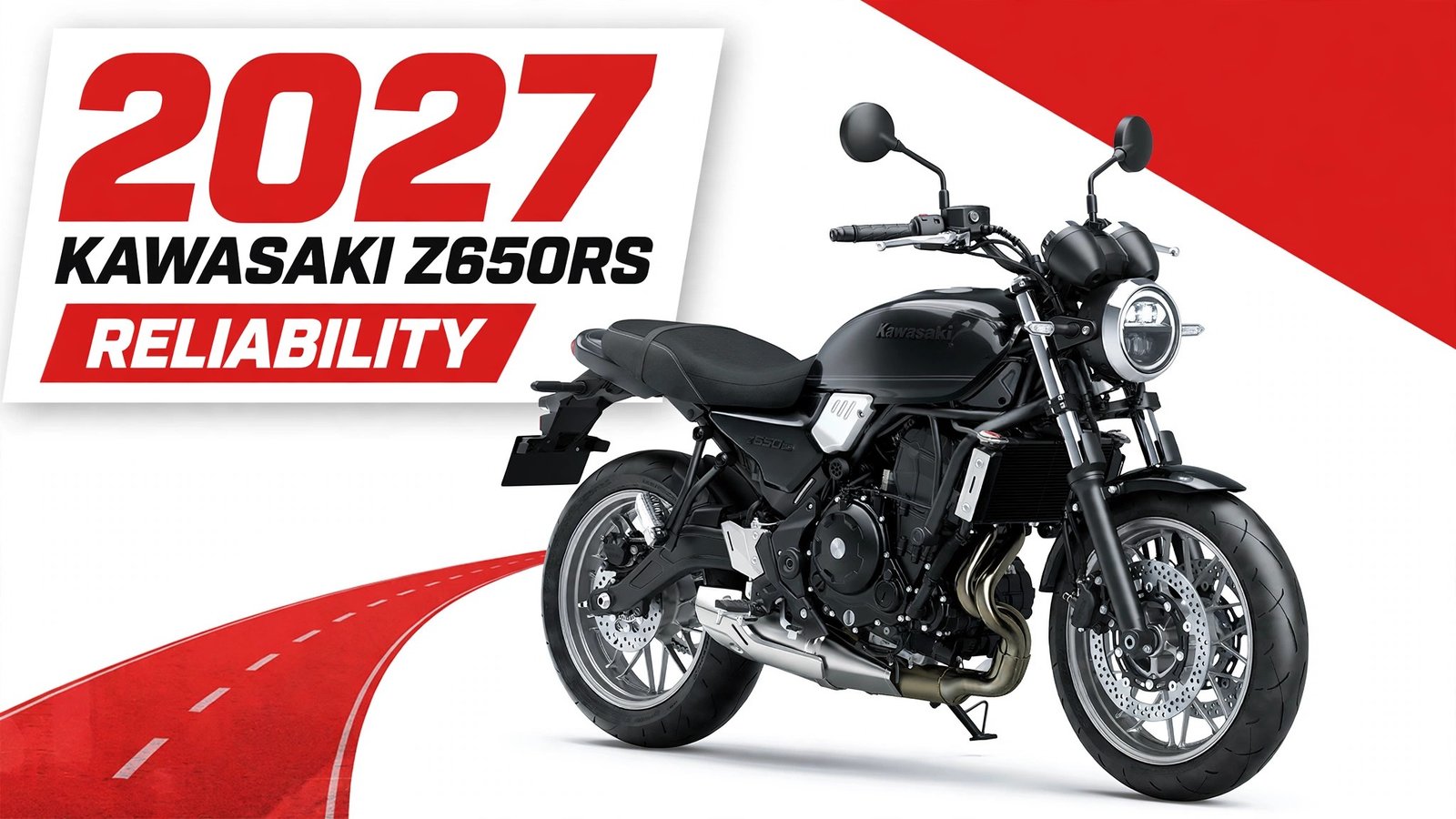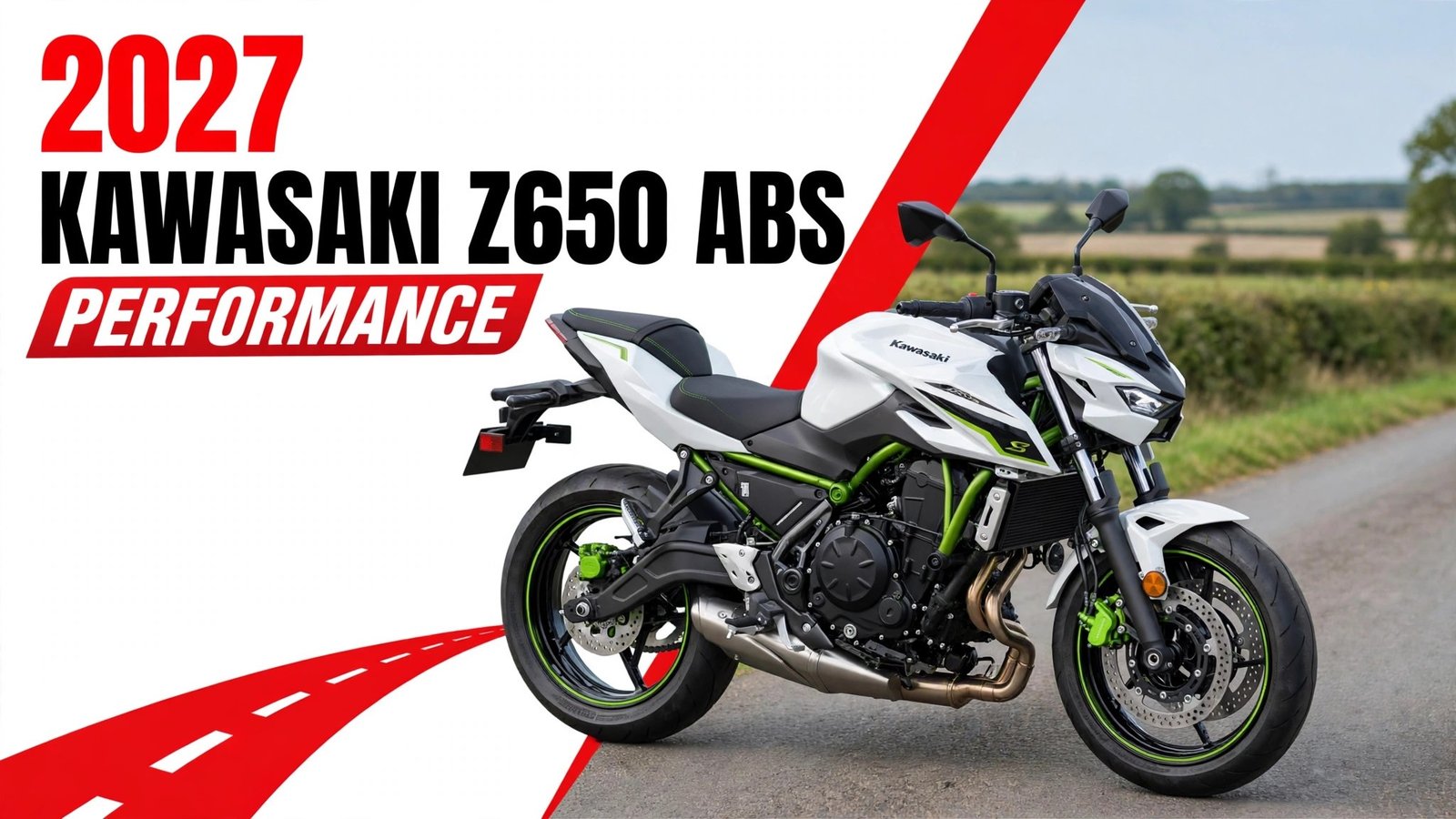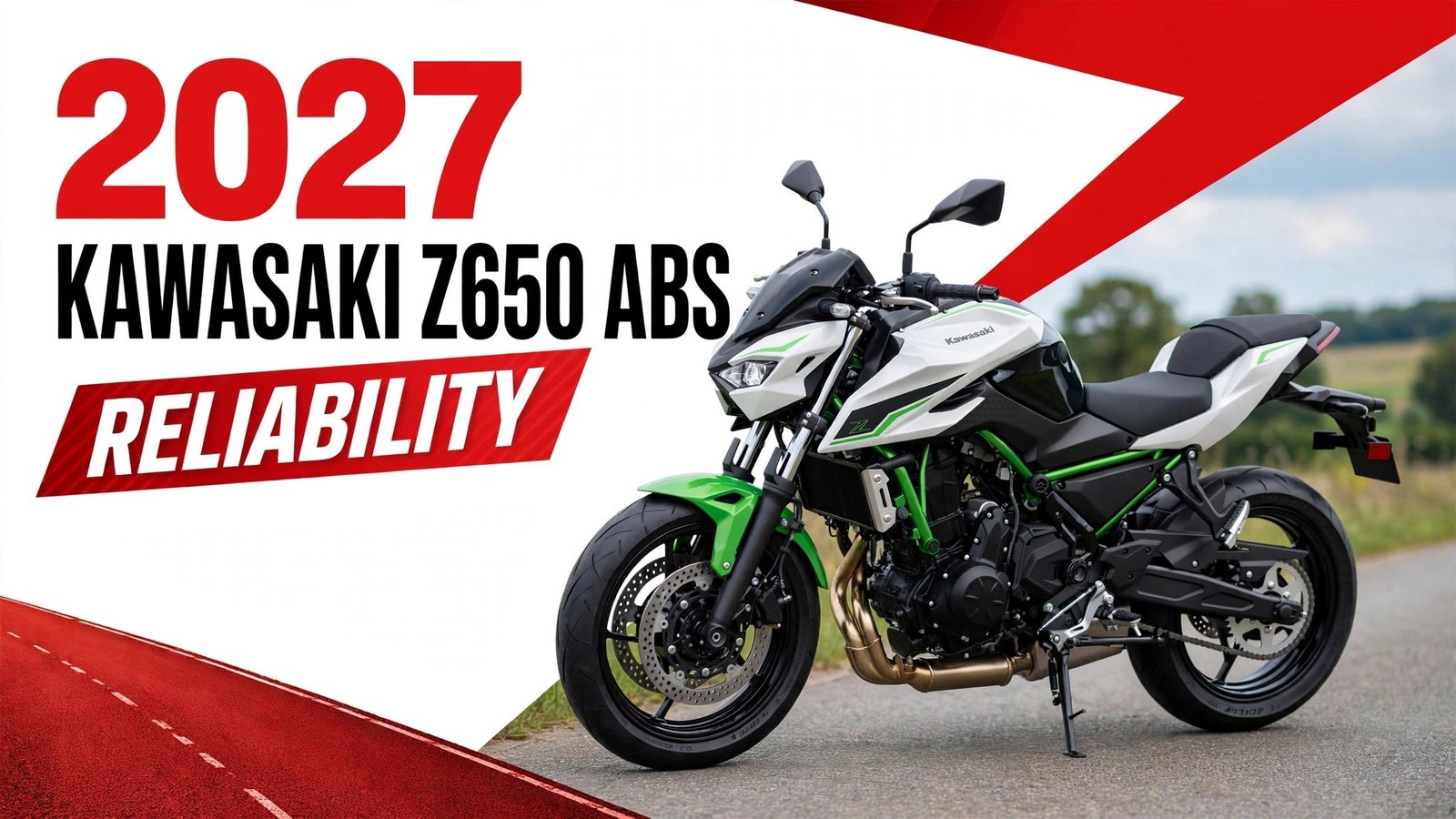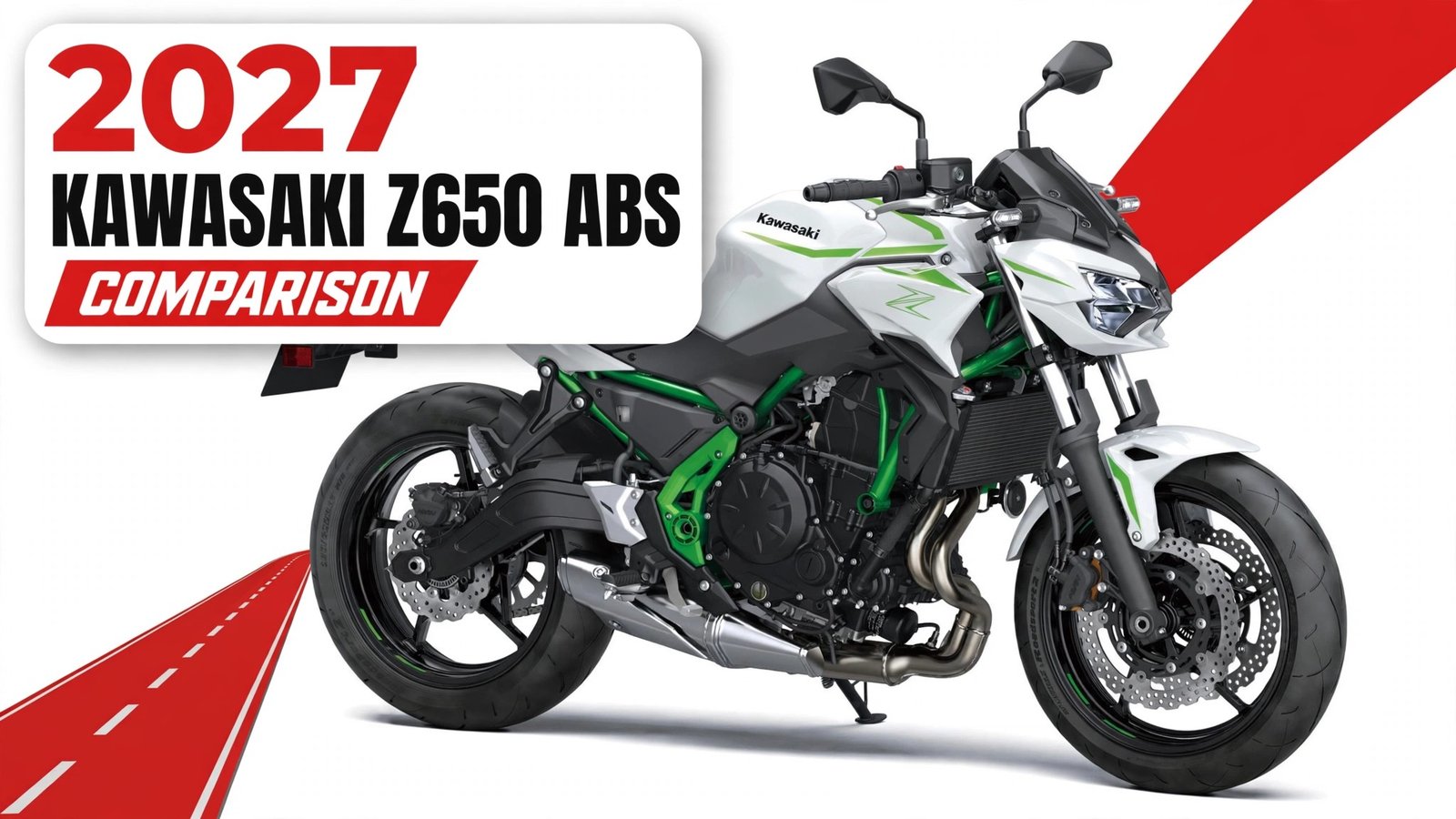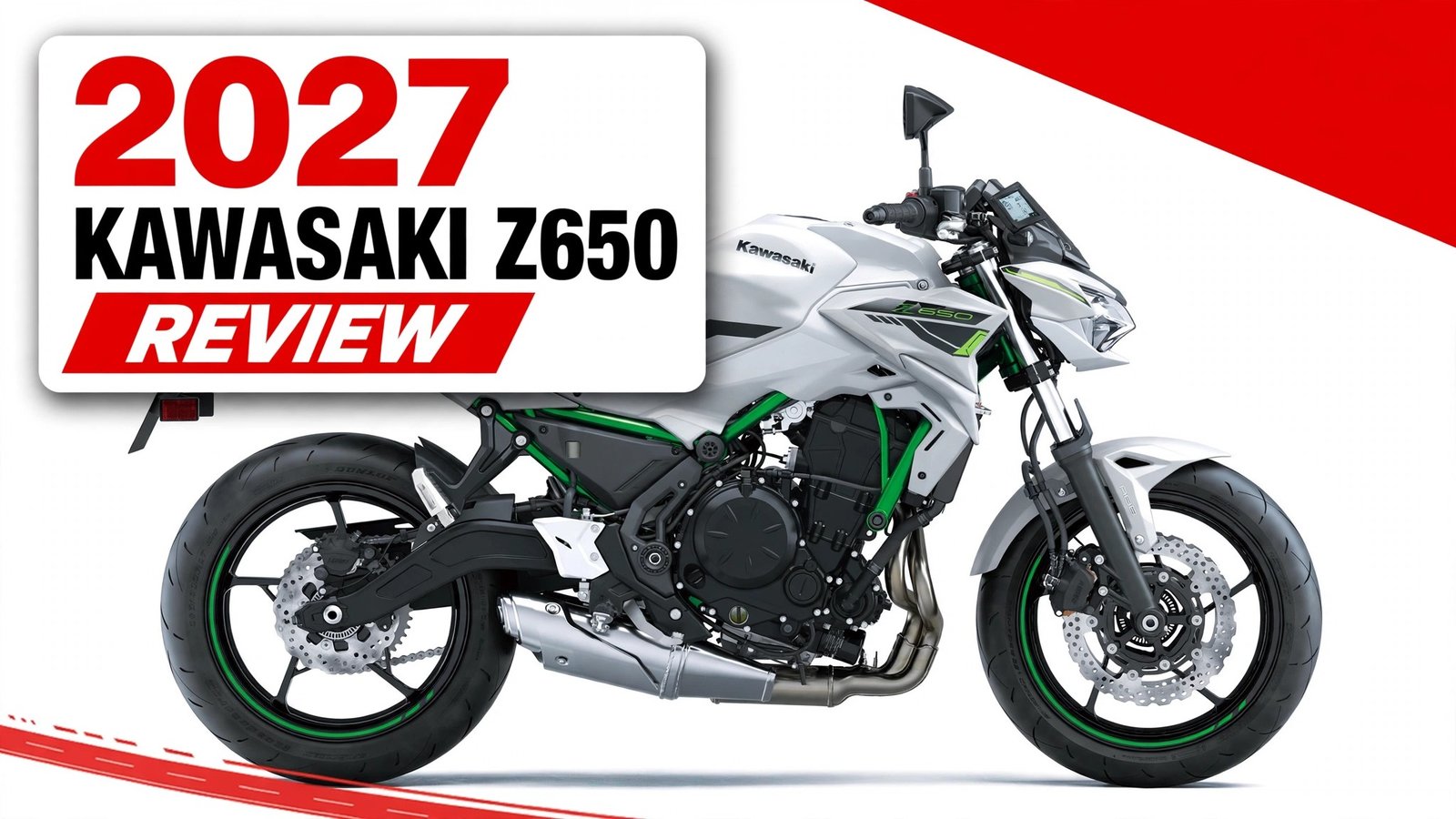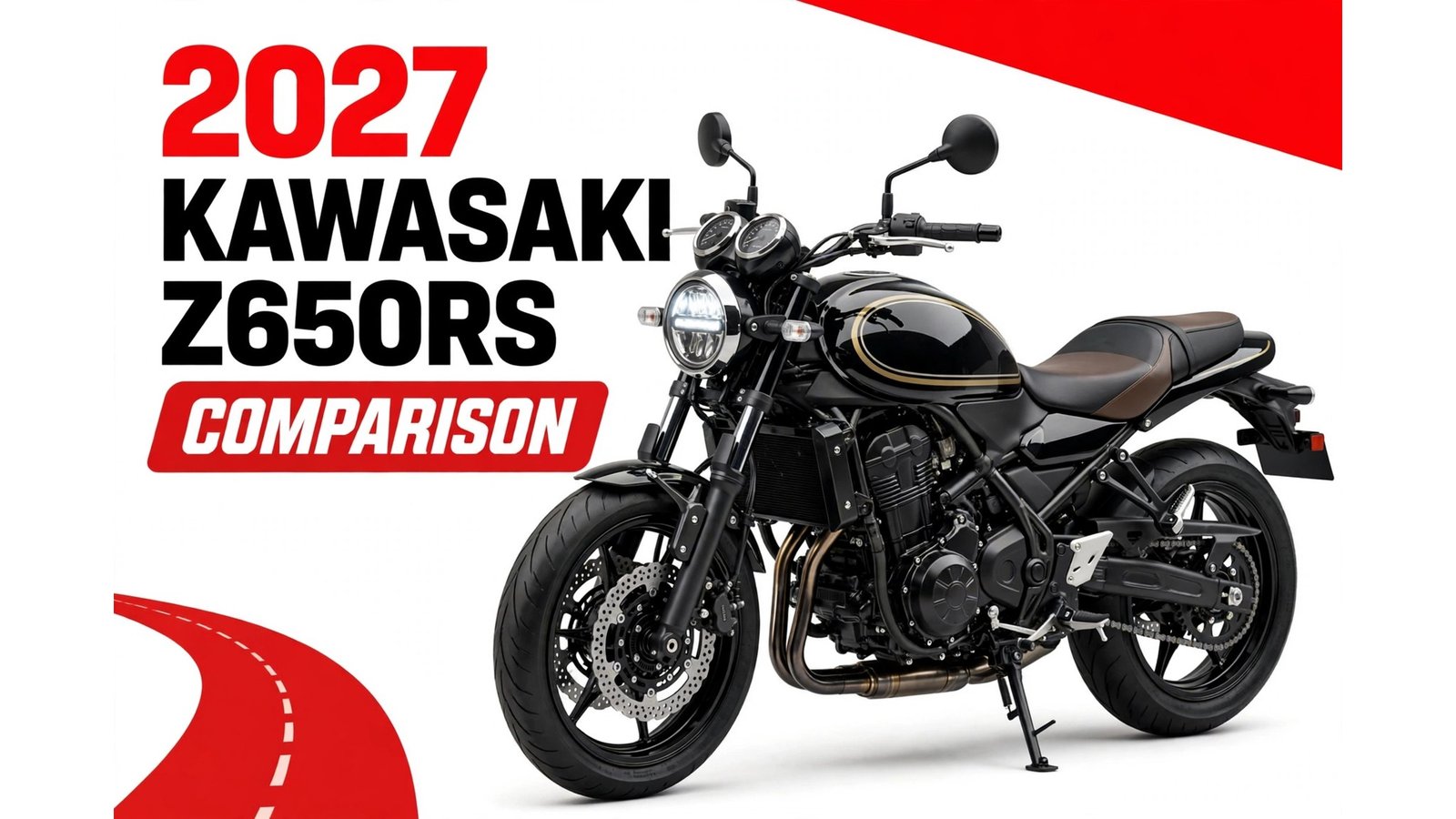
The 2027 Kawasaki Z650RS costs $8,999 before destination. It is a retro twin with a 649cc engine, analogue dials and a 1976-inspired look, and this Kawasaki Z650RS comparison measures it against the three bikes a buyer is most likely to cross-shop: the Yamaha XSR700, the bigger Kawasaki Z900RS and the Royal Enfield Interceptor 650.
The XSR700 is the closest match on price and spec, the Z900RS is the four-cylinder big brother that costs $4,155 more delivered, and the Interceptor 650 is the budget retro that undercuts the RS by $2,850 on MSRP. This Kawasaki Z650RS comparison works through each pairing on price, specs and value, then ends with the Z650 S.
Kawasaki Z650RS Overview and Its Closest Rivals
The RS is the retro-styled twin of the Z650, launched for 2022 as the little brother of the Z900RS. It shares the 649cc liquid-cooled parallel twin and the trellis frame with the Z650, but it wears a teardrop tank, a ducktail cowl, a round LED headlight and dual analogue dials instead of the Z’s modern bodywork. The claim, in this Kawasaki Z650RS comparison, is a modest 67.0 hp at 8,000 rpm and 48.5 lb-ft of torque, and the bike has been ABS-only in the United States since its launch. The Z650RS review carries the full price and spec story.
XSR700 Undercuts It by $410
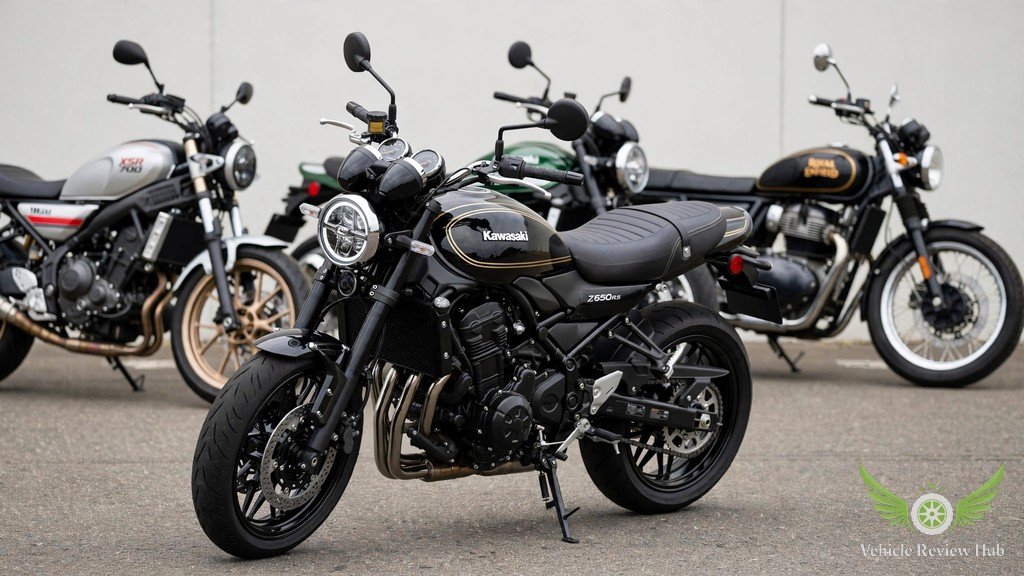
The closest rival is also the cheapest of the Japanese three. The 2027 Yamaha XSR700 lists at $8,599 with a $675 destination charge, $9,274 delivered, against the RS at $8,999 plus $685 destination, $9,684 delivered. That is a $410 gap on a delivered basis, and this Kawasaki Z650RS comparison uses the delivered basis throughout, because that is what a buyer actually pays. On MSRP alone the gap is $400, and either way the Yamaha is the cheaper bike.
The Z900RS is $12,999 plus $840 destination, $13,839 delivered, which is $4,155 more than the RS for a 948cc four-cylinder. The Interceptor 650 starts at $6,149 MSRP, $2,850 below the RS on MSRP, but Royal Enfield publishes no destination charge, so no delivered-price comparison is possible for that bike.
How the Four Bikes Differ at a Glance
Four bikes, four different answers to the same retro question. The table below puts the headline figures side by side before this Kawasaki Z650RS comparison takes each pairing in turn.
| Figure (2027 unless noted) | Kawasaki Z650RS | Yamaha XSR700 | Kawasaki Z900RS | Royal Enfield Interceptor 650 |
|---|---|---|---|---|
| MSRP | $8,999 | $8,599 | $12,999 | $6,149 (2026) |
| Destination | $685 | $675 | $840 | Not published |
| Delivered | $9,684 | $9,274 | $13,839 | Not calculable |
| Claimed power | 67.0 hp @ 8,000 rpm | Not published in the US | 115 hp @ 9,300 rpm | 47 hp @ 7,150 rpm |
| Torque | 48.5 lb-ft @ 6,700 rpm | 50 ft-lb @ 6,500 rpm | 73 lb-ft @ 7,700 rpm | 39.8 lb-ft @ 5,250 rpm |
| Weight | 412.3 lb curb | 410 lb wet | 476.3 lb curb | 480 lb wet |
Note: All prices are 2027 model-year figures except the Interceptor 650, which is priced as a 2026 model. The RS torque figure is the 2025–2027 peak of 48.5 lb-ft at 6,700 rpm; 2022–2023 bikes peak at 6,500 rpm. The Interceptor’s destination charge and tank capacity are unverified.
Kawasaki Z650RS vs Yamaha XSR700
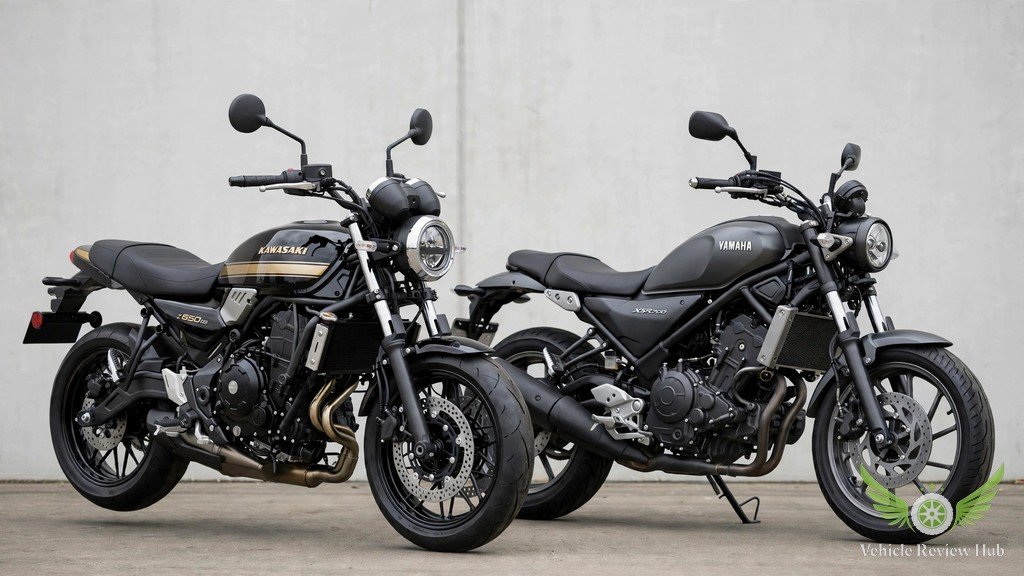
This is the pairing the RS was built for, and it is the closest fight in this Kawasaki Z650RS comparison. Yamaha’s XSR700 is the other retro twin in the class, a 689cc CP2, and it undercuts the RS by $410 delivered while making more torque. This Kawasaki Z650RS comparison starts with the engine, because that is where the Yamaha’s advantage is clearest.
| Spec (2027) | Kawasaki Z650RS | Yamaha XSR700 |
|---|---|---|
| Engine | 649cc parallel twin | 689cc CP2 parallel twin |
| Claimed power | 67.0 hp @ 8,000 rpm | Not published in the US |
| Torque | 48.5 lb-ft @ 6,700 rpm | 50 ft-lb @ 6,500 rpm |
| Weight | 412.3 lb curb | 410 lb wet |
| Fuel capacity | 3.2 gal | 3.7 gal |
| Seat height | 31.5 in | 32.9 in |
| Traction control | KTRC, 3 modes (2025–2027) | None |
| Delivered price | $9,684 | $9,274 |
Note: Yamaha publishes no US horsepower figure for the XSR700, so this Kawasaki Z650RS comparison prints the torque figures and says plainly that the Yamaha’s power is unpublished. In this Kawasaki Z650RS comparison, the RS seat is 31.5 in against the XSR700’s 32.9 in, a 1.4-inch difference that matters to shorter riders.
Engine, Specs and Performance Side by Side
The Yamaha’s 689cc CP2 is the bigger engine by 40cc, and it shows in the torque figure: 50 ft-lb at 6,500 rpm against the RS’s 48.5 lb-ft at 6,700 rpm on 2025–2027 bikes. Yamaha publishes no US horsepower figure for the XSR700, and no magazine has dyno-tested the RS itself, so this Kawasaki Z650RS comparison rests the power argument on claimed figures and torque, not on measured rear-wheel numbers.
The chassis figures are a dead heat. Both bikes share a 55.3-inch wheelbase, both weigh within 2.3 lb of each other, and both run a 41 mm telescopic fork with a preload-only rear shock. Neither bike has a measured top speed or an instrumented braking test, so no 60–0 figure appears anywhere in this Kawasaki Z650RS comparison, and the roughly 120 mph figure in circulation for the RS is an uninstrumented claim, not a test result.
Price, Equipment and Which Suits Which Rider
On equipment the two bikes are a wash in this Kawasaki Z650RS comparison. Both are retro-dial bikes: the RS has dual analogue dials with a small LCD, and the XSR700 has a traditional round LCD digital meter. Neither has a TFT or ride modes, and the only electronics difference is traction control — the RS has had KTRC since 2024, with 3 modes from 2025, while the XSR700 has none at all. Motorcycle.com’s 2027 XSR700 specs confirm the $8,599 MSRP, the 50 ft-lb torque figure and the 410 lb wet weight.
The choice comes down to reach and range. The RS seat is 31.5 inches against the Yamaha’s 32.9 inches, so shorter riders will find the Kawasaki easier to flat-foot, while the Yamaha’s 3.7-gallon tank beats the RS’s 3.2-gallon teardrop by half a gallon, and Yamaha publishes a 58 mpg combined estimate where Kawasaki publishes no MPG figure at all for the RS. Road tests put the RS at roughly 50 to 60 mpg, with MCN’s average at 55 mpg. Buy the RS for the lower seat, the 1976-B1 heritage styling and the traction control; buy the XSR700 for the $410 saving, the extra torque and the longer range. The Z650RS performance guide explains why no dyno or timed test of the RS itself exists.
Kawasaki Z650RS vs Kawasaki Z900RS
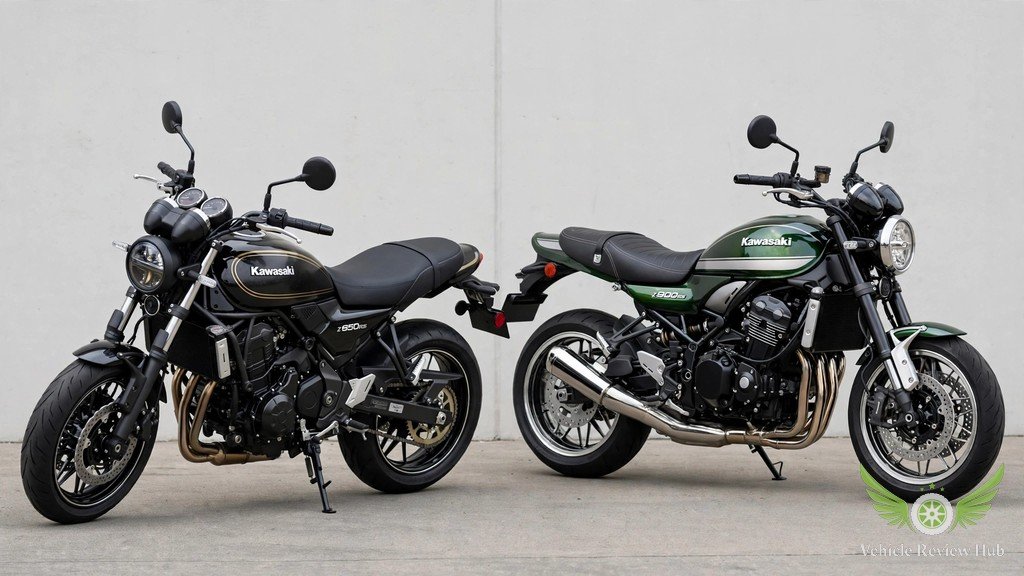
The Z900RS is the bike the RS is measured against, and it is also the bike in its own family. Kawasaki calls the RS the little brother of the Z900RS, and the trade is a straight one: four cylinders, 48 more horsepower and 24.5 more lb-ft of torque against 64 more pounds and $4,155 more delivered. This Kawasaki Z650RS comparison treats the Z900RS as the upgrade path, not as a like-for-like rival.
| Spec (2027) | Kawasaki Z650RS | Kawasaki Z900RS |
|---|---|---|
| Engine | 649cc parallel twin | 948cc inline-four |
| Claimed power | 67.0 hp @ 8,000 rpm | 115 hp @ 9,300 rpm |
| Torque | 48.5 lb-ft @ 6,700 rpm | 73 lb-ft @ 7,700 rpm |
| Weight | 412.3 lb curb | 476.3 lb curb |
| Fuel capacity | 3.2 gal | 4.5 gal |
| Seat height | 31.5 in | 31.9 in |
| Warranty | 12-month limited | 12-month limited |
| Delivered price | $9,684 | $13,839 |
Note: The Z900RS figures are for the 2027 base model; the Cafe costs $13,399 plus $840 destination and the SE costs $14,699 plus $840. The RS torque figure is the 2025–2027 peak at 6,700 rpm, and this Kawasaki Z650RS comparison uses claimed figures throughout because no dyno of the RS itself has been published.
Engine, Specs and Performance Side by Side
The engine gap is the whole story. The Z900RS’s 948cc inline-four makes a claimed 115 hp at 9,300 rpm and 73 lb-ft at 7,700 rpm, against the RS twin’s 67.0 hp at 8,000 rpm and 48.5 lb-ft at 6,700 rpm. That is 48 more horsepower and 24.5 more lb-ft, and it is the difference between a middleweight twin and a litre-class four wearing retro clothes. The Z900RS is also the heavier bike by 64 lb at the curb, with a 2.4-inch longer wheelbase and a 1.3-gallon bigger tank.
What the two bikes share in this Kawasaki Z650RS comparison is the brief, not the hardware. Both are Z1 homages with teardrop tanks, round headlights and dual analogue dials, both carry a 12-month limited warranty, and both run Bosch ABS. The RS counters with the lighter chassis and the lower 31.5-inch seat against the Z900RS’s 31.9 inches. Motorcycle.com’s 2027 Z900RS specs confirm the $12,999 MSRP, the 115 hp figure and the 476.3 lb curb weight.
Price, Equipment and Which Suits Which Rider
The $4,155 delivered gap is the decision in this Kawasaki Z650RS comparison. At $13,839 delivered, the Z900RS costs roughly 43 percent more than the RS, and it spends that money on the four-cylinder engine and the bigger chassis rather than on extra equipment. A rider who wants the authentic four-cylinder retro, the Z1 sound and the highway passing power buys the Z900RS and never looks back.
A rider who wants the retro look at a middleweight price buys the RS and keeps $4,155. The RS is also cheaper to live with day to day, with consumables from the shared Z650 parts bin. This Kawasaki Z650RS comparison calls the Z900RS the better bike and the RS the better buy for most retro buyers, because the extra $4,155 buys performance most riders will rarely use. The Z650RS reliability guide records the RS’s clean recall record and its shared-platform service schedule.
Kawasaki Z650RS vs Royal Enfield Interceptor 650
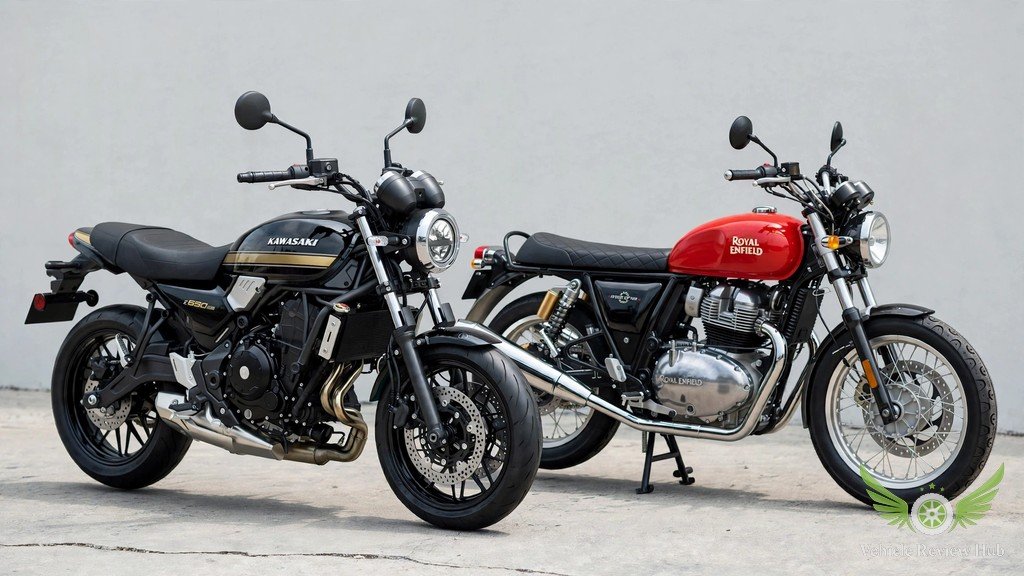
The Interceptor 650 is the value retro, and it is the only rival in this Kawasaki Z650RS comparison that wins on price by thousands rather than hundreds. It starts at $6,149 MSRP, $2,850 below the 2027 RS, and it brings a 3-year unlimited-mile warranty against the RS’s 12 months. What it does not bring is the RS’s performance, its modern running gear or its traction control.
| Spec | Kawasaki Z650RS | Royal Enfield Interceptor 650 |
|---|---|---|
| Engine | 649cc liquid-cooled twin | 648cc air-oil-cooled twin |
| Claimed power | 67.0 hp @ 8,000 rpm | 47 hp @ 7,150 rpm |
| Torque | 48.5 lb-ft @ 6,700 rpm | 39.8 lb-ft @ 5,250 rpm |
| Weight | 412.3 lb curb | 480 lb wet |
| Seat height | 31.5 in | 31.7 in |
| Traction control | KTRC, 3 modes (2025–2027) | None |
| Warranty | 12-month limited | 3-year unlimited-mile |
| MSRP | $8,999 (2027) | $6,149 (2026) |
Note: The Interceptor’s MSRP range is $6,149 to $6,849 by colour, and its destination charge is unpublished, so this Kawasaki Z650RS comparison compares MSRP to MSRP only and prints no delivered Interceptor price. The Interceptor’s tank capacity is also unverified in this Kawasaki Z650RS comparison, so no tank figure appears here.
Engine, Specs and Performance Side by Side
The engine gap is 20 horsepower, the widest performance gap in this Kawasaki Z650RS comparison. The RS twin is liquid-cooled, makes a claimed 67.0 hp at 8,000 rpm and 48.5 lb-ft at 6,700 rpm, and rides on 17-inch wheels with dual petal front discs. The Interceptor’s 648cc twin is air-oil-cooled, makes 47 hp at 7,150 rpm and 39.8 lb-ft at 5,250 rpm, and rides on 18-inch spoked wheels with a single front disc. The Interceptor is also 67.7 lb heavier wet than the RS is at the curb.
The Interceptor’s one clear win is the warranty: three years with unlimited mileage against the RS’s 12-month limited cover. It is also the only bike here with a genuinely classic look straight from the factory, where the RS is a modern bike in retro clothes. But the Interceptor has no traction control and no liquid cooling, and its single front disc marks it as the slower, simpler machine. The Interceptor 650 figures here come from Hispotion’s Interceptor 650 listing, with 47 hp at 7,150 rpm, 480 lb wet and a $6,149 starting MSRP.
The two bikes were put head to head on camera by BikeWale, and the video below is worth watching with one warning: it is an Indian-market comparison, so the prices in it do not apply to the US, and the direct head-to-head segment starts at 08:50 in the chapters.
Price, Equipment and Which Suits Which Rider
On price the Interceptor wins by $2,850 on MSRP. But the MSRP gap is not the whole story, because Royal Enfield’s MSRP excludes freight, setup and the $85 documentation fee, and no dollar freight figure is published, so the delivered gap varies by dealer. SoCal Motorcycles lists the 2026 Interceptor 650 from $6,149 MSRP and states plainly that the price excludes freight, setup and the $85 doc fee.
Buy the Interceptor if the budget is the whole decision and the retro look matters more than the performance: it is $2,850 cheaper on MSRP, it carries a 3-year warranty, and it is the most classic-looking bike in this Kawasaki Z650RS comparison. Buy the RS if the extra $2,850 buys something you will feel every ride in this Kawasaki Z650RS comparison: 20 more horsepower, 8.7 more lb-ft, 67.7 lb less weight, dual petal front discs, liquid cooling and KTRC traction control.
Kawasaki Z650RS Price and Value Compared
The RS has had an unusual price history: it went up for three years, then dropped $700 in 2025, then settled at $8,999 for 2026 and 2027. That history matters, because a leftover 2025 bike can be thousands cheaper than a new 2027, and the premium over the Z650 S has moved every single year. This Kawasaki Z650RS comparison puts the full ladder in one place so the value case can be judged year by year.
| Model year | MSRP | Destination | Delivered | Premium over Z650 ABS / S |
|---|---|---|---|---|
| 2022 | $8,999 | $430 | $9,429 | $950 |
| 2023 | $9,099 | $435 | $9,534 | $850 |
| 2024 | $9,599 | $450 | $10,049 | $950 (Side A only) |
| 2025 | $8,899 | $665 | $9,564 | $1,150 |
| 2026 | $8,999 | $685 | $9,684 | $1,300 |
| 2027 | $8,999 | $685 | $9,684 | $1,100 |
Note: The 2027 destination charge of $685 is verified on Kawasaki’s own 2027 model page; the 2022–2026 destination figures come from the Motorcycle.com database only. The 2024 premium of $950 rests on Side A of the contested 2024 Z650 price ($8,649); on Side B ($7,749) the premium would be $1,850.
Leftover 2025s From $6,998
The best value in the RS range is not a 2027 bike at all, as this Kawasaki Z650RS comparison shows. Verified US prices for new leftover 2025 bikes run from $6,998 at Atlantic Cycle to $7,899 at Maddie’s Motor Sports and Powerhouse Motorsports, as observed in November 2026, against the 2025 MSRP of $8,899. A leftover 2025 at $6,998 is $1,901 below its own MSRP and $2,686 below a delivered 2027 bike.
One figure that circulates for leftover 2025 bikes should not be trusted: $6,299. The only $6,29x listing found anywhere is a UK Gumtree advertisement at £6,295 for a 2025 ex-demonstrator in Reading, Berkshire — pounds, not dollars. This Kawasaki Z650RS comparison prints the verified $6,998 to $7,899 range and never presents $6,299 as a US price. Kawasaki’s own 2027 model page confirms the current $8,999 MSRP and the $685 destination charge.
Running Costs and Resale Value Compared
Running costs favour the RS over its bigger rival and roughly match the XSR700 in this Kawasaki Z650RS comparison. The RS shares its engine, brakes and consumables with the Z650, so oil, filters, spark plugs, brake pads, chain and sprockets are common parts, and the service schedule is a 7,500-mile rhythm with a valve inspection at 15,000 US miles. The Z900RS costs more to run on every line — bigger tyres, four cylinders to service and a heavier bike to stop. No verified US service-cost figure exists for the RS, so this Kawasaki Z650RS comparison prints none, and it does not convert UK prices into dollars.
Resale is the one value question this Kawasaki Z650RS comparison cannot answer with a US figure. In the UK, MCN lists used 2022-on RS bikes at £5,000 to £7,900 against £7,899 new, which suggests the retro look holds its value well, but no verified US resale figure exists. The RS’s value sits in its finish — the green paint and pinstripes reproducing the 1976 B1 on the 2022 bike, the gold wheels, the ducktail cowl — and that condition, records and original paint carry the resale value, as the reliability guide explains. MCN’s RS review carries the UK used-price range and the owner reliability ratings behind it.
Kawasaki Z650RS Comparison Verdict and US Alternatives
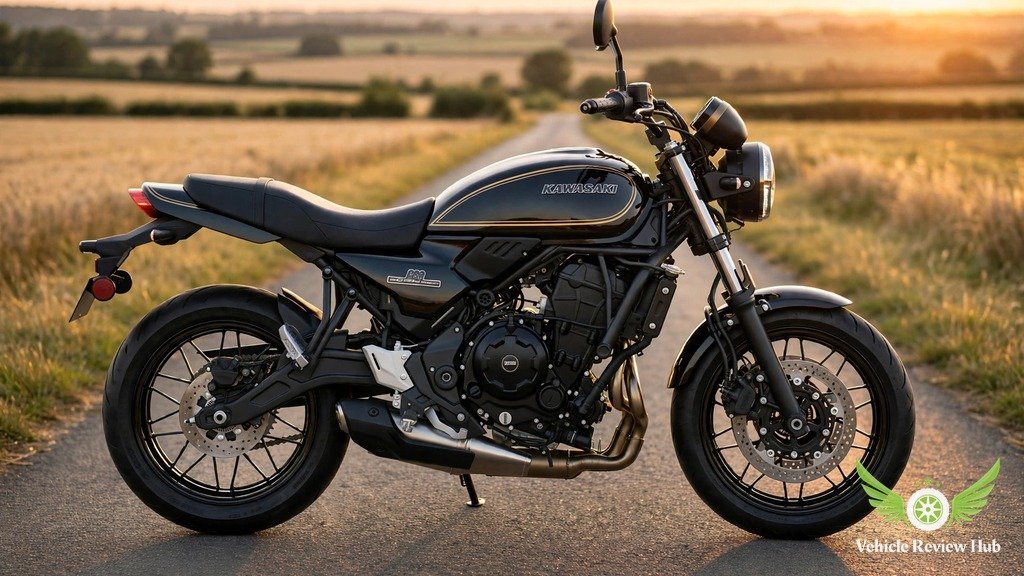
Three rivals, three different answers, and the RS still earns its place. It is not the cheapest retro twin, not the fastest retro, and not the most powerful bike in its own family — but it is the only one of the four that pairs a 31.5-inch seat with traction control, petal discs and a 1976-B1 look at $9,684 delivered.
Verdict: Look Costs Money
The verdict of this Kawasaki Z650RS comparison is that the look costs money, and the money is worth it for the buyer who wants it. Against the XSR700, the RS costs $410 more delivered and gives back a lower seat, traction control and the B1 heritage styling, while giving up 1.5 lb-ft of torque and half a gallon of tank. Against the Z900RS, the RS saves $4,155 and 64 lb and gives up 48 horsepower. Against the Interceptor 650, the RS costs $2,850 more on MSRP and gives back 20 horsepower, 8.7 lb-ft and 67.7 lb less weight.
The buyer who should pick the RS is the rider who wants the retro look without the retro compromises: analogue dials, but with Bosch ABS and traction control; a 1976-inspired tank, but with a 649cc twin that makes a claimed 67.0 hp; a low 31.5-inch seat, but with a 7,500-mile service rhythm from the shared Z650 parts bin. The buyer who should not pick it is the rider who only wants the cheapest retro — take the Interceptor and keep the $2,850 — or the rider who only wants the most power — take the Z900RS and pay the $4,155. The Z650 ABS comparison guide covers the same rivals from the modern twin’s side of the family.
Z650 S Is the Same Platform
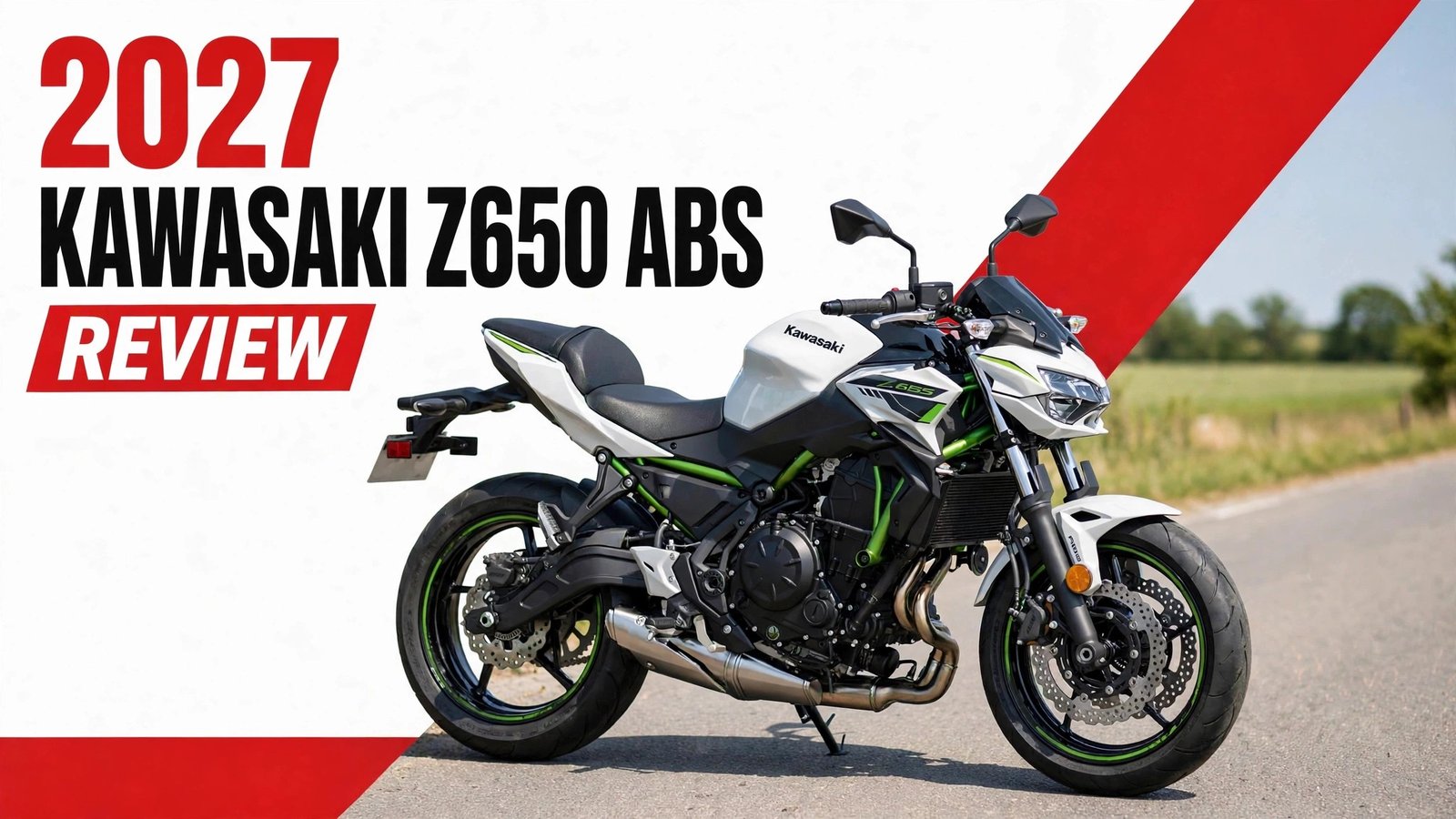
The closest alternative to the RS in this Kawasaki Z650RS comparison is not a rival brand at all — it is the Z650 S, the same 649cc engine and the same trellis frame in modern clothes. The S costs $7,899 in 2027, which is $1,100 less than the RS, and it buys a TFT dash, round front discs and the 47.2 lb-ft tune on the same platform. The RS keeps the 48.5 lb-ft tune, the petal discs and the dual analogue dials, so the $1,100 is a styling and character premium, not a performance premium.
That makes the choice simple. A buyer who wants the modern bike buys the S and saves $1,100; a buyer who wants the retro bike buys the RS and pays for the teardrop tank, the ducktail cowl, the pinstripes and the round LED headlight. Neither bike is the wrong answer, because they are the same platform with two different briefs. The Z650 comparison guide prices the same rivals against the standard twin.
Kawasaki Z650RS Comparison: Frequently Asked Questions
These are the questions buyers ask most when they compare the Z650RS with its rivals — answered with the verified prices from this Kawasaki Z650RS comparison.
Which is cheaper, the Z650RS or the Yamaha XSR700?
In this Kawasaki Z650RS comparison, the XSR700 undercuts it by $410 delivered in 2027 — $9,274 against the RS’s $9,684. On MSRP alone the gap is $400.
Z650RS or Z900RS — which should I buy?
The Z900RS costs $4,155 more delivered ($13,839 vs $9,684) for a 948cc four with 115 hp and 73 lb-ft, but it is 64 lb heavier.
Z650RS or Royal Enfield Interceptor 650?
The Interceptor starts at $6,149 MSRP, $2,850 less than the 2027 RS in this Kawasaki Z650RS comparison, with 47 hp, 480 lb wet and a 3-year warranty — but no destination charge is published, so no delivered-price comparison is possible.
Is the Z650RS worth $1,100 more than the Z650 S?
In 2027, the answer in this Kawasaki Z650RS comparison is yes or no depending on what you value: the RS buys retro styling, the 48.5 lb-ft tune, petal discs and analogue dials for $8,999 against the S’s $7,899; the S buys a TFT, round discs and the 47.2 lb-ft tune on the same platform.
Are there discounted leftover 2025 Z650RS bikes?
Yes — verified US prices for new 2025 bikes run $6,998 to $7,899 (November 2026). The “$6,299” figure could not be verified in the US; the only $6,29x listing found is a UK £6,295 ex-demonstrator.
Does the Z650RS hold its value?
Demand for retro middleweights is strong: in the UK, MCN lists used 2022-on bikes at £5,000–£7,900 against £7,899 new, and this Kawasaki Z650RS comparison found no verified US resale figure.