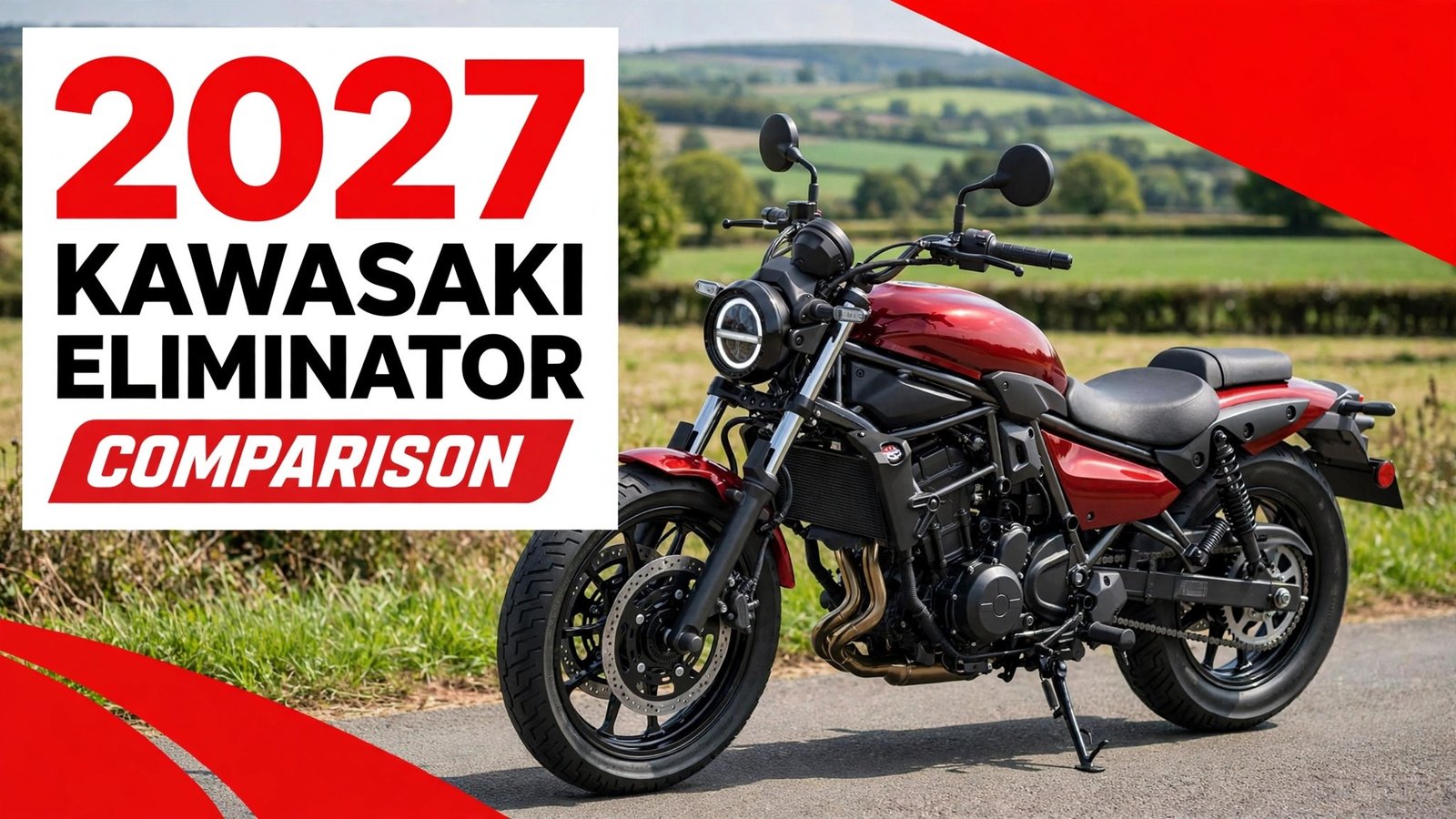
The short answer in this Kawasaki Eliminator comparison is that the lightest bike wins the argument. The 2027 Eliminator ABS costs $6,799 plus a $650 destination charge, $7,449 delivered, and it is the lightest bike in its class at 388.1 lb, with the strongest wheel dyno figure of the four at 47.22 hp. The Rebel 500 is $50 cheaper delivered, the Vulcan S costs $1,335 more delivered, and the Super Meteor 650 costs $7,899 after its 2026 price rise.
Kawasaki Eliminator Overview and Its Closest Rivals
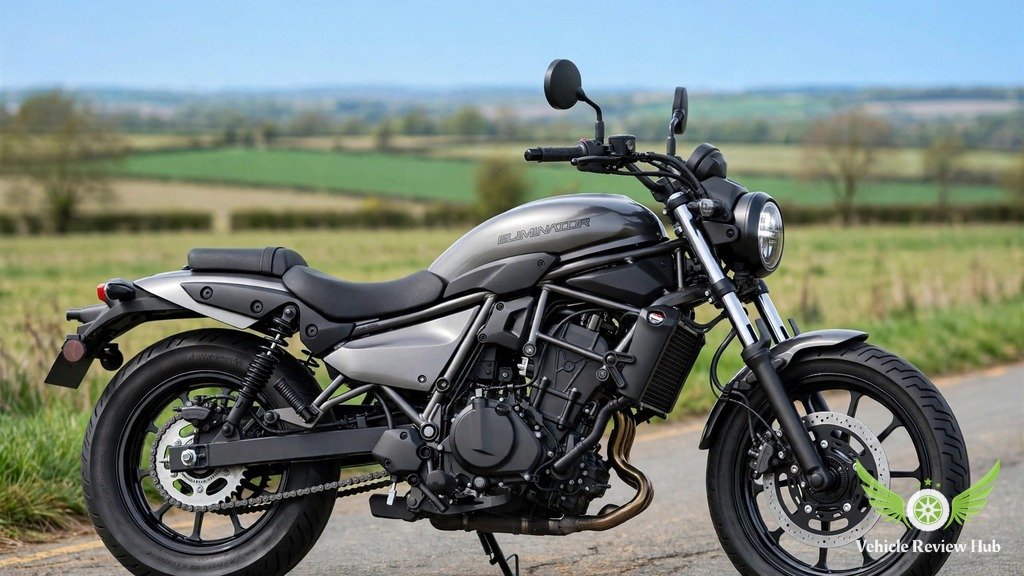
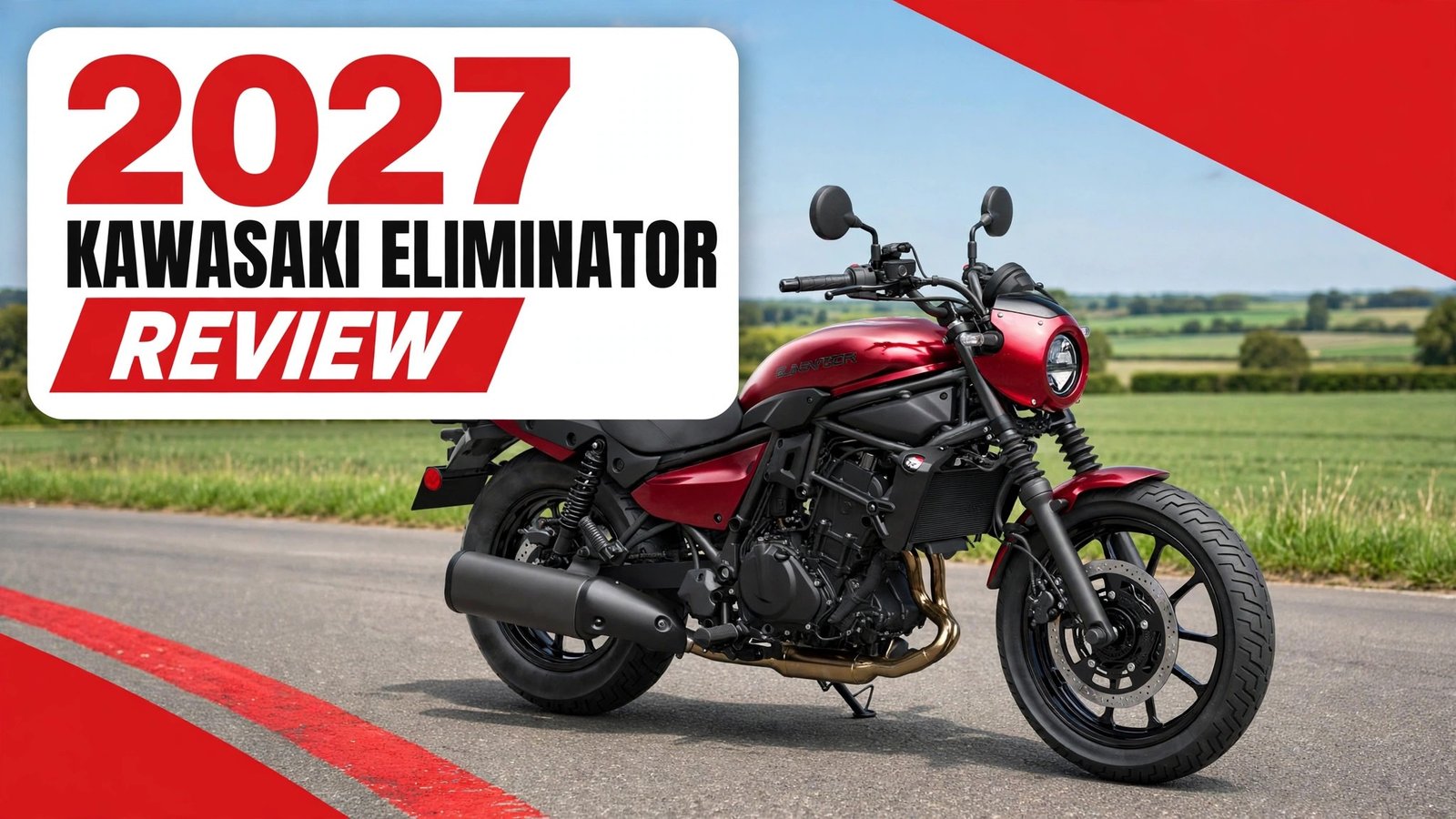
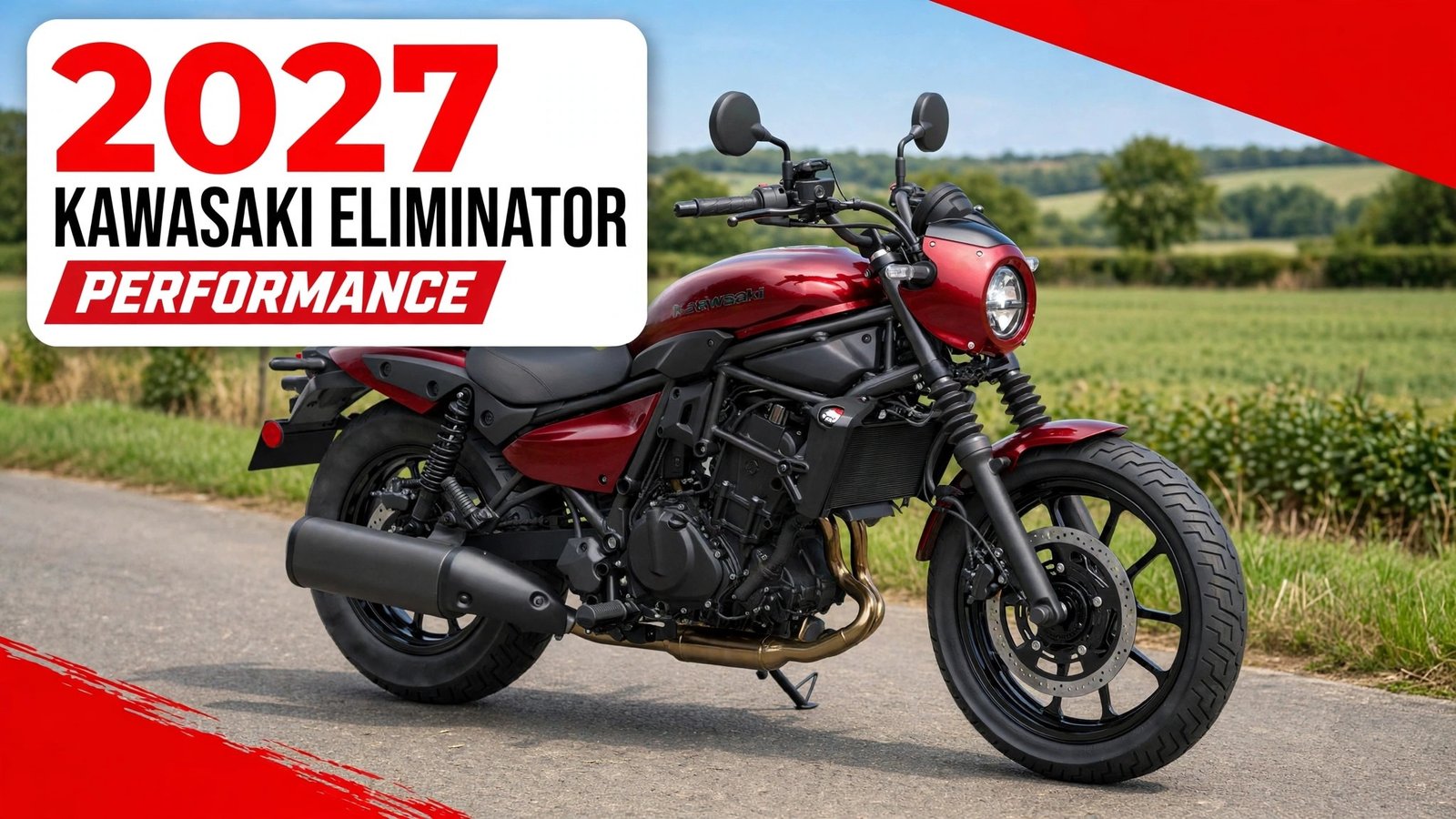
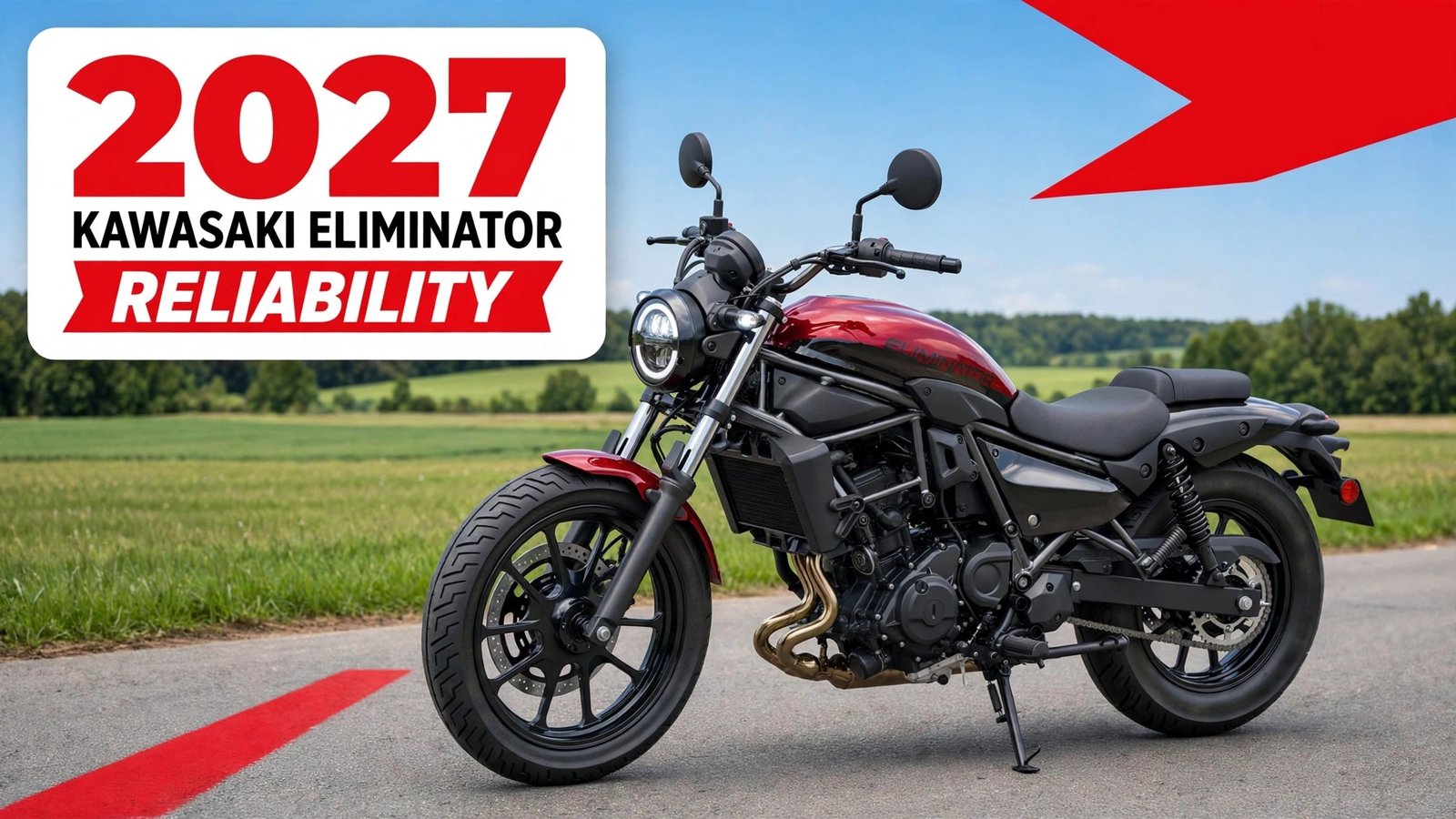
The Eliminator is Kawasaki’s lightweight entry cruiser: a 451cc liquid-cooled parallel twin in a steel trellis frame, with a 28.9-inch seat, a 59.8-inch wheelbase and a curb weight of 385.9 lb in base trim, 388.1 lb as an ABS and 390.3 lb as an SE ABS. The full price and specification story is in our Kawasaki Eliminator review, and the dyno and economy figures are in our Kawasaki Eliminator performance guide.
Rebel, Vulcan S, Super Meteor: Three Directions
The three rivals in this Kawasaki Eliminator comparison point in three different directions. The Rebel 500 is the direct rival: a 471cc parallel twin, 414 lb, a 27.2-inch seat, ABS standard on every trim, $7,399 delivered. The Vulcan S is the bigger sibling: a 649cc parallel twin with 60 hp, a belt drive and forward footpegs, 498.3 lb, $8,784 delivered. The Super Meteor 650 is the classic: a 648cc air/oil-cooled parallel twin, 531.3 lb, a 29.1-inch seat, the only three-year warranty in the set — but its US price moved during 2026 from a $6,999 launch price to $7,899.
How the Four Bikes Differ at a Glance
The table below is the whole Kawasaki Eliminator comparison in one view. Read the weight column first: the Eliminator is 25.9 lb lighter than the Rebel, 110.2 lb lighter than the Vulcan S and 143.2 lb lighter than the Super Meteor.
| Figure | Eliminator ABS (2027) | Rebel 500 (2026) | Vulcan S ABS (2027) | Super Meteor 650 (2026) |
|---|---|---|---|---|
| Engine | 451cc parallel twin, liquid-cooled | 471cc parallel twin, liquid-cooled | 649cc parallel twin, liquid-cooled | 648cc parallel twin, air/oil-cooled |
| Claimed power | 51 hp @ 10,000 rpm | ~46 hp (not a Honda US claim) | 60 hp @ 7,500 rpm | 47 hp @ 7,250 rpm |
| Wheel dyno | 47.22 hp @ 10,430 rpm | No published dyno found | 53.5 hp @ 7,150 rpm (Cafe ABS) | No published dyno found |
| Curb weight | 388.1 lb | 414 lb | 498.3 lb | 531.3 lb |
| Seat height | 28.9 in | 27.2 in | 27.8 in | 29.1 in |
| Fuel tank | 3.4 gal | 3.0 gal (2.96 US gal) | 3.7 gal | 4.2 gal |
| Drive | Chain | Chain | Belt | Chain |
| ABS | Standard (2027, all trims) | Standard on all trims | Standard | Standard, dual-channel |
| Delivered price | $7,449 | $7,399 | $8,784 | $8,444 |
Notes: the figures in this Kawasaki Eliminator comparison table are the verified US figures for each bike. The Eliminator and Vulcan S figures are 2027, the Rebel 500 and Super Meteor 650 figures are 2026. The Rebel horsepower figure is 46.2 PS, published outside the US.
Kawasaki Eliminator vs Honda Rebel 500
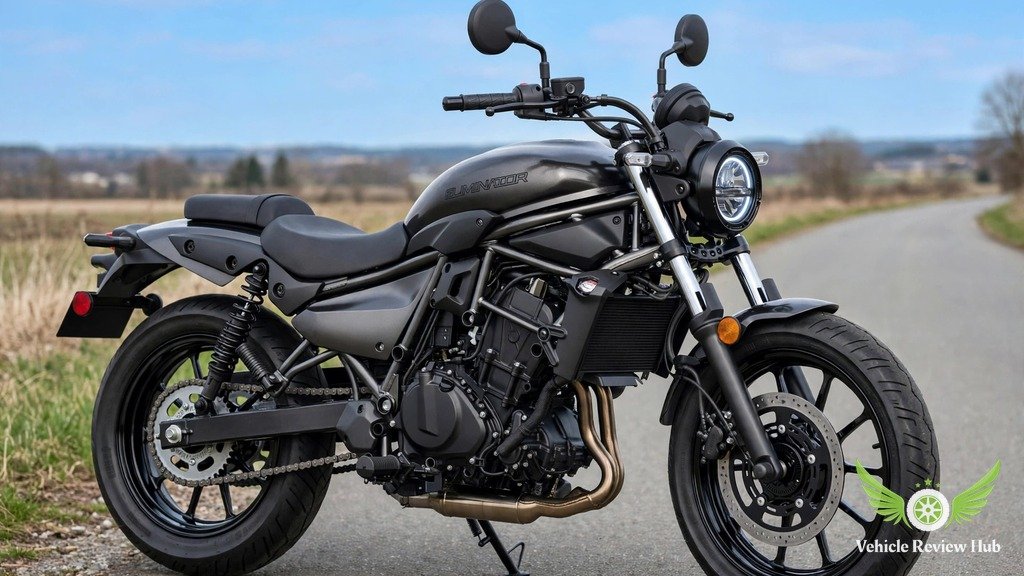
The Rebel 500 is the Eliminator’s real rival, and this Kawasaki Eliminator comparison starts with it because the two bikes are the closest match in the set. Both are liquid-cooled parallel twins, both are chain drive and six-speed, and both cost $6,799 before destination. The Eliminator is lighter and revvier, the Rebel is lower-seated and $50 cheaper delivered with ABS included.
TheTraveler Z.D. rode both bikes on the Amalfi Coast — a Honda Rebel 500 and a Kawasaki Eliminator 500 — and filmed day three of the tour from Salerno to Amalfi. It is a European touring ride, not an instrumented test: the bikes are EU-spec, so the Eliminator in the video makes 45 hp, not the US 51 hp.
Engine, Specs and Performance Side by Side
On paper the Eliminator has the edge. Its 451cc twin claims 51 hp at 10,000 rpm and 31.7 lb-ft at 7,500 rpm, and Cycle World’s dyno test measured 47.22 hp at the wheel on a 2024 SE ABS. The Rebel’s 471cc twin is bigger by 20cc, but Honda publishes no US horsepower figure for it — the quoted figure is 46.2 PS (45.6 hp) at 8,500 rpm, published outside the US. The Eliminator claims about 5 hp more and carries 25.9 lb less, and it has a published wheel figure while the Rebel has none, so this Kawasaki Eliminator comparison claims a paper win, not a tested win.
| Figure | Eliminator ABS (2027) | Rebel 500 (2026) |
|---|---|---|
| Engine | 451cc parallel twin, liquid-cooled | 471cc parallel twin, liquid-cooled |
| Claimed power | 51 hp @ 10,000 rpm | ~46 hp (46.2 PS, not a Honda US claim) |
| Claimed torque | 31.7 lb-ft @ 7,500 rpm | 31.9 lb-ft @ 6,000 rpm |
| Wheel dyno | 47.22 hp @ 10,430 rpm (Cycle World) | No published dyno found |
| Curb weight | 388.1 lb | 414 lb |
| Seat height | 28.9 in | 27.2 in |
| Fuel tank | 3.4 gal | 2.96 US gal (11.2 L) |
| Front brake | 310 mm petal disc, twin-piston | 296 mm disc, twin-piston |
| Wheels | 18-in front / 16-in rear, cast | 16-in front / 16-in rear, cast |
| Delivered price | $7,449 | $7,399 |
Notes: the figures in this Kawasaki Eliminator comparison table are the verified US figures for the two bikes. The Eliminator figures are 2027 and the Rebel 500 figures are 2026. The Rebel horsepower figure is 46.2 PS, published outside the US, and the Eliminator dyno figure is Cycle World’s 2024 SE ABS test.
Price, Equipment and Which Suits Which Rider
Both bikes list at $6,799. The Eliminator ABS costs $6,799 plus a $650 destination charge, $7,449 delivered. The Rebel 500 costs $6,799 plus a $600 destination charge, $7,399 delivered. The Rebel is $50 cheaper delivered, and the whole $50 is the destination charge — the MSRPs are identical. The Rebel has ABS standard on every trim, and its seat is 1.7 inches lower. The Eliminator answers with 25.9 lb less weight, a bigger tank and a slipper clutch. A rider who wants the lowest seat and the cheapest ABS bike buys the Rebel; a rider who wants the lighter, quicker bike buys the Eliminator.
Kawasaki Eliminator vs Kawasaki Vulcan S
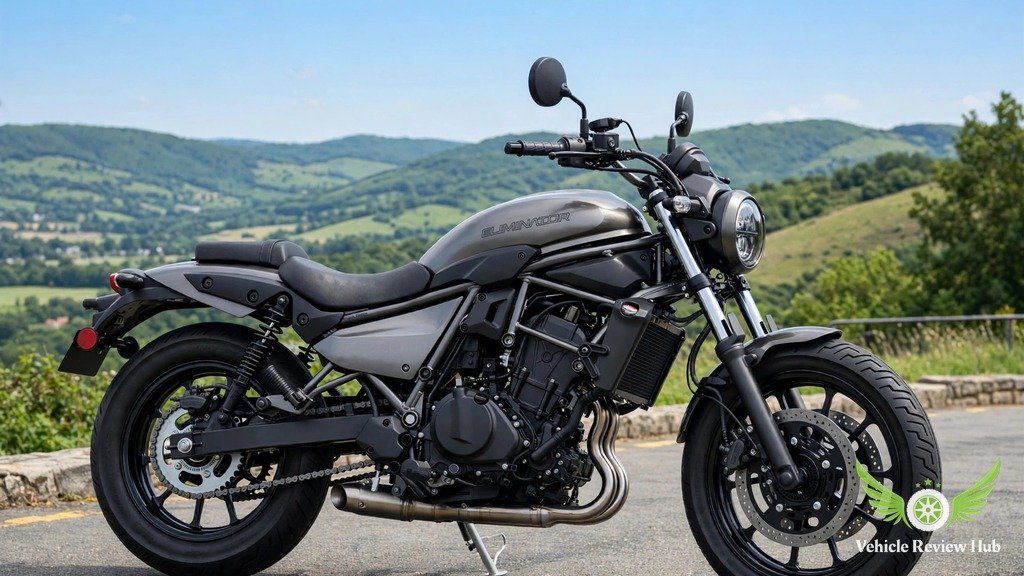
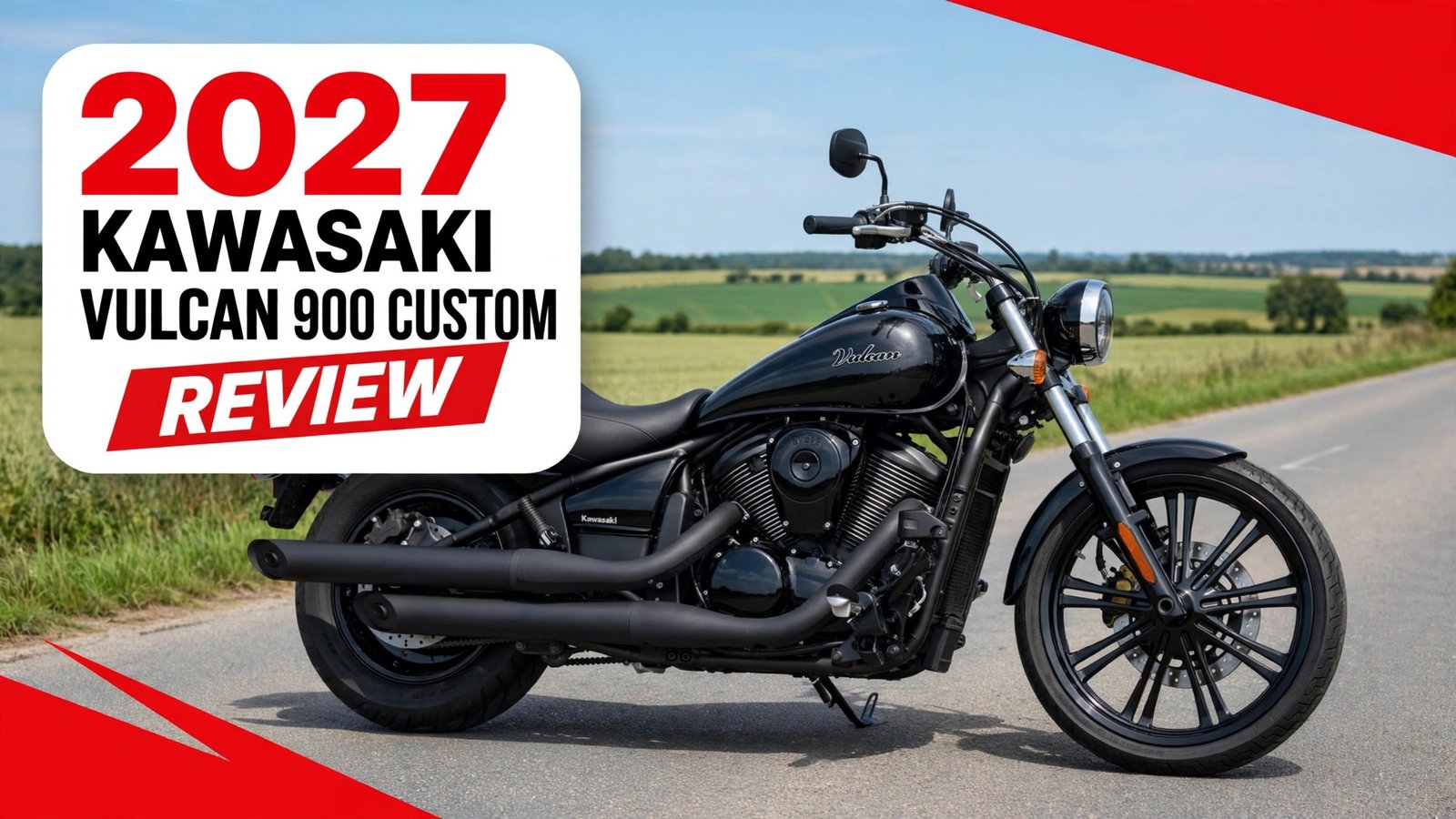
The Vulcan S is the Eliminator’s bigger sibling, a step up, not a twin. It is a 649cc middleweight with a belt drive and forward footpegs, while the Eliminator is a 451cc lightweight with a chain and mid-mount pegs. The Vulcan S costs $1,335 more delivered, weighs 110.2 lb more, and makes 9 hp more on paper.
Engine, Specs and Performance Side by Side
The Vulcan S is the only bike here that out-powers the Eliminator on paper. Its 649cc twin claims 60 hp at 7,500 rpm and 46.5 lb-ft at 6,600 rpm, against the Eliminator’s 51 hp at 10,000 rpm and 31.7 lb-ft at 7,500 rpm. On the dyno, Cycle World measured 53.5 hp at 7,150 rpm on a Vulcan S Cafe ABS, against the Eliminator’s 47.22 hp at 10,430 rpm. The Vulcan S makes 6.28 hp more at the wheel, but it carries 110.2 lb more — 498.3 lb against 388.1 lb. On power per pound the Eliminator wins: 0.131 claimed horsepower per pound against 0.120, and 0.122 wheel horsepower per pound against 0.107. The Vulcan S is torquier, and its belt needs no chain lubrication. Full detail is in our Kawasaki Vulcan S review.
| Figure | Eliminator ABS (2027) | Vulcan S ABS (2027) |
|---|---|---|
| Engine | 451cc parallel twin, liquid-cooled | 649cc parallel twin, liquid-cooled |
| Claimed power | 51 hp @ 10,000 rpm | 60 hp @ 7,500 rpm |
| Claimed torque | 31.7 lb-ft @ 7,500 rpm | 46.5 lb-ft @ 6,600 rpm |
| Wheel dyno | 47.22 hp @ 10,430 rpm (Cycle World) | 53.5 hp @ 7,150 rpm (Cycle World, Cafe ABS) |
| Curb weight | 388.1 lb | 498.3 lb |
| Seat height | 28.9 in | 27.8 in |
| Fuel tank | 3.4 gal | 3.7 gal |
| Drive | Chain | Belt |
| Front brake | 310 mm petal disc, twin-piston | 300 mm disc, twin-piston |
| Delivered price | $7,449 | $8,784 |
Notes: the figures in this Kawasaki Eliminator comparison table are the verified 2027 US figures for both bikes. The Vulcan S dyno figure is Cycle World’s Cafe ABS test, the only published Vulcan S dyno. The Vulcan S tank is 3.7 gallons per Kawasaki’s spec sheet, not the 5.5 gallons one earlier note carried in error.
Price, Equipment and Which Suits Which Rider
The Vulcan S costs $8,099 plus a $685 destination charge, $8,784 delivered — $1,335 more than the Eliminator ABS at $7,449 delivered. What the $1,335 buys is 198cc more engine, 9 hp more on paper, 14.8 lb-ft more torque, a belt drive and a bigger tank. What it costs is 110.2 lb more weight, a longer wheelbase and forward footpegs. The Vulcan S also has Ergo-Fit, with a free fitting at purchase — the Eliminator has no Ergo-Fit system, though its 28.9-inch seat is already low. A smaller or newer rider buys the Eliminator, and this Kawasaki Eliminator comparison rates it the better first bike. A taller rider, or one who plans two-up riding and highway miles, buys the Vulcan S.
Kawasaki Eliminator vs Royal Enfield Super Meteor 650
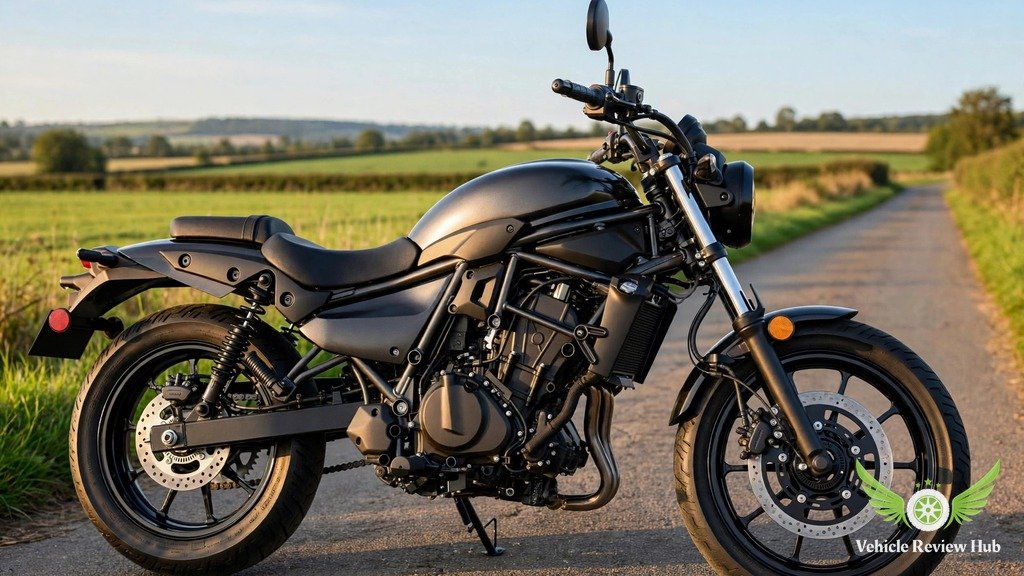
The Super Meteor 650 is the most different bike in this Kawasaki Eliminator comparison, and the one whose price story changed while this guide was being written. It is a 648cc air/oil-cooled parallel twin with a 270-degree crank, a 59.1-inch wheelbase, a 29.1-inch seat and a curb weight of 531.3 lb — 143.2 lb more than the Eliminator ABS. It is the only bike in the set with a three-year warranty, and the only one that looks like a classic British cruiser. It launched in the US at $6,999. That price did not last.
Engine, Specs and Performance Side by Side
On paper the Eliminator has the edge. Its 451cc liquid-cooled twin claims 51 hp at 10,000 rpm and 31.7 lb-ft at 7,500 rpm, with a Cycle World wheel dyno of 47.22 hp at 10,430 rpm. The Super Meteor’s 648cc air/oil-cooled twin claims 47 hp at 7,250 rpm and 38.6 lb-ft at 5,650 rpm, and no published wheel dyno was found for it. The Super Meteor has 197cc more engine and makes 4 hp less — and it carries 143.2 lb more. On power per pound the gap is wide: 0.131 claimed horsepower per pound for the Eliminator against 0.088 for the Super Meteor. Its tank is the biggest in the set at 4.2 gallons, against the Eliminator’s 3.4.
| Figure | Eliminator ABS (2027) | Super Meteor 650 (2026) |
|---|---|---|
| Engine | 451cc parallel twin, liquid-cooled | 648cc parallel twin, air/oil-cooled |
| Claimed power | 51 hp @ 10,000 rpm | 47 hp @ 7,250 rpm |
| Claimed torque | 31.7 lb-ft @ 7,500 rpm | 38.6 lb-ft @ 5,650 rpm |
| Wheel dyno | 47.22 hp @ 10,430 rpm (Cycle World) | No published dyno found |
| Curb weight | 388.1 lb | 531.3 lb (241 kg) |
| Seat height | 28.9 in | 29.1 in |
| Fuel tank | 3.4 gal | 4.2 gal |
| Drive | Chain | Chain |
| Front brake | 310 mm petal disc, twin-piston | 320 mm disc, twin-piston |
| Warranty | 12 months | 36 months, unlimited miles |
| Delivered price | $7,449 | $8,444 |
Notes: the figures in this Kawasaki Eliminator comparison table are the verified US figures for the two bikes. The Eliminator figures are 2027 and the Super Meteor 650 figures are 2026. The Super Meteor curb weight of 531.3 lb (241 kg) and seat height of 29.1 inches are Royal Enfield’s own published figures, confirmed in Motorcycle.com’s 2026 specifications.
Price, Equipment and Which Suits Which Rider
The Super Meteor’s price is the honest complication in this Kawasaki Eliminator comparison, so here it is in full. The bike launched in the US at $6,999 for the Astral trim. During 2026 Royal Enfield raised the US price twice, which TopSpeed attributes to tariff troubles, and the current 2026 listing is $7,899, with the 2027 bike starting at $7,999. At $7,899 plus $545 destination, the 2026 Super Meteor costs $8,444 delivered — $995 more than the Eliminator ABS at $7,449 delivered. The launch-price value case is gone: at $7,899 it is $1,100 more on MSRP and the second-most-expensive bike in the set. What the money still buys is a three-year unlimited-mileage warranty, three times the Eliminator’s 12 months. A rider who wants the classic look, the longest warranty and the most road presence buys the Super Meteor. A rider who wants the lightest, quickest bike for the least money buys the Eliminator.
Kawasaki Eliminator Price and Value Compared
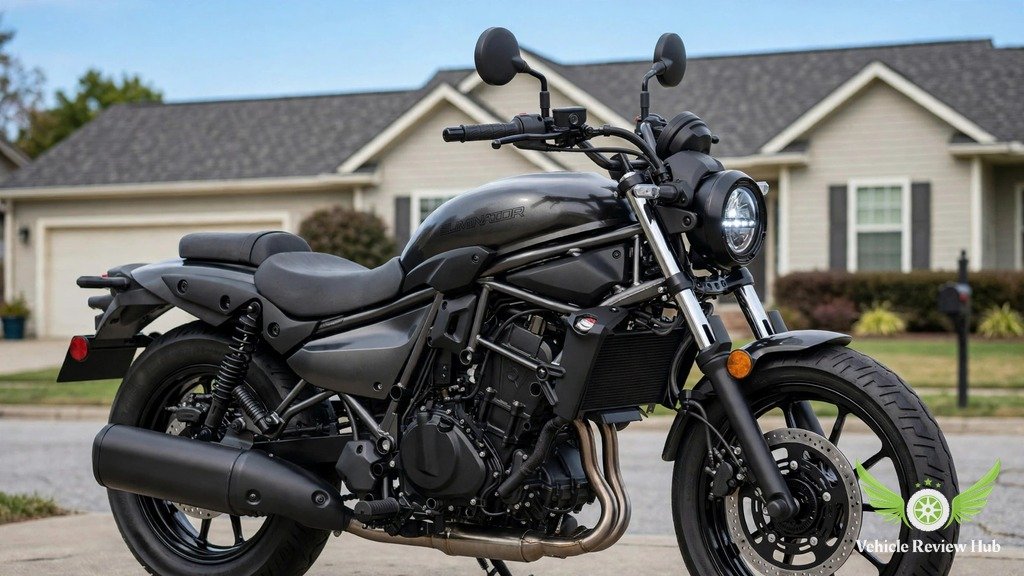
Price is where this Kawasaki Eliminator comparison gets honest about what a buyer actually pays, because the MSRP is never the whole price. Every bike here carries a destination charge: $650 for the Eliminator, $600 for the Rebel 500, $685 for the Vulcan S and $545 for the Super Meteor 650.
Rebel Is $50 Cheaper With ABS Included
The headline price verdict in this Kawasaki Eliminator comparison belongs to the Rebel. The 2027 Eliminator ABS lists at $6,799 with a $650 destination charge, $7,449 delivered. The 2026 Rebel 500 lists at $6,799 with a $600 destination charge, $7,399 delivered. The Rebel is exactly $50 cheaper delivered, and both prices include ABS. The $50 gap is entirely the destination charge — the MSRPs are identical at $6,799. The Vulcan S is $8,784 delivered, $1,335 more than the Eliminator ABS. The Super Meteor 650 is $8,444 delivered, $995 more than the Eliminator ABS. So the Eliminator is the second-cheapest bike in the set on delivered price, $50 behind the Rebel and $995 ahead of the Super Meteor.
| Bike | MSRP | Destination | Delivered | Gap vs Eliminator ABS |
|---|---|---|---|---|
| Rebel 500 (2026) | $6,799 | $600 | $7,399 | −$50 |
| Eliminator ABS (2027) | $6,799 | $650 | $7,449 | — |
| Eliminator SE ABS (2027) | $7,099 | $650 | $7,749 | +$300 |
| Super Meteor 650 (2026) | $7,899 | $545 | $8,444 | +$995 |
| Vulcan S ABS (2027) | $8,099 | $685 | $8,784 | +$1,335 |
Notes: the figures in this Kawasaki Eliminator comparison table are the verified delivered prices, MSRP plus destination charge, for each bike. The Eliminator and Vulcan S figures are 2027 and the Rebel 500 and Super Meteor 650 figures are 2026.
Running Costs and Resale Value Compared
Running costs are where the Eliminator’s simplicity pays off. Fuel is the biggest running cost, and the Eliminator’s tested figure is RevZilla’s first ride showing 45 mpg on the dash after 75 highway miles, for about 150 miles on the 3.4-gallon tank. The Rebel 500’s published figure is the EU WMTC rating of 27 km/L, about 63.5 US mpg, a lab figure, not a US test. The Vulcan S has Rider’s measured 38.8, 48.3 and 56.1 mpg. The Super Meteor’s figure is an India-market claim of about 25 km/L. Servicing is where the Eliminator is cheapest to own in this Kawasaki Eliminator comparison: oil and plugs every 7,600 miles, a valve check every 15,200 miles, and a chain lubed every 400 miles, as our Kawasaki Eliminator reliability guide sets out in full. No verified dealer labour rate exists, so no servicing dollar figures are printed, and no verified resale study exists, so no resale percentage is printed either.
Kawasaki Eliminator Comparison Verdict and US Alternatives
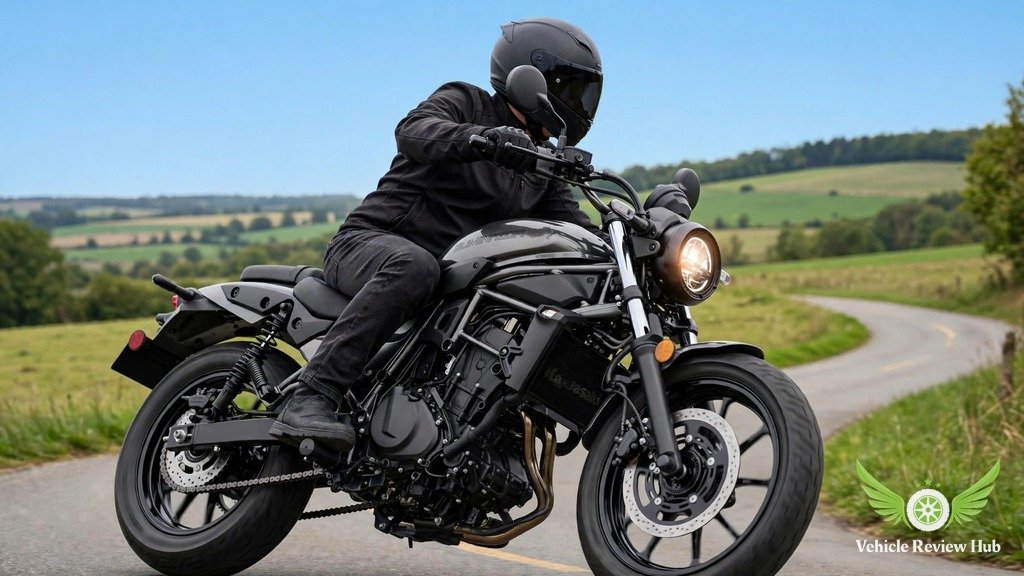
The verdict in this Kawasaki Eliminator comparison is the blog’s own, labelled as such — no outlet has published a verdict on the Eliminator against these three rivals. It rests on three facts verified above: the Eliminator is the lightest bike in the set, it has the best power per pound, and it costs $50 more delivered than the cheapest ABS rival.
Verdict: Weight and Power Win the Case
Weight and power win the case for the Eliminator, and this Kawasaki Eliminator comparison means power per pound, not headline horsepower. The Vulcan S is more powerful on paper at 60 hp against 51, and this verdict concedes that plainly. But the Vulcan S carries 110.2 lb more, so on claimed power per pound the Eliminator leads at 0.131 horsepower per pound against the Vulcan S’s 0.120, the Rebel’s 0.111 and the Super Meteor’s 0.088. On wheel horsepower per pound the Eliminator leads again at 0.122 against the Vulcan S’s 0.107. The weight gap is the whole case: 388.1 lb against 414 for the Rebel, 498.3 for the Vulcan S and 531.3 for the Super Meteor. The Rebel’s $50 is the one concession this verdict makes — the Rebel is cheaper and lower-seated, and a shorter rider or a rider counting every dollar should buy it. The Vulcan S suits a rider who wants more torque and a belt drive; the Super Meteor suits a rider who wants classic presence and a three-year warranty. But for a rider who wants the lightest, quickest-feeling cruiser for the least money, the Eliminator is the pick of this Kawasaki Eliminator comparison. Buy the ABS trim — a beginner should never buy the non-ABS base.
Rebel 300 E-Clutch Alternative
The cheaper alternative in this Kawasaki Eliminator comparison is the Honda Rebel 300 E-Clutch. The 2026 bike costs $5,349 plus a $600 destination charge, $5,949 delivered — $1,500 less than the Eliminator ABS at $7,449 delivered. It is a 286cc single-cylinder with Honda’s E-Clutch, which lets the rider shift without the clutch lever, and it weighs 379 lb, the lightest bike in this comparison. But it is a single, not a twin, with about half the Eliminator’s power. Honda’s 2026 page does not mention ABS for the Rebel 300 E-Clutch, and no 2027 US price had been announced at the time of writing, so the 2026 figures above are labelled as 2026. Two more alternatives, one line each: the Honda Rebel 1100 at $10,399 for 2026, and the Royal Enfield Meteor 350 at $4,899 plus $495, $5,394 delivered.
Kawasaki Eliminator Comparison FAQ
The questions below are the ones buyers actually ask after reading a Kawasaki Eliminator comparison, answered on the verified US figures in this guide.
Which bike wins the Kawasaki Eliminator comparison on value?
The Eliminator wins this Kawasaki Eliminator comparison on value. At $7,449 delivered it is the second-cheapest bike in the set, $50 behind the Rebel 500, and the lightest at 388.1 lb, the best in this Kawasaki Eliminator comparison on weight and power per pound together.
Is the Eliminator cheaper than the Rebel 500?
No — the Rebel 500 is $50 cheaper delivered, and this Kawasaki Eliminator comparison shows the arithmetic. Both bikes list at $6,799: the Eliminator ABS costs $7,449 delivered, the Rebel 500 costs $7,399 delivered, and the whole $50 gap is the destination charge.
Does the Eliminator have ABS?
Yes, from 2027 ABS is standard on every Eliminator. The 2027 Eliminator 500 comes in two trims, ABS at $6,799 and SE ABS at $7,099, and both have ABS — a first for this Kawasaki Eliminator comparison, where every bike now has ABS standard.
Is the Eliminator faster than the Vulcan S?
On headline horsepower, no: the Vulcan S claims 60 hp against the Eliminator’s 51 hp. On power per pound, yes: the Eliminator claims 0.131 horsepower per pound against the Vulcan S’s 0.120, and this Kawasaki Eliminator comparison says so plainly.
How much does the Super Meteor 650 cost in 2026?
The current 2026 US listing in this Kawasaki Eliminator comparison is $7,899 plus a $545 destination charge, $8,444 delivered. The $6,999 figure still quoted in some places was the launch price; this Kawasaki Eliminator comparison uses the current listing, not the launch price.
Which bike is the lightest in this comparison?
The Eliminator, by a wide margin: 388.1 lb against 414 for the Rebel 500, 498.3 for the Vulcan S ABS and 531.3 for the Super Meteor 650. No other bike in this Kawasaki Eliminator comparison is lighter.
Which bike has the best fuel economy?
The honest answer in this Kawasaki Eliminator comparison is that only the Eliminator has a published US test figure. RevZilla’s first ride showed 45 mpg on the dash after 75 highway miles, for about 150 miles on the 3.4-gallon tank.
Is the Eliminator good for a beginner?
Yes — it is the best beginner bike in this Kawasaki Eliminator comparison. It is the lightest bike in the set at 388.1 lb, it has a 28.9-inch seat, ABS is standard from 2027, and it has an assist and slipper clutch.
Which bike is best for two-up riding?
The Vulcan S, and this Kawasaki Eliminator comparison says why. It has the most torque at 46.5 lb-ft, the widest seat in the set and Ergo-Fit adjustment. The Eliminator is tuned for one rider.
Does the Eliminator have a belt drive?
No — the Eliminator is chain drive, with a sealed chain that needs lubrication every 400 miles and a slack check every 600 miles. The only belt drive in this Kawasaki Eliminator comparison is the Vulcan S.
What is the Rebel 300 E-Clutch alternative?
The Rebel 300 E-Clutch is the cheaper alternative in this Kawasaki Eliminator comparison. The 2026 bike costs $5,349 plus $600, $5,949 delivered — $1,500 less than the Eliminator ABS. It is a 286cc single with Honda’s E-Clutch.
Which bike holds its value best?
No verified resale study exists for any of the four bikes, so this Kawasaki Eliminator comparison prints no resale percentage and names no winner on resale. The Eliminator and the Rebel 500 are the cheapest to buy and run, which usually protects resale.