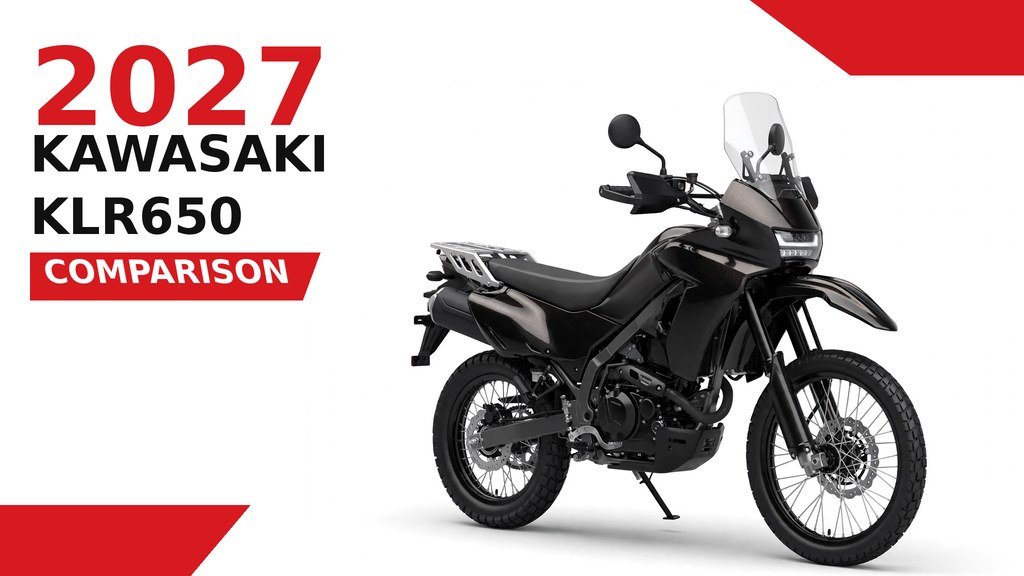
The short answer is that the Kawasaki KLR650 still wins this Kawasaki KLR650 comparison on range and delivered price. The base bike costs $7,684 delivered, undercuts the Suzuki DR650S by $215, and carries a 6.1-gallon tank no rival can match. The Honda XR650L is $85 cheaper and 110 lb lighter, and the Himalayan 450 undercuts the KLR by $1,190 with modern electronics the Kawasaki lacks.
Three of the four bikes in this Kawasaki KLR650 comparison are old singles with five gears and no rider aids, and the fourth is a modern 450 that makes the same claimed 40 hp from 200cc less. The rest of this guide puts each rival against the KLR on engine, specs, price and equipment.
Kawasaki KLR650 Overview and Its Closest Rivals
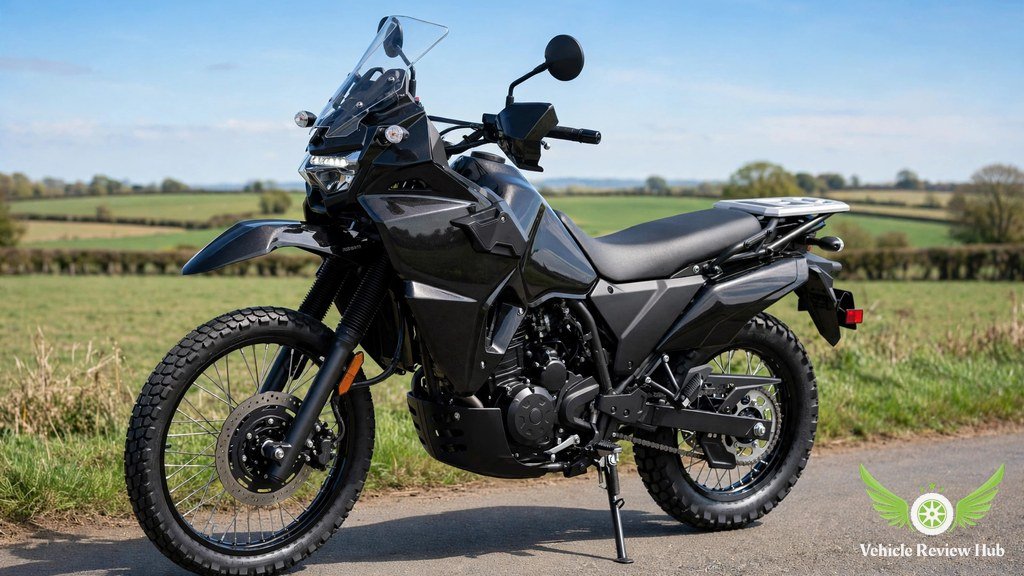
The KLR650 is the third-generation dual sport on sale in the US since 2022, a 652cc liquid-cooled single making a claimed 40 hp at 6,000 rpm and 39.1 lb-ft at 4,500 rpm, the power figure carrying an ISO 4106 footnote on Kawasaki’s own spec sheet. It weighs 456.2 lb without ABS and 460.6 lb with it, seats the rider at 34.3 inches, carries 6.1 gallons, and rolls on 21-inch front and 17-inch rear wire-spoked wheels. This Kawasaki KLR650 comparison starts there: the tank and the price are the two facts every rival must answer, and our Kawasaki KLR650 review covers the 40 hp claim in detail.
Why These Three Rivals: Carb Rivals, Modern Rival
The DR650S and the XR650L are still carbureted in 2026, which makes them the honest old-school rivals: air-cooled singles, five gears, no ABS, no electronics, and prices within a few hundred dollars of the KLR. The Himalayan 450 is the modern rival: fuel-injected, liquid-cooled, six speeds, ride-by-wire, ride modes, switchable ABS and a TFT dash. This Kawasaki KLR650 comparison needs both kinds, because the KLR sits between them.
How the Four Bikes Differ at a Glance
The table below is the whole Kawasaki KLR650 comparison on one screen. Read the tank column first: the KLR carries 6.1 gallons against 3.4 for the DR650S, 2.8 for the XR650L and 4.5 for the Himalayan 450. Then read the weight column: the KLR is the heaviest, and that weight is the price of the range.
| Bike | Engine | Claimed power | Curb / wet weight | Tank | Seat height |
|---|---|---|---|---|---|
| KLR650 (2027 base) | 652cc liquid-cooled single, EFI, 5-speed | 40 hp @ 6,000 rpm (ISO 4106) | 456.2 lb (460.6 lb ABS) | 6.1 gal | 34.3 in (S 32.1 in) |
| Suzuki DR650S (2026) | 644cc air/oil-cooled single, carbureted, 5-speed | Not published | 366 lb | 3.4 gal | 34.8 in |
| Honda XR650L (2026) | 644cc air-cooled SOHC single, carbureted, 5-speed | Not published | 346 lb | 2.8 gal | 37.0 in |
| Royal Enfield Himalayan 450 (2026) | 452cc Sherpa liquid-cooled single, EFI, 6-speed | 40 hp claimed (crank) | 432 lb wet (196 kg, RE figure) | 4.5 gal (17 L) | 32.5 in (825 mm) |
Notes for this Kawasaki KLR650 comparison at-a-glance table: the KLR650 and Himalayan 450 power figures are manufacturer crank claims, and the KLR figure carries Kawasaki’s ISO 4106 footnote. Suzuki and Honda publish no claimed power figure for the DR650S and XR650L, so the dyno figures later in this guide are the only like-for-like power numbers.
Kawasaki KLR650 vs Suzuki DR650S
The DR650S is the closest rival in this Kawasaki KLR650 comparison, and the two bikes have been cross-shopped since the KLR came back in 2022. The Suzuki is 90 lb lighter, simpler and $215 dearer than the base KLR delivered, while the Kawasaki answers with fuel injection, a digital dash, a fuel gauge, optional ABS and nearly twice the fuel range.

The film below is Cross Training Adventure’s three-way review of the Suzuki DR650, the Honda XR650L and the Kawasaki KLR650. The Royal Enfield Himalayan 450 is not in it, so this Kawasaki KLR650 comparison covers the Himalayan separately below.
Engine, Specs and Performance Side by Side
On the dyno the two bikes are almost the same motorcycle. Dirt Rider’s 2022 same-test line puts the DR650S at 35.1 hp and the KLR650 at 34.6 hp, a gap of half a horsepower, with the XR650L at 34.1 hp. Cycle World’s 2022 Adventure run measured 34.61 hp at 5,910 rpm and 33.52 lb-ft at 4,700 rpm for the KLR; the DR made 35.1 hp at 6,200 rpm. This Kawasaki KLR650 comparison treats those numbers as the real power story.
The riding difference is not power but weight and fuel. The DR650S weighs 366 lb against the KLR’s 456.2 lb, and it carries 10.2 inches of suspension travel at both ends against the KLR’s 7.9 inches at the front and 8.0 inches at the rear. The KLR answers with a 6.1-gallon tank against the DR’s 3.4 gallons, which is why Cycle News measured 49 mpg and nearly 300 miles from the KLR.
| Figure | KLR650 | DR650S | Source |
|---|---|---|---|
| Dyno power | 34.61 hp @ 5,910 rpm | 35.1 hp @ 6,200 rpm | CW / Dirt Rider |
| Dyno power, other runs | 36.5 hp @ 6,100 rpm (Rider 2022 Adventure) / 36.9 hp @ 6,100 rpm (CW 2023 S) | Not tested here | Rider Magazine 2022 / Cycle World 2023 |
| Dyno torque | 33.52 lb-ft @ 4,700 rpm | 32.2 lb-ft @ 4,500 rpm | CW / Dirt Rider |
| Curb weight | 456.2 lb (460.6 lb ABS) | 366 lb | Kawasaki / Suzuki |
| Fuel capacity | 6.1 gal | 3.4 gal | Kawasaki / Suzuki |
| Suspension travel | 7.9 in front / 8.0 in rear | 10.2 in front / 10.2 in rear | Kawasaki / Suzuki |
| Top speed (tested) | 88–90 mph | No verified figure found | Cycle News 2022 (KLR only) |
Notes for this Kawasaki KLR650 comparison dyno table: the dyno figures are rear-wheel measurements from different tests, so the half-horsepower gap between the KLR and the DR is within dyno-to-dyno variance. The KLR’s rear travel is 8.0 inches on the current Kawasaki sheet while third-party listings still print the gen-2 figure of 7.3 inches. The same 2022 Adventure dynoed 34.6 and 36.5 hp on different days.
Price, Equipment and Which Suits Which Rider
The price gap is small and the equipment gap is large. A 2026 base KLR650 is $6,999 plus $685 destination, $7,684 delivered, against the 2026 DR650S at $7,299 plus $600 destination, $7,899 delivered, so the base KLR undercuts the DR by $215. One 2026 dealer quote shows a $700 destination charge for the DR; this Kawasaki KLR650 comparison uses the $600 figure from our verified DR650S blog and flags the variance.
What the money buys is different. The KLR comes with fuel injection, an LED headlight, a digital dash with a fuel gauge, a tall two-position windshield, a large aluminium rear carrier as standard, and ABS as a $300 option that cannot be switched off from the dash. The DR650S comes with a carburetor, no ABS, no electronics and no fuel gauge. The DR suits the rider who wants the lightest, simplest 650 for off-road; the KLR suits the rider who wants 300 miles between fuel stops.
Kawasaki KLR650 vs Honda XR650L
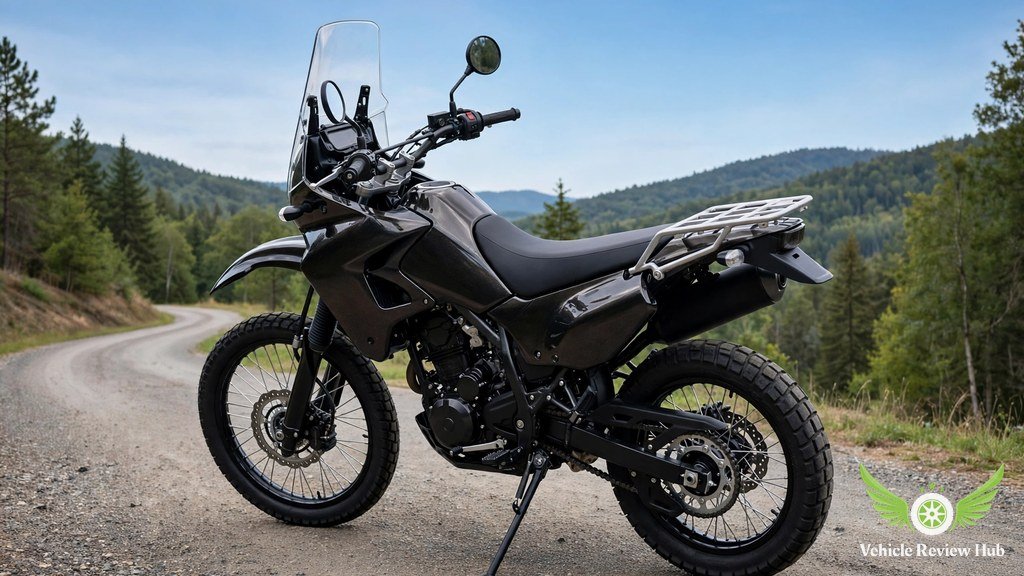
The XR650L is the cheapest bike in this Kawasaki KLR650 comparison and the most extreme one. It is 110 lb lighter than the KLR, seats the rider at 37.0 inches, carries only 2.8 gallons of fuel, and still runs a carburetor with no ABS and no electronics in 2026. It is also the only rival that undercuts the base KLR on delivered price, by $85, at $7,599 against $7,684.
Engine, Specs and Performance Side by Side
The two engines are both 644cc and 652cc singles, but they are built for different jobs. The XR650L is an air-cooled SOHC single with a carburetor, and its dyno figure is 34 hp at 6,120 rpm and 31.4 lb-ft at 5,320 rpm, measured by Cycle World and reported secondhand. The KLR’s Cycle World run made 34.61 hp at 5,910 rpm. On the dyno the two bikes are within one horsepower of each other, and this Kawasaki KLR650 comparison rates them as equals on power.
Everything else favours the Honda off-road and the Kawasaki on-road. The XR650L weighs 346 lb, clears 13.0 inches of ground, and carries 11.6 inches of fork travel and 11.0 inches at the rear. The KLR weighs 456.2 lb, clears 8.3 inches, and carries 7.9 inches at the front and 8.0 inches at the rear. Cycle World’s 2015 XR test recorded 91 mph, 0-60 mph in 6.0 seconds and a 15.01-second quarter mile at 84.33 mph, while the KLR’s only instrumented top speed is Cycle News’s 88-90 mph from 2022.
| Figure | KLR650 | XR650L | Source |
|---|---|---|---|
| Engine | 652cc liquid-cooled single, EFI | 644cc air-cooled SOHC single, carbureted | Kawasaki / Honda |
| Dyno power | 34.61 hp @ 5,910 rpm | 34 hp @ 6,120 rpm | CW / SlashGear |
| Curb weight | 456.2 lb (460.6 lb ABS) | 346 lb | Kawasaki / Honda |
| Seat height | 34.3 in (S 32.1 in) | 37.0 in | Kawasaki / Honda |
| Ground clearance | 8.3 in | 13.0 in | Kawasaki / Honda |
| Fuel capacity | 6.1 gal | 2.8 gal | Kawasaki / Suzuki |
| Oil change interval | Every 7,500 mi | Every 2,000 mi | Owner’s manual / Honda |
Notes for this Kawasaki KLR650 comparison XR650L table: the XR650L dyno figure is reported secondhand through SlashGear from a Cycle World test, so it is labelled as such rather than presented as a same-dyno result. The XR oil interval of 2,000 miles is the shortest in this guide by a wide margin.
Price, Equipment and Which Suits Which Rider
The XR650L is $6,999 plus $600 destination, $7,599 delivered, which is $85 less than the base KLR at $7,684 delivered. That $85 buys almost nothing extra on the Honda: no ABS, no fuel injection, no digital dash, no fuel gauge, no windshield, no rear carrier. The KLR’s $85 premium buys all of those, plus a 12-month warranty. The XR suits the tall rider who rides mostly trails.
Kawasaki KLR650 vs Royal Enfield Himalayan 450
The Himalayan 450 is the odd one out in this Kawasaki KLR650 comparison and the most interesting rival. It is the only bike here with a six-speed gearbox, ride-by-wire, ride modes, switchable ABS, a TFT dash with Google Maps navigation and USB charging. It is also the cheapest: $5,999 plus $495 freight, $6,494 delivered, undercutting the base KLR by $1,190.

Engine, Specs and Performance Side by Side
The Himalayan’s 452cc Sherpa single claims 40 hp, the same number as the KLR’s 652cc single, but the two figures must not be compared as if they were the same measurement. The Himalayan’s 40 hp is a crank claim, and no same-dyno comparison with the KLR exists, so this Kawasaki KLR650 comparison does not set the Himalayan’s 40 hp against the KLR’s 34.61 hp wheel figure. The Himalayan weighs 432 lb wet against the KLR’s 456.2 lb and seats the rider at 32.5 inches against 34.3.
The modern kit is the real story. The Himalayan gets a sixth gear, ride modes, switchable ABS and a TFT dash, while the KLR gets five gears, non-switchable ABS, no ride modes and no tachometer. The KLR answers with the bigger engine and tank: 652cc against 452cc, 6.1 gallons against 4.5, and 39.1 lb-ft of torque. On a long highway run the KLR’s torque and range win; on a technical trail the Himalayan’s weight and electronics win.
| Figure | KLR650 | Himalayan 450 | Source |
|---|---|---|---|
| Engine | 652cc liquid-cooled single, EFI, 5-speed | 452cc Sherpa liquid-cooled single, EFI, 6-speed | Kawasaki / RE |
| Claimed power | 40 hp @ 6,000 rpm (ISO 4106) | 40 hp claimed (crank) | Kawasaki / RE |
| Weight | 456.2 lb curb | 432 lb wet (196 kg) | Kawasaki / RE |
| Fuel capacity | 6.1 gal | 4.5 gal (17 L) | Kawasaki / RE |
| Seat height | 34.3 in (S 32.1 in) | 32.5 in (825 mm) | Kawasaki / RE |
| Delivered price (2026) | $7,684 (base) | $6,494 | Kawasaki USA / RE USA + freight |
Notes for this Kawasaki KLR650 comparison Himalayan table: the two 40 hp figures are both crank claims from different manufacturers and are not the same measurement as a wheel dyno figure, so they are printed side by side without a winner declared. The Himalayan freight of $495 is dealer-documented and varies from $495 to $650 by dealer.
Price, Equipment and Which Suits Which Rider
The Himalayan undercuts the base KLR by $1,190 delivered, and the gap is bigger than it looks because the Himalayan brings more equipment for the money. The KLR’s defence is the 6.1-gallon tank, the 652cc torque, and the dealer network, which reaches almost every US county while Royal Enfield’s is smaller and newer. The Himalayan suits the rider who wants modern electronics, a low seat and the lowest price in the class.
Kawasaki KLR650 Price and Value Compared
The price story of this Kawasaki KLR650 comparison is simple. The base KLR650 at $7,684 delivered undercuts the DR650S by $215, costs $85 more than the XR650L and $1,190 more than the Himalayan 450. The ABS KLR at $7,984 costs $85 more than the DR650S, the new 2027 DF ABS is $8,384 delivered, and the Adventure at $8,884 is the dearest bike here by $985, the same pattern our Versys 650 comparison shows.
Cheaper New Than a Used Gen 3 Sometimes
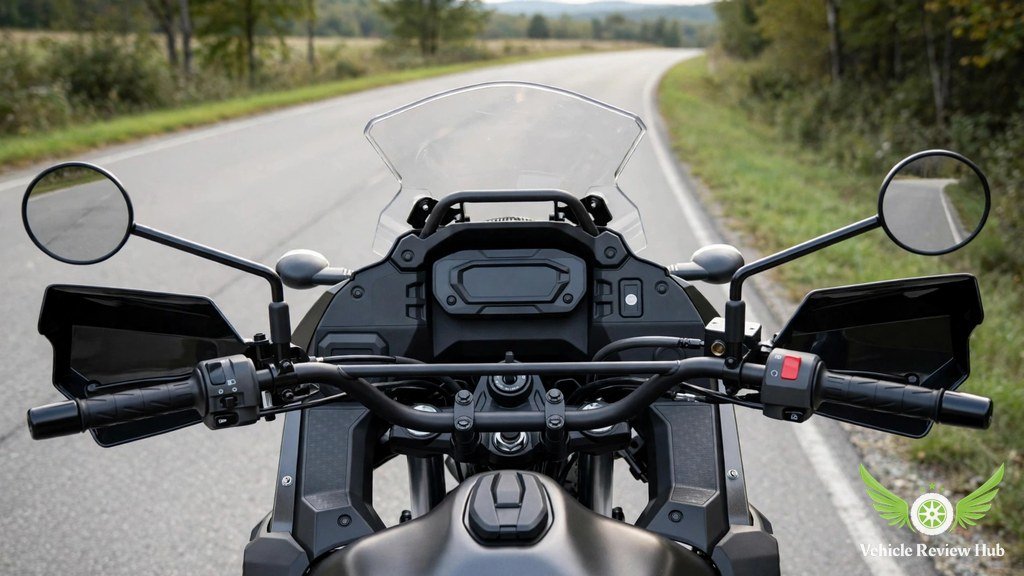
Sometimes is the operative word in this heading, and this Kawasaki KLR650 comparison says so plainly. A private seller in Phoenix, Arizona, listed a 2022 KLR650 Adventure with 2,847 miles at $6,999 on Cycle Trader, seen in November 2026, with barkbusters and a V-stream aftermarket screen fitted. That asking price is exactly the new 2027 base bike’s $6,999 MSRP, and the used Adventure was an $8,199 bike when new in 2022. A buyer paying $6,999 for that used Adventure gets the Adventure kit for new-base money, but a four-year-old bike with no warranty, while a brand-new base bike is $7,684 delivered, only $685 more.
The counter-evidence is real. Another 2022 Adventure with 5,700 miles was listed at $5,995 on Cycle Trader in November 2026, and most used gen-3 examples seen on Cycle Trader that month sat between about $4,999 and $5,995. A used gen-3 KLR is usually much cheaper than a new one; the heading only holds for a low-mileage Adventure with the full kit.
Running Costs and Resale Value Compared
Running costs are where the KLR’s simple single pays off. The owner’s-manual chart sets oil and filter changes at every 7,500 miles and the valve clearance check at every 15,000 miles, with the chain lubed every 400 miles. The XR650L needs oil every 2,000 miles, which is nearly four times as often as the KLR. Fuel is the other running cost: Cycle News measured 49 mpg and Rider Magazine 47 mpg, so the 6.1-gallon tank carries the bike close to 300 miles on the road. This Kawasaki KLR650 comparison rates the KLR as the cheapest of the four to run per mile.
Resale is the honest unknown: the gen-3 KLR has only been on sale since 2022, so there is no long resale history to quote, and this guide does not invent one. Listings seen on Cycle Trader in November 2026 ranged from about $4,999 for a high-mileage base bike to $6,999 for a low-mileage Adventure.
| Running cost | KLR650 | DR650S | XR650L | Himalayan 450 |
|---|---|---|---|---|
| Oil change interval | Every 7,500 mi | Not verified | Every 2,000 mi | Not verified |
| Fuel economy (tested) | 49 mpg (Cycle News) / 47 mpg (Rider) | Not verified | Not verified | Not verified |
| Tank range (road) | Close to 300 mi | About 150 mi (estimate) | About 120 mi (estimate) | About 200 mi (estimate) |
Notes for this Kawasaki KLR650 comparison running-costs table: the range figures for the DR650S, XR650L and Himalayan 450 are estimates from their tank sizes and typical dual-sport economy, not tested figures. Only the KLR650 range is a tested figure, from Cycle News and Rider Magazine.
Kawasaki KLR650 Comparison Verdict and US Alternatives
The verdict of this Kawasaki KLR650 comparison is that the KLR650 stays alive on range and price, and nothing else in the class does both. The base bike at $7,684 delivered is cheaper than the DR650S, nearly as cheap as the XR650L, and carries a tank the other three cannot match. The Himalayan 450 is cheaper and more modern: buy it if electronics and a low seat matter more than range. Weight favours the DR650S; trails favour the XR650L, as our Versys 1100 SE LT ABS comparison shows one class up.
Verdict: Range and Price Keep It Alive
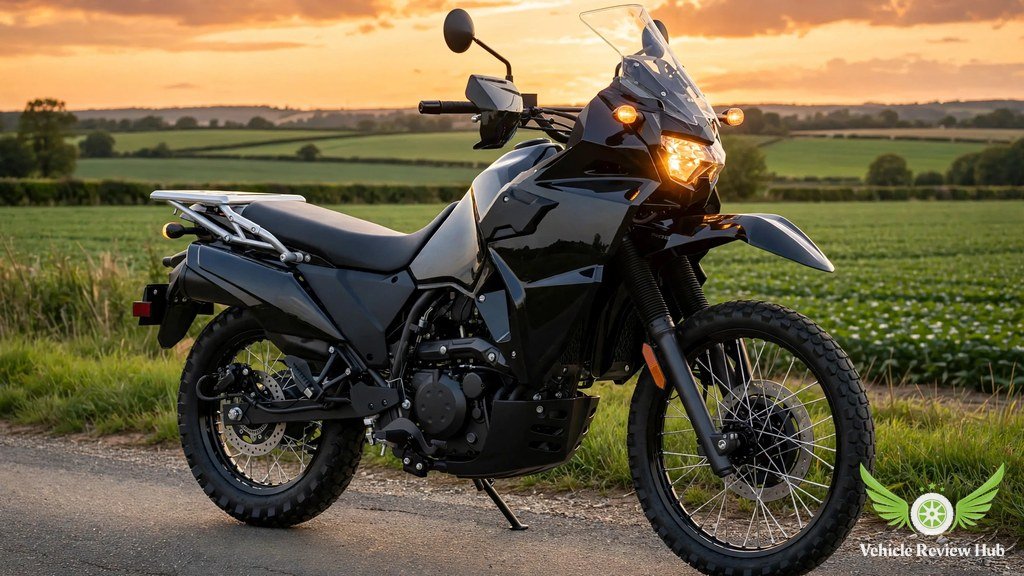
Range and price keep the KLR650 alive, and the numbers are the verdict. A 6.1-gallon tank, close to 300 miles between fuel stops, a $7,684 delivered base price, a 12-month warranty, and a dealer network in every state. The bike’s weaknesses are real and this Kawasaki KLR650 comparison does not hide them: it is the heaviest of the four at 456.2 lb, it has five gears and no tachometer, its ABS cannot be switched off from the dash, and its doohickey history is a genuine split, with the sources divided on whether the gen-3 part was redesigned. The gen-3 NHTSA record is clean on recalls, with zero for every year listed, but not clean on complaints, with one in 2022 and sixteen on the plain 2023 model.
CRF300L Rally Alternative
The Honda CRF300L Rally is the smaller alternative, and its price is now verified: the 2026 bike lists at $6,499 MSRP plus $600 destination on Honda USA, $7,099 delivered, unchanged from the 2025 model and confirmed by Dirt Rider’s 2026 first look. That is $585 less than the base KLR650 delivered, for a lighter, Dakar-styled dual sport. The Honda CRF300L Rally page lists the $6,499 price and the $600 destination charge. The Rally suits the rider who wants a lighter bike for trails and town; the KLR suits the rider who tours and rides on the highway.
Kawasaki KLR650 Comparison: Frequently Asked Questions
Direct answers to the Kawasaki KLR650 comparison questions buyers ask.
Which is better, the KLR650 or the DR650S?
It depends on the riding. This Kawasaki KLR650 comparison rates the DR650S as the better trail bike at 366 lb with 10.2 inches of suspension travel, and the KLR650 as the better touring bike with a 6.1-gallon tank and a $7,684 delivered base price.
Is the KLR650 cheaper than the XR650L?
No. This Kawasaki KLR650 comparison puts the XR650L at $7,599 delivered against the base KLR at $7,684, so the Honda is $85 cheaper. The KLR’s $85 premium buys fuel injection, a digital dash, a fuel gauge, a windshield and a rear carrier.
Is the Himalayan 450 better than the KLR650?
It is cheaper and more modern, but not better at everything. This Kawasaki KLR650 comparison rates the Himalayan 450 ahead on price at $6,494 delivered, electronics and a six-speed gearbox, and the KLR650 ahead on range, torque and dealer network.
How far can the KLR650 go on a tank?
Close to 300 miles on the road. This Kawasaki KLR650 comparison cites Cycle News at 49 mpg and Rider Magazine at 47 mpg; ADV Pulse ran one dry at 239.6 miles in deep sand at 39.3 mpg.
Does the KLR650 have more power than the DR650S?
Not on the dyno. This Kawasaki KLR650 comparison cites Dirt Rider’s 2022 line at 35.1 hp for the DR and 34.6 hp for the KLR, and Cycle World’s KLR run at 34.61 hp.
Is the KLR650 good for beginners?
It can be, with warnings about weight and height. This Kawasaki KLR650 comparison notes the 456.2 lb curb weight and the 34.3-inch seat as the real challenges, while the S trim at 32.1 inches makes it forgiving once moving.
What is the cheapest dual sport in this comparison?
The Royal Enfield Himalayan 450 at $6,494 delivered. This Kawasaki KLR650 comparison puts the base KLR next at $7,684, the XR650L at $7,599, and the DR650S at $7,899.
Does the KLR650 have ABS?
Yes, as a $300 option on the base and S trims, standard on the Adventure and DF. This Kawasaki KLR650 comparison notes the ABS cannot be switched off from the dash, and that the DR650S and XR650L have no ABS at all.
Is the KLR650 reliable compared with its rivals?
Yes, on the evidence available: this Kawasaki KLR650 comparison records zero NHTSA recalls for every gen-3 year listed, with one complaint in 2022 and sixteen on the plain 2023 model.
Should I buy a used KLR650 or a new one?
Check the asking price against the new base delivered figure of $7,684. This Kawasaki KLR650 comparison found a 2022 Adventure with 2,847 miles listed at $6,999 and another 2022 Adventure with 5,700 miles at $5,995.
Is the CRF300L Rally a good alternative to the KLR650?
Yes, if weight and price matter more than range and torque. This Kawasaki KLR650 comparison verifies the 2026 CRF300L Rally at $6,499 plus $600 destination, $7,099 delivered, which is $585 less than the base KLR650.
Which bike should I buy?
Buy the KLR650 to tour, the DR650S for the lightest bike, the XR650L for trails if you can reach its 37.0-inch seat, and the Himalayan 450 for the lowest price. This Kawasaki KLR650 comparison rates the KLR as the best all-rounder of the four.