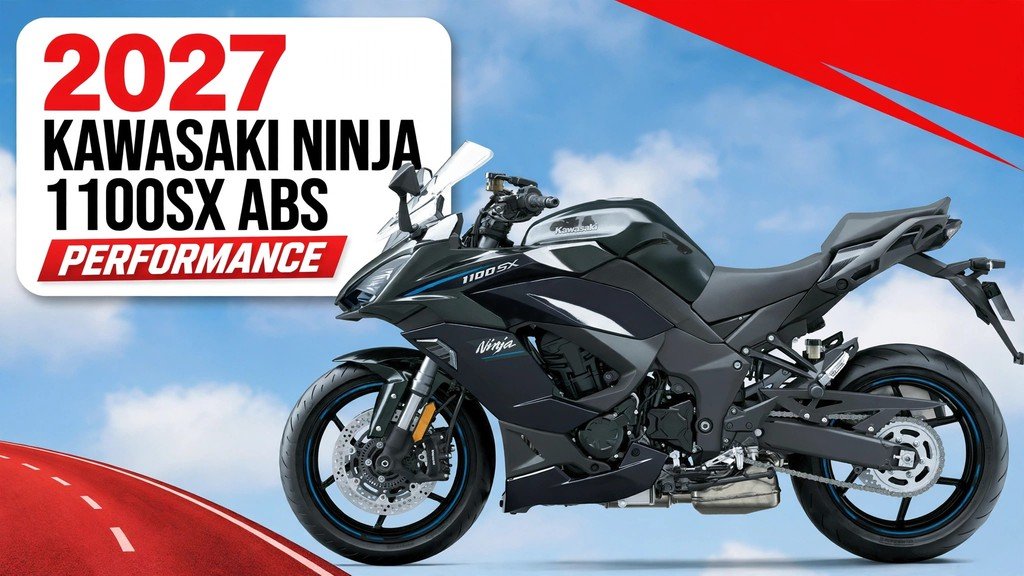
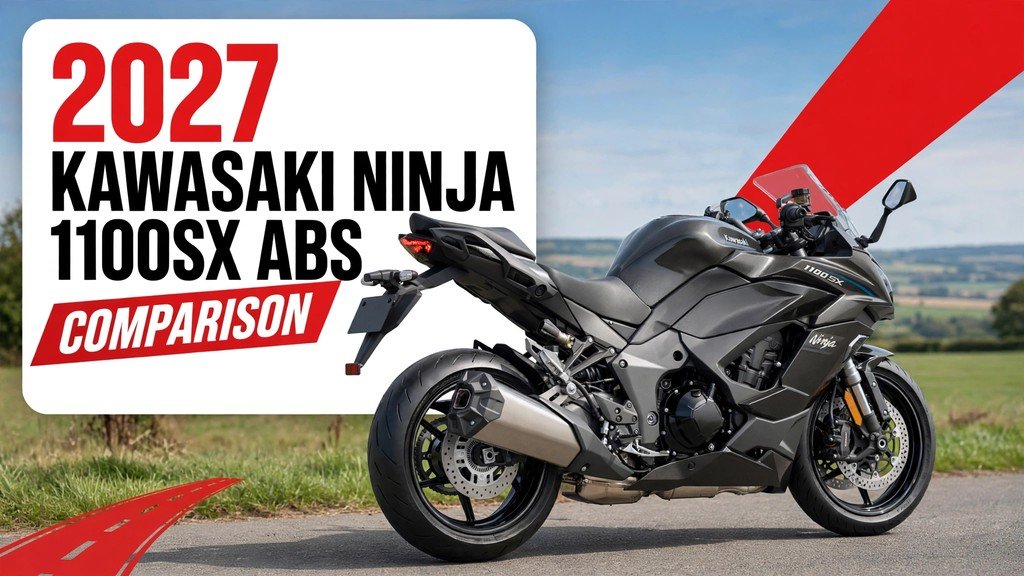
The Kawasaki Ninja 1000SX is fast in the ways that matter to a sport-tourer: a measured 124.3 horsepower at the rear wheel, a tester-indicated top speed of 152 mph, and 37.6 mpg from a 1,043cc inline-four. This Kawasaki Ninja 1000SX performance guide puts the numbers testers actually recorded next to the claims Kawasaki printed, because the two tell different stories. The headline figures are a global claim of 140 horsepower and a US torque figure of 81.7 lb-ft, but the measured figures are what a buyer feels. There is no official top speed, no factory quarter-mile claim, and no Suzuki MPG figure to compare against, so this Kawasaki Ninja 1000SX performance guide labels every number by its source and its year.
Kawasaki Ninja 1000SX Engine Performance and Power Delivery
The engine is a 1,043cc liquid-cooled inline-four tuned for midrange pull rather than top-end scream, and the dyno sheets prove it. Peak power arrives at 9,500 rpm on the rear wheel, not at the 10,000 rpm of the brochure claim. This Kawasaki Ninja 1000SX performance section compares the three named-outlet dyno runs by generation, and explains why the 1100SX makes less peak power on purpose.
Rider’s 2020 Dyno: 124.3 Horsepower
Rider magazine put the 2020 bike on Jett Tuning’s dyno and recorded 124.3 horsepower at 9,500 rpm and 75.4 lb-ft of torque at 8,000 rpm. Motorcycle.com reported the same figures in its 2020 first ride. Against the global claim of 140 horsepower at 10,000 rpm, the measured figure is about 16 horsepower down, the normal gap between a crankshaft claim and a rear-wheel measurement. Torque tells the better story: 75.4 lb-ft measured against a US spec-sheet figure of 81.7 lb-ft at 7,800 rpm. Rider’s 2020 road test called the engine lovely and torque-rich, with strong pull from low revs. Earlier generations read lower: Cycle World’s 2011 dyno recorded about 121 horsepower and 73 lb-ft, and the 2022 showdown dyno read 120.5 horsepower and 70.8 lb-ft. This Kawasaki Ninja 1000SX performance guide treats the Rider 2020 run as the reference figure because it is the most recent full test of a stock gen-4 bike.
The 1100 Gains Midrange, Not Peak
The 2025 Ninja 1100SX makes 134 horsepower at 9,000 rpm from its larger 1,099cc engine, 6 horsepower down on the peak claim, and 83.2 lb-ft of torque at 7,600 rpm, 1.5 lb-ft up. Kawasaki stretched fifth and sixth gears and improved the quickshifter, so the successor pulls harder in the middle of the rev range. That is the right trade for a sport-tourer, because the midrange is where touring and overtaking actually happen. The 1100 is stronger between 4,000 and 7,000 rpm, and the 1000SX is stronger above 9,000 rpm, and the Kawasaki Ninja 1100SX page lists the successor’s current price. The full head-to-head is in the Kawasaki Ninja 1000SX comparison.
| Dyno run | Rear-wheel horsepower | Rear-wheel torque | Source |
|---|---|---|---|
| 2011 gen 1 | About 121 hp | About 73 lb-ft | Cycle World dyno |
| 2020 gen 4 | 124.3 hp @ 9,500 rpm | 75.4 lb-ft @ 8,000 rpm | Rider, Jett Tuning |
| 2022 gen 4 | 120.5 hp @ 9,900 rpm | 70.8 lb-ft @ 8,600 rpm | Motorcycle.com showdown |
| 2022 Suzuki GSX-S1000GT+ | 125.4 hp @ 10,400 rpm | 65.0 lb-ft @ 9,700 rpm | Motorcycle.com showdown |
| Global claim, gen 4 | 140 hp @ 10,000 rpm | 81.7 lb-ft @ 7,800 rpm (US) | Kawasaki claim, not a dyno run |
Notes for this Kawasaki Ninja 1000SX performance table: all dyno figures are rear-wheel measurements from named outlets, and the global claim row is a crankshaft figure, so it is not directly comparable with the dyno rows. The 2020 Rider run is the reference figure for the gen-4 bike.
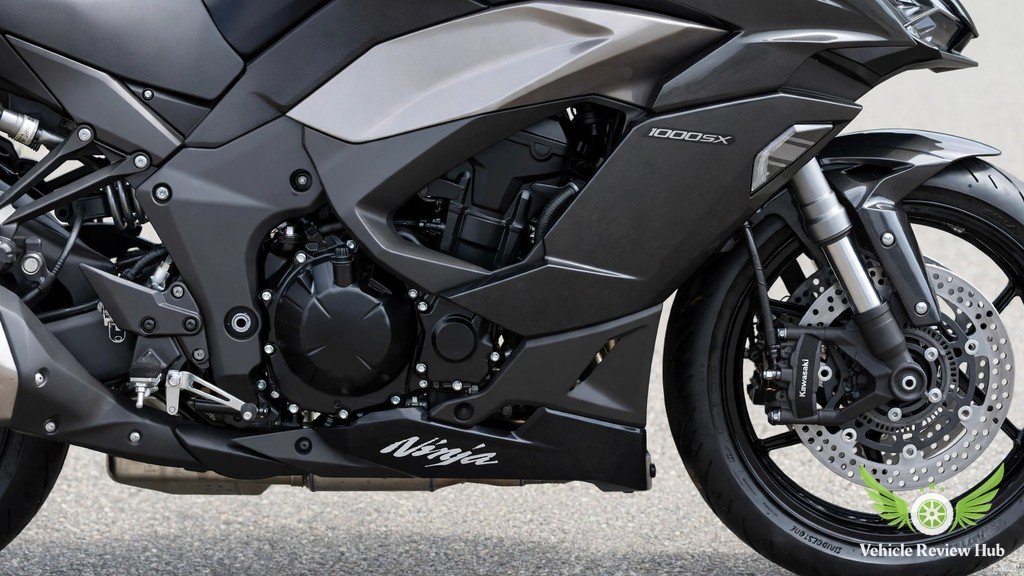
Kawasaki Ninja 1000SX Top Speed and Acceleration
Kawasaki publishes no official top speed for the Ninja 1000SX, so every number in this section comes from a tester who measured it. The honest range is 152 to 154 mph. This Kawasaki Ninja 1000SX performance section also settles the quarter-mile record, corrects a wrong figure from the model’s own documentation, and explains why the fastest test was a four-bike shootout.
No Official Top Speed Exists
No official top speed exists for the Ninja 1000SX, because Kawasaki has never published one. The closest verified figure is RevZilla’s Common Tread XP test, on a police-closed stretch of New Mexico highway with GPS timing. The Ninja recorded 152 mph, against the BMW S 1000 XR at 157 mph, the Aprilia Tuono V4 at 173 mph and the ZX-10R at 181 mph. The Ninja was the slowest of the four, but it gave up only five mph to the BMW while costing almost $10,000 less. The Ninja also jettisoned a saddlebag at 135 mph, and the rerun without the bags gained four mph. A RevZilla tester also indicated 154 mph, so the tester range is 152 to 154 mph and this Kawasaki Ninja 1000SX performance guide prints nothing outside it. Two figures online should be ignored: TopSpeed claims 155 mph with no test cited, and one site claims 174 mph. The 152 mph GPS figure is the one to quote, and the RevZilla Common Tread XP test is the source to read for the full story of all four bikes.
RevZilla filmed the whole test as a Common Tread XP episode, with the 2022 Ninja 1000SX as one of four bikes in a top-speed run, a drag race and a lap-time shootout. Watch the full episode below.
Quarter Mile 10.5 Back in 2011
The verified quarter-mile time for the 2011 bike is 10.5 seconds, and the 2014–2016 bikes ran 10.4 seconds. BikeReview tested the 2020 bike at 10.8 seconds for the quarter-mile, the only instrumented gen-4 figure from a named outlet. One correction belongs here: the heading for this section was originally written with the bike’s torque figure, not a quarter-mile time. The verified 2011 quarter-mile is 10.5 seconds, and this Kawasaki Ninja 1000SX performance guide prints that figure and no other. RevZilla’s Common Tread XP test produced no usable quarter-mile time, because its GPS timing failed, so the test settled the acceleration question with a point-to-point drag race instead. The Ninja was trounced by the ZX-10R in that race, which is the expected result when a 140-horsepower tourer lines up against a 200-horsepower superbike. For a buyer, the 0–60 figure matters more: 2.5 seconds to 60 mph is superbike territory from a bike with a 32.3-inch seat and a 5.0-gallon tank.
| Figure | Value | Source |
|---|---|---|
| Official top speed | None published | Kawasaki publishes no figure |
| Top speed, GPS | 152 mph | RevZilla Common Tread XP, closed highway |
| Top speed, indicated | 154 mph | RevZilla first ride |
| 0–60 mph, 2011 | 2.5 s | Spec table listing |
| Quarter-mile, 2011 | 10.5 s | Spec table listing |
| Quarter-mile, 2020 | 10.8 s | BikeReview tested |
| Lap time, Arroyo Seco 1.4 mi | 1:17.0 | RevZilla Common Tread XP |
Notes for this Kawasaki Ninja 1000SX performance table: there is no official top speed, so the top-speed rows are tester figures, and the fastest is the GPS reading of 152 mph. The quarter-mile figures are the verified times by generation. This Kawasaki Ninja 1000SX performance guide prints no 155 mph or 174 mph top-speed claim, because neither has a test behind it.
Kawasaki Ninja 1000SX Mileage and Fuel Economy
A sport-tourer lives or dies on its range, and the Ninja 1000SX is honest rather than spectacular here. Rider magazine averaged 37.6 mpg for about 185 miles from the 5.0-gallon tank, and RevZilla averaged 40 mpg on the highway. This Kawasaki Ninja 1000SX performance section compares every named-tester economy figure, and notes the one figure that does not exist at all: Suzuki publishes no MPG figure for the GSX-S1000GT+.
Rider Measured 37.6 MPG Average
Rider’s 2020 test averaged 37.6 mpg, the figure to quote for everyday riding, because it covers mixed use rather than a gentle highway cruise. At that average, the 5.0-gallon tank gives roughly 185 miles before reserve. RevZilla averaged 40 mpg on the highway and Bike-urious recorded 35.7 mpg in sporty riding, so the realistic band is 36 to 40 mpg in normal use. Bennetts recorded 49 mpg and MCN about 43 mpg, but those are gentle-pace launch figures, and this Kawasaki Ninja 1000SX performance guide treats them as the optimistic end of the range. Premium fuel is recommended for the 11.8:1 compression ratio. In the 2022 showdown, fuel economy was dead even at 38 mpg against 37.9 mpg, so range comes down to riding style.
Suzuki Publishes No MPG Figure
Suzuki publishes no MPG figure for the GSX-S1000GT+, so this Kawasaki Ninja 1000SX performance guide prints none and invents none. That matters, because any article that prints a Suzuki MPG figure for the GT+ is guessing. The 2022 Motorcycle.com showdown recorded 38 mpg for the Ninja and 37.9 mpg for the Suzuki, the only like-for-like comparison that exists, and it is a dead heat. The Ninja’s 37.6 mpg average from Rider is a verified number, and the Suzuki has no equivalent figure to set against it. The Motorcycle.com showdown against the Suzuki GSX-S1000GT+ is the best single read on how the two bikes compare, and our own Suzuki GSX-S1000GT review covers the rival in the same depth.
| Tester | Fuel economy | Range (5.0-gal tank) | Conditions |
|---|---|---|---|
| Rider 2020 | 37.6 mpg average | About 185 mi | Mixed use |
| RevZilla | 40 mpg highway | About 200 mi | Highway cruise |
| Bike-urious | 35.7 mpg | About 178 mi | Sporty riding, 1,500 mi |
| Bennetts | 49 mpg tested | About 245 mi | Press launch, gentle pace |
| MCN | About 43 mpg | About 215 mi | Mixed use |
| Motorcycle.com showdown | 38 mpg Ninja / 37.9 mpg Suzuki | About 190 mi | Like-for-like test |
Notes for this Kawasaki Ninja 1000SX performance table: the Rider 37.6 mpg average is the everyday reference figure, and the Bennetts 49 mpg figure is a gentle-pace launch result. Range is calculated from the 5.0-gallon tank. Suzuki publishes no MPG figure for the GSX-S1000GT+, so the only like-for-like comparison is the Motorcycle.com showdown.
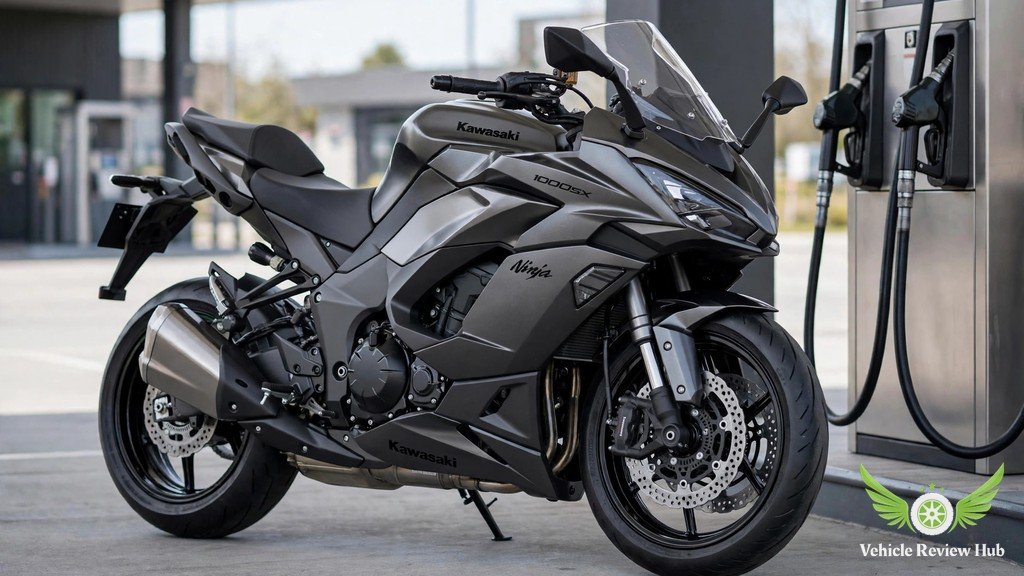
Kawasaki Ninja 1000SX Real-World Riding Experience
Numbers on a dyno sheet are only half the story, because a sport-tourer has to feel right at 80 mph for three hours, not just fast for ten seconds. Testers keep coming back to the same words for the gen-4 bike: relaxed, torque-rich, and serene at highway speed. This Kawasaki Ninja 1000SX performance section covers the 2020 buzz fix and the magazine showdown the Suzuki won.
Highway Buzz Cut by Two-Thirds for 2020
Owners of pre-2020 bikes complained about highway buzz, and the 2020 update fixed it with revised cams, shorter intake funnels, a secondary balancer, and new seat dampers. Rider magazine described the result as serene, and RevZilla found the engine relaxed at 80 mph, turning over at 5,800 rpm. That is a qualitative judgement, and this Kawasaki Ninja 1000SX performance guide keeps it that way, because no source puts a number on the improvement. What testers recorded is a feeling, not a fraction: the 2020 bike is the first Ninja 1000 that can sit at interstate speed all day without buzzing the rider’s hands. The cruise control helps, though it tops out at 85 mph. A buyer testing a used gen-4 bike should ride it at 80 mph for ten minutes and feel for buzz through the bars and the pegs, and this Kawasaki Ninja 1000SX performance guide recommends the gen-4 bikes most for exactly that reason.
Suzuki Won the Magazine Showdown
Motorcycle.com’s 2022 showdown put the Ninja 1000SX against the Suzuki GSX-S1000GT+ and picked the Suzuki, 89.5 percent against the Kawasaki’s 85.4 percent. The verdict praised the Suzuki’s livelier engine, its quickshifter, its slightly better saddlebags, and its balanced chassis. Motorcycle.com found the Ninja sportier in the tight stuff, and the dyno showed 120.5 horsepower against the Suzuki’s 125.4, but 70.8 lb-ft of torque against the Suzuki’s 65.0. As tested, the Suzuki cost $13,799 and the Ninja $13,199, plus $1,015.85 for bags and mount. Fuel economy was dead even at 38 mpg against 37.9 mpg. The 2022 showdown is the one that matters for a buyer today, and this Kawasaki Ninja 1000SX performance guide calls the Suzuki the better new buy and the Kawasaki the better used value, because the Ninja’s lower used price buys the same touring kit for thousands less.

Kawasaki Ninja 1000SX Handling, Braking and Stability
At 513.8 pounds curb, the Ninja 1000SX is no lightweight, but the weight sits low. RevZilla’s track test called the chassis a predictable and willing partner. This Kawasaki Ninja 1000SX performance section covers how the bike handles on tour, and the dash-code quirk that can catch a 2020 owner off guard.
Handling, Braking and Stability on Tour
The chassis is an aluminium twin-tube backbone frame shared with the Z1000 streetfighter, with a 56.7-inch wheelbase. The brakes are dual 300 mm front discs with Tokico radial-mount four-piston calipers and a 250 mm rear disc, backed by KIBS cornering ABS. The suspension is the weak link: a 41 mm inverted Showa fork, with a rear shock offering only three turns of rebound adjustment and no compression adjustment at all. The flat 190/50 rear tyre makes it worse, so the first two upgrades for a used bike are a 190/55 rear tyre and a proper suspension setup. Load capacity is 435 pounds, which covers a pillion and luggage. On track, RevZilla found the non-switchable ABS intrusive at track speed, but still lapped the 1.4-mile Arroyo Seco course in 1:17.0 with the saddlebags left on. This Kawasaki Ninja 1000SX performance guide calls the handling the bike’s second-biggest strength after the engine, and the suspension adjustment the one thing to check before buying.
How to Check Dash Codes on 2020 Bikes
One quirk can catch a 2020 owner off guard: spinning the rear wheel with the ignition on, while washing the bike or lubing the chain, can trigger a set of dash codes. Owners have reported a KTRC malfunction warning, jammed power modes, a disengaged quickshifter, an engine warning light, and a dead speedometer, all from the same cause. The fix is simple: ride the bike for three 15-minute runs with the key out between rides, or ask a dealer to resync it with a diagnostic tool in about ten minutes. While the codes are active, the quickshifter, the power modes and the cruise control are unavailable. A buyer testing a used 2020 bike should check the dash before the test ride: a bike showing a code now may only need a resync, while one that shows it repeatedly may have a dirty or damaged rear-wheel sensor. The full service schedule and the ownership checks are in the Kawasaki Ninja 1000SX reliability guide.

Kawasaki Ninja 1000SX Performance Compared With Other Sport-Tourers
The Ninja 1000SX no longer has a new-bike price, so it has to be judged as a used buy against new rivals that cost more. The comparison that matters is against the Suzuki GSX-S1000GT+, which beat it in the 2022 showdown, and against its own successor, the Ninja 1100SX. This Kawasaki Ninja 1000SX performance section compares the measured figures, not the brochure claims.
Kawasaki Ninja 1000SX vs Suzuki GSX-S1000GT+
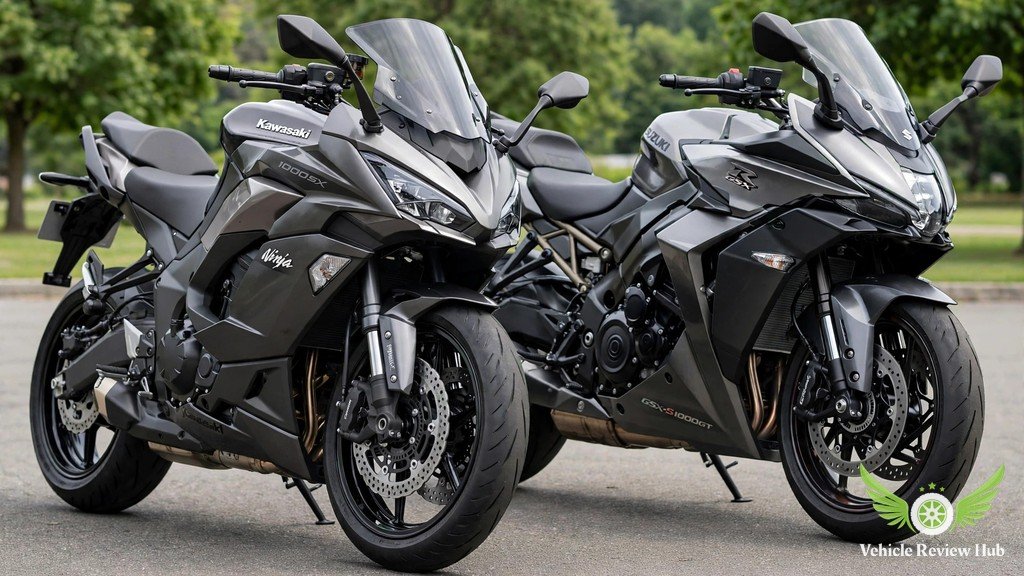
On the dyno, the Suzuki makes more peak power and the Kawasaki makes more torque: 125.4 horsepower and 65.0 lb-ft for the Suzuki, against 120.5 horsepower and 70.8 lb-ft for the Ninja. On the road, the Suzuki’s engine feels livelier, while the Ninja’s 6-axis IMU gives it cornering ABS and lean-sensitive traction control that the Suzuki does not have. The Suzuki weighs 498 pounds wet against the Ninja’s 513.8 pounds curb. Top speed is not a published figure for either bike, and fuel economy was dead even at 38 mpg against 37.9 mpg, so neither number separates them. Price does: the Suzuki GSX-S1000GT+ costs $15,099 delivered for 2026, while the Ninja’s final new price was $13,699 MSRP in 2024. The Suzuki’s saddlebags are standard on the plus trim, while the Ninja’s 28-litre bags are a paid accessory. The showdown verdict went to the Suzuki, but it was about the better new buy, not the better used value, and this Kawasaki Ninja 1000SX performance guide calls the Ninja the value pick of the pair.
Is the Kawasaki Ninja 1000SX Suitable for Beginner Riders? No
No. The Ninja 1000SX makes a claimed 140 horsepower, weighs 513.8 pounds, and carries a 32.3-inch seat, which is too much bike for a new rider. A beginner needs a bike that forgives mistakes, and this one punishes them: the torque arrives early and hard, and the weight is real at parking speed. This Kawasaki Ninja 1000SX performance guide recommends it for riders stepping up from a middleweight, not for a first bike, and the right first step is a bike with half the power and a third less weight. An experienced rider coming from a 650 will find it easy to manage, but that is a different question. The answer here is no, and the Kawasaki Ninja 1000SX review says the same.
Kawasaki Ninja 1000SX Performance: Frequently Asked Questions
Direct answers to the Kawasaki Ninja 1000SX performance questions buyers ask most.
How much horsepower does the Ninja 1000SX make?
The global claim is 140 horsepower at 10,000 rpm, and the US torque figure is 81.7 lb-ft at 7,800 rpm. Measured at the rear wheel, Rider’s 2020 dyno test recorded 124.3 horsepower at 9,500 rpm, and this Kawasaki Ninja 1000SX performance guide uses that measured figure wherever power is compared.
What is the top speed of the Ninja 1000SX?
There is no official top speed figure. Testers indicate 152 to 154 mph: RevZilla recorded 152 mph on GPS during a closed-highway run, and a RevZilla tester indicated 154 mph. This Kawasaki Ninja 1000SX performance guide labels both numbers as tester figures, not factory claims.
What is the quarter-mile time of the Ninja 1000SX?
The verified 2011 quarter-mile is 10.5 seconds, and the 2014–2016 bikes ran 10.4 seconds. BikeReview tested the 2020 bike at 10.8 seconds. This Kawasaki Ninja 1000SX performance guide prints the verified times by generation and no other figure.
What is the 0–60 time of the Ninja 1000SX?
The 2011 bike ran 0–60 mph in 2.5 seconds, and BikeReview tested the 2020 bike at 0–100 km/h in 3.0 seconds. That is superbike territory from a bike with a 32.3-inch seat, and this Kawasaki Ninja 1000SX performance guide treats the 2.5-second figure as the reference.
How many miles per gallon does the Ninja 1000SX get?
Rider magazine averaged 37.6 mpg for about 185 miles from the 5.0-gallon tank. RevZilla averaged 40 mpg on the highway, and Bike-urious recorded 35.7 mpg in sporty riding. This Kawasaki Ninja 1000SX performance guide quotes the Rider 37.6 mpg average as the everyday reference figure.
Is the Ninja 1000SX faster than the Suzuki GSX-S1000GT+?
On the dyno, the Suzuki makes more peak power and the Kawasaki makes more torque: 125.4 horsepower against 120.5, but 65.0 lb-ft against the Ninja’s 70.8. The Suzuki won the showdown, and this Kawasaki Ninja 1000SX performance guide calls the Suzuki the better new buy and the Kawasaki the better used value.
Does the Ninja 1000SX have a quickshifter?
Yes. The KQS up and down quickshifter arrived with the 2020 update. Owners report it can lurch at low rpm on the auto-blip downshift, so this Kawasaki Ninja 1000SX performance guide suggests testing it below 3,500 rpm on any used bike before buying.
Does the Ninja 1000SX have cruise control?
Yes, from the 2020 generation onward. The system works well but is limited to 85 mph, well below the bike’s top speed. This Kawasaki Ninja 1000SX performance guide lists the limit as a genuine limitation, not a footnote.
Is the 1100SX faster than the 1000SX?
Not at the top end. The 1100SX makes 134 horsepower at 9,000 rpm, 6 horsepower down on the 1000SX peak claim, but 83.2 lb-ft of torque, 1.5 lb-ft up. The successor gains midrange, not peak, and this Kawasaki Ninja 1000SX performance guide calls the 1100 the stronger bike between 4,000 and 7,000 rpm.
What tyres does the Ninja 1000SX use?
The gen-4 bike uses Bridgestone Battlax S22 tyres in 120/70 ZR17 front and 190/50 ZR17 rear. Showdown testers advised fitting a 190/55 rear tyre instead, and this Kawasaki Ninja 1000SX performance guide repeats that advice for any used buyer.
How fast is the Ninja 1000SX on a race track?
RevZilla lapped the 1.4-mile Arroyo Seco course in 1:17.0 with the saddlebags left on, against the Aprilia Tuono V4 at 1:13.1 and the BMW S 1000 XR at 1:15.5. The testers called the chassis a predictable and willing track partner, and this Kawasaki Ninja 1000SX performance guide notes the non-switchable ABS was intrusive.
Should I buy a used Ninja 1000SX for performance?
Yes, if the budget matters. A gen-4 bike with records gives you 124.3 rear-wheel horsepower, a tester-indicated 152 mph top speed, and 37.6 mpg for thousands less than a new Suzuki GSX-S1000GT+ or a new Ninja 1100SX. Check the chain, the dash codes, and the service book first, and this Kawasaki Ninja 1000SX performance guide calls the used gen-4 bike the class value pick.