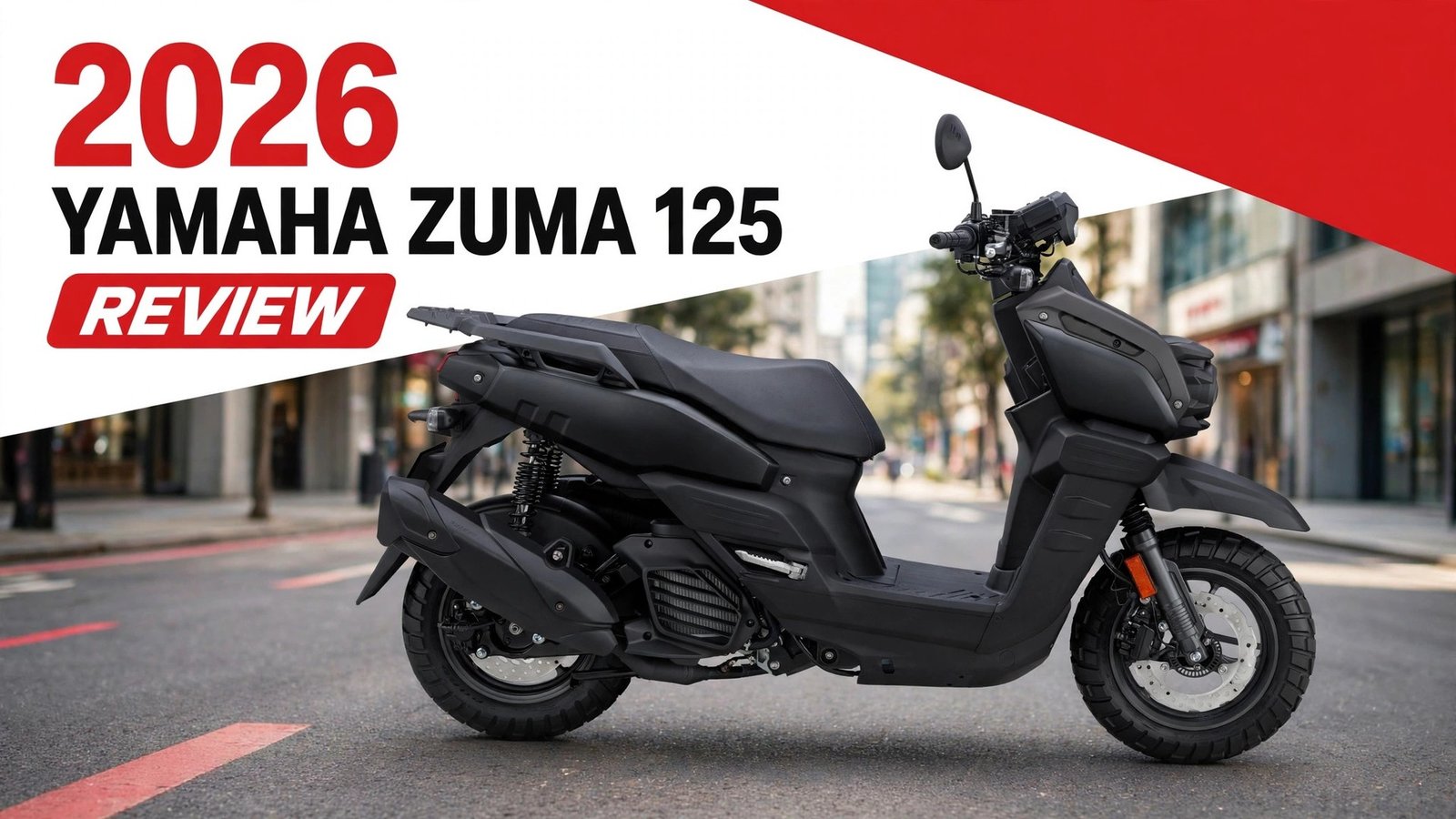
Yes, the Yamaha Zuma 125 is still one of the smartest cheap ways to get around a city in 2026 — but only if you buy it for what it is. This Yamaha Zuma 125 review covers a rugged little 125cc scooter that sips fuel, parks almost anywhere, and costs $3,799 before destination, yet tops out near 60 mph and has no ABS. If your daily route is city streets and suburban errands, this Yamaha Zuma 125 review will show why the Zuma keeps winning fans after 15 years on sale in America. If you need freeway speed or two-up touring, this Yamaha Zuma 125 review will tell you plainly to look elsewhere.
The current bike is the third generation, redesigned for 2022 with a liquid-cooled Blue Core engine, variable valve actuation, and a tougher look. Sold through Yamaha dealers across the United States, it is one of the few Japanese 125cc scooters you can buy new. This Yamaha Zuma 125 review covers generations, specs, prices by year, features, riding impressions, and the ADV160 verdict.
Yamaha Zuma 125 Overview and Model-Year Updates
The Zuma 125 has been on sale in the United States since 2009, one of Yamaha’s longest-running scooters. This Yamaha Zuma 125 review treats that long run as a strength: parts are easy to find, mechanics know the bike, and used examples are plentiful.
What Is the Yamaha Zuma 125 and Who Is It Designed For?
The Yamaha Zuma 125 is a step-through scooter built around a steel frame, fat 12-inch tires, and a CVT automatic — no clutch lever, no foot shifter, no chain. Yamaha pitches it at city commuters and students, and this Yamaha Zuma 125 review finds that pitch fits: the 30.9-inch seat is low, wet weight is 282 pounds, and underseat storage swallows a full-face helmet.
This Yamaha Zuma 125 review must also say who it is not for: not freeway riders, not two-up tourers, and not performance seekers. Its roughly 60-mph ceiling rules out 65-mph highways, and a passenger plus luggage pulls top speed down further.
Three Generations Explained: 2009-2015, 2016-2021 and 2022 Redesign
The first generation ran from 2009 to 2015 with a forced-air-cooled 125cc single, 10:1 compression, and the famous dual bug-eye headlights. It used a 220mm front disc and rear drum brake, carried its tank under the seat, and weighed 269 pounds wet per the 2009 manual. Launched at $2,999, it remains a strictly used buy today, and this Yamaha Zuma 125 review judges condition over year.
The second generation arrived for 2016 with new off-road styling, a single headlight unit replacing the bug-eyes, and the fuel tank moved to the floorboard tunnel, freeing up underseat storage. The engine stayed air-cooled, but Yamaha raised the economy estimate to 103 mpg, fitted 245mm front and 200mm rear discs, and priced the bike at $3,390, as Powersports Business reported at launch. The 2016–2021 bikes are today’s used-market value pick in this Yamaha Zuma 125 review.
The third generation, the bike on sale now, debuted for 2022 with a genuinely new engine and a more angular look with a bigger beak fender. Motorcycle.com’s first look recorded the key changes: a 52.0mm bore and 58.7mm stroke replacing the old 52.4mm by 57.9mm dimensions, compression up from 10.0:1 to 11.2:1, and variable valve actuation — the redesign this Yamaha Zuma 125 review focuses on for new buyers.
Yamaha Zuma 125 Engine and Specifications
The current Zuma 125 runs Yamaha’s Blue Core 125cc engine, a compact liquid-cooled single. This Yamaha Zuma 125 review finds the engine’s character matters more than its numbers: it is tuned for instant pull away from lights and steady mid-range pace, not top speed.
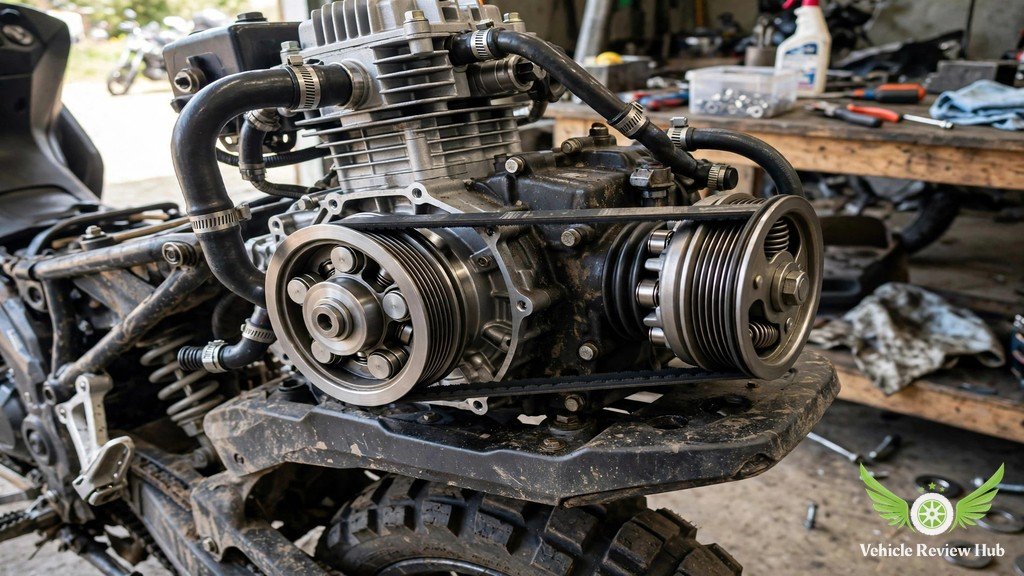
125cc Liquid-Cooled Blue Core Engine With VVA and CVT Automatic
The 2022-on engine is a 125cc liquid-cooled, four-stroke SOHC single with four valves, fuel injection, and Yamaha’s Variable Valve Actuation (VVA), which changes intake valve timing as revs rise for stronger low-end torque. This Yamaha Zuma 125 review notes the DiASil cylinder and forged piston support the 11.2:1 compression ratio, up from the old engine’s 10:1. Drive is a V-belt automatic with a centrifugal clutch. For that drivetrain’s service costs, see the CVT belt service schedule.
One honest gap in the spec sheet: Yamaha USA publishes no horsepower or torque figure for the Zuma 125. Third-party guides report roughly 8 horsepower and about 7 lb-ft of torque, which feels right — brisk to 30 mph, adequate to 45, working hard beyond 55. This Yamaha Zuma 125 review uses those figures only as labelled estimates, because Yamaha itself never printed them.
Weight 282 lb, Seat Height 30.9 Inches, Dimensions and Storage
The current bike weighs 282 pounds wet, seats the rider at 30.9 inches, and rides on a 52.8-inch wheelbase, measuring 75.6 inches long, 29.9 wide, and 45.3 tall. That is why it feels manageable: light enough to push around by hand, with a narrow saddle helping shorter riders. The 2016–2021 bikes were slightly lighter at 262 pounds wet with a 30.7-inch seat — figures this Yamaha Zuma 125 review cross-checked against Yamaha’s spec tables.
Storage is a genuine strong point for a scooter this small. The underseat compartment holds a full-face helmet with two helmet hangers, and the front compartment adds a USB socket for phone charging. The fuel filler sits left of the ignition, both stands are standard, and the ignition has a locking cover. This Yamaha Zuma 125 review rates that package ahead of most rivals.
| Specification | 2022–2026 Zuma 125 | 2016–2021 Zuma 125 | 2009–2015 Zuma 125 |
|---|---|---|---|
| Engine | 125cc liquid-cooled single, VVA | 125cc air-cooled single | 125cc air-cooled single |
| Compression | 11.2:1 | 10:1 | 10:1 |
| Economy (Yamaha est.) | 101 mpg | 103 mpg | 89 mpg |
| Fuel capacity | 1.6 gal | 1.7 gal | About 1.6 gal |
| Wet weight | 282 lb | 262 lb | 269 lb |
| Seat height | 30.9 in | 30.7 in | 30.7 in |
| Wheelbase | 52.8 in | 51.4 in | 50.8 in |
| Brakes | 245 / 230mm discs, UBS | 245 / 200mm discs | 220mm disc / rear drum |
| Tires | 120/70-12, 130/70-12 | 120/70-12, 130/70-12 | 120/70-12, 130/70-12 |
Yamaha Zuma 125 Price and Market Availability
New-bike pricing is one of the Zuma’s best arguments. This Yamaha Zuma 125 review found the price steady since 2023: the 2022 redesign launched at $3,699, then Yamaha moved the sticker to $3,799 and has held it there.
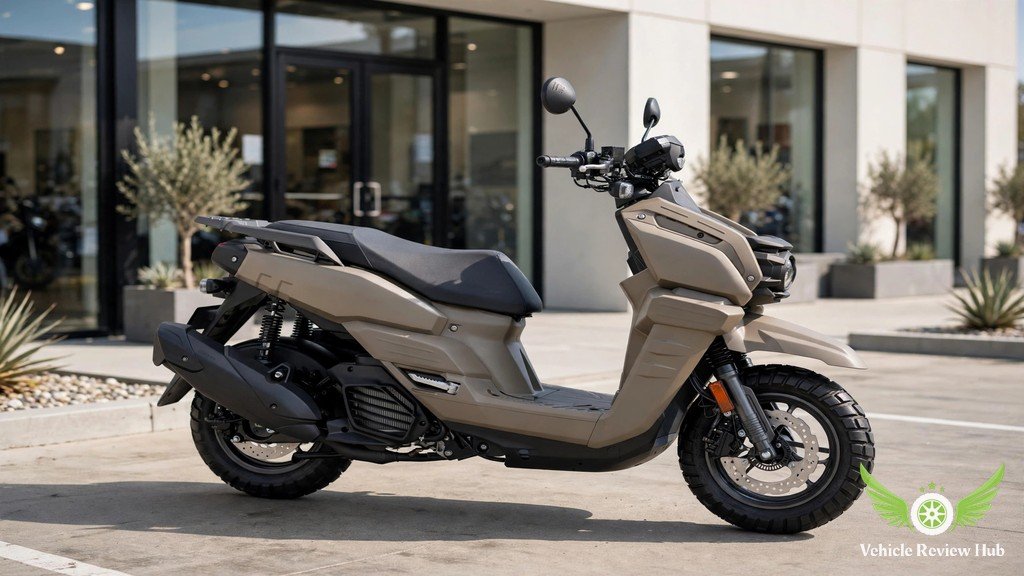
Yamaha Zuma 125 Price by Year in the USA: 2022 to 2026
The price ladder in this Yamaha Zuma 125 review is short and simple. The 2022 bike arrived in July 2021 at $3,699, and the 2023, 2024, 2025, and 2026 bikes all list at $3,799 before destination, matching TotalMotorcycle’s 2025 listing; dealer listings show 2026 destination charges of $450 to $460. A new Zuma therefore costs roughly $4,250 before tax, undercutting Honda’s ADV160 by about $700.
| Model year | US MSRP |
|---|---|
| 2022 | $3,699 |
| 2023 | $3,799 |
| 2024 | $3,799 |
| 2025 | $3,799 |
| 2026 | $3,799 + destination |
Sand Gray and Matte Black Colours and Official US Dealer Availability
For 2025 and 2026 the Zuma 125 comes in Sand Gray and Matte Black, muted colors suiting its off-road styling. The 2022 launch colors were Team Yamaha Blue and Matte Black, and Sand Gray joined by 2024 — so blue means a 2022–2023 bike, while Sand Gray means 2024 or newer. That color timeline is a handy shortcut this Yamaha Zuma 125 review recommends for checking a used listing’s year. This Yamaha Zuma 125 review confirmed the current colors from Yamaha’s 2026 dealer materials.
Availability, in this Yamaha Zuma 125 review’s check, is straightforward: the Zuma 125 is a current, officially sold US model through Yamaha dealers nationwide, with full parts, service, and warranty support and a one-year limited factory warranty. Call ahead, since dealers may only stock one or two at a time.
Yamaha Zuma 125 Design, Features and Technology
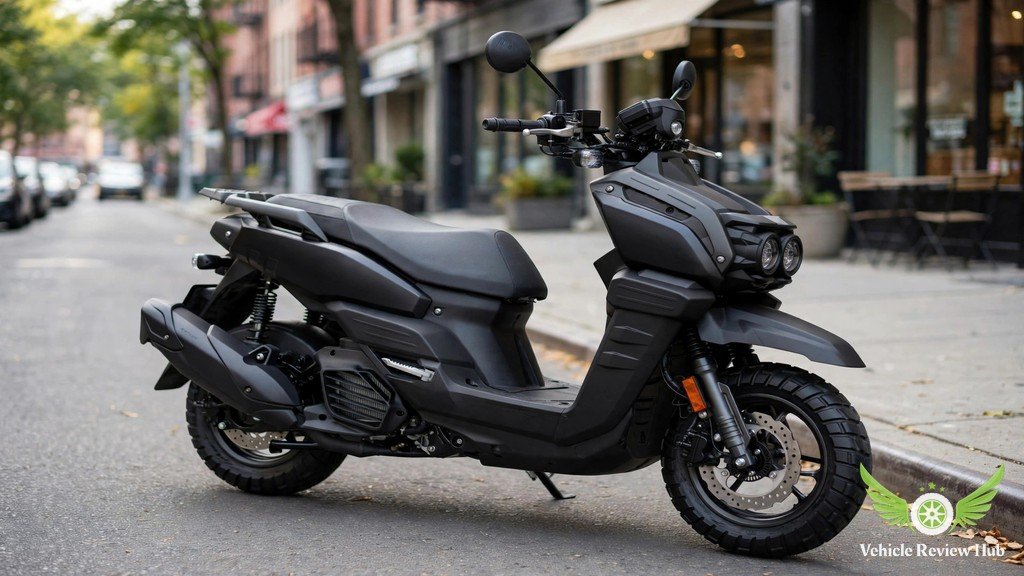
The Zuma has always looked tougher than a typical city scooter. This Yamaha Zuma 125 review finds the 2022 redesign’s styling distinctive: blocky bodywork, a beak-style front fender, fork boots, and fat block-tread tires give it an adventure look no other Japanese 125cc scooter matches.
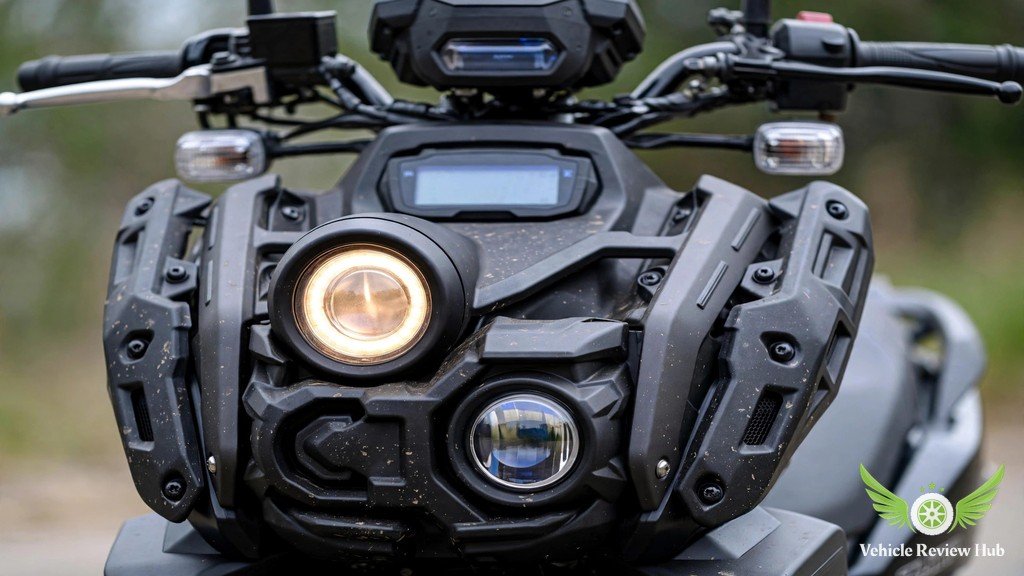
Rugged Styling, Asymmetric Dual Headlights and LCD Display
The signature cue is the asymmetric dual headlight setup, two round lamps in an adjustable housing. The 2022 redesign made the front shield blockier and the beak fender larger, and the DURO tubeless fat tires kept their aggressive block pattern. The steel tube frame with a step-through design keeps mounting easy, with wide floorboards adding to the planted feel — details webBikeWorld’s 2022 Zuma page also highlights — and this Yamaha Zuma 125 review agrees the look is the bike’s strongest visual card.
The instrument package is a stylish LCD meter with a fuel gauge and a full range of indicator lights, easy to read in daylight. It is not a TFT display and there is no phone connectivity. What you do get is practical: a front USB socket, underseat helmet storage, and a centerstand and sidestand. This Yamaha Zuma 125 review rates that feature set right-sized for the price.
Unified Brake System Explained: Linked Braking, Not ABS, and No Start-Stop
The Zuma 125’s braking deserves a careful explanation because it is misunderstood. The bike uses Yamaha’s Unified Brake System (UBS): the rear brake lever applies some braking force to the front brake as well, while the front lever controls only the front brake. That linked setup gives smooth stops. It is not ABS — no US Zuma 125 has anti-lock braking, and with no intervention if a wheel locks on a wet road. This Yamaha Zuma 125 review stresses the distinction because some listings wrongly claim ABS.
Two more facts worth stating plainly. First, the US Zuma 125 has no start-stop system: the engine does not shut off at traffic lights like some European scooters. Second, the current bike’s brakes are strong for the class — a 245mm front disc with a double-piston caliper and a 230mm rear disc with a single-piston caliper — up from the original bike’s 220mm front disc and rear drum. Compared with the bigger Yamaha XMAX, which has ABS, the Zuma’s simpler setup keeps it affordable.
Yamaha Zuma 125 Riding Experience and Comfort
On the road, the Zuma 125 is easy in the best sense: light, narrow, and instantly familiar. This Yamaha Zuma 125 review finds the riding position upright and roomy, with a wide saddle that has room for two, tall handlebars, and floorboards that make getting on and off effortless.
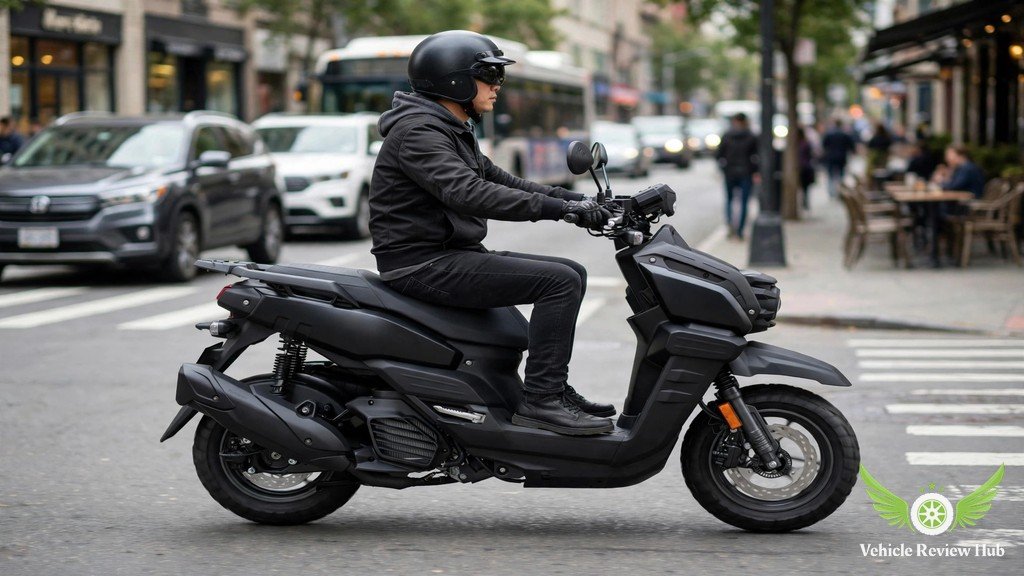
Riding Position, Handling and Low-Speed Maneuverability
Handling is the Zuma’s quiet superpower. At 282 pounds with a short 52.8-inch wheelbase and fat 12-inch tires, it turns tightly, filters through traffic confidently, and parks where motorcycles cannot. The fork gives 3.2 inches of travel and the dual rear shocks 3.1 inches — firm, so rough pavement is felt, never punishing. Owners praise the maneuverability in tight spaces, and this Yamaha Zuma 125 review agrees: for dense city riding, the Zuma’s size is an advantage no bigger scooter can match.
The seat deserves an honest note in this Yamaha Zuma 125 review. It is wide and roomy, but several owners describe it as firm on longer rides, with comfort fading after 30 minutes or so. The suspension is also firm, tuned for control. Neither point ruins the bike, but buyers planning regular 45-minute commutes should test-ride first.
City Riding, Campus Use and Everyday Practicality
Where the Zuma shines is the daily grind: stop-and-go traffic, campus loops, and grocery runs. The CVT gives smooth pull from every light, fuel injection means it fires first press hot or cold, and the 101-mpg Yamaha estimate stretches the 1.6-gallon tank to a claimed 162 miles; real-world riders report 75 to 85 mpg. The top speed of roughly 60 mph is plenty for surface streets posted at 45 or 50 mph, a balance this Yamaha Zuma 125 review rates highly for commuters.
The video below shows the redesigned 2022 bike up close, covering the styling, storage, and ergonomics for first-time buyers.
Practicality extends beyond the ride. Insurance and registration stay low for a 125cc scooter, tires are inexpensive 12-inch sizes, and the light weight suits new riders at parking speeds. One legal note: most US states require a motorcycle endorsement over 50cc, so check your state DMV rules. This Yamaha Zuma 125 review also notes the bike is street legal in all 50 states — it is the freeway, not the street, where its limits appear.
Yamaha Zuma 125 Review: Pros, Cons and Verdict
After weighing the generations, specs, and riding reality, this Yamaha Zuma 125 review lands in a clear place: the Zuma is an excellent city scooter and a poor highway scooter, and buyers who accept that trade will love it.
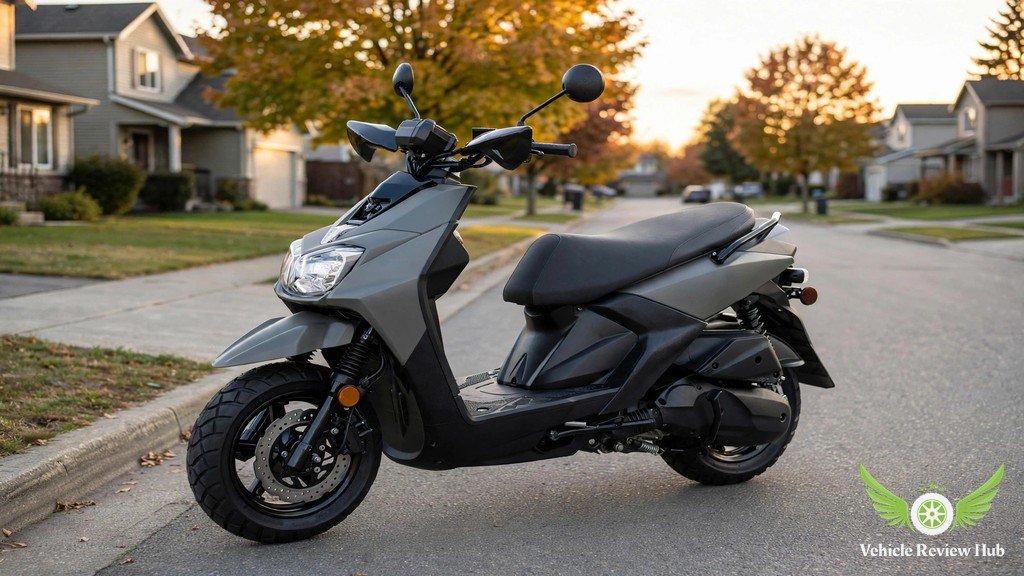
Main Advantages and Limitations of the Yamaha Zuma 125
The advantages stack up quickly: a $3,799 price steady since 2023, Yamaha-estimated 101 mpg, twist-and-go simplicity, helmet storage with USB charging, a 282-pound weight anyone can manage, and a dealer network stocking parts since 2009. This Yamaha Zuma 125 review also credits the linked UBS brakes and fat tires for stopping confidence beyond the price.
The limitations are equally clear in this Yamaha Zuma 125 review. There is no ABS on any year, the roughly 60-mph top speed rules out comfortable freeway use, the seat is firm on longer rides, wind protection is minimal, and Yamaha publishes no horsepower figure — third-party estimates of about 8 horsepower confirm this is not a fast machine. The 1.6-gallon tank is small, even if economy tops 100 miles.
Who Should Consider the Yamaha Zuma 125 Over the Honda ADV160?
The Honda ADV160 is the Zuma’s closest Japanese rival, and the comparison comes down to money versus capability. Honda’s ADV160 page lists the scooter at $4,499 before destination — $5,099 with its $600 destination charge — for a 157cc single with front-wheel ABS, SMART Key, and a two-position windscreen. It is faster, better equipped, and more highway-capable, but costs $700 more. This Yamaha Zuma 125 review recommends the Zuma for truly city-only riding and the ADV160 for regular 55-mph roads or riders who want ABS.
The final verdict: buy the Zuma 125 if your world is city streets, campuses, and short trips — new for $3,799 for the liquid-cooled VVA engine and latest styling, or a 2016–2021 bike used if budget matters most. Skip it if your commute includes freeway miles or two-up highway riding. For the right rider, this Yamaha Zuma 125 review concludes, there is no cheaper Japanese route to reliable everyday two-wheeled transport. Shoppers comparing used examples should also read the used Zuma prices breakdown first.
Yamaha Zuma 125 Review FAQs
Direct answers to the questions buyers ask most about the Yamaha Zuma 125, drawn from the verified facts in this Yamaha Zuma 125 review.
How much does a Yamaha Zuma 125 cost?
According to this Yamaha Zuma 125 review, the 2026 bike costs $3,799 before destination, with destination charges of $450 to $460 in dealer listings. The 2022 redesign launched at $3,699; Yamaha moved to $3,799 for 2023 and held it through 2026.
What engine does the Yamaha Zuma 125 have?
This Yamaha Zuma 125 review confirms the current bike has a 125cc liquid-cooled, four-stroke SOHC single with four valves, fuel injection, and Variable Valve Actuation (VVA), driving the rear wheel through a V-belt automatic CVT; the 2009–2021 bikes used an air-cooled single without VVA.
How fast does the Yamaha Zuma 125 go?
Third-party GPS testing cited in this Yamaha Zuma 125 review puts top speed at about 61 mph under ideal conditions, with 55 to 60 mph typical. The speedometer reads roughly 5 percent optimistic, so an indicated 60 mph is closer to 57 mph.
Does the Yamaha Zuma 125 have ABS?
No — and this Yamaha Zuma 125 review stresses it because listings often get it wrong. The Zuma 125 uses Yamaha’s Unified Brake System, which links the rear lever to some front braking force, but it has no anti-lock braking on any year. The current bike’s brakes are a 245mm front disc and a 230mm rear disc.
What is the fuel economy of the Yamaha Zuma 125?
Yamaha estimates 101 mpg for the current bike, a figure this Yamaha Zuma 125 review cross-checked against Yamaha’s materials, giving a claimed 162-mile range from the 1.6-gallon tank. Real-world riders report 75 to 85 mpg, still well over 100 miles per tank.
How much does the Yamaha Zuma 125 weigh?
This Yamaha Zuma 125 review lists the current bike at 282 pounds wet. The 2016–2021 bikes weighed 262 pounds wet; the originals, 269.
Is the Yamaha Zuma 125 good for beginners?
Yes, for city riding — and this Yamaha Zuma 125 review recommends it as a first urban scooter. The twist-and-go CVT means no clutch or shifting to learn, the 30.9-inch seat and 282-pound weight make it easy to handle at low speed. New riders still need a motorcycle endorsement where their state requires one.
Is the Yamaha Zuma 125 freeway legal?
The Zuma 125 is street legal, but this Yamaha Zuma 125 review is blunt: it is not a freeway machine: its roughly 60-mph ceiling leaves no margin on 65-mph highways, and some states restrict freeway use by displacement. Treat it as a surface-street scooter and check your state’s rules first.
What colors does the Yamaha Zuma 125 come in?
The 2025 and 2026 bikes in this Yamaha Zuma 125 review come in Sand Gray and Matte Black. The 2022 launch colors were Team Yamaha Blue and Matte Black, so blue means 2022–2023.
Should I buy a new or used Yamaha Zuma 125?
This Yamaha Zuma 125 review says: buy new at $3,799 for the liquid-cooled VVA engine, latest styling, and a full warranty. Buy a 2016–2021 bike used on a budget — you keep the 2016 update but give up liquid cooling and VVA.