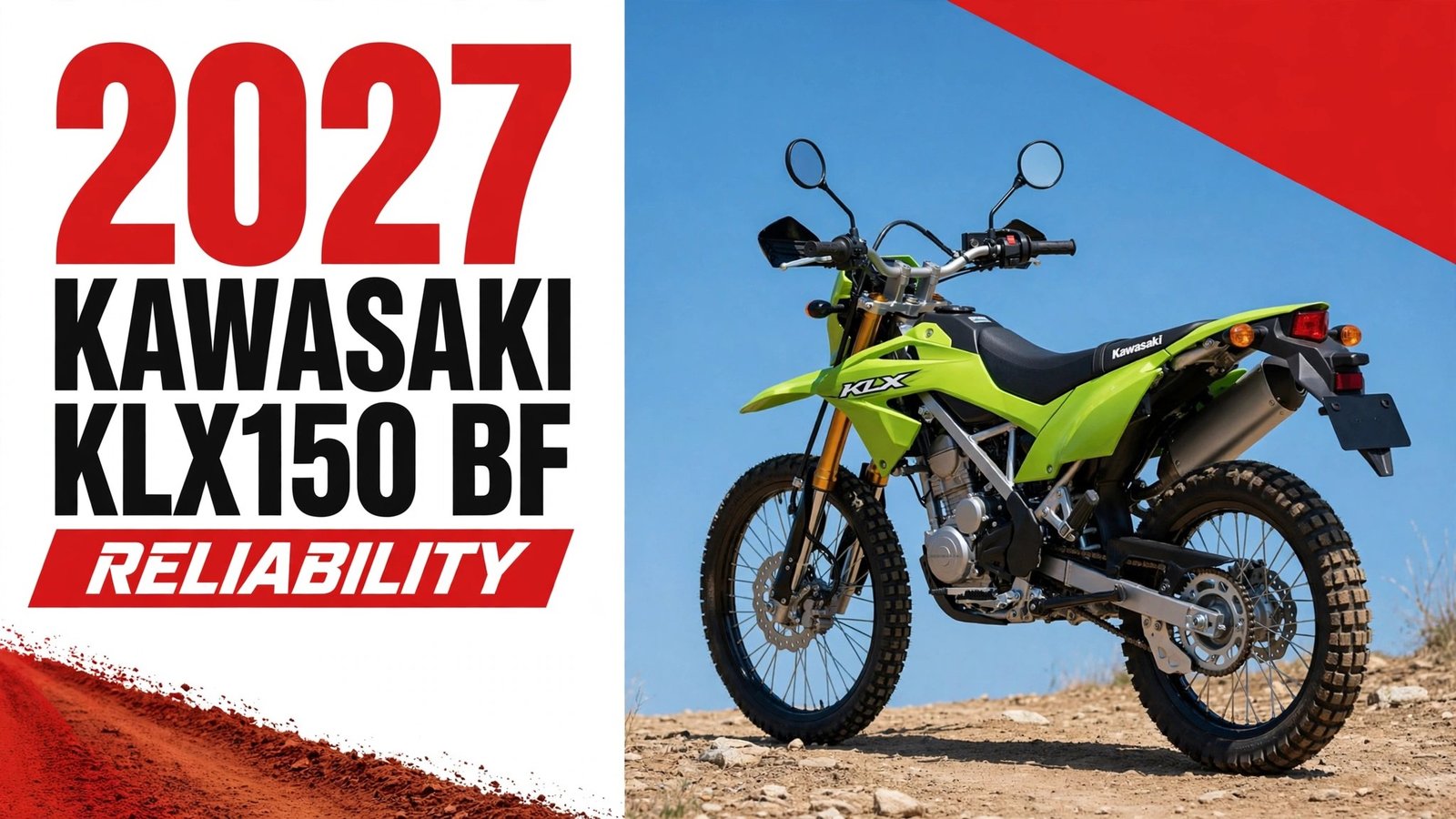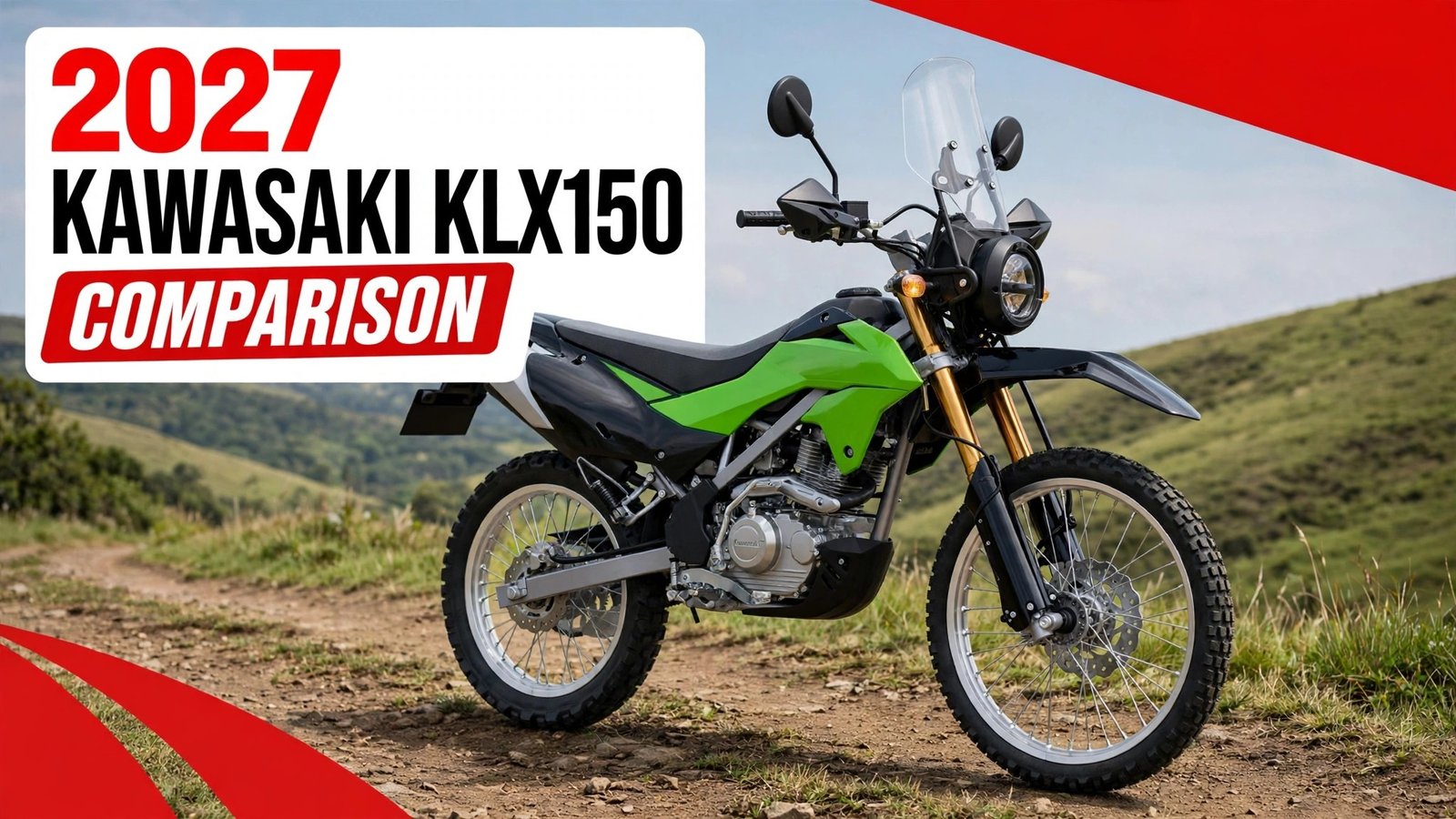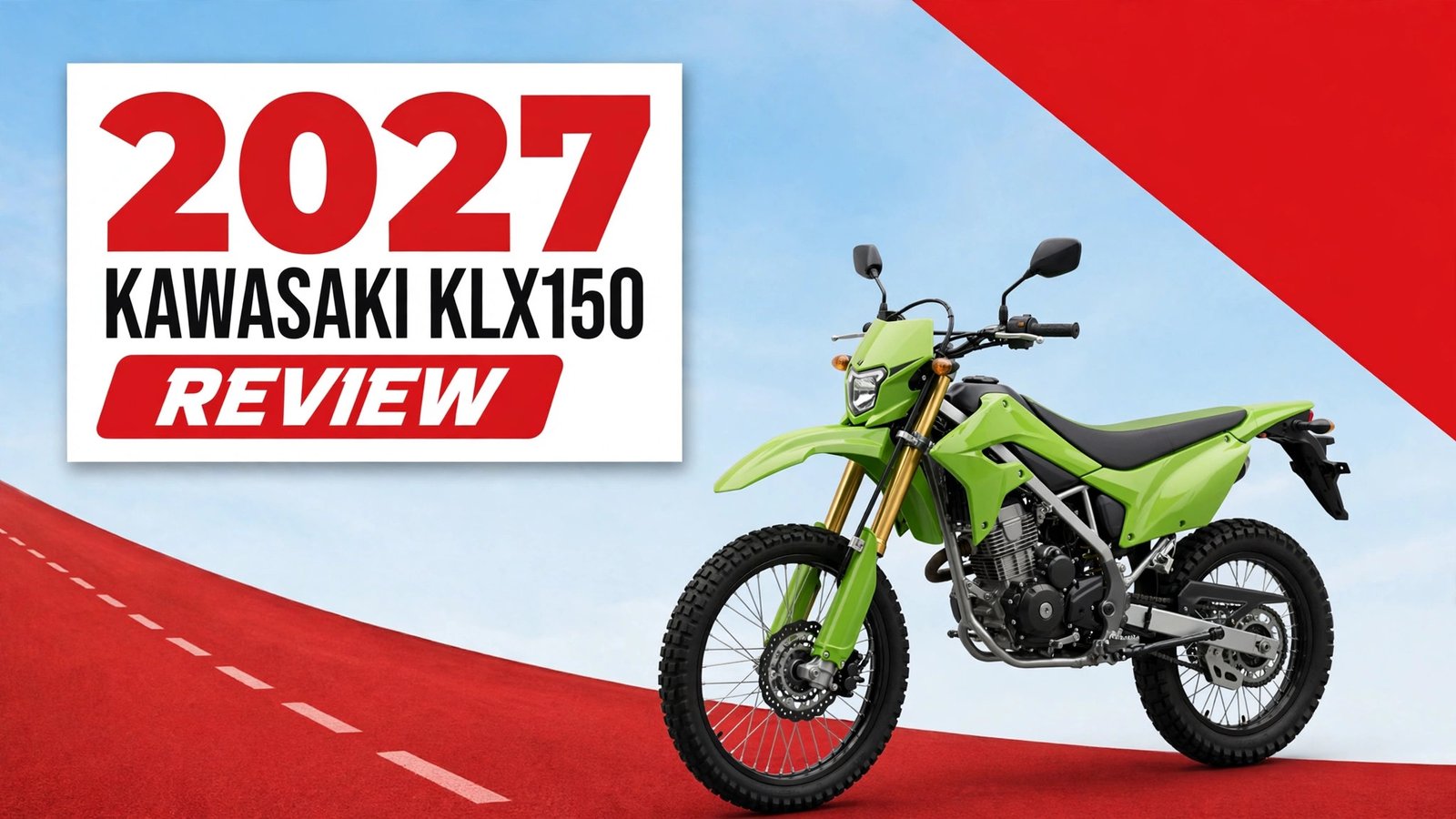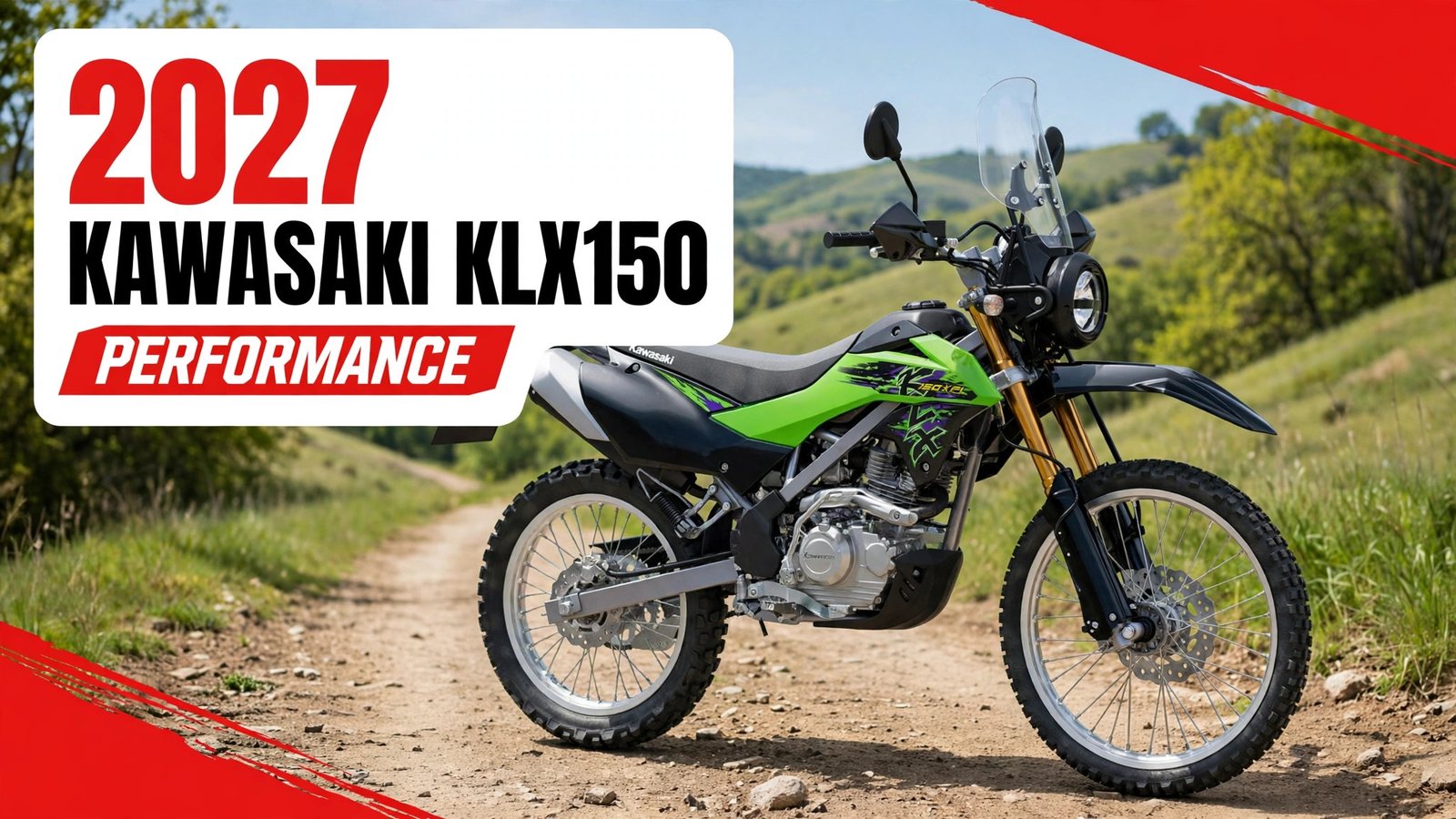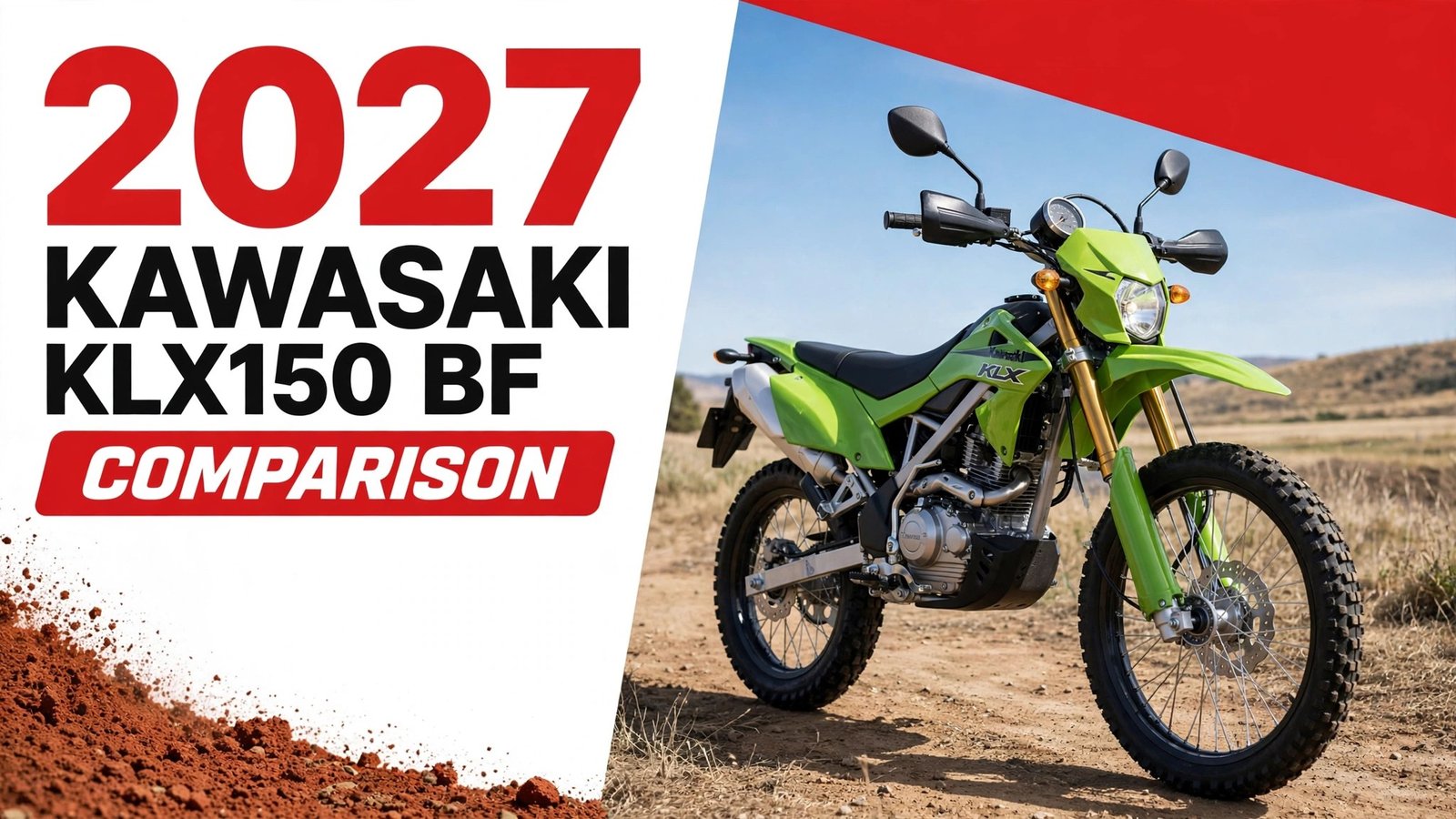
The Kawasaki KLX150 BF is a used buy now, not a new-bike choice, so the honest way to judge it is against the bikes a buyer actually cross-shops: its own successor, the current standard KLX150, and the two rivals that beat it on paper in Indonesia, the Honda CRF150L and the Yamaha WR155R. This Kawasaki KLX150 BF comparison puts the BF against all three on the same evidence — the instrumented 2020 three-bike test, the 2015 BF SE test, and Jakarta prices — the BF is the slowest and the thirstiest of the group, yet it is also the friendliest off road and the simplest to own. That trade is the whole story of this Kawasaki KLX150 BF comparison.
A note on how to read the numbers before the tables begin. Every performance figure in this Kawasaki KLX150 BF comparison comes from one instrumented source, the Otomotif three-bike test of September 2020, run on the same day with the same Racelogic equipment, so the gaps between the bikes are real gaps and not different test days. Prices are in Indonesian rupiah, labelled OTR Jakarta or MSRP, because the BF was never sold in the USA and no US price exists in any year. Where a figure could not be verified, this Kawasaki KLX150 BF comparison says so.
Kawasaki KLX150 BF Overview and Its Closest Rivals
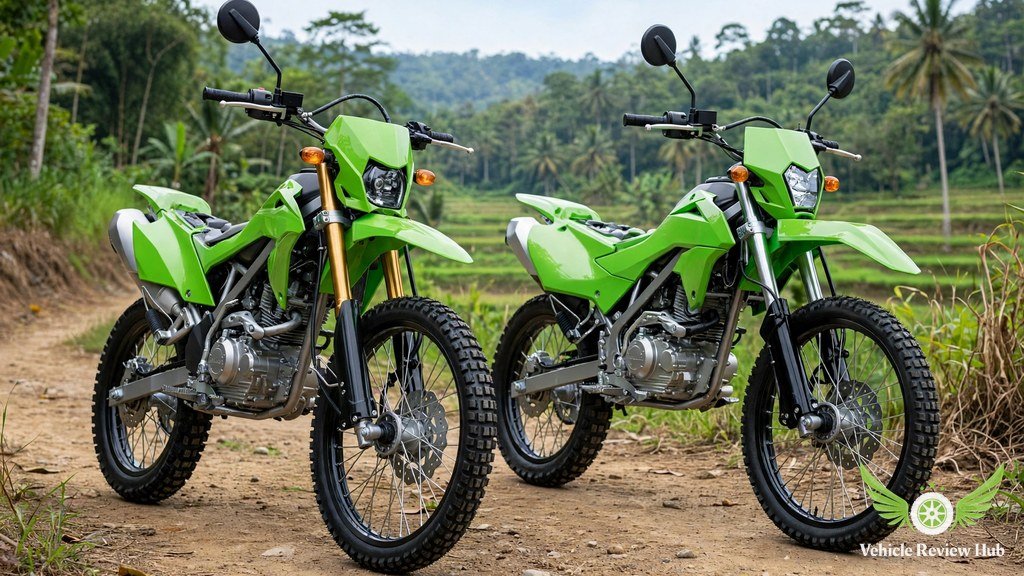
The BF’s closest rivals are the three bikes in this Kawasaki KLX150 BF comparison: the current standard KLX150 that inherited its role, the Honda CRF150L that outsold it, and the Yamaha WR155R that outran it. All four are small entry-level trail bikes on 21/18 wheels, built for the same Indonesian buyer. The differences are in the details: the BF is carburetted and analogue, the Honda adds fuel injection, and the Yamaha adds liquid cooling and a sixth gear. Each rival tests a different weakness of the BF, and this Kawasaki KLX150 BF comparison scores all three on the same evidence.
Its Successor Is the Standard Bike
The BF’s successor is the current standard KLX150, and the handover was a name change more than a new bike. Kawasaki Indonesia dropped the BF name in February 2023, launching the New KLX150 Series with three types only — S, standard and SE — and no BF in the list. The standard inherited the BF’s 21/18 wheels and its upside-down fork, while the SE inherited the BF’s guards, skid plate and black rims, so the BF’s role continues without the BF name. A buyer who wants a new BF today buys the standard or the SE instead, and this Kawasaki KLX150 BF comparison treats the standard as the direct successor throughout. The Kawasaki KLX150 review covers that successor in full, and its reliability picture is the same quiet one the BF earned.
The successor is not identical to the BF, and the small differences matter for a used buyer. The standard’s fork has 185 mm of travel against the BF’s 175 mm, its seat sits 5 mm lower at 865 mm, its ground clearance is 5 mm higher at 300 mm, and its gearing is taller at 46/14 against the BF’s 52/14. The engine, the brakes and the 118 kg weight are the same. In practice the choice between a used BF and a new standard comes down to price and condition rather than to riding feel. That closeness is why this Kawasaki KLX150 BF comparison treats the two as one choice with two price tags.
How the Four Bikes Differ at a Glance
The four bikes differ at a glance in one clear pattern: the BF is the oldest technology, the Honda is the modernised middle, and the Yamaha is the performance pick. The table below is the whole Kawasaki KLX150 BF comparison in one view. The BF’s 12 PS is the weakest claim and its 31.8 km per litre the thirstiest, yet its 118 kg weight is the lightest and its carburettor the simplest to service.
| At a glance | KLX150 BF | KLX150 standard | Honda CRF150L | Yamaha WR155R |
|---|---|---|---|---|
| Engine | 144 cc, air-cooled, NCV24 carb | 144 cc, air-cooled, NCV24 carb | 149.15 cc, air-cooled, PGM-FI | 155 cc, liquid-cooled, VVA, FI |
| Power | 12 PS @ 8,000 rpm | 12 PS @ 8,000 rpm | 12.91 PS @ 8,000 rpm | 16.7 PS @ 10,000 rpm |
| Torque | 11.3 Nm @ 6,500 rpm | 11.3 Nm @ 6,500 rpm | 12.43 Nm @ 6,500 rpm | 14.3 Nm @ 6,500 rpm |
| Gearbox | 5-speed | 5-speed | 5-speed | 6-speed |
| Front fork | 35 mm USD, 175 mm, gold | 35 mm USD, 185 mm | 37 mm Showa inverted | 41 mm telescopic |
| Seat height | 870 mm | 865 mm | 869 mm | 880 mm |
| Curb weight | 118 kg | 118 kg | 122 kg | 134 kg |
| Fuel tank | 6.9 L | 6.9 L | 7.2 L | 8.1 L |
| Top speed (Racelogic) | 104.1 km/h | Not tested | 103 km/h | 109.9 km/h |
| Fuel (same test) | 31.8 km/l | Not tested | 42.3 km/l | 48.3 km/l |
Notes: the top-speed and fuel rows come from the same instrumented Otomotif three-bike test of September 2020, run on the same day with the same Racelogic equipment, so the gaps between the three tested bikes are directly comparable. The current standard was not tested, and this Kawasaki KLX150 BF comparison prints no tested figure for it. The CRF150L seat and weight are the Indonesian AHM figures, 869 mm and 122 kg.
The video below is the Otomotif three-bike comparison test video, WR155R against CRF150L against KLX150BF SE, in Indonesian. Its narration is in Indonesian, not English. This Kawasaki KLX150 BF comparison includes it because it is the actual test behind the figures in the table above — the same bikes, the same day, the same Racelogic runs — and it shows the BF SE on the trail.
Kawasaki KLX150 BF vs Kawasaki KLX150
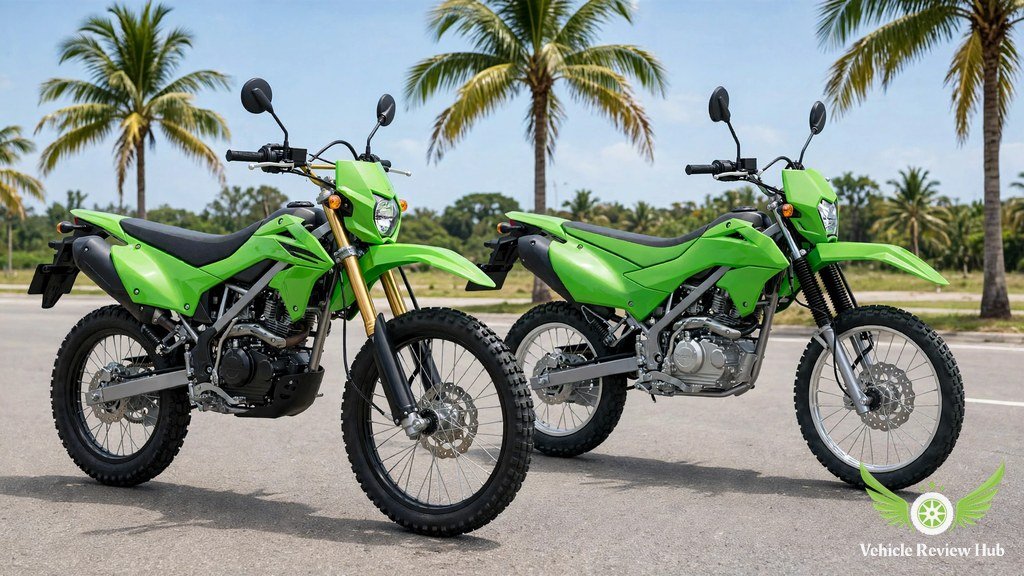
The closest contest in this Kawasaki KLX150 BF comparison is the one against its own successor, because the two bikes share the engine, the brakes and the weight. The bike the BF actually replaced in June 2015 was the old KLX150L, and the BF’s change over that L was the gold upside-down fork and the shorter 52/14 gearing — the wheels were already 21/18 on the L.
Engine, Specs and Performance Side by Side
Engine, specs and performance side by side, the BF and the standard are the same motorcycle with different suspension settings and gearing. Both run the 144 cc air-cooled single with the Keihin NCV24 carburettor, both claim 12 PS and 11.3 Nm, and both use the same 240 mm petal front disc and 190 mm petal rear disc. The BF’s shorter 52/14 gearing gives it stronger low-end pull at the cost of top speed, while the standard’s taller 46/14 gearing suits road cruising better. That is the narrowest gap in this Kawasaki KLX150 BF comparison, and the easiest to close with a test ride. No instrumented test of the current standard exists, so this Kawasaki KLX150 BF comparison prints the BF’s Racelogic figures and no tested figure for the standard.
| Spec | KLX150 BF | KLX150 standard |
|---|---|---|
| Engine | 144 cc air-cooled SOHC, NCV24 carb | 144 cc air-cooled SOHC, NCV24 carb |
| Power / torque | 12 PS @ 8,000 rpm / 11.3 Nm @ 6,500 rpm | 12 PS @ 8,000 rpm / 11.3 Nm @ 6,500 rpm |
| Gearing | 52/14 (3.714) | 46/14 (3.286, KMI) |
| Front fork | 35 mm USD, 175 mm, gold | 35 mm USD, 185 mm |
| Seat / clearance | 870 mm / 295 mm | 865 mm / 300 mm |
| Wheelbase / weight | 1,340 mm / 118 kg | 1,345 mm / 118 kg |
| Top speed / fuel | 104.1 km/h / 31.8 km/l (Racelogic) | Not tested |
Notes: the BF figures come from the Kawasaki Malaysia brochure and the Otomotif BF SE test, while the standard figures come from Kawasaki Indonesia’s current pages. The gearing row carries a conflict worth naming: KMI says the standard is 46/14, while satupiston’s update claims the newest standard is 14/52, and this Kawasaki KLX150 BF comparison prints the KMI figure with the conflict noted rather than settling it. The 2015 BF SE test is the source for the BF’s instrumented figures.
Price, Equipment and Which Suits Which Rider
Price, equipment and which suits which rider: the BF wins on price and the standard wins on everything else that comes with a new bike. The BF launched at Rp 29.9 million OTR Jakarta in June 2015 and its last listings in January 2023 were Rp 36.1 million, while the current standard is Rp 38.6 million — so a used BF costs less than a new standard by whatever the used market decides, and this Kawasaki KLX150 BF comparison prints no used price because none was verified. For a buyer cross-shopping within the family, this Kawasaki KLX150 BF comparison comes down to new against used. The BF suits the buyer who wants the shortest gearing for tight trails and does not mind buying used; the standard suits the buyer who wants a new bike, a longer fork and taller gearing.
Kawasaki KLX150 BF vs Honda CRF150L
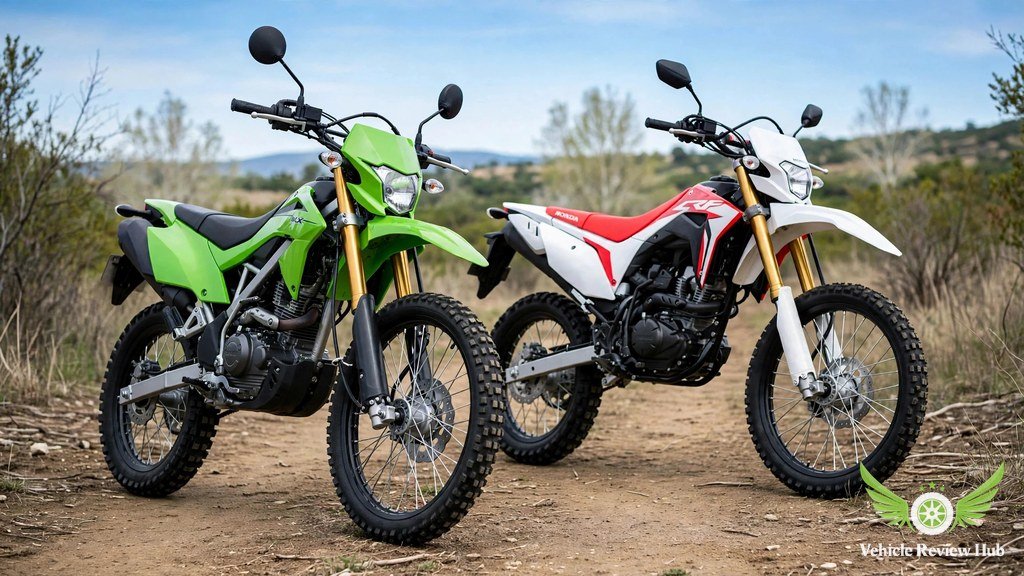
The Honda CRF150L is the rival that beat the BF where it counts in the market, and this part of the Kawasaki KLX150 BF comparison is the one that explains why. The Honda is fuel-injected where the BF is carburetted, it was cheaper than the BF SE at the 2020 test, and it drinks far less fuel — 42.3 km per litre against the BF’s 31.8. Yet the gap on the road is small: the Honda’s Racelogic top speed was 103 km/h against the BF’s 104.1. The Honda is the rival this Kawasaki KLX150 BF comparison keeps coming back to, because it won the market the BF wanted. The Otomotif three-bike test is the source for every tested figure in this section.
Engine, Specs and Performance Side by Side
Engine, specs and performance side by side, the Honda’s advantage is its PGM-FI fuel injection against the BF’s Keihin NCV24 carburettor. The Honda’s 149.15 cc single makes 12.91 PS and 12.43 Nm, and its 37 mm Showa inverted fork is a fraction wider than the BF’s 35 mm gold fork. The BF answers with weight: 118 kg against the Honda’s 122 kg, which is why the BF felt friendlier off road in the test even while it was slower to 100 km/h — 21.7 seconds against the Honda’s 20.6. On paper the Honda leads, and this Kawasaki KLX150 BF comparison does not pretend otherwise.
| Spec | KLX150 BF | Honda CRF150L |
|---|---|---|
| Engine | 144 cc air-cooled SOHC, NCV24 carb | 149.15 cc air-cooled SOHC, PGM-FI |
| Power / torque | 12 PS @ 8,000 rpm / 11.3 Nm @ 6,500 rpm | 12.91 PS @ 8,000 rpm / 12.43 Nm @ 6,500 rpm |
| Gearbox | 5-speed | 5-speed |
| Front fork | 35 mm USD, 175 mm, gold | 37 mm Showa inverted |
| Seat / weight | 870 mm / 118 kg | 869 mm / 122 kg |
| Tank / top speed | 6.9 L / 104.1 km/h (Racelogic) | 7.2 L / 103 km/h (Racelogic) |
| Fuel / 0–100 km/h | 31.8 km/l / 21.7 s | 42.3 km/l / 20.6 s |
Notes: the Honda figures are the Indonesian AHM figures, seat 869 mm and curb weight 122 kg, and this Kawasaki KLX150 BF comparison does not use the Philippine-market figures for the Indonesian comparison. The tested rows come from the same Otomotif three-bike test of September 2020, so the fuel and acceleration gaps are directly comparable. The BF’s 104.1 km/h top speed is the only instrumented figure printed in this Kawasaki KLX150 BF comparison.
Price, Equipment and Which Suits Which Rider
Price, equipment and which suits which rider: the Honda was cheaper and better equipped when both were new, which is why it led the class. At the 2020 test the CRF150L was Rp 34.45 million OTR Jakarta against the BF SE at Rp 36.8 million, a gap of about Rp 2.35 million, and today the CRF150L is Rp 35.93 million OTR Jakarta against the current standard KLX150 at Rp 38.6 million. The Honda’s fuel injection is the equipment difference that matters most, because it removes the carburettor jetting and cold-start fuss the BF owner lives with. The BF suits the trail rider who values the lightest bike and the friendliest handling; the Honda suits the buyer who rides further, wants injection, and counts fuel cost.
Kawasaki KLX150 BF vs Yamaha WR155R
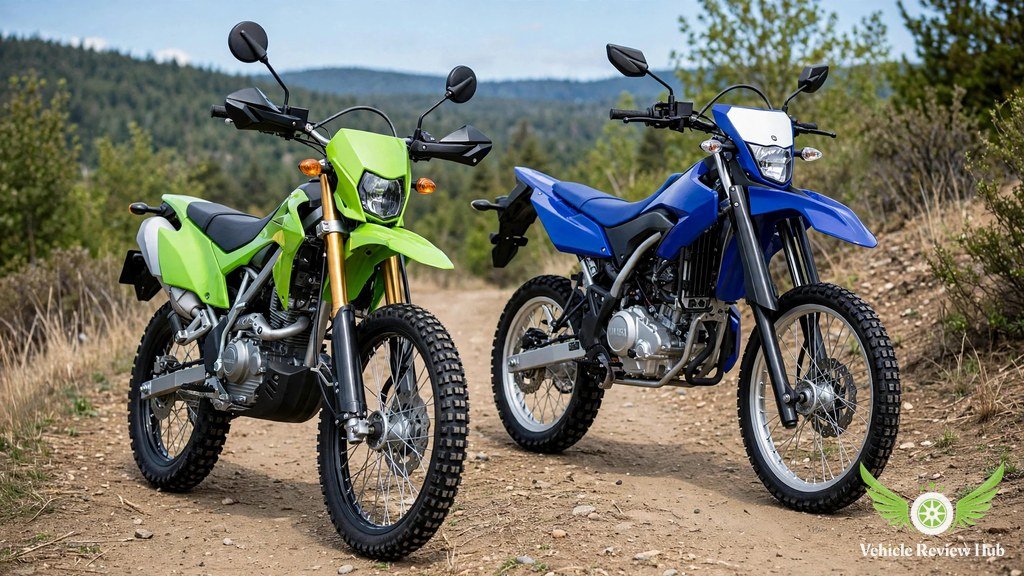
The Yamaha WR155R is the fastest bike in this Kawasaki KLX150 BF comparison and the most modern, and it is the rival that shows up the BF’s age most clearly. The Yamaha brings liquid cooling, a four-valve head with variable valve actuation, fuel injection and a six-speed gearbox, and the test numbers follow: 16.7 PS against 12, 109.9 km/h against 104.1, and 48.3 km per litre against 31.8. The Yamaha cost essentially the same as the BF SE at the 2020 test.
Engine, Specs and Performance Side by Side
Engine, specs and performance side by side, the Yamaha outclasses the BF on every measured figure except weight and friendliness. Its 155 cc liquid-cooled single makes 16.7 PS and 14.3 Nm, and its six-speed gearbox lets it cruise where the BF’s five-speed runs out of breath. The Yamaha’s fork is the surprise in this Kawasaki KLX150 BF comparison: a 41 mm telescopic unit, not an inverted one. The Yamaha is also the heaviest bike here at 134 kg and the tallest at 880 mm, which is why the testers called the BF the friendliest off road.
| Spec | KLX150 BF | Yamaha WR155R |
|---|---|---|
| Engine | 144 cc air-cooled SOHC 2v, NCV24 carb | 155 cc liquid-cooled SOHC 4v VVA, FI |
| Power / torque | 12 PS @ 8,000 rpm / 11.3 Nm @ 6,500 rpm | 16.7 PS @ 10,000 rpm / 14.3 Nm @ 6,500 rpm |
| Gearbox | 5-speed | 6-speed |
| Front fork | 35 mm USD, 175 mm, gold | 41 mm telescopic |
| Seat / weight | 870 mm / 118 kg | 880 mm / 134 kg |
| Tank / top speed | 6.9 L / 104.1 km/h (Racelogic) | 8.1 L / 109.9 km/h (Racelogic) |
| Fuel / 0–100 km/h | 31.8 km/l / 21.7 s | 48.3 km/l / 15.4 s |
Notes: the Yamaha fork is telescopic, not inverted — a common error this Kawasaki KLX150 BF comparison corrects, confirmed by the 2020 three-bike test table. The tested rows come from the same Otomotif test, and the Yamaha won everything from 0–60 km/h to top speed in that test. The BF’s smoothest power character and easiest handling are the testers’ own words, and this Kawasaki KLX150 BF comparison reports them as such.
Price, Equipment and Which Suits Which Rider
Price, equipment and which suits which rider: the Yamaha was the same money as the BF SE and far more bike, which makes it the value pick on paper. At the 2020 test the WR155R was Rp 36.9 million OTR Jakarta against the BF SE at Rp 36.8 million. That is the value verdict of this Kawasaki KLX150 BF comparison: same money, far more bike. The BF suits the shorter or newer trail rider who wants the lightest, friendliest bike and does not chase speed; the Yamaha suits the taller rider who wants the fastest, most economical bike in the class.
Kawasaki KLX150 BF Price and Value Compared
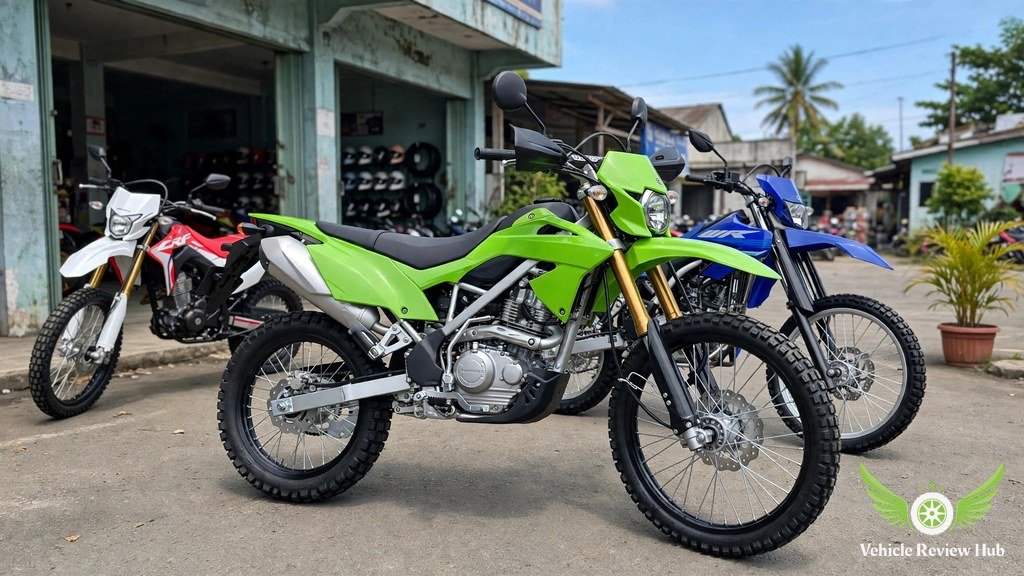
Price and value is where this Kawasaki KLX150 BF comparison turns against the BF, because the BF was never the cheap one and never the fast one. At launch the BF was Rp 29.9 million OTR Jakarta against the standard at Rp 26.8 million, a premium of Rp 3.1 million for the gold fork and the shorter gearing. The table below is the price story behind this Kawasaki KLX150 BF comparison. The table below lines up the prices that matter, and every one of them is labelled by year and by OTR or MSRP so the reader can see what the money bought.
| Price | KLX150 BF / BF SE | Honda CRF150L | Yamaha WR155R |
|---|---|---|---|
| Launch, June 2015 (OTR Jakarta) | Rp 29.9M / Rp 30.9M | Not yet launched | Not yet launched |
| At the 2020 test (OTR Jakarta) | Rp 36.8M (BF SE) | Rp 34.45M | Rp 36.9M |
| Last BF listings, Jan 2023 (OTR Jakarta) | Rp 36.1M / Rp 38.7M | — | — |
| Current, 2026 (OTR Jakarta) | No new BF — name dropped Feb 2023 | Rp 35.93M | Rp 38.66M |
| Current KLX150 standard (OTR Jakarta) | Rp 38.6M (successor) | — | — |
Notes: the BF is a used buy now, and no used price was verified, so this Kawasaki KLX150 BF comparison prints no used price, no resale percentage and no running-cost figure. The 2020 test row is the fairest price comparison, because all three bikes were on sale at the same time.
Honda Outsold It With Injection
Honda outsold the BF with injection, and the press consensus behind that sentence is worth stating carefully because no unit sales figures exist to prove it with numbers. Trial Game 76 calls the CRF150L the market leader in Indonesia’s entry-level trail class, and a 2026 round-up says it still leads while the KLX150 and the WR155R have not displaced it. The counter-view exists and this Kawasaki KLX150 BF comparison does not hide it: an earlier owner-site piece says the KLX still sells better thanks to its head start from 2009. What is factual, without any sales number, is the technology gap — the Honda has PGM-FI, the Yamaha has fuel injection too, and the whole KLX150 family from 2009 to the present is carburetted, so the BF was the oldest-tech bike in the trio and the market noticed. That technology gap runs through this Kawasaki KLX150 BF comparison from the first table to the last. The Dirt Action review of the BF, from when the bike was new in Australia, shows how the bike was received outside Indonesia as well.
Running Costs and Resale Value Compared
Running costs and resale value compared: the BF is the most expensive of the three to run on fuel and the hardest to value on resale, and both points follow from the same test. The BF’s 31.8 km per litre against the Honda’s 42.3 and the Yamaha’s 48.3 means the BF rider stops for fuel more often and pays more per kilometre, and with a 6.9-litre tank the labelled range works out to about 219 km. Servicing is the BF’s counterweight: the bike is air-cooled, carburetted and simple, and its parts are shared across the whole KLX150 family from 2009 to the present. BikeBD’s 3,500 km owner test gives the owner-side view of living with the bike. Resale is where this Kawasaki KLX150 BF comparison stops: no resale percentage and no used price was verified, so price a used BF on its condition — fork seals, chain, tyres and service history. The Kawasaki KLX150 BF reliability guide sets out the checks that matter before paying.
Kawasaki KLX150 BF Comparison Verdict and US Alternatives
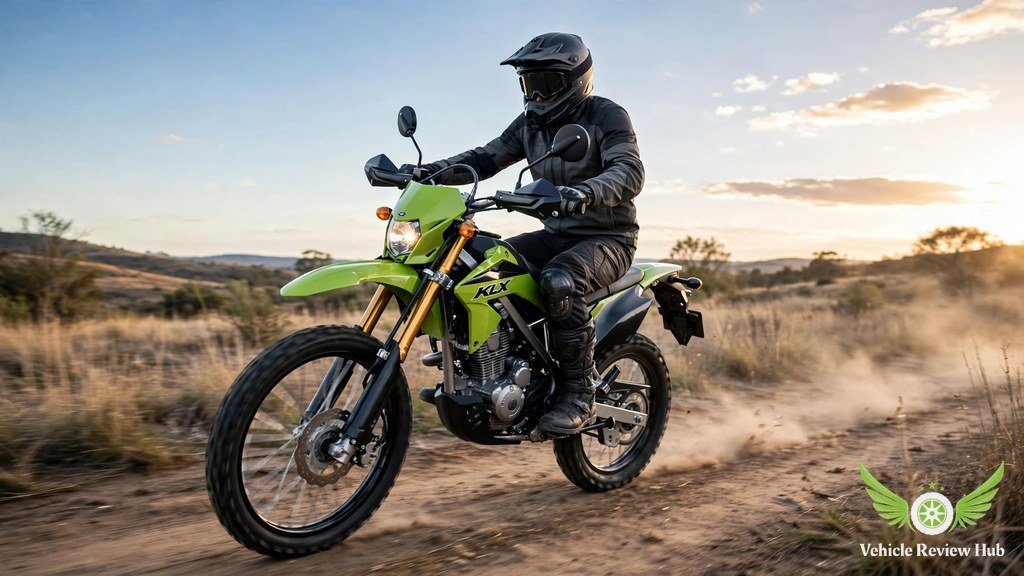
The verdict of this Kawasaki KLX150 BF comparison is that the BF loses the numbers and wins the ride, and which of those matters depends entirely on who is buying. Against its successor it is a used bargain with shorter gearing; against the Honda it is lighter and friendlier but thirstier; against the Yamaha it is slower and simpler but easier to handle.
Verdict: A Used Buy in Indonesia Only
Verdict: the BF is a used buy in Indonesia only, because no new BF exists anywhere — the name was dropped in February 2023 and the current standard carries its role. The buyer who should look for one is the Indonesian trail rider who wants the lightest bike in the class and the shortest gearing for tight trails, and who will check the fork seals, the chain and the service history before paying. The buyer who should not is the rider who covers distance, who wants fuel injection, or who wants the fastest bike for the money — that rider buys the Honda or the Yamaha. The Kawasaki KLX150 BF performance guide has the full instrumented figures behind this verdict, and the Kawasaki KLX150 comparison shows how the same rivals stack up against the standard bike that replaced it.
Import Rule: 2015 Bikes Eligible 2040
Import rule: 2015 bikes are eligible in 2040, under the US 25-year rule, and the clock runs from the date of manufacture. That wait is the final fact of this Kawasaki KLX150 BF comparison. The earliest BF left the factory in June 2015, so the earliest BF becomes eligible for import to the United States in 2040 — a long wait for a 144 cc trail bike, and the reason this Kawasaki KLX150 BF comparison calls it a used buy in Indonesia only. For an American reader the practical answer is the US alternatives: the Kawasaki KLX140R, the same 144 cc family with a PB20 carburettor, is 2027 priced at $3,799 plus $315 destination, or $4,114 delivered, and the KLX230 is $4,999 at MSRP, with its destination charge unverified. The Kawasaki KLX140R comparison covers the American bike in the same depth. No NHTSA result is stated in this Kawasaki KLX150 BF comparison: the recalls API was unreachable when the research was done.
Kawasaki KLX150 BF Comparison Frequently Asked Questions
These answers settle the BF’s closest contests — its successor, the Honda and the Yamaha — and the import question American readers ask first.
What replaced the KLX150 BF?
The current standard KLX150. Kawasaki dropped the BF name in February 2023, and the standard inherited the BF’s 21/18 wheels and upside-down fork while the SE inherited its guards, skid plate and black rims. The standard’s fork has 185 mm of travel against the BF’s 175 mm, its seat sits 5 mm lower at 865 mm, and its gearing is taller at 46/14 — the engine, brakes and 118 kg weight are the same.
KLX150 BF or Honda CRF150L — which is better?
The Honda, on the numbers in this Kawasaki KLX150 BF comparison: fuel injection against the BF’s carburettor, 12.91 PS against 12, and 42.3 km per litre against 31.8 — and it was cheaper at the 2020 test, Rp 34.45 million against the BF SE’s Rp 36.8 million. The BF answers with weight, 118 kg against 122 kg, and the friendliest handling off road. Top speed is a dead heat: 104.1 km/h against the Honda’s 103.
KLX150 BF or Yamaha WR155R — which is faster?
The Yamaha, by a wide margin: 16.7 PS against 12, 109.9 km/h against 104.1, 48.3 km per litre against 31.8, and a six-speed gearbox against the BF’s five — for essentially the same money at the 2020 test, Rp 36.9 million against the BF SE’s Rp 36.8 million. The BF is lighter, 118 kg against 134 kg, and the testers called it the friendliest off road. Note the Yamaha’s fork is telescopic, 41 mm — not inverted.
Can I buy a KLX150 BF in the United States?
No. The BF was never sold in the United States, and no US price exists in any year. The earliest BF left the factory in June 2015, so the earliest bikes become eligible for import under the 25-year rule in 2040. American readers should look at the US alternatives in this Kawasaki KLX150 BF comparison instead: the KLX140R, $3,799 plus $315 destination in 2027, and the KLX230 at $4,999 MSRP.
Is a used KLX150 BF good value?
In Indonesia, yes — with the usual used-bike caution. No used price and no resale percentage was verified, so this Kawasaki KLX150 BF comparison says price a used BF on its condition: fork seals, chain, tyres and service history. The BF launched at Rp 29.9 million on the road in Jakarta in June 2015, and its last listings, in January 2023, were Rp 36.1 million for old stock.
Why is the BF so thirsty on fuel?
Two reasons, both measured: the Keihin NCV24 carburettor against fuel injection on both rivals, and the short 52/14 gearing, which spins the engine faster at any given road speed. The result is 31.8 km per litre against the Honda’s 42.3 and the Yamaha’s 48.3 in the same 2020 test — the thirstiest of the three by a wide margin in this Kawasaki KLX150 BF comparison.