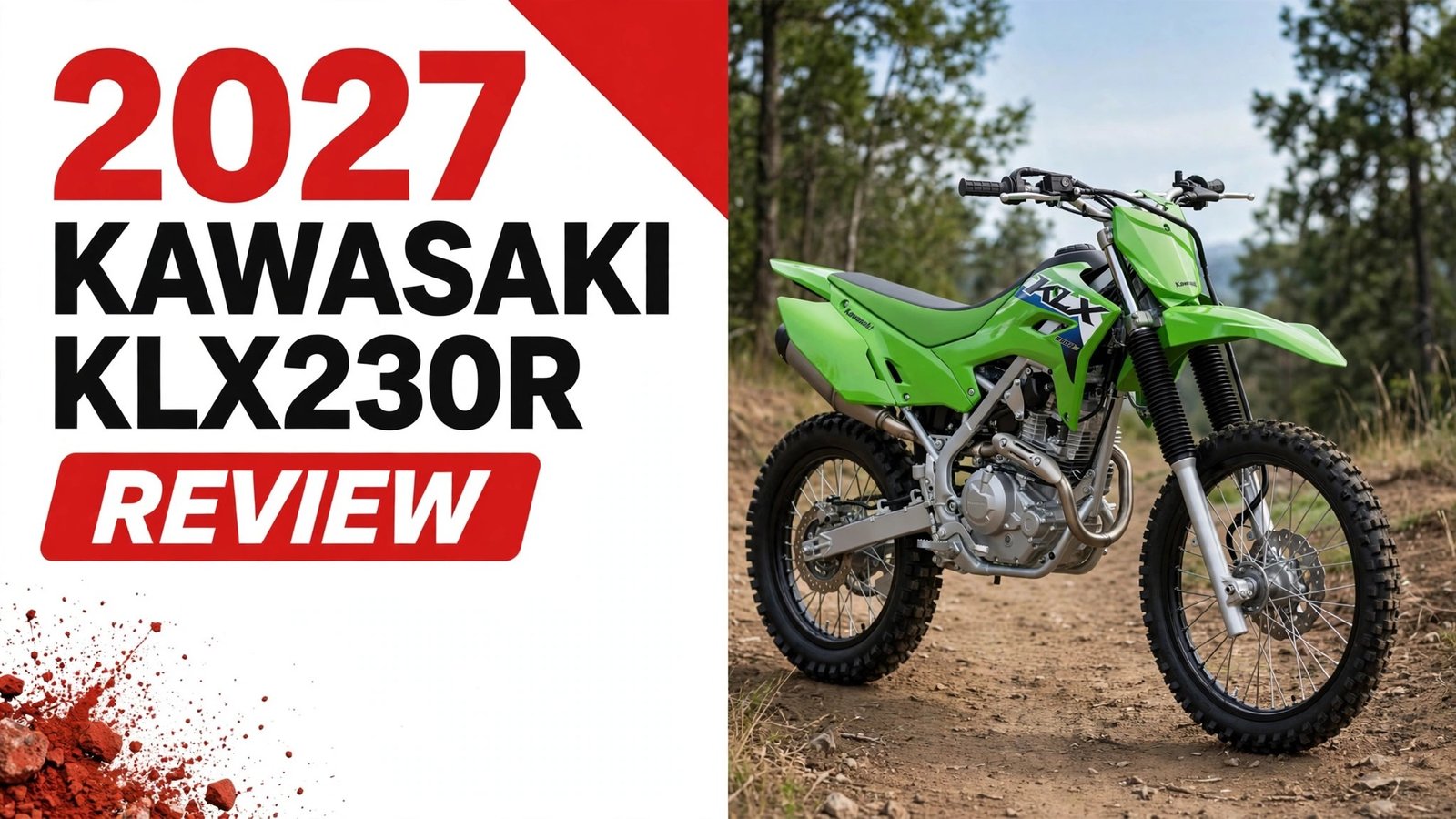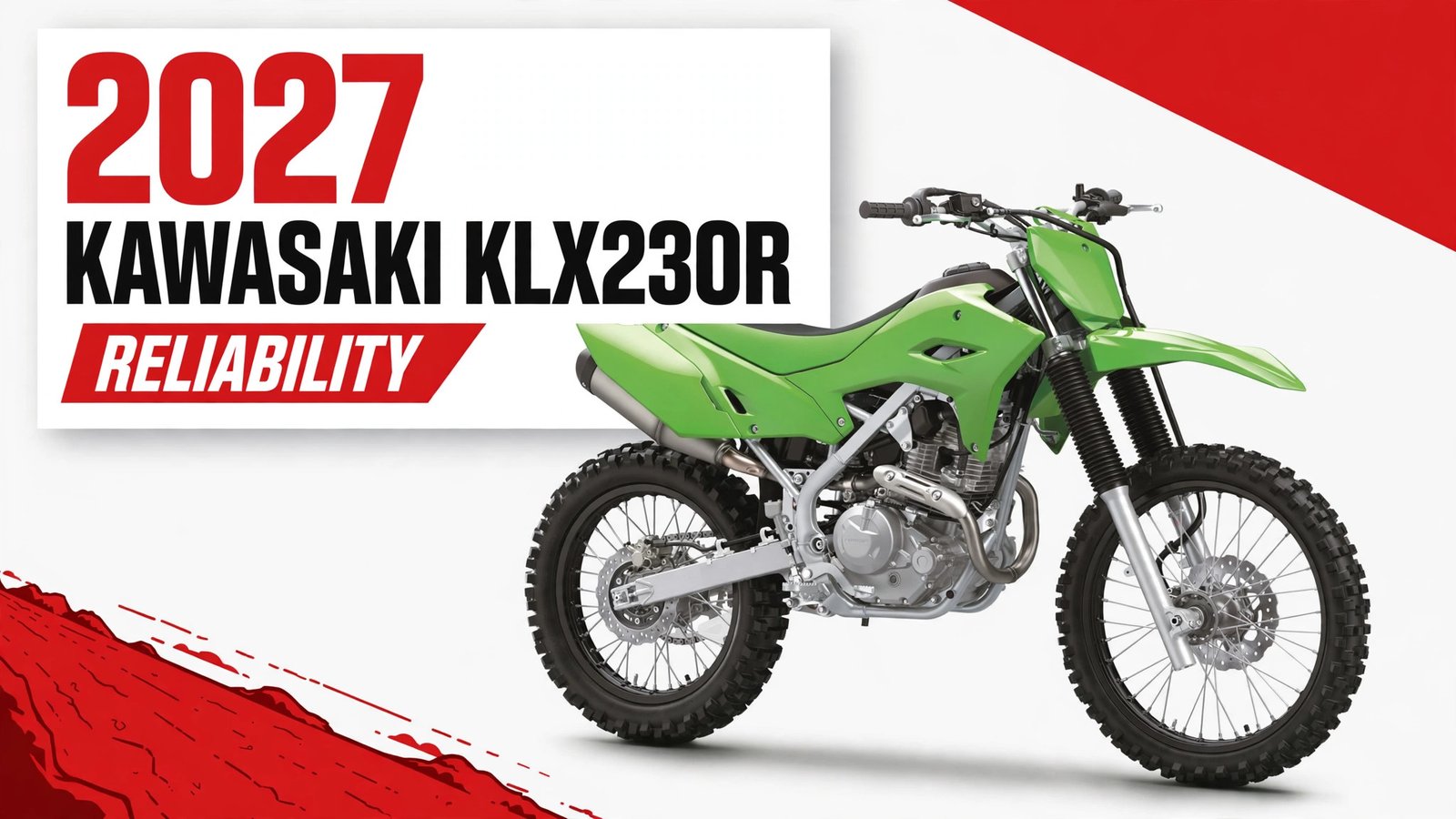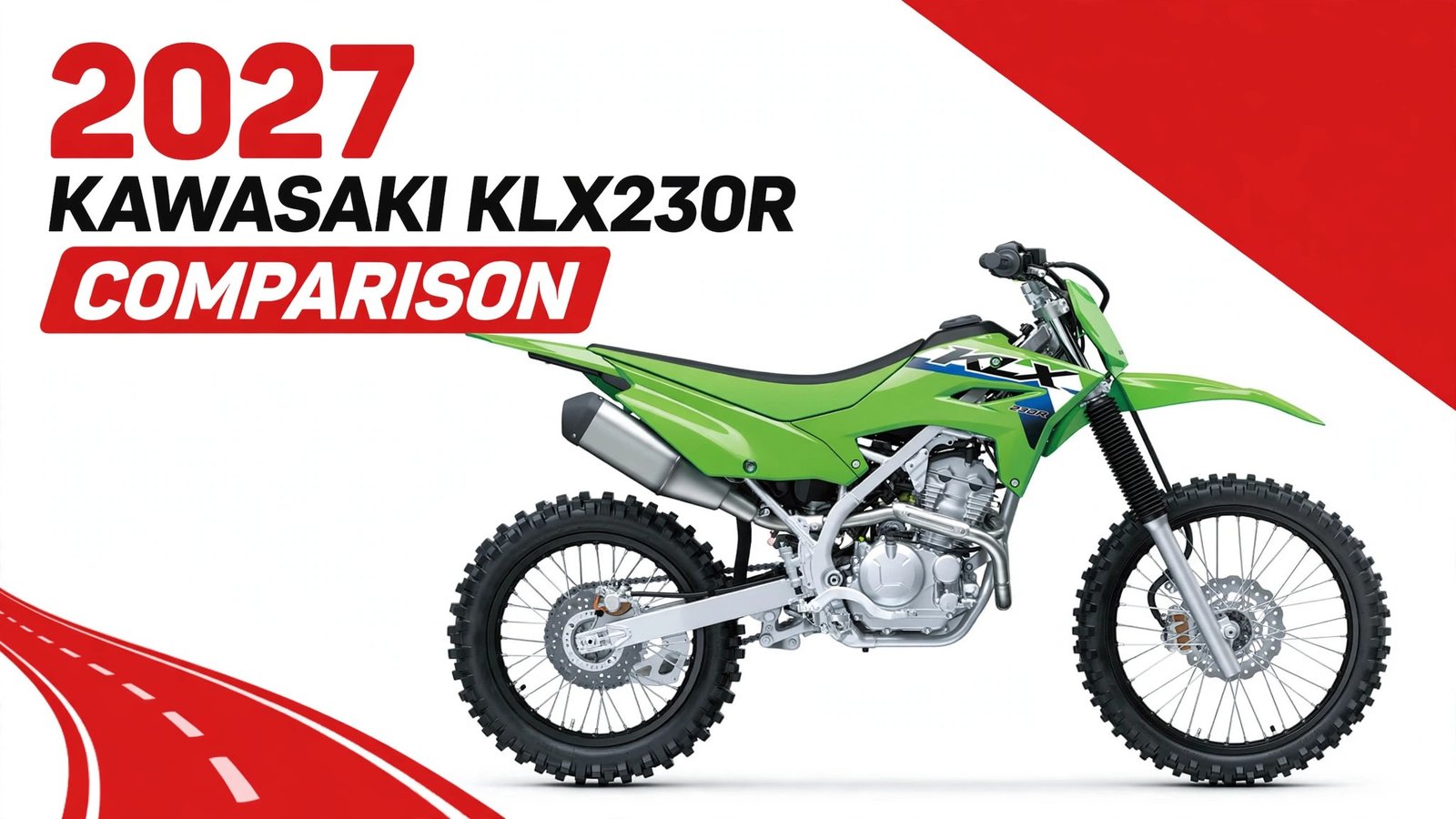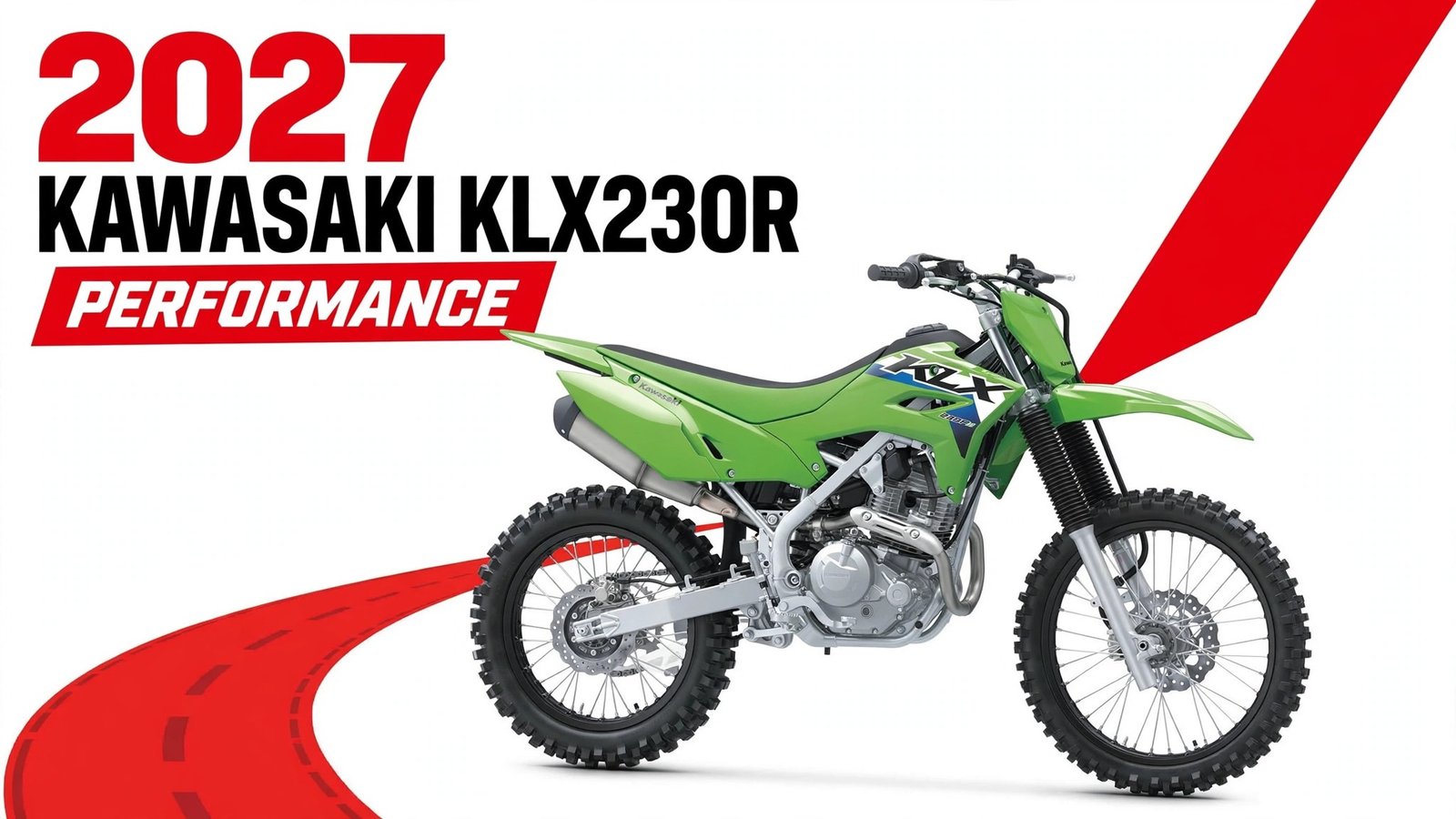
The Kawasaki KLX230R is not a fast bike, and that is the first thing any honest Kawasaki KLX230R performance guide has to say. It is a 233cc air-cooled trail bike with a six-speed gearbox, a soft 37 mm fork and no dash at all. Its power was measured by two magazines on gen-1 bikes at 17.3 and 17.9 horsepower, no tester has ever measured its top speed or its fuel economy, and no dyno figure exists for the 2025-and-later engine. This guide works only with figures that were actually measured, and keeps the two dyno tests separate.
Kawasaki KLX230R Engine Performance and Power Delivery
The engine is the same 233cc air-cooled SOHC two-valve single in both generations, but the 2025 update changed how it breathes, so the old dyno figures do not carry straight across. Kawasaki KLX230R performance starts with that split: everything measured before 2025 belongs to the gen-1 engine, and the gen-2 engine has never been on a dyno.
The video below is MXHideout’s practical comparison of the KLX230R against the KLX300R, the bigger trail bike in the same family — a size and usability comparison, not a KLX230R-only test and not a dyno session, on gen-1 bikes from before the 2025 update — useful context for Kawasaki KLX230R performance, not a measurement of it.
Dirt Rider Dyno: 17.3 Horsepower (2021)
Dirt Rider put a 2021 KLX230R on a dyno and recorded 17.3 horsepower at 7,800 rpm and 13.3 lb-ft of torque at 6,300 rpm. That is the earliest rear-wheel figure for the bike, and it is the one this Kawasaki KLX230R performance guide treats as the Dirt Rider number — two independent catalogues agree with it, which is why the heading carries 17.3 and not the 17.9 that appears in some summaries. The 17.9 figure belongs to a different test, covered below, and the two should never be blended into one “about 17 to 18 horsepower” claim.
What 17.3 horsepower means on the trail is a bike that pulls cleanly from low revs, runs out of breath well before the rev limiter, and asks the rider to use the gearbox. The six-speed transmission matters more than the peak figure: first gear is walking-speed slow for tight trails, and the gaps are close enough to keep the engine in its useful band. A rider from a 250cc motocross bike will find it slow; one from a 140cc play bike will find it a large step up — the honest shape of Kawasaki KLX230R performance.
Kawasaki publishes no horsepower figure for the R, so there is no factory number to check the dyno against. The street KLX230 S does carry one, 17 horsepower at 8,000 rpm, but that is the street bike’s number, not the R’s. Any Kawasaki KLX230R performance claim that starts with “Kawasaki says” and ends with a horsepower number is wrong.
California Bike Made 17.1 (2023)
Dirt Rider also tested a 2023 California-model KLX230R and recorded 17.1 horsepower, according to the magazine’s own heading for that test. This guide prints the figure with that citation and a clear label: the article exists, but its full text could not be retrieved for re-checking, so 17.1 horsepower stands here as the doc’s claim from Dirt Rider, not as a verified figure in this Kawasaki KLX230R performance guide. No torque figure was published with it.
The second measured figure comes from Cycle World (full article mirrored on ninjette.org), which ran a 2022 KLX230R on its Dynojet 250i and recorded 17.9 horsepower at 7,700 rpm and 14.4 lb-ft at 6,100 rpm. That is the source of the 17.9 that sometimes gets attached to Dirt Rider’s name — Cycle World’s figure, on a 2022 bike and a different dyno, half a horsepower and more than a pound-foot above Dirt Rider’s 2021 result. The gap is normal between dynos, and it is why the two results are listed separately below instead of averaged into one number.
| Test | Peak horsepower | Peak torque | Bike tested |
|---|---|---|---|
| Dirt Rider 2021 dyno | 17.3 hp @ 7,800 rpm | 13.3 lb-ft @ 6,300 rpm | 2021 KLX230R, gen 1 |
| Cycle World 2022 dyno (Dynojet 250i) | 17.9 hp @ 7,700 rpm | 14.4 lb-ft @ 6,100 rpm | 2022 KLX230R, gen 1 |
| Dirt Rider 2023 California bike | 17.1 hp (doc-asserted) | Not published | 2023 KLX230R, gen 1, California model |
| Kawasaki USA, KLX230R | No figure published | No figure published | Any year |
| Kawasaki USA, street KLX230 S (for contrast) | 17 hp @ 8,000 rpm | 13 lb-ft @ 6,400 rpm | Street dual-sport, not the R |
Notes: every rear-wheel figure in this table is from a gen-1 bike; no dyno figure exists for the 2025-and-later gen-2 engine, so none is printed. The 17.1 hp figure is printed as Dirt Rider’s doc-asserted claim because the article text could not be retrieved for re-checking. The street S figures show what Kawasaki publishes for the sibling street bike; they are not the R’s figures. A Canadian spec sheet lists the 2026 KLX230R S at 13.8 kW (19 PS) at 8,000 rpm, which is 18.7 hp, never “19 hp”. That is the complete measured Kawasaki KLX230R performance record.
Kawasaki KLX230R Top Speed and Acceleration
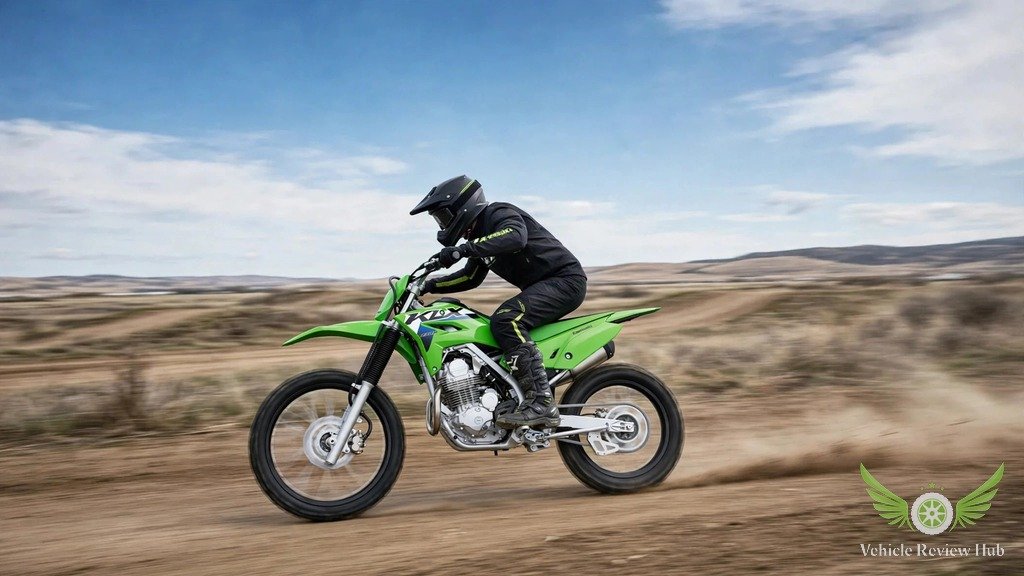
No magazine, no manufacturer and no instrumented test has ever published a top speed for the KLX230R, and the bike itself cannot help: it has no speedometer, no odometer and no hour meter. Kawasaki KLX230R performance in a straight line therefore rests on owner estimates, and this section says so plainly instead of dressing an estimate up as a test result.
No Official Figure Exists
Kawasaki publishes no top speed for the R, and no tester has strapped a GPS to one and recorded a run. The reason is partly the bike’s purpose: a closed-course trail bike is ridden on woods trails and tracks, where top speed is the least useful number about it. It is also partly the missing dash — without a speedometer there is nothing to read, and without an odometer there is no way to time a measured mile. The plated street KLX230 has been recorded at around 75 mph, with one test reaching 77 mph, but those figures belong to the street bike and say nothing about the off-road R. There is no 0–60 mph test, no quarter-mile time and no measured roll-on figure either — the Kawasaki KLX230R performance record on acceleration is empty.
60 MPH Is an Owner Estimate Only
The figure most often quoted for the KLX230R is about 60 mph, and it comes from owners, not from a test. Motocross Hideout’s KLX230 guide puts the top speed at around 60 mph, and another owner account describes a more experienced rider reaching about 60 mph. A different guide puts it at 65 mph, “give or take a few”. All three are estimates that disagree by five miles per hour, which is itself the point: nobody has measured it. This Kawasaki KLX230R performance guide uses 60 mph as the owner estimate and labels it as one every time it appears.
The figure is believable on gearing alone: a 46/13 final drive.
| Claim | Figure | Status |
|---|---|---|
| Kawasaki official top speed, KLX230R | None published | No figure exists |
| Instrumented top speed test | None found | No test exists |
| Owner estimate (Motocross Hideout) | About 60 mph | Estimate, not a test |
| Owner estimate (second guide) | 65 mph, give or take a few | Estimate, not a test |
| 0–60 mph | Slightly more than 10 seconds | YouTube rider estimate only |
| Street KLX230 top speed (for contrast) | About 75 mph; 77 mph in one test | Plated street bike, not the R |
Notes: the 60 mph figure in this Kawasaki KLX230R performance guide is an owner estimate, repeated as such and never presented as a tested result. The street KLX230 figures are included only to stop the common mistake of quoting them for the R. No 0–60 mph or quarter-mile figure has ever been measured.
Kawasaki KLX230R Mileage and Fuel Economy
Fuel economy is the thinnest part of the KLX230R’s record. No tester has measured it, and Kawasaki publishes no figure for the R. The bike has no odometer, so even an owner cannot calculate miles per gallon without tracking distance some other way. Kawasaki KLX230R performance in this section is therefore a record of what is not known, plus the one number that keeps getting misapplied to it.

No Tester-Measured MPG Found
There is no tester-measured MPG figure for the KLX230R in the sources consulted for this Kawasaki KLX230R performance guide — not in the magazine tests, the comparison articles or the owner guides. The reason is the same as for top speed: the bike has no odometer, so a tester would have to carry a GPS and log fuel separately. The 2025 update made the question harder, because the steel tank grew from 1.7 gallons to 2.0 gallons (1.9 gallons on the California bike).
In practice, no tank range can be printed for the R either: a range figure is a tested MPG multiplied by the tank size, and without the first number the second is arithmetic on a guess. A buyer should treat the 2.0-gallon tank as small for a full-size trail bike and carry fuel on longer rides. The 233cc single is frugal in principle, but principle is not a measurement, and this Kawasaki KLX230R performance guide does not print one.
70 MPG Online Is Street-Bike Data
The figure that does exist online is 70 mpg, and it does not belong to the KLX230R — the most repeated wrong number in Kawasaki KLX230R performance pages. Dirt Bike Test measured just over 70 mpg on the 2026 KLX230 Sherpa S ABS, the street-legal sibling with lights, mirrors, a digital display and ABS, ridden about half on road and half off road. That is a street bike’s figure from a street-biased test, copied onto the R’s pages by aggregator sites that treat the whole KLX230 family as one bike. It is not the R’s figure, and it should not be quoted as one.
The confusion is understandable — the two bikes share the same 233cc engine — but the R is geared differently, carries no road equipment, and is ridden differently. The honest statement is that the R’s fuel economy is unmeasured and the Sherpa S figure is just over 70 mpg on a street bike. Any Kawasaki KLX230R performance page that lists “70 mpg” without saying whose bike it was measured on repeats the error.
| Figure | Value | Applies to |
|---|---|---|
| Tester-measured MPG, KLX230R | None found | The R, any year |
| Kawasaki published MPG, KLX230R | None published | The R, any year |
| Dirt Bike Test measured MPG | Just over 70 mpg | 2026 KLX230 Sherpa S ABS (street) |
| Fuel tank, gen 1 | 1.7 gal, plastic | 2020–2024 R |
| Fuel tank, gen 2 | 2.0 gal steel (1.9 gal CA) | 2025+ R |
| Tank range, KLX230R | Cannot be calculated | No tested MPG exists |
Notes: the “just over 70 mpg” figure is Dirt Bike Test’s measurement on the street Sherpa S ABS, included only to identify where the online 70 mpg claim comes from. No MPG or tank-range figure for the KLX230R itself is printed in this Kawasaki KLX230R performance guide, because none was measured.
Kawasaki KLX230R Real-World Riding Experience
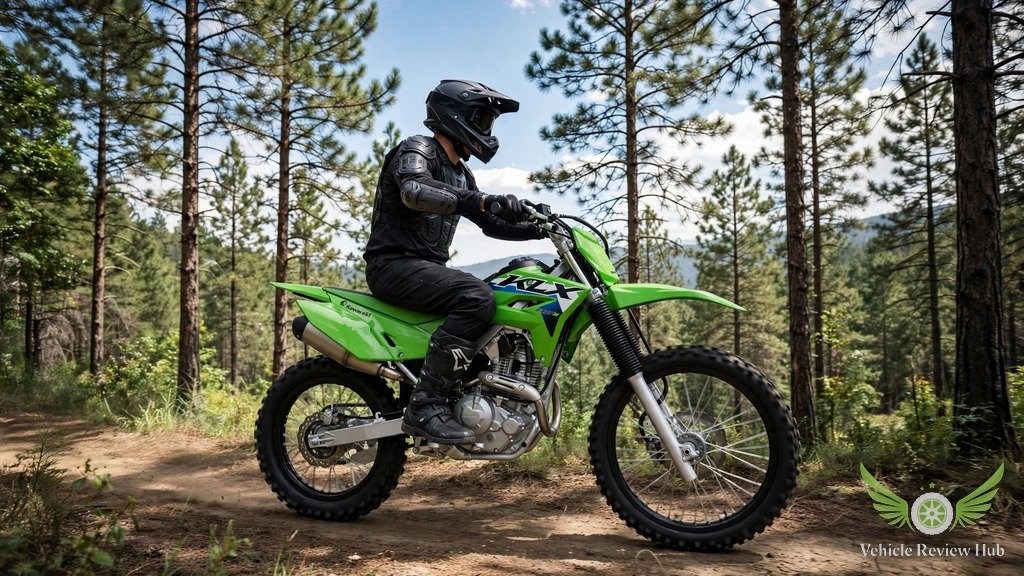
On the trail, the KLX230R rides like its dyno sheet suggests: modest power, a broad and friendly midrange, and a chassis that forgives more than it excites. The 2025 update is the most important riding change since launch, because the counterbalancer, the lower seat and the reworked ergonomics change how the bike feels far more than any horsepower figure would. Kawasaki KLX230R performance on real trails is about fit and manners, not speed.
Honda Rival Had More Power (2023)
In 2023 the KLX230R’s closest rival was the Honda CRF250F, and the Honda had more power. Cycle World’s comparison put both bikes on the same Dynojet 250i: the Honda recorded 20.1 horsepower at 7,500 rpm and 15.5 lb-ft at 6,000 rpm against the Kawasaki’s 17.9 horsepower and 14.4 lb-ft. The gap was about two horsepower and a pound-foot, and on the trail it showed — the Honda pulled harder out of corners and climbed with less shifting, while the Kawasaki asked more of its six-speed gearbox. The Honda had only five gears to the Kawasaki’s six, so the extra cog partly made up for the missing power. That same-dyno result is the fairest Kawasaki KLX230R performance comparison ever published.
That comparison is now history, because Honda replaced the CRF250F with the CRF300F, and the 20.1 horsepower figure belongs to the old 250F, not to the new 300F. It is kept here because it is the only same-dyno comparison of the R against a direct rival, and it anchors this Kawasaki KLX230R performance verdict on power. Motorcycle.com’s 2025 review makes the same point from the other side, praising the revised engine’s manners and noting the counterbalancer takes the edge off the single-cylinder buzz that made the gen-1 bike tiring.
Midrange Spike Near 4,400 rpm
The most distinctive feature of the KLX230R’s power delivery is a torque spike near 4,400 rpm, recorded by Cycle World on its dyno run. The engine does not build power in a smooth line; it steps up in the midrange, felt as a small surge when the revs cross the low four-thousands. On a tight trail that surge is useful, because it arrives exactly where a rider is rolling the throttle open out of a slow corner. It is the engine’s character, and it explains why the bike feels stronger mid-range than its peak figures suggest — the most useful Kawasaki KLX230R performance fact for a trail rider.
The 2025 changes may have altered that character, but no gen-2 dyno exists to say whether the spike survived. The spike is a gen-1 fact, recorded by Cycle World, and it is printed here as one in this Kawasaki KLX230R performance guide.
Kawasaki KLX230R Handling, Braking and Stability
Handling is where the KLX230R earns its keep. The bike is light at 262 lb wet, the seat dropped to 35.6 inches for 2025, and the 21-inch front wheel rolls over trail obstacles that would stop a smaller bike. Kawasaki KLX230R performance in corners and on rough ground depends on a soft, simple chassis reworked for 2025, and this section covers what that chassis does and what it cannot do.
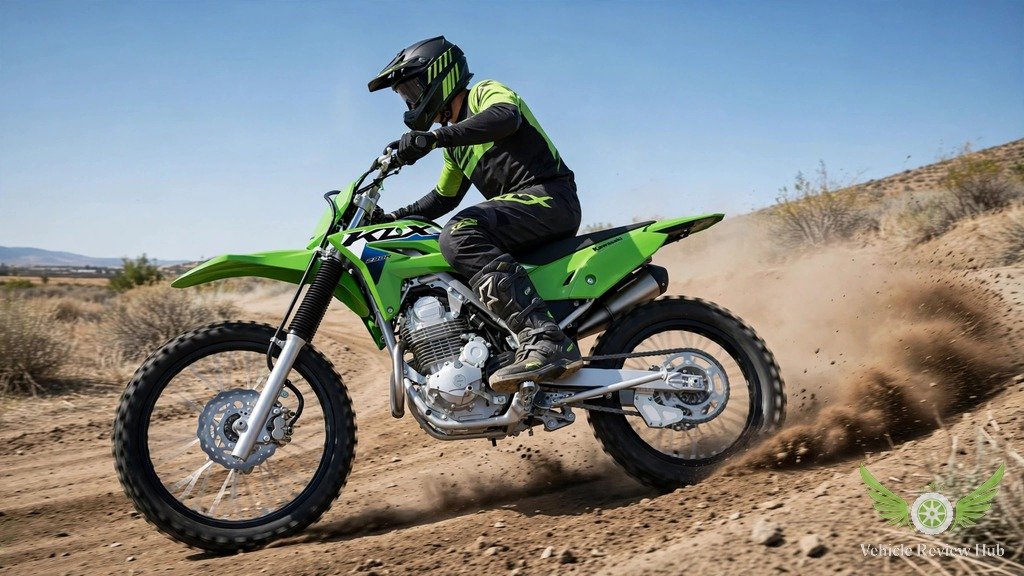
Handling, Braking and Stability on the Trail
The 2025 chassis changes are the largest since launch: rake tightened from 26.5 degrees to 25.4, wheelbase grew from 53.5 inches to 54.1, footpegs moved back about a third of an inch, and the handlebar moved forward an inch and half an inch higher. The seat is lower with thicker, wider foam. Taken together, the bike steers quicker, feels more planted, and gives a more relaxed standing position — the biggest Kawasaki KLX230R performance gain since launch.
Braking is a 240 mm petal front disc with a dual-piston caliper and a 220 mm petal rear disc with a single-piston caliper, the same in both generations, with no ABS and no option to add it — the correct specification on dirt, where riders want to control the rear brake themselves. The Dunlop D952 tyres, 80/100-21 front and 100/100-18 rear, are proper trail rubber, and stability is good at trail speeds — solid Kawasaki KLX230R performance for a $4,999 trail bike.
Soft Fork, Nothing to Adjust
The fork is the chassis’s weakest point: soft fork, nothing to adjust, as the doc heading says. The 37 mm fork has no compression or rebound adjustment at all, and it is set soft from the factory, which suits a lighter rider on slow trails and runs out of control on faster, rougher ground. A heavier rider will find the front end diving under braking and bottoming on bigger hits. The rear shock is better, because the 2025 update added spring-preload adjustment, but that is the only adjustment on the whole bike, and damping remains fixed at both ends, which caps Kawasaki KLX230R performance on rough ground.
That is a fair trade at $4,999: the soft setup forgives beginners, and most owners will never change it. The point for a buyer is to test the fork on the kind of ground they actually ride, knowing the only fix Kawasaki offers is the rear preload adjuster added in 2025 — the only Kawasaki KLX230R performance suspension change that costs nothing.
| Item | Gen 1 (2020–2024) | Gen 2 (2025+) |
|---|---|---|
| Fork | 37 mm, non-adjustable | 37 mm, non-adjustable |
| Rear shock | No preload adjustment | Spring-preload adjustment added |
| Suspension travel | 9.8 in front / about 9.9 in rear | 9.8 in both ends |
| Rake | 26.5 degrees | 25.4 degrees |
| Wheelbase | 53.5 in | 54.1 in |
| Ground clearance | Not stated separately | 11.8 in |
| Front brake | 240 mm petal disc, dual-piston | 240 mm petal disc, dual-piston |
| Rear brake | 220 mm petal disc, single-piston | 220 mm petal disc, single-piston |
| ABS | None, no option | None, no option |
| Wet weight | 253.6 lb (258 lb CA) | 262 lb (+2 lb CA) |
Notes: fork and brake specifications are the same in both generations; the 2025 changes are the rake, wheelbase, seat, tank, counterbalancer and the new rear preload adjuster. The low-seat KLX230R S runs shorter travel at 8.7 inches front and 8.5 inches rear, with 10.6 inches of ground clearance — those are the S figures, not the R’s. This Kawasaki KLX230R performance guide uses the official Canadian spec sheet figures for the S, not the “8.8 in rear” figure that appears in one review.
Kawasaki KLX230R Performance Compared With Other Trail Bikes
Against its rivals the KLX230R is the lighter, simpler, cheaper-handling bike rather than the most powerful one, and that is the trade it has always made. Kawasaki KLX230R performance looks different depending on the comparison: against the street sibling it is the lighter off-road bike, against the old Honda it was the less powerful one, and against the bigger KLX300R it is the smaller, friendlier one.
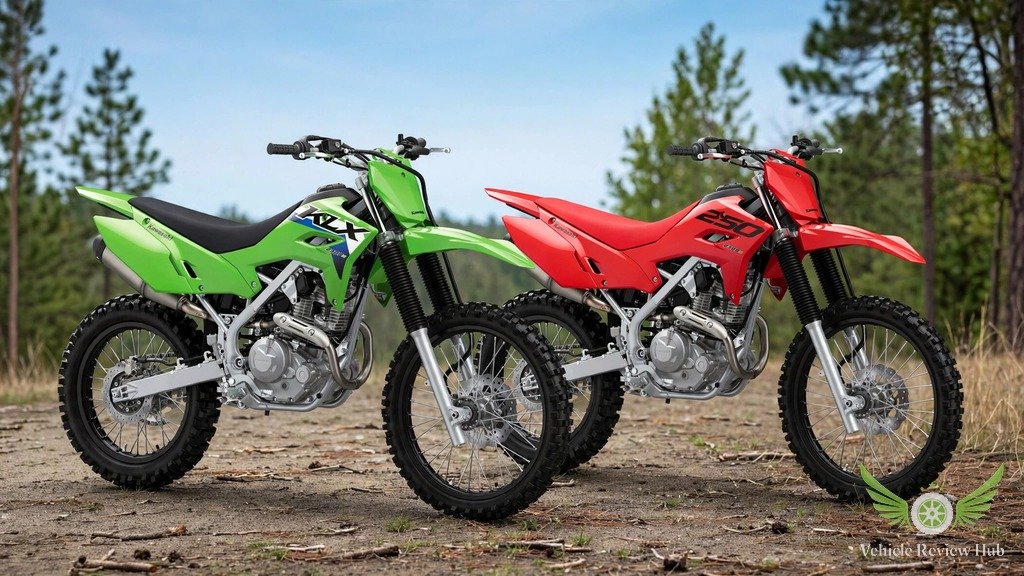
Kawasaki KLX230R vs Kawasaki KLX230
The closest comparison inside Kawasaki’s own range is the street KLX230, the plated dual-sport that shares the 233cc engine. The street bike publishes 17 horsepower at 8,000 rpm, weighs about 291 lb, and carries lights, mirrors, turn signals, a plate and ABS. The R is lighter at 262 lb wet, has no road equipment, and its power was measured on a dyno rather than published by the factory. On a trail the R is the better bike for Kawasaki KLX230R performance.
The step up is the KLX300R, the 292cc trail bike in the video at the top of this guide. The 300R is bigger, heavier and more powerful, and the choice is one of size and confidence rather than speed, and that is the point of this Kawasaki KLX230R performance comparison. The full comparison, with prices and the step-up question, is in the Kawasaki KLX230R comparison guide, and the Kawasaki KLX230R review covers the price, the 2025 update and the riding position in full.
Is the Kawasaki KLX230R Suitable for Beginner Riders?
Yes, with one honest reservation: the seat. The KLX230R is one of the most beginner-friendly full-size trail bikes on sale, because the power is modest and predictable, the clutch is light, the gearbox is forgiving, and the bike is light enough to pick up after a fall. The 2025 update made it friendlier still, with the counterbalancer smoothing the engine and the seat dropping to 35.6 inches with thicker foam — a genuine Kawasaki KLX230R performance gain for new riders.
The reservation is height: at 35.6 inches the seat is still tall for a shorter beginner. The answer is the low-seat KLX230R S, the off-road twin at exactly the same $4,999, with the seat at 34.4 inches — not the street KLX230 S, the plated dual-sport at $5,199. The Kawasaki KLX230R reliability guide covers what to check before paying, and it is the natural next read after this Kawasaki KLX230R performance guide. The step down is the Kawasaki KLX140R L review, and the Indonesian line is covered by the Kawasaki KLX150 review.
| Bike | Measured power | Gears | Wet weight | Road legal |
|---|---|---|---|---|
| KLX230R (gen 1) | 17.3 hp (Dirt Rider) / 17.9 hp (Cycle World) | 6 | 253.6 lb | No |
| KLX230R (gen 2, 2025+) | No dyno exists | 6 | 262 lb | No |
| Honda CRF250F (2023 rival) | 20.1 hp (Cycle World, same dyno) | 5 | Not stated here | No |
| Street KLX230 S | 17 hp @ 8,000 rpm (Kawasaki published) | 6 | About 291 lb | Yes |
| KLX230R S (off-road low seat) | Same engine as the R | 6 | Not stated here | No |
Notes: the CRF250F’s 20.1 hp figure is from Cycle World’s comparison on the same Dynojet 250i and belongs to the discontinued CRF250F, never to the CRF300F that replaced it. The street S figure is Kawasaki’s published number for the street bike, not a dyno result for the R. No gen-2 dyno figure exists, so none is printed for the 2025-and-later bike in this Kawasaki KLX230R performance guide. The verdict on power is simple: the R was never the most powerful bike in its class, and its case rests on weight, price, the six-speed gearbox and the 2025 update, not on horsepower.
Kawasaki KLX230R Performance Frequently Asked Questions
These answers give the measured figures behind this Kawasaki KLX230R performance guide — the two dyno tests, the top-speed evidence and the fuel-economy record — and say plainly where no measurement exists.
How much power does the KLX230R make?
Two magazines measured the gen-1 bike on a dyno: Dirt Rider recorded 17.3 horsepower at 7,800 rpm and 13.3 lb-ft at 6,300 rpm in 2021, and Cycle World recorded 17.9 horsepower at 7,700 rpm and 14.4 lb-ft at 6,100 rpm on its Dynojet 250i in 2022. A third figure, 17.1 horsepower from a 2023 California bike, is Dirt Rider’s doc-asserted claim and could not be re-checked from the article text. Kawasaki publishes no horsepower figure for the R, so there is no factory number to check the dyno against in this Kawasaki KLX230R performance guide, and no dyno figure exists for the 2025-and-later engine.
What is the KLX230R’s top speed?
No official figure and no instrumented test exist. The figures quoted online are owner estimates: about 60 mph from Motocross Hideout, and 65 mph “give or take a few” from another guide. The bike has no speedometer, so there is nothing to read. There is no 0–60 mph test, no quarter-mile time and no measured roll-on figure either — the Kawasaki KLX230R performance record on acceleration is empty. The 75 mph figure sometimes quoted belongs to the plated street KLX230, not the off-road R.
What fuel economy does the KLX230R get?
No tester has measured it, and Kawasaki publishes no figure for the R. The “70 mpg” number found online is Dirt Bike Test’s measurement on the 2026 KLX230 Sherpa S ABS, the street-legal sibling, ridden about half on road and half off road — not the R. With no tested MPG, no tank range can be printed for the R either, despite the 2.0-gallon steel tank fitted from 2025, and this Kawasaki KLX230R performance guide prints neither figure.
What is the torque spike near 4,400 rpm?
A step in the engine’s midrange delivery, recorded by Cycle World on its dyno run: the engine does not build power in a smooth line but steps up near 4,400 rpm, felt as a small surge when the throttle is rolled open out of a slow corner. It is a gen-1 fact — no gen-2 dyno exists to say whether the spike survived the 2025 engine changes.
How does the KLX230R compare with the Honda on power?
On the same Dynojet, Cycle World measured the old Honda CRF250F at 20.1 horsepower at 7,500 rpm and 15.5 lb-ft at 6,000 rpm, against the Kawasaki’s 17.9 horsepower and 14.4 lb-ft — about two horsepower and a pound-foot in the Honda’s favour. That figure belongs to the discontinued CRF250F, not the CRF300F that replaced it, and the 300F has no verified US dyno figure. That same-dyno result is the fairest Kawasaki KLX230R performance comparison ever published.
Is the KLX230R good for beginner riders?
Yes, with one honest reservation: the seat. The power is modest and predictable, the clutch is light, the gearbox is forgiving, and the bike is light enough at 262 lb wet to pick up after a fall. The 2025 update made it friendlier still, with the counterbalancer smoothing the engine and the seat dropping to 35.6 inches — a genuine Kawasaki KLX230R performance gain for new riders. At that height the seat is still tall for a shorter beginner, and the answer is the low-seat KLX230R S at the same $4,999, with the seat at 34.4 inches.