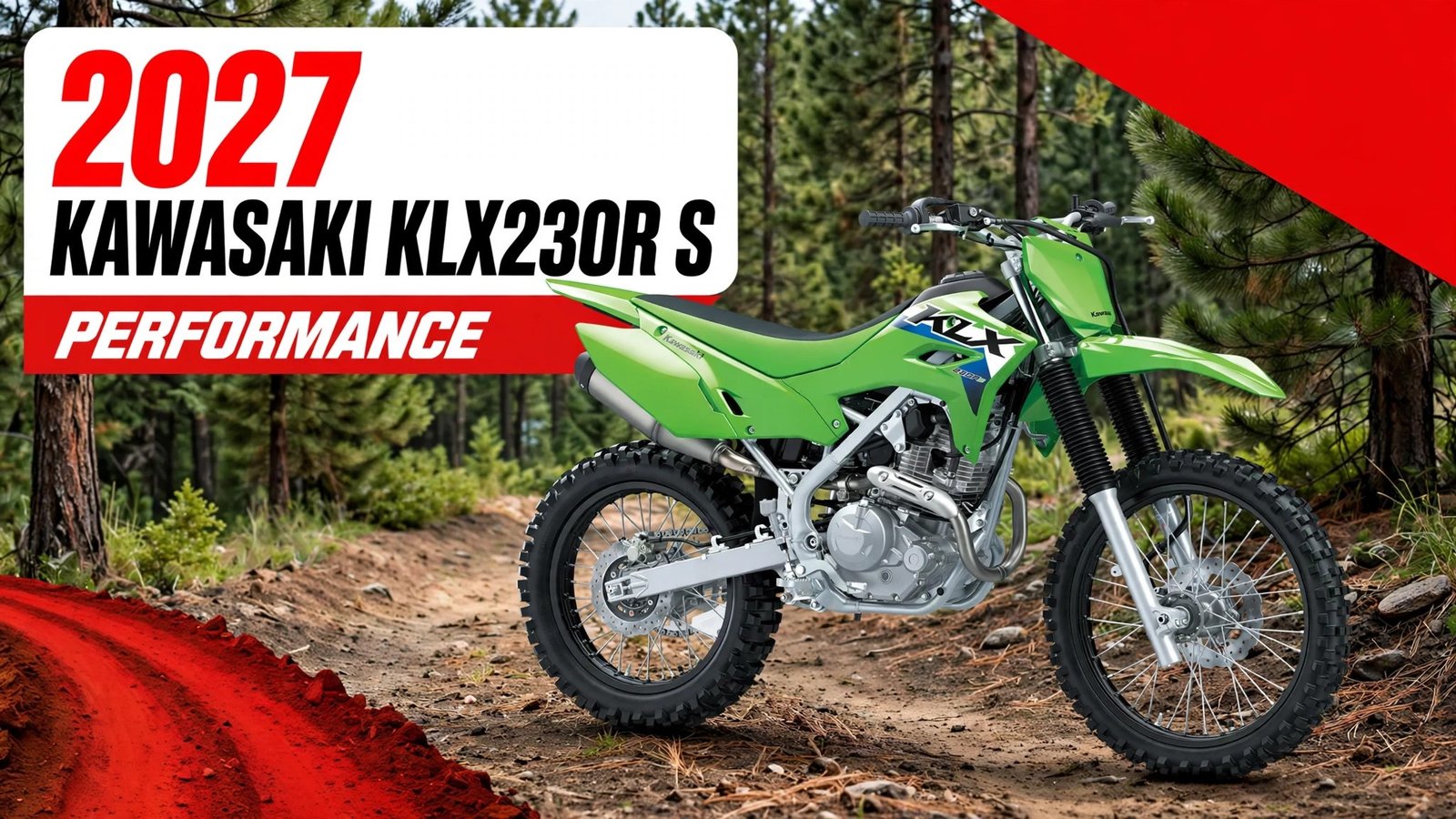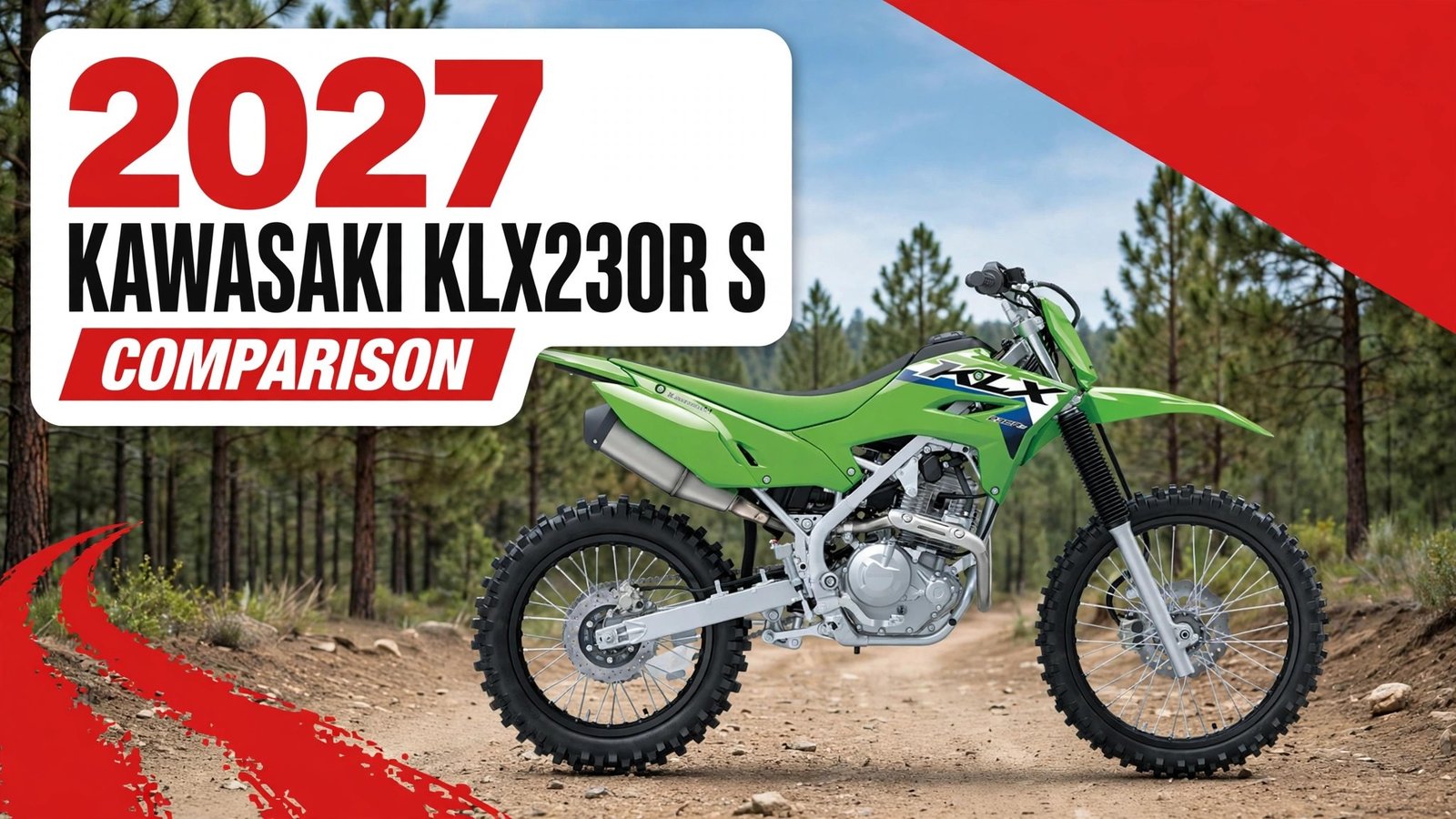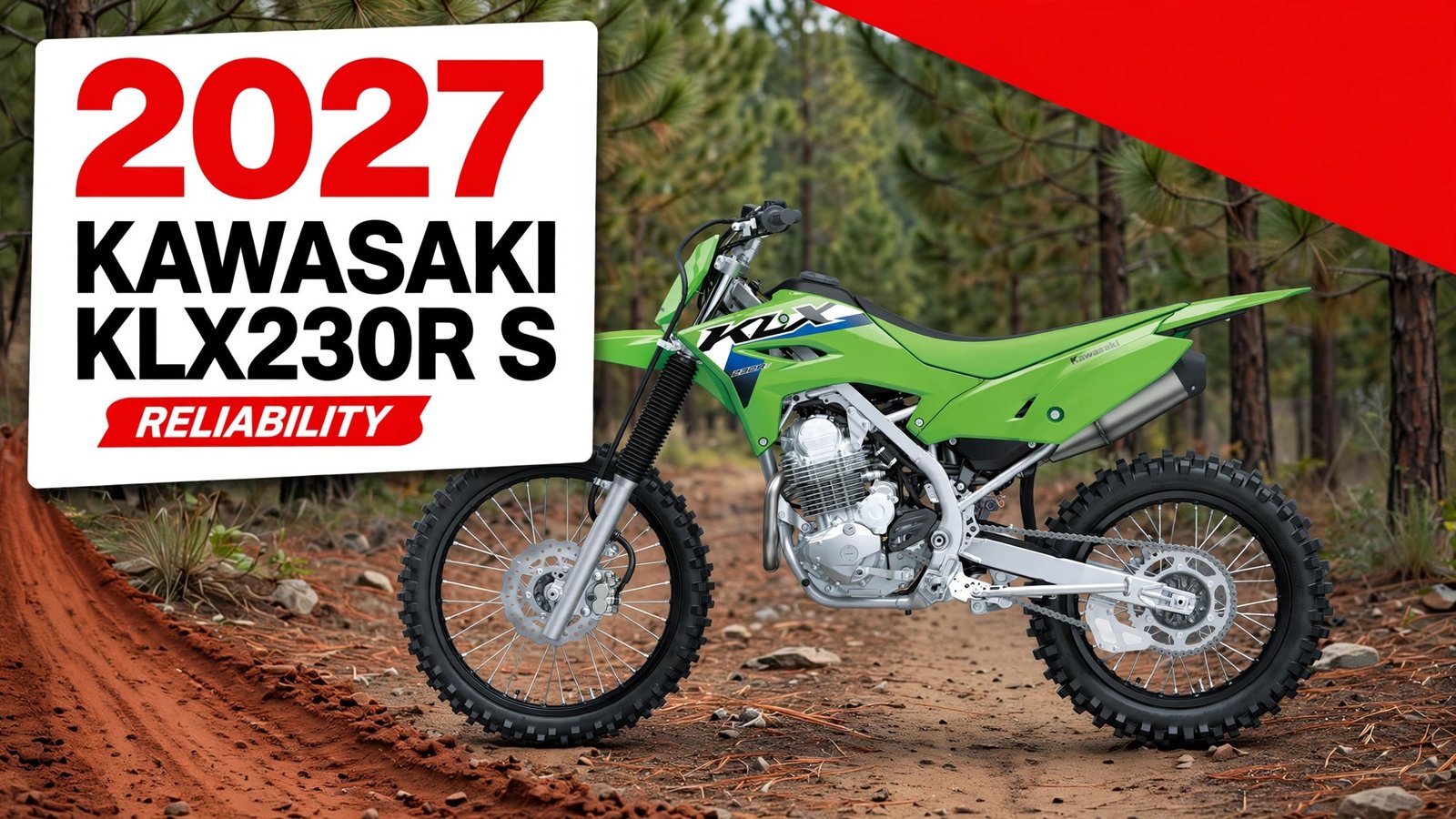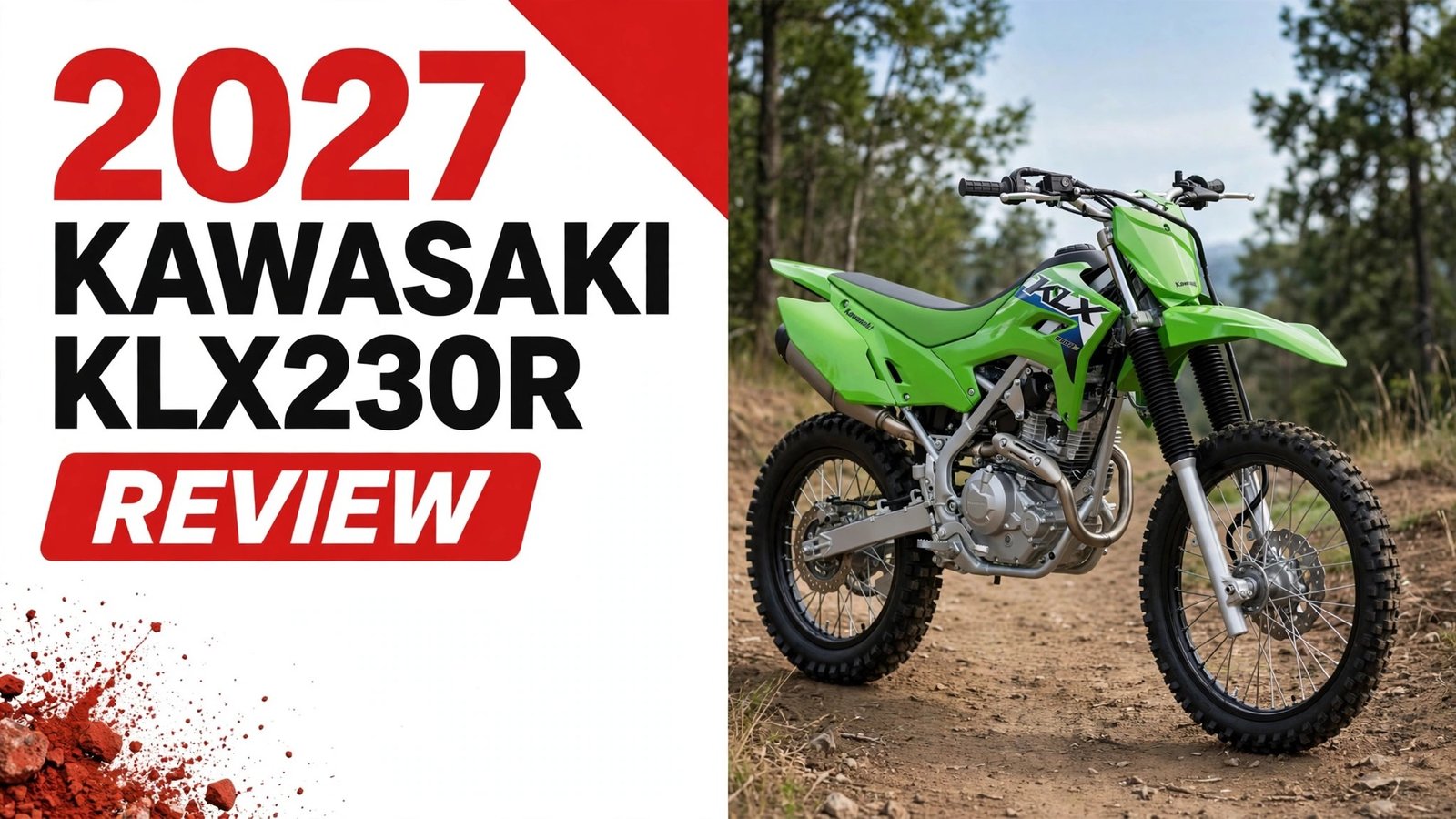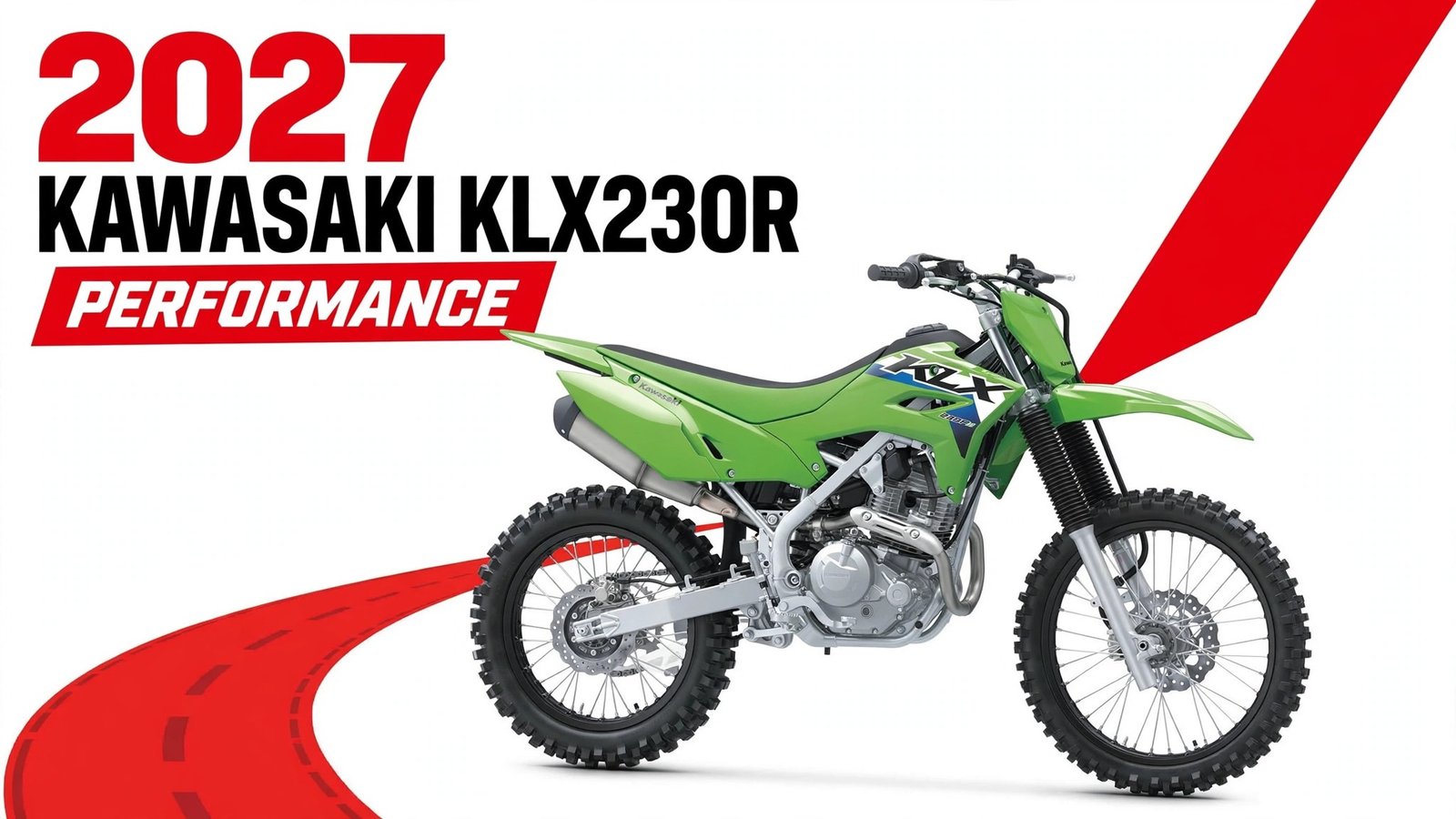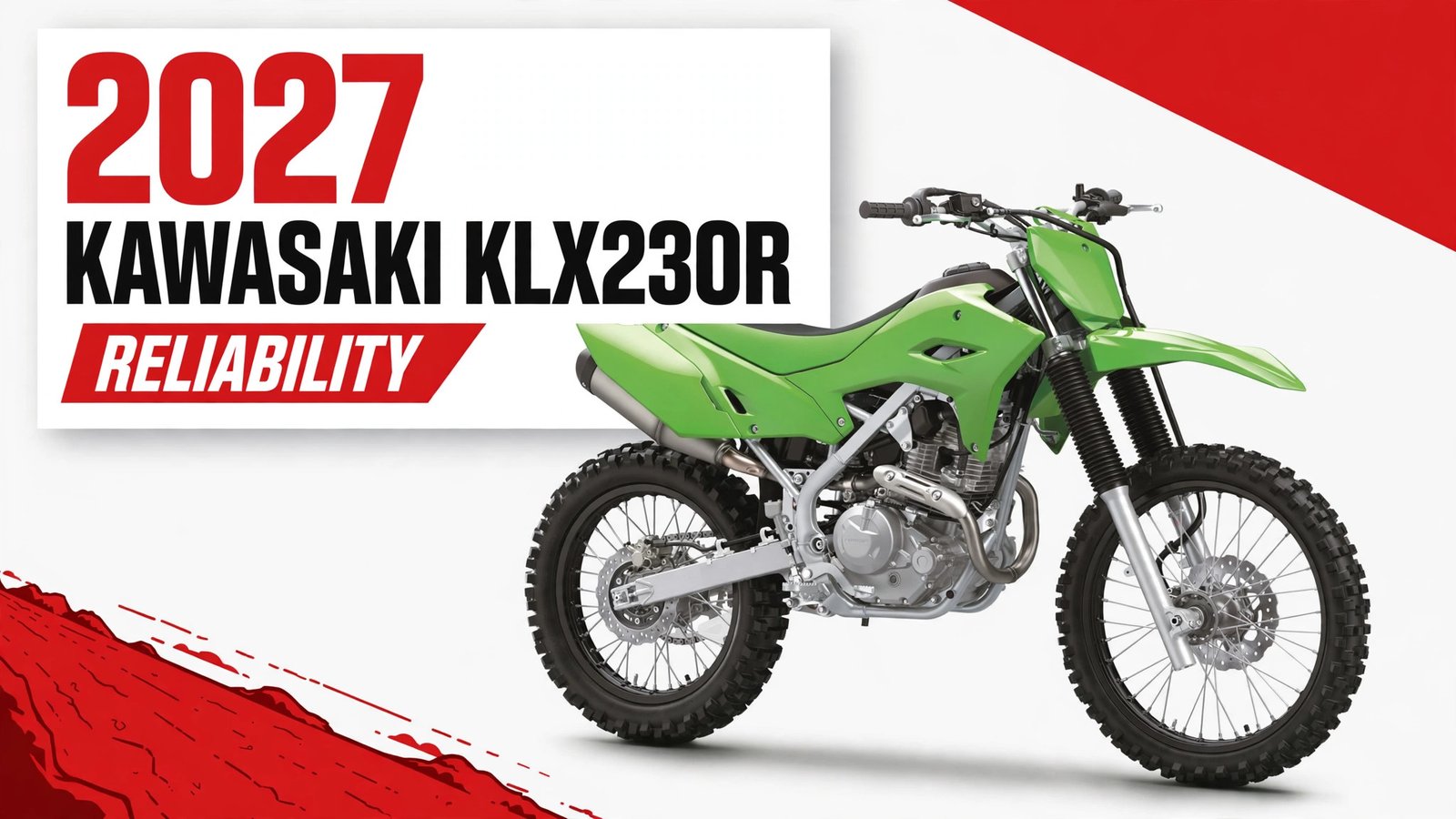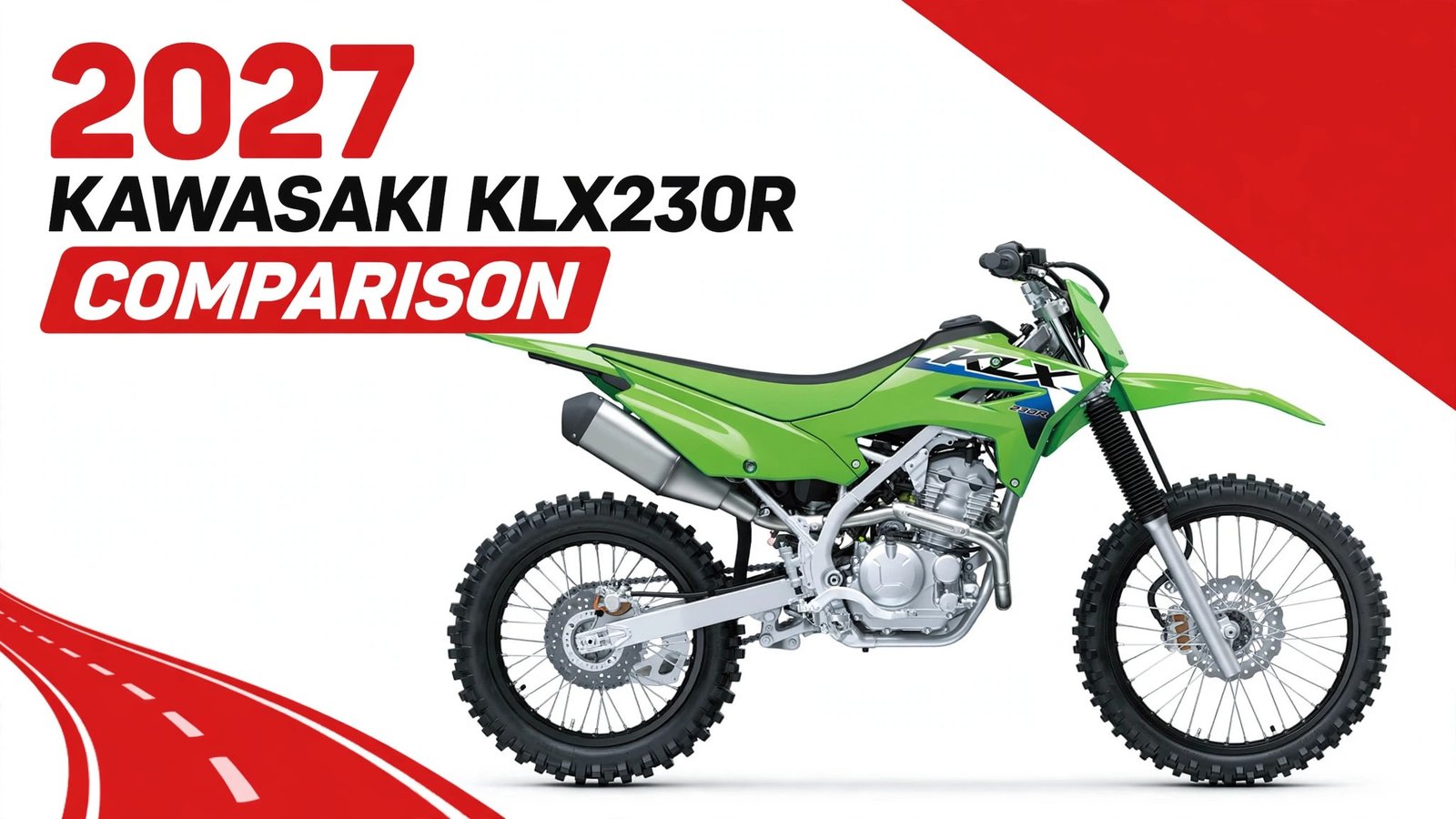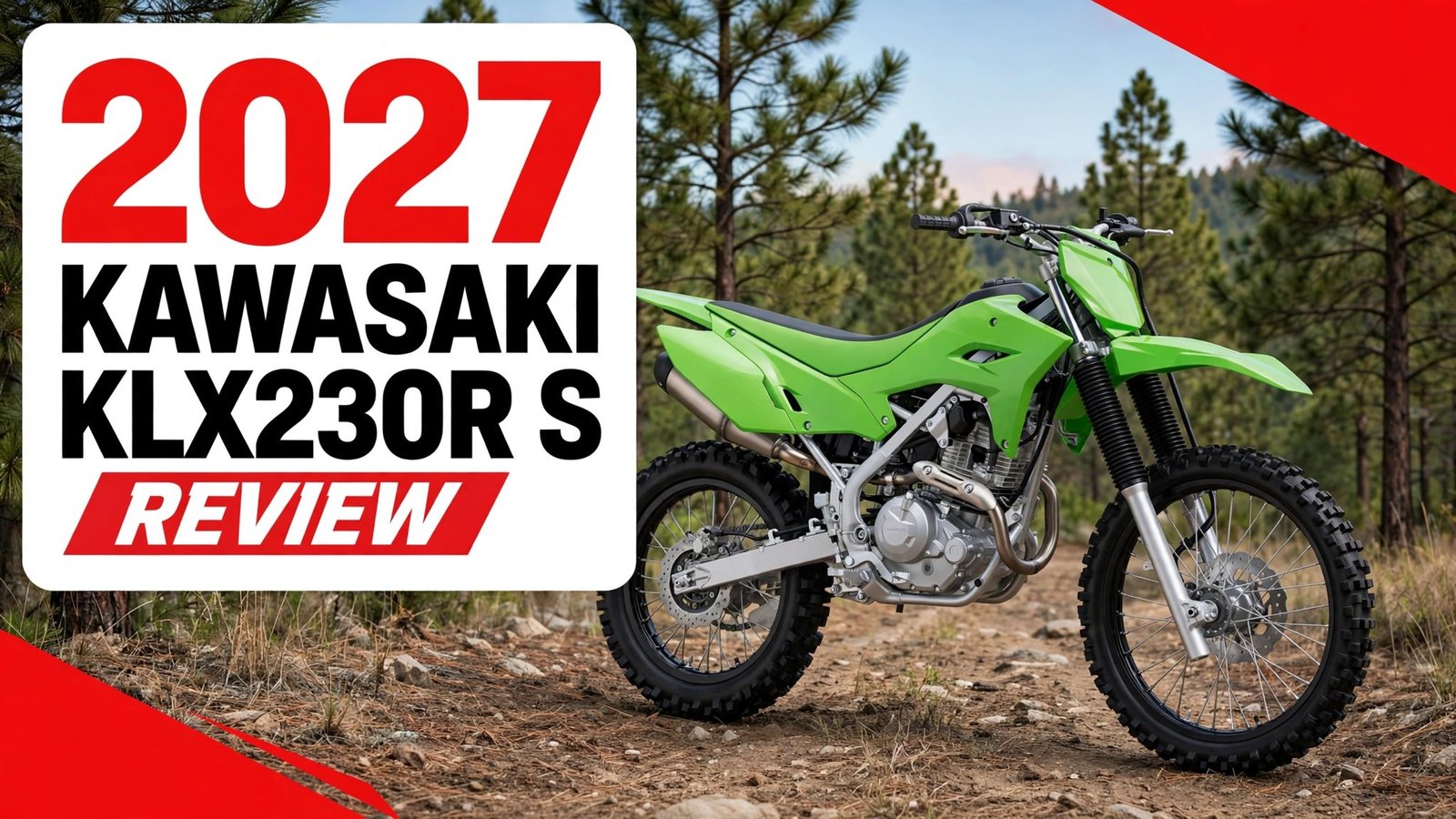
The Kawasaki KLX230R S is the low-seat version of Kawasaki’s KLX230R trail bike, and it costs exactly the same as the standard bike: $4,999. That is the whole point of this Kawasaki KLX230R S review — the lower seat is free in dollars, and it is paid for in suspension travel and ground clearance instead. The S is an off-road-only trail bike, built in Indonesia and sold in the USA since 2021. Its seat sits 1.2 inches lower than the standard R, at 34.4 inches, while the weight stays identical at 262.4 pounds. This Kawasaki KLX230R S review covers the two generations, the price by year, the engine and the riding experience, so a shorter rider can judge whether the drop is enough.
Kawasaki KLX230R S Overview and Model-Year Updates
The short version of this Kawasaki KLX230R S review is that the S is the same bike as the KLX230R, lowered. Kawasaki changed the suspension internals, not the frame, so the bike is easier to touch the ground on and slightly less capable over rough ground. The 2025 update lowered it again, from 35.4 inches to 34.4, and added a counterbalancer, a steel tank and a seat that is thicker and wider. That trade — reach for travel — is the core of this Kawasaki KLX230R S review.
The video below is Kawasaki’s own official features video for the standard KLX230R from 2020 — not an independent review, and not the S. It is useful here because the S is the standard bike’s identical twin, so what you see is what the S looks like, standing taller.
Same Price as Standard, Every Year
Every primary price figure matches the standard R, year for year: $4,399 for both in 2021, $4,749 in 2023, and $4,999 in 2025 and 2027. The 2027 delivered price is $5,434 for both. That makes the S an unusual trim: most manufacturers charge for a lower seat, and Kawasaki does not. For a buyer, the message of this Kawasaki KLX230R S review is simple — choosing the S over the R costs nothing, and choosing the R over the S saves nothing.
Debuted 2021, Not 2025
Cycle News wrote in January 2025 that the low-seat version was “now available for the 2025 model year”. It was not new. Ultimate Motorcycling’s 2021 S review was published in November 2021, and the 2021 spec sheet exists. The S has been on sale since the 2021 model year, and the 2025 bike is the second generation of it, not the first. What 2025 did bring was a second drop: the seat fell from 35.4 inches to 34.4, the tank became steel, and the engine gained a counterbalancer. Getting the debut year right matters, because a 2021 S and a 2025 S are different bikes at different prices — and this Kawasaki KLX230R S review prices them separately.
Kawasaki KLX230R S Engine and Specifications
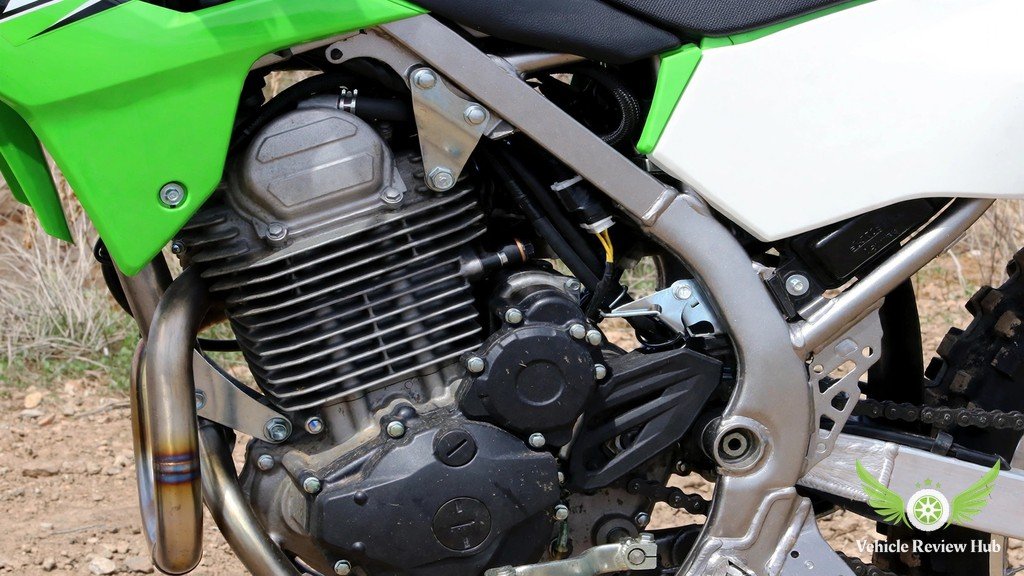
The engine is the same 233cc air-cooled single that powers the standard R, and this Kawasaki KLX230R S review treats it as such — there is no separate S engine, no smaller bore, no detune. The single overhead camshaft, two-valve head, 67.0 by 66.0 mm bore and stroke, 9.4:1 compression and 32 mm throttle body are identical. What changed in 2025 is the same change the R received: a counterbalancer to smooth the single, a smaller 33 mm intake valve with a narrowed port, and a reworked ECU. That shared engine is the starting point for the figures in this Kawasaki KLX230R S review.
Lowered by Internals, Not Links
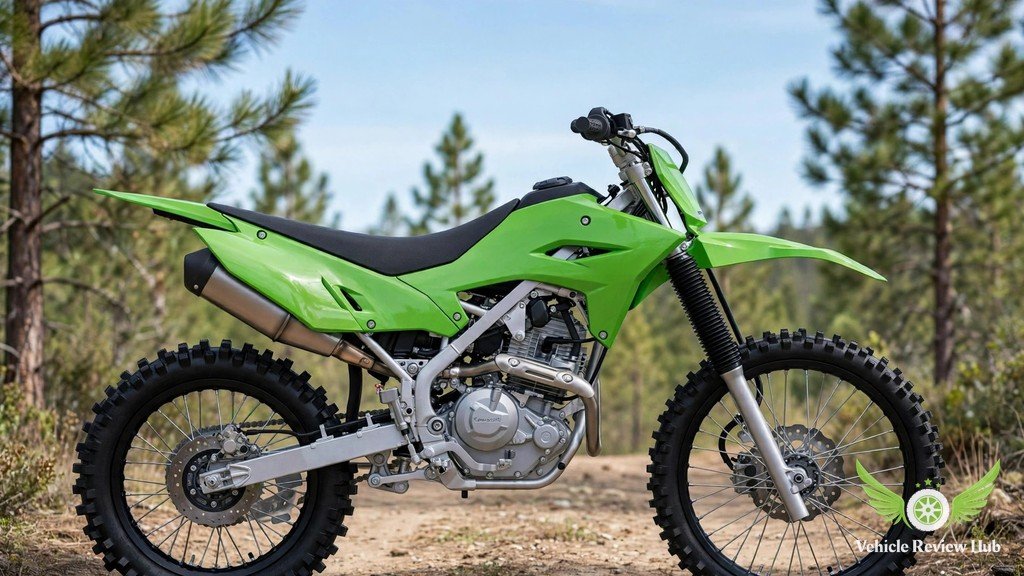
The S is not lowered with a linkage or a shorter shock. Ultimate Motorcycling’s back-to-back test found the externals of the suspension components identical, so the shorter travel comes from different internals and settings. The 37 mm fork is the same soft, non-adjustable unit, and the shock gained spring-preload adjustment in 2025 but is otherwise fixed. The trade is honest — the bike gives up travel to give back reach, and the parts that do the lowering are inside the fork and shock where a buyer cannot see them. Kawasaki publishes no hp figure for the R models in the USA, and no dyno of the S itself exists, so this Kawasaki KLX230R S review prints no S power figure beyond the Canadian sheet’s 13.8 kW (19 PS, or 18.7 hp) at 8,000 rpm.
Clearance Is 10.6 Inches, Not 10.2
The current S clears 10.6 inches, confirmed by the official US spec sheets for 2025 and 2026, by Ultimate Motorcycling and by the Cycle News spec table. No credible source says 10.2 inches. The drop from the R is 0.8 inches — the R clears 11.4 inches, not 11.8, which was the gen-1 figure. The gen-1 S cleared 10.8 inches against the gen-1 R’s 11.8, a full inch. Clearance is one of the first numbers this Kawasaki KLX230R S review checks, because it is where the S pays for its lower seat. The table below puts the two generations side by side.
| Item | Gen-1 S (2021–2024) | Gen-2 S (2025+) |
|---|---|---|
| Engine | 233cc air-cooled single, DFI, 32 mm throttle body | 233cc air-cooled single, DFI, 32 mm throttle body, counterbalancer |
| Bore x stroke | 67.0 x 66.0 mm | 67.0 x 66.0 mm |
| Compression | 9.4:1 | 9.4:1 |
| Intake valve | 37 mm | 33 mm |
| Gears | 6-speed, manual clutch | 6-speed, manual clutch |
| Start | Electric only, no kick starter | Electric only, no kick starter |
| Seat height | 35.4 in | 34.4 in |
| Ground clearance | 10.8 in | 10.6 in |
| Travel, front / rear | 8.7 in / 8.5 in | 8.7 in / 8.5 in |
| Wheelbase | 53.1 in | 53.3 in |
| Rake / trail | 25.7 deg / 4.3 in | 24.6 deg / 3.9 in |
| Fuel tank | 1.7 gal plastic | 2.0 gal steel |
| Curb weight | 253.6 lb (262.3 lb CA) | 262.4 lb (264.5 lb 50-state) |
| Brakes | 240 mm / 220 mm petal discs, no ABS | 240 mm / 220 mm petal discs, no ABS |
| Tyres | Dunlop D952 80/100-21 / 100/100-18 | Dunlop D952 80/100-21 / 100/100-18 |
Notes: rear travel is printed as 8.5 in from the official Canadian 2026 S spec sheet (217 mm), the same adoption as the KLX230R coverage in this Kawasaki KLX230R S review; some US spec sheets print 8.8 in for the rear, and that figure is footnoted here rather than printed as the primary one. The gen-2 R clears 11.4 in, not 11.8 in, which was the gen-1 figure. The S final-drive gearing was not separately verified, so no gearing figure is printed for the S in this Kawasaki KLX230R S review.
Kawasaki KLX230R S Price and Market Availability
The price story of this Kawasaki KLX230R S review is stability. The S has cost $4,999 since the 2025 price cut, and the 2027 bike costs the same $4,999 with a $435 destination charge, for $5,434 delivered. Price stability is the first thing this Kawasaki KLX230R S review confirms for a buyer. The street KLX230 S is a different bike at a different price, and the two should never be confused when shopping.
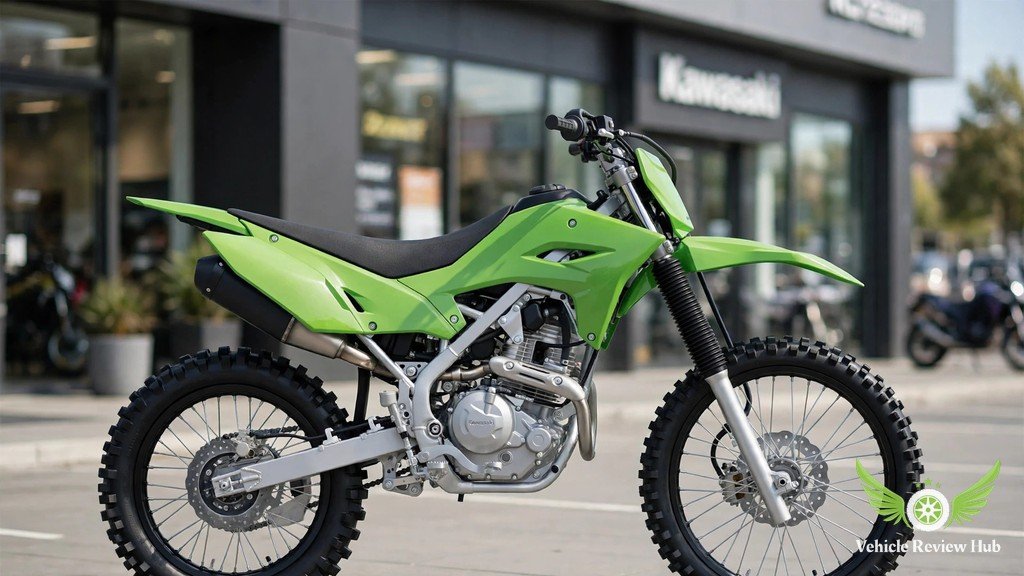
Kawasaki KLX230R S Price in the USA: $4,999
The 2027 bike carries a $4,999 MSRP with a $435 destination charge, confirmed by two dealers, for a $5,434 delivered price. The 2025 and 2026 bikes carried the same $4,999 MSRP, after a 2025 price cut that Ultimate Motorcycling put at $500 on the S. The destination charge was not separately confirmed for 2025 or 2026, so this Kawasaki KLX230R S review prints the MSRP only for those years. That flat $4,999 is the headline number of this Kawasaki KLX230R S review. The 2027 colours are Lime Green and Bright White.
2024 Price Has No Primary Figure
No primary source gives a 2024 price for the S, so this Kawasaki KLX230R S review prints no 2024 dollar figure. The only 2024 number in circulation is derived: Ultimate Motorcycling wrote that the 2025 cut was $500 on the S from $4,999, which would put the 2024 S at $5,499. That derivation creates a problem, because the same sentence puts the 2024 standard R at $5,149 — a $350 gap that contradicts the heading that the S costs the same as the standard bike every year. Either the “$500” is a misstatement, or the heading is wrong for 2024. Without a primary figure, none of those can be settled, and a buyer should not pay a 2024 asking price that rests on the derived number alone. The years with primary figures are all consistent, and that is the honest price history.
| Model year | S MSRP | Destination | Delivered |
|---|---|---|---|
| 2021 | $4,399 | $410 | $4,809 |
| 2022 | $4,599 | $430 | $5,029 |
| 2023 | $4,749 | Not confirmed | MSRP only |
| 2024 | No primary figure | Not confirmed | Not printed |
| 2025 | $4,999 | Not confirmed | MSRP only |
| 2026 | $4,999 | Not confirmed | MSRP only |
| 2027 | $4,999 | $435 | $5,434 |
Notes: delivered prices are MSRP plus destination only, with no dealer setup or documentation fees included. The 2027 destination of $435 is confirmed by two dealers; the 2025 and 2026 destination charges were not separately confirmed, so no delivered figure is printed for those years in this Kawasaki KLX230R S review. The 2024 figure is not printed because no primary source exists and the derived figure conflicts with the same-price heading. The street KLX230 S destination of $435 must not be carried across to the off-road R S.
Kawasaki KLX230R S Design, Features and Technology
Park the S next to the standard R and most riders will not tell them apart. That is by design — the S is a fit option, not a different motorcycle. The Lime Green plastics, the angular shrouds, the steel tank, the 21-inch front and 18-inch rear wheels and the petal disc brakes are the same. Looks alone cannot settle this Kawasaki KLX230R S review, because the two bikes are identical to the eye. It has no dash at all — only indicator lamps for power, low fuel and fuel-injection warnings, with a check-engine lamp added in 2025.
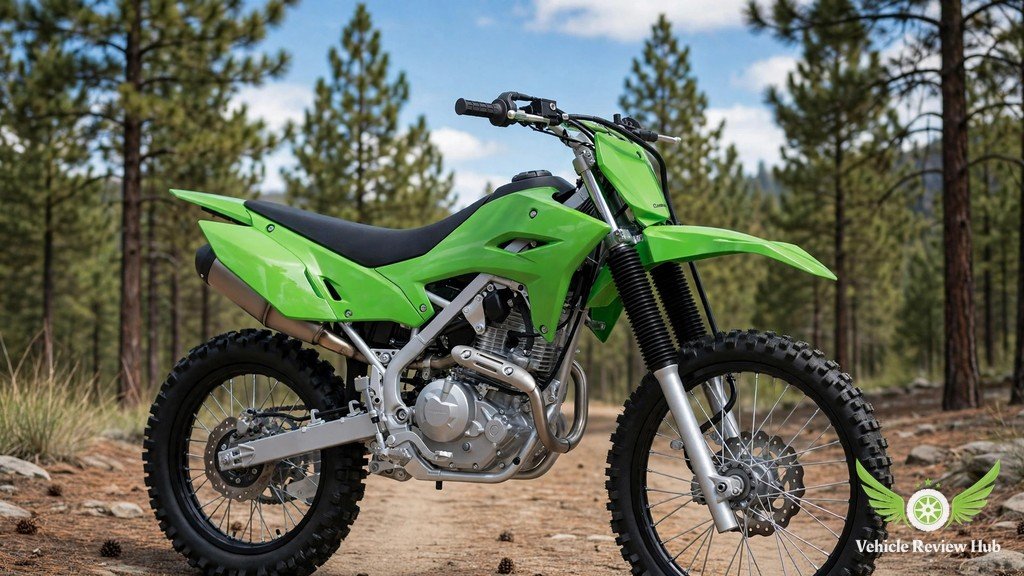
No S Badging Anywhere on the Bike
There is no “S” anywhere on the S. Ultimate Motorcycling’s back-to-back test said exactly that, and it is the most useful identification tip in this Kawasaki KLX230R S review: the taller R leans more on its kickstand. Identification is a practical problem this Kawasaki KLX230R S review flags for used buyers. The shared parts run deep: the clutch perch carries a mirror mount and the fork legs carry ABS sensor tabs and reflector tabs, even though the S has no mirrors and no ABS, because the platform shares parts with the street bikes. Testers noticed the tabs, but they are the price of a shared platform.
Weight Identical: 262.4 Pounds
The S weighs exactly what the R weighs: 262.4 pounds at the curb in the current generation, 264.5 pounds for the 50-state model, and 253.6 pounds for both bikes in the first generation. Lowering the bike added no weight, because the change is inside the suspension rather than in the frame or the wheels. Identical weight is one of the quieter findings of this Kawasaki KLX230R S review. That matters against the street bikes, which carry roughly 29 pounds of lights, mirrors, plate bracket and battery that the off-road bikes do not. The table below puts the S against its standard twin.
| Item | KLX230R S (2025+) | KLX230R (2025+) |
|---|---|---|
| Engine | 233cc air-cooled single, DFI | 233cc air-cooled single, DFI |
| Gears | 6-speed | 6-speed |
| Seat height | 34.4 in | 35.6 in |
| Ground clearance | 10.6 in | 11.4 in |
| Travel, front / rear | 8.7 in / 8.5 in | 9.8 in / 9.8 in |
| Wheelbase | 53.3 in | 54.1 in |
| Rake / trail | 24.6 deg / 3.9 in | 25.4 deg / 4.2 in |
| Curb weight | 262.4 lb | 262.4 lb |
| Fuel tank | 2.0 gal steel | 2.0 gal steel |
| Brakes | 240 mm / 220 mm petal discs, no ABS | 240 mm / 220 mm petal discs, no ABS |
| Road legal | No — off-road only | No — off-road only |
| Delivered price (2027) | $5,434 | $5,434 |
Notes: the gen-2 R clears 11.4 in, not 11.8 in, which was the gen-1 figure. Rear travel for the S is printed as 8.5 in from the official Canadian 2026 S spec sheet (217 mm), the same adoption as the KLX230R coverage in this Kawasaki KLX230R S review; some US sheets print 8.8 in for the rear. Both bikes weigh 262.4 lb and cost $5,434 delivered for 2027 — the only differences are fit, travel, clearance and geometry.
Kawasaki KLX230R S Riding Experience and Comfort
The riding experience is where the S earns its name, and this Kawasaki KLX230R S review gives the testers the last word. Ultimate Motorcycling ran the only direct back-to-back test of the two bikes in December 2021, with a 115-pound tester who has a 30.5-inch inseam, and she rode faster on the S. The rider triangle is identical, so the difference is in the head, not the hands: when both feet reach the ground, a rider commits sooner and brakes later. The same test found the S quicker steering, “like a skateboard on smoother single-track”, thanks to the shorter wheelbase and the steeper rake. Feel, not figures, is what this Kawasaki KLX230R S review weighs most in the riding section. The same tester found the same thing on the gen-2 bike in 2025.
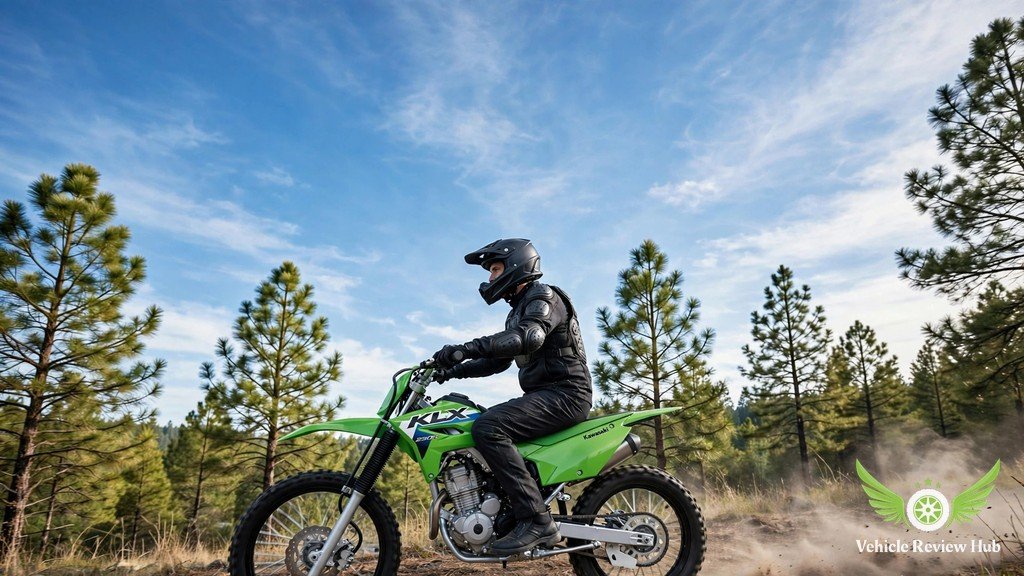
Seat 34.4 Inches After a Second Drop
The current seat sits at 34.4 inches, after a second drop in 2025. The first drop came in 2021, when the S arrived with a 35.4-inch seat against the standard R’s 36.4, and the second came with the 2025 update, from 35.4 to 34.4. The seat is thicker and wider since 2025, which makes the lower number feel lower than it reads. For a rider with a 30-inch inseam, 34.4 inches is still tall, but both feet can graze the ground. Motorcycle.com’s 2025 tester, who is 5 feet 7 inches with a 30-inch inseam and felt at home on the standard R at 35.6 inches, dissented: the S “doesn’t offer a significant reduction in height” for him. The seat is the question this Kawasaki KLX230R S review was written to answer, and a test sit answers it in a minute; a spec sheet cannot.
Gen-1 Seat Was 35.4 Inches
The first-generation S, sold from 2021 to 2024, had a 35.4-inch seat against the gen-1 R’s 36.4 — a one-inch drop, where the current generation drops 1.2 inches from the R’s 35.6. A used S is a different proposition, and this Kawasaki KLX230R S review treats it as one: a slightly taller, slightly lighter bike than the current one, with a plastic 1.7-gallon tank instead of the steel 2.0-gallon tank, and without the counterbalancer. The 115-pound tester never bottomed the gen-1 S and called trading the inch of travel and clearance worth it. The 170-pound tester bottomed the S constantly, especially the rear on G-outs, and even first-gear whoops bottomed the suspension — for him, the R “felt more like a real dirt bike”. The lesson is weight-dependent: under about 130 pounds the S is the better bike, and over about 160 the R’s extra travel is the safer choice.
| Bike | Seat height | Weight | Fuel system | Delivered |
|---|---|---|---|---|
| Kawasaki KLX230R S (2027) | 34.4 in | 262.4 lb curb | Fuel-injected | $5,434 |
| Kawasaki KLX230R (2027) | 35.6 in | 262.4 lb curb | Fuel-injected | $5,434 |
| Yamaha TT-R230 | 34.3 in | 251 lb wet | Carburetted | $5,039 |
| Honda CRF300F (2026) | Not verified | Not verified | Fuel-injected | $5,299 |
| Kawasaki KLX230 S street (2026) | 33.3 in | 291.1 lb curb | Fuel-injected | $5,634 |
Notes: the Yamaha TT-R230 seat is 0.1 in lower than the S at 34.3 in, but it is carburetted, so it does not count in the injected class. The Honda CRF300F seat height and weight were not verified from a retrievable Honda source, so no figures are printed for them in this Kawasaki KLX230R S review. The street KLX230 S is a plated dual-sport, not a trail bike in this group. The Kawasaki KLX230R review covers the standard-height twin in full, and the Kawasaki KLX230R performance guide carries the dyno figures behind the numbers here.
Kawasaki KLX230R S Review: Pros, Cons and Verdict
The verdict of this Kawasaki KLX230R S review is that the S is the right KLX230R for a lighter or shorter rider, and the wrong one for a heavier rider on rough ground. It costs the same as the standard R, weighs the same, and gives up an inch of travel and 0.8 inches of clearance to put both feet closer to the dirt. That split is the whole bike in one sentence. That split is the verdict this Kawasaki KLX230R S review reaches. The honest weaknesses — the soft fork, the flimsy front tyre, the erratic idle and the missing dash — are all shared with the standard R.
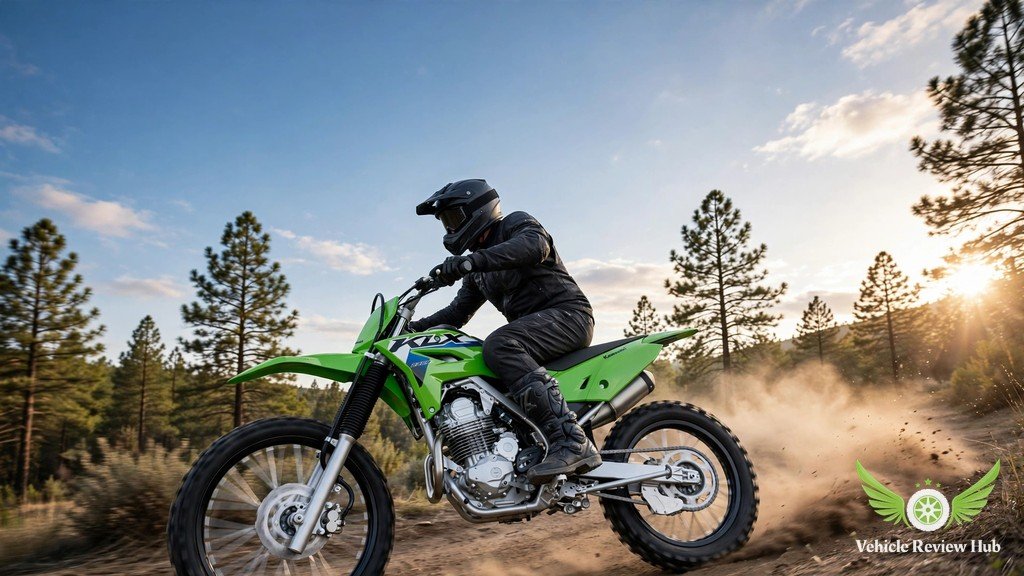
Main Advantages and Limitations of the Kawasaki KLX230R S
The advantages start with the seat and end with the price. At 34.4 inches, the S is the lowest fuel-injected trail bike in its group, and it costs nothing extra over the standard R. The counterbalanced gen-2 engine is smoother, the steel tank holds 2.0 gallons, and the six-speed gearbox has a walking-speed first gear that suits a beginner. The limitations are the other side of the same coin: 8.7 inches of front travel and 8.5 at the rear, 10.6 inches of clearance, and a soft 37 mm fork that a heavier rider will bottom. Testers noted a high, erratic idle and a tip-over sensor that needs a key cycle after a fall. There is no dyno figure for the S, no tested top speed and no tested MPG, and this Kawasaki KLX230R S review prints none of those. The table below is the summary this Kawasaki KLX230R S review stands behind. Ultimate Motorcycling’s 2025 review of the updated R and S together reaches the same split, and Cycle News’ 2025 review agrees the S is quicker in the woods but bottoms sooner.
| Advantages | Limitations |
|---|---|
| Lowest fuel-injected trail-bike seat in its group at 34.4 in | Less travel than the R: 8.7 in front / 8.5 in rear |
| Same $4,999 as the standard R — the drop costs nothing | Less clearance than the R: 10.6 in vs 11.4 in |
| Weight identical to the R at 262.4 lb | Soft 37 mm non-adjustable fork; heavier riders bottom it |
| Counterbalanced gen-2 engine, steel 2.0 gal tank | Front Dunlop D952 tyre is flimsy and not confidence-inspiring |
| Six speeds, electric start, fuel injection, no choke | High, erratic idle hurts engine braking on downhills |
| No recall names the S; 22V-397 covers street ABS bikes only | No dash, no speedometer, no odometer, no hour meter |
| Quicker steering on tight single-track than the R | Key cycle needed after a fall; battery drains if left powered |
Notes: no dyno figure, no tested top speed and no tested MPG exist for the S, so none is printed in this Kawasaki KLX230R S review. The 17.3 hp and 17.9 hp figures in circulation are standard-R gen-1 dyno results, never the S’s. The 22V-397 recall names the 2020–2022 KLX230 ABS and KLX230 S ABS street bikes only, 1,923 units, and no NHTSA result is stated here because the recalls API could not be reached during research. The Kawasaki KLX230R S performance guide carries the back-to-back test and the speed and mileage evidence in full, and the Kawasaki KLX230R S reliability guide covers the recall picture, the key-cycle rule and the service schedule.
6 Month Limited Warranty
The S carries the same 6 Month Limited warranty as the standard R, confirmed on the official spec sheets for both generations. Warranty is a footnote in this Kawasaki KLX230R S review, not a deciding factor. A buyer of a used S should ask for the owner’s own service records, since there is no hour meter. The step down in the family is the Kawasaki KLX140R L review, and the Indonesian carburetted line is covered by the Kawasaki KLX150 review. Buy the S if the seat is the problem and the trail is the point. Buy the R if the ground is rough and the rider is heavy. Either way, the price is the same, and this Kawasaki KLX230R S review ends where it started: the lower seat is free, and the travel is the payment.
Kawasaki KLX230R S Review Frequently Asked Questions
These answers cover the questions buyers ask first about the low-seat trail bike in this Kawasaki KLX230R S review — what it is, what it costs, and how it differs from the standard KLX230R.
What is the Kawasaki KLX230R S?
The KLX230R S is the off-road-only, low-seat trim of the KLX230R. It is not street legal: it has no headlight, no mirrors, no turn signals and no plate, though it is green-sticker legal in California. Kawasaki launched it in 2021, not 2025 — the 2025 date in some coverage is wrong — and it is built in Indonesia with a 6 Month Limited warranty.
How much does the KLX230R S cost in the USA?
$4,999. The S has carried that MSRP since the 2025 price cut, and the 2027 bike costs the same $4,999 with a $435 destination charge, for $5,434 delivered. The price matches the standard R in every year with a primary figure: $4,399 in 2021, $4,599 in 2022, $4,749 in 2023 and $4,999 from 2025. No primary figure exists for 2024, so this Kawasaki KLX230R S review prints no 2024 price.
How is the S different from the standard KLX230R?
Only in fit. The gen-2 S seat is 34.4 inches against 35.6 for the R, ground clearance is 10.6 inches against 11.4, travel is 8.7 inches front and 8.5 rear against 9.8 front and rear, and the wheelbase is 53.3 inches against 54.1. The US spec sheets print 8.8 inches for the S rear, and the review footnotes that split. The engine, the weight at 262.4 pounds and the $4,999 price are identical — the lower seat costs nothing extra and is paid for in travel and clearance, as this Kawasaki KLX230R S review shows.
How was the seat lowered?
By internals, not by a lowering link. Ultimate Motorcycling’s 2021 comparison records that the suspension externals are identical, so the shorter travel comes from different internals and settings. The seat fell twice: from 36.4 inches on the standard R to 35.4 on the gen-1 S in 2021, then to 34.4 on the gen-2 S in 2025. There is no “S” badging anywhere on the bike — the only visual tell is that the taller R leans more on its kickstand.
What engine does the KLX230R S have?
A 233cc air-cooled SOHC 2-valve single, 67.0 by 66.0 mm, 9.4:1 compression, with digital fuel injection through a 32 mm Keihin throttle body, a six-speed gearbox and electric start only — there is no kick starter. The gen-2 engine, from 2025, adds a counterbalancer, a smaller 33 mm intake valve, a narrowed intake port and a reworked ECU. Never trust a listing that says 223cc: that is a misprint in some Kawasaki marketing and dealer copy. Kawasaki USA publishes no horsepower figure for the S, so this Kawasaki KLX230R S review prints the only published S figure instead: the Canadian sheet’s 13.8 kW, or 19 PS, at 8,000 rpm, which is 18.7 hp, never 19 hp.
Is the KLX230R S still made, and what colours does it come in?
Yes. The 2027 bike covered in this Kawasaki KLX230R S review is current at $4,999, in Lime Green and Bright White; the 2025 bike came in Lime Green and Battle Gray. It carries a 6 Month Limited warranty, and the gen-2 bike has a 2.0-gallon steel tank against the gen-1 bike’s 1.7-gallon plastic tank.