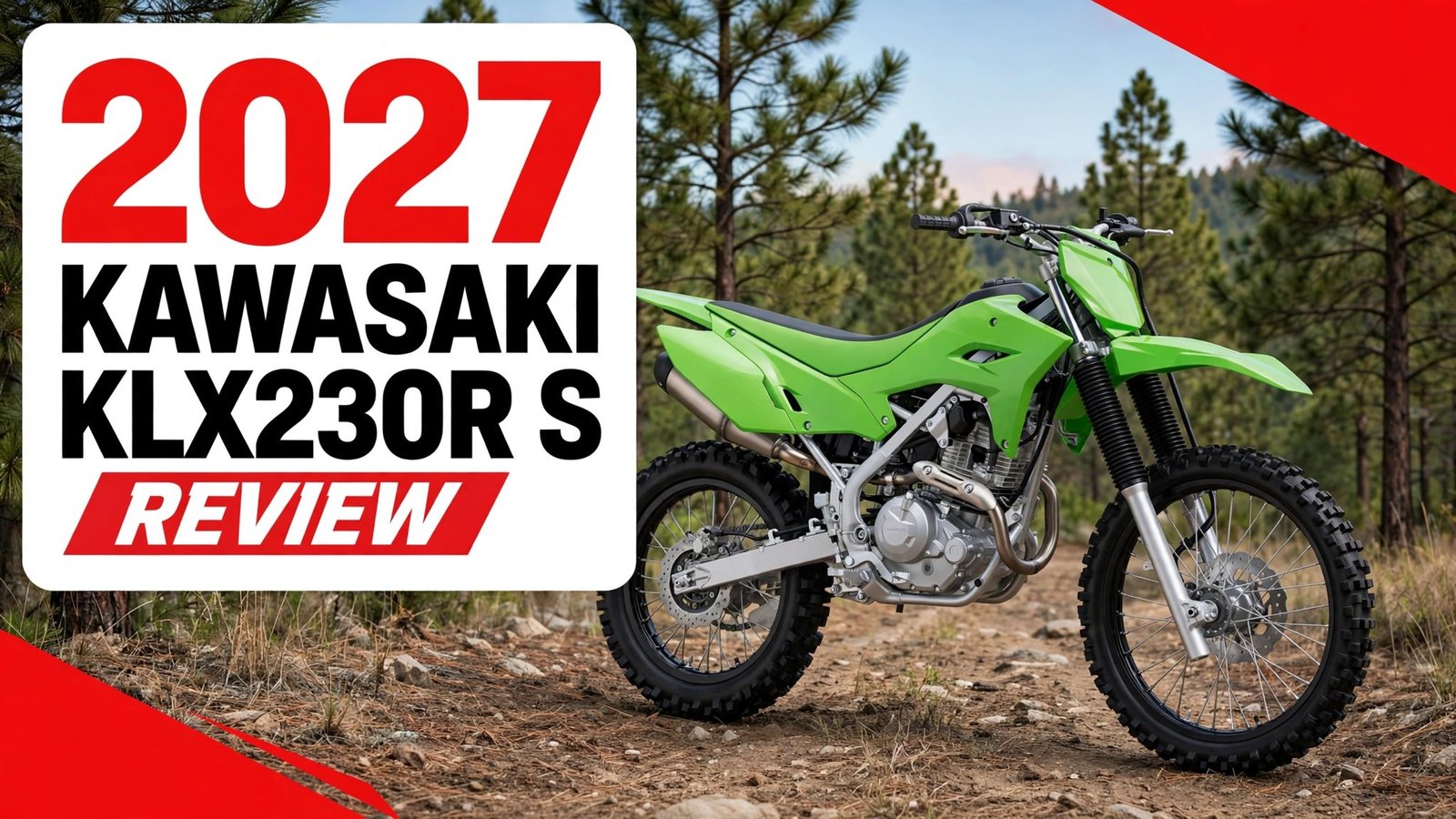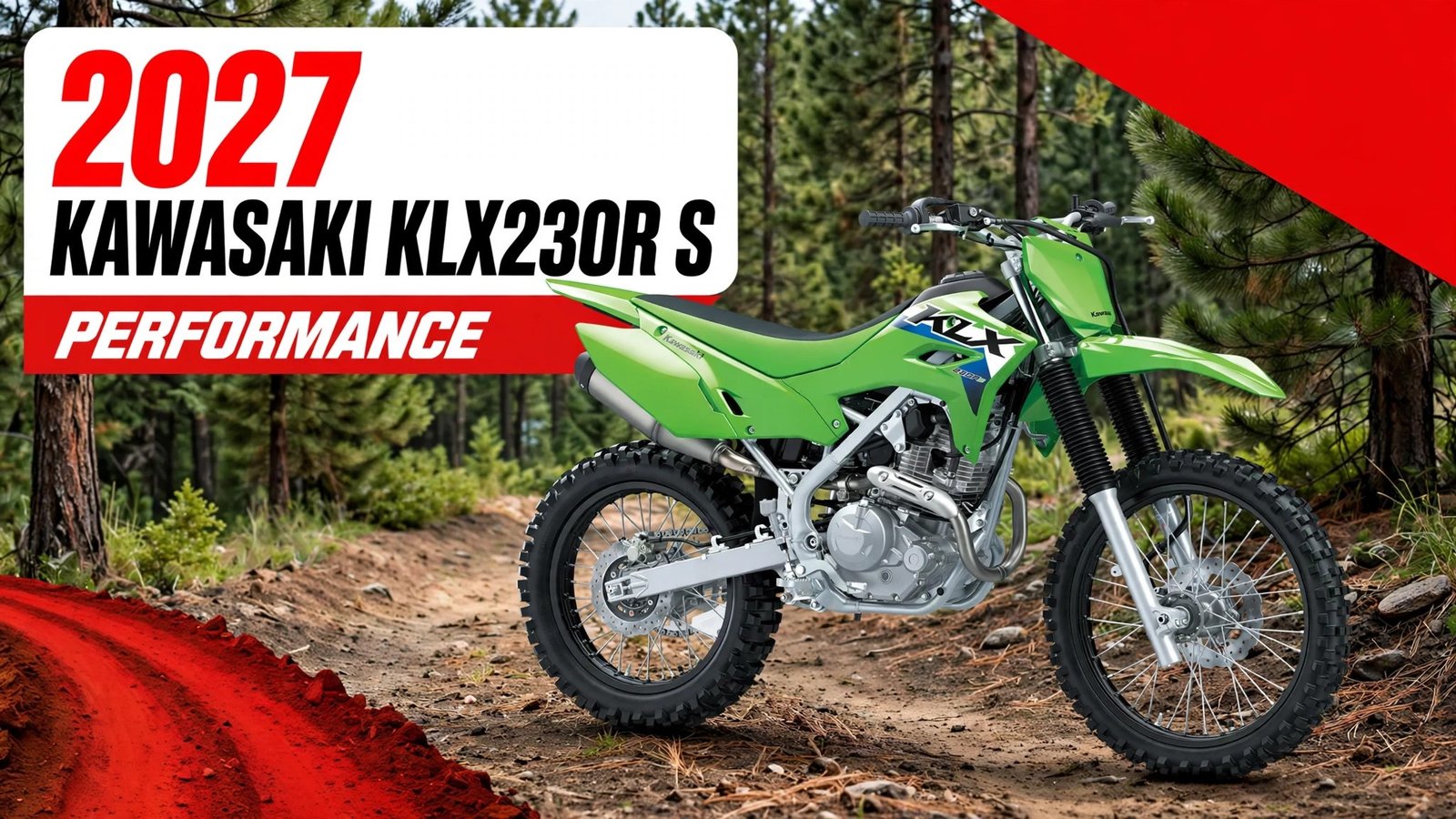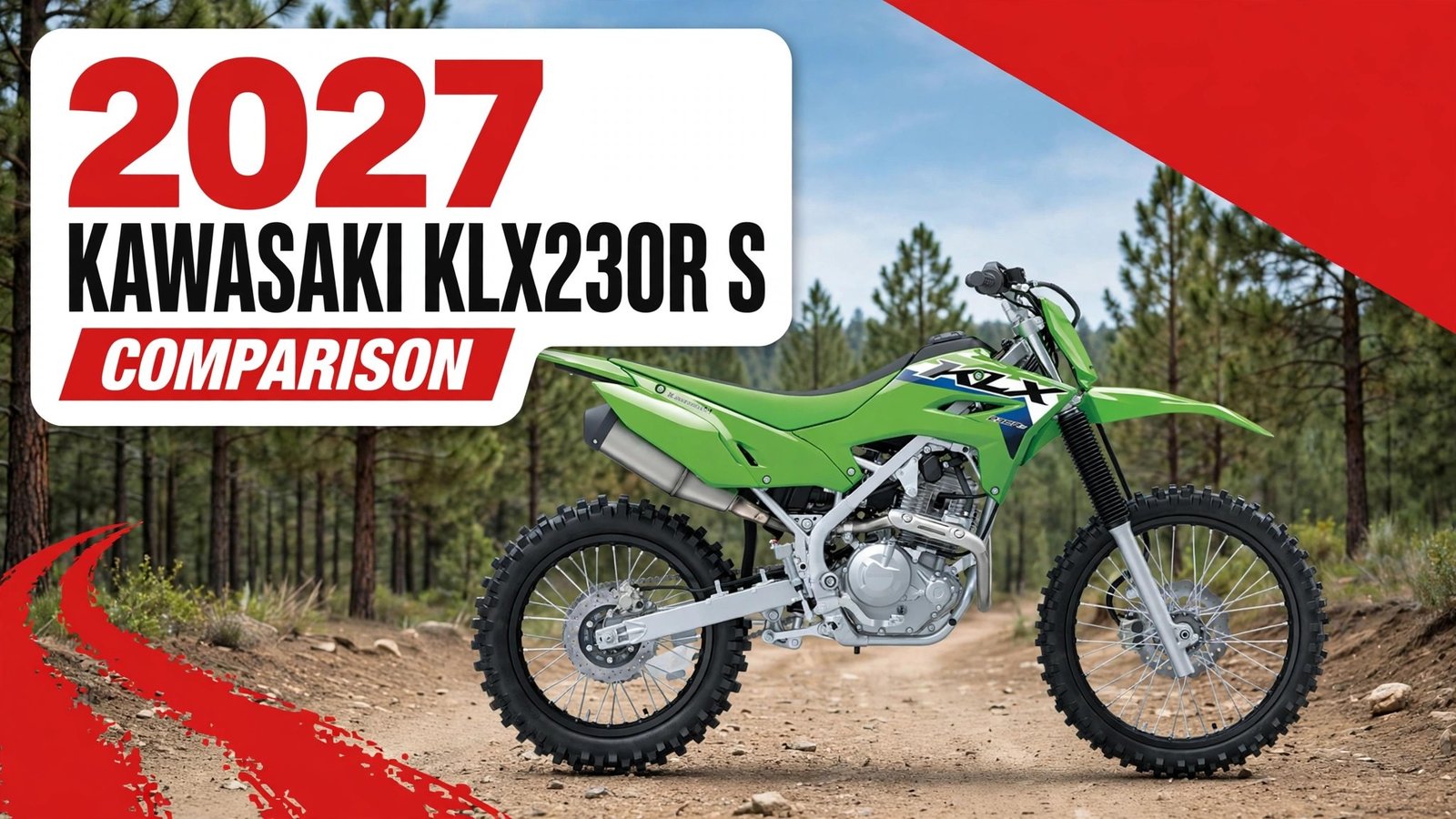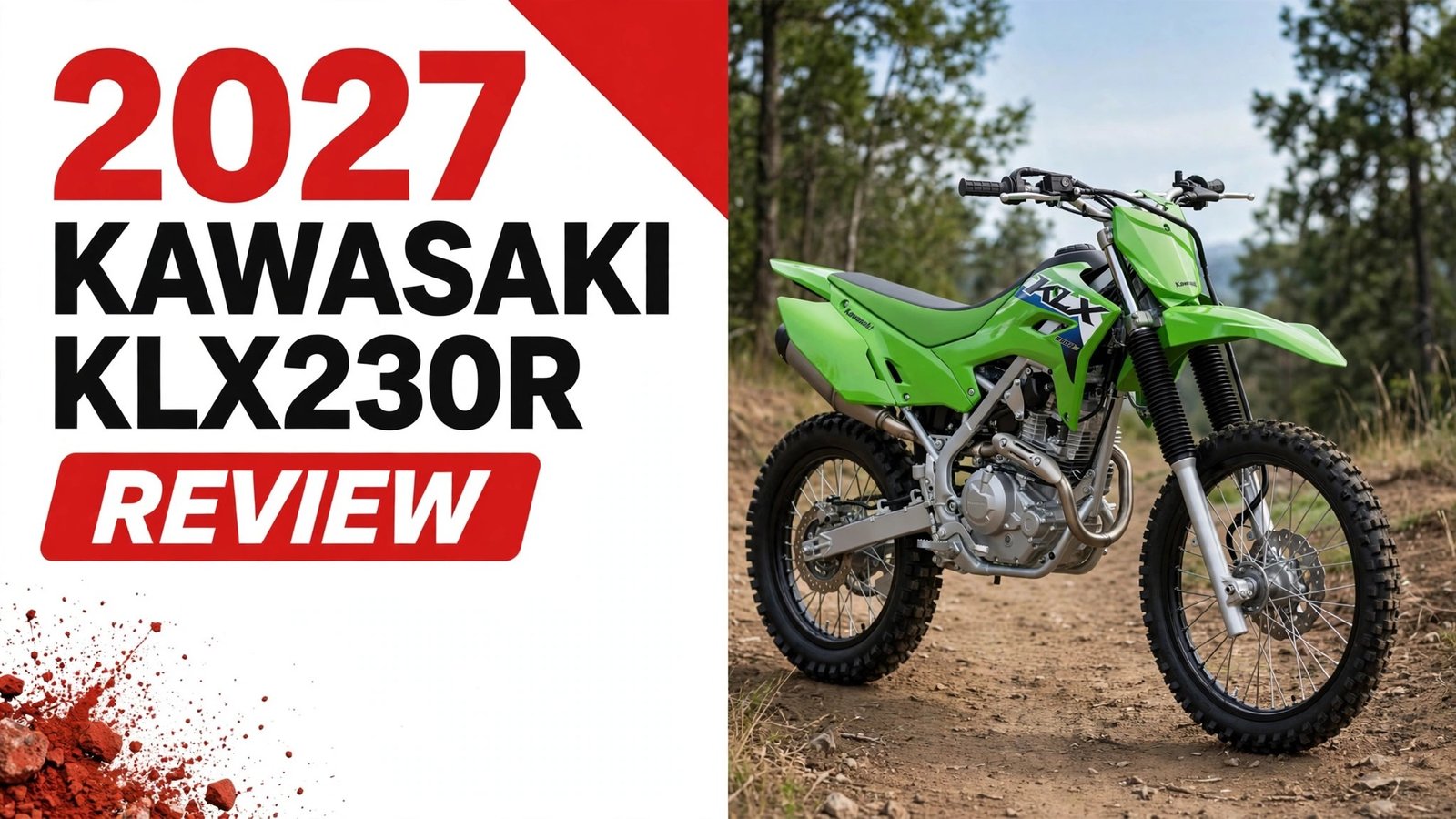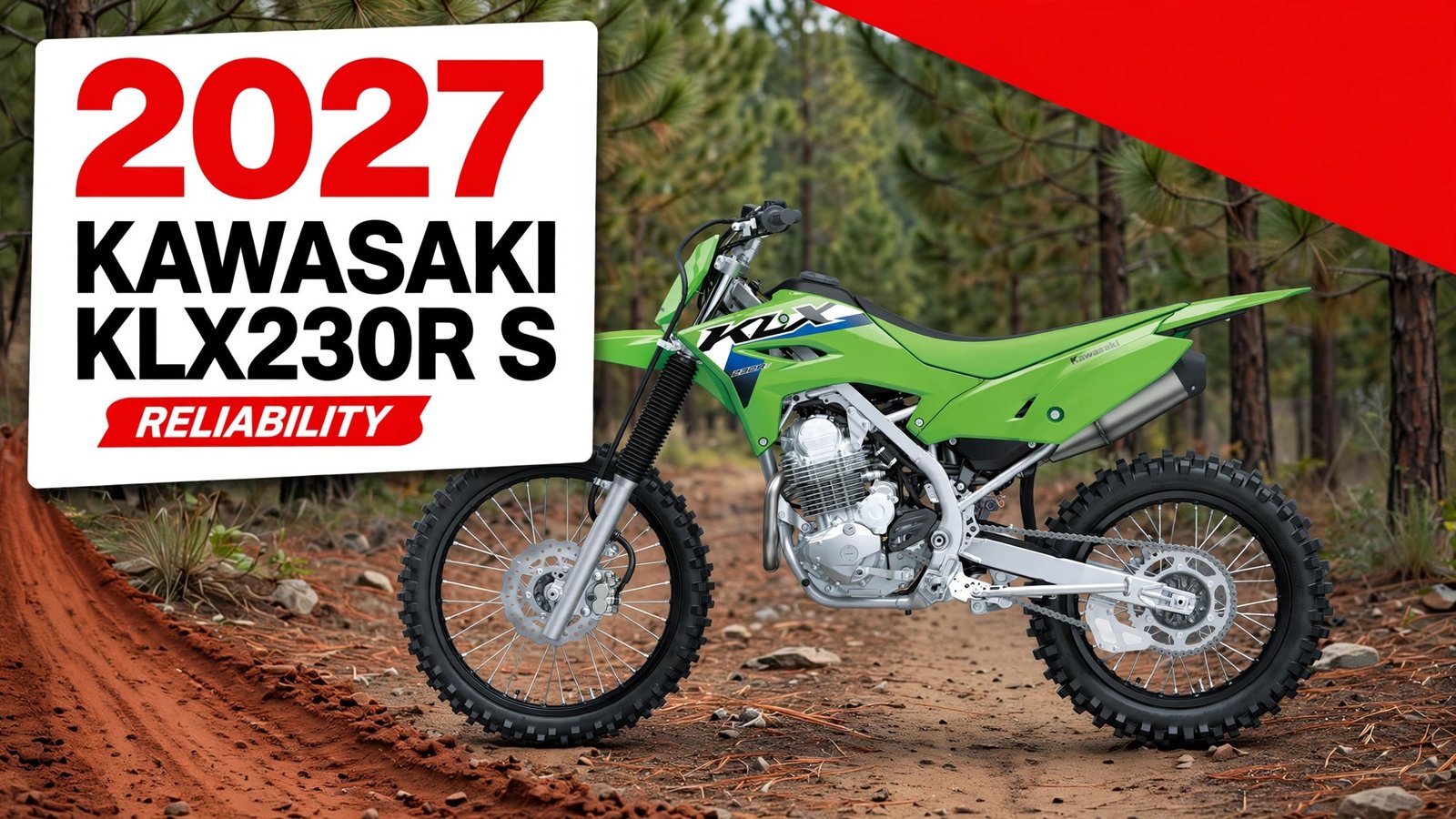
The Kawasaki KLX230R S is a simple bike to keep alive, and that is the whole point of this Kawasaki KLX230R S reliability guide. It is an air-cooled single with fuel injection, a six-speed gearbox and no dash, no ABS and no electronics beyond a tip-over sensor and a power button, so there is almost nothing on it that can fail expensively. What this Kawasaki KLX230R S reliability guide does is sort what is known from what is guessed: no recall names the S, the factory service chart could not be read, and the owner evidence is thin. The bike’s reliability story is honest precisely because it is short.
Kawasaki KLX230R S Reliability Overview
Reliability starts with what the bike does not have. The S carries the same 233cc air-cooled single as the standard R, and this Kawasaki KLX230R S reliability guide treats that shared engine as the foundation of the ownership case. There is no liquid cooling to leak, no radiator to bend and no ABS pump to service. The lower seat is the trade: on gen-2 bikes the S seat is 34.4 inches against the standard R’s 35.6, and clearance is 10.6 inches against the R’s 11.4; gen-1 bikes were 35.4 inches against the R’s 36.4, and this Kawasaki KLX230R S reliability guide records that trade wherever it affects wear.
No Hour Meter: Hours Are Self-Tracked
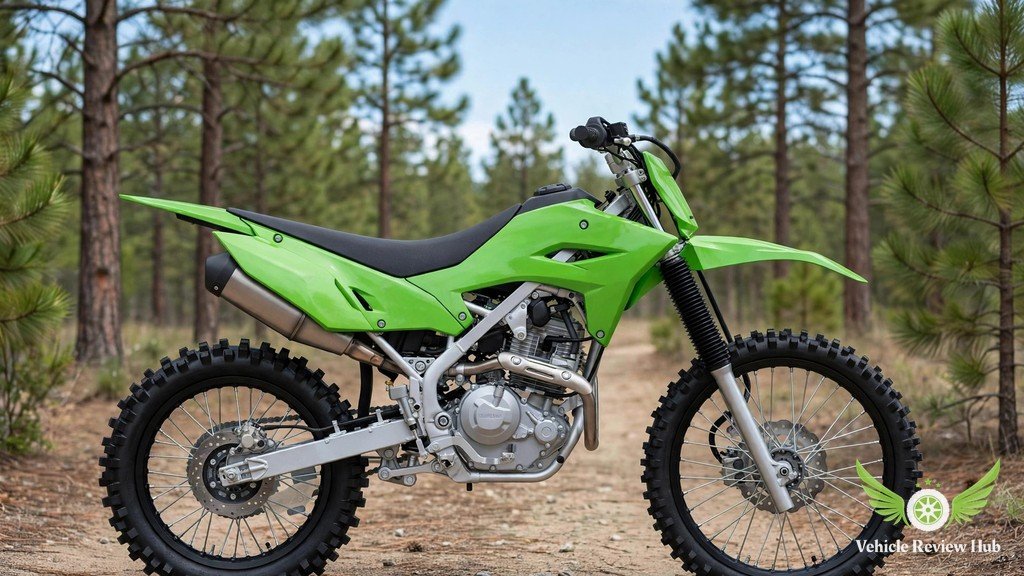
The S has no dash at all, only indicator lamps for power, low fuel and fuel-injection warning. There is no speedometer, no odometer and no hour meter, so service intervals measured in hours must be tracked by the owner, because the bike cannot do it. A used S carries no hour count of its own, so a buyer should ask for the owner’s service records before trusting any claim about how hard the bike has worked. The same applies to the standard R, covered in the Kawasaki KLX230R review. An hour meter is a cheap accessory, and fitting one is the single most useful reliability purchase an S owner can make, which is why this Kawasaki KLX230R S reliability guide recommends it first.
How Hours, Storage and Previous Care Affect Reliability
Hours are only part of the story, and storage matters too: the S still has a steel tank on gen-2 bikes, a battery that drains if the power is left on, and a chain that rusts in a damp shed. Previous care matters most of all on a low-volume trim like this one, where the bikes that reach the used market have often been ridden by exactly the short, light riders the S was built for. This Kawasaki KLX230R S reliability guide treats the pre-purchase inspection as part of reliability, because the cheapest repair is the one the buyer never has to make.
| Reliability point | What is known | Status |
|---|---|---|
| Recall naming the S | None found in any source consulted | Document-search result, not a guarantee |
| Engine | 233cc air-cooled single, shared with the R | Simple, proven layout |
| Cooling | Air-cooled, no coolant to service | One less system to fail |
| Electronics | Indicator lamps only, no dash, no ABS | Almost nothing electronic to fail |
| Hour meter | None fitted | Hours self-tracked by the owner |
| Warranty | 6 Month Limited | Official spec sheets, both generations |
Notes: no recall names the KLX230R S in any source this Kawasaki KLX230R S reliability guide consulted, but that is a document-search result with the caveats in the recalls section, not a guarantee that none will ever appear. The missing hour meter is the one real ownership gap, and it is fixed by fitting one.
Kawasaki KLX230R S Common Problems and Wear Items
The honest answer to “what goes wrong on the S” is that very little has been recorded, and this Kawasaki KLX230R S reliability guide invents no weak point where none has been found. The bike is a low-volume trim, and no long-term owner survey, no common-failure pattern and no forum consensus on a weak point turned up in the research. What exists instead is a short list of tester observations from the 2021 reviews, one recall that names the street bikes and not the S, and the wear items any trail bike eats through. That thinness is itself a reliability signal.
Street Recall Excludes the R Family
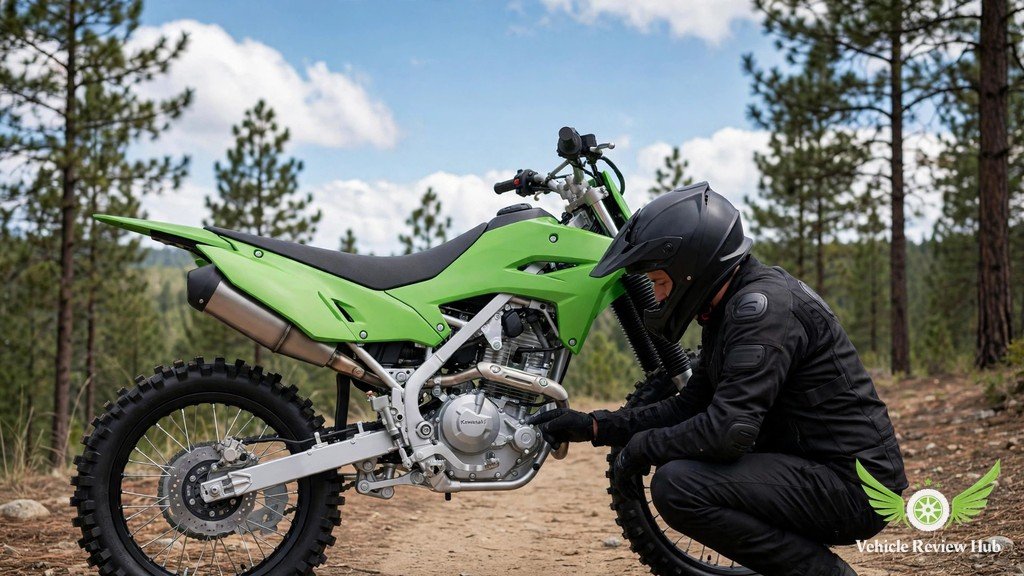
The only recall in the KLX230 family is 22V-397, issued June 7, 2022, and it does not name the R S. The NHTSA Part 573 report names only the 2020 to 2022 KLX230 ABS and KLX230 S ABS street bikes, 1,923 units, fitted with the wrong front brake rotor, smaller than specified and in breach of the federal braking standard, with a free rotor and pad replacement under campaign MC22-04 and owner letters sent June 23, 2022. The R S is off-road-only and carries no ABS, so this Kawasaki KLX230R S reliability guide states plainly that the campaign excludes it. Two other campaigns sometimes get attached to the family in search results, and both belong to the W230, a different bike — neither names the KLX230R S.
Cycle the Key After a Fall
The one behaviour every S owner will meet sooner or later is the tip-over rule, and this Kawasaki KLX230R S reliability guide puts it first because every rider meets it. Ultimate Motorcycling’s 2021 S review records it in plain words: if you fall, switch the bike off and back on before restarting, because if you do not, it will not fire up. The same behaviour applies to the standard R, which shares the engine and electronics, and the Ultimate Motorcycling S review is the source for the rule. A rider who does not know it will stand on a trail kicking at a bike that is working as designed.
| Campaign or issue | Bikes named | Does it touch the R S? |
|---|---|---|
| 22V-397 (June 2022), wrong front brake rotor, 1,923 units, MC22-04 | 2020–2022 KLX230 ABS and KLX230 S ABS street bikes | No — off-road R S not named |
| 25V363 (June 2025), battery ground stall, 482 units, MC25-06 | 2025 W230 ABS | No — different bike |
| 26V387 (June 2026), turn-signal bulbs, 840 units, MC26-08 | 2025–2026 W230 | No — different bike |
| Tip-over sensor, key cycle after a fall | R S and R, shared electronics | Yes — normal behaviour, not a defect |
| High, erratic idle | R S and R, tester-noted | Yes — observation, no bulletin, no recall |
| Front D952 tyre, flimsy feel | R S and R, tester-noted | Yes — wear item, replaceable |
Notes: the recall table in this Kawasaki KLX230R S reliability guide rests on the NHTSA Part 573 report and the W230 campaign documents read directly.
Kawasaki KLX230R S Maintenance Schedule and Servicing
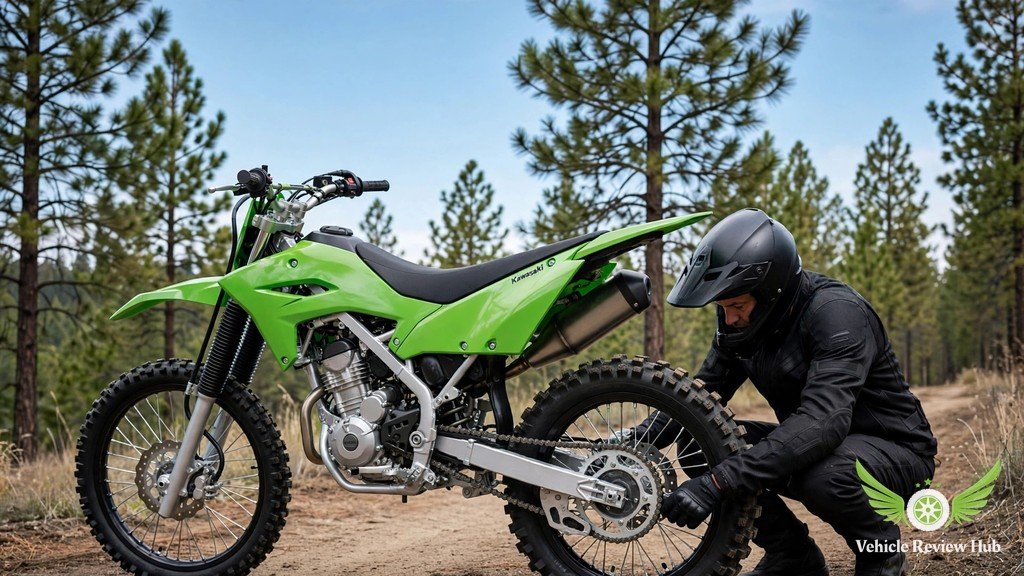
This Kawasaki KLX230R S reliability guide has to be blunt: the factory service chart could not be read, so no factory interval is printed as fact anywhere in this blog. The owner’s manual was not retrieved, and no factory service chart for the KLX230R S turned up in the research. That is not a gap a guess can fill, and no two retailer sources agree on hour intervals for this bike either. What follows is the honest version of a service section: what is known, what is shared-engine and labelled as such, and what the owner should track anyway, which is what this Kawasaki KLX230R S reliability guide sets out below.
Factory Chart Still Unverified
The factory chart stays unverified, and this Kawasaki KLX230R S reliability guide prints that sentence rather than a schedule. The KLX230R service manual is part number 99830-0001, but the manual itself was not retrieved, so this Kawasaki KLX230R S reliability guide could not read its interval table. No interval for oil changes, valve checks, air-filter service or chain care is printed here as the factory schedule. A buyer who wants the factory chart should ask the selling dealer for the owner’s manual and the service manual by part number before signing, rather than trusting a forum post or a retailer page. The Ultimate Motorcycling back-to-back test is a riding test, not a service document, and it carries no interval figures.
Retailer Figures Conflict Again
Retailer hour figures conflict, and this Kawasaki KLX230R S reliability guide labels them retailer-sourced, never factory. No two retailer sources agree on the hour intervals for the S. The figures that do circulate are hour-based, and the owner has no hour meter to measure against. One figure carried here is labelled, not asserted as factory: the oil capacity of about 1.1 litres, a shared-engine figure that this Kawasaki KLX230R S reliability guide labels as such, not from a retrieved S service chart. The air-cooled layout removes one job entirely, since there is no coolant to change. Chain slack is not printed here either, because no slack figure was verified for the 230R S, and the smaller KLX140 family’s figure must never be carried across.
| Service item | What this guide prints | Source status |
|---|---|---|
| Factory service chart | Not printed — chart not retrieved | Unverified |
| Oil-change interval | No factory interval printed | Unverified — track hours yourself |
| Oil capacity | About 1.1 L | Shared-engine figure, labelled |
| Valve-check interval | No interval or clearance printed | Unverified — no figures found |
| Retailer hour figures | Conflict between sources | Retailer-sourced, never factory |
| Coolant service | None — air-cooled engine | Confirmed by design |
| Chain slack figure | Not printed | Not verified for the 230R S |
Notes: no factory interval is printed as fact in this Kawasaki KLX230R S reliability guide, because the factory service chart could not be read and the owner’s manual was not retrieved. Retailer hour figures conflict and are labelled retailer-sourced. The 1.1-litre oil capacity is a shared-engine figure, not a number from a retrieved S service chart.
Kawasaki KLX230R S Tires, Brakes and Suspension Maintenance
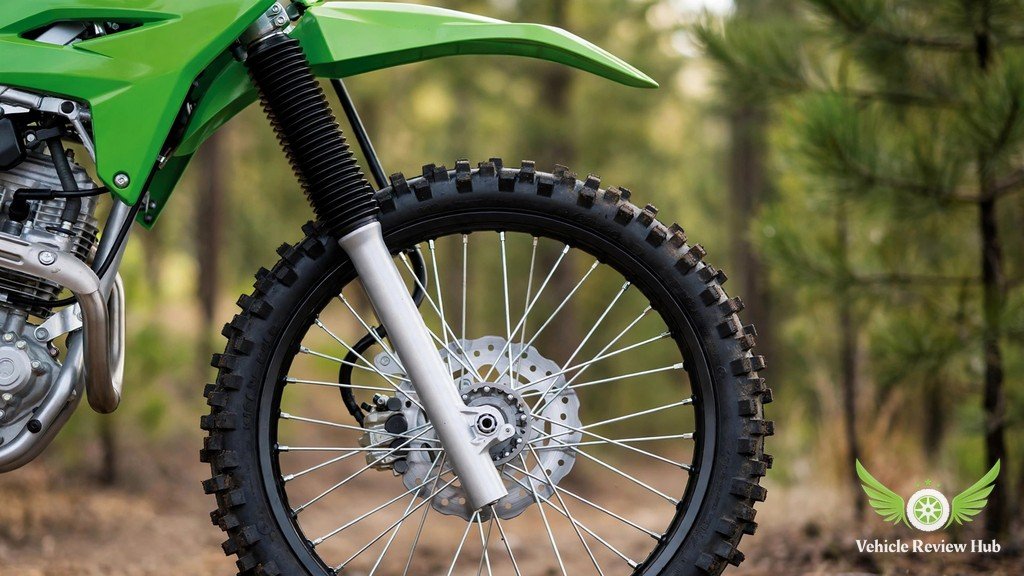
Tyres, brakes and suspension are where the S’s reliability story meets the trail. The hardware is simple: Dunlop D952 tyres, 240 mm petal front and 220 mm petal rear discs with Nissin calipers and no ABS, and a soft 37 mm non-adjustable fork with a shock whose preload became adjustable in 2025. Nothing here needs a dealer computer, and this Kawasaki KLX230R S reliability guide lists the checks in the order a buyer should make them. Everything here needs a regular look.
Screw Valves Proven by Parts Diagram
The heading says screw valves proven by parts diagram, and this Kawasaki KLX230R S reliability guide keeps it verbatim while being honest about the proof behind it. The engine is a single-overhead-cam two-valve single with rocker-arm screw and locknut adjusters, the same head as the standard R, shared-engine and owner-sourced. The parts diagram itself was not located in this pass, so no specific diagram is cited here and no valve-clearance figure is printed for the S. Screw adjusters are good news for an owner, and this Kawasaki KLX230R S reliability guide counts them as a plus: they are adjusted with hand tools and a feeler gauge, with no shims to buy and no dealer visit forced by the design. What the owner needs is the clearance figure from the service manual, and that figure is the one thing this section cannot supply. The smaller KLX140 family’s clearances belong to the 144cc line and must never be carried across to the 233cc engine. Until the S service manual is in hand, ask the dealer for the clearance figures at the first valve check.
Tire, Brake and Suspension Checks That Matter
The checks that matter start with the front tyre: Ultimate Motorcycling’s 2021 S review called the stock D952 front flimsy and not confidence-inspiring, and recommended Dunlop Geomax MX53s, with braking compromised by rubber rather than discs. A buyer should check the front tyre first on any used S, because a worn D952 is the cheapest fix on the bike and the one that changes how it feels most, which is why this Kawasaki KLX230R S reliability guide starts the checks there. Brakes are next: the 240 mm petal front disc and the 220 mm petal rear disc need pad checks and a look at the discs for scoring, and there is no ABS to mask a worn pad. Suspension is where the S’s trade shows: 8.7 inches of front travel and 8.5 at the rear from the official Canadian 2026 S spec sheet, against the R’s 9.8 at both ends, with some US sheets printing 8.8 for the rear, footnoted here rather than printed as primary in this Kawasaki KLX230R S reliability guide. The S also gives up 0.8 inches of clearance against the gen-2 R, 10.6 inches against 11.4, which is the other half of the low-seat trade. The 170-pound tester in the 2021 back-to-back test bottomed the S constantly, especially the rear on G-outs, while the 115-pound tester never bottomed it at all, so a heavier rider should check sag before buying and set the shock preload to suit. The Motorcycle.com 2025 review carries the dissenting view that the drop barely matters for a rider at home on the standard R, and this Kawasaki KLX230R S reliability guide prints it alongside the bottoming report.
| Check | What to look for | Why it matters on the S |
|---|---|---|
| Front tyre | D952 wear, squaring, age; Geomax MX53s as replacement | Tester-called flimsy; braking compromised by rubber |
| Rear tyre | D952 100/100-18 wear and cuts | Drive grip on loose trail surfaces |
| Brake pads and discs | Pad thickness, disc scoring, 240/220 mm petal discs | No ABS to mask worn pads |
| Fork seals | Leaks on the 37 mm fork legs | Soft non-adjustable fork shows wear early |
| Shock preload and sag | Preload set for rider weight; bottoming on G-outs | 170-lb tester bottomed constantly; 115-lb never did |
| Chain and sprockets | Rust, stretch, sprocket hooks | No slack figure verified — check by feel and wear |
| Valve adjusters | Screw and locknut, hand-tool job | No clearance figure verified — get it from the dealer |
Notes: rear travel for the S is printed as 8.5 inches from the official Canadian 2026 S spec sheet, and some US spec sheets print 8.8 inches for the rear, footnoted here rather than printed as the primary figure. No valve-clearance figure is printed in this Kawasaki KLX230R S reliability guide, because none was verified for the S, and the parts diagram itself was not located, so no specific diagram is cited.
Kawasaki KLX230R S Maintenance and Ownership Costs
Ownership costs on the S are low in the ways that matter and unknown in the ways this Kawasaki KLX230R S reliability guide will not paper over. The bike costs $4,999 in every year where a primary price exists, and $5,434 delivered for 2027 with the $435 destination charge, the same as the R. That is the purchase price, and it is the only dollar figure this Kawasaki KLX230R S reliability guide can state with confidence. No running-cost dollar figure, resale percentage or used-price band is printed here, because none was verified.
Fuel, Routine Servicing, Tires and Replacement Parts
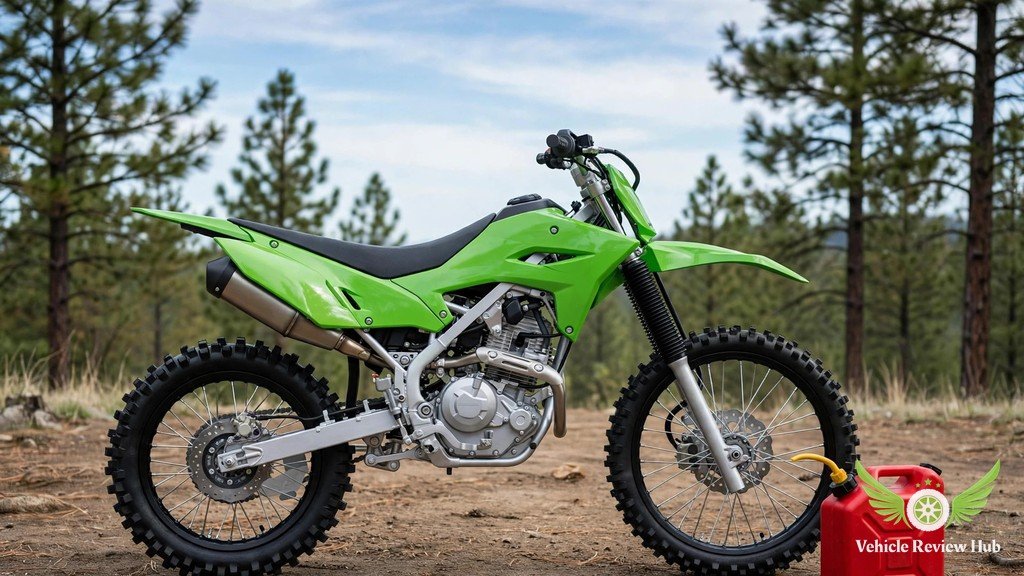
Fuel is the smallest cost: regular unleaded, with no tested MPG to turn into a tank range. Routine servicing is oil, an air filter, a chain and brake pads, all hand-tool jobs, and the oil capacity is about 1.1 litres on the shared-engine figure, which this Kawasaki KLX230R S reliability guide labels as such. Tyres are the one wear item with a tester verdict behind it: the stock D952 front is the first thing to replace, and the recommended Dunlop Geomax MX53s is the named upgrade. Replacement parts are shared with the standard R almost everywhere except the suspension internals. The Cycle News 2025 review agrees the S is quicker in the woods but bottoms sooner, and a heavier rider wears the rear suspension and the chain harder than a light one. The Kawasaki KLX230R S performance guide carries the back-to-back test and the speed and mileage evidence in full.
Battery Drains If Left Powered
Ultimate Motorcycling’s 2021 S review records it plainly: if you do not remember to push the power button to shut the KLX off at the end of the day, it will drain the battery, and it is easy to forget. The S starts by electric start only, with no kick starter as a back-up, so a flat battery is a dead bike until it is charged or jumped. The fix costs nothing: push the button every time, and keep the battery on a maintainer over winter. A buyer of a used S should check that the bike starts cleanly from cold and ask whether the battery has ever been left flat. This Kawasaki KLX230R S reliability guide counts the power-button habit as part of maintenance.
| Cost item | What it costs the owner | Figure status |
|---|---|---|
| Purchase, 2027 | $4,999 MSRP + $435 destination = $5,434 delivered | Verified, same as the R |
| Fuel | Regular unleaded, 2.0 gal steel tank (gen-2) | No tested MPG, no tank range printed |
| Routine servicing | Oil, air filter, chain, brake pads — hand-tool jobs | No running-cost dollar figure printed |
| Tyres | D952 front first to replace; Geomax MX53s named upgrade | Tester recommendation, no price printed |
| Battery | Drains if power left on; maintainer over winter | Tester observation, habit fix costs nothing |
| Resale value | No resale percentage or used-price band printed | Not verified |
Notes: no running-cost dollar figure, no resale percentage and no used-price band is printed in this Kawasaki KLX230R S reliability guide, because none was verified. The 2027 delivered price of $5,434 is the only dollar figure stated with confidence, and the battery habit costs nothing to fix but strands the bike when forgotten.
How to Keep a Kawasaki KLX230R S Reliable
Keeping an S reliable is mostly a matter of doing the simple things on time. The owner who does not will meet the same two quirks every S owner meets, both covered in this Kawasaki KLX230R S reliability guide: a bike that will not fire after a fall until the key is cycled, and a battery that goes flat when the power is left on.

Preventive Maintenance, Records and Regular Inspections
Preventive maintenance on the S starts with the hour meter the bike does not have, and this Kawasaki KLX230R S reliability guide puts it first for that reason. Fit one, write the hours down, and service by hours rather than by memory. Keep records of every oil change, filter clean, chain lube and pad swap. Inspect regularly and in order: tyres, brake pads and discs, fork seals, shock preload for the rider’s weight, the chain, and the battery. The step down in the family is the Kawasaki KLX140R L review, and the Indonesian carburetted line is covered by the Kawasaki KLX150 review.
Owner Evidence Stays Thin
Owner evidence stays thin, and this Kawasaki KLX230R S reliability guide says so. The S is a low-volume trim, and no long-term owner survey, no common-failure pattern and no forum consensus on a weak point was found in the research. The 170-pound bottoming report is the only weight-related complaint, and it is a tester’s, not an owner’s. Buy the S for what it is, a simple air-cooled trail bike with a low seat and the same $4,999 price as the standard R, and keep it reliable with the routine this Kawasaki KLX230R S reliability guide sets out above. The Kawasaki KLX230R S comparison sets the S against the standard R, the Honda CRF300F (35.0-inch seat, 271 lb) and the Yamaha TT-R230 for the buyer still choosing between them, and the Kawasaki KLX230R S review covers the price and the riding side in full.
| Routine item | What to do | How often |
|---|---|---|
| Hour meter | Fit one and log hours after every ride | Every ride — the bike has none |
| Oil and filter | Change oil, about 1.1 L shared-engine figure | By tracked hours — no factory interval printed |
| Air filter | Clean and re-oil after dusty rides | After dusty rides |
| Chain | Clean, lube, check stretch and sprockets | After wet or muddy rides |
| Tyres and brakes | Check tread, pad thickness, disc scoring | Before every ride |
| Battery and power button | Push the power button off every day; maintainer over winter | Every day — a flat battery strands the bike |
| After a fall | Cycle the key off and on before restarting | After every fall — tip-over sensor rule |
| Records | Keep every service record for the next buyer | Every service — a used S carries no hour count |
Notes: this Kawasaki KLX230R S reliability guide prints no factory interval as fact, because the factory service chart could not be read, and no retailer hour figure is printed as the factory schedule, because no two retailer sources agree. Owner evidence stays thin: no long-term survey and no common-failure pattern was found, so no weak point is invented here.
Kawasaki KLX230R S Reliability Frequently Asked Questions
These answers cover the recall record, wear items and service facts a used buyer should follow — with every figure labelled by its source, as this Kawasaki KLX230R S reliability guide does throughout.
Has the KLX230R S had any recalls?
No recall names the KLX230R S in any source consulted. The one family recall, 22V-397 from June 2022, names the street ABS bikes only — the KLX230 ABS and KLX230 S ABS, 1,923 units — for a wrong front brake rotor, and the off-road R S is not named. The W230 recalls, 25V363 and 26V387, belong to a different bike. The NHTSA database could not be checked directly because its API was unreachable, so no NHTSA result is stated here, and the CPSC search was inconclusive rather than clean.
What goes wrong on the KLX230R S?
Very little has been recorded, and no signature defect is documented for the S. The patterns testers did note are a high, erratic idle, a soft 37 mm fork that heavier riders bottom out, and a flimsy stock front tyre — Ultimate Motorcycling called the Dunlop D952 “flimsy” and “not confidence-inspiring”, and named Dunlop Geomax MX53s as the replacement. Owner evidence stays thin, as this Kawasaki KLX230R S reliability guide records: no long-term survey and no common-failure pattern was found for this low-volume trim.
How do I track service hours without an hour meter?
By hand. The S has no dash at all — no speedometer, no odometer and no hour meter — so hours are self-tracked, and a used S carries no hour count of its own. Ask the seller for service records, and fit an aftermarket hour meter: this Kawasaki KLX230R S reliability guide calls it the single most useful reliability purchase an S owner can make.
What is the maintenance schedule?
The factory service chart could not be read, so no interval for oil changes, valve checks, air-filter service or chain care is printed in this Kawasaki KLX230R S reliability guide as the factory schedule. Retailer hour figures conflict, and no two retailer sources agree, so they are labelled retailer-sourced and never printed as factory. One figure is carried as a labelled shared-engine number, not a factory figure: the oil capacity of about 1.1 litres. A buyer who wants the factory chart should ask the selling dealer for the owner’s manual and the service manual by part number.
What should I do after a fall, and why does the battery drain?
After a fall, switch the bike off and back on before restarting — the tip-over sensor needs the key cycled. At the end of the day, push the power button to shut the KLX off: if you forget, the battery drains, and the S starts by electric start only, with no kick starter as a back-up. A flat battery on the trail is a push home, so make the power button part of the parking routine — the lesson this Kawasaki KLX230R S reliability guide takes from the 2021 review.
What about valves, tyres and brakes?
The SOHC 2-valve head uses rocker-arm screw and locknut adjusters, the same head as the standard R, shared-engine and owner-sourced — but the parts diagram itself was not located, so no specific diagram is cited and no valve-clearance figure is printed for the S. Brakes are 240 mm petal front and 220 mm petal rear discs with Nissin calipers and no ABS. Tyres are Dunlop D952, 80/100-21 front and 100/100-18 rear, and this Kawasaki KLX230R S reliability guide names the Geomax MX53 as the tester-recommended replacement, with no price printed.