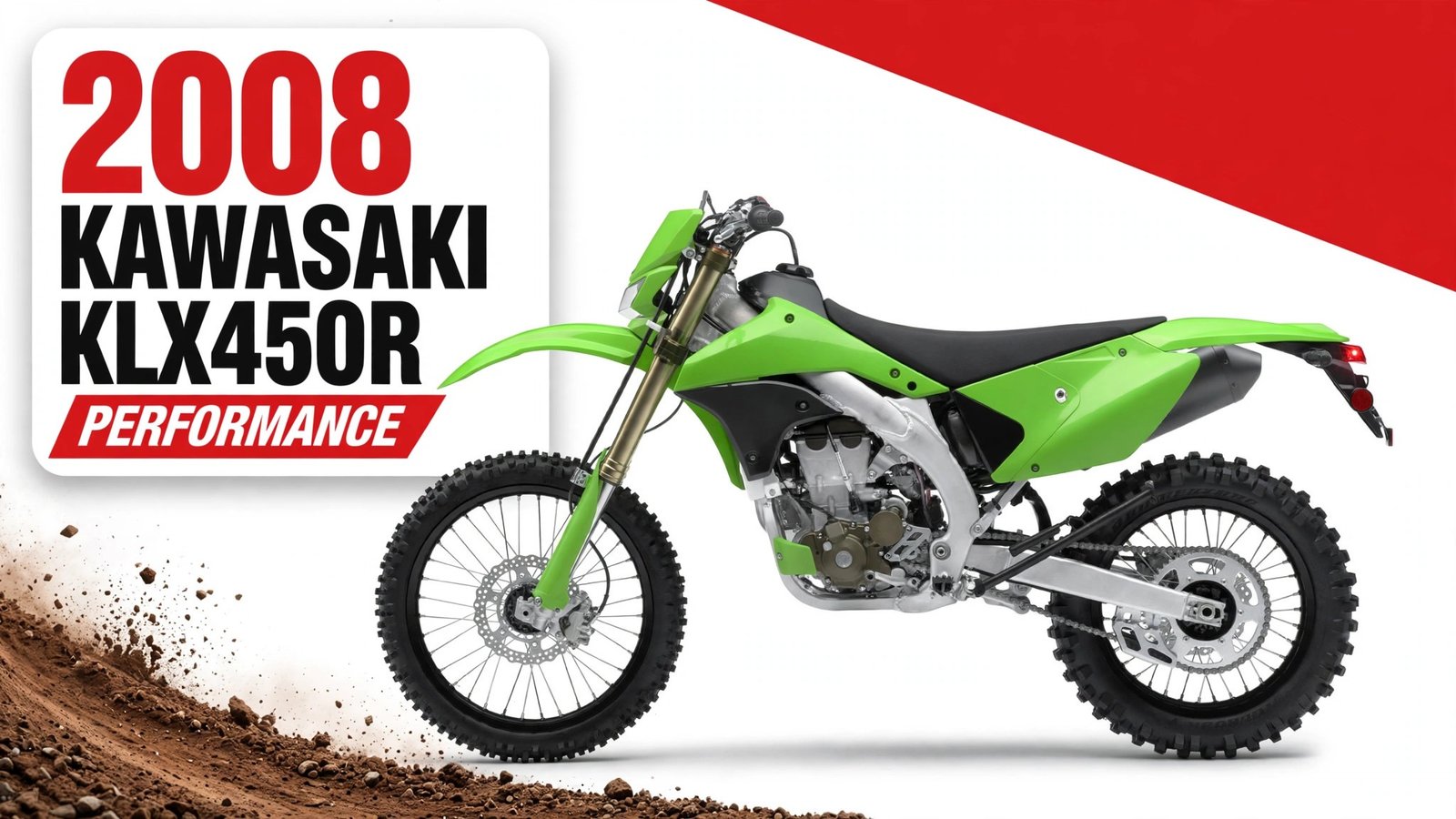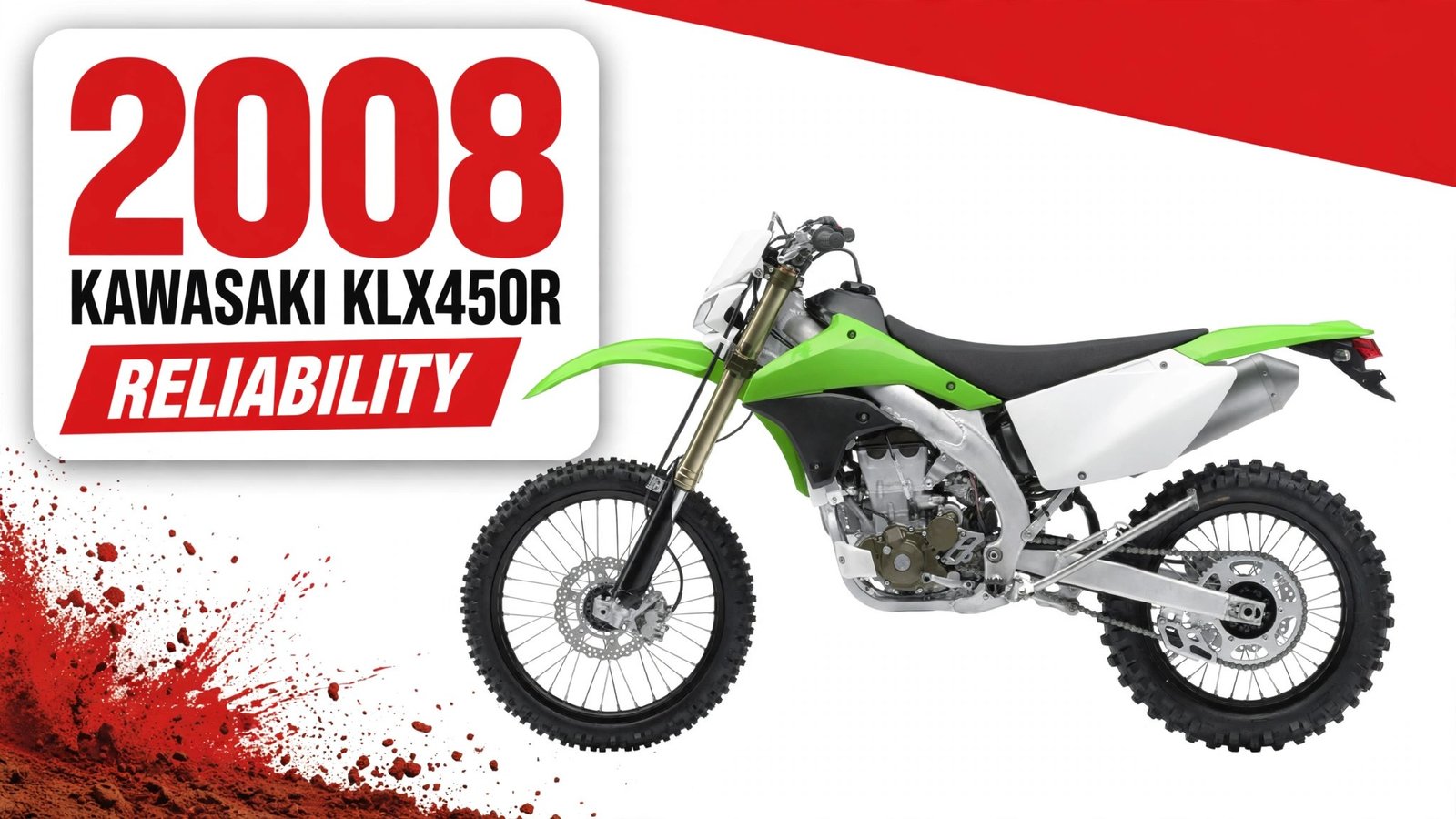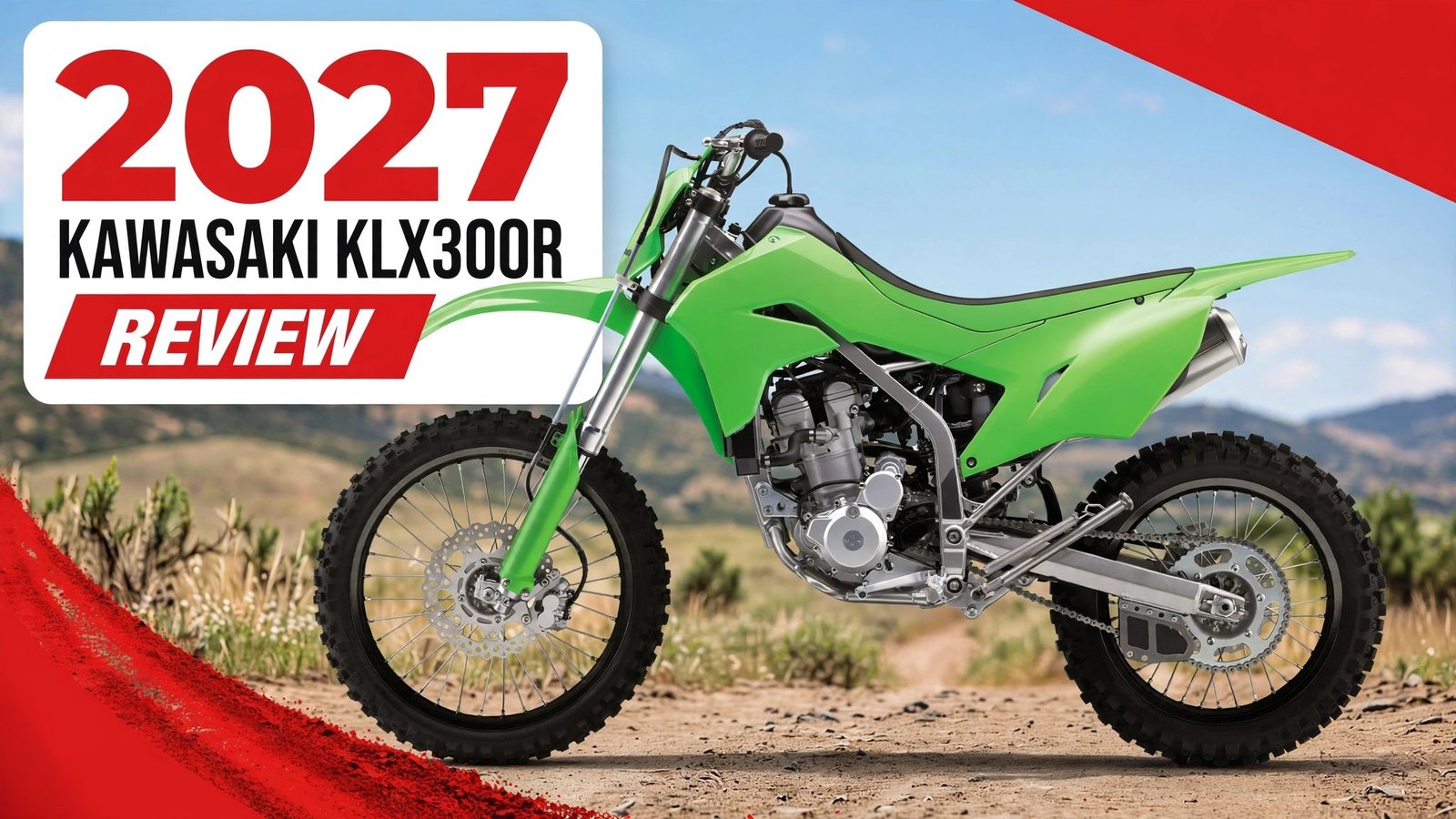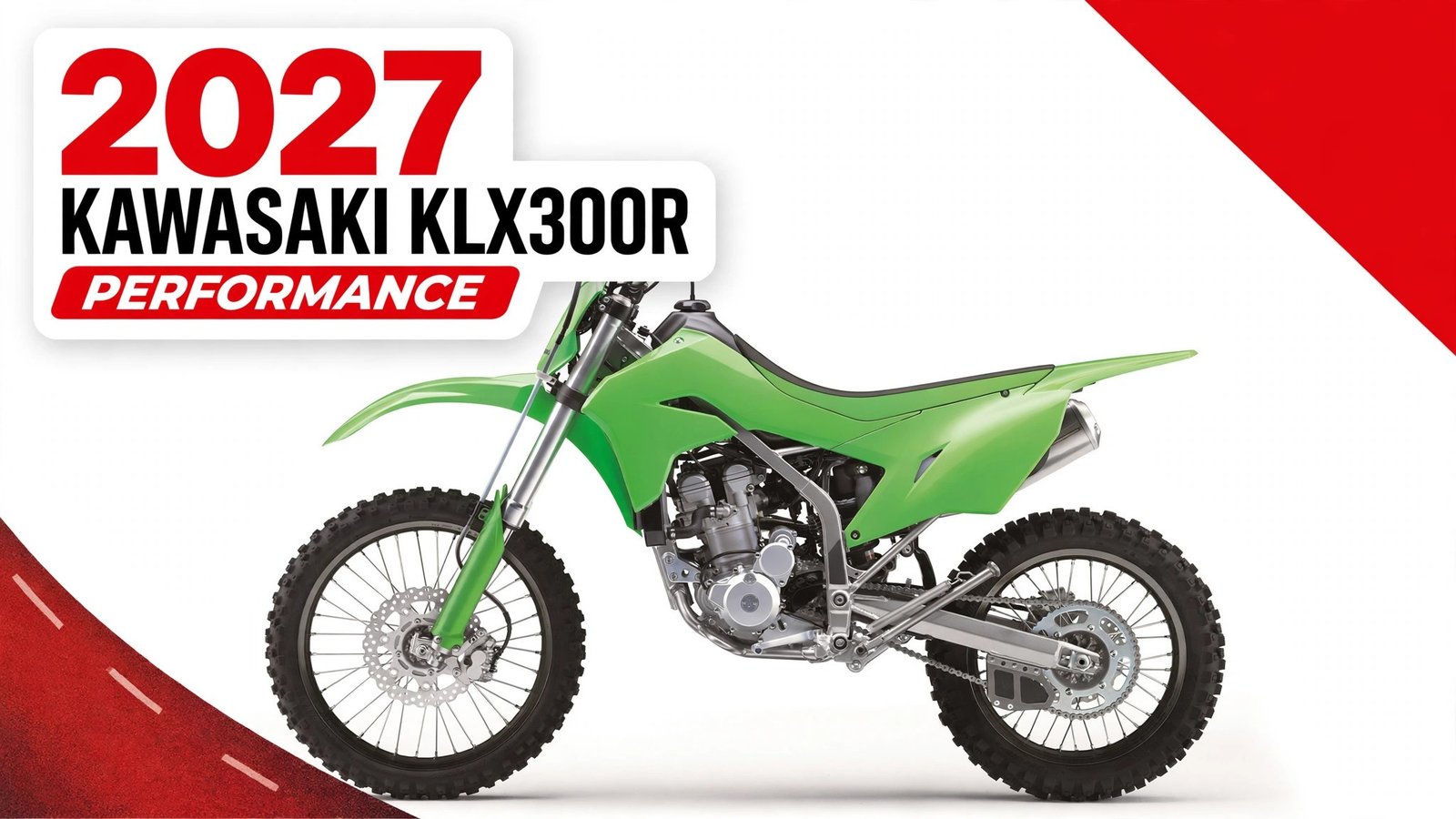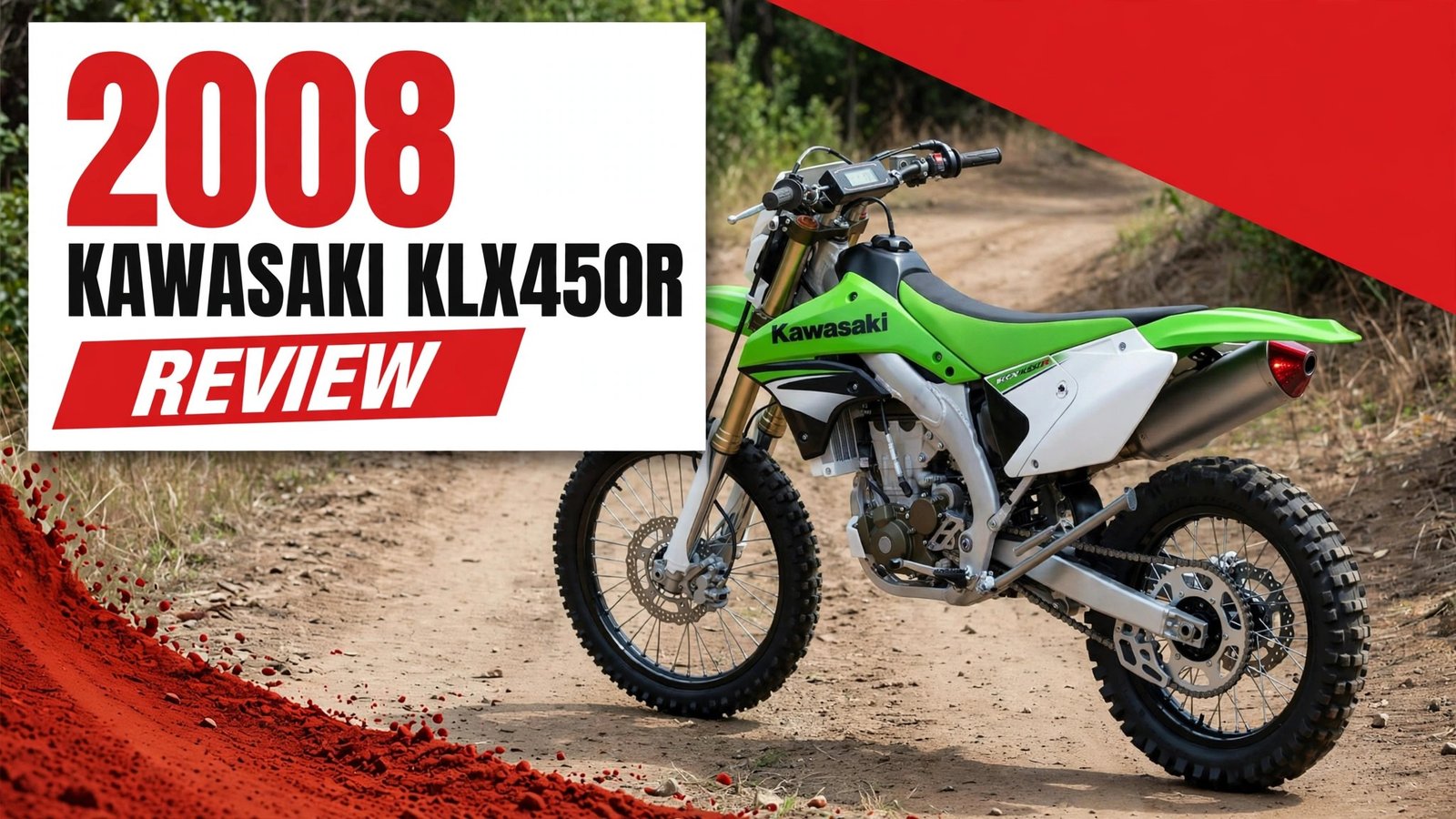
The Kawasaki KLX450R is a bike that disappeared from American showrooms before most of today’s trail riders ever saw one, and that is exactly why it still gets talked about. Kawasaki sold it in the United States for two model years only, 2008 and 2009, then pulled it from the American line while the bike kept selling overseas for years — the split this Kawasaki KLX450R review is built around. This Kawasaki KLX450R review looks at the bike as it actually was: a 449cc carburetted enduro built from the KX450F motocrosser, softened for the trail, fitted with a real headlight and a digital meter, and priced at $7,299 when it launched. This Kawasaki KLX450R review works from what the testers of 2008 and 2009 actually measured.
Kawasaki KLX450R Overview and Model-Year Updates
Kawasaki announced the KLX450R as a 2008 model in 2007, and it reached dealers in February and March of that year. It was the first KLX with a 450cc four-stroke, and it arrived as a closed-course off-road bike, not a dual-sport: no plate, no mirrors, no turn signals, and no pretence of being road legal. This Kawasaki KLX450R review starts with the two American model years, because everything about the bike’s value today depends on understanding how short its US life was.
The video below, chosen for this Kawasaki KLX450R review, is a recent owner’s look at buying and riding a 2008/2009-era KLX450R — not a launch test from 2008. It shows what a 17-year-old KLX450R looks like in a buyer’s hands today, which is the way most American riders will meet this bike now.
Two US Model Years Only
The American story of the KLX450R fits in two model years, and this Kawasaki KLX450R review tells it in full. The 2008 bike launched at $7,299, and the 2009 bike followed at $7,499, a $200 rise. After that, Kawasaki stopped selling the KLX450R in the United States. There is no 2024, 2026 or 2027 American KLX450R at all. For a buyer in the United States today, that leaves only the used market. The 2008 KLX450R spec page still lists the launch price and the dry weight that every later figure is checked against, and it is the first document any buyer should read before looking at a used bike.
No Current US Model Exists
There is no current US KLX450R to walk into a showroom and buy, and Kawasaki’s American off-road line has moved on without it — the first fact this Kawasaki KLX450R review has to state plainly. The nearest thing to a modern KLX trail bike is the KLX300R review bike, a 292cc fuel-injected trail machine that costs $6,449 delivered for 2027 and carries no headlight or dash at all. A search of the NHTSA recalls database returns zero recalls for the 2008 and 2009 KLX450R, with the same search returning one campaign, 25V146000, for the 2024 Ninja 500 control bike, so the zero is a search result with a working control rather than proof that no recall will ever appear. The CPSC record is inconclusive, and the only “450R” recall on file is the 2008 KFX450R ATV, a different machine entirely. This Kawasaki KLX450R review treats the bike as a used purchase, because in the United States that is the only way it can be bought.
Kawasaki KLX450R Engine and Specifications
The KLX450R engine is a 449cc liquid-cooled double-overhead-cam four-valve single, bored 96.0 mm and stroked 62.1 mm, with a 12.0:1 compression ratio and a Keihin FCR-MX40 carburettor feeding it. There is no fuel injection anywhere on this bike, and that is not a flaw to apologise for: the FCR-MX40 was the best carburettor of its era, and the testers of 2008 and 2009 praised its manners at every altitude they tried. The gearbox is a five-speed manual with a wide spread, first gear lower than the motocrosser’s and second through fifth taller, and the final drive is a 50-tooth rear sprocket against a 13-tooth front — the wide-ratio set this Kawasaki KLX450R review lists in the spec table below. The character comes from the softening, not from any single number.
Kick Backup Behind the Button
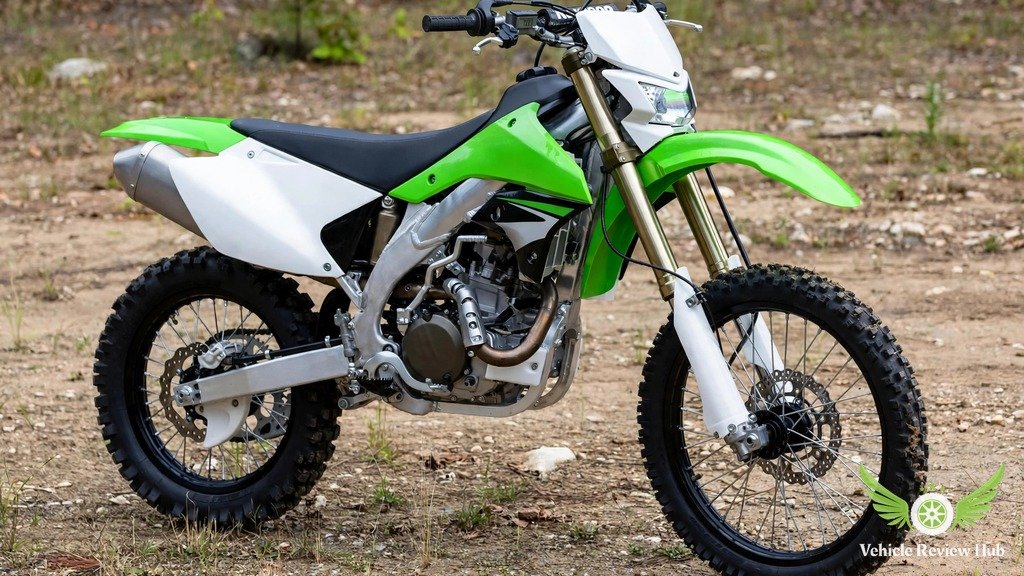
The KLX450R starts with a button, and it also starts with a kick. The electric starter is the normal way in, but Kawasaki fitted a kick starter as well, and the testers found it more than decoration. Ultimate Motorcycling’s 2009 test records the battery dying and the bike being kick-started cold, wearing tennis shoes, on the first try. That matters on a trail bike, because a dead battery in the woods is a long walk without a backup, and the kick lever turns a stranded bike into a running one. For a used buyer, that kick lever is the difference between riding home and walking, and this Kawasaki KLX450R review counts it as essential equipment. The charging system itself was barely adequate in the testers’ experience, which is why the kick starter earns its place in this Kawasaki KLX450R review rather than being treated as a curiosity.
Weight Depends on the Figure Type
The KLX450R’s weight is three different numbers, and mixing them up is the most common mistake in listings for this bike — and the first trap this Kawasaki KLX450R review warns about. The dry weight is 253.5 lb, or 115 kg, on the Motorcycle.com 2008 spec page, and Dirt Rider’s first test lists a claimed dry weight of 254 lb. The ready-to-ride weight, with a full tank, is 278 lb, measured by Dirt Rider and described the same way by Ultimate Motorcycling in 2009. The kerb or wet weight on Australian and Indian spec sheets is 126 kg, which converts to about 277.8 lb. The trap is Motorcycle.com’s 2009 spec page, which prints the 126 kg figure under a “Dry Weight” label, so a careless reader walks away believing the bike weighs 277.7 lb dry. It does not. The figures stay labelled by type in this Kawasaki KLX450R review.
| Specification | 2008–2009 KLX450R |
|---|---|
| Engine | 449cc liquid-cooled DOHC 4-valve single |
| Bore × stroke | 96.0 × 62.1 mm |
| Compression ratio | 12.0:1 |
| Fuelling | Keihin FCR-MX40 carburettor |
| Power (claimed, international) | 41.4–41.5 kW (56 PS) at 8,500 rpm; 50 Nm (37 lb-ft) at 7,500 rpm |
| Transmission | 5-speed manual, chain, 50/13 final drive |
| Starting | Electric start plus kick starter |
| Front suspension | 48 mm KYB inverted fork, 11.2 in travel |
| Rear suspension | Uni-Trak single shock, 11.0 in travel |
| Brakes | 250 mm front disc, 240 mm rear disc; no ABS |
| Wheels / tyres (US) | 21 in / 18 in; 80/100-21 front, 110/100-18 rear |
| Seat height | 37.0 in (spec); Dirt Rider measured 34.5 in |
| Ground clearance | 12.6 in |
| Wheelbase | 58.3 in |
| Fuel capacity | 2.1 gal (7.9 L) |
| Weight | 253.5 lb dry; 278 lb ready to ride; 126 kg kerb |
| Warranty | 6 Month Limited |
Notes: Kawasaki USA publishes no horsepower figure for the KLX450R, so the power row carries the international claimed figures, 41.4–41.5 kW (56 PS), which must never be written as 56 hp. Power is the one figure this Kawasaki KLX450R review refuses to guess at: no dyno exists, and Kawasaki USA publishes no horsepower figure. The seat height row carries both figures: Dirt Rider measured 34.5 in, probably with sag, against the 37.0 in spec. The rear tyre is 110/100-18 on the US spec sheet; Australian and Indian listings print 120/90-18, which is not the American figure. This Kawasaki KLX450R review uses the US figures throughout and flags the foreign ones where they differ.
Kawasaki KLX450R Price and Market Availability
Price is the first thing a buyer asks about the KLX450R and the first thing that gets misquoted, because the bike’s price depends entirely on which year and which country is being talked about. In the United States there were only two prices, both manufacturer suggested retail prices with no destination charge verified anywhere in the record. Overseas the bike lived on for years at prices that have nothing to do with the American ones. This Kawasaki KLX450R review keeps the American, foreign, new and used prices separate.
Kawasaki KLX450R Price in the USA: $7,299 at Launch
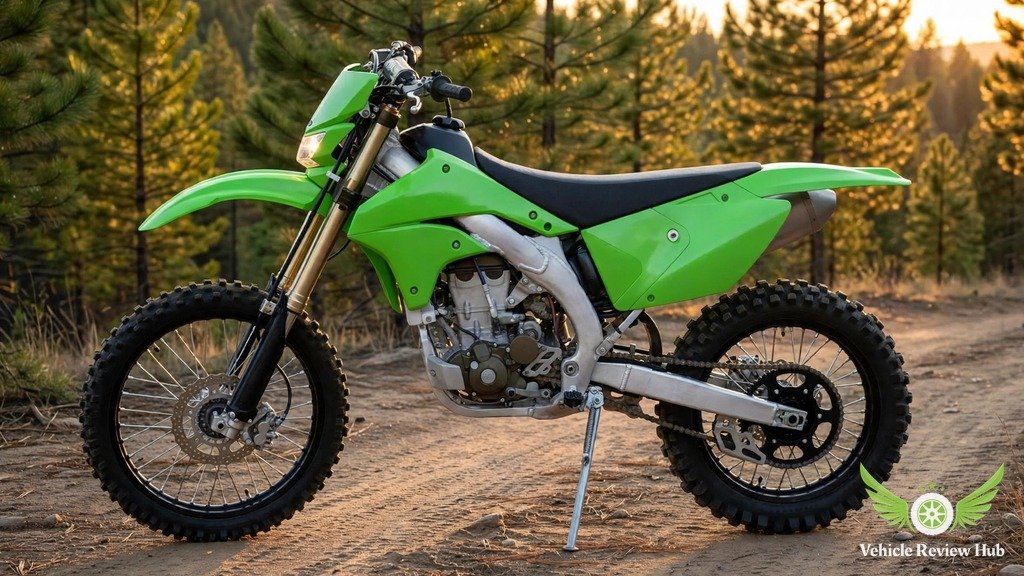
The 2008 KLX450R launched in the United States at $7,299. That figure comes from the Motorcycle.com 2008 spec page and from Dirt Rider’s first test, which printed the same price in its spec box — the two sources this Kawasaki KLX450R review relies on for the launch price. It is a manufacturer suggested retail price only. No destination charge for the 2008 or 2009 bike has been found in any spec page or test, so this Kawasaki KLX450R review prints MSRP only and never adds a delivered figure for these two years. Carrying a later year’s destination charge back to 2008 would invent a number, and the bike deserves better than that. The 2009 KLX450R spec page carries the second year’s price, and the two pages together are the whole American price record for this model.
2009 Rose $200 to $7,499
The 2009 KLX450R cost $7,499, exactly $200 more than the 2008 bike. Nothing else about the price story changed: it was still MSRP only, still with no verified destination charge, and still the last American price the model would ever carry. The Canadian price for 2008 was $8,999, but those are Canadian dollars, and they belong in a Canadian conversation, not an American one. Overseas, the bike’s life ran much longer: a new 2023 KLX450R was listed at a Brisbane dealer for $11,990 excluding government charges, and Indian listings still show the bike in 2026, with the ex-showroom price in conflict between ₹9.61 lakh and ₹8.99 lakh, so this Kawasaki KLX450R review prints neither Indian figure as settled.
| Market | Year | Price | Basis |
|---|---|---|---|
| United States | 2008 | $7,299 | MSRP only; destination unverified |
| United States | 2009 | $7,499 | MSRP only; destination unverified |
| Canada | 2008 | $8,999 CAD | Canadian dollars, not US dollars |
| Australia | 2023 | $11,990 | New stock, Brisbane dealer, excl. govt charges |
| India | 2026 | ₹9.61 lakh vs ₹8.99 lakh | Ex-showroom; in conflict, neither settled |
| United States (used) | 2008–2009 | Check live listings | No settled used band printed here |
Notes: the American rows are MSRP only because no destination charge for 2008 or 2009 has been verified in any source. The Canadian figure is $8,999 in Canadian dollars and must never be quoted as a US price. The Australian row is the newest Australian stock found, a new 2023 bike at a Brisbane dealer, not evidence of a 2026 Australian model. The Indian row carries both conflicting figures because neither can be settled from the listings alone. This Kawasaki KLX450R review prints no used-price band, because no live listing check was run for this blog and a band without listings in hand would be invented. Every price in this Kawasaki KLX450R review is labelled by market and year, so no figure can be mistaken for another market’s.
Kawasaki KLX450R Design, Features and Technology
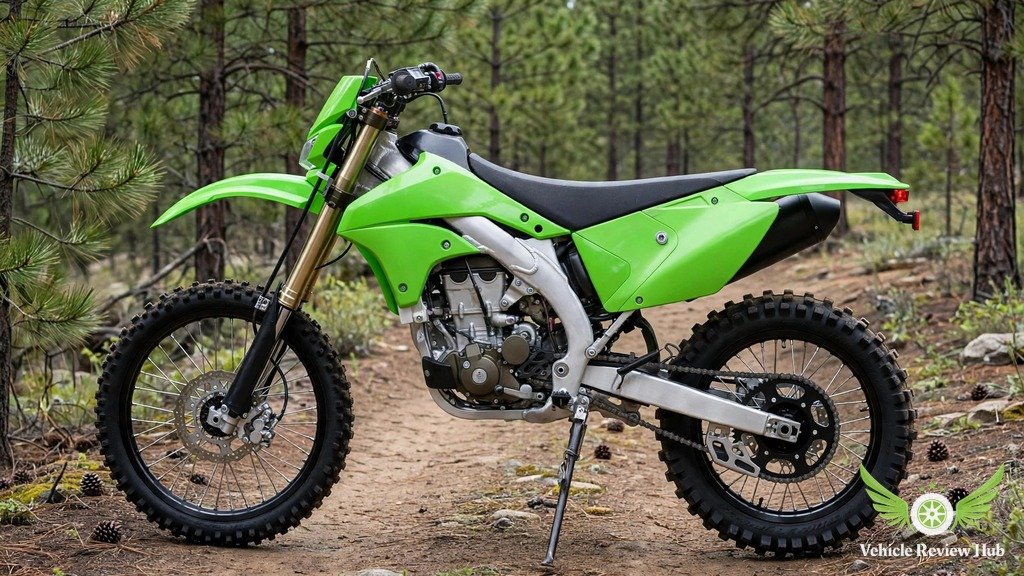
The KLX450R looks like a motocrosser at a glance, and that is because it mostly is one. Kawasaki took the KX450F’s aluminium perimeter frame and KYB suspension, then changed the parts that make a motocross bike unusable on a trail: a wider-ratio five-speed, a heavier flywheel, softer springs, a quiet muffler, an 18-inch rear wheel and electric start. This Kawasaki KLX450R review looks at the design through the features that separate it from both its donor bike and the trail bikes that came after it.
Real Headlight and a Digital Meter
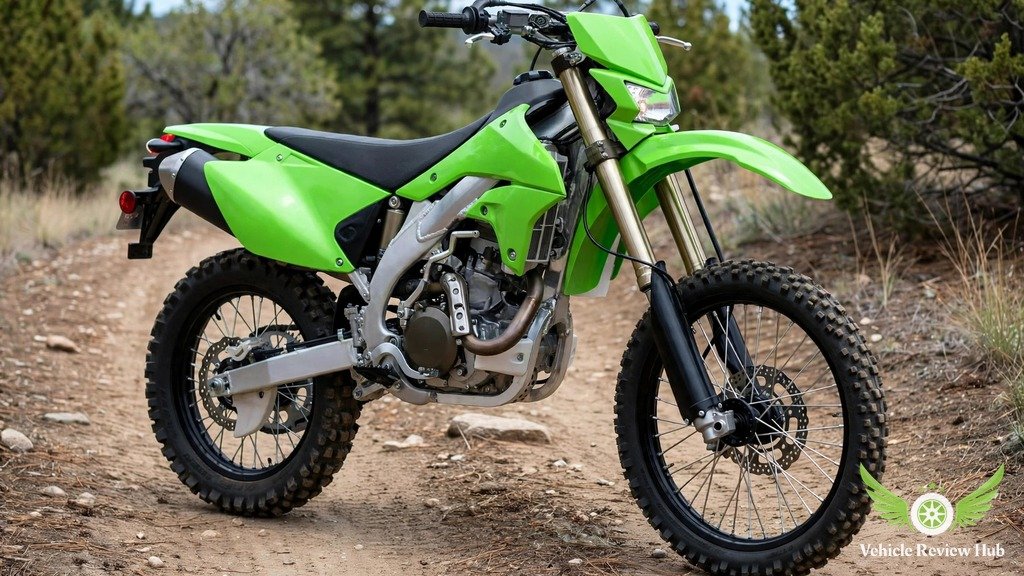
The headlight is the feature that defines the KLX450R in this Kawasaki KLX450R review, because it is the feature the trail bikes that followed it gave up. The 2008–2009 bike carries a small halogen headlight, a taillight, and a digital meter unit on the handlebars with a clock, a speedometer and a trip odometer. Dirt Rider’s first test called the headlight weak at best, and it was right — the lamp is enough to be seen and to find a trail at dusk, not enough to ride fast in the dark. But weak is not the same as absent, and the meter matters more than the lamp: a rider can see speed, distance and time without adding an aftermarket computer. Compare that with the KLX300R review bike, which has no dash and no headlight at all, and the difference is clear. The KLX450R was built for a rider who might need to get home after dark; the KLX300R was built for a rider who goes to the trail in a truck. Neither approach is wrong, but they are different bikes, and this Kawasaki KLX450R review keeps them apart.
California Green Sticker Bike
The KLX450R is a California Green Sticker bike, which means it can be ridden year-round on California’s public off-road land rather than being restricted to the red-sticker season. That classification mattered in 2008 and it still matters to a buyer in California today, because a red-sticker bike is a part-time bike. The Green Sticker status came from the bike’s quiet muffler and its trail tuning, the same changes that made it slower in a drag race than the motocrosser. The Green Sticker point is one more reason this Kawasaki KLX450R review keeps the American story separate from the overseas one. The Dirt Rider first test listed the headlight as a weakness and the lack of hand guards as an omission, and both points still stand as buying advice: budget for hand guards, and do not expect the headlight to do more than it was built to do.
| Feature | KLX450R (2008–2009) | Note |
|---|---|---|
| Headlight | Halogen, fitted as standard | Weak at best, per Dirt Rider |
| Digital meter | Clock, speedometer, trip odometer | On the handlebars |
| Taillight | Fitted as standard | Part of the trail equipment |
| Side stand | Fitted as standard | The KX450F donor had none |
| Mirrors / turn signals | None fitted | Off-road only, no plate |
| ABS | None, any year | Never offered on this bike |
| California status | Green Sticker | Year-round public off-road use |
| Warranty | 6 Month Limited | Expired on every US bike |
Notes: the headlight, meter, taillight and side stand are what make the KLX450R a trail bike rather than a motocrosser with lights bolted on. The absence of mirrors, turn signals and a plate is what keeps it off the road. This Kawasaki KLX450R review treats the Green Sticker status as a real buying point for California riders, because it decides how many months a year the bike can be used.
Kawasaki KLX450R Riding Experience and Comfort
Riding the KLX450R feels like riding a motocrosser that has been taught manners. The engine pulls smoothly from low revs, the suspension soaks up trail junk without complaint, and the bike is quiet enough that the lack of noise is the first thing testers mentioned. This Kawasaki KLX450R review leans on what the testers of 2008 and 2009 actually wrote.
Doubled Flywheel, Softer Tune
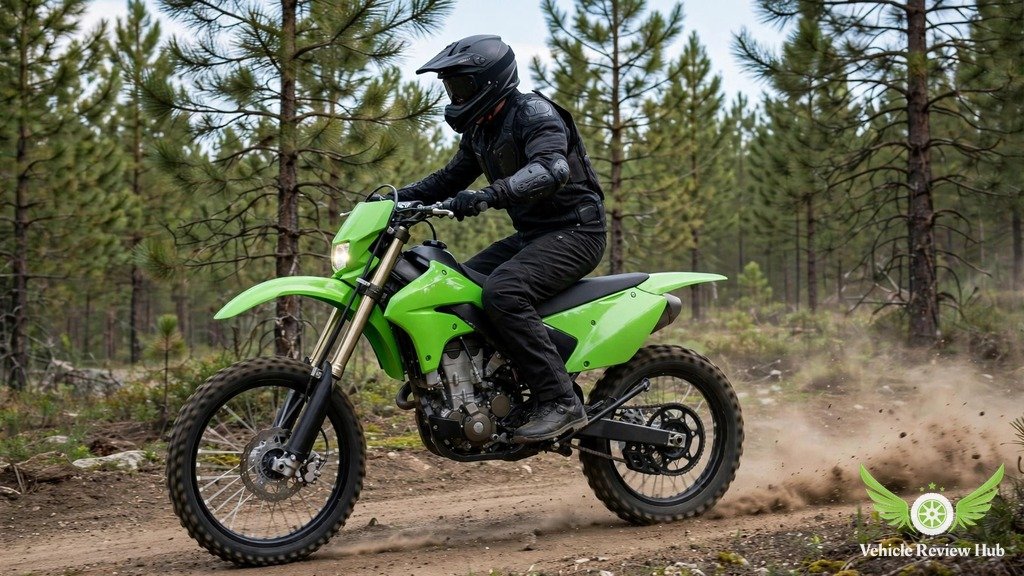
The flywheel weight on the KLX450R is double the motocrosser’s, and that single change does more for the bike’s character than any other. A heavier flywheel resists stalling, smooths the power delivery, and lets the bike chug through slow technical ground that would have a motocrosser bucking and stalling. Kawasaki also changed the cam and lift timing, fitted steel exhaust valves 1 mm smaller than the motocrosser’s with titanium intakes, softened the spring rates from 4.6N to 4.3N at the fork and from 54.0N to 50.0N at the shock, and gave the suspension softer compression with more rebound. Ultimate Motorcycling’s 2009 test called the 48 mm Kayaba inverted forks superb for anything under race speeds, and said the Keihin FCR40 carburettor’s manners were impeccable over a wide range of elevations, with hitch-free power delivery and a five-speed transmission with flawless behaviour. That is the ride this Kawasaki KLX450R review keeps coming back to: plush, quiet and forgiving. The Ultimate Motorcycling 2009 test is the clearest account of how the bike rides, and this Kawasaki KLX450R review follows its judgement: a plush, quiet, forgiving trail bike that trades outright speed for control.
Built in Japan (JKA VINs)
The KLX450R was built in Japan, and the frame numbers prove it. The service manual lists JKALXGA1 frames with 8A000001 for 2008, 9A010001 for 2009, and AA013001 for the 2010 non-US model year, all starting with the JKA prefix that marks Japanese production. Japanese build quality on this bike was good: Dirt Rider’s 160-hour long-haul test of a 2008 bike concluded that it held up way better than most first-year models. Second, the VIN tells a buyer exactly which year the bike is, which matters when the only American years are 2008 and 2009 and a seller claims otherwise. A JKA frame number starting with 8A is a 2008 bike; one starting with 9A is a 2009 bike. Anything else is not an American KLX450R. That frame-number check is the first step this Kawasaki KLX450R review recommends to any buyer. The KLX230R review bike is the step-down from this one in the Kawasaki trail line.
Kawasaki KLX450R Review: Pros, Cons and Verdict
The verdict on the KLX450R in this Kawasaki KLX450R review depends on what the buyer wants it for, and the honest answer is narrower than the bike’s reputation suggests. As a trail bike it was one of the best of its era: quiet, plush, easy to ride, and fitted with a headlight and a meter that its rivals did not have. As a purchase in 2026 it is a 17-year-old machine with no dealer support, no new parts pipeline guaranteed, and a maintenance schedule that asks for a piston every 30 hours. This Kawasaki KLX450R review weighs both sides.
Main Advantages and Limitations of the Kawasaki KLX450R
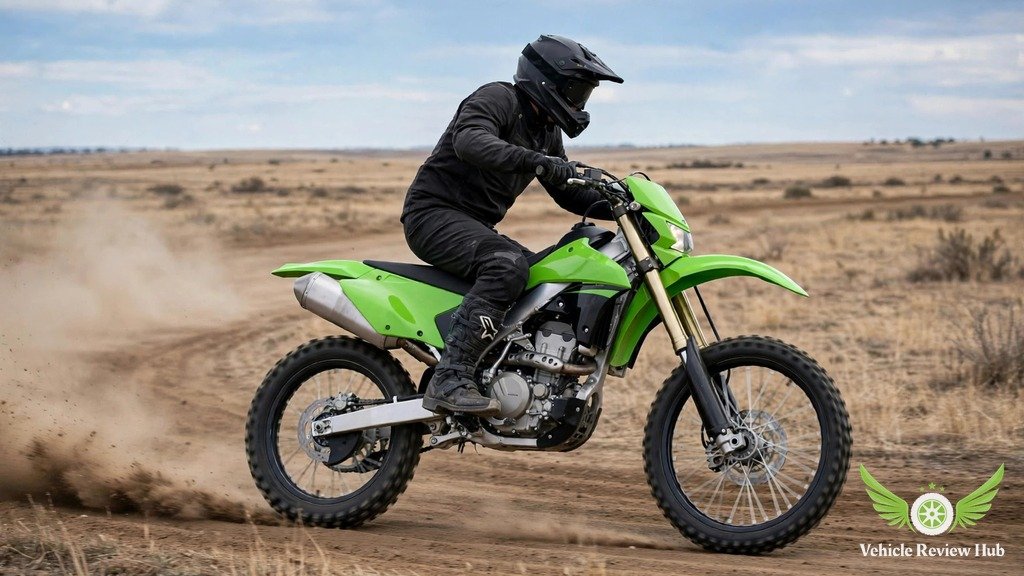
The advantages in this Kawasaki KLX450R review start with the ride. The suspension is the plushest of its class according to Dirt Rider’s 2008 comparison, the seat is the cushiest in the group, and the engine is smooth and quiet, with a carburettor that behaves at any altitude. The headlight and digital meter are real equipment, not afterthoughts, and the kick starter backs up the button. The limitations start with the same comparison: the bike was slow in drag races, it bottomed out first in big jumps, especially at the rear, and its 37.0-inch seat height is tall for shorter riders, even if Dirt Rider measured 34.5 inches with sag. The chain guide pad wears out fast, the oil filter sits behind the header pipe so the exhaust has to come off to change it, and the bike has no radiator fan, so slow technical riding in heat can overheat it — Dirt Rider’s long-haul bike overheated to the point of barely running at least three times in 160 hours.
| Advantages | Limitations |
|---|---|
| Plushest suspension in its 2008 class | Slow in drag races, per Dirt Rider |
| Quiet, smooth, hitch-free power delivery | Bottoms out first in big jumps |
| Real headlight and digital meter fitted | Headlight weak at best |
| Electric start plus kick backup | Battery charging barely adequate |
| 37.0 in seat suits tall riders | 37.0 in seat is tall for shorter riders |
| 160-hour long-haul bike still running strong | Overheated at least 3 times in 160 hours; no fan |
| Green Sticker, year-round California use | Off-road only; no plate, no mirrors |
| KX450F-based frame and suspension | Chain guide pad wears out fast |
Notes: every row in this table comes from a tester account, not from a brochure. The suspension and drag-race judgements are Dirt Rider’s 2008 comparison; the headlight and charging notes are Dirt Rider and Ultimate Motorcycling; the overheating figure is the long-haul bike’s own record. This Kawasaki KLX450R review prints no advantage or limitation that no tester recorded.
Still Sold in Australia, Not Here
The KLX450R outlived its American career by many years overseas, and that is the strangest part of the story this Kawasaki KLX450R review tells. It launched in Australia in 2007, and the newest Australian stock found for this Kawasaki KLX450R review is a brand-new 2023 bike listed at a Brisbane dealer for $11,990 excluding government charges. Kawasaki’s parts catalogue lists 2014, 2018 and 2019 KLX450R models, and the bike is still listed in India in 2026, where the ex-showroom price is in conflict between ₹9.61 lakh and ₹8.99 lakh. But Kawasaki Australia’s own KLX450R model pages are gone, and no live Australian source found for this blog shows the bike on sale as a current 2026 model, so the honest statement is narrower than the heading sounds: the newest Australian stock found is a 2023 bike, not proof of a 2026 model. A rider in the United States who wants a new Kawasaki trail bike today should look at the KLX300R review bike instead, and a rider who wants the 450R itself should buy on condition and budget for the 30-hour piston the manual orders.
Kawasaki KLX450R Review Frequently Asked Questions
These answers cover the questions buyers ask first about the two-year KLX450R — what it is, what it cost, and whether it can be bought in the United States today — from the facts in this Kawasaki KLX450R review.
When was the KLX450R sold in the United States?
For two model years only, 2008 and 2009. Kawasaki announced it as a 2008 model in 2007, it reached dealers in February and March of that year, and after the 2009 bike it was gone from the American line. There is no 2024, 2026 or 2027 US KLX450R, and the current Kawasaki 450 off-road line is the KX450, KX450X and KX450FX.
How much did the KLX450R cost when new?
The 2008 bike launched at $7,299 and the 2009 bike at $7,499, a $200 rise. Both figures are MSRP only: no destination charge for 2008 or 2009 has been verified in any source, so this Kawasaki KLX450R review prints no delivered price for either year. The Canadian price for 2008 was $8,999, but those are Canadian dollars, not US dollars.
What engine does the KLX450R have?
A 449cc liquid-cooled DOHC 4-valve single, bored 96.0 mm and stroked 62.1 mm, with a 12.0:1 compression ratio and a Keihin FCR-MX40 carburettor. There is no fuel injection anywhere on this bike. Kawasaki USA publishes no horsepower figure; the international claimed figures are 41.4 to 41.5 kW (56 PS) at 8,500 rpm and 50 Nm (37 lb-ft) at 7,500 rpm — 56 PS converts to about 55.5 hp, and must never be written as 56 hp. The gearbox is a five-speed manual, and starting is electric plus a kick starter — the combination this Kawasaki KLX450R review counts as essential trail equipment.
Does the KLX450R have a headlight and a meter?
Yes. The 2008–2009 bike carries a small halogen headlight, a taillight, and a digital meter unit on the handlebars with a clock, a speedometer and a trip odometer, plus a side stand. Dirt Rider’s first test called the headlight weak at best, but weak is not absent. That equipment is what separates it from the KLX300R, which has no dash and no headlight at all. It is also a California Green Sticker bike, so it can be ridden year-round on California’s public off-road land.
How heavy is the KLX450R, and how tall is the seat?
It depends on the figure type, and mixing them up is the most common mistake in listings — and the first trap this Kawasaki KLX450R review warns about. The dry weight is 253.5 lb, the ready-to-ride weight with a full tank is 278 lb, and the kerb weight on Australian and Indian sheets is 126 kg, about 277.8 lb. Never print 277.7 lb as the dry weight: Motorcycle.com’s 2009 spec page mislabels the 126 kg kerb figure as dry. The seat is 37.0 in on the spec sheet, though Dirt Rider measured 34.5 in, probably with sag.
Is the KLX450R still made or sold anywhere?
Not in the United States, and no settled final production year exists — CycleChaos says 2008–2019 and MotorcycleDB says 2008–2024, and this Kawasaki KLX450R review prints neither as settled. The bike lived on overseas: it launched in Australia in 2007, the newest Australian stock found is a new 2023 bike at a Brisbane dealer for $11,990 excluding government charges, and it is still listed in India in 2026, where the ex-showroom price is in conflict between ₹9.61 lakh and ₹8.99 lakh. Kawasaki Australia’s own KLX450R model pages are gone, so the bike is not shown on sale as a current 2026 model anywhere this review could verify.