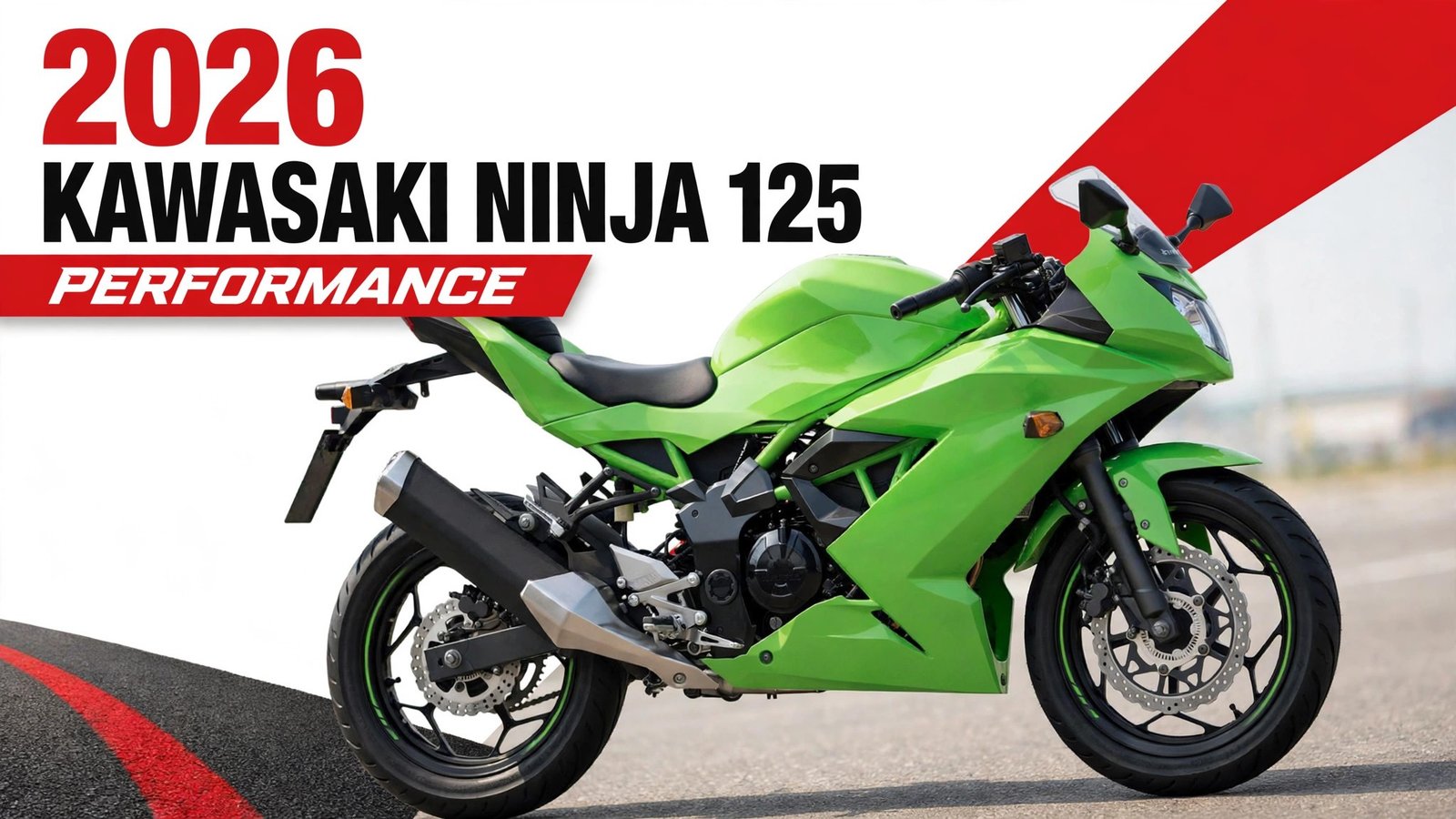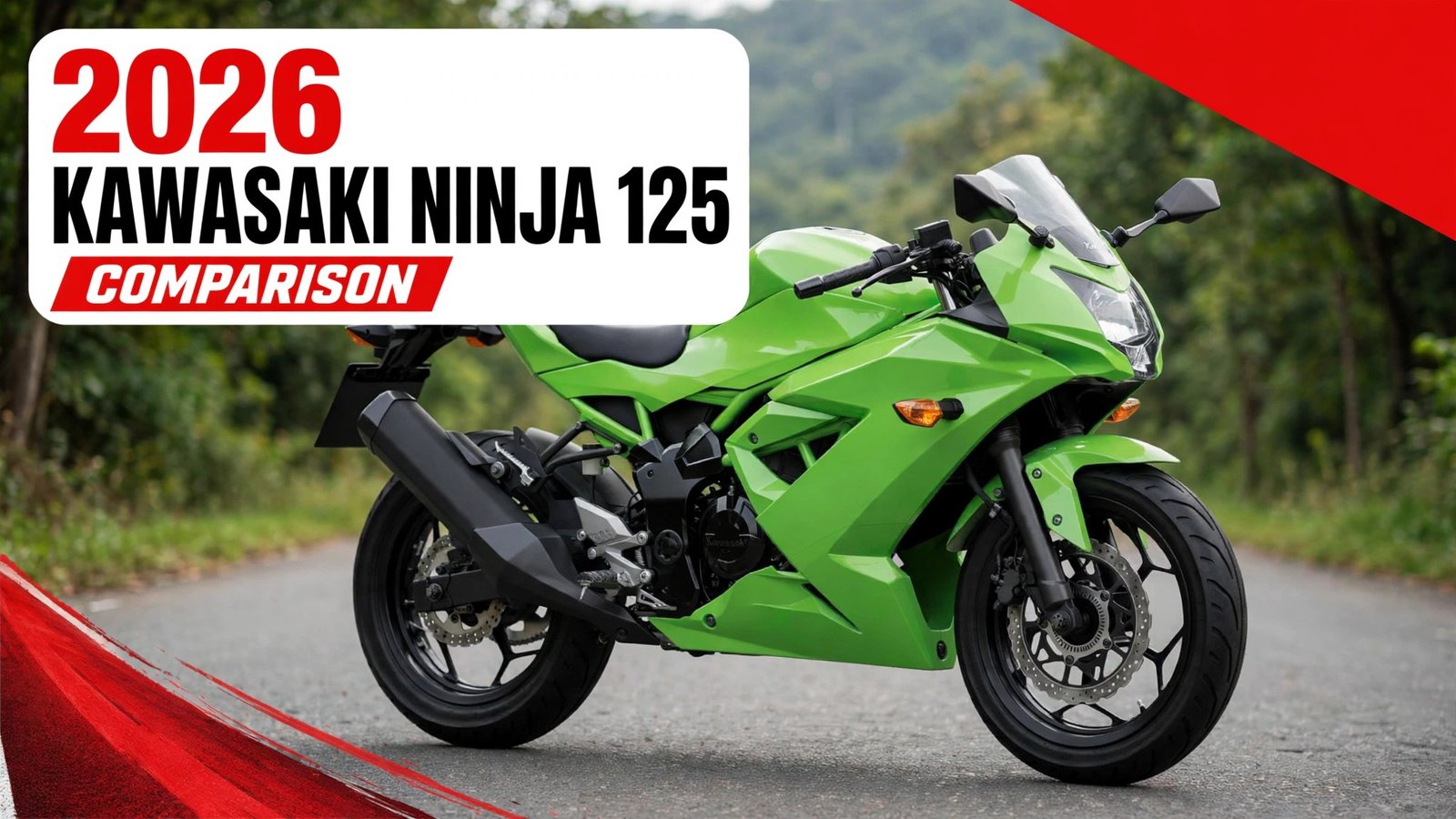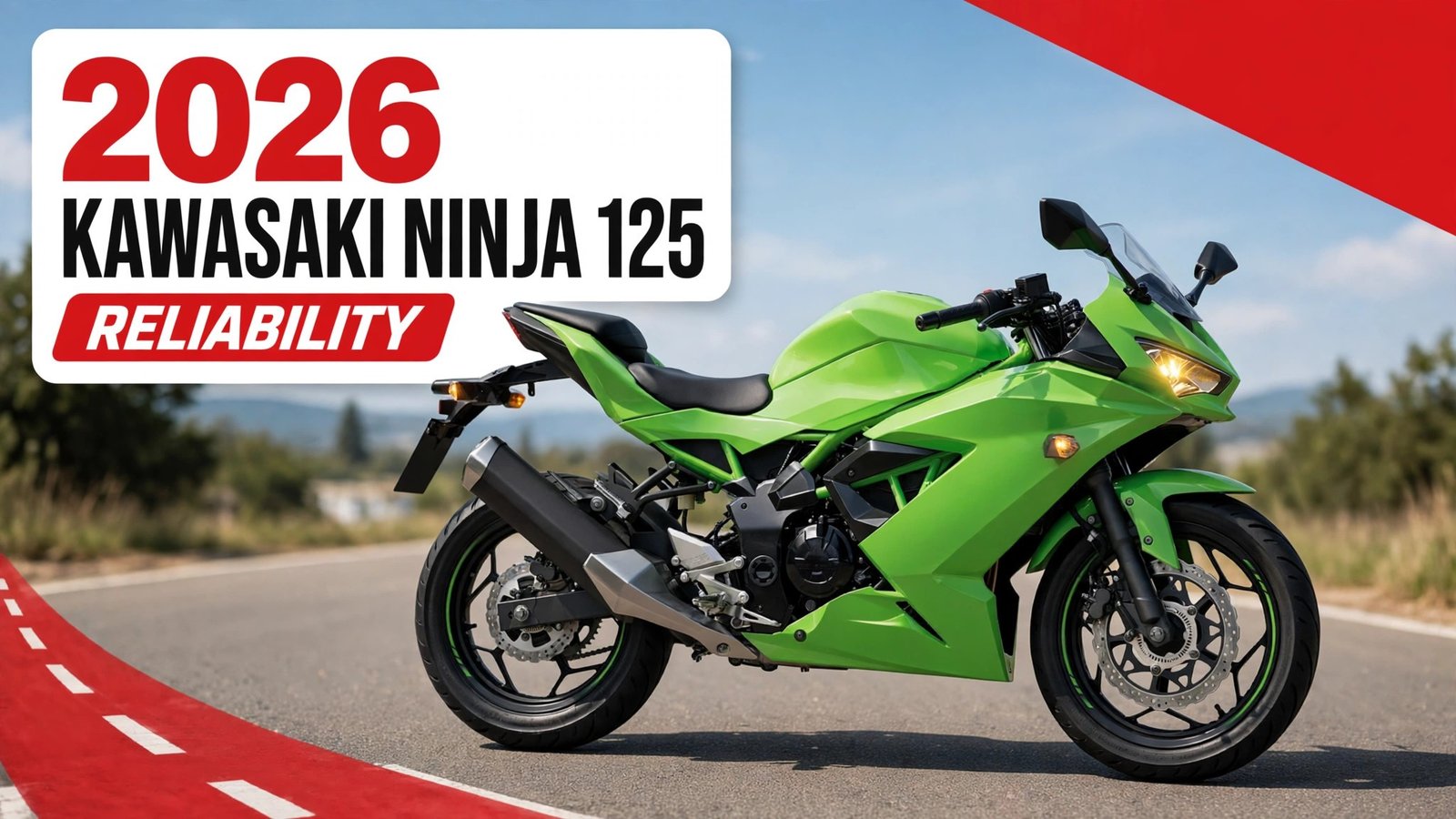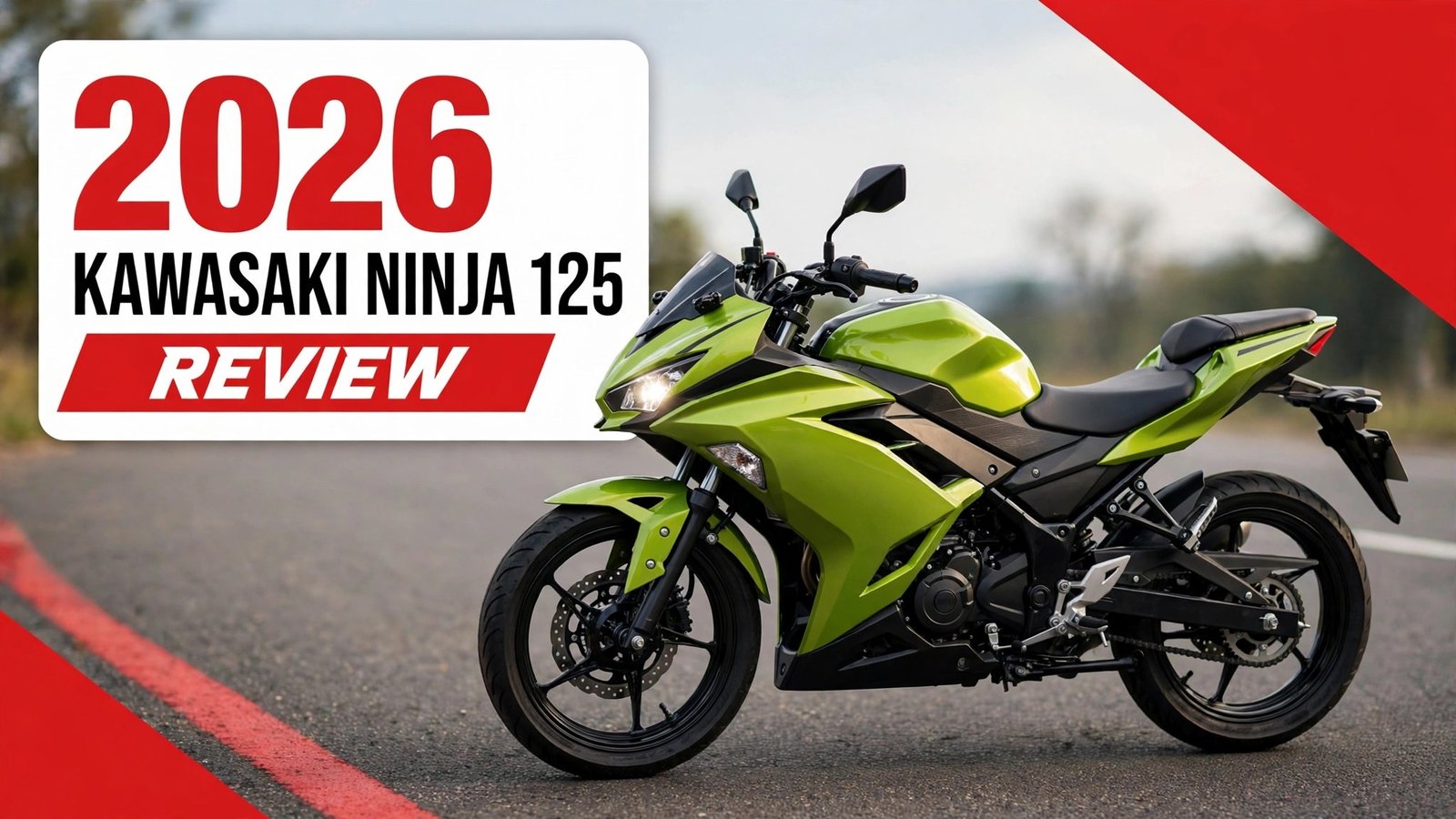
The Kawasaki Ninja 125 is a small faired sports bike that was never sold in the United States, yet it is still a current model in Britain in 2026 at £4,699, in its eighth model year. This Kawasaki Ninja 125 review looks at the bike on its own terms: a 125cc liquid-cooled single with 11 kW (15 PS), a 785 mm seat, standard ABS and a chassis that testers praised, held back by a rev-hungry engine and a dated dash. If you are a US rider, you cannot buy one new at home, and this Kawasaki Ninja 125 review explains why, what it costs in the UK, and what your realistic alternatives are. That is the question this Kawasaki Ninja 125 review sets out to answer.
Kawasaki Ninja 125 Overview and Model-Year Updates
The Ninja 125 is Kawasaki’s return to the small sports bike class after a gap of about 25 years, and this Kawasaki Ninja 125 review starts with the fact that shapes everything else about the bike: it was built for Europe’s A1 licence, not for the American market. It arrived as a 2019 model alongside its naked twin, the Z125, and, as this Kawasaki Ninja 125 review notes, it has stayed in production with almost no mechanical change since, picking up new colours and emissions updates while the core bike stayed the same.
Never Sold in the USA
The Ninja 125 was never sold in the USA. Kawasaki USA has no Ninja 125 model page and never listed one. The reason, as this Kawasaki Ninja 125 review explains, is simple: the bike exists to fit Europe’s A1 licence, which caps a 125 at 11 kW, and the American market has never had an equivalent licence class to support it. Kawasaki’s US small-bike offer instead runs through the Z125 Pro, a different, air-cooled mini bike, and the bigger Ninja 300, Ninja 400 and Ninja 500 that are sold in the States. That matters for this Kawasaki Ninja 125 review because every price in it is a UK price, and no US dollar price for a new Ninja 125 exists to quote. A US rider who wants one faces the 25-year import rule, with the first eligible imports in 2044, and this Kawasaki Ninja 125 review covers the import reality in the comparison blog.
Announced for Europe Only (2018)
Kawasaki announced the Ninja 125 at INTERMOT in Cologne on 2 October 2018, as a 2019 model, alongside the naked Z125 that shares its engine and chassis. The launch was Europe-focused, and the “Europe only” label describes that announcement rather than the bike’s eventual reach. It went on sale in Britain in early 2019 at £4,399, with an SE version at £4,499, and it has since been sold in Asian markets too, including Bangladesh, where it was listed at Tk 499,000. Mechanically the bike is near-unchanged since 2019. Visordown noted of the 2026 colours that no mechanical or technical changes have been made for the refresh, and the only running changes have been emissions-compliance updates that moved the consumption and CO2 figures. That stability is part of this Kawasaki Ninja 125 review: the 2026 bike is, in substance, the bike testers rode at the 2018 launch.
Kawasaki Ninja 125 Engine and Specifications
The engine is the heart of this Kawasaki Ninja 125 review, and it is also the source of the bike’s most confusing numbers. It is a 125cc liquid-cooled single that makes 11 kW, which Kawasaki states as 15 PS, and the different figures you will see in reviews are all the same 11 kW rounded differently, which is why this Kawasaki Ninja 125 review prints Kawasaki’s figure and the 14.8 hp equivalent. The motor is a sleeved-down version of the 249cc single from the Ninja 250SL, the lineage this Kawasaki Ninja 125 review explains in the next section.
Sleeved-Down 250 Single, Not a KLX
The Ninja 125’s engine is essentially a sleeved-down 28 bhp Z250SL motor, in Bennetts’ words. Kawasaki took the Ninja 250SL’s 249cc single, with its 72.0 x 61.2 mm bore and stroke, and sleeved it down to 58.0 x 47.2 mm to make 125cc, keeping the liquid cooling, double overhead camshafts and four valves. It runs well inside its limits, with a 11.7:1 compression ratio and a single 28 mm throttle body. It is not a KLX engine: the KLX150, KLX230 and KLX300 singles are different motors, and none of their figures belong in this Kawasaki Ninja 125 review. The gearbox, as this Kawasaki Ninja 125 review records, is a six-speed return shift with a wet multi-disc clutch and chain final drive, and the engine is started by an electric starter only. The gear ratios run from 2.833 in first to 0.962 in sixth, with a 56/16 final reduction, which is why the bike feels short-geared and busy at motorway speed.
Power Figure Argues With Itself
The power figure argues with itself because every source rounds the same 11 kW differently. Kawasaki’s own figure, the one this Kawasaki Ninja 125 review prints, is 11 kW (15 PS) at 10,000 rpm, with torque of 11.7 Nm at 7,700 rpm, and 15 PS works out to 14.8 hp. MCN prints 14.7 bhp in its text and 15 bhp in its glance box, Bennetts prints 14.8 bhp at 10,000 rpm with 8.6 lb-ft at 7,700 rpm, Visordown prints 15 PS, and 1000PS prints 15 HP. Indian listings add 14.14 PS to the pile. The honest way to state it is Kawasaki’s 11 kW (15 PS), with 14.8 hp as the equivalent; never print “15 hp” as the claimed figure. The redline sits at 10,500 rpm, so peak power arrives 500 rpm short of the limiter, and the engine pulls hardest between 7,000 and 9,000 rpm, with little drive below 6,500 rpm.
| Specification | Kawasaki Ninja 125 (2026) |
|---|---|
| Engine | 125cc liquid-cooled DOHC 4-valve single |
| Bore x stroke | 58.0 x 47.2 mm |
| Compression ratio | 11.7:1 |
| Power | 11 kW (15 PS) at 10,000 rpm (14.8 hp equivalent) |
| Torque | 11.7 Nm at 7,700 rpm |
| Gearbox | 6-speed return, wet multi-disc clutch, chain |
| Frame | Tubular diamond, steel |
| Front suspension | 37 mm conventional telescopic fork, 110 mm travel |
| Rear suspension | Uni-Trak gas-charged shock, preload adjustable only, 112 mm travel |
| Front brake | Single 290 mm petal disc, dual-piston caliper, ABS |
| Rear brake | Single 220 mm petal disc, dual-piston caliper, ABS |
| Wheels and tyres | 17-in black alloy wheels; 100/80-17 front, 130/70-17 rear |
| Seat height | 785 mm (30.9 in) |
| Wheelbase | 1,330 mm |
| Ground clearance | 170 mm |
| Fuel capacity | 11 litres |
| Curb mass | 149 kg (2026 sheet; 148 kg was the 2019 figure) |
| Consumption (combined, lab) | 2.7 L/100km (2026 Euro 5+); CO2 61 g/km |
Notes: figures are from a Kawasaki dealer spec sheet, which is the authority for this Kawasaki Ninja 125 review. The 148 kg curb figure and 66 g/km CO2 figure belong to the 2019 tables, not the 2026 bike. Some tables list 120 mm of rear travel; the Kawasaki sheet says 112 mm. The frame is a tubular diamond steel frame, not a trellis frame as a technical description.
Kawasaki Ninja 125 Price and Market Availability
Price is where this Kawasaki Ninja 125 review has to be careful, because the bike’s price is a UK price and every figure below is labelled by year. The Ninja 125 costs £4,699 in Britain for 2026, both colours the same price. There is no American price to compare it with, because the bike was never sold in the USA, and any dollar figure you see quoted for a new Ninja 125 is a currency conversion, not a price, and this Kawasaki Ninja 125 review will not repeat one.
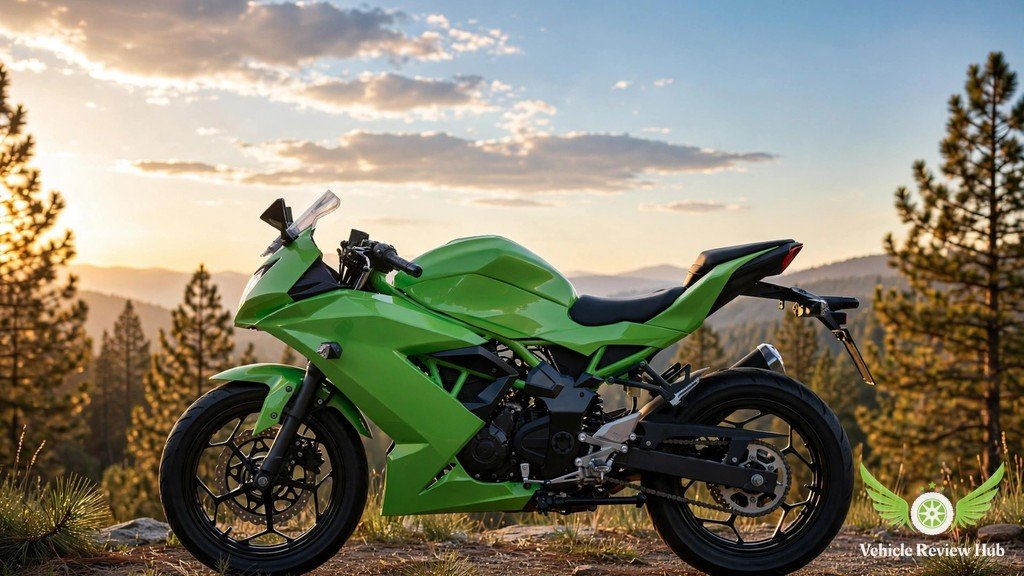
Kawasaki Ninja 125 Price in the UK: £4,699
The 2026 Ninja 125 lists at £4,699 in the UK, in Lime Green or Metallic Graphite Gray with Metallic Spark Black, on sale from October 2025, and this Kawasaki Ninja 125 review uses that RRP as its reference price. Dealers discount from that RRP: Daytona lists an “Our Price” of £4,299, and Seastar lists the bike from £4,599. It launched in 2019 at £4,399 for the standard bike and £4,499 for the SE in black and grey, it was £4,599 in 2023 in Lime Green and Ebony only, and it is £4,699 for 2026. Never print the £5,399 figure on one dealer page for a “2026 Ninja 125 Performance” as the standard price: that is the accessorised edition, with an Arrow carbon silencer, a colour-coded seat cover and engine sliders. The naked Z125 sibling is cheaper at £4,299 or £4,399 for 2026.
Quoted US Prices Are Fabricated
Any US dollar price quoted for a new Ninja 125 is fabricated, because no US price exists. The bike was never sold in America, Kawasaki USA never listed it, and there is no MSRP to convert, a point this Kawasaki Ninja 125 review stresses because converted prices circulate widely. What circulates online is usually a straight currency conversion of the UK price, dressed up as a price. This Kawasaki Ninja 125 review prints no dollar price for the bike, and a reader in the United States should treat any site that does as a site that has not checked. The Z125 Pro, a different air-cooled mini bike, is the American Kawasaki alternative in the small-bike class, and the step up is the Ninja 500, covered in a later cluster. Importing one is governed by the 25-year rule, covered in the comparison blog, because no settled import cost exists to print.
| Model year | UK price | Notes |
|---|---|---|
| 2019 launch | £4,399 (£4,499 SE) | Standard Lime Green / Ebony + Pearl Blizzard White; SE Black / Grey |
| 2023 | £4,599 | Lime Green / Ebony only |
| 2026 | £4,699 | Lime Green or Metallic Graphite Gray / Metallic Spark Black; dealer discounts to £4,299 |
| 2026 Performance edition | £5,399 | Accessorised edition (Arrow silencer, seat cover, sliders), NOT the standard bike |
| Z125 sibling (2026) | £4,299 / £4,399 | Naked twin, same engine and chassis |
Notes: all prices are UK RRP, year-labelled, and never carried across years in this Kawasaki Ninja 125 review. The £4,199 figure in MCN’s price box is stale and wrong; the launch price was £4,399. No US dollar price exists for a new Ninja 125, and none is printed here.
Kawasaki Ninja 125 Design, Features and Technology
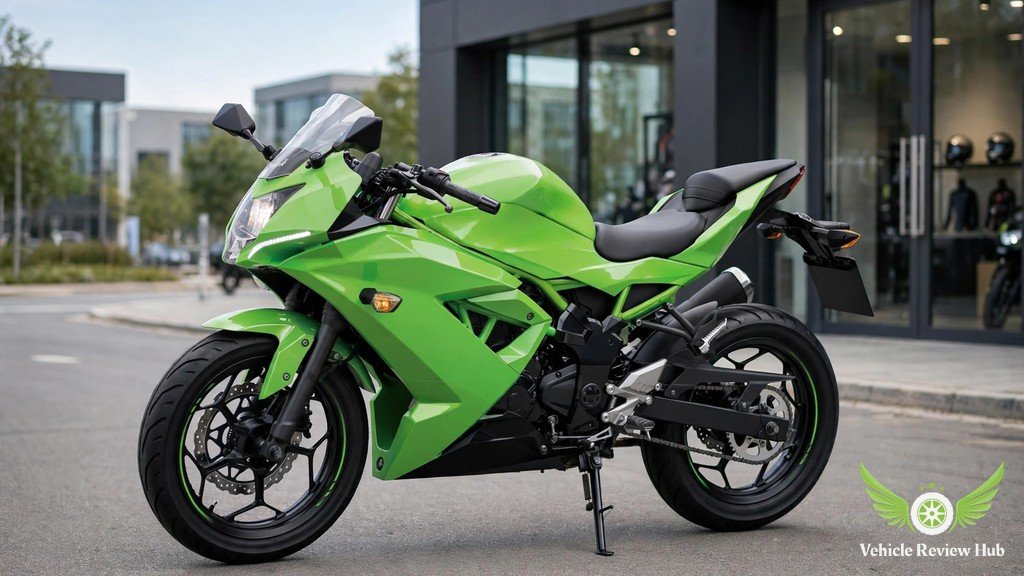
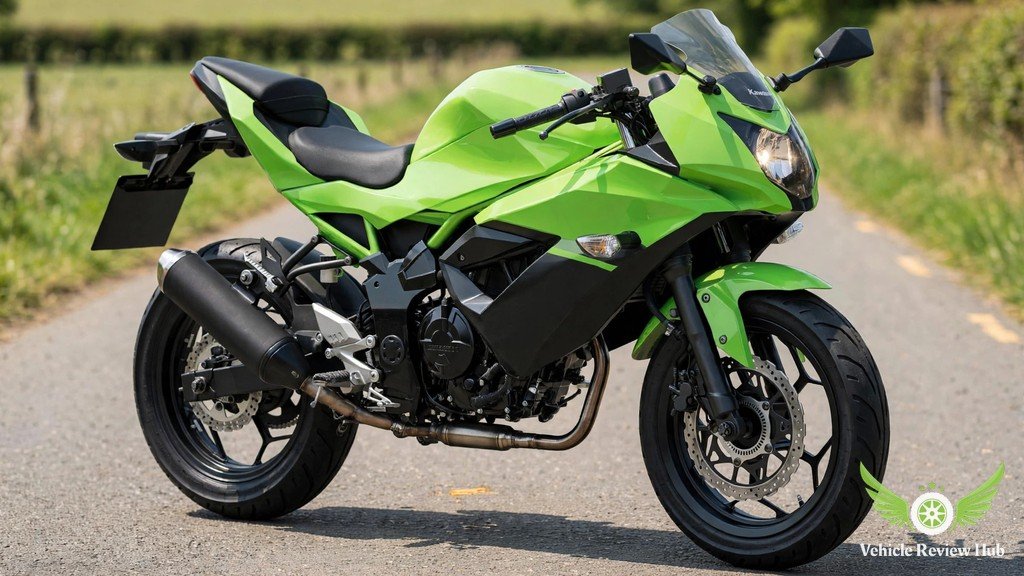
The Ninja 125 looks like a bigger Ninja shrunk down. The full fairing and the Lime Green and black KRT-inspired bodywork give it the family face, and at 1,935 mm long on 17-inch wheels it is a full-size 125, not a mini bike, a distinction this Kawasaki Ninja 125 review makes because the bike is often mistaken for one. This Kawasaki Ninja 125 review finds the styling and chassis feel grown-up, while the equipment list feels frozen in 2019, because in most respects it was.
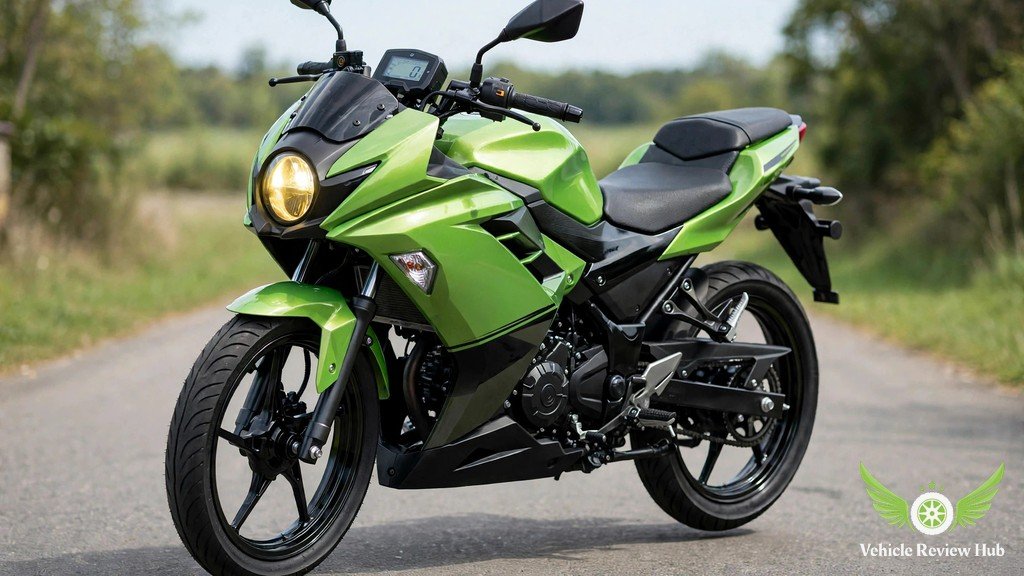
Dated Clocks, No Gear Indicator
The dash is the most dated part of the bike, and this Kawasaki Ninja 125 review does not hide that. It is an all-digital LCD unit lifted from the Z250SL, showing revs, speed, trips, a fuel gauge, a clock and warning lights, and that is all it shows. Bennetts called the display dull, with no colour and information limited to rpm, speed and trips, with no fuel consumption readout and no gear position indicator. MCN added that there is no mode button, no mpg or tank range and no connectivity. Visordown called it not very eye-catching but functional, but on a bike that costs £4,699 in 2026, the missing gear indicator on a six-speed learner bike is a real omission. The headlight is a halogen unit that is always on, with LED position lights beside it. The mirrors are not the best, and the brake and clutch levers are not span-adjustable. There is no traction control or rider mode, which the R125 and the KTM RC 125 both offer, and the only electronic aid is the standard Bosch ABS. Kawasaki offers an Ergofit higher seat that adds 20 mm, and the options list includes an Arrow exhaust, a smoked windscreen and engine sliders.
Still Current in Britain for 2026
The Ninja 125 is still current in Britain for 2026, in its eighth model year, and this Kawasaki Ninja 125 review confirms it is not a discontinued bike. It is on sale now in two colours, Lime Green and Metallic Graphite Gray with Metallic Spark Black, both at £4,699. The 2026 colour refresh brought no mechanical changes, so the bike a buyer collects today is the bike testers rode at the Malaga launch. From 1 November 2026 Kawasaki UK also rolls out a six-year warranty on new road bikes, replacing the four-year Warranty Plus scheme. That continuity cuts both ways: a known quantity with no teething problems, but a generation behind its rivals on equipment. For a buyer who values the Ninja name and the faired look over the latest electronics, the 2026 bike is still a sensible buy.
Kawasaki Ninja 125 Riding Experience and Comfort
On the road, this Kawasaki Ninja 125 review finds a bike that is easy to love and easy to outgrow in the same ride. The chassis is the star: testers praised its handling, its stability and its brakes, and the 785 mm seat and 149 kg kerb weight make it one of the most approachable faired bikes a new rider can buy. The engine is the compromise, and this Kawasaki Ninja 125 review is blunt about it: it needs revs, it runs out of breath above 60 mph, and overtaking has to be planned. It flatters a beginner and frustrates an experienced rider, which is what an A1 bike is supposed to do. Bennetts reckoned on around 150 miles from the 11-litre tank in real-world riding.
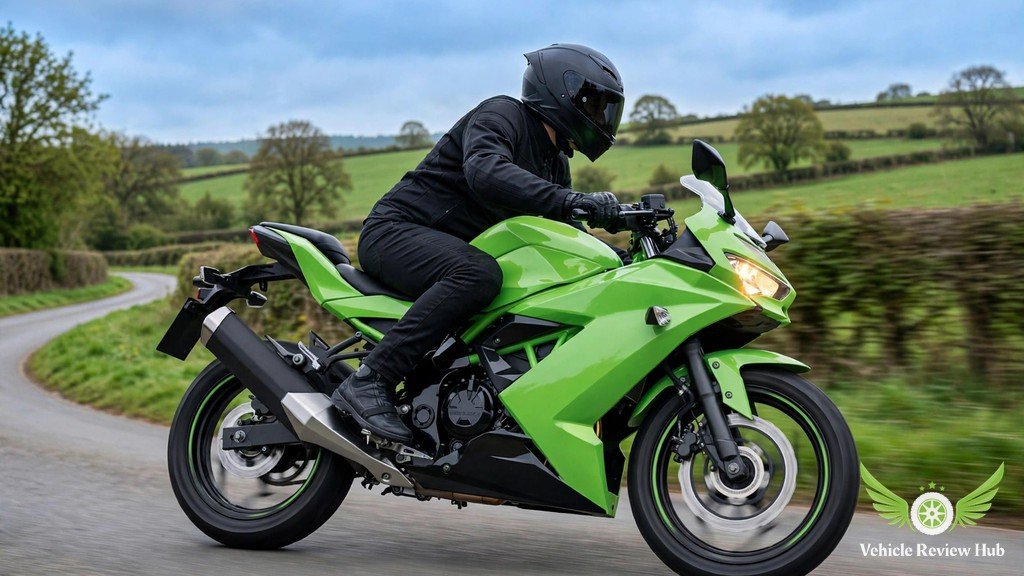
Praised Chassis, Rev-Hungry Engine
The chassis drew praise from every tester who rode the bike, and this Kawasaki Ninja 125 review agrees it is the bike’s strongest asset. MCN said the sporty handling is a breath of fresh air, and that the bike is easy to manage, predictable and controlled, with stability that holds up even when pushed beyond its design parameters. Visordown called it a nimble, easy to ride yet stable package, with firm yet plush suspension that holds its line on rough roads. The Dunlop tyres drew praise for grip and feel, the brakes with standard ABS were judged more than adequate by MCN, and Visordown found the front brake needs a firm two-finger pull while the rear brake was a pleasant surprise. The engine is the other half of the story. It pulls hardest from 7,000 to 9,000 rpm, it needs a big dose of clutch slip from a standstill before it hooks up, and it goes breathless above 60 mph. MCN found it happy to buzz along at an indicated 60 mph, but warned that overtaking normal traffic has to be planned with military precision because there is not much left after 55 mph. Bennetts put the top speed at just over 70 mph, limited by the 10,500 rpm rev limiter in top gear, with a spec-box estimate of 73 mph, and MCN saw an indicated 74 mph flat out, the fastest figure in the top-speed record. Around 7,000 rpm a strange harmonic resonance appears, though Visordown noted it is a light buzz through the mirrors rather than hand-tingling vibration. The clutch is light and progressive, and the six-speed box shifts with a light flick of the lever.
Not Sold in Indonesia Either
The Ninja 125 is not sold in Indonesia either. The bike is reported, on Wikipedia alone, as assembled at Kawasaki Motor Indonesia’s Bekasi plant in West Java, but Kawasaki Motor Indonesia’s own current Ninja line-up lists the Ninja 250, Ninja H2, Ninja ZX-10R, Ninja ZX-25R, Ninja ZX-4RR, Ninja ZX-6R and Ninja e-1, and no Ninja 125. The honest framing is that the bike is built in Indonesia for export and not sold there, though the assembly claim is single-source and unconfirmed by Kawasaki itself. What the Indonesian absence does tell a buyer is how the Ninja 125 sits in Kawasaki’s range: it is a European A1 bike first, an Asian export second, and an Indonesian domestic model never. Its Asian sales, including Bangladesh, where a Bangladesh road test praised its Jekyll-and-Hyde character and noted a clutch that can grab with a clatter at slow starts, are export markets for a bike designed to Europe’s licence rules.
Kawasaki Ninja 125 Review: Pros, Cons and Verdict
The verdict of this Kawasaki Ninja 125 review is that the bike is a good learner’s sports bike with an old-fashioned equipment list. If the faired Ninja look, the praised chassis and the low seat matter most, it is hard to fault; if traction control, a gear indicator and upside-down forks matter, the YZF-R125 and the RC 125 have moved ahead of it. The Ninja 125 asks its buyer to pay £4,699 for a bike that is mechanically unchanged since 2019, and the honest answer of this Kawasaki Ninja 125 review is that the chassis and the name still justify it, while the dash and the electronics do not.
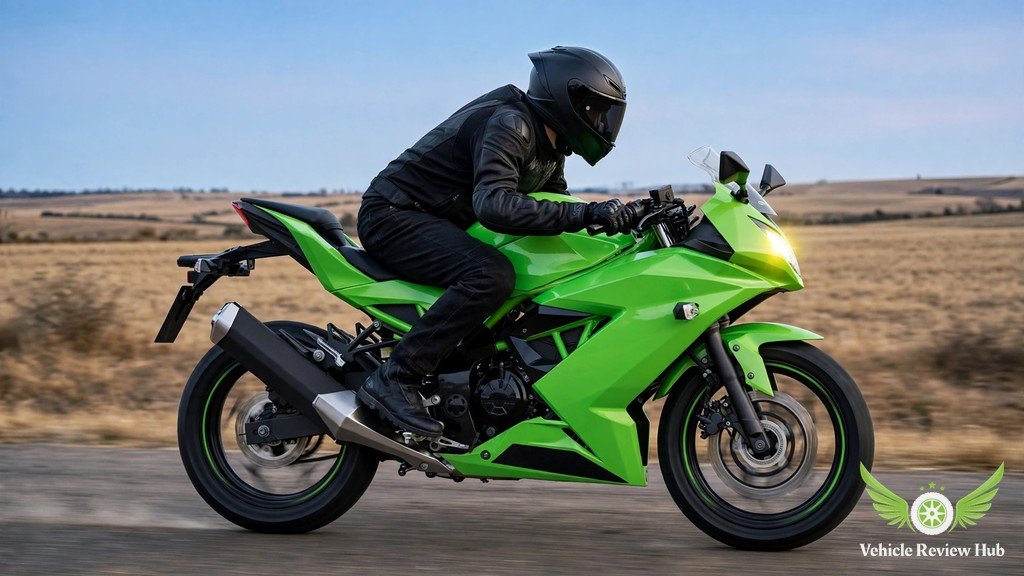
Main Advantages and Limitations of the Kawasaki Ninja 125
MCN rated the Ninja 125 four out of five overall, with four for ride and brakes, four for the engine, five for reliability and build quality, three for value against rivals and three for equipment, and this Kawasaki Ninja 125 review uses that split as its summary. The advantages start with the chassis and the comfortable riding position with a low 785 mm seat that is joint-lowest in its class. The engine is under-stressed, and the owner record, though thin, is clean, with fading paint the only pattern anyone has found. Servicing is every 12 months or 7,500 miles, which is generous for a small bike. The limitations are the rev-hungry delivery, the breathless top end above 60 mph, the dated LCD dash with no gear indicator, the halogen headlight, and the absence of traction control or rider modes. The long-term owner who ran a 2024 bike for 15 months and about 9,000 miles called it a paragon of reliability, with only a temperamental neutral when hot and a warm right leg as niggles.
| Advantages | Limitations |
|---|---|
| Praised chassis: predictable, stable, fun on real roads | Rev-hungry engine with little drive below 6,500 rpm |
| Low 785 mm seat, joint-lowest in the class | Breathless above 60 mph; overtaking needs planning |
| Under-stressed sleeved-down 250 engine | Dated LCD dash with no gear indicator, no connectivity |
| Standard ABS; light, progressive clutch | No traction control or rider modes; halogen headlight |
| Clean owner record; MCN reliability 5/5 | Price up from £4,399 to £4,699 with no mechanical change |
| Full-faired Ninja styling; still current for 2026 | Never sold in the USA; fading paint the only owner complaint pattern |
Notes: scores and quotes in this Kawasaki Ninja 125 review are from MCN, Visordown and Bennetts, and the owner evidence is the two MCN owner reviews plus the MotorbikeToday long-term owner, labelled as such. The 100,000-mile claim from one MCN owner is unverified and is not printed as a fact anywhere in this review.
A1 Limit: 15 PS by Law
The A1 licence caps a 125 at 11 kW, which is 15 PS, and at 0.1 kW per kilogram of power to weight, and the Ninja 125 uses the full legal allowance. The bike cannot legally make more power, so the differences between it and its rivals are weight, gearing, torque curve and equipment, not output. The Ninja 125 weighs 149 kg, which gives it the weakest power-to-weight in the class on Bennetts’ 2019 table: the GSX-R125 at 0.110 bhp per kilogram and the YZF-R125 at 0.104, against the Ninja at 0.100, a gap this Kawasaki Ninja 125 review notes is small but real. It has the simplest kit of the four, with ABS only, a conventional fork and an LCD dash, where the R125 has variable valve actuation, an upside-down fork and traction control, and the RC 125 has cornering ABS, ride-by-wire and traction control. The Ninja’s answer is its chassis, its low seat and its price, which at £4,699 sits between the GSX-R125 at £3,999 and the YZF-R125 at £5,501. For a new A1 rider who wants a faired Ninja and a bike that is easy to ride, predictable and well built, this Kawasaki Ninja 125 review finds the bike still earns its place in 2026. For a rider who wants the most equipment for the money, the rivals have the stronger case, and the full comparison is in the comparison blog. Either way, the Ninja 125 puts a new rider on a proper faired sports bike at the legal limit of what a 125 is allowed to be.
Kawasaki Ninja 125 Review Frequently Asked Questions
These answers cover the questions buyers ask first about the Ninja 125 in this Kawasaki Ninja 125 review — whether it was ever sold in the United States, what it costs, what its engine makes, and whether it suits a new rider.
Was the Kawasaki Ninja 125 ever sold in the United States?
No. The Ninja 125 was never sold in the United States, and Kawasaki USA has no model page for it. The bike was built for Europe’s A1 licence, which caps a 125 at 11 kW, and the American market has no equivalent licence class to support it. No US price exists for a new Ninja 125, so any dollar figure quoted for one is a currency conversion, not a price. A US rider who wants one faces the 25-year import rule, with the first eligible imports in 2044, and this Kawasaki Ninja 125 review covers the import reality in the comparison blog.
How much does the Kawasaki Ninja 125 cost?
£4,699 in Britain for 2026, the same price for both colours, Lime Green and Metallic Graphite Gray with Metallic Spark Black. It launched in 2019 at £4,399, with an SE at £4,499, and it was £4,599 in 2023. Dealers discount from that RRP, which this Kawasaki Ninja 125 review uses as its reference price: Daytona lists an Our Price of £4,299, and Seastar lists the bike from £4,599. Do not mistake the £5,399 figure on one dealer page for the standard price: that is the accessorised Performance edition, with an Arrow carbon silencer, a colour-coded seat cover and engine sliders.
What engine does the Kawasaki Ninja 125 have, and how much power does it make?
A 125cc liquid-cooled DOHC four-valve single, sleeved down from the Ninja 250SL’s 249cc single, with a 58.0 x 47.2 mm bore and stroke and an 11.7:1 compression ratio. Kawasaki claims 11 kW (15 PS) at 10,000 rpm, with torque of 11.7 Nm at 7,700 rpm, and 15 PS works out to 14.8 hp — the figure this Kawasaki Ninja 125 review prints, never 15 hp as the claimed figure. Peak power arrives 500 rpm short of the 10,500 rpm redline, and the engine pulls hardest between 7,000 and 9,000 rpm, with little drive below 6,500 rpm.
Is the Ninja 125 still made?
Yes. It is still current in Britain for 2026, in its eighth model year, and the 2026 colour refresh brought no mechanical changes, so the bike a buyer collects today is the bike testers rode at the 2018 launch. The bike is not discontinued — a point this Kawasaki Ninja 125 review confirms — and 1000PS also lists a 2027 model year.
Does the Ninja 125 have a gear indicator?
No. The dash is an all-digital LCD unit lifted from the Z250SL, showing revs, speed, trips, a fuel gauge, a clock and warning lights, and that is all it shows. There is no gear position indicator, no mode button, no mpg or tank range, and no connectivity. This is the most dated part of the bike, and this Kawasaki Ninja 125 review does not hide that. The headlight is a halogen unit that is always on, with LED position lights, and the only electronic aid is the standard Bosch ABS, since the bike has no traction control or rider modes.
Is the Ninja 125 good for a beginner rider?
Yes, with the usual A1 caveats. The 785 mm seat is joint-lowest in the class, the kerb weight is 149 kg, the clutch is light and progressive, and the chassis is predictable and well built, which is what a new rider needs most. The caveats are the rev-hungry delivery, the breathless top end above 60 mph, and the firm suspension, and overtaking has to be planned because there is not much left after 55 mph. MCN rated the bike 4 out of 5 overall, with 5 out of 5 for reliability and build quality, and this Kawasaki Ninja 125 review finds the bike still earns its place in 2026 for a new A1 rider who wants a faired Ninja.