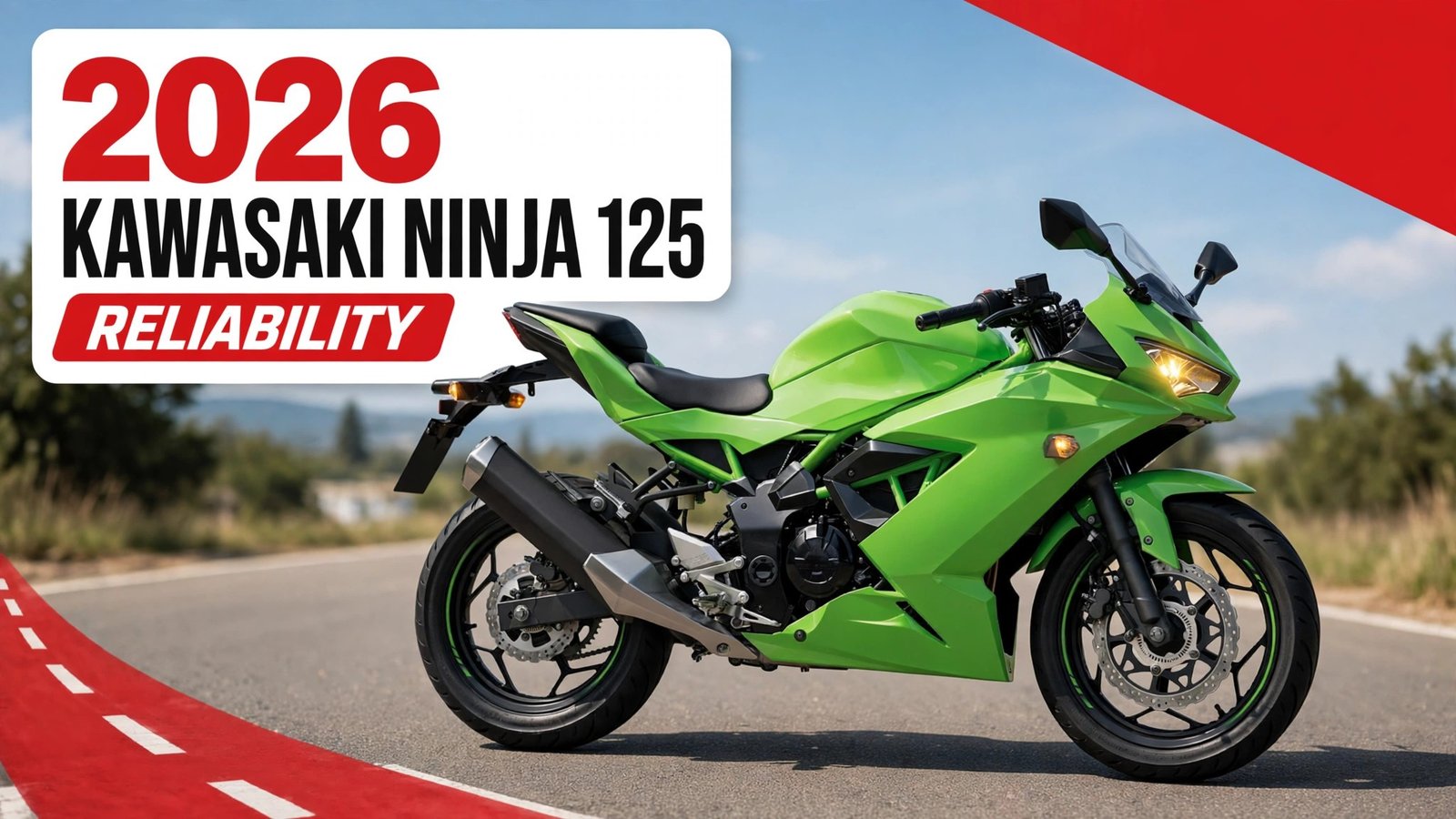
A learner bike lives or dies on reliability, and this Kawasaki Ninja 125 reliability guide starts with the reassuring part: the owner record is thin, but what exists is clean. The Ninja 125 has been on sale in Britain since 2019, and in all that time no recall has named it.
This guide works through what that clean record rests on — the service schedule, the common wear items and the ownership costs — and the few owner complaints that have appeared, so a buyer knows what to check before handing over the money.
Kawasaki Ninja 125 Reliability Overview
Reliability is the quiet question behind every learner bike purchase, and this Kawasaki Ninja 125 reliability guide starts with the honest answer: the owner record is thin, but what exists is clean. The Ninja 125 has been on sale in Britain since 2019, its eighth model year is 2026, and in all that time no recall has named it and only one owner complaint pattern has appeared, a clean record for an 11 kW (15 PS) learner single. That is a strong position for a first bike — and a narrow evidence base.
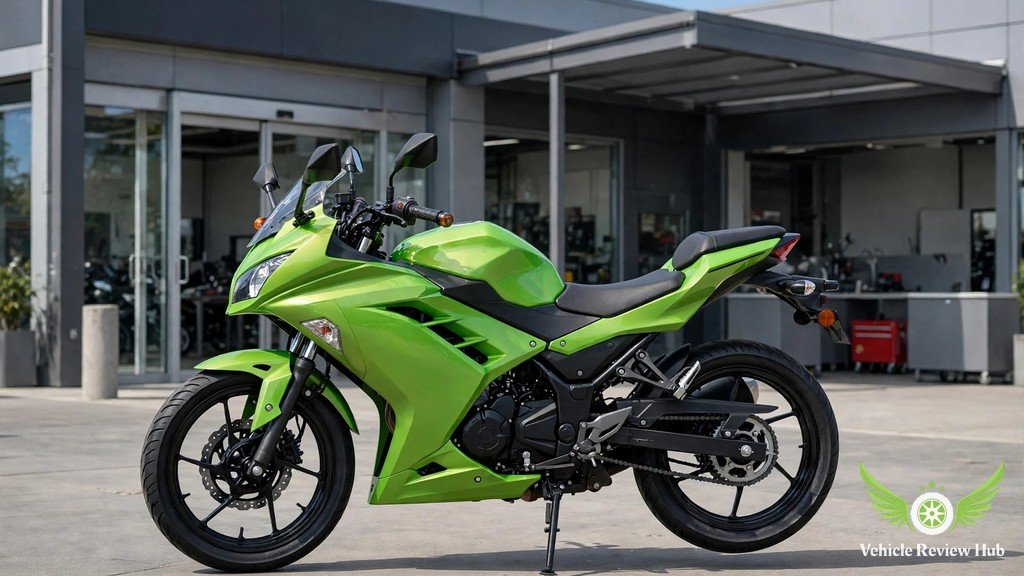
Owner Record Is Thin but Clean
The owner record in this Kawasaki Ninja 125 reliability guide is thin because few first-time riders write long-term reviews, and clean because the few who did had almost nothing to complain about. The MCN review gives the bike 5 out of 5 for reliability and build quality, and owners rate it 4.5 out of 5 — but only two owner reviews exist on its page. One owner, Sam, ran a 2019 bike for 4,000 miles and reported a single problem, fading paint on the steering yoke and around the ignition barrel. The other MCN owner review makes a 100,000-mile claim that MCN itself labels unverified, so this Kawasaki Ninja 125 reliability guide does not repeat it as a fact. The most useful record is the MotorbikeToday long-term owner review of a 2024 bike run for 15 months and about 9,000 miles, with no failures beyond routine maintenance — the owner calls it a paragon of reliability.
| Reliability question | What the evidence says |
|---|---|
| MCN reliability and build quality score | 5 out of 5 (overall bike score 4 out of 5) |
| MCN owners’ reliability rating | 4.5 out of 5 — only two owner reviews on the page |
| Longest owner record found | 2024 bike, 15 months, about 9,000 miles — no failures beyond routine maintenance |
| Failure pattern reported | None for engine, gearbox, electrics or chassis |
| Only complaint pattern | Fading paint on the steering yoke and ignition barrel |
| Recalls naming the Ninja 125 | None in any database checked — see the recalls section |
| Service interval | 12 months or 7,500 miles, whichever comes first |
Notes: the MCN scores and owner reviews are from the MCN review, and the long-term owner record is the MotorbikeToday owner review of a 2024 bike in this Kawasaki Ninja 125 reliability guide.
How Mileage, Storage and Previous Care Affect Reliability
How a Ninja 125 has been used matters more than how old it is, and buyers of a used one reading this Kawasaki Ninja 125 reliability guide should read the bike’s history before its odometer. A low-mileage bike stored damp can be a worse buy than a higher-mileage commuter serviced on schedule, because damp storage accelerates the paint fading this Kawasaki Ninja 125 reliability guide warns about. The service record is the document that matters in this Kawasaki Ninja 125 reliability guide: the interval is 12 months or 7,500 miles, so a bike with stamps at every interval has been looked after and a bike with gaps has not.
Kawasaki Ninja 125 Common Problems and Wear Items
The common problems list for the Ninja 125 is short, and that shortness is itself the finding of this Kawasaki Ninja 125 reliability guide: a small, simple single has few parts to fail and few owner complaints to record. The wear items are the ordinary ones — chain, tyres, brake pads, battery — and they wear at the ordinary rate for a 149 kg learner bike.
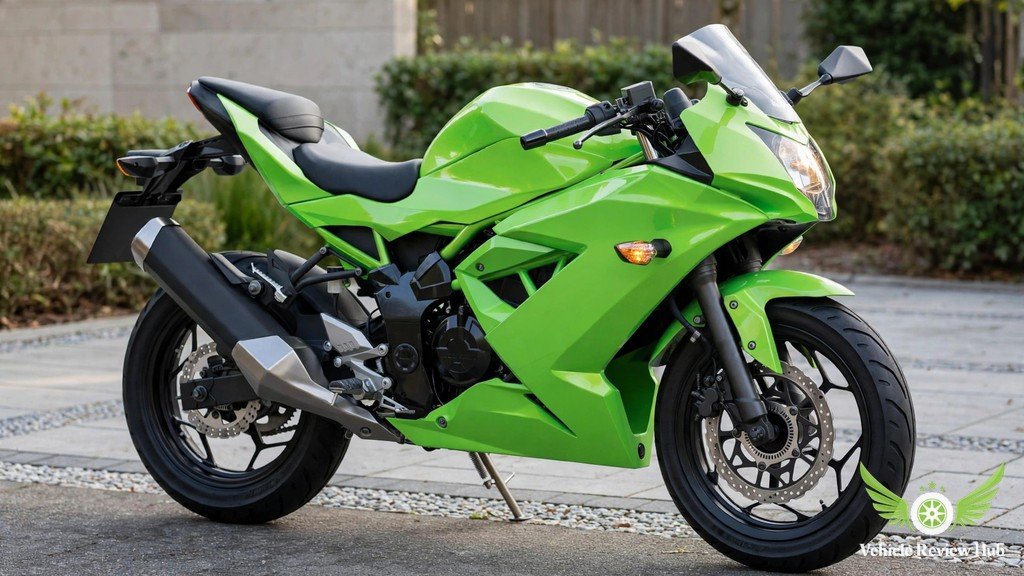
No Recall in Any Database
No recall names the Kawasaki Ninja 125 in any database checked for this Kawasaki Ninja 125 reliability guide, and the searches behind that sentence are worth stating plainly. The NHTSA recalls API was checked live at writing for the Ninja 125 for model year 2026 and returned Count:0 — and the same check on the 2024 Ninja 500 returned Count:1, campaign 25V146000, a clutch release shaft recall. That result is still framed as a search result, not as proof: the bike was never sold in the USA, so the NHTSA database holds few records for it. The CPSC side of this Kawasaki Ninja 125 reliability guide is weaker still: the saferproducts.gov API returned an empty recalls list for the Ninja 125, but an earlier control query returned a Yamaha recall, so the API does not honour product filtering. The full review of the Ninja 125 carries the same framing, and this Kawasaki Ninja 125 reliability guide holds to it.
Fading Paint Is the Only Pattern
Fading paint is pretty much the only complaint mentioned anywhere in the Ninja 125’s owner record, and it is a small one. MCN’s review notes it directly: owner Sam ran a 2019 bike for 4,000 miles and found the paint fading around the yoke and the ignition barrel. First, it is visible on a used bike in seconds, so a buyer reading this Kawasaki Ninja 125 reliability guide can check it before paying — look at the yoke and the ignition surround in daylight. The MotorbikeToday long-term owner ran a 2024 bike for 15 months and about 9,000 miles and reported no paint or finish problems at all — so the fading is not universal, and this Kawasaki Ninja 125 reliability guide records both reports. Two smaller niggles from that same owner are worth naming: a neutral light that sometimes does not show, and heat from the engine felt on the rider’s right leg in slow traffic.
| Issue | Evidence | What to do |
|---|---|---|
| Fading paint on steering yoke and ignition barrel | One owner (2019 bike, 4,000 miles) via MCN; MCN notes it as the only complaint mentioned | Check in daylight before buying; cosmetic only, use as a bargaining point |
| Gearbox temperamental finding neutral when hot | One long-term owner (2024 bike, 15 months, about 9,000 miles) | Irritation, not a failure; no repair reported |
| Right leg heats up in slow traffic | Same long-term owner | Heat from the single-cylinder engine; no repair reported |
| Tramlining on uneven surfaces and loose chippings | Same long-term owner; back wheel inclined to twitch | Handling quirk on poor surfaces; check tyre pressures and condition |
| Engine, gearbox, electrical or chassis failure | No pattern in any tester or owner source consulted | Follow the service schedule; no known weak point to pre-empt |
| Recall | None names the Ninja 125 in any database checked | Check the recall databases and ask a dealer to confirm by frame number |
Notes: the fading-paint report is from the MCN review, and the neutral, leg-heat and tramlining niggles are from the MotorbikeToday long-term owner review, presented as one owner’s experience. The NHTSA search in this Kawasaki Ninja 125 reliability guide was run live at writing for the Ninja 125 (2026, Count:0) with the 2024 Ninja 500 as a working control (Count:1, campaign 25V146000).
Kawasaki Ninja 125 Maintenance Schedule and Servicing
The maintenance schedule for the Ninja 125 is simple, and that simplicity is part of this Kawasaki Ninja 125 reliability guide’s case for the bike: one interval, one oil grade, and a valve check that lands on the same mileage as the service itself. The two numbers an owner needs are the service interval and the valve interval, and both are set out in this Kawasaki Ninja 125 reliability guide with their sources — including where a figure could not be verified and is deliberately left out.
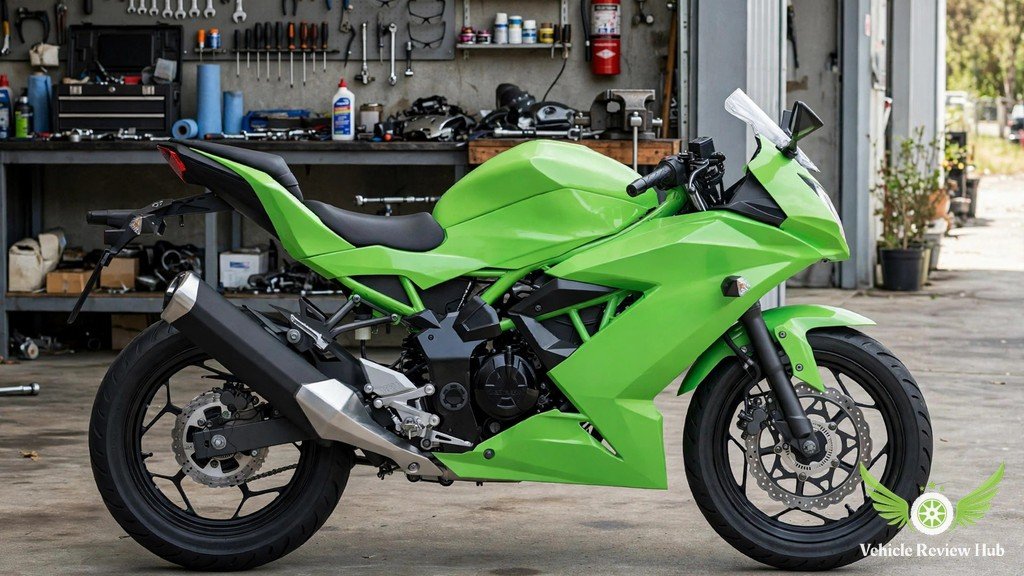
Service Every 7,500 Miles or Yearly
The Ninja 125’s service interval is 12 months or 7,500 miles, whichever comes first, verified from the Kawasaki dealer spec tables read live for this Kawasaki Ninja 125 reliability guide. The first service comes much earlier: the MotorbikeToday owner had his 2024 bike serviced at 900 miles and then at 7,000 miles, consistent with a first service at 1,000 km (about 600 miles) followed by the 7,500-mile interval. The oil grade is verified and uncontroversial: SAE 10W-40 with JASO MA, MA1 or MA2 — one of the few figures both spec sources agree on in this Kawasaki Ninja 125 reliability guide. What is not printed here is the oil volume and the spark plug part number: the aggregators disagree on both, and the manual chart that would settle both could not be read.
Valve Interval Depends on the Sheet
The valve interval is the one place where this Kawasaki Ninja 125 reliability guide has to explain its own heading. The doc flagged the interval as depending on the sheet because the tables that list it do not all say the same thing. The Kawasaki dealer spec table read live for this Kawasaki Ninja 125 reliability guide lists “Valve Clearance, 7500 Miles” next to the 12-month or 7,500-mile service interval, so the valve check falls due at the same point as a routine service. The same figure appears from the other direction: the manual-derived data for the bike’s naked sibling lists a valve clearance check at 12,000 km — the same 7,500 miles, in metric. So the rule is simple: the valve check is due every 7,500 miles, from the dealer spec table.
| Service item | Interval | Source |
|---|---|---|
| Routine service | 12 months or 7,500 miles, whichever comes first | Kawasaki dealer spec table |
| First service | About 1,000 km (600 miles) — owner evidence, not the manual figure | Long-term owner record (services at 900 and 7,000 miles) |
| Valve clearance check | Every 7,500 miles | Kawasaki dealer spec table (“Valve Clearance, 7500 Miles”) |
| Engine oil grade | SAE 10W-40, JASO MA, MA1 or MA2 | Verified — both spec sources agree on the grade |
| Engine oil volume | Not printed — aggregator figures conflict (0.85 / 0.93 / 1.20 L vs 1.0 / 1.1 / 1.3 L) | Owner’s manual or Kawasaki dealer |
| Spark plug | Not printed — aggregator figures conflict (NGK LMAR8G vs NGK CR8E / DPR8EA-9) | Owner’s manual or Kawasaki dealer |
| Air filter and spark plug renewal | 12,000 km in the sibling’s manual-derived data — not verified for this bike | Lead only; confirm from the manual |
Notes: the service interval and the valve clearance figure are from the Kawasaki dealer spec table read live at writing (Seastar Superbikes lists “Service Interval: 12 months / 7500 miles” and “Valve Clearance, 7500 Miles”). The oil volumes and spark plug are deliberately not printed in this Kawasaki Ninja 125 reliability guide because the aggregator sources conflict and the owner’s manual chart could not be read — see the final section.
Kawasaki Ninja 125 Tires, Brakes and Suspension Maintenance
Tyres, brakes and suspension are where a learner bike’s reliability becomes a safety question, and this Kawasaki Ninja 125 reliability guide treats them that way. The suspension is adjustable at one end only, the brakes are a single disc at each end with standard ABS, and the tyres are common 17-inch sizes.
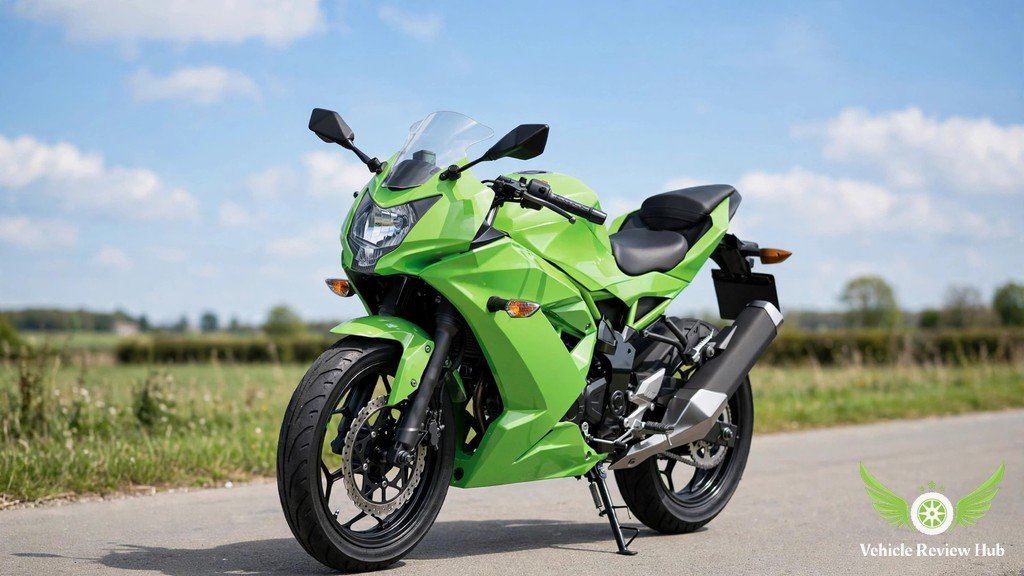
Suspension Is Preload-Adjustable at Rear
The rear suspension is preload-adjustable and the front is not, and that split is the whole story of suspension maintenance in this Kawasaki Ninja 125 reliability guide. At the back, the Uni-Trak gas-charged shock has adjustable spring preload only, so the owner’s one job is to set the preload to suit their weight. At the front, the 37 mm conventional telescopic fork has no adjustment at all, with 110 mm of travel. Testers found the factory suspension firm — the Visordown review calls it firm yet plush, holding its line on rough roads, and MCN found the handling easy to manage, predictable and controlled. The long-term owner softened the factory rear preload and found the cornering crisper — if the bike feels harsh over bumps, try the rear preload first.
Tire, Brake and Suspension Checks That Matter
Tyre pressures are the first: both spec sources agree on 200 kPa (29 psi) front and 225 kPa (33 psi) rear for solo riding, cold — check them weekly. Check the brake pads at every service and the fluid with them: single 290 mm petal disc front, single 220 mm petal disc rear, both with standard ABS. The ABS needs no maintenance, but the owner should know how it behaves — Visordown found it steps in quite early, which suits a learner bike, and the front brake needs a firm two-finger pull. The chain is the wear item that needs the most regular attention: a 520 sealed chain, 25–35 mm of slack at the midpoint, lubricated every 800–1,000 km — the only chain figures this Kawasaki Ninja 125 reliability guide prints. The full performance guide covers how the chassis feels when it is working well; this section of the Kawasaki Ninja 125 reliability guide is about keeping it that way.
| Item | Check or setting | How often |
|---|---|---|
| Front tyre pressure (cold, solo) | 200 kPa (29 psi) | Weekly, cold |
| Rear tyre pressure (cold, solo) | 225 kPa (33 psi) | Weekly, cold |
| Tyre sizes | 100/80-17 front, 130/70-17 rear (Dunlop) | Check tread and sidewall age at every service |
| Front fork | 37 mm conventional, 110 mm travel, no adjustment | Check fork seals for weeping at service time |
| Rear shock | Uni-Trak, preload adjustable only, 112 mm travel per Kawasaki sheet | Set preload to rider weight; soften if the ride feels harsh |
| Front brake | Single 290 mm petal disc, dual-piston caliper, Bosch ABS | Check pads and fluid at every service |
| Rear brake | Single 220 mm petal disc, dual-piston caliper, Bosch ABS | Check pads and fluid at every service |
| Drive chain | 520 sealed O-ring or X-ring, slack 25 to 35 mm, lube every 800 to 1,000 km | Check slack and lube regularly; measure at the tightest point |
Notes: the tyre pressures, chain slack and lubrication interval are the figures both spec sources agree on, and they are the only chain figures printed in this Kawasaki Ninja 125 reliability guide. The rear travel figure follows the Kawasaki sheet at 112 mm; Visordown’s 2019 table prints 120 mm. The ABS and brake-feel descriptions are from the Visordown review and the MotorbikeToday long-term owner review. Tyre sizes, disc sizes and fork diameter are from the Kawasaki dealer spec sheet in this Kawasaki Ninja 125 reliability guide.
Kawasaki Ninja 125 Maintenance and Ownership Costs
Ownership costs for the Ninja 125 are low in every category that can be measured honestly, and this Kawasaki Ninja 125 reliability guide only claims what it can show. The purchase price is £4,699, the fuel bill is a small single’s bill, the service interval is a generous 7,500 miles or a year, and the warranty now runs to six years at no extra cost.
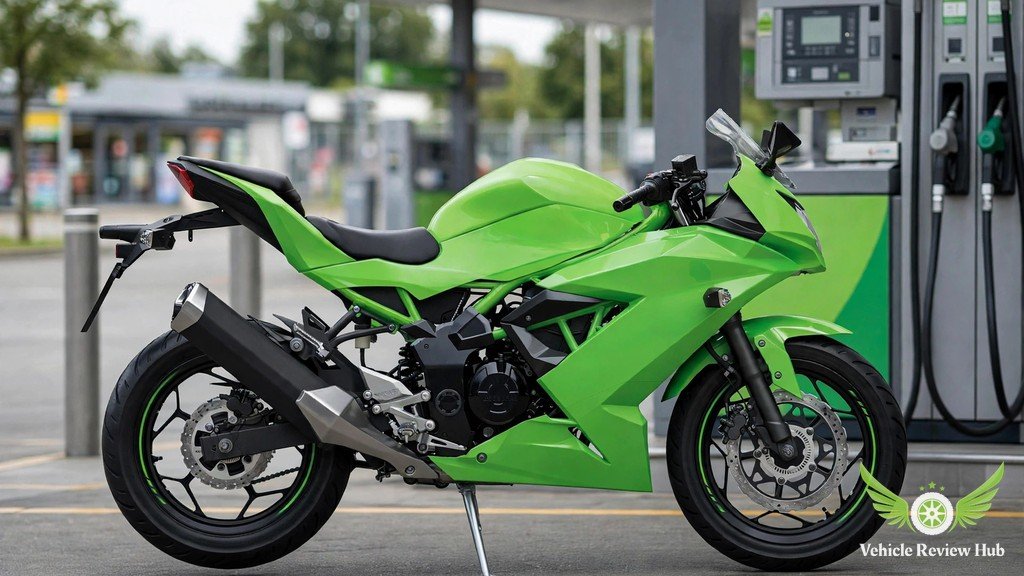
Fuel, Routine Servicing, Tires and Replacement Parts
Fuel is the cheapest part of running a Ninja 125: 2.7 litres per 100 km combined and 61 g/km of CO2 on the 2026 Euro 5+ sheet, as set out in this Kawasaki Ninja 125 reliability guide. The current lab consumption is 2.7 litres per 100 km combined, with 61 g/km of CO2 on the 2026 Euro 5+ sheet — and the road range is about 150 miles, according to Bennetts, with a spec-box estimate of 160 miles to empty; the 407 km WMTC figure is a laboratory number, never a road range. Tyres are a standard 17-inch pair in common sizes, 100/80-17 front and 130/70-17 rear, so replacement is cheap. The bike shares its engine and many chassis parts with the Ninja 250SL lineage and its naked sibling, the Z125. The comparison with its rivals covers the purchase-price side of value in full.
Warranty Plus Reaches Six Years
The warranty is the strongest ownership-cost story on the Ninja 125, because it changed during the writing of this Kawasaki Ninja 125 reliability guide. The standard warranty is two years with unlimited mileage, and Kawasaki’s Warranty Plus extension takes it to four years — a £295 dealer option at the time of the review. From 1 November 2026, Kawasaki UK rolls out a six-year warranty for all new road motorcycles, so a new Ninja 125 bought now carries six years of cover at no extra cost. The dealer pages confirm it: 48 months of Warranty Plus included, six years total, covering manufacturing defects and staying with the bike when sold. Two conditions matter: the official maintenance plan must be respected, and the cover excludes wear items such as tyres, filters, spark plugs and brake pads and discs. The warranty story for this Kawasaki Ninja 125 reliability guide is therefore simple: six years of cover, no extra cost — but the paint fading owners report is excluded as aesthetic damage, so the bike’s one complaint is the one the warranty will not fix.
| Cost item | What it costs |
|---|---|
| List price (2026 UK) | £4,699, both colours; dealer discounts to £4,299 (Daytona) and from £4,599 (Seastar) |
| New Rider Awards | £200 off a new Ninja 125 for CBT completers, to December 2026 |
| Fuel | 2.7 L/100km combined (lab); around 150 miles real-world range on the 11-litre tank (Bennetts) |
| Routine servicing | Every 12 months or 7,500 miles; no servicing price verified — ask a dealer for a quote |
| Tyres | Standard 17-inch pair (100/80-17 front, 130/70-17 rear); ordinary learner-bike tyre prices |
| Warranty | 2 years standard, plus Warranty Plus to a total of 6 years from 1 November 2026, at no extra cost |
| Used prices and resale | No used-price band or resale percentage verified at writing — none printed |
Notes: the list price, dealer discounts and New Rider Awards figure are from Kawasaki dealer pages; warranty terms from the Bennetts review and the Kawasaki UK six-year warranty announcement. No servicing price, used-price band or resale percentage is printed in this Kawasaki Ninja 125 reliability guide, because none was verified.
How to Keep a Kawasaki Ninja 125 Reliable
Keeping a Ninja 125 reliable is mostly a matter of doing the small things on time, and this final section of this Kawasaki Ninja 125 reliability guide gathers them. The bike asks for very little — a service every 7,500 miles or once a year, a clean and correctly tensioned chain, tyres at pressure, and dry storage.
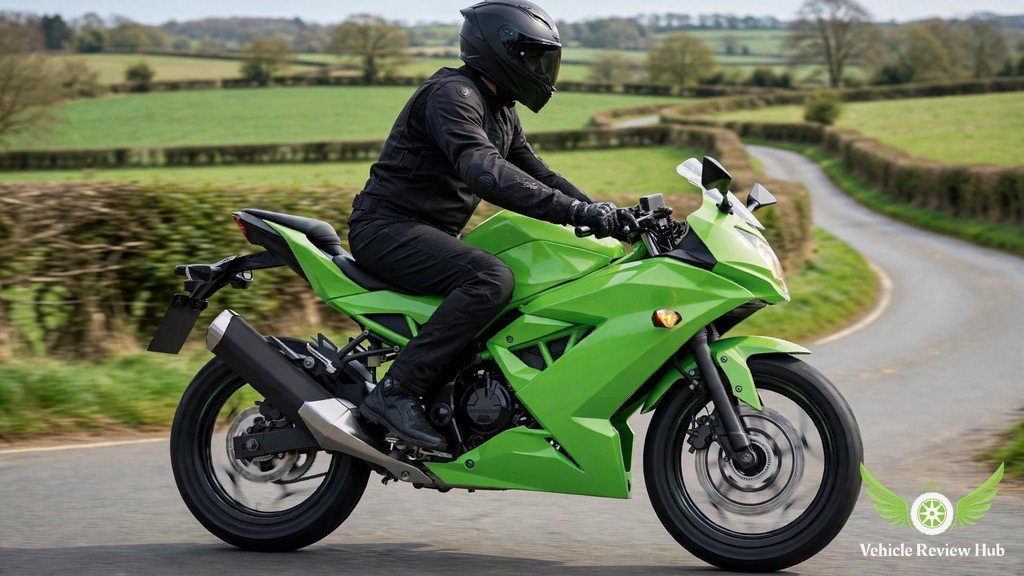
Preventive Maintenance, Records and Regular Inspections
Preventive maintenance on the Ninja 125 starts with the service book and ends with a weekly walk around the bike, and both halves matter. Keep the book stamped at every 12-month or 7,500-mile service, because the stamps are what keep the six-year warranty valid and what a future buyer will ask to see first — the first rule in this Kawasaki Ninja 125 reliability guide. Between services, the weekly routine is short: check tyre pressures cold, chain slack and dry links, brake pads and fluid, and fork seals for weeping — the weekly routine this Kawasaki Ninja 125 reliability guide recommends. Monthly, check the coolant level, the battery terminals and the lights, and wash the bike with proper products — the fading pattern means the yoke and ignition barrel deserve protection from sun and damp.
Manual Chart Could Not Be Read
This heading is a statement about this Kawasaki Ninja 125 reliability guide, not about the bike, and it deserves a straight explanation. The owner’s manual periodic maintenance chart for the Ninja 125 could not be read while writing this guide: Kawasaki does not publish this model’s owner’s manual as a freely downloadable document, and three targeted searches across manuals.plus, manua.ls, manuals.ca, manualsnet and Cyclepedia found no Ninja 125 owner’s manual at all. That is why two figures in this guide are deliberately not printed — the engine oil volumes and the spark plug part number — and the reader is told exactly why. What could be verified without the manual is stated with its source in this Kawasaki Ninja 125 reliability guide: the service and valve figures, the oil grade, and the tyre and chain figures. What could not be verified is left blank; the reader can get it from their bike’s manual or a Kawasaki dealer.
| Routine | What to do | How often |
|---|---|---|
| Daily checks before riding | Tyres, brakes, chain, lights, oil level in the sight glass | Every ride |
| Tyre pressures | 200 kPa (29 psi) front, 225 kPa (33 psi) rear, cold, solo | Weekly |
| Chain | Check slack 25 to 35 mm, clean and lube every 800 to 1,000 km | Weekly, and after long or wet rides |
| Wash and paint care | Wash with proper products; protect the yoke and ignition barrel from sun and damp | Regularly; the warranty excludes aesthetic damage from irregular washing |
| Service | Full service at a Kawasaki dealer, book stamped | Every 12 months or 7,500 miles, whichever comes first |
| Valve clearance check | Dealer job; due with the service | Every 7,500 miles |
| Winter storage | Dry storage under cover, full tank, battery tender | Over winter |
| Records | Keep every invoice and stamp; they keep the warranty valid and prove the bike’s history | Always |
Notes: the figures in this table are stated with their sources earlier in this Kawasaki Ninja 125 reliability guide. The oil volumes and spark plug part number are not in this table, because the owner’s manual chart could not be read and the aggregator sources conflict; take them from the bike’s own manual or a Kawasaki dealer. The KLX150 review covers another Kawasaki that was never sold in the USA.
Kawasaki Ninja 125 Reliability Frequently Asked Questions
These answers cover the Ninja 125’s recall record, its wear items and its service intervals in this Kawasaki Ninja 125 reliability guide — with every figure labelled by its source, and with the gaps named where a figure could not be verified.
Has the Kawasaki Ninja 125 had any recalls?
No recall names the Ninja 125 in any database checked for this Kawasaki Ninja 125 reliability guide. The NHTSA recalls API was checked live at writing for the 2026 bike and returned Count:0, and the same check on the 2024 Ninja 500 returned Count:1, campaign 25V146000, so the control worked. That is still a search result, not proof: the bike was never sold in the United States, so the NHTSA database holds few records for it. The CPSC side is weaker still, since the saferproducts.gov API returned an empty recalls list but an earlier control query returned a Yamaha recall, so its product filtering is unreliable.
What are the Ninja 125’s common problems?
Fading paint is pretty much the only complaint mentioned anywhere in the Ninja 125’s owner record. One owner, Sam, ran a 2019 bike for 4,000 miles and found the paint fading on the steering yoke and around the ignition barrel, and MCN notes it as the only complaint mentioned. No engine, gearbox, electrical or chassis failure pattern appears in any tester or owner source consulted, and MCN gives the bike 5 out of 5 for reliability and build quality, with owners rating it 4.5 out of 5 — although only two owner reviews exist on its page.
What should I check on a used Ninja 125?
Look at the paint on the steering yoke and around the ignition barrel in daylight first, since fading is the one pattern and it shows in seconds. Then check the service stamps, the chain and sprockets, the tyre tread and age, and the brake pads. Two smaller niggles come from one long-term owner: the gearbox can be temperamental finding neutral when hot, and the rider’s right leg heats up in slow traffic. One MCN owner claimed 100,000 miles, but MCN itself labels that claim unverified, so this Kawasaki Ninja 125 reliability guide does not repeat it as a fact.
How often should the Ninja 125 be serviced?
Every 12 months or 7,500 miles, whichever comes first, verified from the Kawasaki dealer spec tables. The first service comes much earlier: the long-term owner had his 2024 bike serviced at 900 miles and then at 7,000 miles, consistent with a first service at about 1,000 km (600 miles). The oil grade is verified and uncontroversial: SAE 10W-40 with JASO MA, MA1 or MA2. The oil volume and the spark plug part number are deliberately not printed in this Kawasaki Ninja 125 reliability guide, because the aggregator sources conflict and the owner’s manual chart could not be read.
When is the valve clearance check due?
Every 7,500 miles, from the Kawasaki dealer spec table, which lists “Valve Clearance, 7500 Miles” next to the 12-month or 7,500-mile service interval, so the valve check falls due at the same point as a routine service. The same figure appears from the other direction: the 12,000 km valve check in the manual-derived data is the same 7,500 miles in metric. The doc flagged the interval as depending on the sheet because the tables that list it do not all say the same thing, but the dealer table figure is the one this guide prints.
How long is the Ninja 125’s warranty?
The standard warranty is two years with unlimited mileage, and Kawasaki’s Warranty Plus extension takes it to four years. From 1 November 2026, Kawasaki UK rolls out a six-year warranty for all new road motorcycles, so a new Ninja 125 bought now carries six years of cover at no extra cost. Two conditions matter: the official maintenance plan must be respected, and the cover excludes wear items such as tyres, filters, spark plugs and brake pads and discs. The paint fading owners report is excluded as aesthetic damage, so the bike’s one complaint is the one the warranty will not fix.