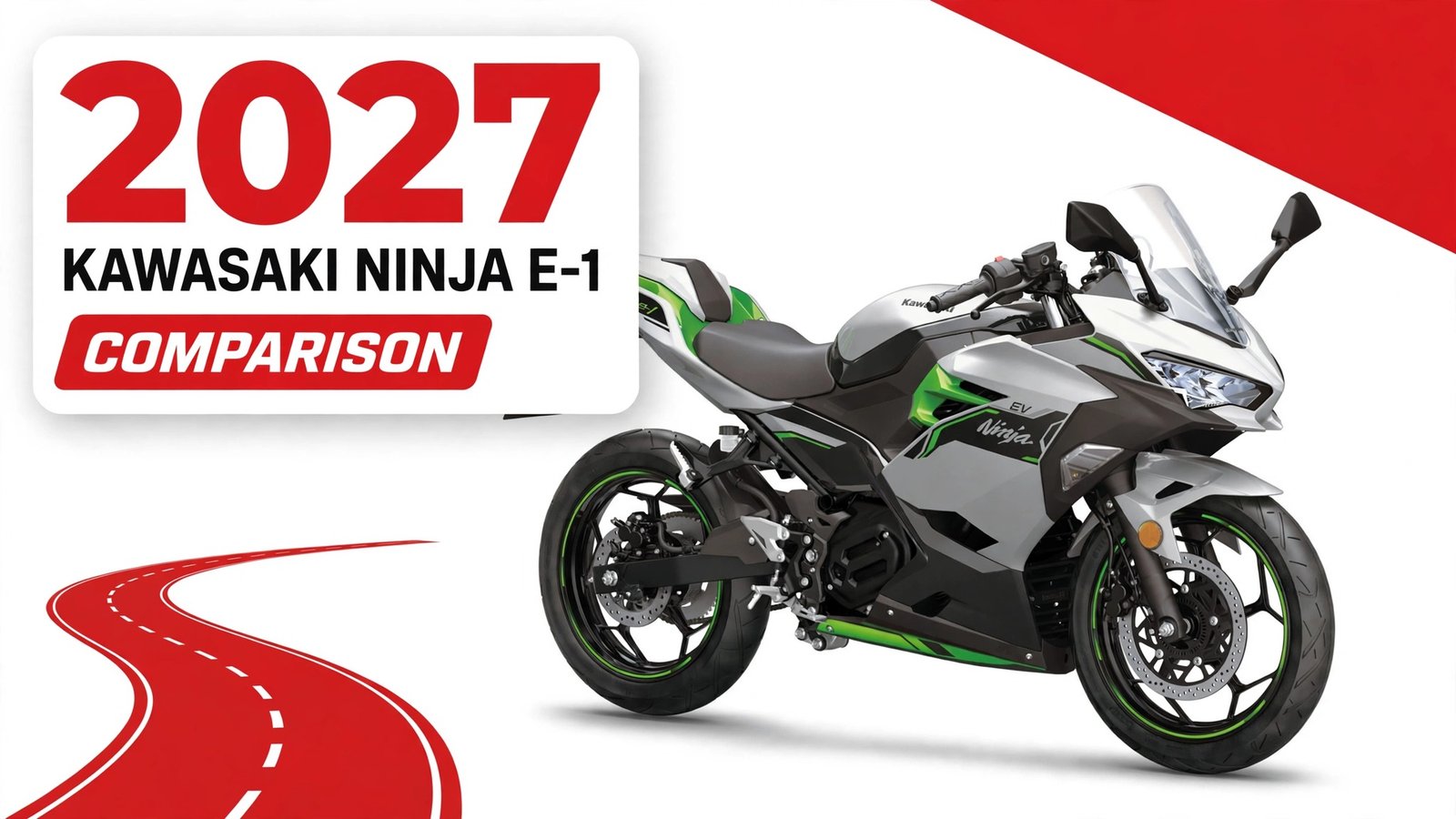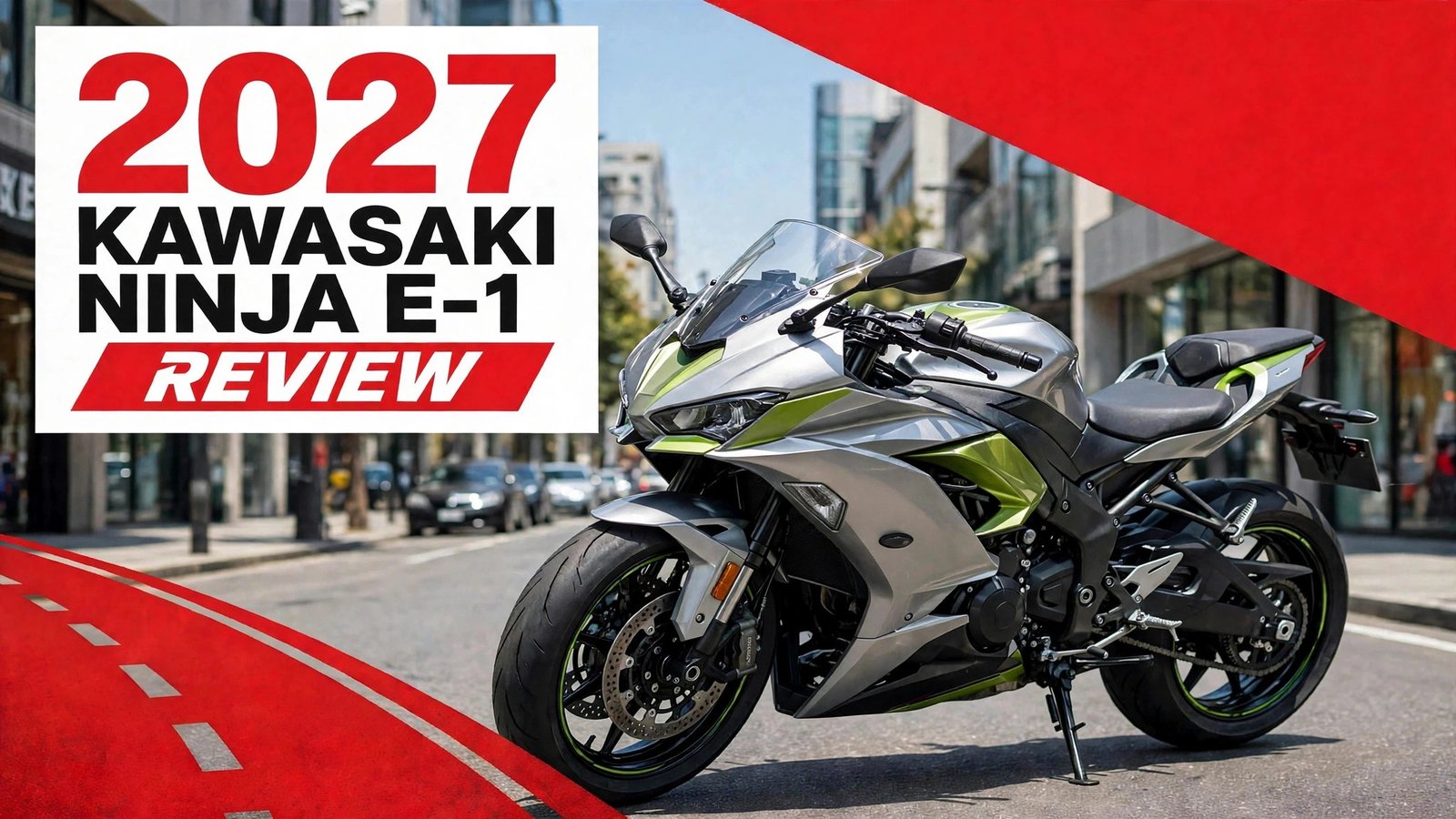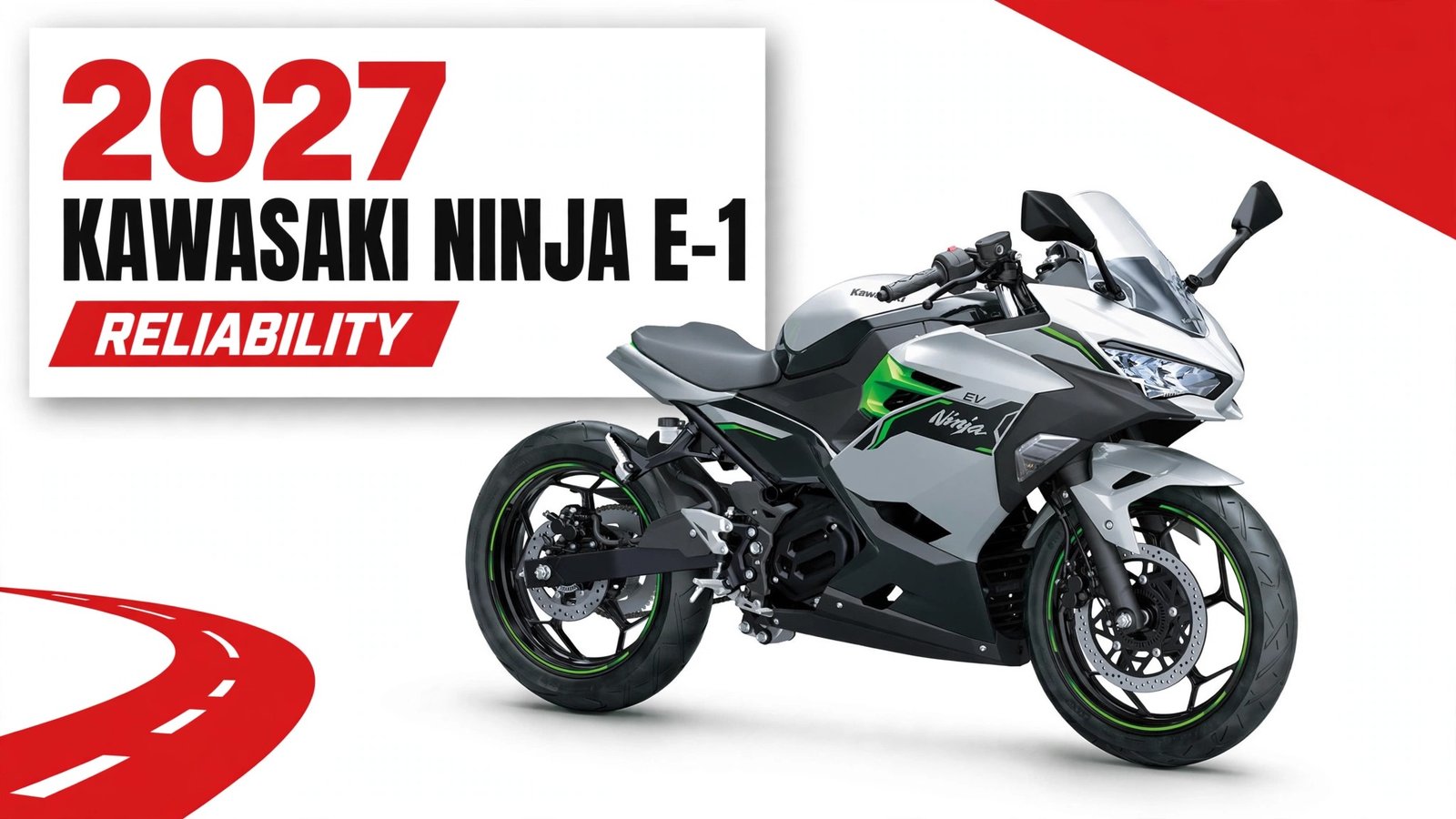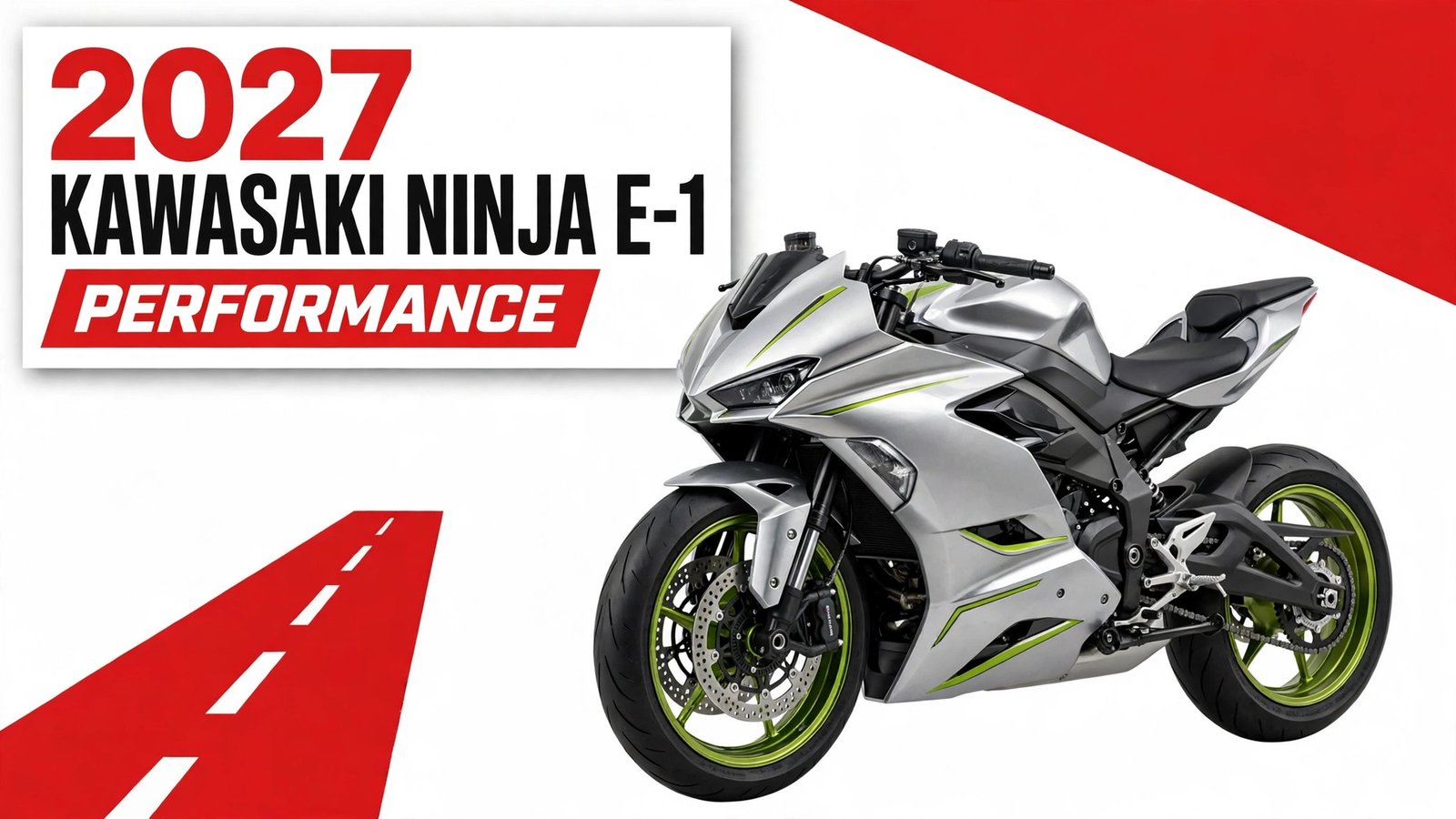
The Kawasaki Ninja e-1 performance story is short on numbers and long on caveats: 55 mph continuous, 65 mph for 15 seconds with e-boost, 41 miles of claimed range, and no 0–60 time, no dyno figure and no MPG figure anywhere. The US spec sheet governs every number in this guide, and it prints the same figures for the 2024 bike and the returning 2027 bike. This Kawasaki Ninja e-1 performance guide tests those sheet numbers against what American testers actually observed, and the gap between the two is the honest story.
Kawasaki Ninja e-1 Motor Performance and Power Delivery
The motor is the same air-cooled permanent-magnet unit as the naked Z e-1, and the delivery is the same too. This Kawasaki Ninja e-1 performance guide starts with the two power figures, because confusing them is the most common mistake in the press coverage.
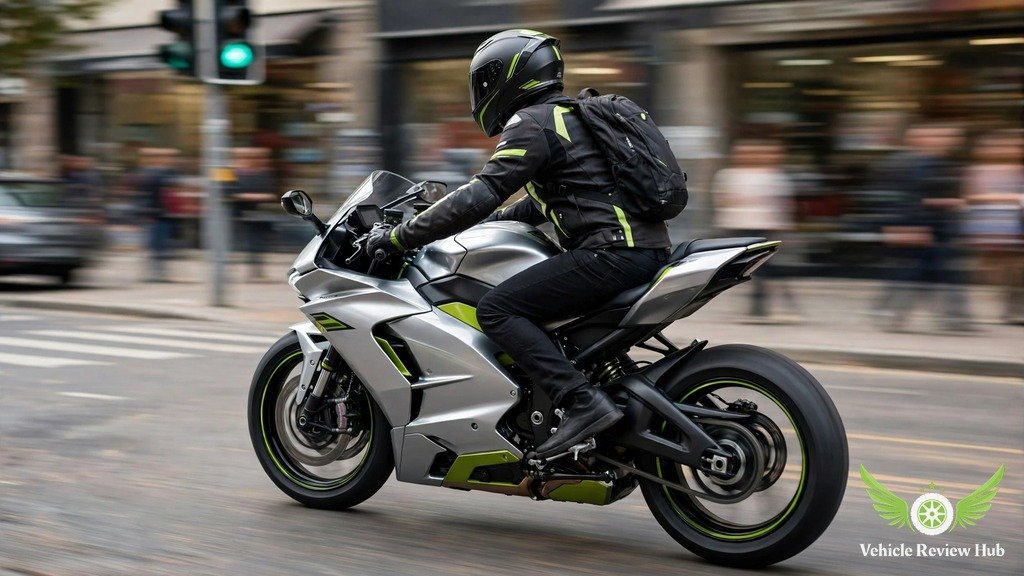
Caps Read 55/40/65/47
The four caps on the US spec sheet govern this Kawasaki Ninja e-1 performance guide: Road 55 mph continuous and 65 mph with e-boost, Eco 40 mph continuous and 47 mph with e-boost. Both the 2024 sheet and the 2027 sheet print the same four figures — the 2027 Ninja e-1 spec sheet is identical to the 2024 sheet in every figure. The Z e-1 prints 53 mph and 63 mph with boost in Road mode and 45 mph with boost in Eco — the Ninja’s 2 mph advantage is aerodynamic, from the fairing, not mechanical.
Rated power is 5.0 kW (6.7 hp) at 2,800 rpm, sustained as long as the rider holds the throttle. Maximum power is 9.0 kW (12.1 hp) at 2,600–4,000 rpm, available only with e-boost, for 15 seconds at a time. Carscoops put it plainly: maximum shove for 15 seconds, then 7 hp the rest of the time. Torque is 29.7 lb-ft at 500 rpm — full torque from a standstill, which is why the bike feels quicker off the line than 6.7 hp suggests. The 15-second limit is confirmed by five sources, and the boost has lockouts: below 35% state of charge the bike switches to Eco mode automatically and e-boost becomes unavailable, and BikeReview adds that boost becomes unavailable when the indicated range drops below about 12 km. This Kawasaki Ninja e-1 performance guide promises no 65 mph burst at low charge — the boost is a full-battery feature.
No 0-60 Figure Exists
No 0–60 time exists for the Ninja e-1, and this Kawasaki Ninja e-1 performance guide will not invent one: no publication has instrumented-tested its acceleration, and Kawasaki publishes no figure. The MotoSnax “0-50 KMH / 0-80 KMH” video is a Z e-1 rider’s video, not an instrumented test. What testers do say, consistently, is that the bike accelerates briskly off the line and then settles at its capped top speed: TopSpeed found the e-1 bikes accelerate with the alacrity of a 400cc bike for about 15 seconds — then the boost ends. That is the honest acceleration story this Kawasaki Ninja e-1 performance guide prints — a strong launch, a short burst, and a hard cap.
| Item | Specification |
|---|---|
| Rated power | 5.0 kW (6.7 hp) @ 2,800 rpm |
| Maximum power | 9.0 kW (12.1 hp) @ 2,600–4,000 rpm, with e-boost only |
| Maximum torque | 29.7 lb-ft @ 500 rpm (40.3 Nm) |
| e-boost duration | 15 seconds at a time |
| Top speed, Road mode | 55 mph continuous, 65 mph with e-boost |
| Top speed, Eco mode | 40 mph continuous, 47 mph with e-boost |
| 0–60 time | No figure exists — never printed |
| Dyno figure | No figure exists — never printed |
Note: Every figure here is from the Kawasaki USA 2024 and 2027 Ninja e-1 spec sheets, identical in every figure. The Kawasaki Ninja e-1 performance figures above are the US sheet’s numbers — the global press figures convert differently and are not the US caps.
Kawasaki Ninja e-1 Top Speed and Acceleration
Top speed is where the Ninja e-1’s numbers cause the most confusion: three figure sets circulate — the US sheet, the global press, and the pre-production estimates. This Kawasaki Ninja e-1 performance guide prints only the US sheet’s figures as the caps — not a kilometre-per-hour conversion and not an outdated estimate. TopSpeed’s observed figures sit in a fourth column, lower than the caps — the part this Kawasaki Ninja e-1 performance guide leads with.
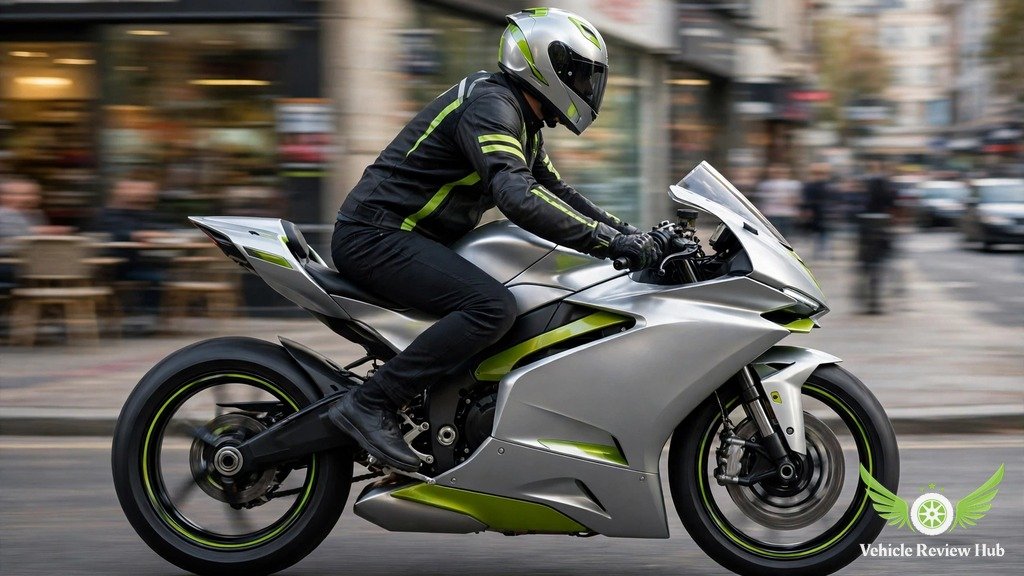
Just Over 50 Observed
TopSpeed rode the e-1 bikes daily for a week in Phoenix, and the observed top speed is the most useful number in this Kawasaki Ninja e-1 performance guide: “top speed taps out at just over 50 MPH, but with e-boost engaged, they can briefly manage 59 MPH.” That is a dash reading from a US test ride, not a claim, and it sits below the sheet’s caps in both modes. The boost is brief by design: e-boost lasts 15 seconds, and the bike then settles back to its continuous speed.
The same article’s spec table prints “Maximum Speed 59 MPH” — the pre-production estimate, not the observed figure and not the sheet figure — a distinction this Kawasaki Ninja e-1 performance guide keeps throughout.
Press Text Says 52, Sheet 55
The “52 mph” figure in the press is the global figure, not the American one: 84 km/h converts to about 52 mph, and Autocar India printed “approximately 52mph (84kph)” while Electrek wrote the top speed “is capped at 52 mph (85 km/h), with e-Boost unlocking 65 mph”. Even TopSpeed’s August 2026 article on the 2027 bike prints the global figures while the US sheet for that same bike prints 55/40/65/47. This Kawasaki Ninja e-1 performance guide prints the US sheet’s 55/40/65/47 and explains the press figure as the global conversion — never 52 mph as the US Road cap or 45 mph as the US Eco boost. The 45 mph Eco boost belongs to the Z e-1, not to this bike.
| Figure set | Road | Road + e-boost | Eco | Eco + e-boost |
|---|---|---|---|---|
| US spec sheet — print this | 55 mph | 65 mph | 40 mph | 47 mph |
| Global press (km/h converted) | 52 mph (84 km/h) | 65 mph (105 km/h) | 37 mph (60 km/h) | 45 mph (72 km/h) |
| Pre-production US estimates | 51 mph | 59 mph | 36 mph | 44 mph |
| Observed (TopSpeed, Phoenix) | Just over 50 mph | Briefly 59 mph | Not tested | Not tested |
Note: The US sheet’s figures are the caps for the 2024 and the 2027 Ninja e-1. The Kawasaki Ninja e-1 performance numbers in the global and pre-production rows are shown only so a buyer can recognise them in the press — they are not the US bike’s figures.
Kawasaki Ninja e-1 Range and Energy Use
There is no MPG figure for this bike, and the section heading says so by design: this is a range and energy-use section, not a fuel-economy section, because an electric motorcycle burns no fuel — a point this Kawasaki Ninja e-1 performance guide makes before any number appears. The H1 keeps “Mileage and MPG” as the doc heading, but the body covers what exists instead — a 41-mile claimed range, a real-world range under 40 miles, and charging from a household outlet. This Kawasaki Ninja e-1 performance guide states that absence plainly, and fills it with no invented number.
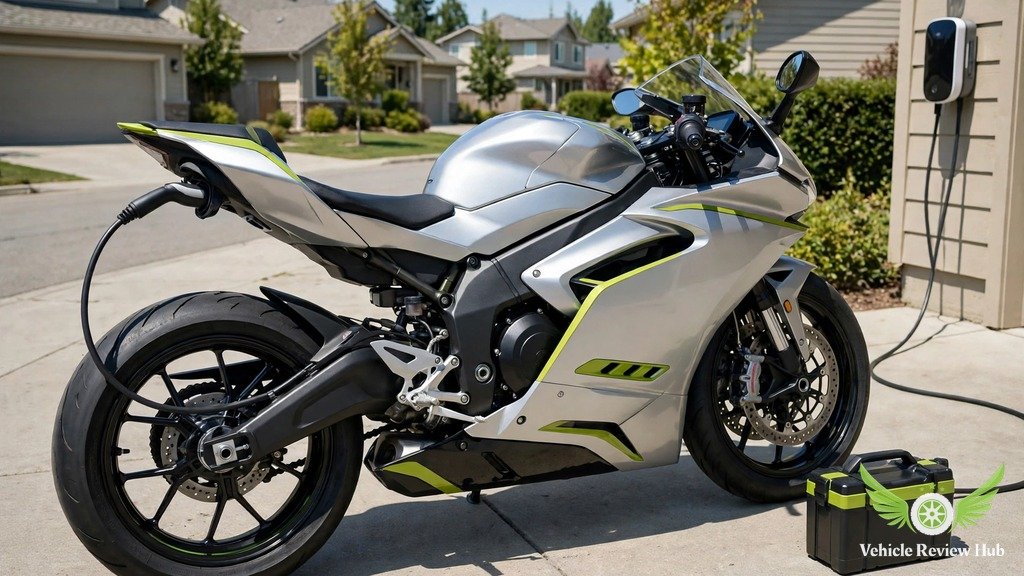
41 Miles, No Cycle Named
The claimed range is 41 miles, approximate, in Road mode without e-boost — and the US spec sheet names no test cycle for it. No WMTC, no EPA, no WLTP appears on the sheet, which is why this Kawasaki Ninja e-1 performance guide prints the figure exactly as Kawasaki prints it. The global cycle claim does exist — THE PACK reported 72 km (WMTC Class 1), and MCN quoted the same 72 km in Eco mode — but that is the global claim. It is printed here only with its attribution. Eco mode extends the range, but no US Eco range figure is published — and this Kawasaki Ninja e-1 performance guide will not invent one.
The two packs hold 1.5 kWh each, 50.4 V and 30 Ah, and they lift out to charge from a household outlet — 3.7 hours per pack on 120 V, no Level 2 or DC fast charging. Regen works only below 60% of capacity, and with one pack discharged the bike continues in Eco mode only — the honest energy picture this Kawasaki Ninja e-1 performance guide prints.
Dash Showed Under 40
In the real world the range is under 40 miles. Cycle World’s Phoenix first ride reported “throwing a leg over a fully charged machine and seeing a range of less than 40 miles” on the dash. THE PACK’s Brussels test started at 93% charge, drove 30 km with frequent e-boost, and returned at 43% — half the battery for 30 km, about 60 km (37 miles) at that spirited pace. MCN, riding the Z e-1 hard in Road mode, found 30–40 km realistic before the tortoise light. Put together, this Kawasaki Ninja e-1 performance guide prints the range as 41 miles claimed, under 40 on the dash, and roughly 37 miles in spirited riding. The spread is not a defect — it is what happens when a 3.0 kWh battery meets a 15-second boost button.
No drained-battery US test exists, and this Kawasaki Ninja e-1 performance guide prints that absence. Ultimate Motorcycling’s tester, after a week with both bikes, said outright: “I didn’t have the chance to run the batteries out on my own, so I can only share Kawasaki’s numbers.” No US publication has published a test with the battery run down — no preservation-mode range, no tortoise-mode speed, no “how far after the light” figure. When the battery runs low the dash shows a tortoise light and the bike enters a preservation mode, and with the 35% boost lockout the last miles are slower than the first.
| Range figure | Value | Source |
|---|---|---|
| Claimed range | 41 miles, approximate, Road mode w/o e-boost | Kawasaki USA spec sheet (2024 + 2027) |
| Test cycle named | None — no cycle on the US sheet | Kawasaki USA spec sheet |
| Global WMTC Class 1 claim | 72 km (about 45 miles) | THE PACK / MCN (global only) |
| Dash at full charge | Under 40 miles | Cycle World, Phoenix first ride |
| Spirited riding | About 37 miles (30 km on half a battery) | THE PACK, Brussels test |
| Fuel economy (MPG) | No figure exists — never printed | No source; the bike is an EV |
Note: The 41-mile claim and the under-40 dash reading differ — one is Kawasaki’s sheet figure, the other is what testers saw. The Kawasaki Ninja e-1 performance range to plan around is the dash figure, not the claim.
Kawasaki Ninja e-1 Real-World Riding Experience
On the road the Ninja e-1 is a quiet city bike with a strong launch and a short fuse: 125cc-class power with better pick-up than a 125, thanks to 29.7 lb-ft from a standstill, and with e-boost it accelerates with the alacrity of a 400cc bike for about 15 seconds. Then the boost ends, and the bike is a 55 mph city commuter again — and this Kawasaki Ninja e-1 performance guide keeps that sequence in view, because the launch is the fun part and the cap is the part a buyer lives with.
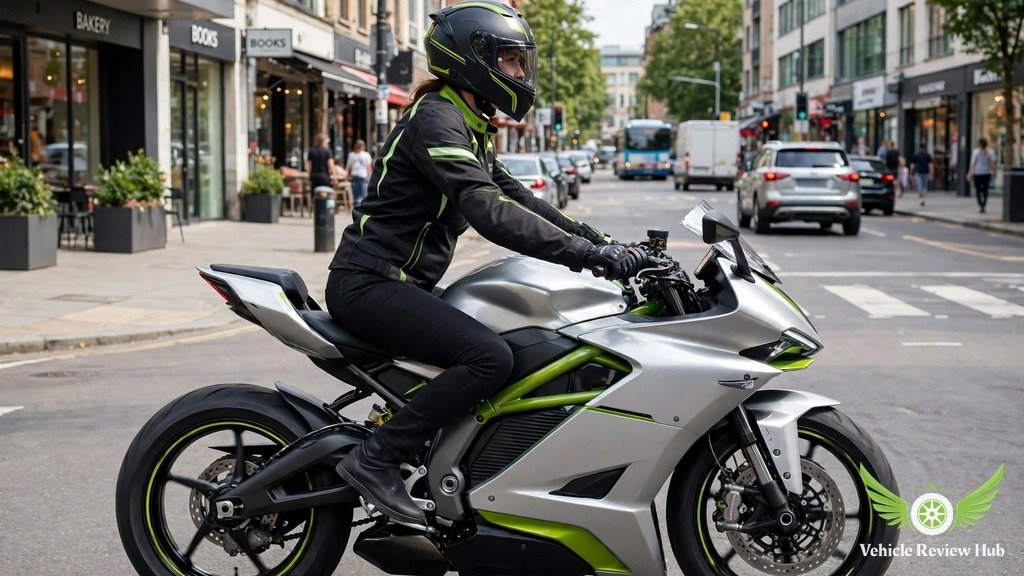
The Riding Experience Buyers Actually Talk About
Buyers talk about four things, and this Kawasaki Ninja e-1 performance guide hears all four: the quiet, the instant torque off the line, the 15-second boost, and the range anxiety. TopSpeed’s week-long test called it “an excellent first bike without looking like one”. THE PACK’s testers called the ride quiet and smooth, and said the e-boost adds an element of fun. The clip-on bars and wind protection make the Ninja feel like a sport bike at city speeds, while the upright triangle keeps it comfortable in traffic. The 4.3-inch TFT dash carries the speedometer, ride-mode indicator, e-boost gauge, battery and temperature gauges and a range indicator, with Bluetooth. This is not a highway bike — Cycle Gear warned a rider would have to be brave to the point of foolish to take the e-1 on a major US highway, and TopSpeed agrees the bikes are not rated for highway use, and this Kawasaki Ninja e-1 performance guide treats it as a city experience.
Fairing Doesn’t Fix the Caps
The fairing changes the caps by 2 mph; it does not remove them. The Ninja is 2 mph faster than the Z e-1 performance twin in Road mode (55 vs 53 mph) and with boost (65 vs 63 mph), and 2 mph faster in Eco boost (47 vs 45 mph), all from aerodynamics — the powertrains are identical. The bike is still capped, still 15-second-limited. A buyer who wants the faired look and the upright triangle behind clip-on bars should buy the Ninja; a buyer who wants the caps gone should buy a different motorcycle entirely. The fairing is the bike’s identity and its only performance advantage over its twin, and this Kawasaki Ninja e-1 performance guide prices that advantage at $300 and 11 lb.
Kawasaki Ninja e-1 Handling, Braking and Stability
At city speeds the Ninja e-1 handles like the light motorcycle it is: 308.7 lb, a 53.9-inch wheelbase, 24.4 degrees of rake, and a full-size chassis from a modified Ninja and Z 400 trellis frame. The 41 mm fork and preload-adjustable Uni-Trak rear are adequate for city roads, and the narrow tyres keep the steering quick at the cost of grip. This Kawasaki Ninja e-1 performance guide treats the handling as a city strength and a highway weakness in the same breath.
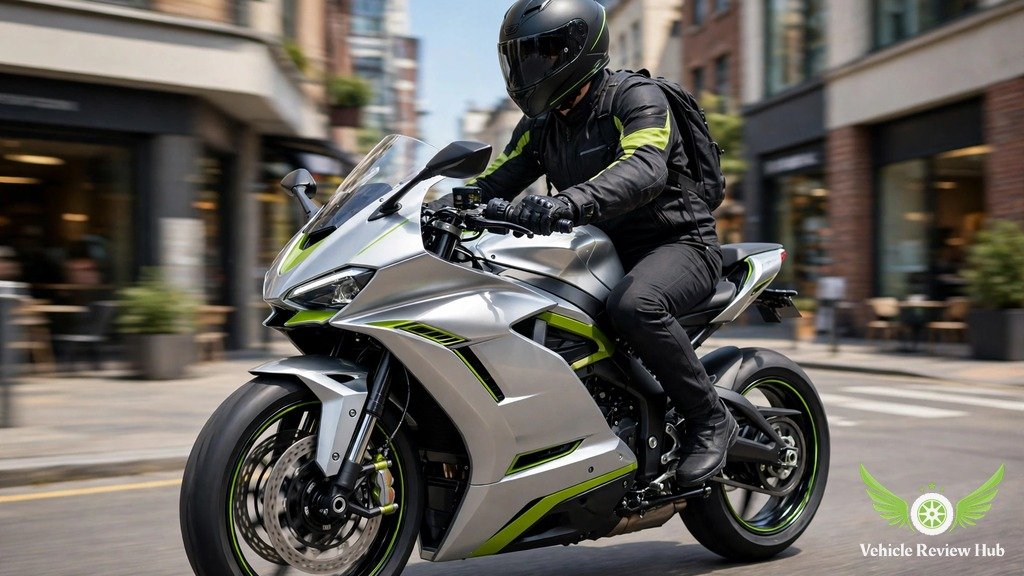
Handling, Braking and Stability on Real Roads
TopSpeed found both e-1 bikes “extremely nimble and easy to ride”, with forgiving but firm suspension and competent ABS brakes — the handling verdict this Kawasaki Ninja e-1 performance guide prints for city roads. The brakes are a single 290 mm front disc with a dual-piston caliper and a single 220 mm rear disc, with standard Nissin ABS. The same hardware sits on the Z e-1, and MCN’s complaint about the Z’s brakes — vague, “a lack of any real bite, both front and rear” — comes from that shared hardware, so it applies here too, and this Kawasaki Ninja e-1 performance guide prints it with the MCN attribution. TopSpeed also found the narrow tyres do not provide much confidence in handling — the honest trade-off for the quick steering. A buyer who wants grip should budget for better rubber; a city commuter will find the stock setup adequate for the speeds this Kawasaki Ninja e-1 performance guide has already set out. Stability at the 55 mph cap is not a concern, but crosswinds are felt more than on a heavier petrol bike — another reason the highway is not its place.
Walk Mode: 3 mph, 1 Back
Walk mode separates the e-1 from every petrol bike: forward at about 3.1 mph and reverse at about 1.8 mph, under power. Cycle World put forward at about 3 mph and reverse under 2 mph; TopSpeed adds that rolling the throttle forward past its stop selects reverse. The reverse function is the point: a petrol bike cannot reverse under power, and a 308.7 lb bike is easier to move with a throttle than with a rider’s legs. It is a parking feature, not a performance feature, but it is the one trick this Kawasaki Ninja e-1 performance guide notes no petrol Ninja can match.
Kawasaki Ninja e-1 Performance Compared With Other Sport Bikes
Against its own twin the Ninja e-1 is 2 mph faster and $300 dearer. Against a petrol Ninja the comparison is not close: the Ninja 500 performance figures — 51 hp, a real top speed, a 3.7-gallon tank — belong to a different class of motorcycle. This Kawasaki Ninja e-1 performance guide compares the bike with its twin and the petrol control: the fairing and the dealer network are the reasons to buy it, not the numbers.
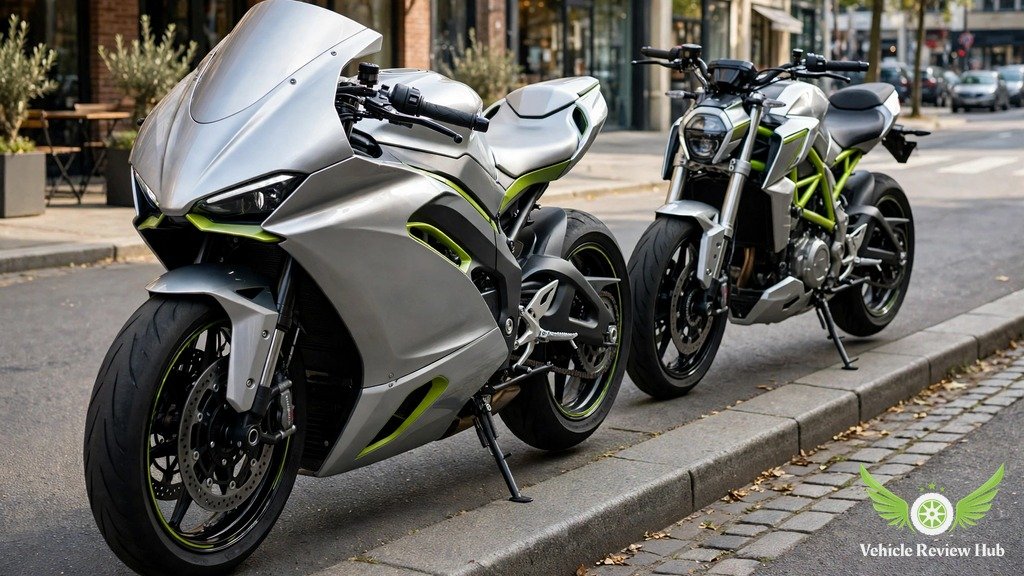
Kawasaki Ninja e-1 vs Kawasaki Z e-1
The comparison with the naked Z e-1 is the whole buying decision, because the bikes are one motorcycle in two outfits: same motor, battery, range, charge time, brakes and chassis. The differences fit in one table: faired with clip-on bars, 11 lb heavier at 308.7 lb, $300 more at $7,899, 2 mph faster in Road mode and with boost, 2 mph faster in Eco boost, narrower and taller. The Ninja is also the only e-1 with a future — it returned for 2027; the Z was a one-year-only bike, leftover-only. No tester has said they prefer one twin over the other, and this Kawasaki Ninja e-1 performance guide will not invent that claim: TopSpeed treats the two as styling-only different, and Cycle World reported both comfortable to ride. The honest choice is ergonomic — the Ninja for the faired sport look, the Z for the naked position — and the 2 mph is a tiebreaker, not a reason.
| Item | Ninja e-1 | Z e-1 | Ninja 500 (petrol control) |
|---|---|---|---|
| Price | $7,899 | $7,599 | $6,449 delivered |
| Power | 9.0 kW peak (12.1 hp), 15 s boost | 9.0 kW peak (12.1 hp), 15 s boost | 51.0 hp, continuous |
| Top speed, Road | 55 mph (65 mph boost) | 53 mph (63 mph boost) | No official figure; highway-capable |
| Range / tank | 41 miles claimed | 41 miles claimed | 3.7 gal tank; no tester MPG published |
| Curb weight | 308.7 lb | 297.7 lb | 374.9 lb (ABS) |
Note: The Ninja 500’s delivered price is the 2026 ABS figure with the verified $650 destination charge. The Kawasaki Ninja e-1 performance comparison above is a city-bike comparison — the petrol bike’s highway capability is the point, not a footnote.
Is the Kawasaki Ninja e-1 Suitable for Beginner Riders?
Yes, for city riding — with the highway caveat attached. It is twist-and-go with no clutch and no gears, 6.7 hp continuous, 308.7 lb, a 30.9 in seat, ABS, and a Walk mode with reverse. THE PACK called it perfect for a beginner rider, and TopSpeed called it an excellent first bike without looking like one. The honest recommendation in this Kawasaki Ninja e-1 performance guide is the same as the line’s standing advice: the Ninja e-1 is a genuine first bike for a city rider who charges at home, and the Ninja 650 is the honest first bike for anyone who needs a highway. A beginner who buys it for the city gets a forgiving, quiet, predictable motorcycle; one who buys it expecting a highway commuter gets a 55 mph cap and a 41-mile range.
Kawasaki Ninja e-1 Performance: Frequently Asked Questions
Buyers ask the same six questions, and the answers below give the verified figures — the speed caps, the power, the missing 0–60, the range, the drained-battery test, and beginner suitability. This Kawasaki Ninja e-1 performance guide stands behind each answer below.
How fast is the Kawasaki Ninja e-1?
The US spec sheet caps it at 55 mph in Road mode and 40 mph in Eco mode, with e-boost raising those to 65 mph and 47 mph for 15 seconds. TopSpeed’s week-long test observed just over 50 mph in Road mode and briefly 59 mph with e-boost — below the sheet’s caps.
How much power does the Ninja e-1 make?
5.0 kW (6.7 hp) rated, and 9.0 kW (12.1 hp) maximum with e-boost, for 15 seconds at a time. Torque is 29.7 lb-ft from 500 rpm. The bike is a 125cc-class machine — its performance is comparable to a 125cc petrol bike, with better pick-up off the line thanks to the instant torque.
What is the Ninja e-1’s 0–60 time?
No 0–60 figure exists for the Ninja e-1. No publication has instrumented-tested its acceleration, and Kawasaki publishes no figure. The bike accelerates briskly off the line and then settles at its capped top speed.
What is the Ninja e-1’s range?
41 miles claimed, in Road mode without e-boost, with no test cycle named on the US spec sheet. In the real world, testers saw under 40 miles on the dash at full charge, and about 37 miles in spirited riding. There is no MPG figure for this bike — it is an EV, and no fuel-economy figure exists.
Has anyone tested the Ninja e-1 with the battery run down?
No. No US publication has published a test with the battery run down, and Ultimate Motorcycling’s tester said outright that he did not have the chance to run the batteries out. The bike has a preservation mode (a tortoise light on the dash) when the battery runs low, and e-boost becomes unavailable below 35% charge.
Is the Ninja e-1 good for beginners?
Yes, for city riding. It is twist-and-go with no clutch or gears, it weighs 308.7 lb, the seat is 30.9 in, it has ABS and a Walk mode with reverse, and testers call it a perfect beginner bike. It is not a highway bike — the 55 mph cap and 41-mile range make it a city commuter only.