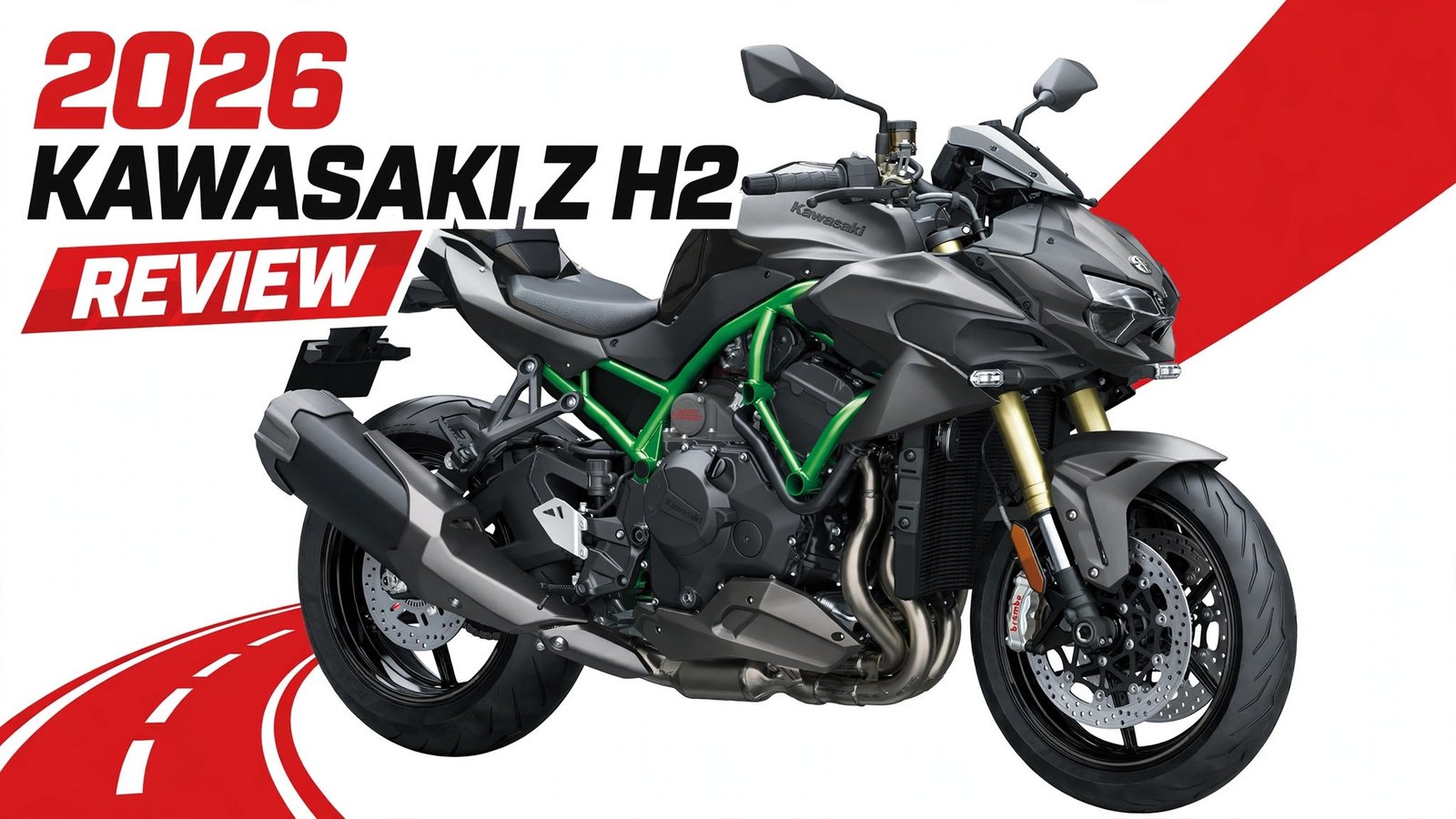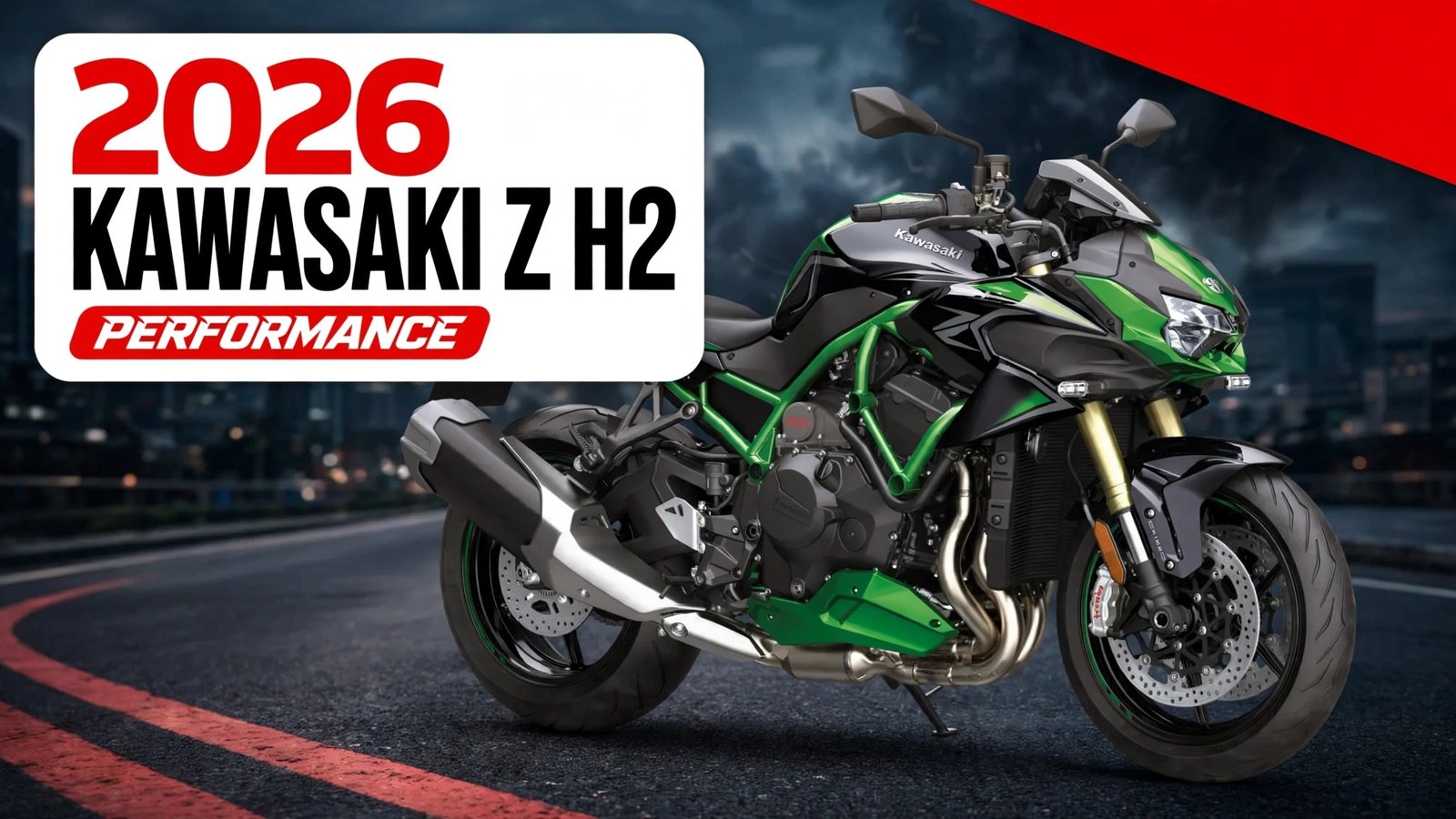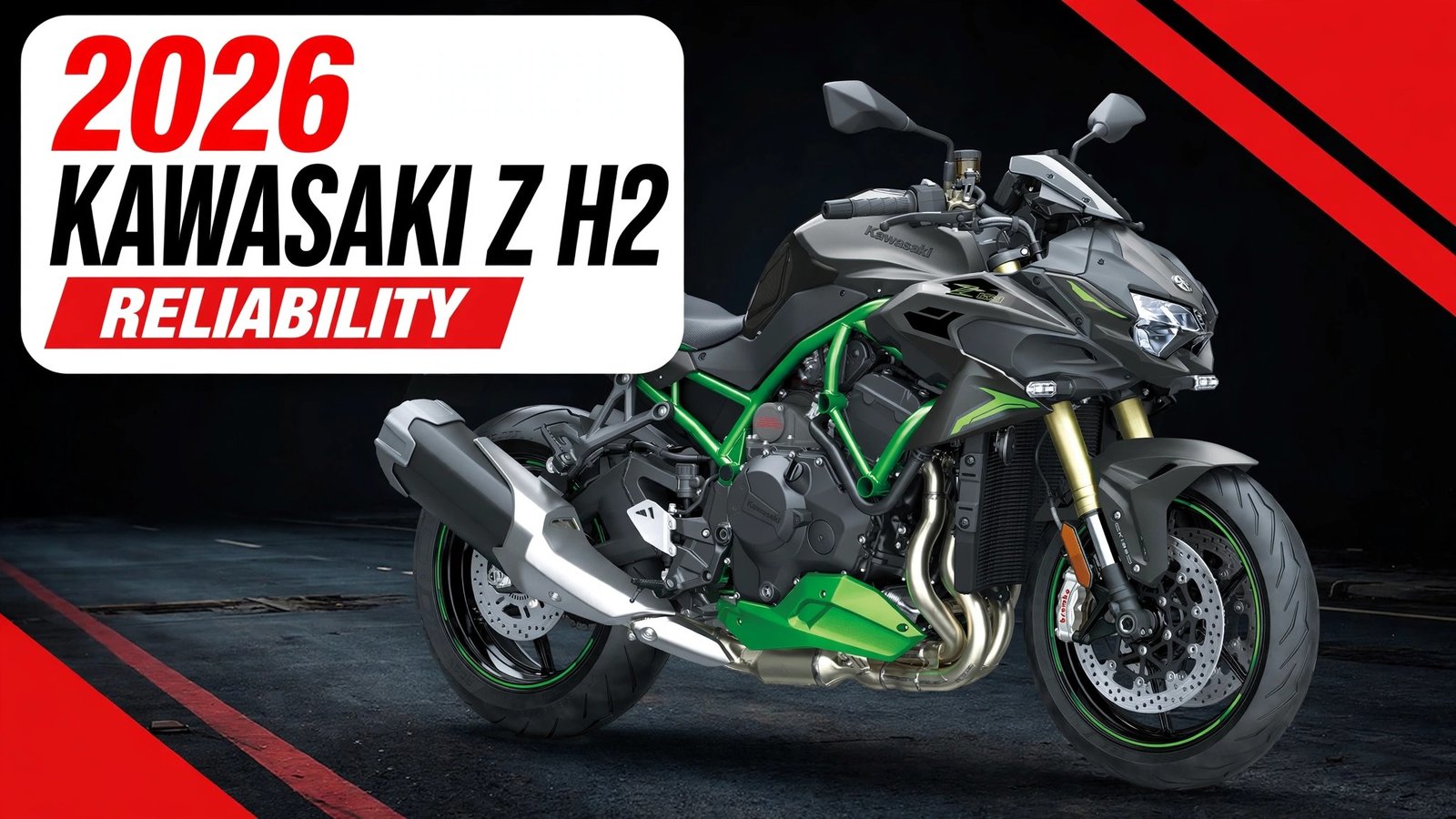
Two recalls name the Kawasaki Z H2, both fixed free at the dealer, and this Kawasaki Z H2 reliability guide prints them exactly as the NHTSA Part 573 reports break them out. The oil-pressure relief valve campaign covers 324 Z H2 bikes of its own, and the cam-chain tensioner campaign covers 1,176 Z H2 and SE bikes combined. Beyond the recalls, the maintenance story is dominated by one item no other naked bike has: a gear-driven supercharger whose checks start later than the paperwork suggests.
The short version of this Kawasaki Z H2 reliability story is that the Z H2 is a reliable supercharged litre bike with a short, specific recall history and a maintenance schedule that rewards owners who follow it. The base bike ended after 2023 and only the SE is sold new now, so most buyers are looking at used 2020–2023 machines. This Kawasaki Z H2 reliability guide covers both campaigns, the service chart, the tyre, brake and suspension checks, and the ownership costs.
Kawasaki Z H2 Reliability Overview
The Kawasaki Z H2 reliability picture is unusually clean for a first-generation supercharged bike. Two NHTSA campaigns name the bike, both with free dealer remedies; exactly one owner complaint sits on file across all model years. The supercharged engine itself has no known pattern failure in the published record — the two campaigns are an assembly error and a tensioner part, not a design flaw in the blower.
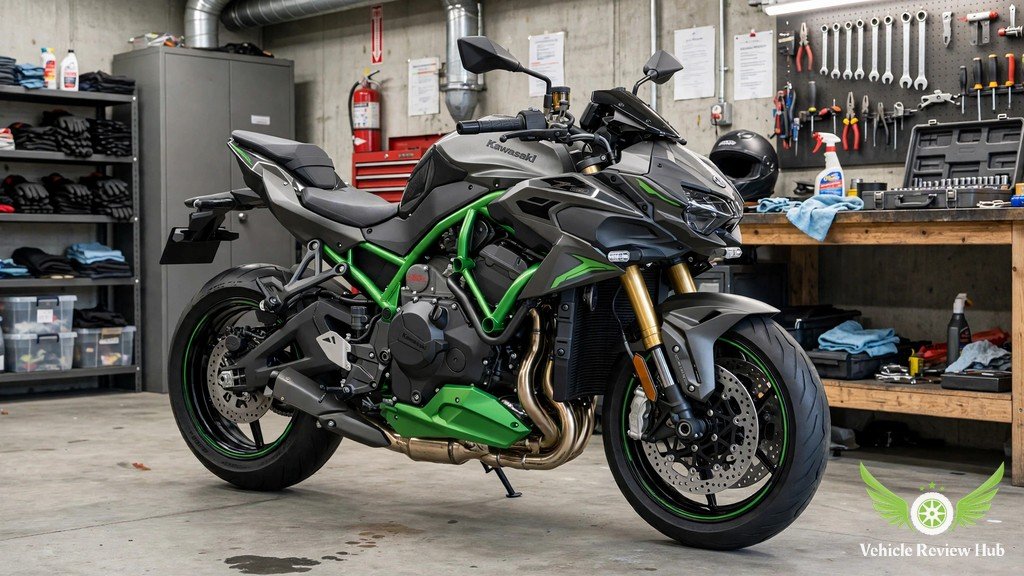
Two Recalls Name the Z H2
Exactly two NHTSA campaigns name the Z H2, and the Part 573 reports are the ground truth for both — the NHTSA recalls API returns a count of zero for every Z H2 variant and year. For Kawasaki Z H2 reliability, campaign 21V-593 covers an oil-pressure relief valve fault on 2020–2021 Z H2 bikes and the 2021 SE, with the Z H2’s own count of 324 bikes; campaign 22V-912 covers a cam-chain tensioner fault on 2020–2023 Z H2 bikes and 2021–2023 SE bikes, with 1,176 Z H2 and SE bikes combined. Both repairs are free at the dealer, and both are checked by VIN — the first check in any Kawasaki Z H2 reliability inspection. The full campaign detail is in the table under the Common Problems section below — and the Motorcycle.com Best Naked Motorcycle of 2020 award predates both campaigns.
How Mileage, Storage and Previous Care Affect Reliability
No model-specific data exists on how mileage, storage or previous care affect Z H2 reliability, so the guidance below is general supercharged-bike guidance, labelled as such. For Kawasaki Z H2 reliability, service history matters more than the odometer: a bike with every service stamped and both recall remedies done is a better buy than a lower-mileage bike with gaps in its history. Storage matters because a bike that sits still still ages — brake fluid is on a two-year clock and coolant on a three-year clock regardless of miles ridden. The one Z H2-specific rule that never changes with mileage is the recall check: verify both campaigns against the VIN before purchase. For the performance side — the dyno figures, the top speed and the mileage — see our Kawasaki Z H2 performance guide.
Kawasaki Z H2 Common Problems and Wear Items
The common-problems list in this Kawasaki Z H2 reliability guide is short: the two recalls, one unverified owner complaint, and the ordinary wear items every litre bike has. This Kawasaki Z H2 reliability guide prints each campaign with its Part 573 defect wording, the years it covers, the Z H2 slice, and the remedy — and names the four H2-family campaigns that do not touch this bike.
21V-593: 324 Bikes, Own Count
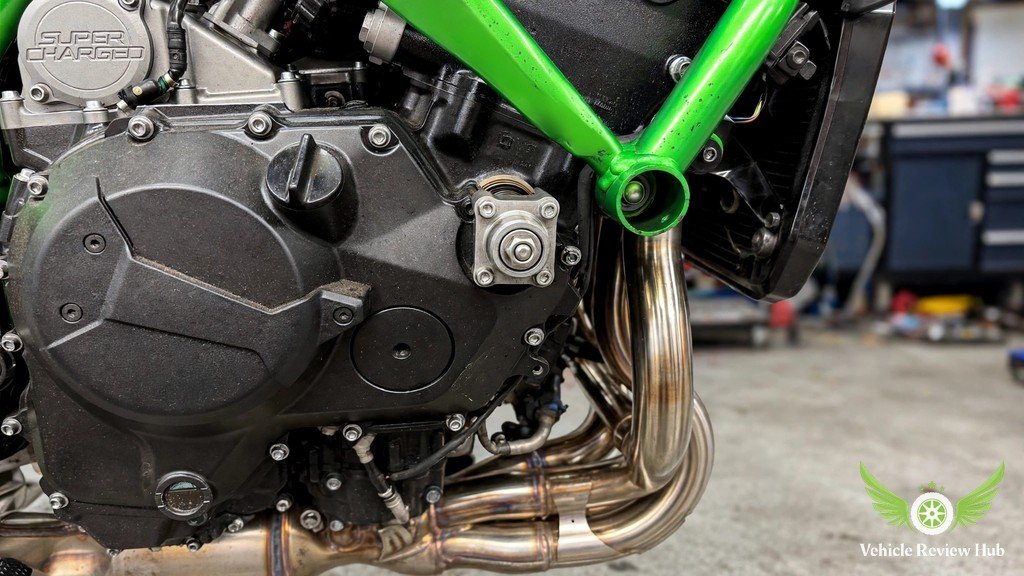
Campaign 21V-593 is the oil-pressure relief valve campaign, and its Z H2 count of 324 is the bike’s own broken-out figure in the Part 573 report — the headline number for Kawasaki Z H2 reliability. The report’s defect wording is that relief-valve components “may come off due to improper assembly”, which can cause poor lubrication and an engine that stops or seizes. The cause was an assembly error: a circlip not seated, with the assembly jig misadjusted in December 2019. Production covered March 26, 2020 to March 5, 2021, and the campaign covers 2020–2021 Z H2 bikes and the 2021 SE — the SE slice is 81 bikes, listed separately, so the Z H2 family’s own total for this campaign is 405. The rest of the 1,523-unit campaign total belongs to other models — the H2 SX family, the Ninja H2 and H2 Carbon, the ZX-10R range and the ZX-10RR. The remedy is a replacement relief valve, free at the dealer, with owner letters dated August 23, 2021 — see the NHTSA Part 573 report for 21V-593.
| Campaign | Defect | Z H2 years covered | Z H2 slice | Remedy |
|---|---|---|---|---|
| 21V-593 | Oil-pressure relief valve components may come off (improper assembly) — poor lubrication, engine may stop or seize | 2020–2021 Z H2; 2021 SE | 324 Z H2 bikes (SE 81 separately; campaign total 1,523) | Replace relief valve, free; owner letters Aug 23, 2021 |
| 22V-912 | Cam-chain tensioner plunger can lock up — loss of engine power or engine stop | 2020–2023 Z H2; 2021–2023 SE | 1,176 Z H2 + SE combined (campaign total 3,172) | Replace tensioner + gasket, free; owner letters Dec 21, 2022 |
Note: The campaign totals (1,523 and 3,172) span several Kawasaki models and are never the Z H2’s counts, as this Kawasaki Z H2 reliability guide records. The 324 is the Z H2’s own broken-out count for 21V-593; the 1,176 is the combined Z H2 and SE slice for 22V-912 and cannot be split between the two trims.
22V-912 Share Cannot Split
Campaign 22V-912 is the cam-chain tensioner campaign, and its Z H2 figure of 1,176 is a combined slice that cannot be split — the Part 573 report groups the bikes as one line, “ZR1000K/L (Kawasaki/Z H2/H2 SE/1,176)”. The defect wording is that the plunger in the camshaft-chain tensioner can lock up due to deterioration of internal parts, causing a loss of engine power or an engine stop through cam-timing deviation. The warning sign named in the report is abnormal noise from the right side of the engine. The campaign covers 2020–2023 Z H2 bikes and 2021–2023 SE bikes, and the remedy is a replacement tensioner (part 12048-0120) and gasket, free at the dealer. The rest of the 3,172-unit campaign total belongs to the Ninja H2 and H2 Carbon (830) and the H2 SX and SX SE (1,166). The four other H2-family campaigns — 18V-580, 20V-676, 21V-594 and 22V-913 — do not touch the Z H2 at all. This Kawasaki Z H2 reliability guide lists only the two campaigns that do, and the NHTSA Part 573 report for 22V-912 is the source for every figure in this paragraph. The H2 SX’s six-campaign history is covered in our Ninja H2 SX review and its reliability guide.
Kawasaki Z H2 Maintenance Schedule and Servicing
The Z H2’s service schedule is the owner’s-manual maintenance chart, and this Kawasaki Z H2 reliability guide prints it as the chart reads. The actual Kawasaki manual PDF could not be downloaded because its portal is JavaScript-gated, so the chart below is the owner’s-manual maintenance chart as transcribed by maintenanceschedule.com. The schedule is straightforward: a first service at 600 miles, then service every 7,600 miles or annually.
Blower Checks From Service One
The heading above is wrong, and this Kawasaki Z H2 reliability guide corrects it in the first sentence: blower checks do not start at service one. The impeller axial play — the supercharger’s key inspection — is checked at the 12,000, 24,000, 36,000 and 48,000 km services, and the first-service column is blank. The meta description’s phrase “supercharger checks from the first service” is wrong too. The blower’s first real check comes at 12,000 km (7,600 miles), at the first regular service after break-in.
Oil Screen at 15,200 Miles
The oil screen at 15,200 miles is a replacement, not a first check. The supercharger oil screen is replaced at 24,000 km (15,200 miles) and again at 48,000 km, and the heading’s mileage figure is correct as a replacement point in any Kawasaki Z H2 reliability check. The screen sits in the supercharger’s oil supply, and replacing it on schedule is the cheapest insurance the blower has. The rest of the oil system follows the same rhythm — engine oil and filter at every service, SAE 10W-40 (API SG–SM, JASO MA/MA1/MA2). The with-filter oil capacity is best supported at 4.4 litres, but the drain-only capacity is unresolved across the sources, so this Kawasaki Z H2 reliability guide prints no drain-only figure as settled and no oil-filter part number, because the two published part numbers conflict.
| Item | Interval / specification |
|---|---|
| First service | 1,000 km / 600 mi |
| Regular service | Every 12,000 km / 7,600 mi or annually |
| Engine oil + filter | At every service; SAE 10W-40, API SG–SM, JASO MA/MA1/MA2; 4.4 L with filter (best-supported figure) |
| Valve clearance | Inspect every 24,000 km / 15,200 mi; clearance values never printed in mm |
| Spark plugs | NGK SILMAR9E9 ×4, gap 0.8–0.9 mm; inspect at 24,000 km, replace at 48,000 km |
| Air filter | Inspect at 12/24/36/48k km; replace every 2 years |
| Supercharger impeller axial play | Inspect at 12/24/36/48k km — blank at first service |
| Supercharger oil screen | REPLACE at 24,000 km (15,200 mi) and 48,000 km |
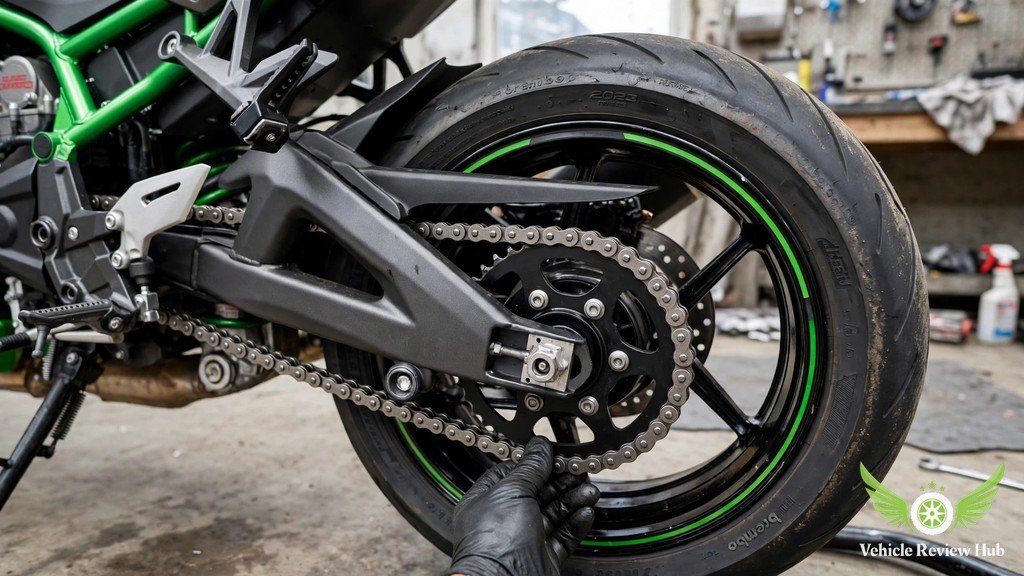
| Chain | 525 sealed; slack 20–30 mm; check every 1,000 km, lube every 600 km |
| Tyres | 36 psi front / 42 psi rear, cold |
| Brake fluid / clutch fluid | DOT 4; replace at 24k/48k km and every 2 years |
| Coolant / hoses / O-rings | Replace at 36,000 km / 22,800 mi and every 3 years |
| Fuel filter / fuel pump / fuel hose | Filter replace at 24k/48k km; pump at 48k km; hose every 5 years |
| Battery | 12 V 8.6 Ah (YTZ10S) |
| Warranty | 12 months Limited |
Note: This schedule is the owner’s-manual maintenance chart as transcribed by maintenanceschedule.com, and this Kawasaki Z H2 reliability guide labels it that way. The valve-clearance values are never printed in millimetres because no verified figure exists, and the drain-only oil capacity is unresolved, so only the best-supported 4.4-litre with-filter figure is printed.
Kawasaki Z H2 Tires, Brakes and Suspension Maintenance
Tyres, brakes and suspension are wear items with numbers, not opinions, and this Kawasaki Z H2 reliability guide treats them that way. At 527.0 to 531.4 lb depending on year and trim, the Z H2 is the heaviest bike in its rival set, so the brake and suspension checks below are worth doing on schedule.

Rear Disc: 260, Not 250
The heading above is only partly right, and this Kawasaki Z H2 reliability guide prints the split: the rear disc is 260 mm on the 2020 base bike, on every SE, and on the 2023 base — but 250 mm on the 2021 and 2022 base bikes, per Kawasaki’s own spec sheets. One conflict remains on the 2023 base: Kawasaki’s sheet says 260 mm while Motorcycle.com says 250 mm, and the sheet wins. The front brakes need no such correction: dual 320 mm discs, with Brembo M4.32 calipers on the base every year and on the SE from 2022 — the 2021 SE alone wore Brembo Stylema calipers, a nuance the Cycle World buyers-guide page does not carry. The rear brake is a single disc with a Nissin caliper, and the front master cylinder is a Brembo radial unit. Any owner ordering a rear disc must check the year and trim first, because the 250 mm and 260 mm discs are not interchangeable.
Tire, Brake and Suspension Checks That Matter
The checks that matter start with the tyres: 36 psi front and 42 psi rear, cold. Pressures are the cheapest reliability item on the bike — wrong pressures wear the tyre unevenly and hide a slow puncture. The chain is next: a 525 sealed chain with 20–30 mm of slack, checked every 1,000 km and lubricated every 600 km. Brake fluid is DOT 4, replaced at the 24,000 and 48,000 km services and every two years, with the clutch fluid on the same schedule. The suspension check is the SE’s KECS semi-active system against the base bike’s conventional fully-adjustable shock: no spring-rate or damping figure was verified for either trim, so none is printed here. Coolant, hoses and O-rings are replaced at 36,000 km (22,800 miles) and every three years. No publication has published a 60–0 mph braking distance for the Z H2. For how the same hardware feels on the road, see our Kawasaki Z H2 review.
Kawasaki Z H2 Maintenance and Ownership Costs
Ownership costs for the Z H2 are the price of the bike, the fuel it drinks, the services it needs, and the tyres and consumables it wears — and this Kawasaki Z H2 reliability guide prints only verified prices. The 2020–2023 prices come from Kawasaki’s own press material and spec sheets with Motorcycle.com database destinations; the 2024–2026 SE prices rest on the Motorcycle.com database alone, and they are labelled that way on every use.
Fuel, Routine Servicing, Tires and Replacement Parts
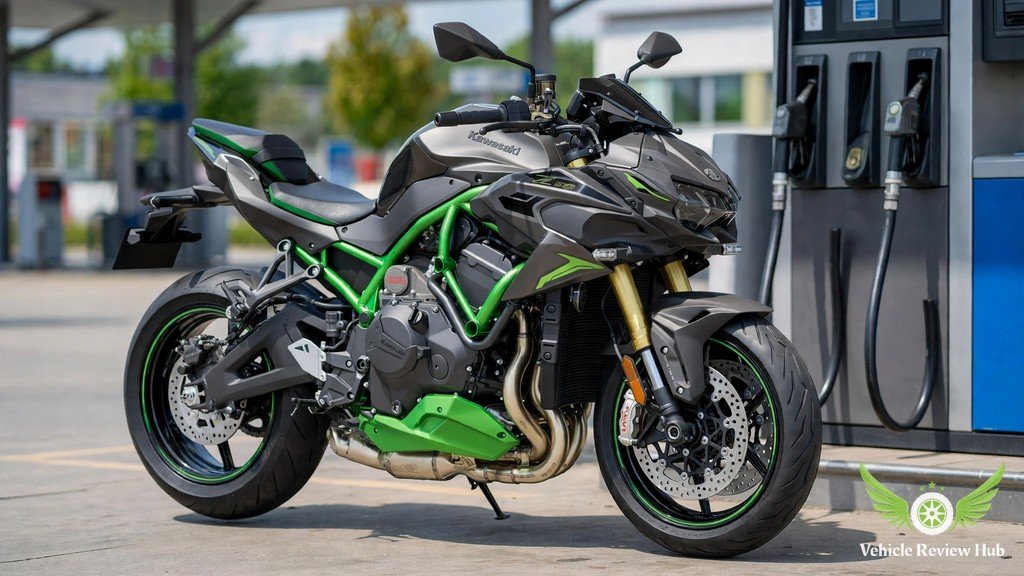
Motorcyclist’s 2023 test recorded 40–45 mpg on the freeway and 28–30 mpg on back roads, and with a 5.0-gallon tank those figures imply roughly 200 to 225 miles on the freeway and 140 to 150 miles on back roads. Routine servicing follows the chart in the section above: oil and filter at every service, the valve inspection every 15,200 miles, and the supercharger oil screen replaced at 24,000 and 48,000 km. Tyres are 120/70-17 front and 190/55-17 rear Pirelli Diablo Rosso III rubber, at 36 psi front and 42 psi rear cold. Replacement parts are the one cost this Kawasaki Z H2 reliability guide does not price: no verified parts prices were found for the Z H2, so no shock, caliper, chain or filter price is printed as a fact. The warranty behind all of it is 12 months Limited.
Curb Weight Prints Conflict
The curb-weight prints conflict, and this Kawasaki Z H2 reliability guide prints the conflict rather than picking one figure. Kawasaki’s own spec sheets, the source for this Kawasaki Z H2 reliability guide, say the base bike weighs 527.0 lb on 2020/2021 bikes and 529.2 lb on 2022/2023 bikes, with the SE at 531.4 lb in every year — figures corroborated by the Motorcycle.com database, Cycle News, Cycle World and MCN (239 kg). The conflict comes from Bennetts, whose comparison table alone prints 231 kg for the 2020 bike, contradicting its own spec section’s 239 kg. The 2022 base gained 2.2 lb over the 2020/2021 bike with no published explanation on the sheets. No independently scale-measured weight was found for the Z H2, so no “measured” curb weight is printed here. The price ladder below is the other half of the ownership picture — and the Kawasaki Z H2 comparison puts those prices against the Ducati, Aprilia and Yamaha rivals for buyers cross-shopping the class.
| Year | Trim | MSRP | Destination | Delivered |
|---|---|---|---|---|
| 2020 | Base | $17,000 | $410 | $17,410 |
| 2021 | Base | $17,500 | $410 | $17,910 |
| 2021 | SE | $19,700 | $410 | $20,110 |
| 2022 | Base | $18,000 | $430 | $18,430 |
| 2022 | SE | $20,200 | $430 | $20,630 |
| 2023 | Base | $18,500 | $460 | $18,960 |
| 2023 | SE | $20,700 | $460 | $21,160 |
| 2024 | SE | $21,300 | Not found | Not printed |
| 2025 | SE | $21,700 at launch, later $21,999 | $815 vs $840 (conflict) | Not settled |
| 2026 | SE | $21,999 | $840 | $22,839 |
Note: The 2020–2023 prices come from Kawasaki’s own press material and spec sheets with Motorcycle.com database destinations; the 2024–2026 SE prices rest on the Motorcycle.com database alone. This Kawasaki Z H2 reliability guide never prints a 2024 SE delivered price (destination not found) or a 2025 SE delivered price as settled (destination conflict, $815 vs $840). Launch was $17,000 in 2020; $17,500 is the 2021 base price, never the launch price.
How to Keep a Kawasaki Z H2 Reliable
Keeping a Z H2 reliable is mostly a matter of following the schedule and keeping the paper trail — the routine this Kawasaki Z H2 reliability guide closes with. Nothing in the routine is exotic — oil and filter at every service, the valve check every 15,200 miles, the supercharger screen replaced on its two dates, and the chain, tyres and fluids on their clocks — but the routine only works if it is followed. The two recall checks are the exception: they are done once, by VIN, before purchase, and then they are done for good.
Preventive Maintenance, Records and Regular Inspections
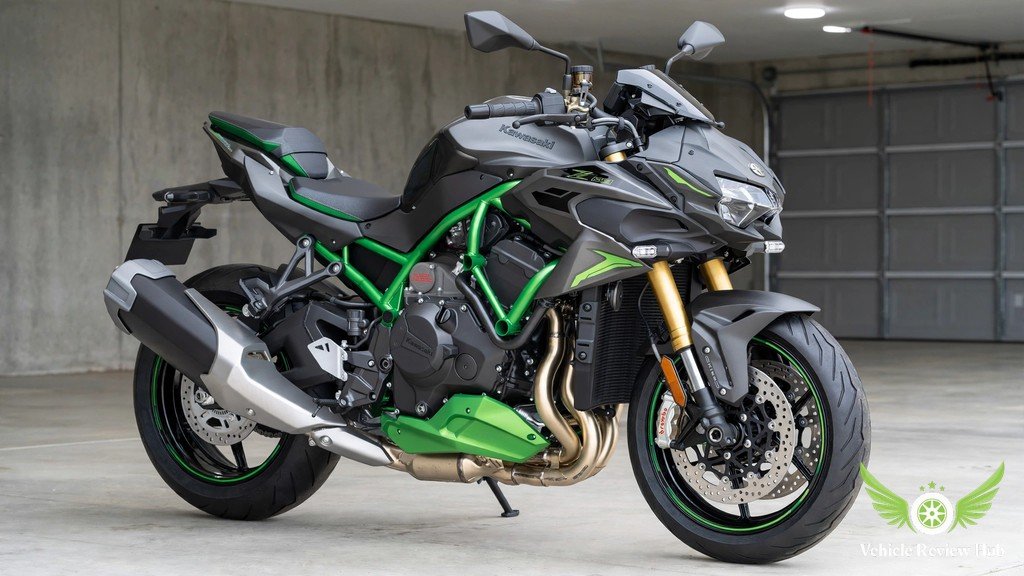
Preventive maintenance is the core of Kawasaki Z H2 reliability: the service chart, kept on time and kept on paper. The oil and filter go at every service, and the valve clearance is inspected every 24,000 km (15,200 miles). The supercharger items are the ones to watch: impeller axial play inspected at the 12,000, 24,000, 36,000 and 48,000 km services, and the oil screen replaced at 24,000 and 48,000 km. Records are the second half — a stamped service book with the recall remedies noted is worth more at resale than any single service. Regular inspections are the third half: chain slack at 20–30 mm, tyre pressures at 36 psi front and 42 psi rear cold, brake fluid on its two-year clock, and a listen for abnormal noise from the right side of the engine. The track-only sibling of this bike, the Ninja H2R, runs a far harsher service routine — every 15 hours over 8,000 rpm — which is why there is no excuse for skipping the Z H2’s road schedule.
Check Both Recall Campaigns
Check both recall campaigns before buying any Z H2, and check them by VIN — that is the single sentence this Kawasaki Z H2 reliability guide would keep. Campaign 21V-593 covers 2020–2021 Z H2 bikes and the 2021 SE for the oil-pressure relief valve fault (324 Z H2 bikes); campaign 22V-912 covers 2020–2023 Z H2 bikes and 2021–2023 SE bikes for the cam-chain tensioner fault (1,176 bikes combined) — the two numbers at the heart of Kawasaki Z H2 reliability. Both remedies are free at the dealer and recorded against the VIN, so a seller who cannot show them done is a seller whose bike still needs them. The NHTSA recalls API returns zero for every Z H2 variant and year, so do not trust a clean API result — check the VIN against the two campaign numbers themselves, or ask a Kawasaki dealer to run it. For the full model run and the verdict, see our Kawasaki Z H2 review.
Kawasaki Z H2 Reliability FAQs
The questions below cover what buyers ask about most in this Kawasaki Z H2 reliability guide: the two recalls, the supercharger checks, the valves, the oil, and the single complaint.
Has the Kawasaki Z H2 been recalled?
Yes, twice. NHTSA campaign 21V-593 covers 2020–2021 Z H2 and 2021 SE bikes for an oil-pressure relief valve fault, with 324 Z H2 bikes in the campaign. Campaign 22V-912 covers 2020–2023 Z H2 and 2021–2023 SE bikes for a camshaft-chain tensioner fault, with 1,176 Z H2 and SE bikes combined. Both repairs are free at the dealer, and this Kawasaki Z H2 reliability guide checks both by VIN before purchase.
What is the 22V-912 recall about?
The plunger in the camshaft-chain tensioner can lock up, causing a loss of engine power or an engine stop — the second of the two faults in the Kawasaki Z H2 reliability record. The warning sign is abnormal noise from the right side of the engine. Dealers replace the tensioner and gasket free of charge.
When does the supercharger need checking on a Z H2?
The impeller axial play is inspected at the 12,000, 24,000, 36,000 and 48,000 km services — not at the first service, where the chart column is blank. The supercharger oil screen is replaced at 24,000 km (15,200 miles) and again at 48,000 km — the correction this Kawasaki Z H2 reliability guide makes wherever the phrase appears.
When do the valves need checking on a Kawasaki Z H2?
Every 24,000 km (15,200 miles) per the owner’s-manual maintenance schedule. Never quote a valve clearance in millimetres — no verified figure exists, and this Kawasaki Z H2 reliability guide prints none.
What oil does the Kawasaki Z H2 take?
SAE 10W-40 (API SG–SM, JASO MA/MA1/MA2), changed with the filter at every service — first at 600 miles, then every 7,600 miles or annually. The with-filter capacity is best supported at 4.4 litres; the drain-only capacity is unresolved, and this Kawasaki Z H2 reliability guide prints no drain-only figure as settled.
Are there any NHTSA complaints about the Kawasaki Z H2?
Exactly one, across all model years. A 2025 owner reported a transmission failure and later a dropped-valve engine failure (ODI 11761233) — the only complaint in the Kawasaki Z H2 reliability record. It is an unverified owner complaint, not a recall, and it is the only complaint on file — never a defect pattern, as this Kawasaki Z H2 reliability guide records.