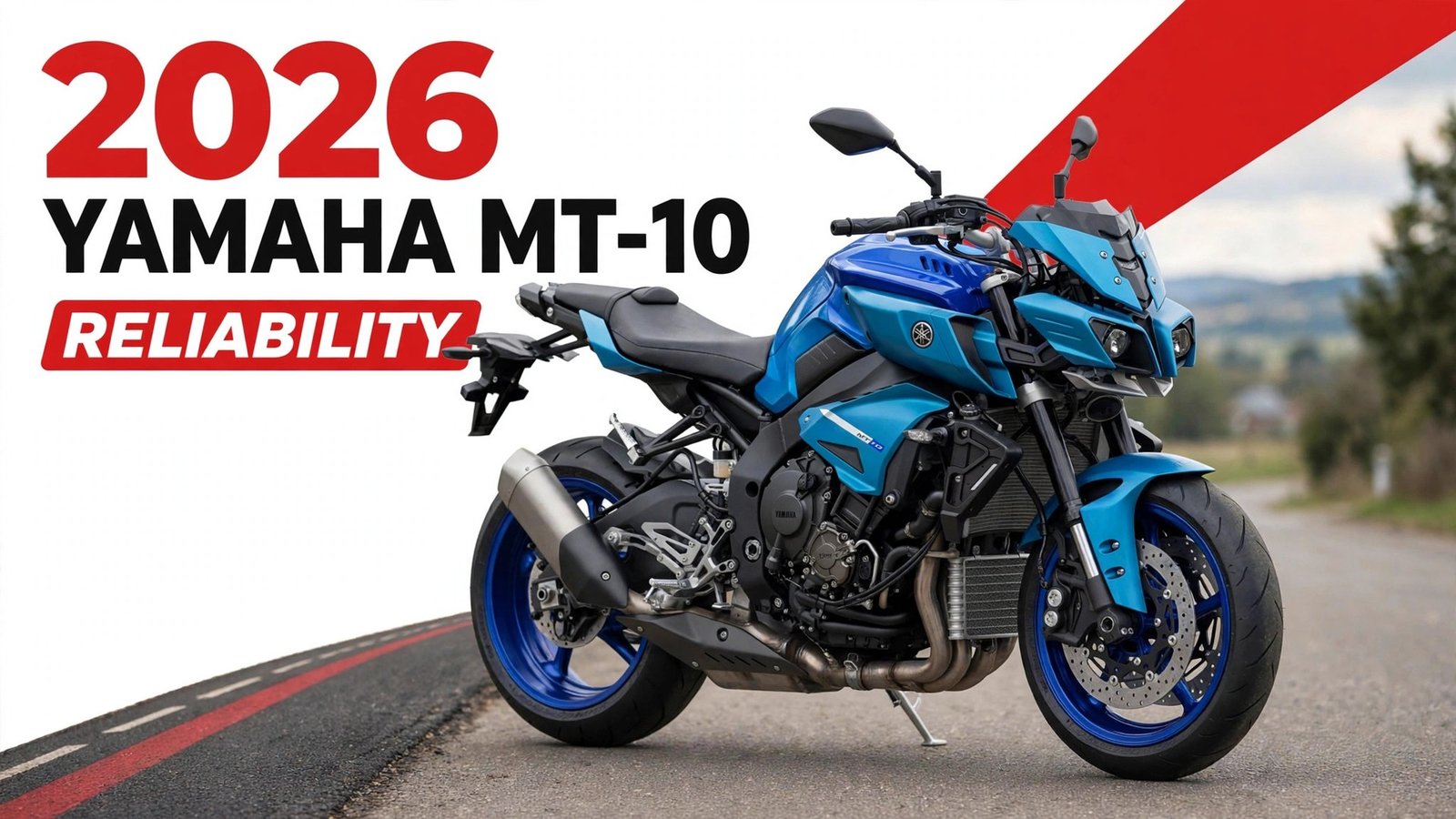
Yamaha MT-10 reliability is strong, with one honest caveat: the headline owner ratings behind that verdict come from very small samples. The standard MT-10 pairs Yamaha’s proven 998cc CP4 crossplane engine with fully adjustable KYB suspension and, from 2022 on, a full six-axis electronics suite. The known trouble spots for Yamaha MT-10 reliability are wear items and two recalls that need careful reading, not a pattern of engine failures.
Yamaha MT-10 Reliability Overview
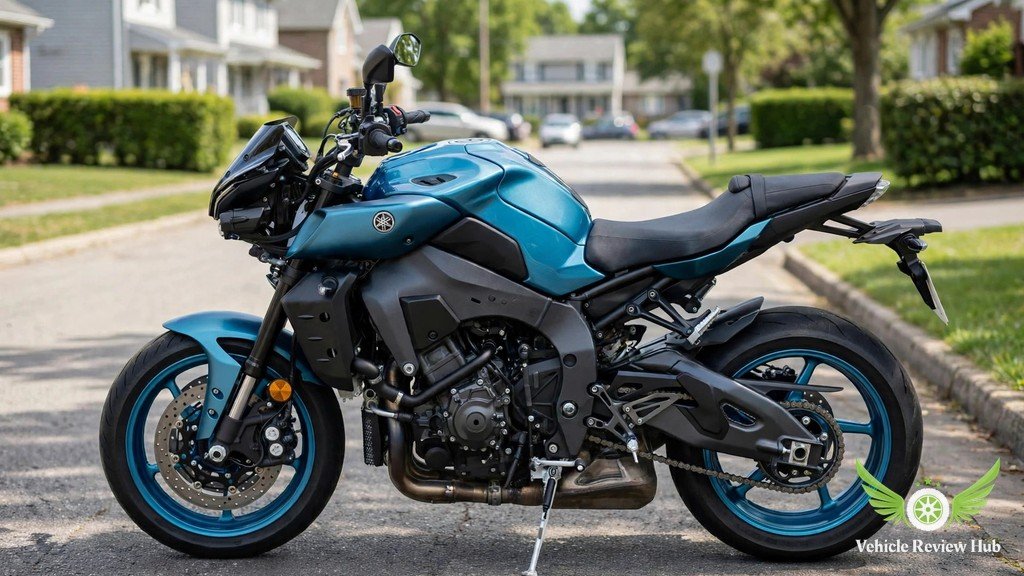
Yamaha MT-10 reliability starts from a strong foundation: the standard bike’s liquid-cooled 998cc CP4 inline-four is shared with the SP, an R1-derived engine retuned for stronger mid-range torque. The standard bike skips the SP’s semi-active suspension and braided lines, which simplifies Yamaha MT-10 reliability: no electronic suspension to diagnose, no premium-priced SP hardware to replace. The MT-10 review covers the full specification: a claimed 163.6 bhp in UK specification, 467 lb wet, a 4.5-gallon tank, and a 32.9-inch seat height. Those numbers describe a serious liter-class naked, so discipline matters more than ratings for Yamaha MT-10 reliability.
MCN Reliability 4 Out of 5 From Only 6 Owners: Evidence Explained
The most quoted figure in any discussion of Yamaha MT-10 reliability is MCN’s 4-out-of-5 reliability rating for the 2022-on MT-10, published on MCN’s MT-10 review pages. Read it with its sample size attached: MCN lists just 6 owner reviews behind the current-generation standard bike’s scores. Six owners is a small base, so the 4 is encouraging early evidence rather than a large-sample verdict on Yamaha MT-10 reliability. The older generation tells a similar story: MCN owner pages for the 2016–2021 bike include long-term owners reporting two years with no problems beyond a flat battery after four months off the road, which supports Yamaha MT-10 reliability without overstating it.
How Mileage, Maintenance History and Previous Use Affect Reliability
Mileage alone is a poor predictor of Yamaha MT-10 reliability. A 20,000-mile MT-10 with a stamped service book, fresh fluids, and a careful owner beats a 5,000-mile bike that sat unridden for two years, was ridden hard from cold, and skipped its first service. A used MT-10 deserves a closer consumables check than its odometer suggests: ask for service invoices and check for crash damage around bar ends and fork bottoms. When judging Yamaha MT-10 reliability on a used example, treat the maintenance record as primary evidence, the odometer as supporting detail. Previous use matters too: commuting wear looks different from track-day wear at the same mileage, and the chain, tires, and brake pads usually tell you which life it lived.
Yamaha MT-10 Common Problems and Wear Items
Yamaha MT-10 reliability is not defined by one big defect. The honest picture is wear items, minor niggles, and two model-year-specific recalls, with no verified widespread failure pattern for the CP4 engine in MT-10 service, which is itself meaningful for Yamaha MT-10 reliability.
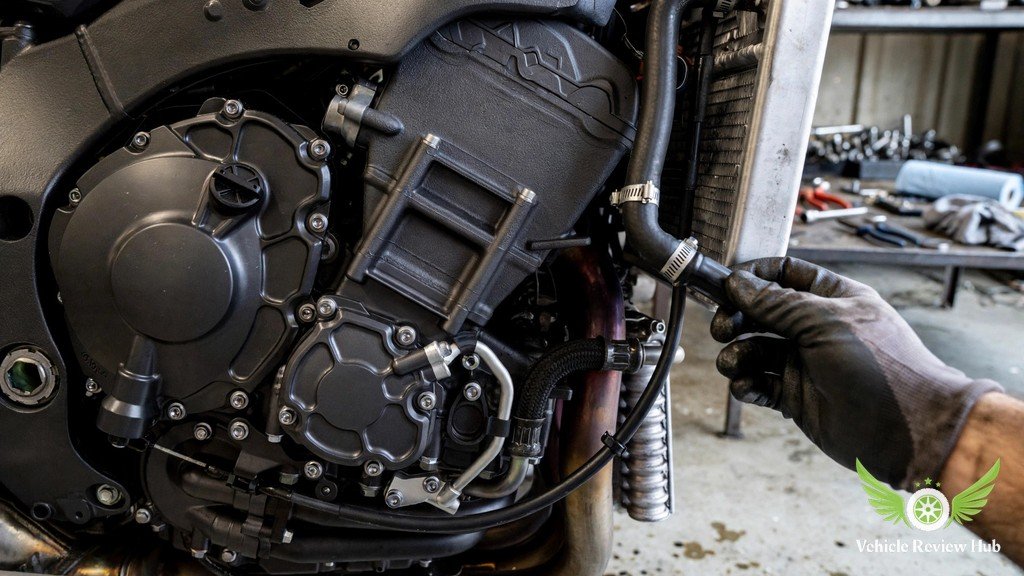
Engine, Cooling System and Fuel System Inspection Points
The CP4 engine has no recurring failure story on the standard MT-10, good news for Yamaha MT-10 reliability. The checks that matter are ordinary: oil level and condition, coolant level and color, and weeping around the water pump, radiator hoses, or thermostat housing. The MT-10 requires premium unleaded gasoline (RON 95 or higher); ethanol blends up to E10 are acceptable, but fuel containing methanol is not. Listen for cam-chain noise on a cold start and watch for startup smoke: neither is a reported MT-10 pattern, but both are cheap checks for Yamaha MT-10 reliability. One owner-reported quirk deserves a calm note: a light mechanical ticking at idle that owners of this engine family widely describe as normal, sometimes called the Yamaha tick, and not a verified defect.
Clutch, Gearbox, Chain, Sprockets and Electrical Checks
The most commonly reported MT-10 niggle affecting Yamaha MT-10 reliability is notchy shifting, and the causes are mundane: misadjusted shift linkage, incorrect chain tension, insufficient clutch lever free play, or oil past its best. A common MT-10 problems guide lists the same culprits in the same order, and the fix is usually adjustment and lubrication rather than parts. Cruise control is the second electrical item to test: owner guides list complaints about it refusing to engage or switching itself off, and on 2017–2020 bikes the front brake switch defect behind recall 20V814 is the prime suspect. Test cruise control, riding modes, and the TFT display during a ride, and have warning lights diagnosed with dealer tools first. Chain and sprockets wear fast on a 160-plus-horsepower naked, so check for tight spots, hooked teeth, and a chain that will not hold adjustment — constant adjustment says much about the previous owner’s habits, and about Yamaha MT-10 reliability for that bike.
Yamaha MT-10 Maintenance Schedule and Servicing
The US maintenance schedule is the backbone of Yamaha MT-10 reliability: service every 4,000 miles or 6 months, whichever comes first, with bigger items layered on top. The MT-10 maintenance schedule summary reproduces the full schedule in plain form for both the FZ-10 and MT-10 names.
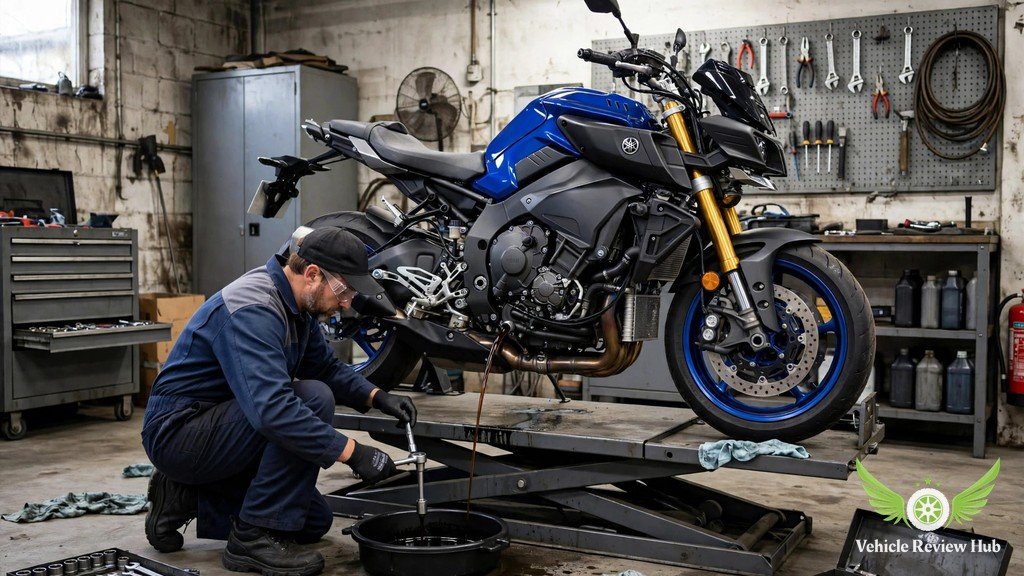
This walkthrough shows an oil and filter change on an FZ-10, the first-generation MT-10’s US name, and the procedure carries over to the current standard MT-10’s CP4 engine.
Service Every 4,000 Miles, Engine Oil, Filters and Spark Plugs
Every 4,000-mile service underpins Yamaha MT-10 reliability: engine oil plus checks of the brakes, clutch, cooling hoses, tires, wheel bearings, swingarm pivot, steering bearings, and fasteners. The oil filter and spark plugs are replaced every 8,000 miles. The break-in service at 600 miles covers the first oil and filter change and a full check-over, and it is the service most often skipped on used bikes, to the detriment of Yamaha MT-10 reliability. After break-in, sticking to the 4,000-mile rhythm is the single most effective thing for Yamaha MT-10 reliability. Yamaha specifies full synthetic 10W-40 or 15W-50 oil meeting JASO MA, since the oil also lubricates the clutch; capacity is 4.10 liters with a filter change. Avoid Energy Conserving oils, which can cause clutch slip.
Valve-Clearance at 26,600 Miles and the 24,000 Mile Source Disagreement
Valve-clearance checks are due every 26,600 miles in the US manual, or 42,000 km, while the European manual lists 40,000 km, or about 24,000 miles. US owners should use the 26,600-mile figure for Yamaha MT-10 reliability, a manual-market difference, not a mechanical one: the same engine, a different printed interval. This is a dealer job and the largest single routine bill. These time-based items are the ones low-mileage bikes miss: a five-year-old MT-10 with 6,000 miles needs fresh brake fluid and coolant. When evaluating Yamaha MT-10 reliability on a garage-kept example, check age-based services first — the most commonly overdue items. The same US-versus-Europe split applies elsewhere: Europe stretches general servicing to 10,000 km (about 6,000 miles) or 12 months and lists coolant on a 3-year cycle with no distance limit, while the US manual keeps coolant at 16,000 miles or 2 years.
| Service item | US interval | Notes |
|---|---|---|
| General service including engine oil | Every 4,000 miles or 6 months | 10W-40 or 15W-50, JASO MA |
| Oil filter replacement | Every 8,000 miles | At that visit |
| Spark plug replacement | Every 8,000 miles | NGK LMAR9E-J, gap 0.6–0.7 mm |
| Coolant change | 16,000 miles or 2 years | Check hoses each service |
| Valve-clearance check | Every 26,600 miles | Dealer job |
| Air filter replacement | Every 24,000 miles | Earlier in dusty use |
| Brake fluid change | Every 2 years | DOT 4 only |
| Brake hose replacement | Every 4 years | Each service |
| First service | 600 miles | Oil, filter, full check-over |
This schedule protects Yamaha MT-10 reliability in practice.
Yamaha MT-10 Tires, Brakes and Suspension Maintenance
Tires, brakes, and suspension are where Yamaha MT-10 reliability meets the road most directly, and where the standard bike differs most from the SP: its KYB suspension is fully adjustable and far cheaper to service than electronic hardware, a genuine ownership advantage.
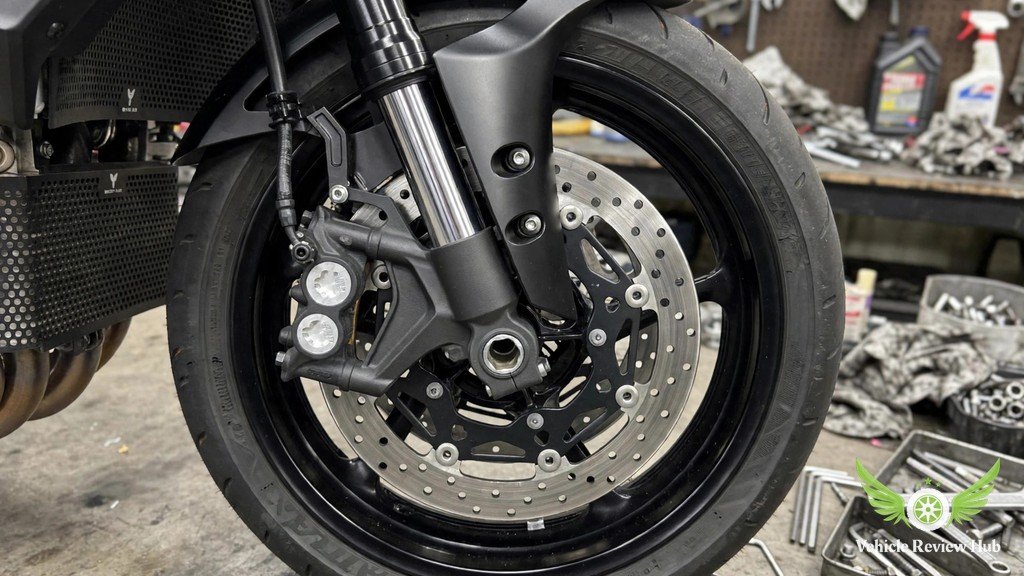
Tire Condition, Pressure, Tread Wear and Replacement
The standard MT-10 runs a 120/70ZR17 front tire and a 190/55ZR17 rear, both Bridgestone Battlax Hypersport S22 tubeless tires as standard, with cold tire pressures of 36 psi front and 42 psi rear, solo or two-up. Tire life is the running-cost surprise for new owners: one owner reported only about 1,600 miles from the original tires on the SP, a figure reflecting aggressive riding, and the standard bike’s identical tire sizes mean the same warning applies. When buying used, measure tread, check date codes, and look for squared-off rears and uneven front wear, which point to highway miles or wrong pressures — and reveal how the bike was ridden, a useful clue for Yamaha MT-10 reliability.
Brake Pads, Brake Discs, KYB Forks and Rear Suspension Checks
Braking is handled by dual 320 mm front discs with radial-mount four-piston calipers, a Brembo radial master cylinder, and a 220 mm rear disc, with lean-sensitive ABS on 2022-on bikes. Pads are checked at every service and replaced as needed for Yamaha MT-10 reliability: front pads are EBC FA380HH pattern parts (two pairs), the rear FA174HH. The KYB system is the standard bike’s quiet strength: a fully adjustable 43 mm inverted fork and piggyback rear shock, each with 4.7 inches of travel, serviceable by any competent suspension shop without specialist electronics. On inspection, check fork seals for weeping, oil mist on fork legs and shock, and free-moving damping adjusters. The SP reliability picture differs here: the SP’s electronic suspension costs more when it eventually needs attention, while the standard bike’s KYB hardware keeps Yamaha MT-10 reliability affordable.
Yamaha MT-10 Maintenance and Ownership Costs
Yamaha MT-10 reliability has a price tag: higher than a middleweight’s, but fair for the performance. The 2022 standard bike listed at $13,999 in the United States, and its running costs are set by fuel, tires, and the valve service. Fuel is the everyday expense, tires the surprise, and the valve service the big scheduled expense for Yamaha MT-10 reliability.
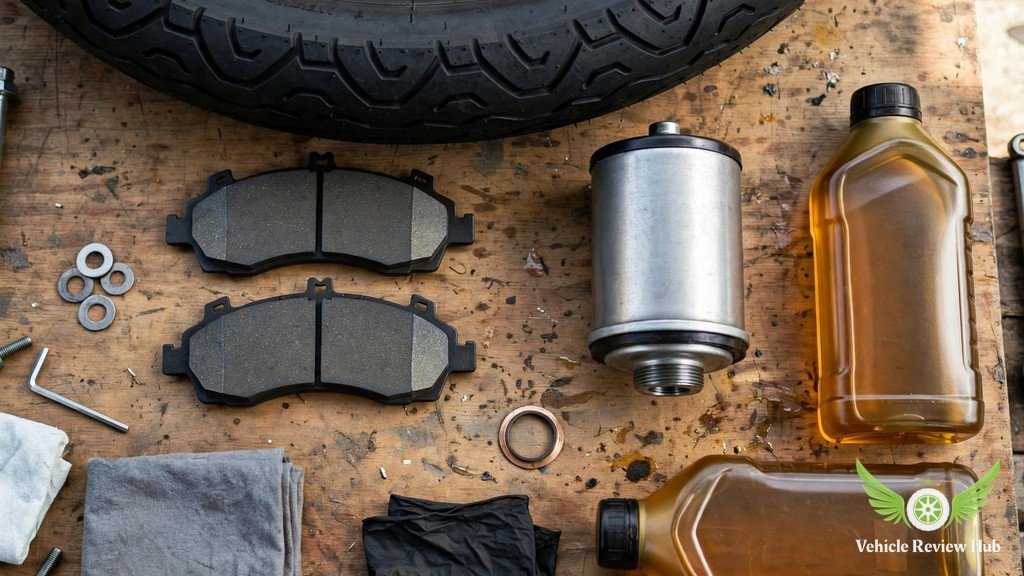
Fuel, Routine Servicing, Tires and Replacement Parts
Fuel economy is the MT-10’s weakest everyday number: Yamaha lists 36 mpg, owner reports cluster in the low-to-mid 30s for mixed riding, and under 30 mpg when riding hard. Routine servicing costs affecting Yamaha MT-10 reliability are documented: UK owners on MCN report annual servicing around £220 to £250, figures to read as UK evidence rather than US pricing. A published MT-10 maintenance log shows the DIY side: about $50 to $65 for a home oil change, $230 for a front tire, $310 to $380 for a rear, $76 for front brake pads, $55 for an air filter, and $57 for spark plugs, all parts or DIY costs. Parts availability is a genuine strength for Yamaha MT-10 reliability: the CP4 engine’s shared lineage with the R1 and the SP means filters, plugs, pads, and chains are widely stocked. The buying guide covers how service history affects what a used bike is worth.
Repair Expenses, Parts Availability and Long-Term Ownership Costs
Repair expenses for Yamaha MT-10 reliability split into two groups: cheap shared parts and pricier electronics. Engine, brake, chain, and KYB suspension parts are widely available and priced accordingly, while the TFT display and IMU electronics on 2022-on bikes cost more and sometimes need specialist diagnosis. Owners doing their own basic servicing report the MT-10 is straightforward to work on, which keeps long-term Yamaha MT-10 reliability affordable. The warranty is short, just one year limited factory cover, so the service record matters far more than remaining cover. For what the standard bike delivers when properly maintained, see the performance figures for the MT-10.
| Cost item | Typical cost | Basis |
|---|---|---|
| DIY oil change | About $50–$65 | One owner’s logged MT-10 costs, parts only |
| Front tire | About $230 | One owner’s logged MT-10 costs |
| Rear tire | About $310–$380 | One owner’s logged MT-10 costs |
| Front brake pads | About $76 | EBC FA380HH pattern parts, logged cost |
| Air filter / spark plugs | About $55 / $57 | One owner’s logged MT-10 costs |
| UK dealer annual service | About £220–£250 | MCN owner reviews, UK figures |
| Valve-clearance service | Varies by dealer | Get a written quote before 26,600 miles |
How to Keep a Yamaha MT-10 Reliable
Keeping Yamaha MT-10 reliability high is mostly discipline rather than expertise: follow the schedule, warm the bike properly, keep the chain clean and adjusted, and fix small issues before they become large ones.
Preventive Maintenance, Proper Lubrication and Regular Inspections
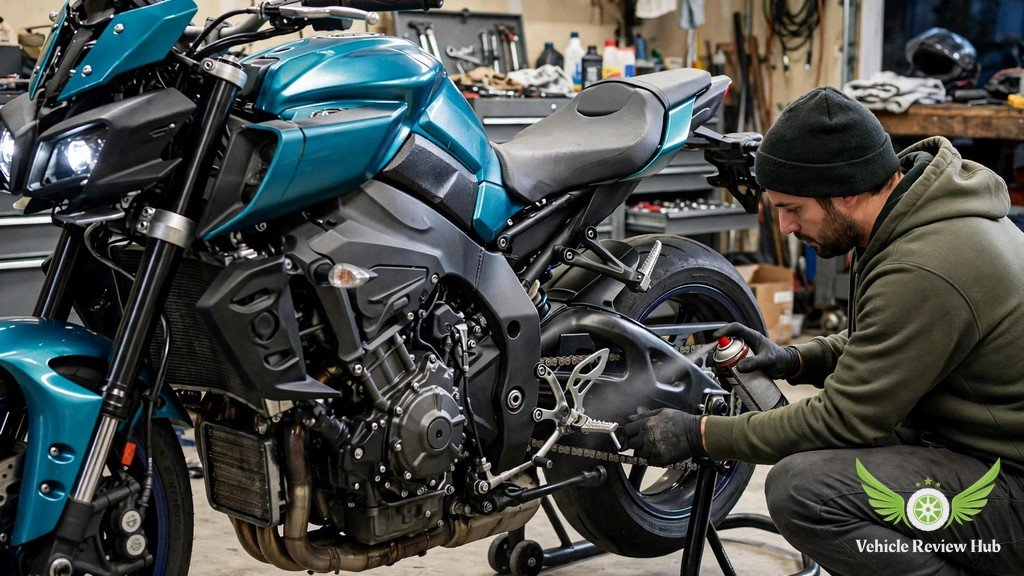
Between services, the highest-value habit for Yamaha MT-10 reliability is chain care: clean and lubricate with a proper O-ring chain lubricant, check slack and alignment regularly, and replace chain and sprockets as a set. A neglected chain wears sprockets, strains the gearbox output bearing, and delivers the notchy shifting owners mistake for gearbox trouble. The R7 reliability and R3 reliability guides show the same schedule-first pattern on smaller Yamahas. Keep records: a stamped book plus invoices is worth real money at resale, and supports Yamaha MT-10 reliability when the bike changes hands.
Recall Checks: 20V814 Nationwide and 25V248 Hawaii Filing With VIN Check
Recall checks confuse MT-10 buyers most for Yamaha MT-10 reliability, because two different recalls sound similar but cover different bikes. The first is NHTSA campaign 20V814, the nationwide front brake switch recall filed by Yamaha Motor Corporation, USA in December 2020, covering 18,203 bikes. Its published model list names the standard MT-10 from 2017 to 2020, alongside the Tracer GT, Niken GT, Super Tenere, FJR1300, and Star models, but not the 2022-on redesign. Silicon oxide raises resistance in the front brake switch, leaving the brake light on or canceling cruise control; the remedy is a free switch replacement, and the 20V814 brake switch record confirms that model list. The second is 25V248, where the standard bike’s story differs from the SP-only telling: the Hawaii filing by Pure Sports Distributing (Yamaha of Hawaii) covers certain 2022–2024 standard MT-10 motorcycles as well as certain 2022–2023 and 2025 MT-10 SP bikes, plus other models, 216 units in total. The throttle position sensor’s brushes may slide excessively due to improper ECU programming, possibly causing unstable idling or stalling, and the remedy is a free ECU reprogram plus TPS replacement. The 25V248 recall record states that scope plainly. The critical detail is the filing party: this is a Hawaii distributor filing, not a nationwide Yamaha recall, so a mainland 2022–2024 standard MT-10 is unlikely to be included — but the only safe answer for any bike is a VIN check. Run every candidate bike through the NHTSA recall lookup before money changes hands, and ask the seller for written proof that any open recall work is done.
Yamaha MT-10 Reliability FAQs
Direct answers on Yamaha MT-10 reliability, from headline ratings to service intervals and recall checks.
Is the Yamaha MT-10 reliable?
Yes. MCN rates the 2022-on standard bike at 4 out of 5 for Yamaha MT-10 reliability, with no verified widespread engine or gearbox failure pattern. Caveat: the rating rests on only 6 UK owner reviews.
What are the common problems on the Yamaha MT-10?
Minor issues dominate: notchy shifting from linkage adjustment, chain tension, clutch free play, or old oil; cruise control occasionally refusing to engage or switching off; and fast tire, chain, and brake pad wear under hard use. No recurring engine failure pattern has been verified for Yamaha MT-10 reliability.
How often does the MT-10 need servicing?
Every 4,000 miles or 6 months under the US manual — the rhythm behind Yamaha MT-10 reliability. Oil at every service; filter and plugs every 8,000 miles; coolant at 16,000 miles or 2 years; brake fluid every 2 years; hoses every 4 years; valves every 26,600 miles; first service at 600 miles.
When is the valve-clearance service due on the MT-10?
Every 26,600 miles under the US manual (42,000 km). The European manual lists 40,000 km (about 24,000 miles) for the same engine, so US owners should use 26,600 miles — a dealer job and the largest single routine bill.
What engine oil does the MT-10 use?
Full synthetic SAE 10W-40 or 15W-50, API SG or higher and JASO MA; the oil also lubricates the clutch. Capacity is 4.10 liters (4.33 US quarts) with a filter change, 3.90 liters without. Skip Energy Conserving oils, which can cause clutch slip.
Does the MT-10 have any recalls?
Yes, two matter. NHTSA campaign 20V814 is the nationwide front brake switch recall covering certain 2017–2020 standard MT-10 bikes, fixed free with a switch replacement. Campaign 25V248 is a Hawaii-only filing covering certain 2022–2024 standard MT-10 and certain SP bikes, covering a throttle position sensor issue fixed free with an ECU reprogram and TPS replacement. Always check by VIN.
Is the MT-10 expensive to maintain?
More expensive than a middleweight but reasonable for a liter naked. UK owners report annual servicing around £220 to £250, while logged US history shows DIY oil changes around $50 to $65, tires at $230 front and $310 to $380 rear, and brake pads around $76. Tires cost most often; the valve service costs most per visit for Yamaha MT-10 reliability.
Should I buy a used MT-10?
Yes, if the service history checks out: a recorded 600-mile first service, oil changes every 4,000 miles, the valve service done on time if mileage requires it, fresh tires and chain, and a clean VIN recall check covering 20V814 on 2017–2020 bikes and 25V248 on Hawaii-distributed 2022–2024 bikes. Complete history matters more than low mileage for Yamaha MT-10 reliability.
How long will an MT-10 last?
With the US schedule followed, a well-maintained MT-10 should cover high mileages and strong Yamaha MT-10 reliability: the CP4 engine has a long production history and no verified systemic weakness. Longevity depends on oil discipline, chain care, on-time coolant and brake fluid changes, and the valve service at 26,600 miles.