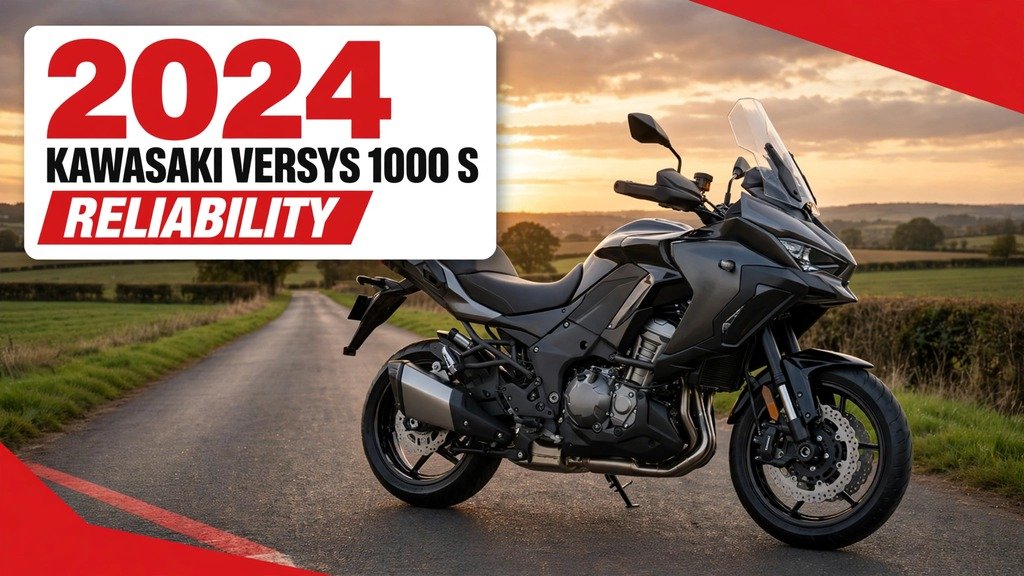
The short answer in this Kawasaki Versys 1000 S reliability guide is that the S is a tough, long-lived tourer with one documented fault on one bike, a radiator that needs a guard, and a service book that asks for oil every 7,600 miles and a valve check at 15,000 miles in the United States. No recall has been found for the US Versys 1000, and the owners who rate it highest ride it furthest.
That verdict comes from written evidence, not from a video: MCN’s 16,000-mile long-term test of a 2019 SE, owner ratings split by generation and the 2021 manual’s service chart. The American figures in this Kawasaki Versys 1000 S reliability guide belong to the SE LT+ and are labelled every time.
Kawasaki Versys 1000 S Reliability Overview
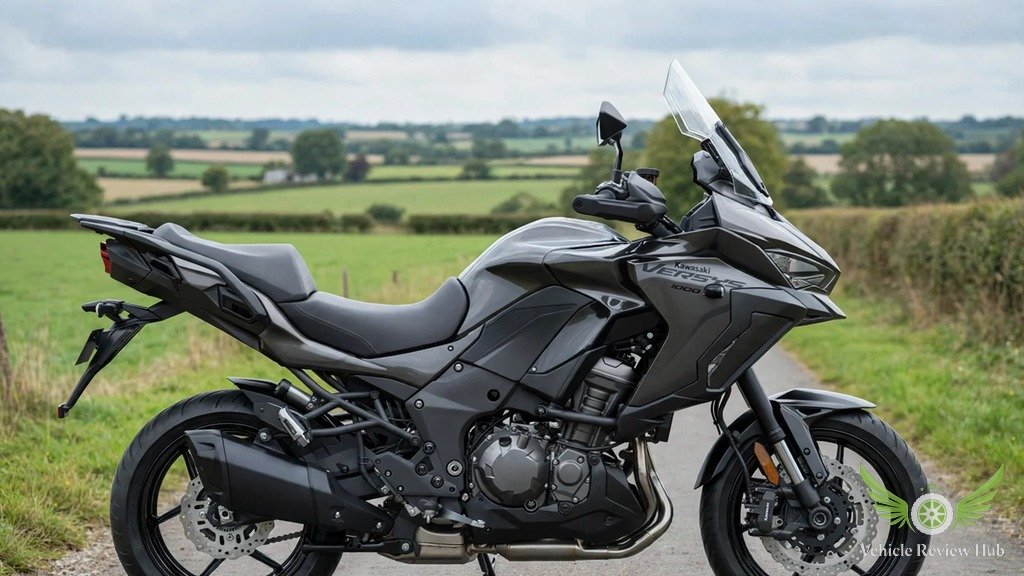
This Kawasaki Versys 1000 S reliability guide starts with the engine, the reason the bike’s reputation is as strong as it is. The 1,043cc inline-four is a detuned Ninja 1000 and Z1000 unit, tuned for midrange smoothness, and owners call it bulletproof.
Valve Check: 15,000 US, 26,250 Elsewhere
The valve-clearance check is the one service item where the market matters. In the United States and Canada, the 2021 manual calls for a valve inspection every 15,000 miles, or 24,000 km. Everywhere else, the same manual calls for 26,250 miles, or 42,000 km. The two numbers describe the same engine in different markets, and this Kawasaki Versys 1000 S reliability guide prints the 15,000-mile figure for American readers — never the 26,250-mile figure as the US interval, a mistake the Versys 650’s own reliability story has already shown.
The valve check is the most expensive routine job on the bike, so a buyer looking at a used SE LT+ should ask whether the 15,000-mile check has been done, and budget for it if that mileage is near without a record.
How Mileage, Storage and Previous Care Affect Reliability
Mileage alone does not decide whether a Versys 1000 is reliable. The furthest-running owner reports share one pattern: regular use, regular servicing, and dry storage. One MCN owner reports a third Versys over 75,000 miles with never a problem, another 77,000 miles in six years, and a Team-BHP owner in India passed 50,000 km with no major issues. Those are labelled owner claims.
Storage matters more than the odometer: a bike that sat two years in a damp garage will need more than one that covered the same miles in regular use, because the chain, brake fluid, fuel hoses, and battery all age with time as well as miles. That is why the manual lists time-based items, and why this Kawasaki Versys 1000 S reliability guide values a full service record over a low odometer reading.
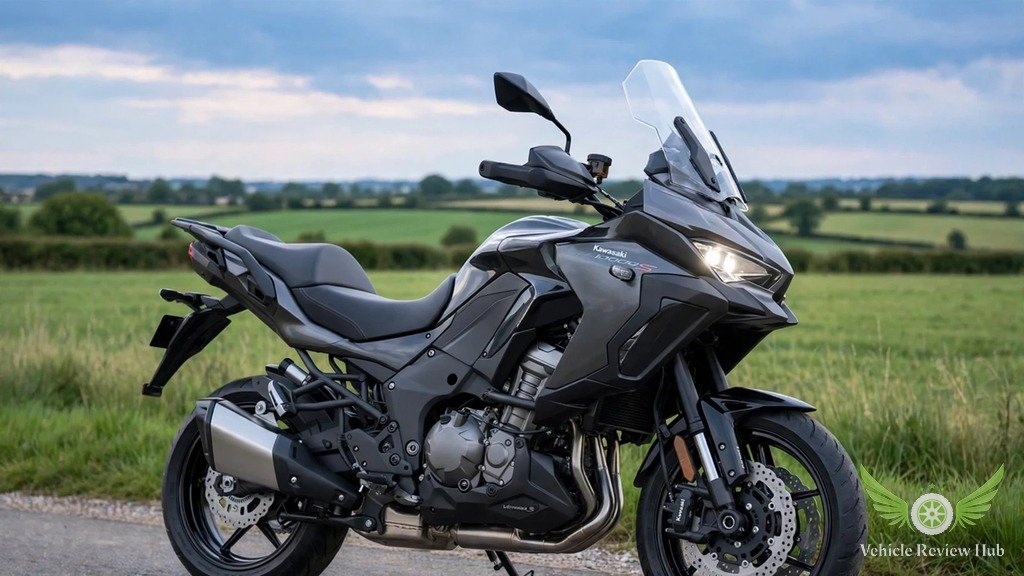
Kawasaki Versys 1000 S Common Problems and Wear Items
The honest list of problems on this bike is short, and this Kawasaki Versys 1000 S reliability guide keeps it short on purpose: one documented fault on one long-term bike, one exposed part that needs a guard, and wear items that cost money on schedule rather than failing without warning.
The video below is Motoplanete’s upload of Kawasaki’s 2015 Versys 1000 promo film, with an English voiceover — the French text is only in the video’s description. No dedicated English long-term or owner video exists for this bike, so the reliability evidence here is written — MCN’s 16,000-mile fleet test and the owner reports behind it.
Quickshifter Case on a UK Long-Term Bike
In August 2019, MCN’s long-term 2019 SE started refusing to change into third or fifth gear above 6,000 rpm when using the quickshifter. The bike went back to Kawasaki for about a month, and a couple of gears, the quickshifter, and a sensor were replaced. No official cause was ever confirmed: one bike, one fault, no pattern — the single documented fault in this Kawasaki Versys 1000 S reliability guide.
It is important to say what this case is not: not a recall, and not a pattern — no other Versys 1000 in the long-term test or the owner reports shows the same fault. Nor is it the quickshifter’s manners at low revs — upshifts smooth, backshifts less smooth at slow speeds, as Bennetts and 1000PS describe. That is a character trait, not a failure, and this Kawasaki Versys 1000 S reliability guide treats the two as separate things. A used buyer should still test every gear above 6,000 rpm on a test ride.
Owners Rate Reliability 4.6 of 5
MCN’s owner ratings split by generation. The 2012–2015 bikes rate 4.7 out of 5 from 13 owners, and the 2015–2018 bikes rate 4.7 out of 5 from 15 owners. The 2019–2020 generation — the gen-3 bike the S is built on — rates 4.6 out of 5 from 10 owners. That is why this Kawasaki Versys 1000 S reliability guide uses 4.6, not 4.7: the S’s own generation is the one that counts.
The samples are small, and this guide labels them as such: ten owners is not a survey, and a 4.6 from ten is a signal, not a statistic. But the direction is consistent — every generation rates above 4.5 — and the owner voices behind the numbers say the same: high mileage, no major issues, “bulletproof” for the detuned Z1000 engine. MCN’s 2021 Versys 1000 review carries the same generation-by-generation ratings.
| Generation | Reliability and build | Overall score | Owners |
|---|---|---|---|
| 2012–2015 | 4.7 / 5 | 4.7 / 5 | 13 |
| 2015–2018 | 4.7 / 5 | 4.7 / 5 | 15 |
| 2019–2020 | 4.6 / 5 | 4.1 / 5 | 10 |
Notes for this Kawasaki Versys 1000 S reliability table: the ratings are MCN owner ratings, split by generation, with the owner count shown. The S is a gen-3 bike, so the 2019–2020 row is the one that applies to it. Small samples — treat the figures as owner sentiment.
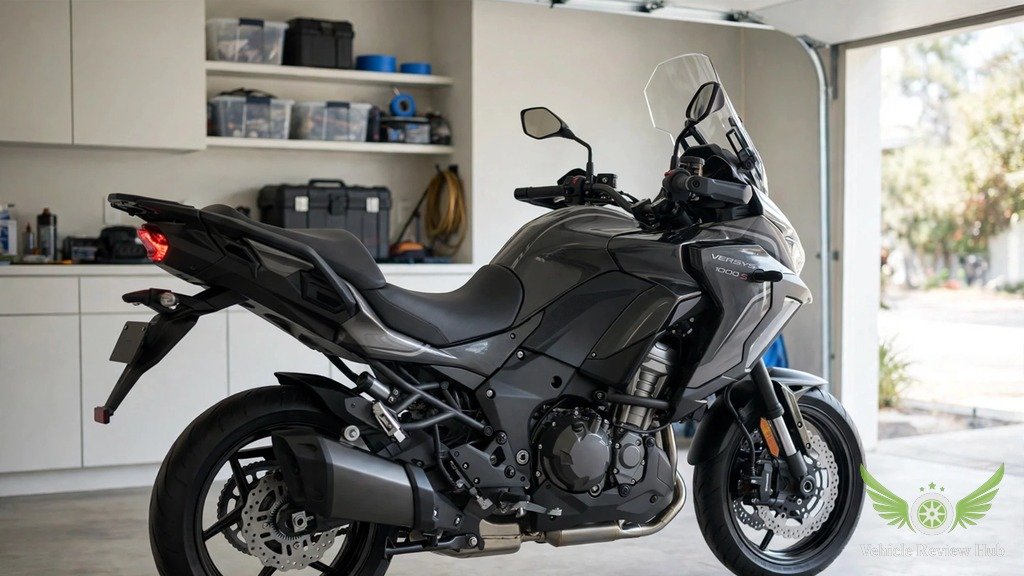
Kawasaki Versys 1000 S Maintenance Schedule and Servicing
The service book is simple and regular, and this Kawasaki Versys 1000 S reliability guide follows the 2021 manual’s chart as published on the maintenanceschedule.com gen-3 schedule page. The first service is at 600 miles, and from there the bike runs on 7,600-mile services, with the big items at the 15,000- and 22,800-mile marks.
Oil and Filter Every 7,600 Miles
Engine oil and the oil filter are replaced every 7,600 miles, or 12,000 km, or annually — whichever comes first. That is the manual’s figure; the 7,500 miles most riders quote is MCN’s UK-rounded usage, and MCN’s own bike ran its services at 7,500-mile intervals without using oil or coolant between them. The manual says 7,600, and this Kawasaki Versys 1000 S reliability guide uses it.
The air filter and the spark plugs are replaced from the 7,600-mile service onward, on the same visit as the oil, and the fuel filter at 15,200 miles.
Coolant Every Three Years or 22,800
Coolant, the water hoses, and the O-ring are replaced every three years, at the 22,800-mile service column. The three-year figure matters most: a low-mileage bike reaches the time limit long before the mileage limit, and a used bike with no coolant change in four years needs one.
The rest of the time-based items follow the same logic: brake fluid every two years, brake hoses every four, steering bearings lubricated every two years, fuel hoses every five. The chain is the only item on its own mileage rhythm — lubricate every 400 miles, check the slack every 600. The Kawasaki Versys 1000 gen-3 maintenance schedule reproduces the manual’s chart.
| Service item | Interval |
|---|---|
| First service | 600 miles |
| Engine oil + oil filter | Every 7,600 miles / 12,000 km or annually |
| Air filter + spark plugs | Replace from the 7,600-mile service on |
| Valve clearances (US) | Every 15,000 miles / 24,000 km |
| Valve clearances (elsewhere) | Every 26,250 miles / 42,000 km |
| Fuel filter | 15,200 miles |
| Coolant, water hose, O-ring | Every 3 years / 22,800-mile service |
| Drive chain — lube | Every 400 miles |
| Drive chain — slack check | Every 600 miles |
| Brake fluid | Replace every 2 years |
| Brake hoses | Replace every 4 years |
| Steering stem bearings | Lubricate every 2 years |
| Fuel hoses | Replace every 5 years |
Notes for this Kawasaki Versys 1000 S reliability table: every interval comes from the 2021 manual’s chart. The valve check is 15,000 miles in the US and 26,250 miles elsewhere — different markets, not different engines. The 7,600-mile figure is the manual’s number; 7,500 is MCN’s UK-rounded usage.
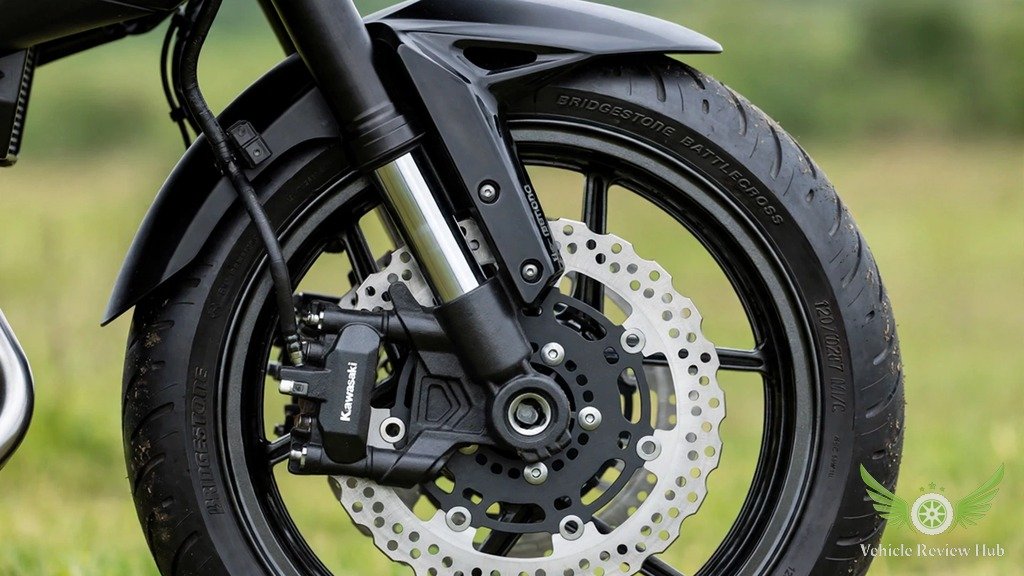
Kawasaki Versys 1000 S Tires, Brakes and Suspension Maintenance
The wear items are predictable, and this Kawasaki Versys 1000 S reliability guide treats them as a budget line: tyres wear fast, brakes are a routine consumable, and the S’s manual suspension has nothing electronic to fail.
Exposed Radiator Needs a Guard
The single most useful purchase for any Versys 1000 is a radiator guard, and the reason is a stone: at around 4,500 miles, one pierced the exposed radiator on MCN’s long-term SE. It was not covered under warranty. The new radiator cost £624.73 for the part, plus £22.47 for fresh coolant, and the total fitted at the dealer was £755.20 — labour included. The £624.73 is the part alone, not the total — a distinction this Kawasaki Versys 1000 S reliability guide makes because the two figures are often confused.
The fix costs far less than the repair: the official Kawasaki radiator guard is £79.95, the cheapest insurance on the bike. A used buyer should check whether a guard is fitted and budget for one before the first long ride if it is not. Stone damage is a negotiating point, not a reason to walk away — but only if the guard goes on straight after.
Tire, Brake and Suspension Checks That Matter
Tyre wear is heavy: MCN’s long-term SE was on its fourth set at around 15,000 miles. The tyres are Bridgestone Battlax in 120/70ZR17 front and 180/55ZR17 rear, at 36 psi front and 42 psi rear. Budget for tyres more often than the service book suggests.
The brakes are dual 310 mm petal discs at the front with four-piston calipers, and a single 250 mm petal disc at the rear, under cornering ABS that cannot be switched off. Pads are a routine wear item, and no pattern of disc failure was found. Check the pads, fluid age, and disc surfaces — the fluid is a two-year item. The suspension is the S’s quiet advantage: a 43 mm inverted Showa fork with manual preload and rebound, and a rear shock with rebound and a remote preload adjuster, 150 mm of travel at both ends. No Skyhook to service, nothing electronic to fail. Bennetts’ 2021 Grand Tourer review is the source for the brake criticism and the comfort verdict behind this section.
The screen is another small item with a known habit: MCN’s long-term bike had the screen bolts loosen and the screen self-adjust at 70 mph, and an owner reports the same.

Kawasaki Versys 1000 S Maintenance and Ownership Costs
Owning a Versys 1000 costs less than most bikes in its class, and this Kawasaki Versys 1000 S reliability guide prices the ownership in named figures: a modest fuel bill, regular services, and two big numbers to remember — the radiator repair and the tyre bill.
Fuel, Routine Servicing, Tires and Replacement Parts
Fuel economy comes from named UK tests, all imperial gallons: Bennetts saw just over 50 mpg imperial over 700 miles on the 2021 Grand Tourer test, and MCN’s long-term SE averaged 51.3 mpg imperial over 16,000 miles. By arithmetic only, 50 mpg imperial is about 41.6 mpg US. Kawasaki publishes no US MPG figure, and this Kawasaki Versys 1000 S reliability guide does not invent one.
Routine servicing follows the 7,600-mile rhythm, and no US dealer service price exists in the research — this guide prints none.
| Cost item | Figure | Source |
|---|---|---|
| Fuel economy | Just over 50 mpg imperial (Bennetts); 51.3 mpg imperial (MCN) | Named UK tests |
| Range between fill-ups | 200-plus miles; fuel light 160–170 miles | Bennetts / MCN |
| Radiator guard (official Kawasaki) | £79.95 | Kawasaki UK |
| Radiator part only | £624.73 | MCN long-term |
| Radiator total fitted | £755.20 (incl. coolant £22.47 + labour) | MCN long-term |
| Tyre wear | 4th set at ~15,000 miles | MCN long-term |
| SE LT+ warranty (US) | 24 months limited | Motorcycle.com |
Notes for this Kawasaki Versys 1000 S reliability table: all prices are UK figures except the warranty, which is the US SE LT+ term. The radiator part price is not the fitted total — the two are shown on separate rows. No US dealer service price exists, so none is printed.
No Recall Found for the US Versys 1000
No recall has been found for the US Versys 1000, and this Kawasaki Versys 1000 S reliability guide says exactly how that finding was reached. The NHTSA recalls API returns Count:0 for the Versys 1000 for 2015 and for every year from 2019 to 2024, and the complaints API returns 0 for the same years. That is the API’s result, labelled as such — and it is not the whole check, because the Versys 650 proved an API zero can be false: two real campaigns existed while the API said zero.
So the record was cross-checked. The NHTSA vehicle page for the 2019 Versys 1000 loads its recall data dynamically, so its text could not be read to confirm the zero directly, and a targeted search for a Versys 1000 recall found no campaign in any source. The two campaigns that do turn up belong to other bikes: the 2012 passenger-footpeg campaign, 12V-081, covers the 2012 Versys 650, and campaign 17V465000 covers the 2017 Versys-X 300. Neither covers the Versys 1000, and this Kawasaki Versys 1000 S reliability guide does not attach either one to it. The finding stands as a finding, not a guarantee. A buyer should still check the VIN on the NHTSA vehicle page for the 2019 Versys 1000 before buying.

How to Keep a Kawasaki Versys 1000 S Reliable
Keeping one of these bikes reliable is mostly a matter of doing the ordinary things on time, and this Kawasaki Versys 1000 S reliability guide ends with the checklist that follows.
Preventive Maintenance, Records and Regular Inspections
Follow the 7,600-mile service rhythm this Kawasaki Versys 1000 S reliability guide lays out, and keep the record: oil and filter every 7,600 miles or annually, plugs and air filter from the same service, valve check at 15,000 miles, coolant every three years. Lubricate the chain every 400 miles, check its slack every 600, change the brake fluid every two years.
Fit the radiator guard before the first long ride, and check the screen bolts and the tyre pressures on every ride. Keep every receipt: a full service record is worth more than a low odometer reading, and a bike with a record is the one this Kawasaki Versys 1000 S reliability guide would buy.
US Buyers: Inspect an SE LT+ Instead
The S was never sold in the United States, so an American buyer cannot buy one new at any price, and cannot import a used one until the 25-year rule opens: a 2021 S becomes importable in 2046, a 2024 S in 2049. The bike to inspect instead is the SE LT+, the only US trim from 2019 to 2024, at $19,359 delivered for the 2023 model — the S’s engine and chassis, plus Skyhook suspension and 28-litre panniers. The Kawasaki Versys 1000 S review has the full kit list.
When inspecting an SE LT+, check the same things this guide checks on the S: the service record, the valve check, the radiator guard, the quickshifter, the screen bolts, and the tyre age. The successor, the Versys 1100 SE LT, arrived for 2025 at $19,499 before destination, and the 2027 model costs $20,639 delivered. Either way, the verdict of this Kawasaki Versys 1000 S reliability guide is the same: a reliable workhorse, and the buyer who checks the record buys with confidence.
Kawasaki Versys 1000 S Reliability: Frequently Asked Questions
Direct answers to the Kawasaki Versys 1000 S reliability questions buyers ask most, including the ones American readers ask first.
Is the Versys 1000 S reliable?
Yes. MCN’s long-term test called the bike a largely reliable workhorse and mechanically solid over 16,000 miles, and owners rate the 2019–2020 generation 4.6 out of 5 for reliability and build. This Kawasaki Versys 1000 S reliability guide records one documented fault on one bike, not a pattern — and the engine is the part owners praise most.
How often should the oil be changed on a Versys 1000 S?
Every 7,600 miles, or 12,000 km, or annually, with the oil filter changed at the same time. That is the manual’s figure; the 7,500-mile number many riders quote is MCN’s UK-rounded usage, and this Kawasaki Versys 1000 S reliability guide uses the manual’s 7,600 miles.
When does the Versys 1000 S need a valve check?
Every 15,000 miles in the United States and Canada, or 24,000 km; elsewhere the manual calls for 26,250 miles, or 42,000 km. The two figures describe the same engine, and this Kawasaki Versys 1000 S reliability guide prints the 15,000-mile figure for American readers.
What is the most common problem with the Versys 1000 S?
The most common problem is the exposed radiator: a stone pierced it at around 4,500 miles on MCN’s long-term bike, and the repair cost £755.20 fitted. The official Kawasaki radiator guard costs £79.95 and prevents it. The only other documented fault is the quickshifter case on one UK long-term bike, which this Kawasaki Versys 1000 S reliability guide treats as one case, not a pattern.
Has the Versys 1000 been recalled?
No recall has been found for the US Versys 1000. The NHTSA recalls API returns Count:0 for 2015 and for every year from 2019 to 2024, and a targeted search found no campaign in any source. The two campaigns that turn up belong to other bikes — 12V-081 is the 2012 Versys 650 and 17V465000 is the 2017 Versys-X 300 — and this Kawasaki Versys 1000 S reliability guide does not attach either one to the 1000. Check the VIN on the NHTSA vehicle page before buying.
How long do Versys 1000 tyres last?
Not long: MCN’s long-term bike was on its fourth set of tyres at around 15,000 miles, and this Kawasaki Versys 1000 S reliability guide budgets for tyres more often than the service book suggests. The tyres are Bridgestone Battlax in 120/70ZR17 front and 180/55ZR17 rear, at 36 psi front and 42 psi rear.
Does the Versys 1000 S have a quickshifter problem?
One bike had one: MCN’s long-term 2019 SE refused third and fifth above 6,000 rpm in August 2019, spent about a month at Kawasaki, with gears, the quickshifter, and a sensor replaced and no official cause confirmed. The quickshifter being poor at low revs is a separate character trait, not a failure, and this Kawasaki Versys 1000 S reliability guide keeps the two apart.
How much does it cost to maintain a Versys 1000 S?
No US dealer service price exists in the research, so this Kawasaki Versys 1000 S reliability guide prints none. The named costs are the radiator guard at £79.95, the radiator repair at £755.20 fitted, and tyres, the fourth set arriving at around 15,000 miles.
What is the fuel economy of the Versys 1000 S?
Bennetts saw just over 50 mpg imperial over 700 miles, and MCN’s long-term SE averaged 51.3 mpg imperial over 16,000 miles. Those are UK imperial figures; by arithmetic, 50 mpg imperial is about 41.6 mpg US, and Kawasaki publishes no US MPG figure, as this Kawasaki Versys 1000 S reliability guide notes.
Can I buy a Versys 1000 S in the USA?
No. The S was never sold in the United States, and the 25-year import rule means a 2021 S becomes importable in 2046 and a 2024 S in 2049. Buy the SE LT+ instead — the only US trim from 2019 to 2024. This Kawasaki Versys 1000 S reliability guide inspects the SE LT+ on the same checklist as the S.
Is the manual suspension on the S more reliable than Skyhook?
For long-term ownership, yes: the S’s 43 mm inverted Showa fork and rear shock are manually adjustable, with nothing electronic to fail and no dealer-only servicing. The SE’s Skyhook works well, but it is SE-only and dealer-only to service. This Kawasaki Versys 1000 S reliability guide treats the manual suspension as the S’s honest advantage.
What should I check before buying a used Versys 1000?
The service record first: oil every 7,600 miles, the 15,000-mile valve check, and coolant every three years. Then the radiator guard, the quickshifter, the screen bolts, the tyre age, and the chain. A bike with a full record and a guard fitted is the one to buy; this Kawasaki Versys 1000 S reliability guide would walk away from a bike with neither.