The short answer in this Kawasaki Versys 1000 S comparison is that the S itself cannot be bought new in the United States at any price, so the real question is not which rival beats it on paper — it is which American bike gives you the same tourer. The answer is the Versys 1100 SE LT, the direct successor that Kawasaki sells in the US, with the V-Strom 1050 and the Tracer 9 as cheaper alternatives and the NT1100 DCT as the budget automatic.
That verdict comes from the prices and the spec sheets, not from a showroom visit: the S was a Europe-only bike from 2021 to 2024, the US got the SE LT+ instead, and the 1100 SE LT replaced it for 2025. Every figure in this Kawasaki Versys 1000 S comparison is year-tagged, and every US price is a delivered price — MSRP plus destination — so the gaps between the bikes are real gaps, not brochure tricks.
Kawasaki Versys 1000 S Overview and Its Closest Rivals
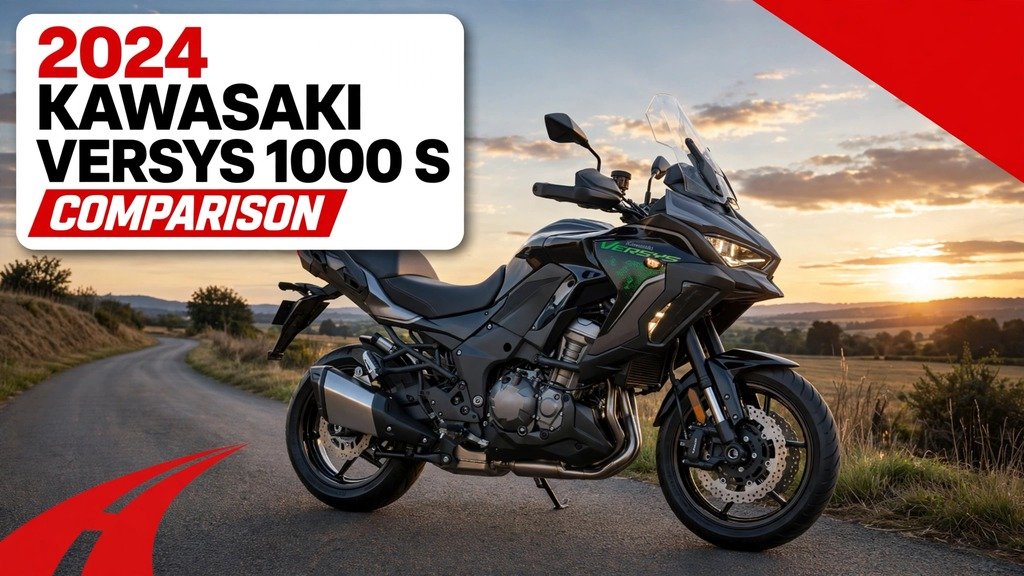
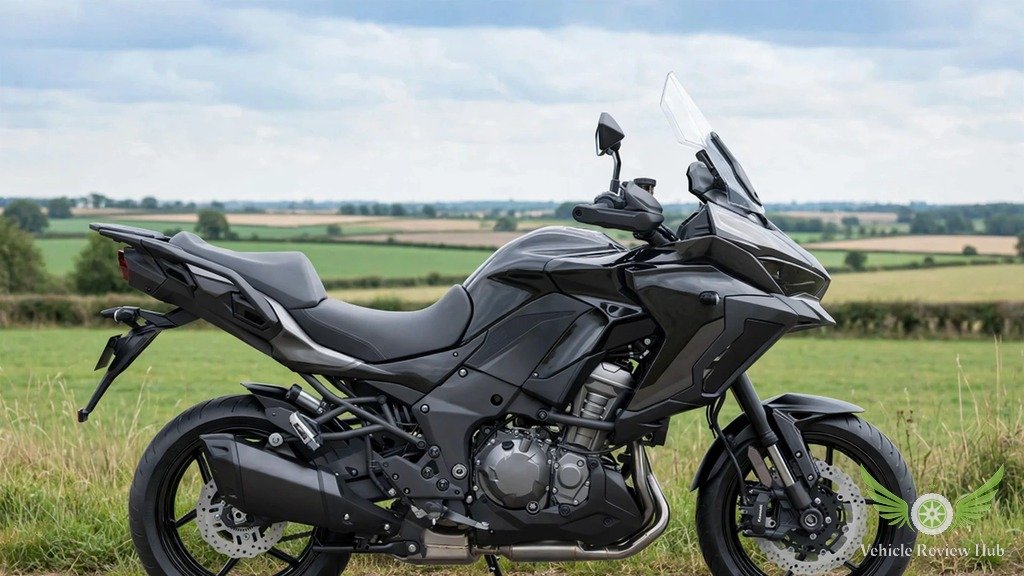
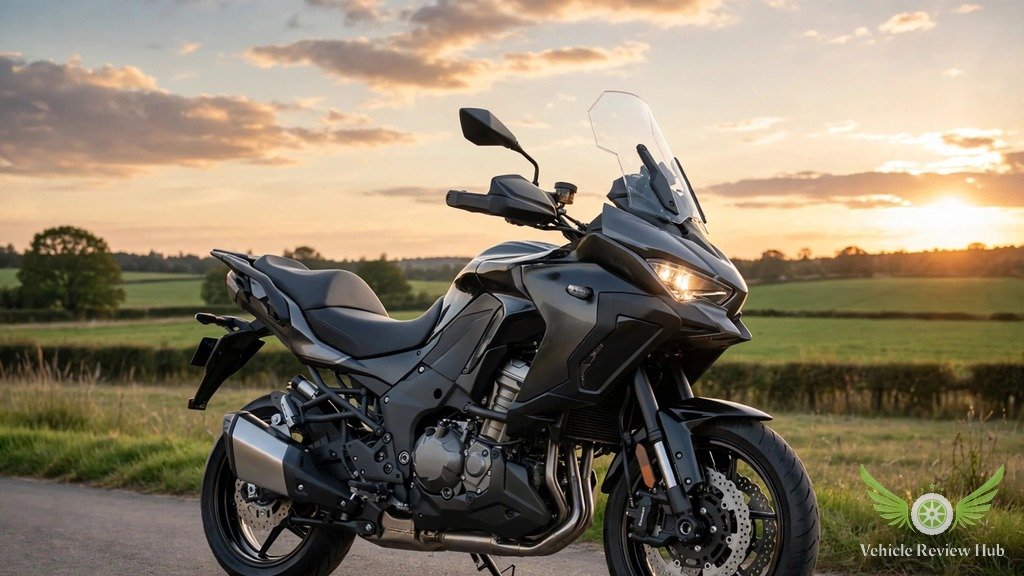
This Kawasaki Versys 1000 S comparison starts with the bike itself, because the rivals only make sense against it. The S is a gen-3 Versys 1000: a 1,043cc inline-four making 120 PS, which is 118 hp, with 102 Nm or 75 lb-ft of torque, a 5.5-gallon tank, a TFT dash, cruise control, a bi-directional quickshifter and LED cornering lights. The one thing it does not have is the SE’s Skyhook semi-active suspension — the S runs a manually adjustable 43 mm inverted Showa fork, and that is the honest difference between the two trims.
Why These Three Rivals: Successor, Twin, Triple
The three rivals in this Kawasaki Versys 1000 S comparison were picked because each one answers the S from a different direction. The Versys 1100 SE LT is the successor: the same touring brief, the same chassis family, a bigger 1,099cc engine, Skyhook suspension and 28-litre panniers included — the bike Kawasaki actually sells to the American buyer who wanted an S. The V-Strom 1050 is the twin: Suzuki’s 1,037cc V-twin adventure tourer, the natural rival the Versys has faced since the first generation, cheaper than the last US 1000 and built around a completely different engine character. The Tracer 9 is the triple: Yamaha’s 890cc CP3, lighter and cheaper than the Versys, with hard side cases standard in the US — the value pick for a rider who wants the touring shape without the touring price.
The video below is Bennetts’ review of the 2019 Versys 1000 SE, not the S. Bennetts pits the SE against the BMW S1000XR, the Ducati Multistrada and the Yamaha Tracer 900 on the road in Lanzarote and Fuerteventura — the only multi-rival comparison video found for this family, and the closest thing to a head-to-head the S ever got on camera.
How the Four Bikes Differ at a Glance
Four bikes, four engines, one touring brief. The S is the smoothest four of the group; the 1100 is the same idea with more of everything; the V-Strom is the twin with the most character and the longest service intervals; the Tracer 9 is the lightest and cheapest. The table below puts the headline numbers side by side so the rest of this Kawasaki Versys 1000 S comparison can talk about what the numbers mean instead of repeating them.
| Bike | Engine | Power | Tank | Delivered price |
|---|---|---|---|---|
| Kawasaki Versys 1000 S (2021–2024) | 1,043cc inline-four | 120 PS / 118 hp | 5.5 gal | No US price — Europe only |
| Kawasaki Versys 1100 SE LT (2027) | 1,099cc inline-four | 133 hp | 5.5 gal | $20,639 |
| Suzuki V-Strom 1050 (2026) | 1,037cc V-twin | 107 hp | 5.3 gal | $16,199 |
| Yamaha Tracer 9 (2026) | 890cc triple | 117 hp | 5.0 gal | $13,299 |
Notes for this Kawasaki Versys 1000 S comparison table: delivered prices are MSRP plus destination, year-tagged. The S has no US price because it was never sold in the United States — its 2021 UK launch price was £12,999. The 1100 SE LT figure is the 2027 model; the 2025 model was $19,499 before a provisional $800 destination.
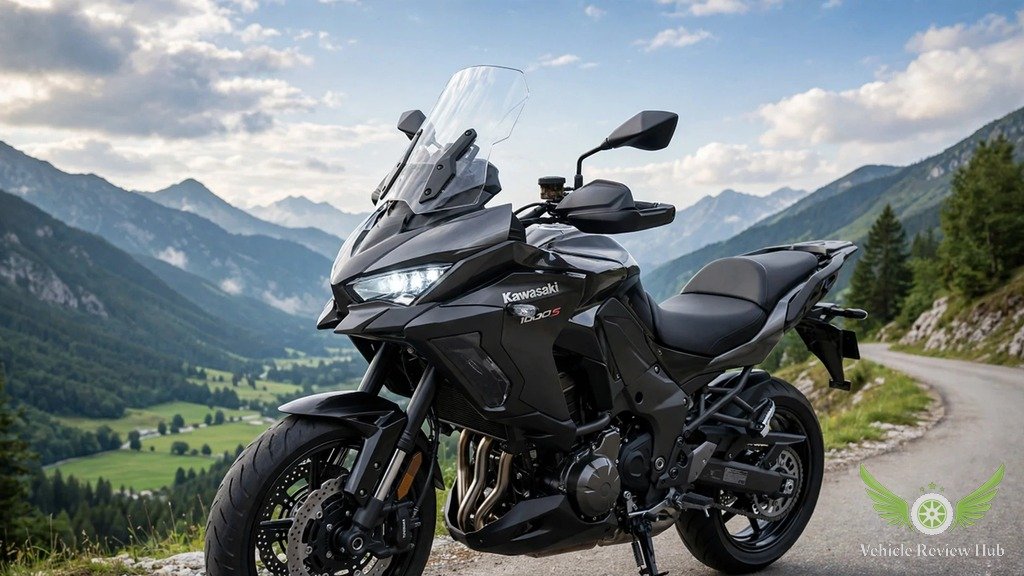
Kawasaki Versys 1000 S vs Kawasaki Versys 1100 SE LT
This is the pairing that matters most in this Kawasaki Versys 1000 S comparison, because the 1100 SE LT is not really a rival — it is the S’s replacement, wearing the same touring brief with a bigger engine and the suspension the S never got. An American buyer cannot choose between the two new, so the honest question is whether the successor is worth its price over a used SE LT+.
Engine, Specs and Performance Side by Side
The 1100’s engine is a 1,099cc inline-four, 77.0 × 59.0 mm, making a claimed 133 hp at 9,000 rpm and 82.5 lb-ft at 7,600 rpm — against the S’s 1,043cc four with 120 PS, or 118 hp, and 75 lb-ft. On paper that is 15 hp and 7.5 lb-ft more, from 56cc extra. In reality the gap is smaller than the brochure suggests: a Bike magazine dyno of the 1100 found 119 bhp and 74 lb-ft at the wheel, only 1 bhp and 1 lb-ft more than the old 1000 — the claimed 135 PS jump is mostly paper. Both bikes carry the same 5.5-gallon tank and the same six-speed gearbox with a bi-directional quickshifter, and the 2025 Versys 1100 SE LT first ride found the new engine’s extra midrange is what you actually feel, not the headline number. Top speed is no help in separating them either: Kawasaki publishes no official figure for either bike, and the only instrumented number in the family is MCN’s 133.76 mph GPS run on a 2019 SE. The performance guide covers that test in full.
Price, Equipment and Which Suits Which Rider
The equipment gap is where the 1100 earns its money. The S came with manual Showa suspension, a TFT dash, cruise, cornering lights and heated grips — and no panniers, which were a paid Tourer or Grand Tourer pack. The 1100 SE LT adds KECS Skyhook semi-active suspension, the same TFT and cruise, and 28-litre panniers included, with a 24-month warranty. Price: a 2027 1100 SE LT costs $20,639 delivered ($19,799 plus $840 destination), while the last US 1000, the 2023 SE LT+, cost $19,359 delivered — so the successor costs about $1,280 more than the last 1000, for a new bike, Skyhook and the bigger engine. The 2025 1100 was $19,499 before destination, with the $800 destination figure dealer-stated and provisional, so its $20,299 delivered total is provisional too. The S suits the rider who wants the manual-suspension bike and is willing to wait for the 25-year import rule; the 1100 SE LT suits the American buyer who wants the same bike today, with Skyhook and luggage, and is willing to pay for it.
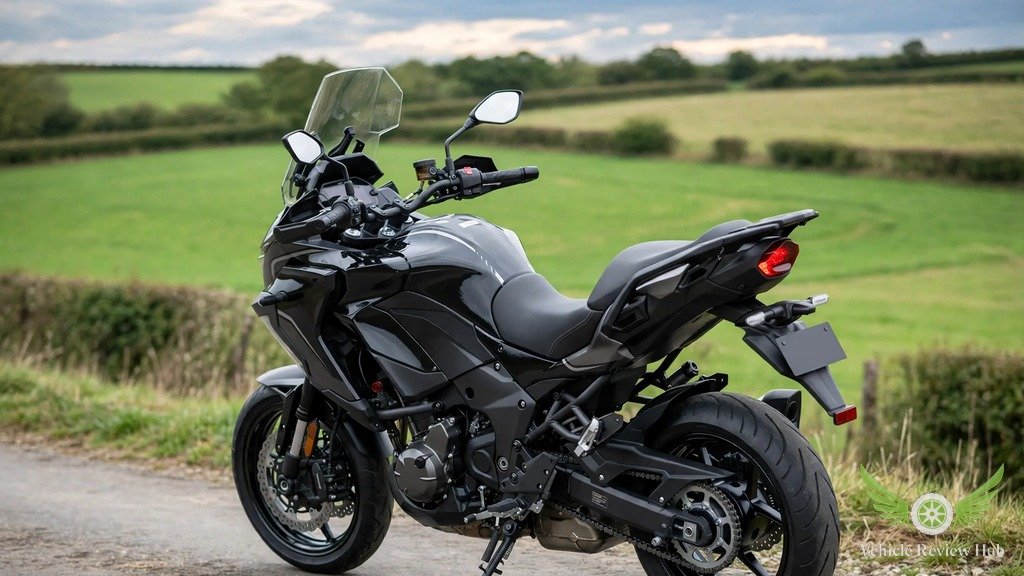
Kawasaki Versys 1000 S vs Suzuki V-Strom 1050
The V-Strom 1050 is the oldest rivalry in this Kawasaki Versys 1000 S comparison, and the most honest one: two big Japanese adventure tourers, one with a V-twin and one with an inline-four, both built for the same long days on the road. The Suzuki is the cheaper bike and the simpler one, and for some riders that is the whole argument.
Engine, Specs and Performance Side by Side
The V-Strom’s 1,037cc V-twin makes 107 hp at 8,500 rpm and 100 Nm, or 74 lb-ft — 11 hp down on the S’s 118 hp and 1 lb-ft down on its 75 lb-ft, but the twin delivers its torque lower down, with a character the four cannot copy. The S answers with smoothness: its inline-four is the calmer engine at motorway speed, with little vibration through the bars and pegs and an induction roar only under hard acceleration. The V-Strom carries a 20-litre tank, or 5.3 gallons, against the S’s 5.5 gallons in this Kawasaki Versys 1000 S comparison, so the Kawasaki holds a small range advantage. The base 1050 runs a 19-inch front wheel, with the 21-inch wheel reserved for the DE, and it has no TFT on the base bike — an LCD dash — no included luggage and a halogen headlight, where the S has a TFT, LED cornering lights and cruise. The V-Strom 1050 review covers the Suzuki’s own kit list, and the service story favours the twin too: Suzuki’s longer service intervals against the Kawasaki’s 7,600-mile oil services and the 15,000-mile US valve check that the reliability guide lays out.
Price, Equipment and Which Suits Which Rider
Price is where this Kawasaki Versys 1000 S comparison tilts toward the Suzuki. The 2026 V-Strom 1050 costs $16,199 delivered ($15,499 plus $700 destination), against the last US 1000’s $19,359 delivered for the 2023 SE LT+ — a gap of more than $3,000, with the years labelled, since the two prices come from different model years. The V-Strom suits the rider who wants the adventure-tourer shape, the twin’s character and the lower buy-in, and who is happy to add luggage himself. The Versys suits the rider who wants the smoother four, the bigger tank, the TFT and cruise as standard, and the comfort that Bennetts called brilliant on the 2021 Grand Tourer test. Neither bike is the wrong answer; the money and the engine character decide it.
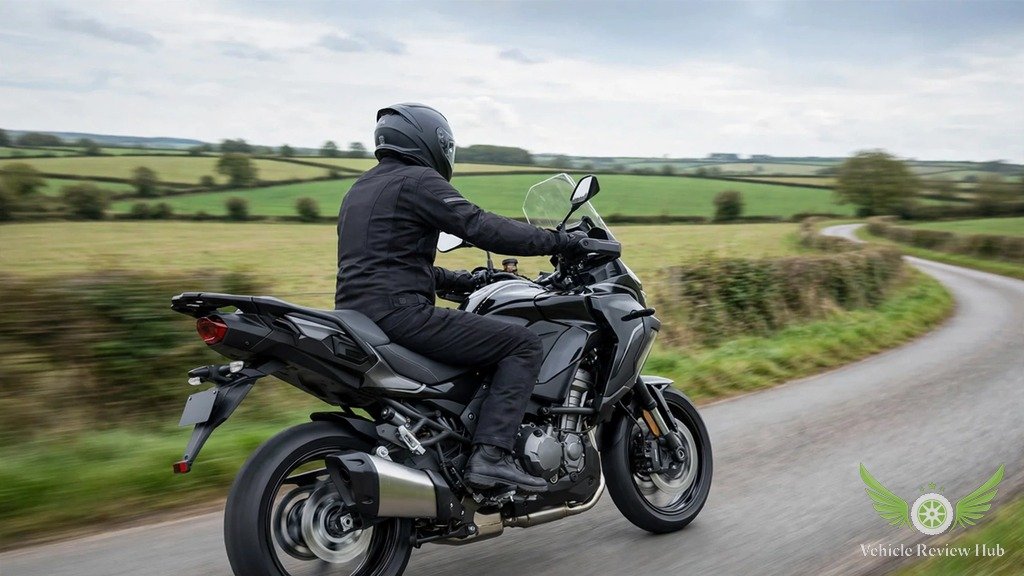
Kawasaki Versys 1000 S vs Yamaha Tracer 9
The Tracer 9 is the value pick in this Kawasaki Versys 1000 S comparison, and the lightest bike of the four by a clear margin. Yamaha’s 890cc triple gives up almost nothing on power to the Versys four, weighs 84 lb less, and costs more than $6,000 less than the last US 1000 — a gap big enough to make any buyer stop and think.
Engine, Specs and Performance Side by Side
The Tracer 9’s CP3 triple makes 117 hp at 10,000 rpm and 68.6 lb-ft at 7,000 rpm — 1 hp down on the S’s 118 hp, but 6.4 lb-ft down on torque, and the triple is eager and revvy where the four is smooth and quiet at a cruise. The weight tells the real story in this Kawasaki Versys 1000 S comparison: the Tracer 9 weighs 483 lb against the SE LT+’s 566.7 lb with bags, and that 84 lb shows up every time the road turns. The Yamaha carries a 5.0-gallon tank against the Versys’ 5.5 gallons, and its 48-mpg estimate gives a theoretical range of about 240 miles — close to the Versys’ 200-plus miles between fill-ups, but the Kawasaki still goes further on a tank. The Tracer 9 brings a 6-axis IMU and cornering electronics, a 33.3-inch seat, and hard side cases standard in the US on the 2025-and-later base bike, which the Yamaha Tracer 9 page lists as standard kit.
Price, Equipment and Which Suits Which Rider
The 2026 Tracer 9 costs $13,299 delivered ($12,599 plus $700 destination), and this Kawasaki Versys 1000 S comparison puts that against the 2023 SE LT+’s $19,359 delivered — more than $6,000 apart, with the years labelled. The Tracer 9 suits the rider who wants the sportiest engine of the group, the lightest bike, and the lowest price, and who does not mind the smaller tank and the triple’s busier character on a long motorway day. The Versys suits the rider who wants the calmest four, the longest range, and the most comfortable seat for two-up touring — the comfort that Bennetts praised after 170 miles in one stint. The Tracer 9 GT first ride found the same trade-off: the Yamaha is the sharper bike, the Versys is the easier one to live with.
Kawasaki Versys 1000 S Price and Value Compared
Price is where this Kawasaki Versys 1000 S comparison turns from a spec sheet into a buying decision. The S has no US price at all — it was never sold here — so the money question is what the American alternatives cost, and how far apart they sit. The table below lists every delivered price in this guide.
| Bike | MSRP | Destination | Delivered |
|---|---|---|---|
| Kawasaki Versys 1000 S | — | — | No US price — Europe only (UK 2021 launch £12,999) |
| Kawasaki Versys 1100 SE LT ABS (2025) | $19,499 | $800 provisional | $20,299 provisional |
| Kawasaki Versys 1100 SE LT ABS (2027) | $19,799 | $840 | $20,639 |
| Suzuki V-Strom 1050 (2026) | $15,499 | $700 | $16,199 |
| Yamaha Tracer 9 (2026) | $12,599 | $700 | $13,299 |
| Honda NT1100 DCT (2026) | $11,999 | $775 | $12,774 |
Notes for this Kawasaki Versys 1000 S comparison table: delivered prices are MSRP plus destination, year-tagged. The 2025 Versys 1100 destination of $800 is dealer-stated and provisional, so its $20,299 delivered total is provisional too. The 2026 Versys 1100 MSRP is unverified and no 2026 delivered total is printed. The S’s UK launch price was £12,999 in 2021 — a UK price, not a US one, and never converted to dollars here.
Cannot Be Imported Until 2046
The 25-year import rule is the wall at the end of this Kawasaki Versys 1000 S comparison. A 2021 Versys 1000 S becomes importable in 2046, and a 2024 S — the last year of the bike — in 2049. There is no grey-market shortcut worth suggesting, and no legal way to buy one new in the United States at any price. That is why the whole guide is built around the US bikes above the S: the 1100 SE LT for the buyer who wants the same bike today, and the V-Strom, Tracer 9 and NT1100 for the buyer who wants the same touring brief for less money. Waiting until 2046 for a 2021 bike is not a plan — it is a hobby.
Running Costs and Resale Value Compared
Running costs favour the cheaper bikes, but not by as much as the price gaps suggest. The Versys family services every 7,600 miles for oil and filter, with the valve check at 15,000 miles in the US — and no US dealer service price exists, so this Kawasaki Versys 1000 S comparison prints none. Tyres are the big consumable on the 1000: MCN’s long-term SE was on its fourth set at around 15,000 miles, so budget for rubber more often than the service book suggests. The radiator guard is the cheapest insurance on the bike at £79.95 in the UK, against a £755.20 fitted repair if a stone pierces the exposed radiator. On resale, no used-price market range was verified for the S or the SE LT+ — only single listings, such as a used 2019 SE LT+ at $8,995 — so no range is printed here, and any guide that quotes one is guessing. The Tracer 9 and V-Strom are cheapest to buy and feed; the 1100 SE LT is the most expensive.
Kawasaki Versys 1000 S Comparison Verdict and US Alternatives
The verdict of this Kawasaki Versys 1000 S comparison is simple: you cannot buy the S in the United States, so buy the bike above it. The Versys 1100 SE LT is the S’s engine and chassis with a bigger four, Skyhook suspension and panniers included — the same tourer, sold here, with a warranty. This Kawasaki Versys 1000 S comparison ends where it started, with the successor, not the S, as the bike to put money on.
| Ownership item | Versys 1000 S / SE LT+ | Rivals |
|---|---|---|
| Oil + filter service | Every 7,600 mi / annually | V-Strom intervals longer; Tracer 9 similar rhythm |
| Valve check (US) | Every 15,000 mi | Check each rival’s manual; intervals differ |
| Warranty (US) | 24 months limited (SE LT+) | 1100 SE LT: 24 months; V-Strom / Tracer 9: 12 months |
| Tyre wear | Heavy — 4th set at ~15,000 mi (MCN) | Touring tyres wear fast on all four |
| Radiator guard | £79.95 (UK) — fit it first | Exposed radiators are a shared risk |
| Fuel economy | ~50 mpg imperial (UK tests) | Tracer 9 ~48 mpg (Yamaha estimate) |
Notes for this Kawasaki Versys 1000 S comparison table: service and warranty figures are the US SE LT+ terms where the S was never sold. No US dealer service price exists for the Versys family, so none is printed. Tyre wear and the radiator-guard figures come from MCN’s long-term SE test.
Verdict: Buy the US Bike Above It
Buy the Versys 1100 SE LT. That is the verdict of this Kawasaki Versys 1000 S comparison, and it follows from everything above it: the same 5.5-gallon tank and touring ergonomics, a bigger engine that is only 1 bhp stronger on the dyno but torquier in the midrange, Skyhook suspension the S never had, panniers included, and a 24-month warranty — for about $1,280 more than the last US 1000 cost. The Versys 1000 S review has the full kit list if you want to see what the S itself offered, and the 2021 Versys 1000 review from MCN backs the comfort verdict. If $20,639 is too much, the Tracer 9 at $13,299 is the value pick and the V-Strom 1050 at $16,199 is the twin-character pick. The S stays a European bike you admire from a distance until 2046.
NT1100 DCT Alternative
The NT1100 DCT is the budget automatic alternative in this Kawasaki Versys 1000 S comparison, and the cheapest bike in the whole guide at $12,774 delivered for 2026 ($11,999 plus $775 destination). It is a Honda, not a Kawasaki, with a DCT automatic gearbox instead of a clutch and quickshifter — a different kind of touring bike for a rider who wants the Versys brief without the Versys price and without shifting at all. It gives up the four-cylinder smoothness and the 5.5-gallon tank, but it undercuts even the Tracer 9 by more than $500 and the last US 1000 by more than $6,500. For a commuter-tourer who values the automatic most, it is the cheapest honest answer in this guide.
Kawasaki Versys 1000 S Comparison: Frequently Asked Questions
Direct answers to the Kawasaki Versys 1000 S comparison questions buyers ask most, including the ones American readers ask first.
Can I buy a Versys 1000 S in the USA?
No. The S was never sold in the United States, and this Kawasaki Versys 1000 S comparison recommends the Versys 1100 SE LT instead — the same touring bike, sold here, with Skyhook and panniers.
Which bike should I buy instead of the Versys 1000 S?
The Versys 1100 SE LT. This Kawasaki Versys 1000 S comparison puts it first because it is the direct successor: the same chassis and tank, a bigger engine, Skyhook suspension and luggage included.
Is the Versys 1100 SE LT faster than the Versys 1000 S?
On paper, yes — 133 hp against 118 hp — but this Kawasaki Versys 1000 S comparison notes the dyno gap is only 1 bhp, so the real difference is midrange torque, not top speed.
How much more does the Versys 1100 SE LT cost than the last Versys 1000?
About $1,280. In this Kawasaki Versys 1000 S comparison the 2027 1100 SE LT costs $20,639 delivered, against the 2023 SE LT+’s $19,359 delivered.
Is the V-Strom 1050 cheaper than the Versys 1000 S?
Yes. This Kawasaki Versys 1000 S comparison prices the 2026 V-Strom 1050 at $16,199 delivered — more than $3,000 less than the last US 1000, with the years labelled.
Is the Tracer 9 a good alternative to the Versys 1000 S?
Yes — it is the value pick in this Kawasaki Versys 1000 S comparison: 117 hp, 84 lb lighter than the SE LT+, hard cases standard, and $13,299 delivered for 2026.
Which of the four bikes has the longest range?
The Versys pair. This Kawasaki Versys 1000 S comparison gives the S and the 1100 the win on the 5.5-gallon tank, with 200-plus miles between fill-ups against the Tracer 9’s 5.0 gallons.
Does the Versys 1000 S have a quickshifter?
Yes. The S carries the KQS bi-directional quickshifter as standard, and this Kawasaki Versys 1000 S comparison notes upshifts are smooth while backshifts are less smooth at slow speeds.
Can I import a Versys 1000 S from Europe?
Not until the 25-year rule opens. This Kawasaki Versys 1000 S comparison dates it plainly: a 2021 S becomes importable in 2046, and a 2024 S in 2049.
Is the NT1100 DCT a good budget alternative?
Yes, for the right rider. This Kawasaki Versys 1000 S comparison prices it at $12,774 delivered — the cheapest bike in the guide — with a DCT automatic instead of a clutch.
Which bike is best for two-up touring?
The Versys 1100 SE LT. This Kawasaki Versys 1000 S comparison picks it for the pillion: Skyhook suspension, 28-litre panniers, cruise control and the most comfortable seat of the group.
Does the Versys 1000 S have cruise control?
Yes. Electronic cruise control is standard on the S, and this Kawasaki Versys 1000 S comparison lists it alongside the TFT dash, cornering lights and heated grips.