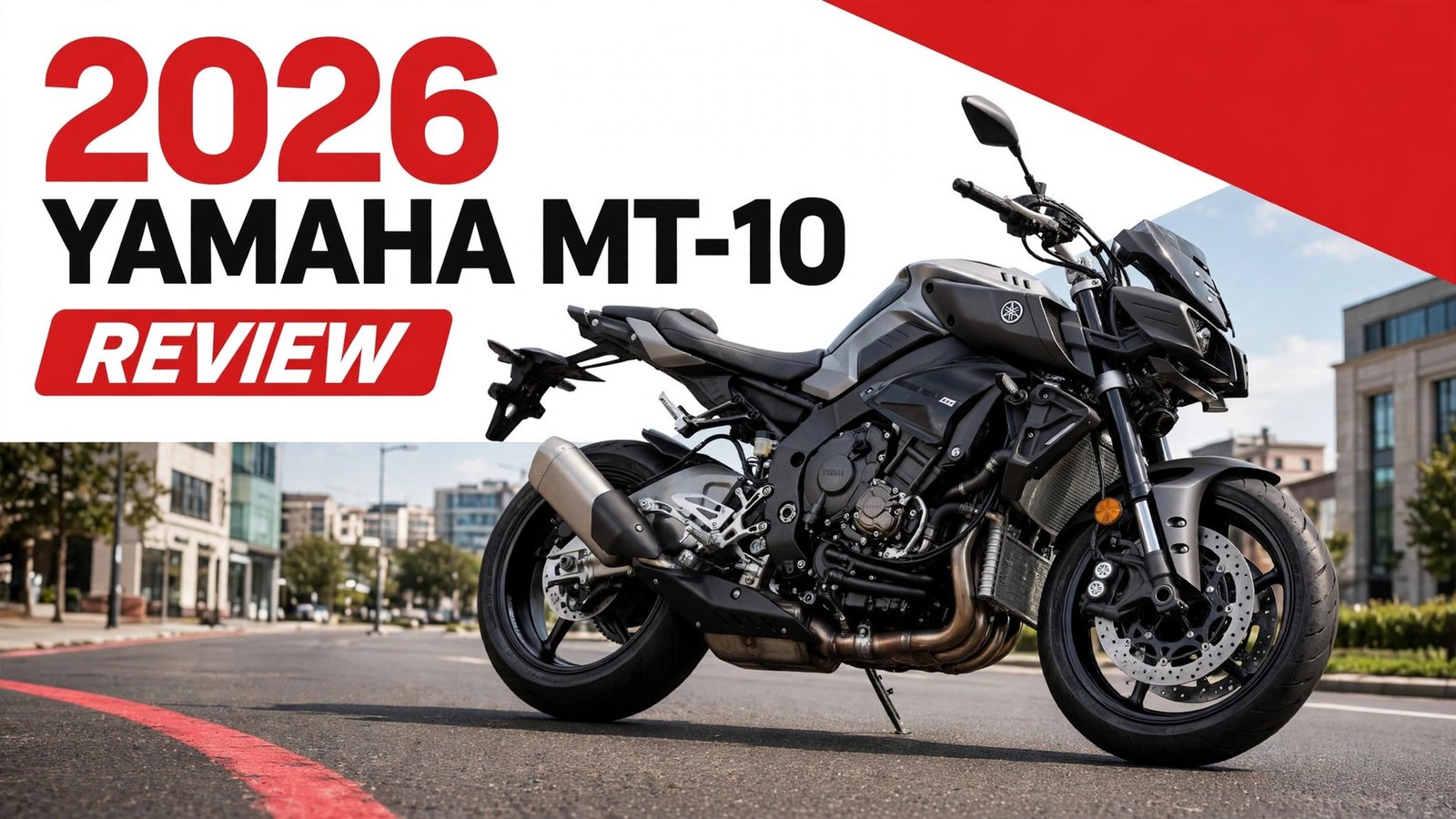
The direct answer in this Yamaha MT-10 review is simple: the standard MT-10 is Yamaha’s 998cc hyper-naked flagship, priced at $14,999 for 2026, weighing 467 pounds wet, and offering superbike-derived performance with a full electronics suite, $2,500 less than the MT-10 SP. This Yamaha MT-10 review notes it pairs the R1-derived CP4 engine with KYB suspension, a six-axis IMU, a 4.2-inch TFT display, and an up-and-down quickshifter.
Yamaha MT-10 Overview and Model-Year Updates
In this Yamaha MT-10 review, the MT-10 sits at the top of Yamaha’s MT range as its flagship hyper-naked. It has been on sale in the US since 2017, and the current generation dates to a thorough 2022 redesign.
What Is the Yamaha MT-10 and Who Is It Designed For?
The MT-10 is Yamaha’s answer to the European hyper-nakeds: a liter-class motorcycle with upright ergonomics and minimal bodywork, and a superbike engine retuned for street torque. In this Yamaha MT-10 review, the MT-10 suits experienced riders who want superbike pace without clip-on handlebars, for commuting, weekend back roads, and the occasional track day. It is not a beginner motorcycle: with roughly 138 rear-wheel horsepower on an independent dyno and a throttle that lifts the front wheel with little provocation, it rewards riders with solid throttle and braking skill. Riders stepping up from a middleweight such as the YZF-R7 should treat the MT-10 as a big jump in power, weight, and insurance cost, as this Yamaha MT-10 review stresses.
FZ-10 in 2017, MT-10 From 2018 and the 2022 Redesign Explained
The generation split matters in any Yamaha MT-10 review: the bike debuted at EICMA in 2015, first went on sale in 2016, and arrived in North America as the 2017 FZ-10 at $12,999 in Armor Gray and Matte Raven Black. The FZ-10 name lasted one model year: from 2018 onward Yamaha used the MT-10 name in all markets. The first generation, sold through 2021, used the same CP4 engine and Deltabox chassis but simpler electronics: three D-Mode ride settings, three-level traction control, ABS, cruise control, a slipper clutch, and a monochrome LCD dash, plus decorative intake scoops and a 32.5-inch seat. The 2022 redesign changed the bike: a revised engine with stronger midrange torque, functional intake ducts, Acoustic Amplifier Grilles, a titanium exhaust, a new six-axis IMU with lean-sensitive aids, a 4.2-inch color TFT display, an up-and-down quickshifter, a Brembo radial master cylinder, Bridgestone S22 tires, and a one-tooth-smaller rear sprocket. This Yamaha MT-10 review evaluates that second-generation package.
Yamaha MT-10 Engine and Specifications
The engine is the reason most riders look at the MT-10, and this Yamaha MT-10 review finds the chassis numbers explain why it works on real roads. The CP4 delivers a distinctive growl and a fat midrange, while KYB suspension and Brembo brakes give the standard bike a fully adjustable chassis. This section of the Yamaha MT-10 review separates claimed figures from tested ones, because the two are often mixed up.
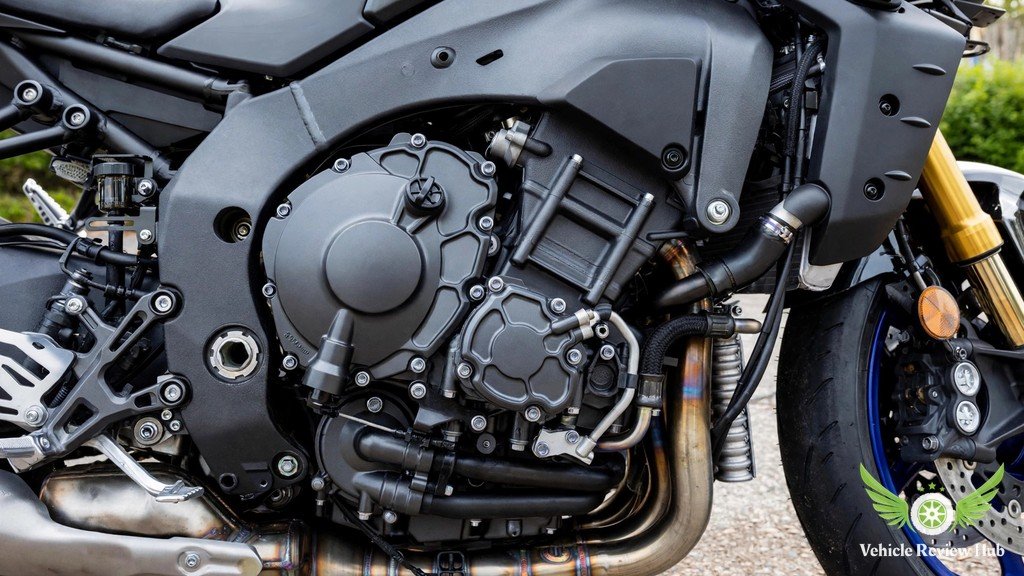
998cc CP4 Engine, Horsepower Context, Torque and Six-Speed Transmission
The MT-10 uses a 998cc liquid-cooled DOHC inline-four with Yamaha’s crossplane crankshaft, borrowed from the YZF-R1 and retuned with steel connecting rods, revised intake and exhaust, and fueling optimized for low and midrange torque. Yamaha’s European specification claims 163.6 horsepower at 11,500 rpm and 82.6 lb-ft of torque at 9,000 rpm, but Yamaha publishes no US horsepower number, so any American horsepower claim needs a test source attached. The most useful tested figure in this Yamaha MT-10 review comes from Rider magazine’s 2023 tour test: 138.5 rear-wheel horsepower at 10,200 rpm and 76.5 lb-ft at 9,000 rpm. Critically, these standard-bike figures must not be confused with the SP dyno figures from Cycle World’s testing, which measured the SP at 134.4 rear-wheel horsepower on a different dyno, bike, and day. The gap says nothing about which trim is more powerful, since both share essentially the same engine tune; it only shows why dyno numbers from different testers cannot be compared head to head. A Yamaha MT-10 review that quotes one dyno figure as the other trim’s result is simply wrong. This Yamaha MT-10 review notes the six-speed gearbox has an assist-and-slipper clutch and a standard up-and-down quickshifter on 2022-on models, allowing clutchless shifts both ways.
Weight 467 lb, Seat Height 32.9 Inches, KYB Suspension and Braking Specifications
At 467 pounds wet, the standard MT-10 is 5 pounds lighter than the SP in this Yamaha MT-10 review’s comparison, mainly because of the SP’s heavier electronic suspension hardware. Seat height is 32.9 inches, wheelbase 55.3 inches, rake 24.0 degrees with 4.0 inches of trail, and ground clearance 5.3 inches. Suspension is fully adjustable KYB equipment at both ends: a 43mm inverted fork and a piggyback rear shock, each with 4.7 inches of travel. KYB suspension can be serviced by any competent shop at ordinary prices, unlike the SP’s electronic Öhlins units — a running-cost point this Yamaha MT-10 review stresses. Braking comes from dual 320mm front discs with radial-mount four-piston calipers and a Brembo radial master cylinder, plus a 220mm rear disc, all with lean-sensitive ABS. One difference buyers often miss: braided steel brake lines are SP-only, so the standard bike uses conventional lines, a small but real distinction in lever feel under repeated hard use. Tires are Bridgestone Battlax Hypersport S22s, 120/70ZR17 front and 190/55ZR17 rear, and the 4.5-gallon tank at an official 36 mpg gives a theoretical range of about 162 miles. The table below gathers the key numbers this Yamaha MT-10 review relies on.
| Yamaha MT-10 specification | Standard model value | Source |
|---|---|---|
| Engine | 998cc liquid-cooled DOHC inline-four, CP4 crossplane | Yamaha specs |
| Claimed output (European figure) | 163.6 hp @ 11,500 rpm; 82.6 lb-ft @ 9,000 rpm | European spec |
| Tested output (rear wheel) | 138.5 hp @ 10,200 rpm; 76.5 lb-ft @ 9,000 rpm | Rider 2023 dyno |
| Transmission | 6-speed; assist-and-slipper clutch; up/down quickshifter | Yamaha specs |
| Wet weight / seat height | 467 lb / 32.9 in | Yamaha specs |
| Suspension | 43mm KYB fork + KYB piggyback shock, fully adjustable, 4.7-in travel | Yamaha specs |
| Brakes | Dual 320mm front discs, Brembo master cylinder; 220mm rear; ABS | Yamaha specs |
| Tires / fuel / economy | 120/70ZR17 + 190/55ZR17 S22; 4.5 gal; 36 mpg estimated | Yamaha specs |
| Warranty | 1 year limited factory warranty | Yamaha specs |
Yamaha MT-10 Price and Market Availability
Pricing is where the standard MT-10 makes its strongest case in this Yamaha MT-10 review. The current generation has moved only modestly in price since 2022, and the standard bike has stayed $2,300 to $3,000 below the SP every year. MSRP figures below exclude tax, title, preparation, and destination charges.
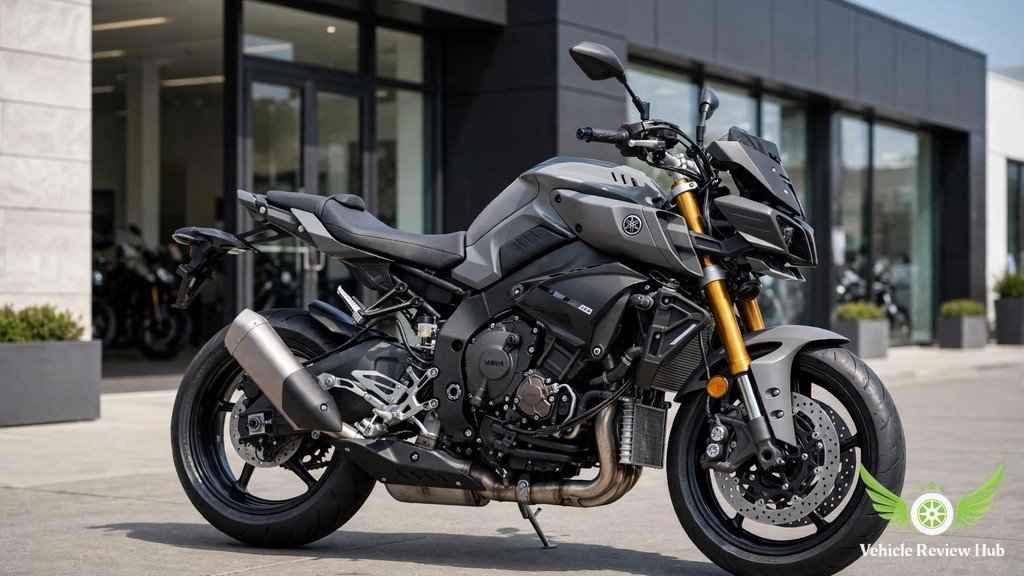
Yamaha MT-10 Price by Year in the USA: 2022 to 2026
In this Yamaha MT-10 review, standard MT-10 pricing across the current generation is predictable, which helps buyers judge value. The 2026 Yamaha MT-10 specifications list the current $14,999 MSRP alongside the 467-pound wet weight and 36 mpg estimate, and the 2024 specifications confirm the $14,499 figure for that year; destination is $775 extra for 2026 models. For used buyers, the ladder below in this Yamaha MT-10 review sets the ceiling: a clean 2022 or 2023 standard bike should sit well below its original MSRP, while nearly new 2025 and 2026 examples will ask near new-bike money. The buying guide walks through used pricing by generation in detail, and this Yamaha MT-10 review treats that ladder as the baseline for used-value judgments.
| Model year | Standard MT-10 MSRP (USA) | MT-10 SP MSRP for comparison | SP premium |
|---|---|---|---|
| 2022 | $13,999 | $16,899 | $2,900 |
| 2023 | $14,199 | $17,199 | $3,000 |
| 2024 | $14,499 | $16,999 | $2,500 |
| 2025 | $14,999 | $17,299 | $2,300 |
| 2026 | $14,999 | $17,499 | $2,500 |
Ice Storm Colour and Official US Dealer Availability
Yes, the standard MT-10 is an official US model sold through authorized Yamaha dealers, and the 2026 model is listed in Ice Storm, the current gray colorway. Earlier current-generation colors include Icon Blue (2022–2025), Matte Raven Black and Cyan Storm (2022–2023), Midnight Cyan (2024), and Tech Black (2024–2025). Color matters here because the SP’s Liquid Metal and Raven scheme is SP-only: if a used listing shows that silver-and-black scheme with blue wheels, it is an SP, not a standard bike. This Yamaha MT-10 review also notes the 2026 MSRP excludes the $775 destination charge plus tax, title, and preparation, so an out-the-door quote runs above $14,999.
Yamaha MT-10 Design, Features and Technology
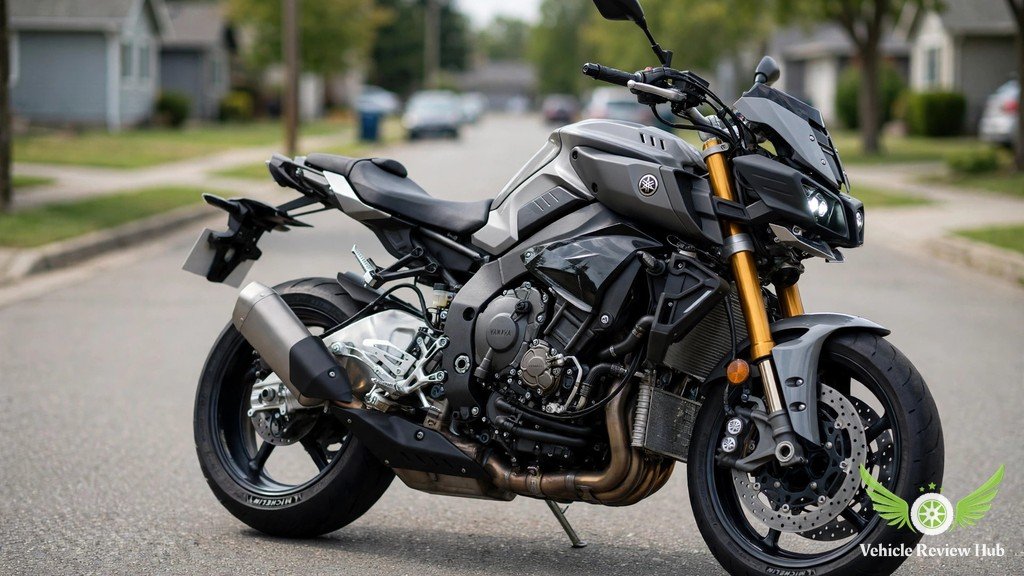
The 2022 redesign gave the MT-10, the subject of this Yamaha MT-10 review, its current face: twin-eye LED headlights, a compact nose assembly, functional intake ducts beside the tank cover, and stripped-down bodywork exposing the engine and frame. It is divisive styling, but this Yamaha MT-10 review finds nobody mistakes it for anything else. A Yamaha MT-10 review treats the electronics as the bigger story, because the 2022 update moved the standard bike from basic aids to a full R1-derived suite.
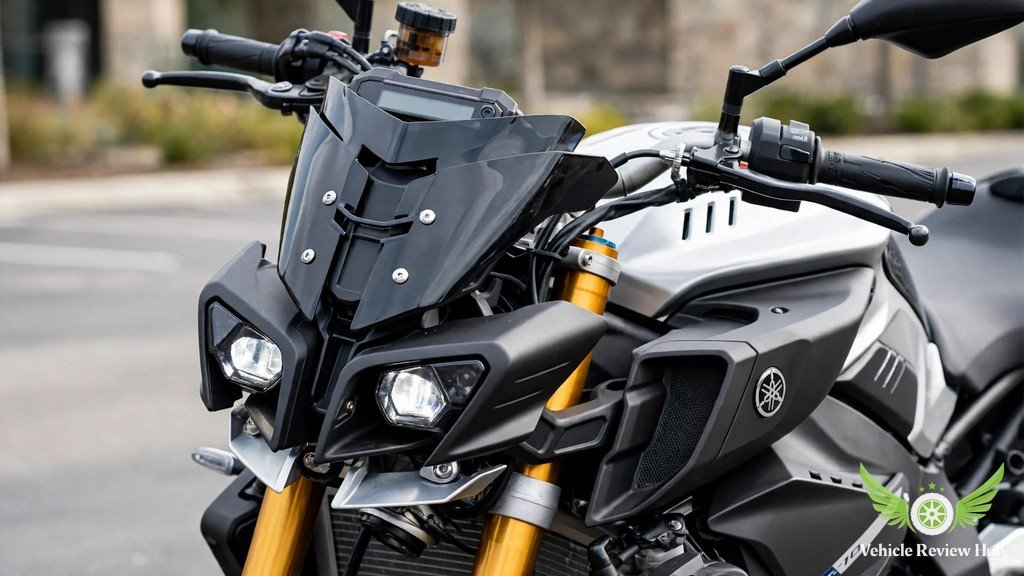
Sportbike Styling, LED Lighting and 4.2-Inch TFT Instrument Display
All lighting on the current MT-10 is LED, including the twin-eye mono-focus headlights, LED position lights, tail light, and turn signals. The 4.2-inch full-color TFT display replaced the first generation’s monochrome LCD dash and serves as the control center for ride modes and rider aids, navigated through handlebar switches. MCN’s 2022 review notes two honest limitations: the TFT is not as feature-rich as some European rivals’ displays and it lacks connectivity, and Yamaha’s menu system is less intuitive than some competitors’. The small flyscreen offers modest wind deflection, and the seat uses plush, Alcantara-like material testers found comfortable. In this Yamaha MT-10 review, those are details worth surfacing before a buyer sits on the bike.
Six-Axis IMU, Traction Control and Assist and Slipper Clutch
The 2022 update added, as this Yamaha MT-10 review notes, a new six-axis IMU, smaller and lighter than the R1’s, informing the full suite of lean-sensitive rider aids: traction control, Slide Control, Lift Control for wheelies, Engine Brake Management, and cornering ABS through the Brake Control system. Four ride modes adjust throttle response and aid intervention, and settings can be mixed or switched off. Cruise control and Yamaha’s Variable Speed Limiter, a rider-set limiter, are standard, as is the up-and-down quickshifter, and the assist-and-slipper clutch lightens lever effort and prevents rear-wheel hop on downshifts. The IMU suite arrived only in 2022, so a 2017–2021 FZ-10 or MT-10 has traction control and ride modes but no lean-sensitive aids, TFT, or standard up-and-down quickshifter. This Yamaha MT-10 review flags that gap because it changes what a used example is worth.
Yamaha MT-10 Riding Experience and Comfort
On the road, the MT-10’s character, as this Yamaha MT-10 review finds, is defined by its engine. Testers describe the CP4, the heart of this Yamaha MT-10 review, as slightly dull below 4,000 rpm, strong through the midrange, and ferocious above 8,000 rpm, with a deep, V4-like growl from the crossplane firing order and acoustic intake grilles. The upright, roomy riding position, closer to a supermoto than a sportbike, suits back-road riding and commuting.
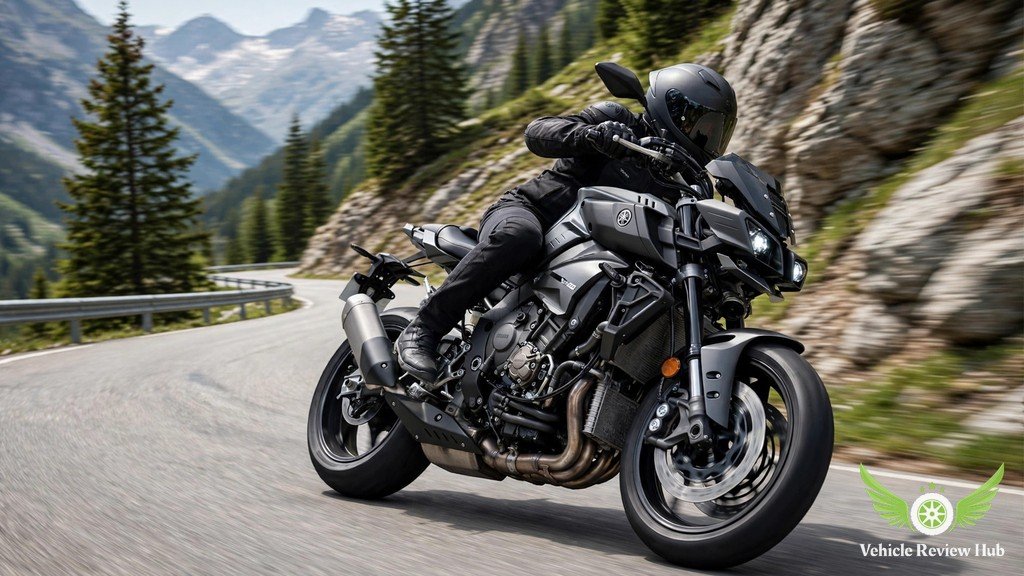
Riding Position, Handling and Low-Speed Maneuverability
In this Yamaha MT-10 review, the seat, footpeg, and handlebar relationship is, in Cycle World’s words, just about perfect for average-sized riders, with a relatively comfortable seat at 32.9 inches. The Deltabox frame, 55.3-inch wheelbase, and 24-degree rake give stable handling, and the fully adjustable KYB suspension lets riders dial in sag and damping. Reviewers call the MT-10 one of the easiest motorcycles to wheelie, so its lift control exists for a reason, and this Yamaha MT-10 review advises new owners to start in a gentler power mode.
City Riding, Highway Comfort and Everyday Practicality
In city traffic, this Yamaha MT-10 review finds the MT-10 surprisingly manageable for a liter bike: the ride-by-wire throttle is smooth in gentler modes, the assist clutch keeps lever effort light, and the quickshifter eases low-speed changes. On the highway, overtaking is effortless thanks to midrange torque and standard cruise control, but the small flyscreen means full wind blast at sustained speed. Range is the other practical limit this Yamaha MT-10 review stresses: at the official 36 mpg, the 4.5-gallon tank gives roughly 160 miles between fill-ups, and spirited riding drops that fast. As a daily motorcycle for an experienced rider, the MT-10 is realistic; as a tourer, this Yamaha MT-10 review finds it compromised by wind and tank size. Rider magazine’s video review of the standard 2022 bike, embedded below, shows that road character.
Yamaha MT-10 Review: Pros, Cons and Verdict
In this Yamaha MT-10 review, after weighing the specifications, pricing, and riding reports, the standard MT-10 emerges as the rational and emotional pick: superbike character, honest hardware, and a price undercutting every European rival. The trade-offs below in this Yamaha MT-10 review are stated plainly, so buyers can decide with eyes open.
Main Advantages and Limitations of the Yamaha MT-10
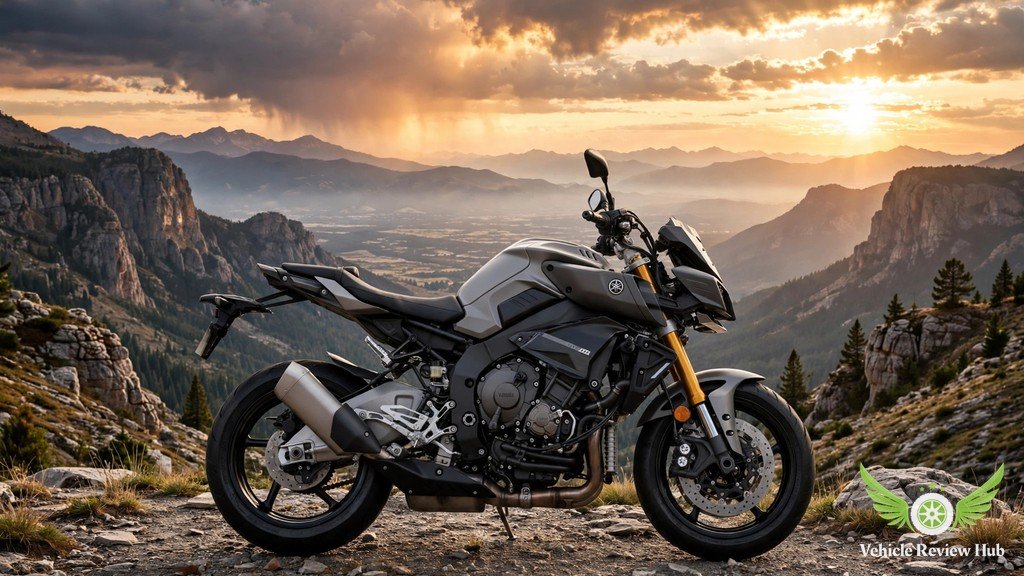
The advantages start with the engine: a distinctive crossplane four with real midrange torque, a soundtrack no inline-four rival matches, and a chassis praised for stability and feedback. The standard bike’s KYB suspension is fully adjustable and cheap to service, the electronics suite matches the SP’s except for suspension control, and the $14,999 price leaves room for tires, gear, and insurance. The limitations in this Yamaha MT-10 review are clear: fuel range is short at roughly 160 miles, wind protection is minimal, the TFT and menus lag European rivals, the one-year warranty is short for the class, and the bike’s weight and seat height make it demanding at parking-lot speeds. Tires, chains, and brake pads wear fast under hard use, which is where the reliability and maintenance picture matters for long-term costs. A balanced Yamaha MT-10 review keeps both lists in view.
Who Should Consider the Yamaha MT-10 Over the MT-10 SP?
This Yamaha MT-10 review says buy the standard MT-10 if you ride mostly on the street, value serviceability and purchase price, and are happy to set your own suspension with a screwdriver rather than a TFT menu. The SP, covered in the MT-10 SP review, adds Öhlins semi-active suspension, braided steel brake lines, a polished swingarm, a color-matched lower fairing, and the exclusive Liquid Metal and Raven scheme, for a $2,500 premium in 2026 and 5 extra pounds. That hardware earns its money on track days and aggressive back-road riding, where damping adapts corner by corner. For commuting, weekend rides, and the occasional track day, the standard bike gives you the same engine, electronics, and chassis for less money, with cheaper servicing. The verdict of this Yamaha MT-10 review is that the standard bike is the smarter buy for most riders, and the SP is the better toy for riders who will genuinely use its suspension.
Yamaha MT-10 Review: Frequently Asked Questions
These direct answers cover the questions buyers ask most in a Yamaha MT-10 review, from pricing and specifications to SP differences and daily riding, all checked for this Yamaha MT-10 review.
How much does a new Yamaha MT-10 cost?
The 2026 Yamaha MT-10 carries a $14,999 MSRP, excluding tax, title, preparation, and $775 destination. The 2025 model was also $14,999; earlier prices in this Yamaha MT-10 review were $13,999 (2022), $14,199 (2023), and $14,499 (2024).
How much horsepower does the Yamaha MT-10 make?
Yamaha’s European specification claims 163.6 horsepower at 11,500 rpm; Yamaha publishes no US figure. Rider’s dyno test of the standard bike measured 138.5 rear-wheel horsepower at 10,200 rpm and 76.5 lb-ft at 9,000 rpm. Do not compare them with the SP’s Cycle World dyno numbers, from a different bike and dyno.
What is the difference between the Yamaha MT-10 and the MT-10 SP?
The SP adds Öhlins semi-active suspension, braided lines, a polished swingarm, a color-matched lower fairing, and the exclusive Liquid Metal/Raven scheme. The standard bike uses fully adjustable KYB suspension and conventional brake lines, weighs 5 pounds less, 467 versus 472, and costs $2,500 less in 2026. Both share the engine, frame, electronics, and TFT display, as this Yamaha MT-10 review notes.
What is the Yamaha MT-10 seat height and weight?
The current standard MT-10 has a 32.9-inch seat height and 467-pound wet weight. First-generation bikes (2017–2021) had a 32.5-inch seat.
What suspension does the standard Yamaha MT-10 have?
The standard MT-10 uses fully adjustable KYB suspension: a 43mm inverted fork and piggyback rear shock, each with 4.7-inch travel. It does not have the SP’s Öhlins electronic suspension, which is the biggest hardware difference between the trims.
Does the Yamaha MT-10 have a quickshifter and cruise control?
Yes, on 2022-on models, which come standard with an up-and-down quickshifter, cruise control, a six-axis IMU with lean-sensitive aids, four ride modes, and Yamaha’s Variable Speed Limiter. First-generation bikes had cruise control but no IMU or quickshifter.
What is the Yamaha MT-10 fuel economy and range?
In this Yamaha MT-10 review, Yamaha estimates 36 mpg combined, and the 4.5-gallon tank gives a theoretical range of about 162 miles. Real-world range is closer to 130–150 miles, less when ridden hard.
Is the Yamaha MT-10 good for beginners?
No. With roughly 138 rear-wheel horsepower, 467 pounds, and a 32.9-inch seat, it is for experienced riders. Beginners should start on an MT-03 or MT-07 first.
Can the Yamaha MT-10 be ridden daily?
Yes, for experienced riders: the upright position, quickshifter, and cruise control suit commuting, but short range, minimal wind protection, and fast wear are trade-offs.
Is the Yamaha MT-10 worth it over European rivals?
For most riders, yes. The standard MT-10 undercuts BMW, KTM, and Aprilia rivals on price with a comparable engine and electronics suite, Japanese dealer support, and cheaper suspension servicing, though European rivals offer more sophisticated displays and sometimes more power at higher prices.